


Have you ever wondered why that persistent ache in your heel refuses to shift, even after you’ve invested in the most expensive pair of runners on the shelf? It’s a common frustration for many residents across Sydney and Liverpool who find themselves sidelined by discomfort they just can’t pin down. The reality is that your unique walking pattern holds the secret to your recovery, and a professional gait analysis is the most effective way to decode it. By observing exactly how your feet interact with the ground, we can move past the guesswork and start addressing the mechanical issues that are truly holding you back.
We understand how daunting it feels when you’re forced to stop exercising or worry about losing your mobility as the years go by. You deserve a clear path forward that doesn’t involve trial and error with generic, off-the-shelf inserts. This guide will show you how a clinical assessment at Active Footcare identifies the root cause of your pain and provides a personalised treatment plan to help you move with confidence. We’ll explore the latest 2026 diagnostic techniques and explain how our local podiatry expertise can help you regain the physical ease you’ve been missing.
Key Takeaways
- Learn why a professional gait analysis is a sophisticated medical diagnostic tool that goes far beyond simply choosing a new pair of shoes.
- Discover the critical differences between a clinical assessment and a retail shoe fitting, ensuring you receive a proper medical diagnosis rather than a sales pitch.
- Identify how specific biomechanical issues lead to chronic conditions like plantar fasciitis and persistent heel pain.
- Understand why custom orthotics designed through professional interpretation offer superior support compared to generic, off-the-shelf options.
- Explore how personalised treatment plans from a local Sydney podiatrist can help you return to the activities you love with improved stability and ease.
What is Gait Analysis and How Does it Influence Your Foot Health?
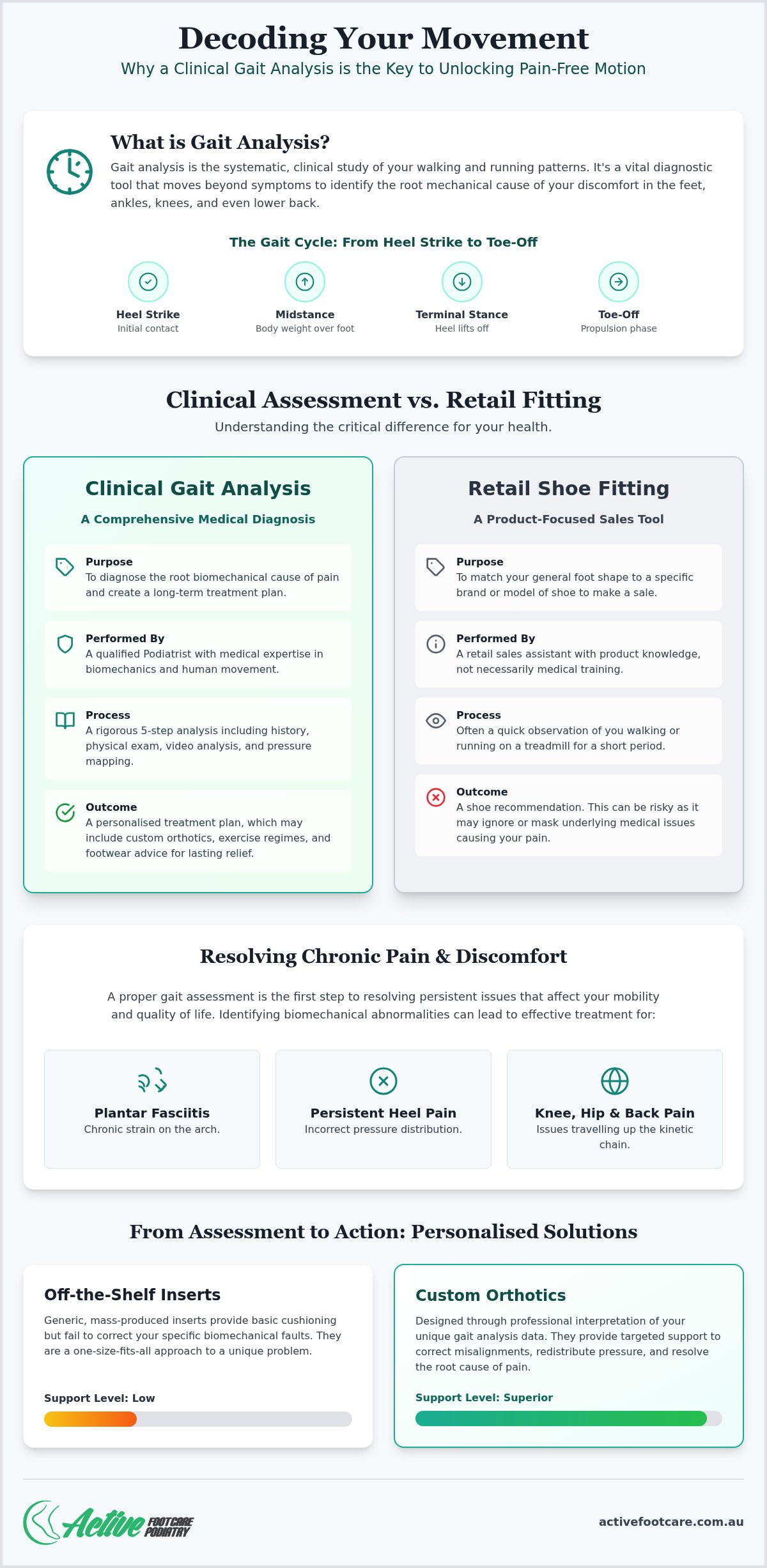
Gait analysis is the systematic study of how you move, specifically looking at the intricate details of your walking and running patterns. It serves as a vital diagnostic tool that bridges the gap between your current symptoms and the long-term relief you’re looking for. Instead of simply treating the spot where it hurts, we use this assessment to understand the mechanical “why” behind your discomfort. By identifying biomechanical abnormalities early, we can prevent issues that often manifest as chronic pain in your feet, ankles, knees, or even your lower back.
The foundation of this process is understanding the gait cycle. This cycle tracks your movement from the precise moment your heel strikes the ground through to the point where your toes lift off to begin the next step. Each phase, including the loading response, midstance, and terminal stance, requires your joints and muscles to coordinate perfectly. When one part of this cycle is out of sync, your body naturally compensates. These compensations are often the hidden culprits behind the strain and fatigue you feel after a walk through Liverpool or a day spent on your feet in the Sydney CBD.
The Science of Biomechanics
Your bones, muscles, and joints are designed to work in unison during every step you take. This complex interaction is known as biomechanics. When you walk, your feet must absorb significant ground reaction forces, which are the pressures exerted by the pavement back up into your limbs. If your foot doesn’t distribute this pressure correctly, those forces travel up the kinetic chain.
Even a minor misalignment in how your foot lands can cause significant chronic pain over time as your knees and hips try to pick up the slack. For instance, if your arches collapse too much, it forces your lower leg to rotate inward excessively. This repetitive motion stresses the soft tissues and can lead to long-term wear and tear on your joints that a simple rest won’t fix.
Why ‘Normal’ Walking is Different for Everyone
There is a common myth that a ‘perfect’ gait exists, but the reality is that movement is highly personal. What matters most is whether your walking pattern is functional for your specific body. Factors such as your age, weight, and previous injuries all shape your unique style of movement. A pattern that works for a teenager might not be sustainable for someone managing an old sports injury or navigating the changes that come with age.
This is why generic, one-size-fits-all advice often fails to provide lasting results. At Active Footcare, we focus on an individualised gait analysis that respects your personal history and physical requirements. We believe that professional care should be as unique as the person receiving it. Rather than comparing you to an abstract ideal, we look at how your mechanics can be optimised to reduce pain and improve your specific mobility goals.
Clinical Gait Analysis vs. Retail Shoe Fitting: Understanding the Difference
Many people first encounter the term “gait analysis” while browsing for new runners at a sporting goods store. While a quick treadmill test at a shop can help you choose a comfortable pair of shoes, it’s important to understand that this is a sales tool rather than a medical diagnostic procedure. Retail fittings focus on matching your foot shape to a specific brand or model. In contrast, a clinical assessment at Active Footcare is a comprehensive investigation into your physical health, conducted by a medical professional.
A podiatrist looks at the whole person, not just the feet. We evaluate your medical history, joint range of motion, and muscle strength to understand how your entire body coordinates movement. If you’re experiencing persistent pain, relying on a retail fitting can be risky. It often ignores underlying pathologies that footwear alone cannot fix. Our clinical approach follows a rigorous five-step process to ensure accuracy: a detailed clinical history, a biomechanical physical exam, high-definition video analysis, digital pressure mapping, and a final clinical diagnosis.
What Happens During a Podiatric Assessment?
We begin your journey with a detailed discussion regarding your pain, daily lifestyle, and specific activity goals. This is followed by a non-weight-bearing exam where we check your joint flexibility and muscle integrity while you’re seated. Finally, we analyse your gait while you walk or run on a flat surface or treadmill. This allow us to see how your body handles weight and movement in a real-world scenario, providing data that a retail clerk simply isn’t trained to interpret.
Advanced Technology in Modern Podiatry
Our clinics utilise high-speed video software to capture subtle movements that are invisible to the naked eye. We can slow down your stride to see exactly how your heel strikes and how your arch responds. Digital pressure plate analysis further enhances this by showing us exactly where your foot is absorbing the most stress in real-time.
This sophisticated data, combined with 3D scanning technology, creates a precise digital blueprint for custom orthotics. These devices are tailored specifically to your anatomy to provide support where you need it most. If you’re tired of guessing which shoes might help your condition, arranging a professional consultation can provide the clarity and medical expertise required for lasting relief.
Common Conditions Resolved Through Professional Gait Assessment
Gait analysis acts as the key to unlocking the ‘why’ behind persistent foot complaints that simply won’t go away. Many patients come to us with a history of discomfort that has been treated only at the surface level. By examining your movement, we can identify how foot issues contribute to ‘referred pain’ in your knees, hips, and lower back. This holistic view ensures that we aren’t just putting a bandage on the problem but addressing the mechanical triggers that cause your body to compensate in painful ways.
For active individuals in Sydney and Liverpool, this assessment is also a critical tool for managing shin splints and preventing stress fractures. These injuries are usually the result of repetitive impact being absorbed poorly by the lower limbs. By adjusting your striking pattern or providing targeted support, we can help you stay on the track or the field without the fear of a recurring injury. Whether you’re a weekend walker or a dedicated athlete, understanding these mechanics is the first step toward pain-free movement. If you’re searching for a trusted podiatrist near me in Sydney or Liverpool who can conduct a thorough biomechanical assessment, our experienced team is ready to help.
Solving Chronic Heel and Plantar Fasciitis Pain
Heel pain is often a symptom of poor mechanical loading rather than a standalone injury. Through a professional gait analysis, we can determine if excessive overpronation is placing repetitive strain on your plantar fascia ligament. When your arch collapses too far or for too long, it creates a tug-of-war effect on the heel bone. Identifying this specific movement flaw allows us to implement gait corrections that often reduce the need for more invasive treatments. This is particularly effective for those struggling with heel inside pain, as we can pinpoint exactly where the pressure distribution is failing during each step.
Addressing Flat Feet and Overpronation
Flat feet are frequently misunderstood, yet they are a primary reason for seeking clinical help. It’s vital to distinguish between a ‘flexible’ flat foot, which has an arch when non-weight-bearing, and a ‘rigid’ flat foot, which remains flat regardless of position. This distinction changes the entire treatment approach. Many people try to manage this by purchasing generic ‘orthotics’ from a chemist, but these mass-produced inserts often fail because they don’t account for your specific joint range of motion. We use the data from your assessment to inform the design of corrective devices that provide the exact level of support your unique foot structure requires, ensuring your stability is restored from the ground up.
From Assessment to Action: Custom Orthotics and Treatment Plans
A clinical gait analysis provides the raw data, but the real value lies in how that information is translated into a functional recovery plan. Your treatment journey doesn’t end with a diagnosis; it begins with applying those insights to your daily life. We use the findings from your assessment to create a roadmap that addresses your immediate pain while protecting your long-term mobility. This often involves a combination of mechanical support, footwear education, and targeted physical therapy.
Custom-made medical devices consistently outperform generic, shop-bought insoles because they’re built for your specific foot geometry. While a generic insert might offer a soft cushion, it cannot correct the specific timing issues or joint misalignments identified during your analysis. Footwear also plays a vital role. We guide you in choosing the right “tool” for your gait, ensuring your shoes work with your orthotics rather than against them. This holistic approach ensures every step you take promotes healing rather than further irritation.
The Role of Custom Medical Orthotics
During the design phase, we use your gait data to prescribe precise angles and support levels. If your analysis showed a late-stage collapse of the arch, we can reinforce that specific area of the device. We often integrate these mechanical corrections with other regenerative treatments. For instance, combining prolotherapy for foot pain with custom support can accelerate the repair of strained ligaments. Ensuring your orthotics fit comfortably in your everyday work shoes and weekend runners is a priority, as consistency is key to seeing a reduction in chronic symptoms.
Exercise and Rehabilitation Strategies
Prescribing targeted stretching and strengthening exercises is essential for correcting gait imbalances. While orthotics provide the necessary structural support, your muscles must be conditioned to move correctly. This isn’t just about strength; it’s about “retraining” your walking pattern under professional guidance to ensure you aren’t falling back into old, painful habits. Long-term monitoring allows us to adjust your plan as your body heals and your mechanics improve. If you’re ready to stop managing symptoms and start fixing the cause, you can book your biomechanical assessment at one of our Sydney or Liverpool clinics today.
Expert Gait Analysis at Active Footcare: Personalised Solutions in Western Sydney
Active Footcare bridges the gap between high-level clinical excellence and the warm, friendly service you expect from a local provider. Led by Principal Podiatrist Dr Maher Said, our team specialises in complex biomechanical cases that require a deep, evidence-based understanding of human movement. We don’t believe in generic, one-size-fits-all solutions. Instead, we provide tailored care for everyone from elite athletes looking to shave seconds off their personal best to NDIS participants seeking greater daily independence. Our primary focus is always on restoring your mobility so you can continue to enjoy the lifestyle you love without being held back by avoidable physical discomfort.
We take our role as “Compassionate Experts” seriously, ensuring that every patient feels heard and understood throughout their diagnostic journey. By combining modern technology with traditional values of attentive service, we help you navigate the complexities of foot health with clarity. Our goal is to empower you with the knowledge needed to make informed decisions about your recovery, acting as your dedicated partner in long-term physical well-being. This personalised approach ensures that your treatment plan aligns perfectly with your specific activity levels and health goals.
Local Care Across Liverpool, Bankstown, and Campbelltown
We’ve strategically positioned our clinic locations to serve the Western Sydney community with ease and convenience. Whether you’re visiting us in Liverpool, Bankstown, or the surrounding suburbs, you’ll receive the same commitment to friendly, up-to-date advice that local families have come to rely on. We understand the specific lifestyle needs of our community and take immense pride in being a trusted health partner for residents across the region. If you’re looking for a top-rated Sydney podiatrist in Liverpool who combines clinical expertise with genuine local care, our team is ready to help. If you’re ready to take the first step toward better movement, you can book your gait analysis at our Liverpool or Bankstown clinics today!
Mobile Podiatry and NDIS Support
We recognise that not everyone can easily travel to a clinic, which is why we offer specialised podiatrist home visit Sydney services. This mobile care ensures that professional biomechanical assessments are accessible to those with limited mobility or complex health needs. Our team conducts detailed NDIS mobile podiatry assessments designed specifically to improve safety and promote independence within the home environment.
Additionally, we provide dedicated podiatry services for aged care, focusing on maintaining senior foot health and preventing debilitating falls. By bringing our expertise directly to your doorstep, we ensure that every member of the community has the opportunity to benefit from a professional gait analysis. This proactive approach helps identify potential risks before they lead to significant injury, keeping our seniors active and confident in their movement for years to come.
Take the First Step Toward Pain-Free Movement
Understanding exactly how your body moves is the most vital factor in overcoming persistent foot and lower limb discomfort. We’ve explored how a professional gait analysis serves as a clinical diagnostic bridge, moving you away from guesswork and toward a personalised recovery plan that actually works. Whether you’re managing a complex biomechanical condition or simply want to stay active as you age, medical precision ensures your treatment is as unique as your walking pattern. You don’t have to settle for off-the-shelf solutions that only offer temporary relief.
Led by Principal Podiatrist Dr Maher Said, our team is dedicated to providing accessible, high-quality care across Western Sydney. As a registered NDIS provider, we also offer mobile podiatry home visits for those who find it difficult to reach our clinics, ensuring everyone has access to expert advice. We’re here to help you regain your independence and move with renewed confidence. If you’re ready to address the root cause of your pain, Book Your Comprehensive Gait Analysis at Active Footcare Today. We look forward to supporting you on your journey toward better mobility and long-term physical ease.
Frequently Asked Questions
Is gait analysis only for professional runners and athletes?
No, gait analysis is a valuable tool for anyone experiencing mobility issues or persistent pain, not just elite athletes. We use these assessments to help local Sydney residents manage daily discomfort, whether they’re walking to the shops or standing all day at work. It’s particularly beneficial for NDIS participants and seniors who want to improve their stability and prevent falls. By understanding your unique movement, we can tailor solutions that support your specific lifestyle goals.
How long does a professional gait analysis session take?
A comprehensive session typically takes between 45 and 60 minutes to complete. This allows our podiatrists to conduct a thorough physical exam, review your medical history, and perform digital video analysis. We take the time to ensure every detail of your walking pattern is captured accurately. This methodical approach ensures we don’t rush the diagnostic process, giving you a clear and reliable understanding of your foot health before we discuss any treatment options.
Do I need to bring my old shoes to the podiatry appointment?
Yes, bringing your most frequently worn shoes is highly recommended. The wear patterns on your old soles provide our team with real-world data about how your feet interact with the ground over time. Whether they are work boots, school shoes, or your favourite runners, these items offer clues that a treadmill test alone might miss. Seeing how your footwear has adapted to your stride helps us create more effective, personalised treatment plans for your recovery.
Will my health fund cover the cost of gait analysis and orthotics?
Most Australian private health funds provide rebates for podiatry services, including clinical assessments and custom orthotics, depending on your level of extras cover. Since every policy is different, we suggest contacting your provider to confirm your specific entitlements. Our clinics in Liverpool and Bankstown use HICAPS, which allows you to claim your rebate on the spot. This makes it easier for you to access professional care without unnecessary administrative delays or confusion.
Can gait analysis help with my knee and lower back pain?
Yes, it’s common for foot mechanics to be the underlying cause of pain in the knees, hips, and lower back. This is because your body functions as a kinetic chain; if your feet aren’t absorbing shock correctly, that stress travels upwards. By identifying these misalignments through a professional assessment, we can address the root cause of your referred pain. Correcting your gait often leads to significant improvements in comfort across your entire lower body.
What is the difference between a podiatrist’s gait analysis and a shoe shop test?
The primary difference is that a podiatrist’s assessment is a medical diagnostic procedure, while a shoe shop test is a retail sales tool. A retail test focuses on matching you to a specific product on their shelf. In contrast, our clinical gait analysis involves a deep dive into your joint range of motion, muscle strength, and medical history. We provide a diagnosis and a long-term health strategy rather than just a footwear recommendation.
How often should I have my gait re-assessed?
We generally recommend a review every 12 to 24 months, or sooner if you notice new discomfort or changes in your activity levels. Your walking pattern can evolve due to age, weight changes, or new injuries, so regular monitoring ensures your treatment remains effective. For our NDIS and aged care clients across Sydney, more frequent check-ups may be necessary to maintain safety and prevent falls. Keeping your records up to date ensures your mobility stays at its peak.
Can children benefit from a gait analysis at a kids’ foot clinic?
Absolutely, children benefit significantly from early intervention. As their bones and muscles develop, identifying issues like pigeon-toeing or severe flat feet can prevent chronic problems in adulthood. An assessment helps us determine if a child’s walking pattern is part of normal development or if they require supportive intervention. Our friendly approach ensures that kids feel comfortable during the process, helping local families in Liverpool and Bankstown manage their children’s foot health with confidence.