


Have you ever wondered if that sharp twinge in your heel after a morning walk through Liverpool’s Bigge Park is just a sign of a busy day, or if it’s time to learn When to See a Podiatrist? Many of us tend to push through discomfort, believing that foot pain is simply an unavoidable part of an active life or a natural consequence of ageing. It’s completely normal to feel a bit hesitant or even confused about whether your symptoms warrant a professional’s opinion, especially when you’re trying to stay mobile and independent.
This guide will help you identify the critical warning signs that shouldn’t be ignored, from persistent arch pain to the complexities of diabetic foot management. You’ll gain a clear understanding of how modern clinical treatments like shockwave therapy can accelerate your recovery, and we’ll clarify how our specialised NDIS podiatry services support the Western Sydney community. We’re here to provide the professional guidance you need to move from uncertainty toward a future of pain-free mobility and improved quality of life.
Key Takeaways
- Recognise that a podiatrist is an AHPRA-regulated specialist dedicated to restoring your lower limb health through a blend of clinical authority and empathetic support.
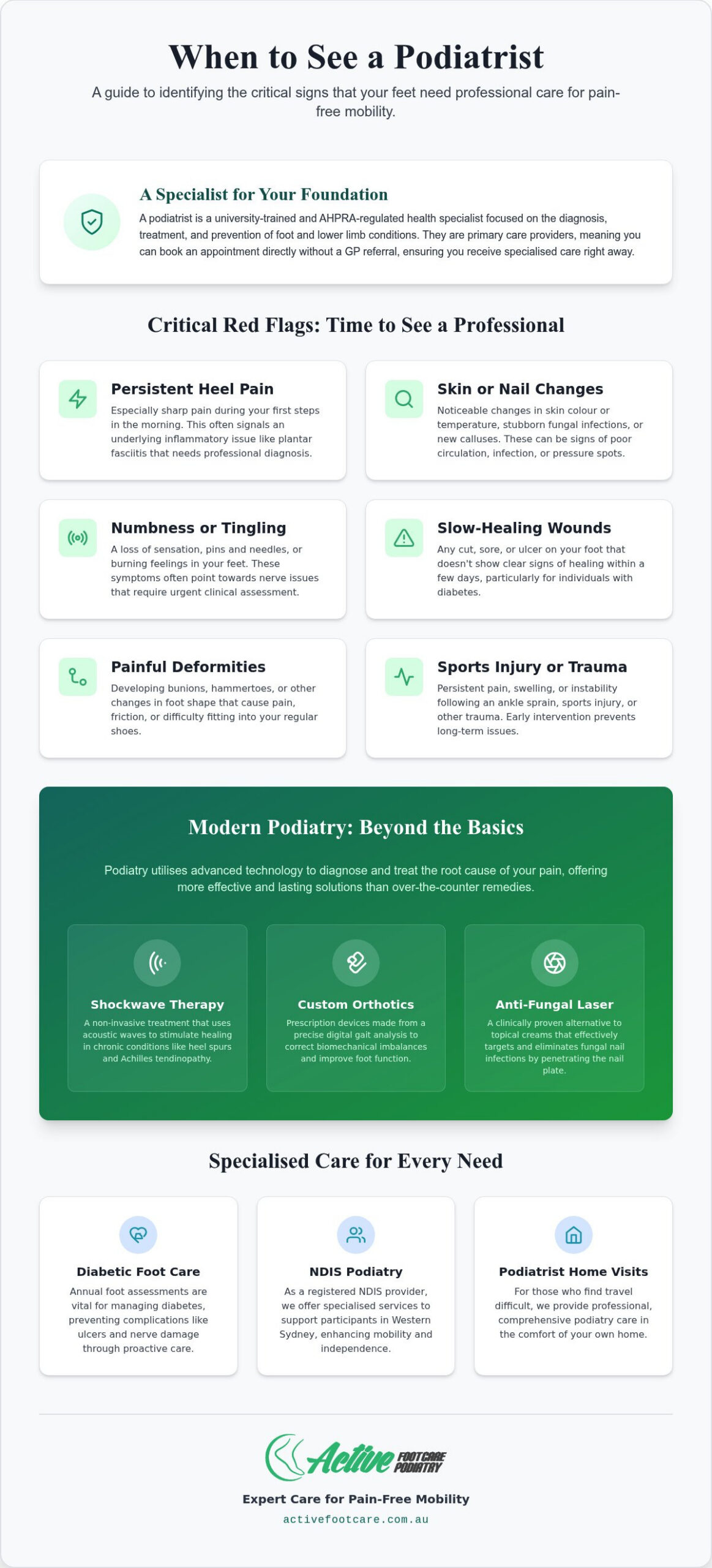
- Identify the critical red flags, such as persistent heel pain or changes in skin temperature, that signal exactly When to See a Podiatrist for professional intervention.
- Understand the vital role of preventative care, including annual diabetes foot assessments and NDIS-registered services, in managing chronic health conditions.
- Learn how modern technologies like gait analysis and shockwave therapy can identify and treat biomechanical inefficiencies before they lead to long-term mobility issues.
- Discover the convenience of tailored care options in Liverpool, ranging from advanced in-clinic treatments to professional podiatrist home visits for those who find travel difficult.
Understanding the Role of a Podiatrist in Modern Healthcare
A podiatrist is a university-trained health professional, regulated by the Australian Health Practitioner Regulation Agency (AHPRA), who specialises in the diagnosis and management of conditions affecting the feet and lower limbs. For a deeper Understanding the Role of a Podiatrist, it’s helpful to see them as the primary guardians of your mobility. At Active Footcare, Dr. Maher Said takes a “Compassionate Expert” approach. This means we don’t just look at a sore toe; we look at the person attached to it. We combine clinical precision with a warm, patient-focused environment to ensure you feel heard and supported throughout your treatment journey.
Many people only ask When to See a Podiatrist once they’re already limping. While we certainly help with acute pain, our role is increasingly focused on proactive health. By identifying biomechanical issues early, we can prevent chronic conditions from developing, ensuring you stay active in Liverpool and beyond. Our care spans the entire spectrum of foot health, from maintaining skin integrity to performing complex biomechanical interventions.
Podiatry vs. General Practice: When to Skip the GP
If you have a foot-specific concern, you don’t always need to visit your GP first. Podiatrists are primary care providers, meaning you can book in directly for specialised assessments. We use advanced diagnostic tools, such as digital gait analysis, which provides data that a standard physical exam might miss. However, we still value the role of your doctor. We frequently collaborate with local Liverpool GPs through Enhanced Primary Care (EPC) plans, which may allow eligible patients with chronic conditions to access Medicare rebates for their consultations.
The Scope of Practice: From Routine Care to Advanced Procedures
Our clinical scope is broad, moving well beyond simple nail trimming. We manage everything from complex skin pathologies to regenerative treatments like prolotherapy for foot pain. Our clinic is equipped with modern technology designed to offer more effective results than over-the-counter solutions. Knowing When to See a Podiatrist involves recognising that your feet deserve more than just a surface-level fix.
- Shockwave Therapy: A non-invasive option that uses pressure waves to stimulate healing in chronic heel pain and Achilles issues.
- Anti-fungal Laser Treatment: A medically-backed alternative to chemist-bought creams that often fail to penetrate the nail plate.
- Custom Orthotics: Prescription inserts designed after a thorough gait analysis to correct structural imbalances.
Whether it’s a stubborn fungal infection or a long-term sports injury, we provide the clinical depth required for lasting relief. By choosing a specialist, you’re opting for a provider who understands the intricate mechanics of your feet and how they impact your entire body.
The Red Flags: Immediate Reasons to Book a Podiatry Consultation
Identifying When to See a Podiatrist is often a matter of listening to the signals your feet send during your daily routine. While minor aches might occasionally resolve with rest, certain red flags demand professional attention to prevent permanent mobility issues. If you experience persistent heel pain that feels sharpest during those first few steps in the morning, your body is highlighting an underlying inflammatory concern. Likewise, noticing changes in skin colour, unusual temperature shifts, or a distinct numbness and tingling in your soles should never be dismissed. These symptoms often point toward circulation or nerve issues that require a clinical assessment to manage effectively.
For Liverpool residents with known health risks, slow-healing wounds or sores are a high priority. A small break in the skin that doesn’t show signs of improvement within a few days can escalate quickly without expert intervention. We also frequently assist patients with visible deformities like bunions or hammertoes. While these may begin as a minor annoyance, they often lead to painful friction and skin breakdown once they start to interfere with your favourite footwear.
Acute Pain and Injury Management
It’s vital to distinguish between general muscle fatigue and specific structural issues like heel inside pain. Structural discomfort often involves ligament or tendon damage that won’t simply disappear by “walking it off.” In fact, pushing through the pain often forces you to alter your gait, which can lead to secondary injuries in your knees, hips, or lower back. For stubborn conditions such as chronic plantar fasciitis, we often utilise shockwave therapy. This modern treatment uses acoustic pressure waves to stimulate your body’s natural healing response, providing a non-invasive path to recovery for those who haven’t found relief through traditional rest.
Skin and Nail Concerns You Shouldn’t Ignore
We strongly advise against “bathroom surgery” for ingrown toenails. Attempting to fix these at home often introduces bacteria into the nail bed; this leads to infections that require much more intensive care. Professional management ensures the nail is treated safely to prevent recurrence. This same level of clinical care applies to fungal nail infections. While chemist-bought creams are popular, they rarely reach the source of the infection effectively. Our anti-fungal laser treatment provides a medically-backed alternative that targets the fungus directly through the nail plate. If you’re struggling with painful calluses or corns that make walking a chore, a professional podiatry consultation can restore your comfort and help you move with confidence again.
Managing Chronic Conditions: NDIS and Diabetes Care
Foot health often serves as a window into your overall systemic wellbeing. For many Liverpool residents, understanding When to See a Podiatrist is not just about comfort; it’s a vital part of managing long-term health conditions. Systemic diseases such as rheumatoid arthritis frequently manifest first in the small joints of the feet, causing inflammation and structural changes that require early intervention. Likewise, we act as a partner for those in aged care facilities, where professional monitoring ensures that minor issues don’t escalate into mobility-threatening complications. Our goal is to provide a steady hand and clinical expertise to help you maintain your independence.
Diabetic Foot Health: A Lifesaving Necessity
Living with diabetes requires a proactive approach to foot care because the condition can lead to peripheral neuropathy, a form of nerve damage that masks pain. When you can’t feel a small blister or a stone in your shoe, a minor injury can quickly become a serious problem. This is why annual diabetic foot assessments are non-negotiable. During these consultations at Active Footcare, we perform a thorough neuro-vascular assessment to check your circulation and nerve response. We look for the subtle signs of “silent” damage that you might not notice yourself. A diabetic foot ulcer is a high-risk complication requiring immediate podiatric intervention to prevent infection and promote healing. By catching these issues early, we significantly reduce the risk of more severe outcomes.
NDIS Podiatry: Supporting Independence in Western Sydney
Navigating the NDIS can feel overwhelming, but we’ve designed our services to be as accessible as possible for participants in Liverpool, Moorebank, and Bankstown. Podiatry is a core component of maintaining physical ease and can be funded under NDIS categories such as “Improved Daily Living” or “Health and Wellbeing.” We help you use your funding effectively, whether it’s for routine skin and nail maintenance or for more complex requirements like custom medical devices.
Our NDIS mobile podiatry service is a game-changer for those who find it difficult to visit a clinic. We bring the consultation to your home, removing the stress of travel and allowing you to receive professional care in a familiar, comfortable environment. This mobile approach ensures that everyone in our community, regardless of their mobility levels, can access the specialised support they need to stay active and engaged with their daily lives. Knowing When to See a Podiatrist through the NDIS framework ensures you’re getting the right support at the right time to reach your personal mobility goals.
Optimising Movement: Biomechanics, Gait, and Orthotics
Many people wait for a physical crisis to occur, but understanding When to See a Podiatrist includes recognising the value of preventative care. Even if you aren’t currently in pain, your movement patterns could be placing undue stress on your knees, hips, and spine. We look for “silent” biomechanical inefficiencies, which are small misalignments in how your foot strikes the ground. These issues can lead to significant wear and tear over time if left unaddressed. Proactively managing conditions like flat feet (over-pronation) or high arches (supination) is a vital step in protecting your long-term joint health.
The Science of Gait Analysis
At Active Footcare, we use gait analysis to identify exactly where your movement pattern breaks down. We don’t just guess; we assess how your foot interacts with the surface below to find the root cause of your discomfort or potential instability. This technology allows us to design precision medical devices that are unique to your anatomy. For athletes in Campbelltown and Liverpool, this assessment is an essential tool for improving performance and preventing the injuries that often sideline a training programme. By understanding your mechanics, we can help you move with greater ease and efficiency.
Custom Orthotics: More Than Just Arch Support
It’s a common misconception that all shoe inserts are created equal. While chemist-bought cushions might provide a moment of softness, custom orthotics are specialised medical prescriptions designed for your unique foot structure. We tailor these devices to your specific footwear and lifestyle needs, whether you are wearing heavy work boots or lightweight running shoes. Knowing When to See a Podiatrist for a custom fitting ensures you receive a device made from durable, high-quality materials that offer genuine stability. These orthotics are not just cushions; they are tools that redistribute pressure and realign your lower limbs to prevent future pain.
If you want to ensure your feet are supporting your body correctly, book a biomechanical gait analysis with our compassionate experts to start your journey toward better movement.
Accessing Expert Care: Clinic Visits vs. Home Podiatry
Deciding When to See a Podiatrist often involves choosing between a clinical environment and the comfort of your own lounge room. A modern clinic serves as a specialised centre for advanced treatments that require fixed equipment. If you require shockwave therapy for chronic heel pain, visiting our Liverpool based facility ensures you have full access to our high energy shockwave units. These clinical settings are designed for thorough biomechanical assessments where space and specialised equipment are needed to capture precise data about your movement. It’s an environment focused on delivering the latest advancements in foot health technology.
On the other hand, podiatrist home visits in Sydney have become a game-changer for seniors and NDIS participants. We understand that for many, the journey to a clinic can be more painful than the foot condition itself. By bringing our expertise to your doorstep, we ensure that mobility limitations never stand in the way of professional care. During your first consultation, whether at home or in-clinic, we focus on a comprehensive history and physical assessment. We then work with you to develop a personalised treatment plan that aligns with your specific lifestyle goals and physical needs.
Preparing for your appointment is simple but important. We recommend bringing the shoes you wear most often; the wear patterns on your soles provide vital clues about your biomechanics. Having your relevant medical history and any recent imaging results ready will also help us form a complete picture of your health during that initial meeting.
The Convenience of Mobile Podiatry in Western Sydney
Our mobile services are specifically tailored to the Western Sydney community, covering Liverpool, Bankstown, and Moorebank. We maintain the same rigorous clinical standards during a home visit as we do in our office, ensuring you receive high quality care without the stress of navigating traffic or finding parking. This service significantly reduces the “carer burden” for families, as our podiatrists come directly to the patient. It allows for a more relaxed assessment where we can observe how you move within your own environment, providing insights that might be missed in a clinical setting.
Booking Your Consultation with Active Footcare
Taking the first step toward pain-free living is straightforward. If you’re a private patient, you don’t need a referral to start your journey with us. For those accessing care through Medicare’s Enhanced Primary Care plans or the Department of Veterans’ Affairs (DVA), a quick visit to your GP for the necessary paperwork is all that’s required. Knowing When to See a Podiatrist is the first part of the process; booking the appointment is the second. Dr. Maher Said and our team are dedicated to providing the “Compassionate Expert” care you deserve. We are here to act as your reliable guide, helping you move from a state of uncertainty toward informed confidence and lasting relief.
Take the Next Step Toward Lasting Mobility
Maintaining your mobility is one of the most important investments you can make for your future independence. By identifying red flags early and understanding When to See a Podiatrist, you can prevent minor discomfort from evolving into chronic pain or serious systemic complications. Whether you require advanced clinical treatments like shockwave and laser therapy or the convenience of our specialised NDIS and aged care mobile services, our team is ready to support you.
Led by Principal Podiatrist Dr. Maher Said, we combine modern technology with a patient-focused approach to ensure you receive the highest standard of care across Liverpool and Western Sydney. You don’t have to navigate foot pain or mobility challenges alone; we are here to provide the clinical guidance and restorative treatments needed for a better quality of life. Book Your Consultation with Active Footcare Today and let’s work together to restore your comfort and confidence in every step you take.
Frequently Asked Questions
Do I need a referral from my GP to see a podiatrist in Sydney?
No, you don’t need a referral to see a podiatrist in Sydney as a private patient. You can simply book an appointment directly with our Liverpool or Bankstown teams. However, if you’re seeking a Medicare rebate through an Enhanced Primary Care (EPC) plan or are a DVA cardholder, you must visit your GP first to obtain the necessary paperwork. We regularly work with local doctors to ensure your treatment is coordinated and effective.
Can a podiatrist help with back and knee pain?
Yes, our team frequently treats patients whose back and knee pain stems from poor foot alignment. When your feet don’t provide a stable base, your body compensates by overworking the joints above. By performing a comprehensive gait analysis, we can identify these structural imbalances. Knowing When to See a Podiatrist for joint pain is crucial because correctly aligning your feet often alleviates the mechanical stress placed on your knees and lower back.
How often should a person with diabetes see a podiatrist?
Individuals living with diabetes should undergo a professional diabetes foot assessment at least once every twelve months. If you have high-risk factors such as poor circulation or loss of sensation, we may recommend more frequent check-ups every three to six months. These regular reviews allow us to monitor for “silent” changes and provide preventative care that significantly reduces the risk of serious complications like ulceration or infection.
What is the difference between a podiatrist and a chiropodist?
In Australia, “podiatrist” is the modern, legally protected title for AHPRA-regulated professionals specialising in lower limb health. The term “chiropodist” is an older title that is no longer used in our current healthcare system. While chiropody traditionally focused on routine skin and nail care, modern podiatry includes advanced medical procedures, biomechanical gait analysis, and regenerative therapies like prolotherapy to provide a much broader scope of clinical expertise and patient support.
Are podiatry services covered by Medicare or private health insurance?
Many podiatry services are accessible through Medicare or private health insurance. If your GP places you on an Enhanced Primary Care (EPC) plan for a chronic condition, you may be eligible for Medicare rebates on up to five consultations per year. Most private health funds also provide coverage for podiatry under their “extras” tables. We recommend checking with your specific provider to confirm your level of cover for custom orthotics or clinical procedures.
What happens if I ignore an ingrown toenail for too long?
Ignoring an ingrown toenail can lead to severe localised infection, abscess formation, and intense pain that limits your mobility. What starts as minor redness can quickly escalate into a medical issue requiring surgical intervention or antibiotics. Professional treatment ensures the offending nail spike is removed safely under sterile conditions. Seeking help early prevents the need for more invasive procedures and helps you return to your daily activities in Liverpool without discomfort.
How do I know if I need custom orthotics or just better shoes?
Determining When to See a Podiatrist for orthotics involves a professional biomechanical assessment. While high-quality shoes provide better support, they cannot correct internal structural misalignments like severe over-pronation. We use digital gait analysis to see if your pain is caused by footwear or your foot’s mechanics. If your issues are structural, custom orthotics provide the specific medical correction that “off-the-shelf” shoes or generic chemist inserts simply cannot offer for long-term relief.
Can a podiatrist perform surgery for foot conditions?
Podiatrists are qualified to perform various minor surgical procedures, such as permanent ingrown toenail corrections under local anaesthetic. These clinical interventions are designed to provide long-term solutions for recurring pain. While we don’t perform major hospital-based bone surgery, we specialise in restorative procedures that can be managed within a clinical setting. This ensures you receive expert care for persistent conditions without the need for a long hospital waiting list or general anaesthesia.