


What if the key to resolving your chronic ankle instability or nagging heel pain isn’t a stronger medication, but a deliberate “reset” of your body’s natural healing response? Prolotherapy for foot pain offers a sophisticated alternative to invasive procedures by targeting the root cause of joint and ligament weakness. Instead of masking symptoms, this regenerative technique encourages your tissues to repair themselves, building a foundation of strength that lasts.
We understand the frustration of living with persistent discomfort that keeps you on the sidelines during a weekend footy match or prevents a simple bushwalk with friends. You might feel stuck between “quick fixes” that don’t work and the daunting prospect of surgery with a lengthy recovery. It’s common to worry that your best days of movement are behind you, but physical ease shouldn’t be a luxury or a memory.
This guide explains how prolotherapy triggers your body’s repair mechanisms to resolve chronic foot and ankle pain without the need for an operating theatre. We will explore the science behind these targeted injections, the typical treatment journey, and how this natural approach helps you return to the activities you love with renewed confidence and stability.
Key Takeaways
- Understand how prolotherapy for foot pain works by stimulating your body’s natural inflammatory response to strengthen weakened ligaments and tendons.
- Learn why regenerative injections offer a superior long-term solution compared to cortisone by focusing on tissue repair rather than temporary symptom masking.
- Discover the specific benefits of this therapy for stubborn conditions like plantar fasciitis and Achilles tendinopathy that limit your daily mobility.
- Gain insight into the clinical process at our Liverpool or Bankstown clinics, starting with a thorough biomechanical assessment to ensure a personalised treatment path.
- Explore how choosing a non-surgical approach can reduce your recovery time and help you return to favourite Australian pastimes like bushwalking or footy sooner.
What is Prolotherapy for Foot Pain?
Prolotherapy for foot pain is a clinical procedure designed to stimulate the body’s innate ability to repair damaged connective tissue. The term itself is derived from “proliferative therapy,” which refers to the rapid growth or proliferation of new, healthy cells. While the fundamental concept has historical roots, it has evolved into a precise, evidence-based tool within modern podiatry for managing persistent injuries that haven’t responded to standard rest, ice, or physiotherapy. It offers a middle ground for patients who need more than a simple bandage but wish to avoid the risks of surgery.
In a clinical setting, we use a concentrated dextrose solution as a mild, safe irritant. When this solution is injected into specific sites like weakened ligaments, strained tendons, or worn joint capsules, it creates a local osmotic gradient. This chemical signal essentially tells your body that a new “injury” has occurred, even though no actual damage is being done to the structure. To understand the broader medical context and history of this technique, you can explore What is Prolotherapy? as it applies to various musculoskeletal conditions. In the context of your feet, it is a focused method for restoring stability to your foundation.
The Concept of ‘Controlled Healing’
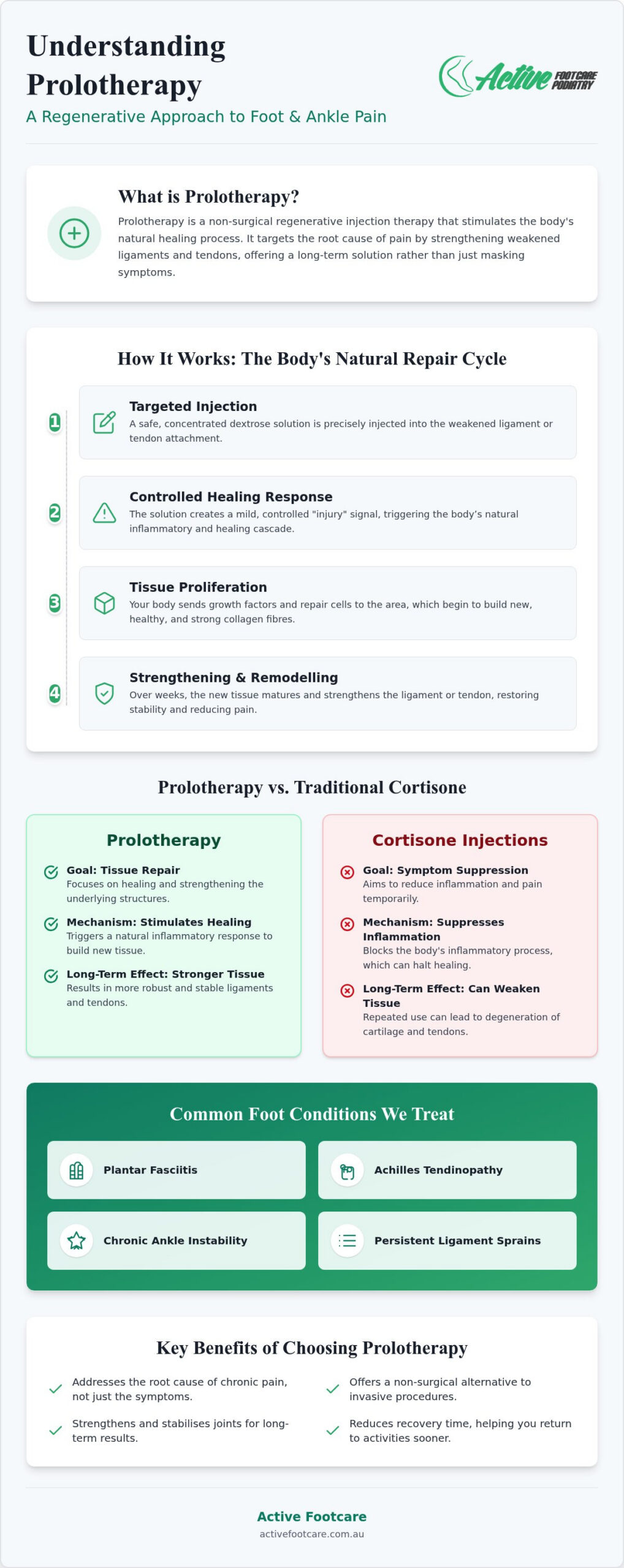
Natural healing is usually a predictable three-stage process: inflammation, proliferation, and remodelling. When you first hurt your foot, your immune system rushes to the scene to clear debris and lay down new collagen fibres. However, in chronic cases, this process can stall. The initial inflammation fades, but the tissue remains weak, thin, or “lax.” This is where the concept of controlled healing becomes vital. By reintroducing a small, safe level of inflammation through an injection, we alert your immune system to a neglected repair job. It acts like a restart button for a stalled engine, providing the necessary spark that allows the body to finish the repair work it may have abandoned months or even years ago.
Why Podiatrists Use Prolotherapy
The human foot is a mechanical marvel containing 26 bones and a complex web of supporting ligaments. When these structures become overstretched or chronically inflamed, they no longer provide the stability needed for daily walks or sport. Podiatrists utilise this method because it addresses the structural integrity of the foot directly. It is particularly effective for those who find that “quick fixes” like painkillers or anti-inflammatory medications only offer a fleeting reprieve.
Unlike steroid shots, which focus on suppressing inflammation and can sometimes lead to tissue weakening if used repeatedly, prolotherapy seeks to build tissue up. We often integrate these injections with custom orthotics to manage your foot’s alignment while the new tissue matures. This dual approach ensures that while the injections trigger the repair, the orthotics provide the structural support required to prevent the injury from recurring. It is a proactive, long-term strategy for anyone looking to return to their favourite activities without pharmaceutical dependence.
The Science of Healing: How Injections Trigger Tissue Repair
The effectiveness of prolotherapy for foot pain lies in its ability to harness your own biological resources. Unlike traditional treatments that focus on suppressing symptoms, this regenerative approach uses a concentrated dextrose solution to create a local osmotic gradient. When we inject this solution into a weakened ligament or tendon, it causes a minor, temporary dehydration of the local cells. Your immune system interprets this change as a signal of new tissue distress, which attracts growth factors and repair cells to a site that may have been previously ignored by the body’s natural maintenance systems.
Clinical evidence reinforces the value of this targeted response. A systematic review on prolotherapy for lower limb pain demonstrates that these injections are particularly effective for chronic conditions where the initial healing process has stalled. By restarting the repair cycle, we can address the underlying structural laxity that often causes persistent discomfort during daily walks or sport. This process is not an overnight fix but a methodical restoration of the foot’s supporting architecture.
The Inflammation Phase: The Necessary First Step
The first 48 to 72 hours following an injection are defined by the inflammation phase. While many of us are conditioned to view swelling as a negative outcome, in this context, it is a vital sign that the treatment is working. This mild, temporary swelling acts as a biological beacon, guiding the immune system to identify the “irritated” site as an area needing urgent attention. This targeted inflammatory trigger serves as the essential catalyst for collagen synthesis and the recruitment of specialised repair cells.
Building New Strength: Proliferation and Remodelling
Once the initial inflammation settles, the body enters the proliferation phase, which typically lasts several weeks. During this period, specialised cells called fibroblasts migrate to the treated area to lay down new, high-quality collagen fibres. These fibres are the essential building blocks of healthy connective tissue, providing the foundation for a stronger and more stable foot structure. This isn’t just about temporary comfort; it’s about physically reinforcing the tissues that support your weight every day.
The final stage is the remodelling phase, where the new tissue matures and becomes more resilient under the natural pressure of walking. As you gradually return to movement, the collagen fibres align themselves to better handle mechanical stress. For patients suffering from chronic ankle instability, this results in ligaments that are tighter and more dependable. If you’re ready to move beyond temporary relief and focus on structural restoration, you can discuss a personalised plan for prolotherapy injections with our clinical team.
Prolotherapy vs. Traditional Treatments: Making an Informed Choice
Choosing the right clinical path for chronic discomfort often involves weighing the benefits of immediate relief against the necessity of long-term repair. While many patients are familiar with cortisone injections, it’s vital to understand how they differ from prolotherapy for foot pain. Cortisone is a potent anti-inflammatory designed to “mask” or suppress the body’s immune response. While this can provide rapid comfort, it doesn’t address the underlying structural weakness. In contrast, prolotherapy is a “building” treatment that uses the body’s natural inflammatory cycle to reinforce damaged tissues.
Research from the U.S. Department of Veterans Affairs in their review of prolotherapy for musculoskeletal pain highlights its effectiveness for conditions like plantar fasciitis. This evidence suggests that for many, the regenerative approach offers a more sustainable outcome than simply dampening the pain signal. When the goal is returning to bushwalking or daily activity without a recurring injury, focusing on the integrity of the tissue is often the more reliable strategy.
Why Cortisone Isn’t Always the Answer
Steroid injections can be highly effective for acute tendinitis, which involves active, short-term inflammation. However, most long-standing foot pain is actually tendinosis, a state of tissue degeneration where no active inflammation is present. Using cortisone in these cases can be counterproductive. Repeated steroid use has been linked to an increased risk of tendon rupture and can inhibit the natural healing process by slowing down collagen production. We prefer to focus on restoration rather than suppression, especially when dealing with the heavy mechanical loads placed on the feet during sport or work.
Prolotherapy as a Conservative Alternative to Surgery
For those facing the prospect of invasive procedures, regenerative injections offer a compelling alternative. Surgery often involves significant risks associated with anaesthesia and hospital stays, not to mention the substantial cost of surgical theatre fees. Prolotherapy for foot pain is performed in a clinical setting, allowing you to maintain your mobility throughout the treatment period. Unlike post-surgical protocols that may require weeks in a cast or moon boot, most patients can continue their daily activities with only minor adjustments while the tissue matures.
In some instances, we may recommend shockwave therapy as a complementary treatment. While prolotherapy works from the “inside out” via injection, shockwave therapy uses acoustic pulses to stimulate healing from the “outside in.” Combining these modern modalities allows us to create a comprehensive, non-surgical plan tailored to your specific recovery goals, ensuring you aren’t just managing pain but actively resolving it.
Common Foot Conditions Treated with Prolotherapy
The human foot is a complex mechanical structure, and when one component fails, the entire kinetic chain is affected. While broad medical resources often focus on spinal applications, prolotherapy for foot pain is exceptionally effective for localised connective tissue issues. It provides a solution for those who have exhausted traditional options for heel or ankle discomfort by focusing on the specific ligaments and tendons that provide your stability.
Solving Stubborn Heel Pain
Plantar Fasciitis is perhaps the most common condition we address in our Western Sydney clinics. This “heel inside pain” often becomes chronic because the fascia is under constant tension every time you take a step. Prolotherapy addresses the micro-tears found in chronic heel pain by stimulating the deposition of new, resilient collagen at the site of degeneration. By targeting the attachment point on the heel bone, we help the body finally close these microscopic gaps. To ensure the pain doesn’t return, we often pair this with professional gait analysis to identify the mechanical stresses that caused the injury initially.
- Achilles Tendinopathy: As the largest tendon in the body, the Achilles endures immense force. When it becomes thickened and painful, regenerative injections help restore its structural integrity and tensile strength.
- Morton’s Neuroma: We use prolotherapy to stabilise the metatarsal ligaments. By reducing the “slack” in these tissues, we prevent the bones from pinching the nerve, providing relief without surgical excision.
Treating Ligament Laxity and Joint Instability
Many of our patients suffer from “weak ankles” following years of sports or poorly rehabilitated sprains. When ligaments remain loose, the joint becomes unstable, leading to a cycle of repeated rolls and persistent swelling. Prolotherapy for foot pain works by tightening these overstretched ligaments, restoring the “snug” fit of the joint. This stabilisation is crucial because an unstable joint is a primary risk factor for the secondary development of arthritis in the midfoot and ankle.
Whether you are a weekend walker exploring local bush trails or a competitive athlete in Liverpool, addressing joint laxity early can preserve your mobility for years to come. If you are struggling with a persistent injury that won’t settle, you can book a consultation for prolotherapy injections to see if this regenerative approach is right for you. By treating the cause rather than just the symptom, we help you build a stronger foundation for every step you take.
Your Prolotherapy Journey at Active Footcare
Your journey toward physical ease begins with a clear understanding of your unique foot mechanics. At our clinics in Liverpool and Bankstown, we provide a thorough biomechanical assessment before starting prolotherapy for foot pain. This initial consultation allows us to map out the specific ligaments or tendons that require reinforcement. We believe that an informed patient is a confident patient, so we take the time to explain our findings and how regenerative injections will fit into your broader recovery plan.
The injection process itself is efficient and designed with your comfort in mind. Most sessions take only a few minutes, and we often utilise a local anaesthetic to ensure the procedure is as smooth as possible. For patients with limited mobility, including NDIS participants and those in aged care, we offer mobile podiatry home visits across Western Sydney. This service ensures you can receive high-quality regenerative care in the comfort and safety of your own home, removing the stress of travel when you are already in discomfort.
The Active Footcare Clinical Approach
Under the clinical leadership of Dr. Maher Said, our team focuses on a personalised model of care. We understand that every patient heals at a different rate, so we tailor the frequency of your injections to your specific needs. This isn’t a “set and forget” treatment; it’s a partnership where we monitor your progress and adjust our technique based on your body’s response. Our goal is to provide a supportive environment where you feel heard and understood at every stage of your treatment in Western Sydney.
Aftercare and Long-Term Success
Immediately following your treatment, you might experience a mild “healing ache” or slight swelling. This is a natural part of the inflammatory trigger we use to restart your body’s repair mechanisms. To achieve the best possible results for prolotherapy for foot pain, we typically recommend a series of 3 to 6 treatments spaced several weeks apart. This timeframe allows the new collagen fibres to mature and gain the tensile strength needed to support your weight effectively.
Success isn’t just about the injections; it’s about how we integrate them into your lifestyle. We provide a customised mobility plan that includes specific rehabilitation exercises to support the new, stronger tissue. As your foot stability improves, we guide you through a gradual return to full activity, whether that means a morning walk through the local park or a return to competitive sport. By combining clinical precision with proactive aftercare, we help you move away from temporary fixes and toward a future of lasting physical comfort.
Step Toward Lasting Mobility and Relief
Choosing to address chronic discomfort through regenerative healing is a proactive shift from simply managing symptoms to actively restoring your foundation. Prolotherapy for foot pain offers a reliable path for those who’ve found little success with temporary fixes or wish to avoid the risks of invasive surgery. By triggering your body’s natural repair mechanisms, you aren’t just masking an injury; you’re building the structural integrity needed for every bushwalk and weekend match ahead.
Led by Principal Podiatrist Dr. Maher Said, our team at Active Footcare is dedicated to providing modern regenerative techniques that prioritise your long-term well-being. We understand that getting to a clinic isn’t always easy, which is why we offer a specialised mobile service for NDIS and aged care patients across Bankstown and Liverpool. Whether we see you in our clinical rooms or at your doorstep, our focus remains on delivering personalised care that understands your unique journey.
Don’t let persistent pain dictate your lifestyle any longer. Book your prolotherapy consultation with Active Footcare today and take the first step toward a more stable, pain-free future. We’re here to help you return to the activities you love with confidence.
Frequently Asked Questions
Is prolotherapy for foot pain painful during the injection?
Discomfort is typically minimal and brief. We often use a local anaesthetic to ensure the injection site is numb before we begin the procedure. You might feel a sensation of pressure or a temporary “fullness” in the joint or tendon being treated. Most patients find the process very manageable and are able to walk out of the clinic immediately after the session is complete.
How many prolotherapy sessions will I need for my heel pain?
Most patients require between 3 and 6 sessions to achieve optimal results for chronic heel pain. These appointments are usually spaced four to six weeks apart to allow your body enough time to produce and remodel new collagen fibres. While some individuals notice an improvement after just one or two treatments, completing the full recommended series is essential for achieving long-term structural stability and lasting relief.
Can I drive home after a prolotherapy session in Liverpool?
Yes, you can usually drive yourself home after a session in Liverpool or Bankstown. Since we don’t use general anaesthesia or sedation, your alertness won’t be affected. Your foot might feel slightly stiff or heavy due to the local anaesthetic and the volume of the dextrose solution, but this rarely interferes with operating a vehicle. If you’re feeling particularly anxious, bringing a friend along for support is always welcome.
Is prolotherapy covered by Medicare or private health insurance in Australia?
Prolotherapy for foot pain is generally not covered by Medicare or private health insurance in Australia. Most insurers currently view regenerative injection therapies as elective or investigational, which means there is typically an out-of-pocket cost for the procedure. We encourage you to check with your specific health fund for any recent policy updates. Despite the lack of rebates, many patients find it a cost-effective alternative to long-term medication or surgery.
What are the common side effects of prolotherapy for the foot?
The most common side effects are temporary swelling, stiffness, and a localised ache at the injection site. These symptoms are actually a positive sign that your immune system has been successfully activated to begin the repair process. This “healing ache” typically peaks within 48 hours and then gradually subsides. We provide clear instructions on managing this initial discomfort without using anti-inflammatory medications that might hinder the regenerative response.
How soon will I see results from my prolotherapy treatment?
Improvement is typically gradual rather than immediate. You might notice a subtle reduction in pain or increased stability after your second or third session as new tissue begins to form. Because prolotherapy for foot pain relies on your body’s natural growth cycle, the full benefits often emerge several weeks after the final injection. This steady progression ensures that the healing is structural and sustainable rather than just a temporary mask.
Is prolotherapy safe for diabetic patients or those in aged care?
Prolotherapy is safe for many diabetic and aged care patients, provided their circulation and blood sugar levels are well-managed. We conduct a thorough vascular and neurological assessment during your initial consultation to ensure you’re a suitable candidate for regenerative care. Patients managing diabetes are encouraged to also schedule a diabetic foot assessment Campbelltown to protect their feet between treatment sessions and follow a structured routine with our diabetic foot care Moorebank checklist. Our mobile podiatry service is particularly helpful for Western Sydney residents who find it difficult to travel, allowing us to deliver these specialised treatments directly to your home or facility.
Can I have prolotherapy if I am already wearing custom orthotics?
You can certainly continue wearing your custom orthotics during and after your treatment programme. In fact, we often recommend combining the two to achieve the best possible outcome. While the injections work to repair and tighten the internal ligaments, your orthotics provide the external mechanical support needed to reduce strain on the healing tissues. This multi-disciplinary approach ensures your foot remains stable while the new collagen fibres mature and strengthen.