


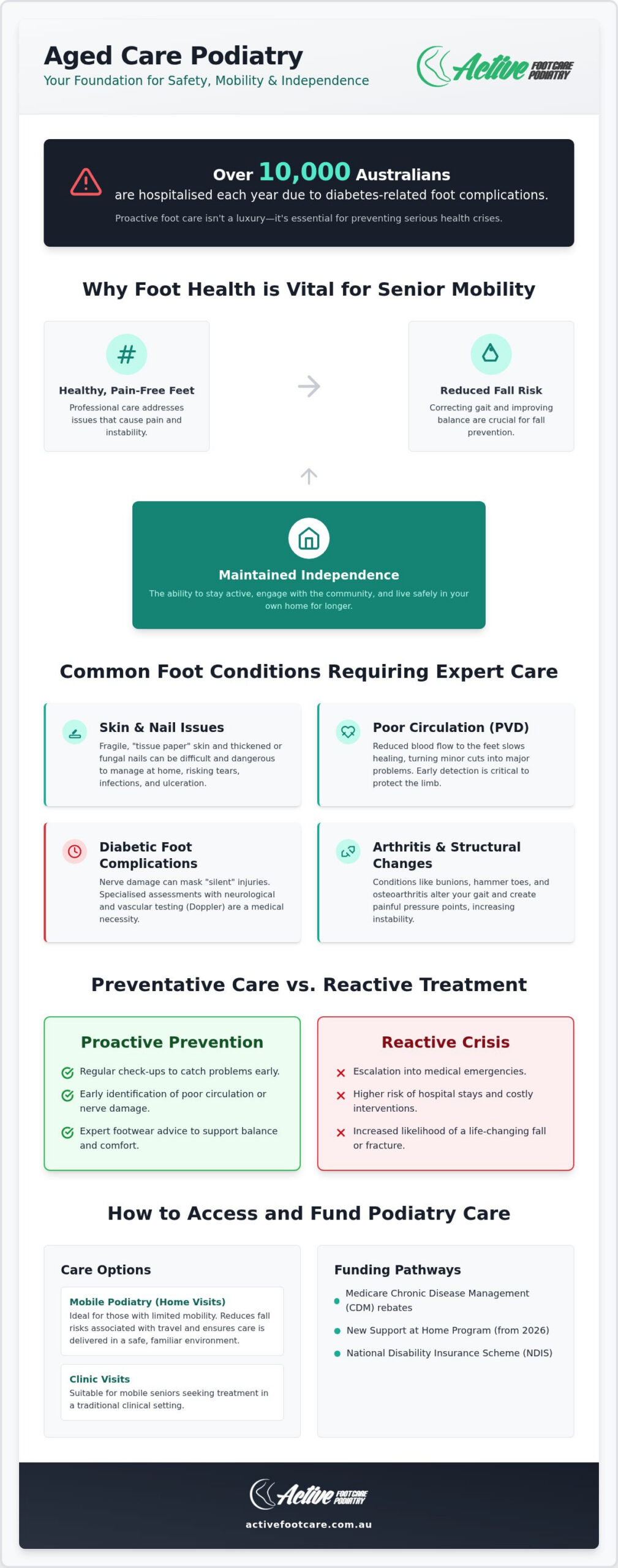
Did you know that over 10,000 Australians are hospitalised every year due to diabetes-related foot complications? It’s a sobering figure that highlights why foot health is far more than just a matter of comfort as we age; it’s a critical component of your overall safety and independence. For many Sydney seniors and their families, the fear of a sudden fall or the daily struggle with thick, painful nails can make the simplest walk feel daunting. You deserve to move without pain, yet navigating the healthcare system often feels just as complex as managing the conditions themselves.
This is where specialised aged care podiatry serves as a vital partner in your wellbeing. We’ll show you how proactive clinical care prevents falls, manages chronic conditions like arthritis, and ensures you remain mobile in the comfort of your own home. This guide provides a clear roadmap through the 2026 funding landscape, including the Support at Home program and NDIS pathways. You’ll learn how modern, compassionate footcare can help you maintain your freedom and keep you moving safely through your local community for years to come.
Key Takeaways
- Understand how maintaining foot health prevents the “mobility gap” and keeps you active and independent in your own home for longer.
- Learn how specialised aged care podiatry addresses complex issues like fungal nails and diabetic foot monitoring to prevent serious health complications.
- Discover the convenience of mobile podiatry home visits across Sydney, designed to reduce fall risks for those with limited mobility.
- Navigate the 2026 funding changes with ease, from Medicare Chronic Disease Management rebates to the new Support at Home program requirements.
- See how a compassionate, expert approach to geriatric care can transform your daily comfort and provide long-term physical stability.
Why Aged Care Podiatry is Vital for Senior Mobility in 2026
As we age, our feet undergo significant physiological shifts that require more than just basic grooming. Podiatry is a medical field dedicated to the health of the lower limbs, but aged care podiatry specifically addresses the complex needs of seniors whose skin, circulation, and bone structure have changed over time. It’s a specialised branch of healthcare that treats the feet as the foundation of your entire physical wellbeing.
There is a direct ‘Mobility Connection’ that dictates how well we age. When every step causes a sharp twinge or a dull ache, the natural response is to move less. This sedentary shift doesn’t just affect the feet; it leads to muscle wastage, reduced cardiovascular health, and a loss of the independence that defines our golden years. Being able to walk to the letterbox or stroll through a local Sydney park without pain is a cornerstone of psychological wellbeing. It’s about more than just walking; it’s about the confidence to engage with the world.
The Link Between Foot Pain and Fall Risks
Minor issues like corns, calluses, or neglected, thickened nails can subtly alter how you place your foot on the ground. This change shifts your centre of gravity, making you less stable. Your feet provide vital sensory feedback to your brain to help you stay upright. Proprioception is the body’s ability to sense its position and movement in space, a faculty that naturally declines in seniors and requires professional management to maintain. By addressing these issues, aged care podiatry helps restore a natural gait and reduces the risk of a life-changing tumble. Since balance also relies heavily on clear vision, you might also choose to visit Bright Sight Eye Specialists for a specialist ophthalmic assessment to further safeguard your independence.
Preventative Care vs. Reactive Treatment
Regular consultations allow us to catch small problems before they escalate into medical emergencies. The cost of a proactive check-up is a fraction of the physical and financial toll of a hip fracture or a hospital stay. At Active Footcare, our ‘Foot Doctor Sydney’ approach prioritises preventative maintenance. We focus on:
- Identifying early signs of poor circulation or nerve damage.
- Treating fungal infections before they compromise skin integrity.
- Providing expert footwear advice to ensure every shoe you wear supports your balance.
Choosing preventative care means you aren’t just waiting for pain to occur; you’re actively protecting your future mobility.
To complement your podiatric care, addressing the underlying causes of physical injury through exercise physiology and Clinical Reformer Pilates at movemed.au can further enhance your mobility and long-term strength.
Common Geriatric Foot Conditions and Their Management
As the years pass, our feet undergo a natural transformation. Skin becomes thinner and more fragile, often described as “tissue paper” skin, which is more susceptible to tears and infections. Nails frequently thicken or develop fungal infections, making them nearly impossible to manage with standard home clippers. While these changes might seem like minor inconveniences, in the context of aged care podiatry, they are clinical indicators that require professional attention to prevent secondary complications like cellulitis or chronic ulceration.
Circulatory health also takes centre stage during senior foot assessments. We look for signs of Peripheral Vascular Disease (PVD), where reduced blood flow to the extremities slows down the body’s ability to heal even the smallest scratch. Identifying these issues early allows us to implement management strategies that protect the limb. Government resources, such as the ACT Government’s Community Care Podiatry guidelines, emphasise that regular clinical monitoring is the gold standard for maintaining senior health and preventing avoidable hospitalisations.
Specialised Diabetic Foot Assessments
For seniors living with diabetes, professional foot care is a medical necessity rather than a luxury. Australia sees over 10,000 hospital admissions for diabetes-related foot ulcers annually, many of which begin as “silent” injuries that go unnoticed due to nerve damage. Our Diabetes Foot Assessment involves precise neurological and vascular testing, including Doppler ultrasound, to measure blood flow and sensation. This proactive approach catches potential issues before they escalate into serious health crises.
Arthritis and Structural Changes
Biomechanical shifts, such as bunions, hammer toes, and osteoarthritis, can significantly alter how you move. These structural changes often cause joints to rub against shoes, leading to painful pressure points. We use detailed gait analysis cost-effective assessments to understand how your body compensates for this pain. Often, the solution involves custom orthotics designed to redistribute weight and cushion sensitive joints. We also address a common pitfall: footwear. While soft slippers feel comfortable, they lack the stability needed to support arthritic feet. Transitioning to supportive, professionally fitted shoes is one of the simplest ways to improve daily comfort. If you find it difficult to travel for these assessments, a Podiatrist Home Visit can bring this specialised care directly to your living room.
Clinic Visits vs. Mobile Podiatry: Which is Best for You?
Choosing between a clinic visit and a home consultation is a pivotal step in your aged care podiatry journey. While our clinics offer a controlled environment with access to our full suite of technology, the home visit prioritises absolute accessibility and safety for those who find travel difficult. For many families, aged care podiatry is most effective when it’s delivered where the patient feels most at ease. We believe that healthcare should adapt to your life, not the other way around.
One of the most significant advantages of a Podiatrist Home Visit Sydney is the “familiar environment” benefit. When we visit you at home, we can assess your footwear in situ, check for common trip hazards like loose rugs or poor lighting, and observe how you naturally navigate your living space. This context is often lost in a clinical setting but is vital for a truly personalised fall prevention plan. Safety is our priority, and by coming to you, we eliminate the physical stress and fall risks associated with navigating uneven footpaths, steep gutters, or busy car parks.
The Benefits of Mobile Podiatry in Western Sydney
We’re dedicated to bringing clinical excellence to doorsteps across Western Sydney, specifically serving communities in Liverpool, Bankstown, and Campbelltown. We recognise that the physical and emotional toll of travel can often become a barrier to receiving the care you need. Our podiatrist Bankstown mobile service maintains the same rigorous sterilisation standards found in our clinics; we use vacuum-sealed, autoclaved instruments for every single patient to ensure total safety. This service is particularly supportive for individuals living with dementia, as a familiar setting reduces anxiety and confusion. It’s also the ideal choice for those in post-surgery recovery or anyone with severe mobility restrictions that make leaving the house a challenge.
When to Opt for a Clinic Appointment
While home visits offer immense convenience, certain advanced treatments require the specialised equipment housed within our clinical facilities. If your treatment plan involves Anti-fungal Laser Treatment for stubborn nail infections or Shockwave Therapy for chronic musculoskeletal pain, a clinic visit will be necessary. Our clinics also feature dedicated spaces for comprehensive gait analysis cost assessments and biomechanical evaluations that require more room than a typical home environment provides. If you’re mobile enough to travel and require these high-tech interventions, you can find more information on our locations through our Foot Doctor Sydney guide. Regardless of the setting, our commitment to compassionate, expert care remains the same.
How to Access Funding for Aged Care Podiatry in Australia
Understanding the financial side of aged care podiatry shouldn’t be a source of stress for you or your family. Australia’s healthcare system provides several structured pathways to ensure that regular, professional foot care remains accessible. Whether you are living independently or within an aged care facility, these funding options are designed to prioritise your mobility and prevent the serious complications we’ve discussed in previous sections.
If you live with a chronic condition like diabetes or arthritis, your General Practitioner can facilitate a Chronic Disease Management (CDM) plan. As of July 2026, the Medicare rebate for these services is $63.40 per consultation, allowing for up to five rebated visits per calendar year. This plan is a cornerstone of preventative health, ensuring that your feet are assessed by a professional at regular intervals. For our veteran community, we provide care under Department of Veterans’ Affairs (DVA) arrangements. Eligible Gold or White Card holders can access clinical podiatry services with no out-of-pocket expenses, provided there is a clinical need and a valid referral.
The landscape of aged care changed significantly on November 1, 2025, with the introduction of the Support at Home program. This program replaced the old Home Care Packages (HCP) system to streamline how clinical care is delivered. Under these current 2026 regulations, clinical podiatry is often fully funded as a core service. If you are still transitioning from the Commonwealth Home Support Programme (CHSP), which is slated to move to the new model by July 2027, you can still access subsidised care through a My Aged Care referral. We work closely with package managers across Sydney to ensure your foot care is seamlessly integrated into your broader care plan.
Navigating the NDIS for Seniors with Disabilities
For NDIS participants, podiatry is typically funded under the ‘Improved Daily Living’ or ‘Assistive Technology’ categories. This funding can be used for regular clinical treatments or for the design and manufacture of custom orthotics. Choosing an NDIS podiatry provider who understands the specific reporting and goal-setting requirements of the scheme is essential. At Active Footcare, we’re a preferred choice for participants in Sydney because we manage the administrative details and deliver mobile therapy directly to your home, ensuring your budget is used effectively to improve your daily independence.
Private Health Insurance and Self-Funding
If you prefer to self-fund or use private health insurance, you can often claim a portion of the cost back through your ‘Extras’ cover. Most private health funds provide on-the-spot claims via HICAPS, meaning you only pay the remaining gap at the time of your appointment. We believe in complete price transparency, so you’ll always have a clear understanding of any costs before your treatment begins. If you’re ready to arrange a consultation or need help understanding which funding pathway fits your situation, speak with our compassionate team today to organise your first visit.
Active Footcare: Compassionate Aged Care Specialists in Sydney
At the heart of Active Footcare is a simple, patient-first philosophy led by Dr. Maher Said. We believe that every senior deserves to be treated with the same dignity and clinical excellence as any other patient, regardless of their mobility limits. Our team functions as a “Compassionate Expert,” combining years of medical training with the old-fashioned values of friendly, attentive service. We don’t just treat symptoms; we partner with you and your family to understand your lifestyle goals and keep you moving with confidence.
Quality aged care podiatry shouldn’t be restricted by location. We’ve established a strong local footprint across Western Sydney, providing dedicated mobile care to residents in Liverpool, Bankstown, Moorebank, and Campbelltown. For those in the Bankstown area seeking specialist clinical and mobile foot care, our podiatrist Bankstown service brings expert diabetic foot assessments, nail care, and orthotics consultations directly to your door. To ensure we deliver clinic-grade results in a home setting, our practitioners travel with a full suite of specialised equipment. This includes high-torque portable drills for managing thickened nails and vacuum-sealed, sterilised instrument kits that meet the highest Australian healthcare standards. You receive the same level of professional care in your favourite armchair as you would in our modern clinical rooms.
Tailor-Made Solutions for Every Senior
Our approach to aged care podiatry is never “one size fits all.” We provide a broad spectrum of care, ranging from routine nail maintenance to the management of complex diabetic wounds. We recognise that effective senior care requires a team effort, which is why we actively collaborate with your GP, your family carers, and your aged care facility managers. For those living in residential aged care or respite centres, we offer streamlined facility visits. This allows us to provide consistent, high-quality care to multiple residents in one morning, ensuring no one’s foot health is overlooked.
Start Your Journey to Better Mobility Today
Beginning your care with us is a straightforward and stress-free process. Whether you prefer a clinic appointment or a home visit, our booking team is ready to help you find a suitable time. To make the most of your first consultation, it’s helpful to have a few things ready. We’ll need to see a current list of your medications and a few pairs of the shoes you wear most often, as this helps us understand your gait and skin health. We’re here to guide you through every step of the process, from the initial assessment to the long-term management of your mobility. If you’re ready to take the first step toward pain-free movement, contact Active Footcare to organise your aged care podiatry visit today.
Take the Next Step Toward Lasting Independence
Maintaining your mobility is one of the most powerful ways to protect your independence as the years progress. We’ve explored how professional aged care podiatry serves as a vital safeguard against falls while ensuring chronic conditions like diabetes are managed with clinical precision. By utilising the modern funding pathways available in 2026, you can prioritise your foot health and ensure that simple daily activities remain a source of joy rather than discomfort. The right care doesn’t just treat a condition; it restores your confidence to engage with the world around you.
At Active Footcare, it’s our mission to provide the stability you need to move through life with confidence. As a registered NDIS and DVA provider, we bring expert diabetic care and specialised mobile equipment directly to your home across Sydney. You don’t have to navigate these physical changes alone; our compassionate team is here to guide you toward a more comfortable and active future. Book a Mobile Aged Care Podiatry Consultation Today and rediscover the freedom of walking without pain. We look forward to helping you stay active in the community you love.
Common Questions About Aged Care Podiatry
Is podiatry covered by Medicare for seniors in Australia?
Yes, Medicare provides rebates for seniors through a Chronic Disease Management (CDM) plan. As of July 1, 2026, the rebate for MBS Item 10962 is $63.40, covering up to five visits per year for those with complex, chronic care needs. Your GP must facilitate this plan to ensure your foot health is integrated into your overall medical management and long-term wellbeing.
How often should an elderly person see a podiatrist?
Most seniors benefit from a consultation every 6 to 10 weeks, though this varies based on individual health requirements. If you live with high-risk conditions like diabetes or peripheral vascular disease, more frequent monitoring is essential to prevent complications. Regular aged care podiatry visits ensure that skin integrity and nail health are maintained before they become painful or restrictive to your daily movement.
Can a podiatrist come to my home or aged care facility in Sydney?
Yes, we provide specialised mobile consultations across Sydney, including Liverpool, Bankstown, and Campbelltown. We bring all the necessary clinical equipment to your home or aged care facility to ensure you receive professional care in a safe, comfortable setting. This service is particularly beneficial for those who find it physically challenging or stressful to travel to a traditional clinic for their appointments.
What is the difference between a pedicurist and an aged care podiatrist?
A pedicurist focuses on the cosmetic appearance of the feet, whereas an aged care podiatrist is a university-qualified medical professional. Podiatrists diagnose and treat clinical pathologies, manage human mechanics, and perform complex procedures like diabetic wound care or gait analysis. While a pedicure is about grooming, podiatry is a healthcare service dedicated to your long-term mobility, safety, and physical ease.
Does My Aged Care pay for podiatry services?
Yes, clinical podiatry services are fully government-funded under the Support at Home program that commenced in late 2025. This program replaced the old Home Care Packages to make essential clinical care more accessible for seniors. Under these current 2026 guidelines, eligible individuals can access podiatry with no out-of-pocket co-contribution required for their clinical needs, provided the service is included in their care plan.
What should I look for in a podiatrist for a person with dementia?
Look for a practitioner who demonstrates patience, uses clear communication, and offers the option of home visits. A familiar environment reduces the anxiety and confusion often associated with medical appointments for those living with dementia. It’s also important that the podiatrist is experienced in gentle, non-invasive techniques and maintains the highest standards of instrument sterilisation to ensure a safe and calm experience.
Can podiatry help prevent my parent from falling?
Yes, podiatry is a cornerstone of fall prevention for seniors. By treating painful corns, calluses, and thickened nails, we help restore a natural gait and improve your parent’s centre of gravity. We also provide expert footwear advice and balance assessments to ensure they’re moving as safely as possible. Addressing these issues directly improves proprioception and gives them more confidence in every step they take.
Do I need a referral from my GP to see a podiatrist?
You don’t need a referral to see a podiatrist as a private patient, but one is required to access government rebates. To claim the Medicare CDM rebate or access care through the DVA, your GP must provide a formal referral. We’re always happy to work alongside your doctor to ensure your treatment plan is comprehensive, well-coordinated, and focused on your specific health goals.