


What if that sharp, stabbing sensation during your first steps of the morning wasn’t just a daily burden you had to endure? For many Australians, the persistent ache in the heel makes even a simple walk to the kitchen feel like a challenge, often leading to a frustrating cycle of missed exercise and limited mobility. If you’ve felt confused about whether to see a doctor, a physio, or a podiatrist, you aren’t alone; approximately 1 in 10 adults will experience this condition, yet many struggle to find a lasting solution. Understanding the most effective therapy for plantar fascia is the first step toward reclaiming your active lifestyle.
We agree that managing foot health can feel overwhelming, especially when you just want to get back on your feet without the fear of pain. This guide is designed to provide you with a clear, clinical roadmap to permanent recovery using the latest 2026 standards of care. We will explore how a combination of advanced clinical interventions, such as shockwave therapy, and tailored at-home strategies can help you achieve pain-free walking. You will discover why 90% of patients see significant improvement within two months of starting treatment and how a personalised plan can help you avoid surgery altogether.
Key Takeaways
- Understand the critical difference between temporary inflammation and chronic tissue degeneration to ensure you seek the right care at the right time.
- Master adapted home management strategies, including specific stretching techniques designed to support the Achilles tendon and plantar ligament.
- Learn how gait analysis identifies biomechanical strain, allowing for a personalised therapy for plantar fascia that addresses the root cause of your pain.
- Discover how advanced clinical treatments like Shockwave Therapy use acoustic waves to restart the healing process in stubborn scar tissue.
- Follow a structured recovery roadmap that prioritises an accurate diagnosis to ensure your treatment plan is both safe and effective.
What Is Plantar Fascia Therapy and Why Is Early Intervention Crucial?
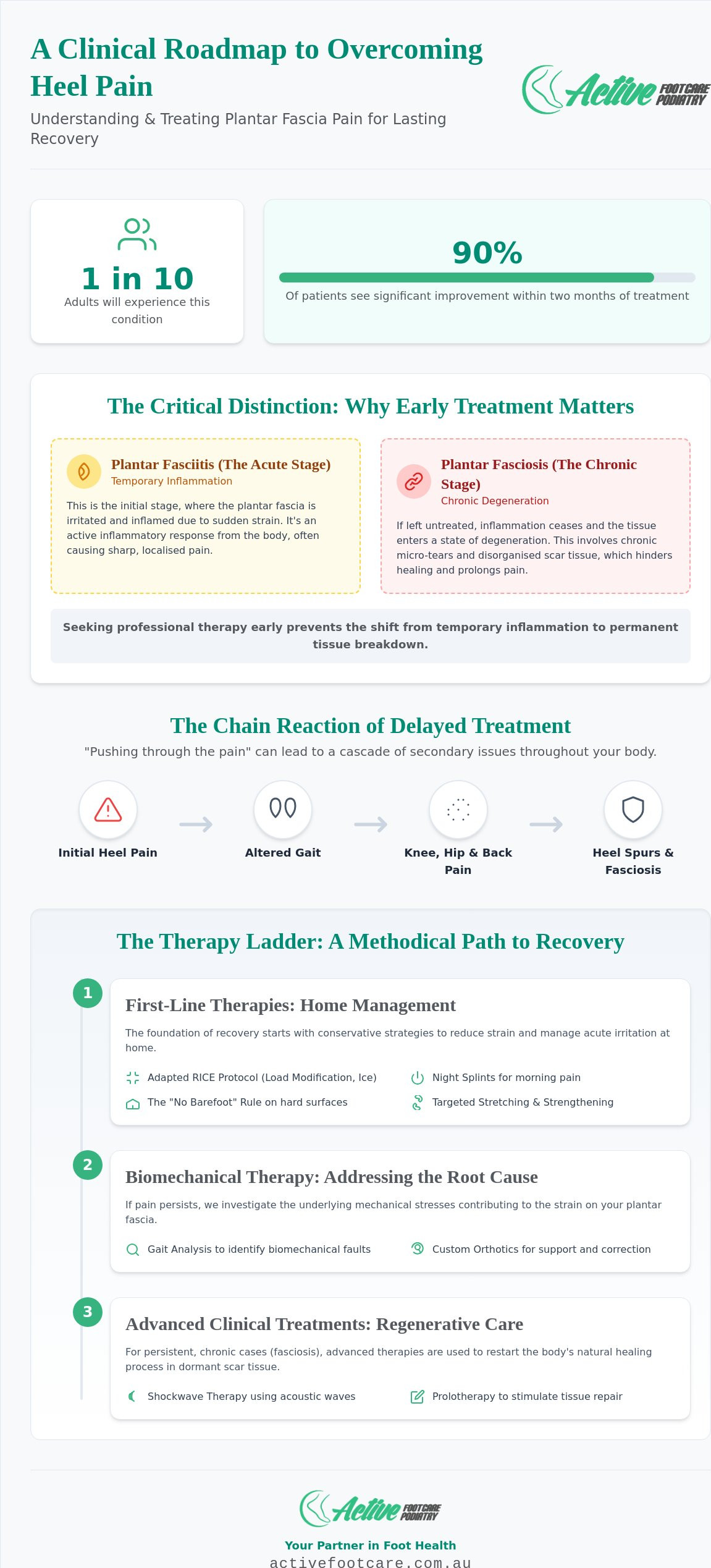
The plantar fascia is a robust band of connective tissue that runs along the sole of your foot, acting as a vital support for your arch and a primary shock absorber during every step you take. When this tissue becomes strained, it results in a condition widely known as Plantar fasciitis. While the initial discomfort often stems from acute inflammation, leaving the condition unaddressed causes a shift from a temporary irritation to a state of chronic degenerative micro-tears. Seeking professional therapy for plantar fascia early on is essential to prevent this structural breakdown and ensure a smoother recovery.
Effective therapy for plantar fascia typically follows what we call a “Therapy Ladder” approach. This methodical progression ensures you receive the right level of care at the right time. The ladder begins with conservative home management, such as load modification and specific icing techniques, before moving to biomechanical corrections like custom orthotics. If the pain persists beyond these initial stages, our clinical team at Active Footcare introduces advanced regenerative treatments, such as Shockwave Therapy, to stimulate the body’s natural healing response in dormant tissue.
Recognising the Signs: Is It Really Plantar Fasciitis?
The most common indicator of this condition is a sharp, stabbing sensation in the heel during your first few steps each morning. You might find that the pain eases slightly as you move around and the tissue warms up, only to return with a vengeance after you’ve been sitting for a while or standing for long periods. It’s important to distinguish this from other issues like fat pad atrophy, where the natural cushioning of the heel thins out, or a stress fracture in the calcaneus. A professional assessment helps us rule out these alternatives and confirm if you are dealing with a genuine fascia tear or a secondary response like a heel spur.
The Risks of Delayed Treatment
When you attempt to “push through” the pain, your body naturally tries to protect the injured area by altering your gait. This compensation often leads to a chain reaction of mechanical stress, causing secondary issues in your knees, hips, and even pelvic misalignment. Over time, the constant tension on the bone can trigger the development of bony protrusions known as heel spurs as the body attempts to stabilise the area. Fasciosis is the chronic stage of untreated fascia pain where the tissue has moved beyond inflammation into a state of structural degeneration. By addressing the problem early, we can stop this cycle before it impacts your broader mobility and quality of life.
Addressing these structural imbalances is often a vital part of a holistic recovery plan; to see how gentle adjustments can help restore your body’s natural alignment, you can discover Livelovelife Chiropractic.
First-Line Therapies: Non-Invasive Home Management Strategies
Taking the first steps toward recovery often begins in your own home. While clinical intervention is frequently necessary for long-term resolution, initial conservative management provides the foundation for healing. Adopting an adapted RICE protocol (Rest, Ice, Compression, and Elevation) specifically for foot health helps settle acute irritation. Rest, in this context, does not mean complete inactivity; it involves modifying your daily load to avoid high-impact movements that strain the arch. Research into the outpatient management of plantar fasciitis suggests that early activity modification is a cornerstone of successful recovery.
One of the most effective home-based habits you can adopt is the “No Barefoot” rule. Many Australian homes feature hard surfaces like tiles or polished timber floors, which provide zero shock absorption. Walking barefoot on these surfaces forces your plantar fascia to flatten completely with every step, aggravating existing micro-tears. Wearing supportive indoor footwear or slippers with a contoured footbed ensures your arch remains supported even when you are just moving around the house. For those experiencing intense morning stiffness, night splints can be a valuable tool. These devices hold the foot in a neutral position overnight, preventing the fascia from shortening and reducing that sharp “first step” pain in the morning.
Effective Stretching and Strengthening Exercises
Targeted movement is essential for restoring flexibility. The “towel scrunch” is an excellent exercise for building intrinsic foot muscle strength. Simply place a towel flat on the floor and use your toes to pull it toward you while keeping your heel grounded. To reduce tension on the heel bone, perform wall-assisted calf stretches twice daily. Stand facing a wall with one foot back and the heel pressed down, feeling a gentle pull through the lower leg. You can also use a trigger point ball to massage the sole of your foot. Roll the ball slowly under your arch for two minutes, but be careful not to apply excessive pressure directly to the painful heel site, as this can increase inflammation.
Lifestyle and Footwear Adjustments
Your shoes are your primary defence against recurring strain. It is vital to identify “dead” shoes that have lost their structural integrity; if the midsole feels soft or the heel counter is flimsy, the shoe is no longer protecting your foot. Transitioning to a professional therapy for plantar fascia becomes necessary if you don’t see improvement within three to four weeks of consistent home care. If these home strategies don’t provide the relief you need, a professional podiatry assessment can help identify the specific biomechanical factors contributing to your pain.
Biomechanical Therapy: The Role of Custom Orthotics and Gait Analysis
While home-based stretches and rest provide temporary relief, addressing the root cause of heel pain often requires a more technical approach to foot function. For many patients in Western Sydney, the underlying issue isn’t just inflammation but a mechanical failure in how the foot handles weight. When your foot mechanics are “off,” every step you take can place excessive tension on the connective tissues. This is where a targeted therapy for plantar fascia becomes essential, moving beyond surface-level comfort to provide structural correction.
Abnormal foot mechanics, particularly over-pronation, are a leading cause of repetitive fascia strain. Over-pronation occurs when the arch collapses excessively inward during walking, which overstretches the plantar ligament at its attachment point on the heel bone. Over time, this repetitive tugging creates the micro-tears that lead to chronic pain. To address this, we use the science of gait analysis to map exactly how your foot strikes the ground. By identifying these specific pressure points and timing imbalances, we can design a treatment plan that realigns your stride and offloads the injured area.
Custom orthotics play a pivotal role in this process by redistributing pressure away from the painful heel site. It’s vital to distinguish between simple cushioning and true structural support. While soft pharmacy insoles might offer immediate “cloud-like” comfort, they often lack the rigidity needed to control bone movement. Advanced non-surgical treatments for heel pain frequently rely on clinical-grade orthotics to hold the foot in a neutral position, allowing the fascia to heal without being constantly re-strained.
Custom Orthotics vs. Pharmacy Inserts
The difference between medical-grade custom orthotics and retail foam inserts lies in both durability and precision. Pharmacy inserts are typically made from mass-produced EVA foam that compresses quickly, losing its effectiveness within weeks. In contrast, custom devices are crafted from high-quality, medical-grade materials tailored to your specific arch height and heel cupping. Because these are built to a “prescription” based on your unique anatomy, they avoid the common pitfall of one-size-fits-all products, which can sometimes worsen pain by placing pressure in the wrong areas.
What to Expect During a Biomechanical Assessment
A thorough biomechanical assessment is the first step in creating your personalised therapy for plantar fascia. During this consultation, we utilise digital pressure mapping and video gait analysis to observe your movement patterns in real-time. We also conduct physical testing of your joint range of motion and muscle strength to identify any tightness in the calves or weakness in the intrinsic foot muscles. Custom orthotics are an investment in long-term alignment. This comprehensive data allows us to provide a device that doesn’t just mask the pain but actively works to prevent its return.
Advanced Clinical Treatments: Shockwave Therapy and Prolotherapy
When conservative measures like stretching and custom orthotics don’t provide the full relief you need, advanced clinical interventions offer a powerful path forward. Extracorporeal Shockwave Therapy (ESWT) and Prolotherapy have emerged as the gold standard for treating persistent heel pain, providing non-surgical alternatives that focus on long-term tissue repair rather than just temporary symptom management. These treatments are particularly effective for those who have struggled with pain for more than six months and are looking for a definitive therapy for plantar fascia. By moving beyond passive rest, we can actively stimulate the body to heal itself.
Shockwave Therapy: Mechanism and Benefits
Shockwave Therapy works by delivering high-energy acoustic waves directly to the site of the injury. These waves create a controlled “micro-trauma” in the dormant scar tissue, which signals the body to re-start the inflammatory and healing processes. This surge in biological activity triggers increased blood flow and collagen production, both of which are necessary to repair the micro-tears in the fascia. Most patients require between 3 to 5 sessions to see significant results, though many report an immediate reduction in pain after the first appointment. While the initial relief is encouraging, the true benefit lies in the long-term structural improvement of the tissue over the following weeks as the fascia regains its natural elasticity and strength.
Prolotherapy and Regenerative Injections
Prolotherapy represents another leap forward in regenerative podiatry. Unlike corticosteroid injections, which focus on masking inflammation and can occasionally weaken the ligament over time, Prolotherapy uses targeted injections to stimulate the body’s natural repair mechanisms. By injecting a mild irritant solution near the damaged fascia, we encourage the growth of new, healthy ligament fibres. This process strengthens the attachment point on the heel bone, making it more resilient to future strain. This therapy is ideal for candidates who want to avoid the risks associated with surgery or repeated steroid use, particularly active individuals who need their connective tissues to remain robust under load.
The choice between these advanced options depends on your specific clinical history and the degree of tissue degeneration. Our team at Active Footcare, led by Dr. Maher Said, utilises specialised equipment to deliver these treatments with precision and care. If you are tired of living with persistent heel pain and want to explore a modern, non-surgical approach, you can book a consultation for Shockwave Therapy today to discuss which clinical therapy for plantar fascia is right for your recovery.
Your Recovery Roadmap: Accessing Podiatry Care in Western Sydney
Navigating the path to recovery requires more than just resting; it demands a structured, clinical approach to ensure the pain doesn’t return. At Active Footcare, we believe in a methodical progression that moves from acute relief to long-term stability. This roadmap ensures that every patient understands the “why” behind their treatment, turning a state of physical concern into informed confidence. Your journey toward pain-free walking begins with a clear, four-step process tailored to your unique biomechanics.
Step 1: Professional Diagnosis. The first priority is a thorough assessment to rule out conditions that mimic heel pain, such as calcaneal stress fractures or nerve entrapment. An accurate diagnosis ensures your therapy for plantar fascia is targeted and effective. Step 2: Immediate Pain Relief. Once the condition is confirmed, we focus on reducing your daily discomfort. This often involves clinical interventions like Shockwave Therapy or professional taping techniques designed to provide immediate support to the arch. Step 3: Long-Term Correction. We address the underlying mechanical issues through custom orthotics and specific footwear advice. This phase is about redistributing pressure to prevent future micro-tears. Step 4: Maintenance and Prevention. The final stage involves a personalised exercise programme. By strengthening the intrinsic muscles of the foot and improving calf flexibility, you can maintain your mobility for years to come.
Local Care in Liverpool, Bankstown, and Moorebank
We are proud to serve the Western Sydney community with accessible, high-quality podiatric care. Our clinics in Bankstown and Liverpool are equipped with specialised technology for advanced procedures, ensuring you receive modern treatments close to home. We understand that visiting a clinic isn’t always possible for everyone. For residents in Moorebank and surrounding suburbs with limited mobility, our podiatrist home visit service brings clinical expertise directly to your door. Active Footcare is also a dedicated provider of NDIS podiatry services, where we work closely with participants to develop therapy plans that support their independence and physical well-being.
Making an Appointment with Active Footcare
Preparing for your first consultation is a simple but important process. We ask that you bring your most-worn pairs of shoes, including your work boots or exercise runners. Dr. Maher Said will examine the wear patterns on your soles, which provides invaluable data about your gait and pressure distribution. During your initial assessment, we will discuss your clinical history, perform a physical examination, and begin mapping out your personalised therapy for plantar fascia. Taking that first step toward professional care is the most important decision you can make for your long-term foot health. Book your heel pain assessment at our Liverpool or Bankstown clinics today and let us help you regain your mobility.
Take the First Step Toward Lasting Relief
Recovering from chronic heel pain is a methodical process that moves from initial symptom management to long-term structural correction. We’ve explored how early intervention and professional gait analysis can stop the progression of tissue damage before it impacts your broader mobility. By integrating advanced clinical options with tailored home strategies, you can access a comprehensive therapy for plantar fascia that focuses on genuine restoration rather than just masking the ache. We are here to help you move with confidence again.
As you regain your mobility, you may find yourself looking forward to more active time outdoors with your pets; to ensure your dog is as ready for the journey as you are, visit Pet ID Tags Australia to explore their range of personalised harnesses.
At Active Footcare, our clinical team is led by Principal Podiatrist Dr. Maher Said, a specialist in non-surgical heel pain resolution. As an NDIS Registered Provider for Western Sydney, we pride ourselves on offering modern treatments like Shockwave Therapy to patients in Liverpool, Bankstown, and Moorebank. Whether you visit us in-clinic or require a mobile home visit, we provide the expert guidance needed to rebuild your foot health. Relieve your heel pain with expert podiatry care-Book an appointment today. You don’t have to accept foot pain as a permanent part of your life; with a clear plan and professional support, pain-free walking is within your reach.
Frequently Asked Questions
How long does therapy for plantar fascia typically take to work?
Most patients experience significant improvement within two months of starting a consistent therapy for plantar fascia. While initial pain relief can occur within the first few weeks, full tissue healing often takes between six to twelve weeks depending on the chronicity of the injury. We focus on a tiered approach to ensure steady progress and prevent a relapse of symptoms during your recovery journey.
Is shockwave therapy painful for treating heel pain?
Shockwave therapy is generally well-tolerated and is often described as a series of fast, rhythmic pulses or a deep tapping sensation. While you may feel some mild discomfort during the session, our practitioners can adjust the intensity of the acoustic waves to suit your comfort levels. Most people find the treatment manageable and are able to walk normally immediately after the procedure without any downtime.
Can I get therapy for plantar fascia through my NDIS plan?
Yes, you can access therapy for plantar fascia through your NDIS plan if podiatry is included in your funding for improved daily living or health and well-being. As an NDIS Registered Provider in Western Sydney, we work with participants to develop tailored plans that improve mobility and reduce pain. We can provide these services both in-clinic and through our mobile home visit program for your convenience.
Will I need to wear orthotics forever once I start therapy?
Not everyone needs to wear orthotics indefinitely, as the requirement depends on your specific foot mechanics and lifestyle. Some patients use them as a temporary support to allow the fascia to heal, while others with permanent biomechanical issues may benefit from long-term use to prevent recurrence. We regularly review your progress to determine if and when you can safely transition back to standard footwear.
What is the difference between a podiatrist and a physio for plantar fascia?
The main difference lies in the specialised focus on foot and ankle mechanics that a podiatrist provides. While physiotherapists are experts in general body movement, podiatrists specialise in lower limb pathologies and can provide specific clinical treatments such as custom orthotics, gait analysis, and shockwave therapy. We focus specifically on the complex structures of the foot to ensure a targeted and effective recovery plan.
Does Medicare cover podiatry therapy for heel pain in Australia?
Medicare provides a rebate of $61.80 for eligible podiatry services when you have a Chronic Disease Management plan from your General Practitioner. To access this, you must have a chronic condition and a valid referral. While this doesn’t cover the full cost of the consultation, it significantly reduces your out-of-pocket expenses for clinical therapy sessions and professional assessments.
Can I continue to exercise while undergoing plantar fascia therapy?
You can often continue to exercise, but we usually recommend modifying your activities to reduce high-impact strain during the healing phase. Replacing running with swimming or cycling allows you to maintain fitness without aggravating the micro-tears in the fascia. As your strength improves, we provide a structured return-to-sport plan that gradually reintroduces impact in a safe and controlled manner.
Are heel spurs and plantar fasciitis the same thing?
Heel spurs and plantar fasciitis are related but are not the same thing. Plantar fasciitis is the inflammation or degeneration of the connective tissue, while a heel spur is a bony protrusion that develops on the heel bone as a secondary response to long-term strain. Many people with heel spurs feel no pain at all, while others with severe fasciitis have no spurs, which is why an accurate diagnosis is vital.