


Did you know that as many as 48% of Australians struggle with foot and leg issues, often finding themselves trapped in a cycle of persistent morning pain? It is incredibly draining when that first step out of bed feels like treading on sharp glass, which is why more patients are seeking shockwave therapy for heel pain to achieve lasting relief. We understand the frustration of feeling sidelined from your morning walk or weekend sport, especially when you have already tried resting and basic stretches without seeing the progress you deserve.
The good news is that you don’t have to rely on invasive injections or surgery to get back on your feet. This guide explores how advanced, non-invasive technology acts as a biological catalyst to restart the healing process in chronic tissues. We will outline the clinical benefits of this modern approach and describe the personalised care you can expect as we work together to restore your physical ease and long-term mobility.
Key Takeaways
- Understand how Extracorporeal Shockwave Therapy (ESWT) has evolved from kidney stone treatment into a sophisticated, non-invasive way to manage persistent heel discomfort.
- Discover the biological mechanism behind shockwave therapy for heel pain, including how it triggers neovascularisation to repair damaged tissues and improve blood flow.
- Compare the long-term benefits of biological repair against temporary solutions like cortisone injections to help you make an informed decision for your recovery.
- Gain a clear picture of what to expect during your treatment, from the initial skin assessment to the unique “thumping” sensation of the specialised applicator.
- Learn how professional podiatric guidance and the convenience of mobile home visits across Western Sydney can streamline your return to daily activities and sport.
What is Shockwave Therapy for Heel Pain?
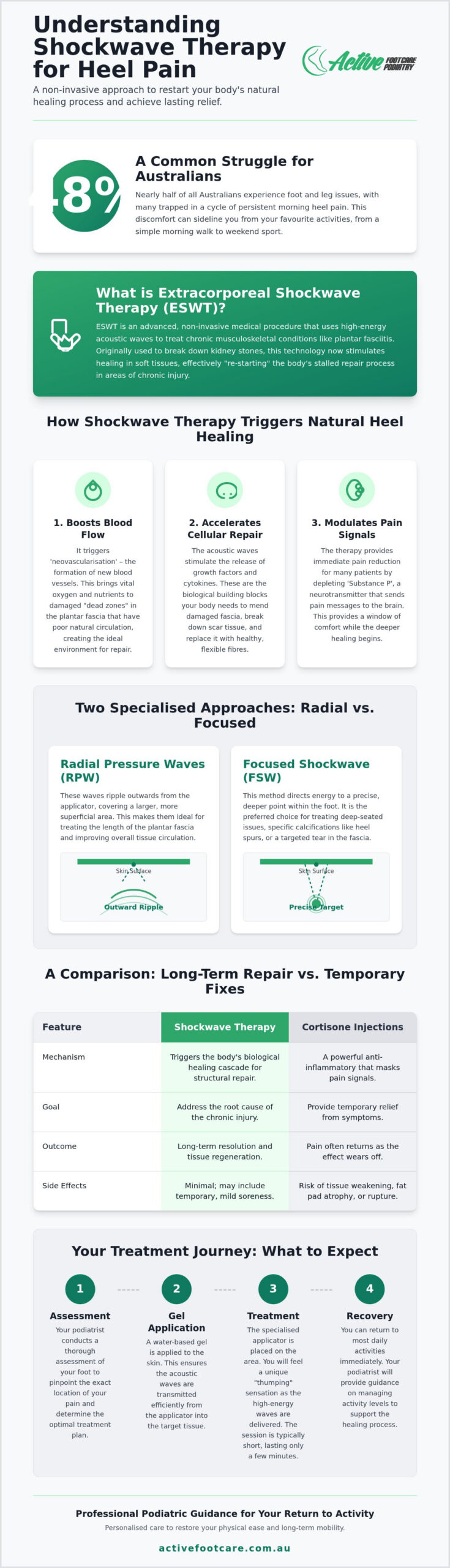
Extracorporeal Shockwave Therapy, often called ESWT, is a non-invasive medical procedure that uses high-energy acoustic waves to treat musculoskeletal conditions. When we discuss What is Shockwave Therapy?, we are looking at a technology that has evolved significantly over the last few decades. Originally developed as lithotripsy to break down kidney stones without the need for surgery, medical professionals soon realised these same sound waves could stimulate healing in soft tissues. Today, shockwave therapy for heel pain has become a cornerstone of modern podiatric care, offering a bridge between conservative treatments and more invasive options.
Chronic heel pain, particularly plantar fasciitis, often fails to heal because the body’s natural repair process has stalled. In many cases, the tissue enters a degenerative state where blood flow is restricted and the inflammatory response has quietened down before the injury is fully resolved. This is why your pain might feel like a permanent fixture in your daily life. Shockwave therapy works by “re-starting” this biological clock. It creates a controlled stimulus in the affected area, effectively tricking the body into sending fresh resources and healing cells to the site of the chronic injury.
The Science of Acoustic Waves
The effectiveness of this treatment lies in a process called mechanotransduction. When high-energy sound waves penetrate deep into the soft tissue of your heel, they exert physical pressure on the cellular level. These cells then convert that physical force into biological healing signals. This isn’t just about managing acute pain; it’s about structural repair. The waves encourage the release of growth factors and cytokines, which are the building blocks your body needs to mend damaged fascia and tendons. It is a sophisticated way to prompt your body to do what it does best: heal itself.
Radial vs Focused Shockwave: What You Need to Know
In a clinical setting, we typically use two different types of delivery systems depending on your specific diagnosis. Radial Pressure Waves (RPW) are the most common. These waves ripple outwards as they enter the skin, making them ideal for treating superficial tissues and larger areas like the length of the plantar fascia. They are excellent for general tissue restoration and increasing local circulation.
Focused Shockwave (FSW) is different. It directs energy to a precise, deeper point within the foot. This is often the preferred choice for treating deep-seated issues or specific areas of calcification, such as a heel spur. Your podiatrist will carefully assess your foot mechanics and the location of your pain to decide which specialised approach is right for you. By tailoring the wave type to your unique injury, we ensure the energy reaches exactly where it’s needed most to facilitate a return to comfort.
How Shockwave Therapy Triggers Heel Healing
The real power of shockwave therapy for heel pain isn’t found in the device itself, but in how your body responds to the acoustic energy. Unlike treatments that simply mask symptoms, this technology initiates three distinct biological phases: enhancing local circulation, accelerating cellular repair, and modulating pain signals. A prominent clinical study on shockwave therapy effectiveness has demonstrated that these combined effects lead to significant improvements in long-term function. One of the most fascinating aspects is the immediate reduction in pain many patients feel. This happens because the waves deplete “Substance P,” a neurotransmitter responsible for sending pain messages to the brain. By temporarily desensitising these receptors, we can provide a window of relief while the deeper structural work begins.
Boosting Blood Flow to the “Dead Zone”
The plantar fascia is notorious for having a “watershed” area, which is a section with naturally poor blood supply that makes self-healing difficult. When an injury becomes chronic, this area effectively becomes a “dead zone” where nutrients can’t reach the damaged fibres. Shockwave therapy creates a mechanical stimulus that forces nutrient-rich blood into this stagnant, scarred tissue. This process triggers neovascularisation. Neovascularisation is the growth of new micro-vessels to nourish healing tissue. By establishing this new vascular network, we ensure your heel has the oxygen and energy required to complete the repair cycle. If you are struggling with persistent discomfort, our team can help you determine if Shockwave Therapy is the right path for your recovery.
Breaking Down Scar Tissue and Calcification
Chronic inflammation often results in the formation of brittle, unorganised scar tissue. Instead of flexible, healthy fibres, the fascia becomes thick and less resilient. Shockwave therapy uses precise acoustic waves to “micro-traumatise” these stubborn areas. This isn’t harmful; rather, it is a purposeful disruption that tells the body to clear away old, dysfunctional cells and start a fresh repair cycle. This is particularly effective for those dealing with calcific tendinopathy or heel spurs. The energy helps break down calcium deposits, allowing the body to reabsorb them naturally. Over several weeks, this process encourages the production of new collagen, restoring the structural integrity of the tendon and helping you move with confidence once again.
Shockwave vs Other Heel Pain Treatments
Many Australians spend months or even years trying to manage their discomfort with traditional methods before discovering shockwave therapy for heel pain. While rest, ice, and over-the-counter anti-inflammatories are often the first port of call, they are primarily designed for acute injuries. For chronic conditions like plantar fasciosis, where the tissue has actually begun to degenerate, these passive approaches rarely provide a permanent fix. Resting a chronic injury can sometimes lead to further stiffness and muscle weakness, while icing only provides temporary numbing without addressing the structural breakdown. Shockwave therapy acts as a vital bridge, offering a sophisticated alternative for those who have found little success with conservative care but wish to avoid the risks of surgery. If you want a deeper understanding of all available options, our advanced therapy for plantar fascia recovery guide provides a comprehensive clinical roadmap to permanent relief.
The Cortisone Conflict: Why Repair is Better Than Relief
Cortisone injections are a common choice for rapid pain relief, but it is essential to understand the difference between chemical masking and biological repair. Cortisone is a powerful anti-inflammatory that can “switch off” pain, yet it does nothing to mend the underlying structural damage. In fact, repeated steroid injections carry documented risks, including fascial rupture and the atrophy of the protective fat pad under your heel. This FDA patient guide to ESWT highlights how shockwave therapy differs by stimulating the body’s natural healing mechanisms rather than suppressing them. Instead of weakening the tissue, shockwave encourages collagen production to strengthen the fascia. While cortisone might offer a quick result, clinical data shows that shockwave therapy has a success rate between 80% and 90% for long-term resolution. Australian clinical observations have noted that 86% of patients experience a significant reduction in plantar fascia pain within three months of starting their treatment program.
Synergy with Custom Orthotics and Gait Analysis
We often see patients who wonder if they should choose between shockwave therapy and custom orthotics. In reality, these treatments work best when paired together. Shockwave therapy focuses on fixing the damaged tissue itself, while custom orthotics and a comprehensive gait analysis Sydney address the mechanical reasons why the injury occurred in the first place. If your foot over-pronates or your walking pattern places excessive strain on your heel, the tissue will continue to be stressed even after it heals. By integrating these services, we ensure that once the shockwave therapy for heel pain resolves your symptoms, your foot is properly supported to prevent the pain from returning. This dual approach provides a comprehensive, permanent solution rather than just treating the symptoms in isolation.
The Procedure: What to Expect During and After
Understanding the logistics of your treatment journey helps alleviate any uncertainty you might feel about trying a new technology. A standard course of shockwave therapy for heel pain typically involves three to five sessions, organised at weekly intervals. Each session is relatively brief, usually lasting between 4 and 10 minutes, as the device delivers roughly 2,000 acoustic pulses to the targeted area. While you might feel some apprehension about the term “shocks,” most patients describe the sensation as a rhythmic thumping or a quick flicking against the skin. It’s a manageable, outpatient experience that requires no downtime, allowing you to return to your day immediately after leaving the clinic.
Step-by-Step: Your 15-Minute Session
Your appointment begins with a thorough skin assessment to ensure the treatment area is healthy and ready. We then apply a clear ultrasound gel, which acts as a vital coupling medium to help the acoustic waves travel efficiently from the applicator into your soft tissues. Before starting the device, we use manual palpation to locate the “sweet spot,” which is the exact point where your discomfort is most concentrated. Communication with your podiatrist is essential during this stage. We always start at a low energy level and gradually increase the intensity based on your comfort and feedback. Many patients notice a slight dulling of the pain halfway through the session as the pulses begin to desensitise local nerve endings, making the second half of the treatment feel much easier.
The 12-Week Recovery Roadmap
Recovery is a gradual biological process rather than an overnight fix. While some patients feel immediate relief due to the temporary numbing of pain receptors, the real structural changes take time. Immediately after your session, you can walk and drive normally, though we recommend avoiding high-impact sport or heavy lifting for the first 48 hours to let the healing response settle. Your recovery generally follows this timeline:
- Days 1-2: You might experience mild soreness or slight redness in the heel, similar to the feeling of a bruised muscle.
- Weeks 1-4: This is the primary repair phase where your body begins the work of neovascularisation and tissue restoration.
- Weeks 8-12: Most patients reach their maximum clinical benefit during this window as the new collagen matures and strengthens.
Clinical research indicates that approximately 80% of patients report a significant reduction in pain and improved mobility by the 12-week mark. To ensure you achieve these long-term results, we encourage you to book a consultation for Shockwave Therapy so we can design a recovery plan tailored to your specific needs.
Expert Heel Pain Solutions in Sydney and Liverpool
At Active Footcare, we believe that advanced medical technology should be accessible to everyone, regardless of their location or mobility levels. Led by Principal Podiatrist Dr. Maher Said, our clinical team takes a comprehensive view of your foot health, ensuring that shockwave therapy for heel pain is integrated into a wider, holistic recovery plan. We pride ourselves on creating a friendly, supportive environment where you are treated as a partner in your own healing journey. It is our mission to ensure you feel heard and understood from the very first consultation. Whether you visit us in-clinic or require our specialised mobile services, our goal remains the same: restoring your physical ease and getting you back to the activities you love.
Mobile Podiatry: Bringing Advanced Care to Your Door
We understand that persistent heel pain can make even a short trip to a clinic feel like a daunting task. To address this, we offer dedicated mobile podiatry home visits across Liverpool, Bankstown, Moorebank, and the broader Campbelltown region. Our practitioners bring the same high-standard shockwave equipment used in our clinics directly to your lounge room. This service is particularly beneficial for seniors or those with severe mobility restrictions who might otherwise miss out on transformative care. By removing the stress of travel and the need to navigate busy car parks, we allow you to focus entirely on your recovery in a familiar, relaxed setting.
This focus on accessibility mirrors a wider shift in modern medicine towards flexible care. For instance, those interested in how technology facilitates remote medical advice can discover AskMyDoc.ca and their virtual healthcare model, which provides a digital alternative to traditional clinic visits.
Tailored Treatment Plans for NDIS and Diabetic Patients
As a registered NDIS podiatry provider, we specialise in aligning treatment with your specific mobility and community participation goals. We work closely with NDIS participants to ensure that shockwave therapy for heel pain is utilised effectively to improve stability, reduce pain, and increase independence. For our diabetic patients, we maintain a heightened focus on neuro-vascular safety. We perform meticulous assessments before any procedure to ensure your skin integrity and circulation are suitable for acoustic wave therapy. This personalised attention ensures that even those with complex health requirements receive the highest level of clinical care without compromising their safety. If you are ready to take the next step toward a pain-free life, Book a consultation with Active Footcare today and let us help you regain your stride.
Take Your First Step Toward Lasting Relief
Regaining your mobility starts with choosing a treatment that addresses the root cause of your discomfort rather than just masking the symptoms. As we have explored, shockwave therapy for heel pain represents a significant advancement in podiatric medicine, providing a non-invasive path to recovery for those who have struggled with chronic conditions. By triggering the body’s natural repair mechanisms and establishing a new vascular network, this technology helps you return to your daily walks and sporting activities with renewed confidence.
At Active Footcare, our team is dedicated to providing personalised care that fits your unique lifestyle. Led by Principal Podiatrist Dr. Maher Said, we offer these specialised treatments both in our clinics and through mobile home visits across Western Sydney. As a registered NDIS podiatry provider, we are also committed to helping participants achieve their long-term mobility goals in a supportive and professional environment; if you are also looking to optimise your home setup for better physical support, you can learn more about Workpod and their modular workspace options.
You don’t have to navigate your recovery journey alone. Book your heel pain assessment with Active Footcare in Liverpool or Sydney to begin your journey toward physical ease. We look forward to partnering with you as you take that first pain-free step.
Frequently Asked Questions
Is shockwave therapy for heel pain painful?
Most patients describe the sensation as a rhythmic thumping or a mild flicking against the skin. While it can be slightly uncomfortable, it shouldn’t be unbearable, and we always start at a lower intensity to help you adjust. We communicate with you throughout the session to ensure the energy levels are effective yet manageable for your specific comfort level.
How many sessions of shockwave therapy will I need for plantar fasciitis?
A typical treatment programme consists of 3 to 5 sessions, usually spaced about one week apart. This frequency is designed to consistently stimulate the biological repair process without over-stressing the tissue. While some people notice a difference early on, completing the full course is essential for achieving long-term structural healing and pain resolution. For a complete overview of all evidence-based options, explore our guide to therapy for plantar fascia recovery to understand how each approach fits into your broader treatment plan.
Can I walk or exercise immediately after a shockwave session?
You can certainly walk and go about your normal daily activities immediately after your appointment. We do, however, recommend avoiding high-impact exercise, such as running or heavy lifting, for at least 48 hours following treatment. This brief rest period allows the initial inflammatory response to settle and ensures the healing process isn’t interrupted by excessive mechanical stress.
Is shockwave therapy covered by Medicare or private health insurance in Australia?
Medicare generally doesn’t cover specialised procedure fees, though a Chronic Disease Management plan from your GP may help cover a portion of the consultation costs. Most private health insurers do provide rebates for podiatry services under “extras” cover. We suggest contacting your specific provider to confirm your eligibility and the amount of your rebate for shockwave sessions.
Are there any side effects or risks associated with shockwave therapy?
Side effects are rare and typically very mild, making it a safe alternative to more invasive options. You might experience some temporary redness, slight swelling, or a dull ache in the heel for a day or two after your session. These are actually signs that your body’s healing response has been activated and they usually resolve quickly without any further intervention.
How soon will I feel the results after my first shockwave treatment?
Some patients experience an immediate reduction in pain due to the temporary desensitisation of local nerve endings. However, because the treatment triggers a biological repair cycle, the most significant clinical benefits are usually felt between 8 and 12 weeks after the final session. This timeline allows for the production of new collagen and the restoration of healthy tissue structure.
Is shockwave therapy suitable for everyone with heel pain?
While it is highly effective for chronic conditions, certain medical factors may make it unsuitable for some individuals. We don’t recommend this therapy for pregnant women, people with pacemakers, or those with active blood clotting disorders. During your initial assessment, we will review your medical history to ensure that shockwave therapy for heel pain is a safe and appropriate choice for you.
Do I need a GP referral to see a podiatrist for shockwave therapy in Sydney?
You don’t need a referral to see us as a private patient; you can simply contact our clinic to book an assessment. A GP referral is only required if you are seeking treatment under a Medicare Chronic Disease Management plan or through the Department of Veterans’ Affairs (DVA). For NDIS participants, we can coordinate with your support coordinator to include this therapy in your mobility plan. If you are unsure which podiatric services are right for your needs, our gait analysis Sydney checklist for choosing the best podiatrist can help you identify the right clinical approach before your first appointment.