


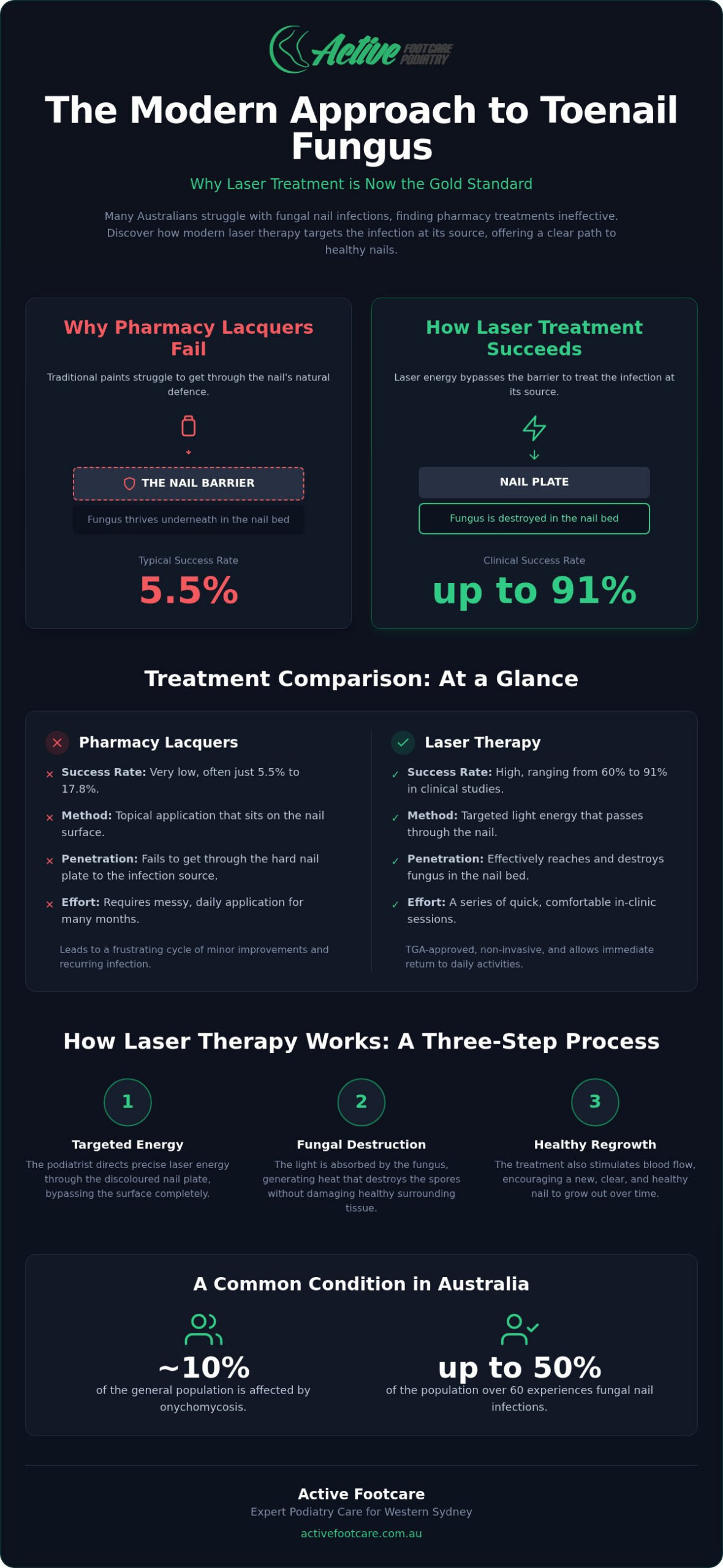
Did you know that traditional antifungal paints often have a success rate as low as 5.5 per cent because they struggle to penetrate the thick barrier of the nail? It’s a frustrating reality for many Australians who spend months applying messy lacquers only to see the same yellowed, brittle texture remain. At Active Footcare, we see many patients who feel embarrassed to wear thongs at the beach or suffer through the physical discomfort of thickened nails in their work boots. You aren’t alone in wanting a solution that actually works without the daily hassle of pharmacy products.
We believe you deserve a more effective, modern approach to your foot health. This guide explains why fungus toenail laser treatment is now considered the gold standard for stubborn infections in 2026. You will discover how this TGA-approved technology outperforms topical paints by targeting the infection at its source beneath the nail plate. We also provide expert podiatry insights into the recovery process, helping you move toward clear, healthy nail regrowth and a life free from constant maintenance.
Key Takeaways
- Learn why the “nail barrier” renders most pharmacy lacquers ineffective and why clinical intervention is required to reach the source of the infection.
- Discover how fungus toenail laser treatment uses targeted light energy to clear fungal spores without the mess of daily paints or the side effects of oral drugs.
- Understand the importance of a professional assessment and nail debridement to ensure maximum penetration and the best possible regrowth results.
- Explore the advantages of a non-invasive, TGA-approved therapy that allows you to return to your daily activities immediately after your appointment.
- Find out how the expert team at Active Footcare supports patients across Western Sydney with modern, compassionate care tailored to your specific needs.
Understanding Toenail Fungus and Why DIY Treatments Often Fail
Many people first notice a fungal infection as a small white or yellow spot under the tip of the nail. It’s easy to ignore initially, but left untreated, the infection deepens and causes the nail to deteriorate. Onychomycosis is a chronic fungal infection of the nail apparatus. This condition affects approximately 10 per cent of the Australian population, and for those over 60, that figure can jump to 50 per cent according to clinical data. For a deeper look at the biology of this condition, Understanding Toenail Fungus (Onychomycosis) provides a detailed medical overview.
The fungus feeds on keratin, the primary protein that gives your nails their strength. As the infection progresses, you might notice several distinct changes:
- Significant thickening that makes trimming difficult.
- Yellow, brown, or white discolouration.
- A brittle or crumbly texture at the edges.
- Debris building up under the nail, often causing a faint odour.
It’s tempting to “wait it out” or hope the nail grows out healthy on its own. Unfortunately, fungal spores are incredibly resilient. What starts as a minor cosmetic issue can quickly spread to adjacent toes or even family members through shared shower floors and towels. To help reduce the risk of cross-contamination at home, you can explore Residential and Specialised Cleaning Service Fees from Dee Cleaning Services to see how professional sanitisation can help maintain a hygienic environment. This is why professional fungus toenail laser treatment is often the most reliable path to restoration.
The Science of Fungal Persistence
Fungal spores don’t just sit on top of the nail. They thrive in the nail bed, which is the sensitive skin underneath the hard plate. In Western Sydney, we see many patients whose infections are exacerbated by long hours in heavy work boots. These dark, moist environments are perfect breeding grounds for fungi. Because the infection is physically shielded by the hard nail, standard foot washes and soaps simply cannot reach the underlying problem.
The Limitations of Pharmacy Lacquers
If you’ve spent months applying daily paints without success, you’re experiencing the “nail barrier” problem. Research indicates that topical antifungal treatments have a remarkably low success rate, often ranging between 5.5 per cent and 17.8 per cent. The hard nail plate acts as a protective shield for the fungus. Most over-the-counter lacquers fail to penetrate deep enough to kill the spores living in the nail bed. This leads to a frustrating cycle where the infection appears to clear slightly, only to return as soon as you stop the daily application. If you’ve also experienced recurring skin infections alongside your nail concerns, our detailed guide to athlete’s foot treatment comparing OTC, home remedies, and professional care can help you understand all available options. This lack of penetration is the primary reason why we recommend fungus toenail laser treatment to our patients in Liverpool, Bankstown, and Campbelltown who want a more definitive solution.
How Laser Technology Targets Fungal Infections
The beauty of fungus toenail laser treatment lies in its ability to bypass the physical obstacles that stop creams in their tracks. While liquids sit on the surface, laser light travels directly through the nail plate to reach the fungus hiding in the nail bed. This process, known as selective photothermolysis, allows us to target the infection with extreme precision. The laser energy is absorbed by the fungal pigment, heating it to a point where the spores are destroyed without harming the healthy skin or nail tissue surrounding the area.
According to this Patient’s Guide to Laser Therapy, the procedure is designed to be comfortable and efficient. Beyond just killing the fungus, the light energy also stimulates local blood flow. This increased circulation helps your body accelerate the growth of a clear, healthy nail from the base. It’s a proactive way to restore the natural appearance of your feet while addressing the root cause of the damage.
Hot Laser vs. Cold Laser Therapy
There are two main ways we use light energy to treat infections. “Hot” lasers, such as the Nd:YAG variety, use thermal energy to denature the proteins within the fungus. Most patients feel only a mild warming sensation during the process. For those with high sensitivity or conditions like diabetes where thermal regulation is a concern, “cold” lasers or Low-Level Laser Therapy (LLLT) are an excellent alternative. Cold lasers use specific wavelengths to trigger a photo-chemical reaction that kills the fungus without generating heat.
Clinical Efficacy and Success Rates
The results we see in clinical settings are backed by significant data. Recent research shows that laser treatment has a success rate ranging from 60 per cent to 91 per cent. This is a substantial improvement over the 14 to 38 per cent cure rate typically associated with oral medications. Unlike oral tablets, which can carry risks of liver toxicity and require regular blood tests, laser therapy is entirely non-invasive and drug-free. It provides a safer path for patients who cannot take oral antifungals due to existing health conditions or medication interactions.
This shift toward non-invasive, light-based solutions is a hallmark of modern medicine. Beyond podiatry, specialist facilities like Instant Laser Clinic apply these advanced laser technologies to a variety of medical aesthetic treatments, offering patients safe and effective alternatives to more traditional procedures.
It’s often helpful to have a professional fungus toenail laser treatment assessment to determine which technology suits your specific condition. By combining this advanced technology with expert podiatry advice on footwear hygiene, we can significantly reduce the risk of the infection returning and help you maintain healthy nails for the long term.
Pros and Cons: Is Laser the Right Choice for Your Nails?
Choosing a clinical path for your foot health involves weighing up medical benefits against lifestyle factors. While fungus toenail laser treatment offers a modern alternative to traditional methods, it’s essential to understand how it fits into your personal health journey. We aim to provide clear, honest guidance so you feel confident in your decision.
The advantages are compelling for many of our patients. Being non-invasive and drug-free means you avoid the potential liver toxicity and systemic side effects associated with oral antifungal medications. There’s no downtime; you can walk out of the clinic and return to work or daily activities immediately. Sessions are also remarkably efficient, usually taking less than 30 minutes to complete for all ten toes.
However, transparency is vital. You must be prepared for a slow visual transition. Because the laser kills the fungus but doesn’t instantly “clean” the damaged nail, you have to wait for the healthy nail to grow out from the base. This typically takes six to twelve months. Additionally, the initial financial outlay is higher than a single bottle of lacquer, though the long-term value often proves superior.
Comparing Treatment Paths
The ideal candidate for laser intervention is someone with a chronic infection who has seen little success with topical paints. It’s also the preferred choice for individuals who cannot take oral medications due to pre-existing conditions. While lacquers require a daily commitment for up to a year, laser therapy usually involves a short course of three to six sessions. This significantly reduces the “compliance fatigue” that causes many DIY treatments to fail.
Investment and Value for Money
When evaluating the cost, it’s helpful to look at the “cost per cure.” Many people spend hundreds of dollars over several years on pharmacy products that never fully resolve the issue. In contrast, a structured course of laser therapy aims for a definitive result. This targeted approach often saves you both money and frustration in the long run.
Many private health funds in Australia offer rebates for laser fungal treatment under Podiatry “extras” cover. We recommend checking with your provider to see what your specific policy allows. For our patients in Liverpool and Bankstown, Active Footcare is an NDIS registered provider. Eligible participants may be able to access funding for these services as part of their personal care plan, making professional treatment more accessible for those with mobility challenges or long-term disabilities. Seniors in residential care settings may also benefit from dedicated podiatry services for aged care facilities, which can address fungal nail infections as part of a broader foot health management plan.
What to Expect During and After Your Laser Session
Entering a clinical environment for any procedure can feel slightly daunting. At Active Footcare, we prioritise your comfort by ensuring you understand every step of the process. Our practitioners guide you through the appointment with a focus on both medical precision and empathetic care. You won’t be left wondering what happens next or if the treatment is working.
The process begins with a comprehensive initial assessment. We don’t just look at the nail; we examine your overall foot health to confirm the diagnosis. This is a vital step because conditions like nail trauma or psoriasis can mimic fungal infections. Once we confirm that fungus toenail laser treatment is the right path for you, we move to the preparation phase. We use specialised clinical tools to thin the thickened nail plate, a process called debridement. This ensures the laser energy can penetrate deeply enough to reach the spores living in the nail bed.
The Step-by-Step Procedure
We follow a methodical approach to ensure the best possible outcome for your foot health:
- Clinical Sanitisation: We begin by cleaning the area and performing any necessary nail trimming to prepare the site.
- Systematic Application: The laser is applied in a grid-like pattern across all infected nails. This ensures no area of the nail bed is missed.
- Hygiene Education: We conclude the session by providing clear instructions on how to manage your footwear and socks at home.
During the procedure, you’ll likely feel a mild warming sensation as the laser energy targets the infection. It isn’t painful, and most patients find the experience quite relaxing. You can return to your normal routine immediately after leaving our clinic, as there’s no downtime or recovery period required.
The Journey to Clear Nails
Patience is a necessary part of the healing process. While the laser kills the fungus during your sessions, the damaged nail must still grow out naturally. Healthy nail regrowth typically appears at the base within 8-12 weeks. Because toenails grow slowly, it usually takes between six and twelve months for the entire nail to appear clear and healthy again.
We schedule follow-up appointments to monitor this progress and ensure the infection hasn’t returned. These check-ups are an excellent time to discuss any concerns and refine your home care routine. If you’re ready to leave the frustration of messy paints behind, you can book an anti-fungal laser assessment with our friendly Western Sydney team to begin your journey toward healthy nails.
Professional Laser Treatment at Active Footcare Sydney
Active Footcare, led by Principal Podiatrist Dr. Maher Said, offers a specialised and supportive approach to restoring your foot health. We provide professional fungus toenail laser treatment across our clinics in Liverpool, Bankstown, and Campbelltown. We understand that seeking help for a long-term infection can feel like a significant step. Our team is dedicated to making that transition as smooth as possible, combining clinical authority with a warm, patient-focused environment where you feel heard and understood.
Our practitioners don’t view a fungal infection as a standalone issue. Instead, we take a holistic view of your physical ease and mobility. For patients managing chronic conditions, we can integrate your laser sessions with a Diabetes Foot Assessment to ensure your overall foot health is protected. If your thickened nails have caused changes in how you walk, we might also recommend a Gait Analysis. This thorough approach allows us to address the root causes of discomfort while we work toward clearing the infection. We also recognise that travel isn’t always easy. Our Podiatrist Home Visit service brings our expertise directly to your home or aged care facility, ensuring everyone in the Western Sydney community has access to modern care. For families and facility managers seeking comprehensive foot health support for older residents, our podiatry services for aged care facilities provide a dedicated clinical framework designed to protect senior mobility and wellbeing.
Why Choose Active Footcare?
We believe that modern technology should always be delivered with old-fashioned values of friendly, attentive service. As an NDIS registered provider, we have extensive experience in creating personalised treatment plans that respect the unique needs of every individual. We don’t use “one size fits all” programmes. Whether you’re looking for restoration after years of frustration or need a reliable guide through the NDIS podiatry process, our team acts as a dedicated partner in your journey. We focus on long-term outcomes, not just temporary fixes.
Start Your Journey to Healthy Feet
Organising your initial consultation in Moorebank or Bankstown is the first step toward regaining your confidence. When you attend your first appointment, we recommend bringing any antifungal paints you’ve previously tried and a list of your current medications. It’s also helpful to wear the footwear you use most often. This information helps us understand the history of your infection and allows us to provide the most accurate advice for preventing future issues. We’ll walk you through the entire process, from the first laser application to the final stages of healthy nail regrowth.
Book your fungus toenail assessment with Active Footcare today and discover how our expert team can help you achieve the clear, healthy nails you deserve in 2026.
Take the First Step Toward Clearer Nails Today
You don’t have to settle for the frustration of messy paints or the embarrassment of hiding your feet at the beach. We’ve explored how fungus toenail laser treatment provides a sophisticated, drug-free alternative that reaches the source of the infection where over-the-counter lacquers fail. By choosing this targeted technology, you’re investing in a path that values your time and prioritises long-term nail health without the risks of systemic medications. It’s a modern solution for a stubborn problem.
At Active Footcare, our team is led by Principal Podiatrist Dr. Maher Said. We’re proud to be an NDIS Registered Provider serving the communities of Liverpool, Bankstown, and Campbelltown. Whether you visit us in the clinic or require the convenience of a home visit, we’re committed to being your reliable guide through the restoration process. We focus on your comfort and mobility. This ensures you feel understood and supported every step of the way.
Your journey to healthy, clear nails is closer than you think. Book your expert laser consultation at Active Footcare and let us help you walk with renewed confidence and ease. We look forward to supporting your foot health goals.
Frequently Asked Questions
Does fungus toenail laser treatment hurt?
Most patients find the procedure remarkably comfortable. You’ll likely feel a mild warming sensation as the laser energy targets the infection, but it isn’t painful. There’s no need for local anaesthesia or numbing creams. Because the treatment is non-invasive, you can stand up and walk out of the clinic immediately after the session without any lingering discomfort or downtime.
How many laser sessions will I need to clear the fungus?
A standard course of fungus toenail laser treatment usually involves between three and six sessions. We typically space these appointments about two weeks apart to ensure the fungal spores are systematically addressed. The exact number of sessions depends on the severity of your infection and how quickly your nails grow. During your initial assessment, we’ll provide a personalised plan tailored to your specific needs.
Can I wear nail polish after my laser treatment session?
We recommend avoiding traditional nail polish and acrylics during your treatment course. These products create a seal that can trap moisture and encourage fungal growth, potentially hindering your progress. If you feel self-conscious, we can discuss breathable, antifungal nail colours that are safer to use. Keeping the nail clear allows us to monitor the regrowth of the healthy nail plate more effectively during your follow-up appointments.
Is laser treatment for toenail fungus covered by Medicare?
Medicare doesn’t currently provide rebates for laser fungal treatment as it is classified as a cosmetic procedure. However, many private health funds offer a rebate if you have “extras” cover for podiatry services. We suggest contacting your insurer directly to confirm your level of cover. For eligible NDIS participants, funding may be available under specific personal care plans to help manage chronic foot health conditions.
What happens if I don’t treat my fungal nail infection?
Leaving an infection untreated often leads to the fungus spreading to your other toes or even the skin on your feet, causing athlete’s foot. Over time, the nails can become so thick that they cause physical pain when wearing shoes or work boots. There’s also a significant risk of passing the infection to family members through shared showers and floors. Early intervention is always the most effective way to prevent these complications.
How do I prevent the fungus from coming back after laser treatment?
Prevention is a vital part of your long-term success. We recommend using antifungal sprays in your shoes and washing your socks in hot water with a specialised laundry additive. It’s also important to keep your feet dry and avoid walking barefoot in public areas like gym showers or pools. During your fungus toenail laser treatment sessions, we’ll provide detailed education on maintaining a hygienic environment for your feet. For patients prone to recurring fungal conditions, our podiatrist’s guide to permanent athlete’s foot relief and prevention offers additional strategies to break the infection cycle for good.
Is laser treatment safe for people with diabetes?
Yes, laser therapy is a safe and effective option for patients with diabetes. Because the treatment is non-invasive and drug-free, it avoids many of the risks associated with oral medications. We often recommend “cold” laser technology for those with sensitive skin or circulation issues, as it doesn’t generate heat. Our team takes extra care to monitor your skin integrity during every session to ensure your safety and comfort.
Can the laser be used on fingernails as well as toenails?
The laser technology is equally effective for treating fungal infections on fingernails. While toenail fungus is more common due to the dark, moist environment of shoes, fingernails can also become infected through trauma or exposure. The procedure remains the same, focusing on penetrating the nail plate to destroy the underlying spores. Since fingernails grow faster than toenails, you’ll often see the clear regrowth results even sooner than you would on your feet.