

Did you know that up to 25% of Australians will struggle with the persistent itch and burning of tinea at some point in their lives? It is incredibly frustrating to deal with skin that feels like it is on fire, especially when you have already tried various pharmacy creams only for the infection to return a few weeks later. We understand that this is about more than just physical discomfort; it is about the embarrassment of foot odour and the desire for clear, healthy skin that you don’t feel the need to hide. You deserve an athlete’s foot treatment that actually works for the long term, rather than a cycle of recurring symptoms.
In this article, you will discover the most effective ways to treat and prevent fungal infections, comparing everything from basic pharmacy creams to advanced clinical options. We will provide a clear overview of over-the-counter medications, traditional home remedies, and professional solutions like anti-fungal laser treatment. By the end, you will have a practical prevention routine and the clinical insights needed to restore your foot health and move with total confidence again.
Key Takeaways
- Identify the three main types of tinea and understand why Australia’s humid climate makes these infections so persistent.
- Compare the effectiveness of natural remedies and pharmacy creams against clinical athlete’s foot treatment for long-term relief.
- Recognise the critical red flags that require professional care, particularly for high-risk patients with diabetes or circulation concerns.
- Implement a “Dry First” hygiene routine and shoe rotation strategy to stop fungal spores from returning to your skin.
- Explore advanced options like anti-fungal laser treatment and the convenience of podiatrist home visits for managing stubborn cases.
Understanding Athlete’s Foot: Why It Thrives in Australia
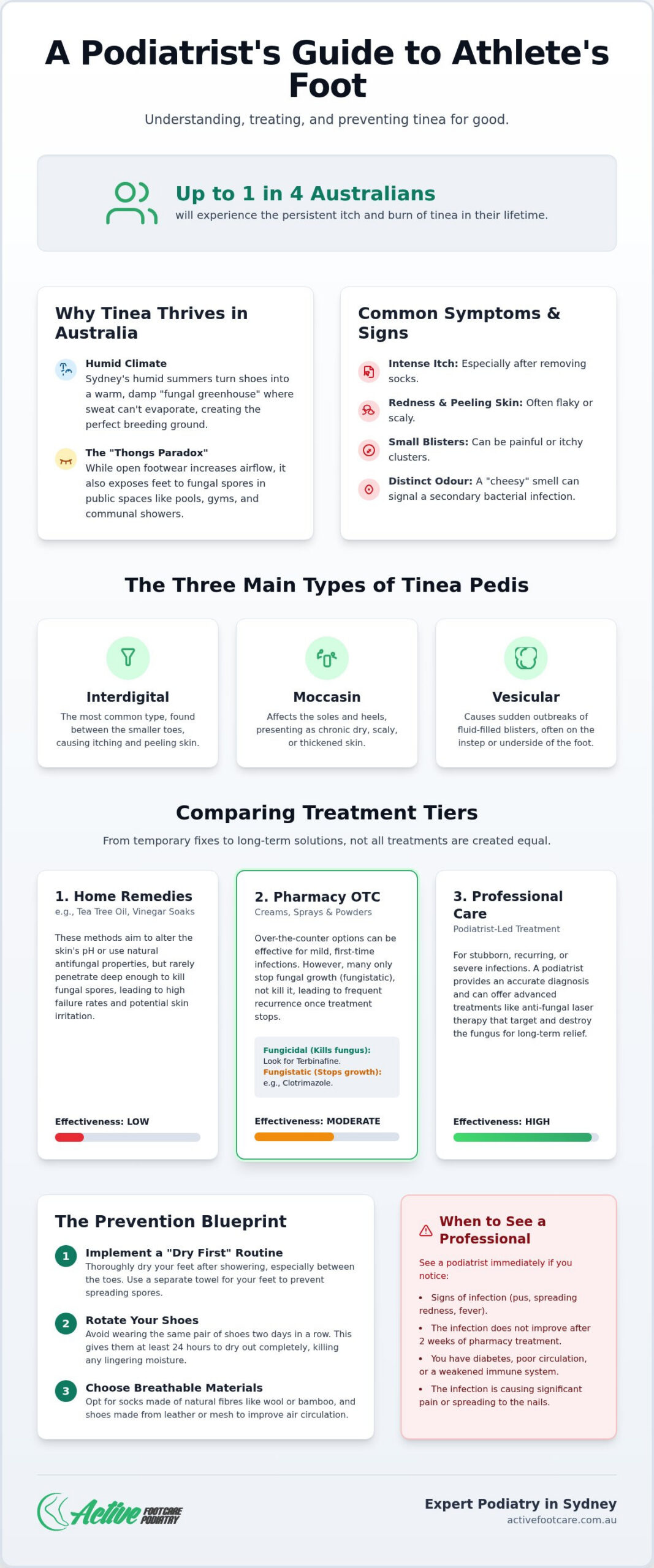
Athlete’s foot, medically known as tinea pedis, is a contagious fungal infection that affects the skin on the feet. It isn’t just a minor annoyance; it’s a persistent condition caused by dermatophytes that feed on keratin. In our clinical experience at Active Footcare, we see three primary presentations. The interdigital type is the most common, usually nesting between the smaller toes. Moccasin infections affect the soles and heels with dry, scaly skin, while the vesicular type causes sudden, painful blisters. Identifying your specific type is the first step in finding the right athlete’s foot treatment.
Sydney’s humid summers effectively turn your shoes into a fungal greenhouse. When the air is thick with moisture, sweat doesn’t evaporate, creating the damp, warm environment where fungi flourish. This leads to what we call the “thongs paradox.” While wearing open footwear like thongs allows for better airflow and keeps feet dry, it also exposes you to fungal spores in public spaces. Walking barefoot in communal areas or wearing thongs in a public shower provides a direct pathway for infection to take hold.
Common Symptoms and Early Warning Signs
Most patients first notice an intense itch that seems to peak the moment they take their socks off at the end of the day. This occurs because the sudden change in temperature and airflow stimulates the nerve endings already irritated by the fungus. You might also see redness, peeling skin, or small clusters of blisters. If you notice a distinct, “cheesy” odour, it often indicates a bacterial-fungal crossover. This happens when the fungal infection breaks down the skin’s barrier, allowing bacteria to move in and create secondary complications.
High-Risk Environments in Western Sydney
Fungal spores are incredibly resilient and thrive in shared spaces across our local community. We often treat patients who frequent leisure centres and public pools in Bankstown and Liverpool, where wet tiles act as a primary transmission site. Gym changing rooms and communal showers are equally problematic if you aren’t vigilant about foot hygiene. However, the most common site of transmission is often the shared family bathroom. If one person in the house has an active infection, the fungus can easily move between household members via bath mats or shared towels, making a coordinated athlete’s foot treatment plan essential for the whole family.
Comparing Treatment Tiers: Home Remedies vs. OTC Pharmacy Solutions
Deciding on the right athlete’s foot treatment often feels like a choice between convenience and clinical effectiveness. Most Australians start their journey either in the pantry or at the local pharmacy. While these entry-level options can provide temporary relief, understanding their limitations is key to preventing the infection from becoming a chronic issue. The following table provides a high-level comparison of the different approaches available to you.
| Treatment Tier | Primary Benefit | Main Drawback | Best For |
|---|---|---|---|
| Home Remedies | Low cost and accessible | High failure rate; skin irritation | Very mild, early-stage itch |
| Pharmacy OTC | Effective for mild cases | Frequent recurrence (rebound) | First-time, uncomplicated tinea |
| Professional Care | Expert diagnosis and laser | Higher initial consultation cost | Stubborn or recurring infections |
The Reality of Home Remedies
We often hear about tea tree oil or vinegar soaks as natural alternatives. While tea tree oil does possess antifungal properties, it frequently causes contact dermatitis, leaving the skin red and inflamed. Similarly, vinegar soaks aim to alter the skin’s pH to make it less hospitable for fungus. These methods might soothe a surface itch, but they rarely reach the deep-seated spores nestled within the skin’s layers. If your symptoms persist after a few days of DIY care, it is usually time to seek professional diagnosis and treatment to ensure the infection doesn’t spread to your nails.
Navigating the Pharmacy Aisle
Walking into a local chemist presents a dizzying array of creams, sprays, and powders. The most common active ingredients are Terbinafine and Clotrimazole. Terbinafine is often preferred because it is fungicidal, meaning it actively kills the fungal cells. In contrast, older agents like Clotrimazole are fungistatic, which simply stops the fungus from growing while your immune system does the heavy lifting. Many products now offer “once-daily” applications for convenience, which is a great fit for a busy lifestyle. However, the most common mistake is stopping the cream the moment the itching stops. This leads to a “rebound effect” where the remaining spores multiply and the infection returns. You must continue your athlete’s foot treatment for at least seven days after the skin appears clear to ensure total eradication. If you’ve tried several pharmacy brands without success, our clinical team can help identify the underlying cause of your recurring infection.
When to See a Professional: Clinical Athlete’s Foot Treatment
Not every itchy foot is a simple case of tinea that can be resolved with a quick trip to the chemist. If you have been applying pharmacy products for more than two weeks without seeing a clear improvement, it is time to seek a professional opinion. Red flags that require immediate attention include intense pain that makes walking difficult, significant swelling, warmth in the foot, or the presence of pus. These symptoms often suggest a secondary bacterial infection that needs clinical intervention. For a broader look at how these symptoms develop, you can consult MedlinePlus on Athlete’s Foot.
For patients living with diabetes or poor circulation, a fungal infection is never a minor issue. Small cracks between the toes can quickly become entry points for serious complications like cellulitis. We also find that many patients are hesitant to take oral antifungal medications because of the potential for side effects and the requirement for regular liver function monitoring. In these instances, a multi-modal clinical athlete’s foot treatment plan provides a safer, more targeted alternative that focuses on the source of the infection without systemic risks.
Professional Diagnosis and Skin Scraping
It is surprisingly common for patients to spend months treating what they believe is tinea, only to discover they actually have contact dermatitis, psoriasis, or pitted keratolysis. A podiatrist uses clinical observation and, when necessary, skin scraping to confirm the presence of fungal hyphae. This diagnostic step ensures you don’t waste money on antifungal medications for a condition that isn’t fungal. By identifying the specific presentation, we can tailor the management plan to your skin’s unique needs and ensure the fastest possible recovery.
Advanced Therapies: Beyond the Cream
When standard topicals fail to clear the infection, we utilise more advanced technology to achieve results. Anti-fungal Laser Treatment is a highly effective option for stubborn infections that have resisted traditional methods. The laser light penetrates the skin or nail plate to target the fungus directly without damaging the healthy surrounding tissue. We often combine this technology with clinical debridement, where we gently remove thickened skin or infected nail material. This process allows our medical-grade topical applications to penetrate deeper and work more efficiently. Our professional athlete’s foot treatment aims to break the cycle of recurrence and restore your skin to its healthy, natural state.
The Prevention Blueprint: Stopping the Itch for Good
Successfully clearing the skin is only half the battle. Without a dedicated prevention plan, even the most effective athlete’s foot treatment will eventually fail because fungal spores are remarkably resilient. These microscopic organisms can survive for months in your carpet, bath mats, and footwear, waiting for the right conditions to strike again. Breaking this cycle requires a shift in your daily habits to ensure your feet remain a hostile environment for fungus.
We advocate for the ‘Dry First’ rule as a foundation of foot hygiene. When you step out of the shower, make it a habit to dry the spaces between your fourth and fifth toes first. These tight gaps are the most common starting points for infection because they trap moisture and heat. Using a dedicated foot towel or even a hair dryer on a cool setting ensures that no dampness remains to fuel fungal growth. Similarly, environmental decontamination is essential. You should wash your bath mats and bedsheets in water that is at least 60 degrees Celsius to effectively neutralise lingering spores.
Footwear Hygiene and Sanitisation
Your shoes are often the primary reservoir for recurring infections. Wearing the same pair of joggers every day is a mistake because it takes at least 24 to 48 hours for the inner materials to dry out completely. We recommend rotating between at least two pairs of shoes to allow for adequate ventilation. You can also use antifungal sprays or UV shoe sterilisers to sanitise the interior of your footwear. While thongs are necessary for protection in public showers at the gym or pool, be careful of the trip hazard they present on wet surfaces. If a pair of shoes has been worn through multiple chronic infections, it is often more hygienic to simply throw them away and start fresh.
Daily Foot Care Routine for Active Australians
For those with a busy lifestyle, a post-gym protocol is a non-negotiable part of fungal management. After your workout, wash your feet with a mild soap, dry them meticulously, and apply a light dusting of antifungal powder if you are prone to heavy sweating. Choosing the right socks makes a significant difference; moisture-wicking synthetic blends or merino wool are far superior to cotton, which tends to hold sweat against the skin. Regular professional check-ups ensure that small issues don’t turn into major setbacks. Whether you need help with tinea or are looking for a corn removal podiatrist to address painful pressure points, maintaining overall foot health is the best way to stay active. To ensure your feet stay healthy year-round, book a consultation with our Western Sydney team today.
Expert Podiatry in Sydney: How Active Footcare Can Help
Active Footcare provides a bridge between clinical expertise and compassionate patient care. Under the guidance of Principal Podiatrist Dr. Maher Said, our team focuses on resolving the root cause of your discomfort rather than just masking the symptoms. We understand that finding an effective athlete’s foot treatment can be a frustrating journey of trial and error. By choosing professional care, you gain access to diagnostic precision and advanced therapies that simply aren’t available at the local chemist.
Accessibility is a core value of our practice. We recognise that many residents in Western Sydney, from busy families to seniors, may find it difficult to visit a clinic during standard hours. To address this, we provide a podiatrist home visit Sydney service that covers areas including Liverpool, Bankstown, and Campbelltown. This mobile service ensures you receive the same high standard of care in the comfort and privacy of your own home, making it easier to stay consistent with your treatment plan.
Our clinical scope extends to the most stubborn cases. If your skin infection has migrated, we can integrate fungus toenail laser treatment to ensure both the skin and nails are cleared simultaneously. This holistic view is particularly important for our NDIS and aged care patients, where maintaining mobility and preventing secondary infections is a top priority. We work closely with carers and support coordinators to provide comprehensive foot health management that fits seamlessly into existing care plans.
Tailored Solutions for Western Sydney Residents
Our clinics in Liverpool and Bankstown are designed to be accessible and welcoming hubs for the community. We pride ourselves on a friendly, non-judgmental approach; we’ve seen it all, and our only goal is to help you feel better. Whether you visit us in-person or book a home visit, you can expect a thorough assessment that respects your time and your specific health goals. We believe that everyone deserves to walk without the distraction of pain or irritation.
Taking the First Step to Permanent Relief
During your initial consultation, we’ll perform a detailed examination of your skin health and footwear habits. This evidence-based approach allows us to create a personalised athlete’s foot treatment strategy that targets the fungus effectively. We’re committed to using the latest clinical advancements to ensure you achieve clear skin and healthy nails as quickly as possible. Don’t let a persistent itch hold you back from your active lifestyle. Book your assessment with Active Footcare today and take the first step toward walking with total confidence again.
Restore Your Comfort and Confidence
Living with the persistent itch and discomfort of tinea can be a daily struggle, but it doesn’t have to be a permanent one. While home remedies and pharmacy creams offer a starting point, they often fail to address the deep-seated spores that cause infections to return. Lasting relief requires a combination of smart prevention habits, like rotating your footwear, and seeking professional intervention when symptoms persist. You deserve an athlete’s foot treatment that provides more than just a temporary fix.
At Active Footcare, led by Principal Podiatrist Dr. Maher Said, we focus on providing evidence-based solutions tailored to your unique needs. Whether you require our specialised Anti-fungal Laser Treatment or the convenience of mobile podiatry home visits across Liverpool, Bankstown, and Moorebank, our goal is to get you back on your feet quickly. We are here to support your journey toward healthier skin and improved mobility with expert guidance and modern clinical tools.
Don’t let foot health concerns hold you back from an active lifestyle. We encourage you to Book a Professional Foot Assessment with Active Footcare today. Let’s work together to ensure you can walk, run, and move with total ease once again.
Frequently Asked Questions
Is athlete’s foot treatment permanent or will it always come back?
Treatment can be permanent if you successfully eradicate the fungal colony and manage your footwear environment. The fungus is opportunistic and will return if your feet provide a warm, damp habitat. Consistency with shoe rotation and drying between your toes is vital for long-term success. Our goal is to provide a comprehensive athlete’s foot treatment that addresses both the current infection and your future risk factors.
Can I treat athlete’s foot at home with natural remedies?
Natural remedies like tea tree oil or vinegar soaks might offer temporary relief for very mild itching, but they rarely eliminate deep-seated spores. These DIY methods often cause secondary skin irritation or contact dermatitis, which can complicate your recovery. If your symptoms persist for more than a few days, we recommend moving to a clinical athlete’s foot treatment to ensure the infection is completely cleared before it spreads.
How long does it take for professional athlete’s foot treatment to work?
Most patients experience a noticeable reduction in itching and burning within 48 hours of starting a professional management plan. While the surface symptoms fade quickly, the skin usually requires two to four weeks to heal completely. We often utilise Anti-fungal Laser Treatment for more stubborn cases, as this technology targets the fungus directly. This professional approach ensures a much faster and more reliable recovery than self-treating with pharmacy products.
What happens if I leave athlete’s foot untreated for too long?
Leaving the infection untreated allows the fungus to migrate into your toenails, where it becomes significantly more difficult to manage. The skin can also develop deep, painful cracks that serve as entry points for bacterial infections like cellulitis. This is particularly dangerous for patients with diabetes or poor circulation. Early intervention is the best way to prevent these painful complications and protect your overall foot health.
Is athlete’s foot contagious to other parts of my body?
The fungus is highly opportunistic and can spread to your groin or underarms through contaminated towels or hands. This cross-contamination is common when people use a single towel for their entire body after showering. To prevent this, you should always dry your feet last or use a dedicated foot towel. It is also essential to wash your hands thoroughly after touching the infected area to stop the spread.
Why is my athlete’s foot not responding to pharmacy creams?
Pharmacy creams often fail because the active ingredient isn’t potent enough or the condition has been misdiagnosed. Many skin issues, such as psoriasis or pitted keratolysis, look identical to tinea but require entirely different medications. If your infection keeps returning, it may be due to lingering spores in your footwear or carpets. A podiatrist can provide a definitive diagnosis and prescribe medical-grade treatments that are not available over the counter.
Can kids get athlete’s foot and how should it be treated?
Kids often pick up fungal infections at school pools or in shared sports changing rooms. While the infection is the same as the adult version, children have thinner skin that requires a gentler approach to medication. We focus on teaching children simple hygiene habits, such as drying between their toes and not sharing shoes. Professional care ensures that the treatment is safe for their age while effectively stopping the itch.
Does washing my socks in hot water kill the fungus?
Washing your socks in water that is 60 degrees Celsius or hotter is essential for killing resilient fungal spores. Standard cold or warm wash cycles often leave spores alive in the fabric, leading to immediate re-infection when you wear them again. If you have delicate socks that can’t handle high heat, we suggest using an antifungal laundry rinse. This step is a critical part of your overall prevention strategy.