


Imagine sliding into your favourite pair of shoes for a morning walk in Liverpool, only to feel a sharp, stabbing sensation that makes every step a chore. You have likely tried pharmacy pads or even considered “bathroom surgery” to get some relief, but that stubborn corn simply keeps returning. It’s a common frustration, and the fear of causing a nasty infection often makes the discomfort even more stressful. Booking an appointment with a professional corn removal podiatrist is the most reliable way to address the root of the problem while avoiding the risks of home remedies.
We understand how a small patch of thickened skin can completely disrupt your mobility and peace of mind. This article explains why professional podiatry is the safest way to remove painful corns and how you can access expert care in Liverpool and Bankstown. We will explore the benefits of treatment in a sterile clinical environment, the importance of understanding why corns form, and how our tailored approach provides immediate relief. By focusing on the biomechanical causes of pressure, we help you move toward a future of physical ease and improved stability.
Key Takeaways
- Understand why professional treatment is the only way to safely remove the hard central nucleus of a corn without risking infection.
- Discover how a corn removal podiatrist in Liverpool or Bankstown uses sterile techniques to provide immediate, painless relief from “walking on a stone” sensations.
- Learn to distinguish between hard corns, soft corns, and warts, ensuring you receive the correct clinical care for your specific condition.
- Identify the significant risks associated with pharmacy corn pads and “bathroom surgery,” which often lead to deeper tissue damage and more painful recurrences.
- Explore the convenience of mobile podiatry home visits across Western Sydney for patients whose foot pain makes travelling to a clinic difficult.
Professional Corn Removal: Why a Podiatrist is Your Best Bet
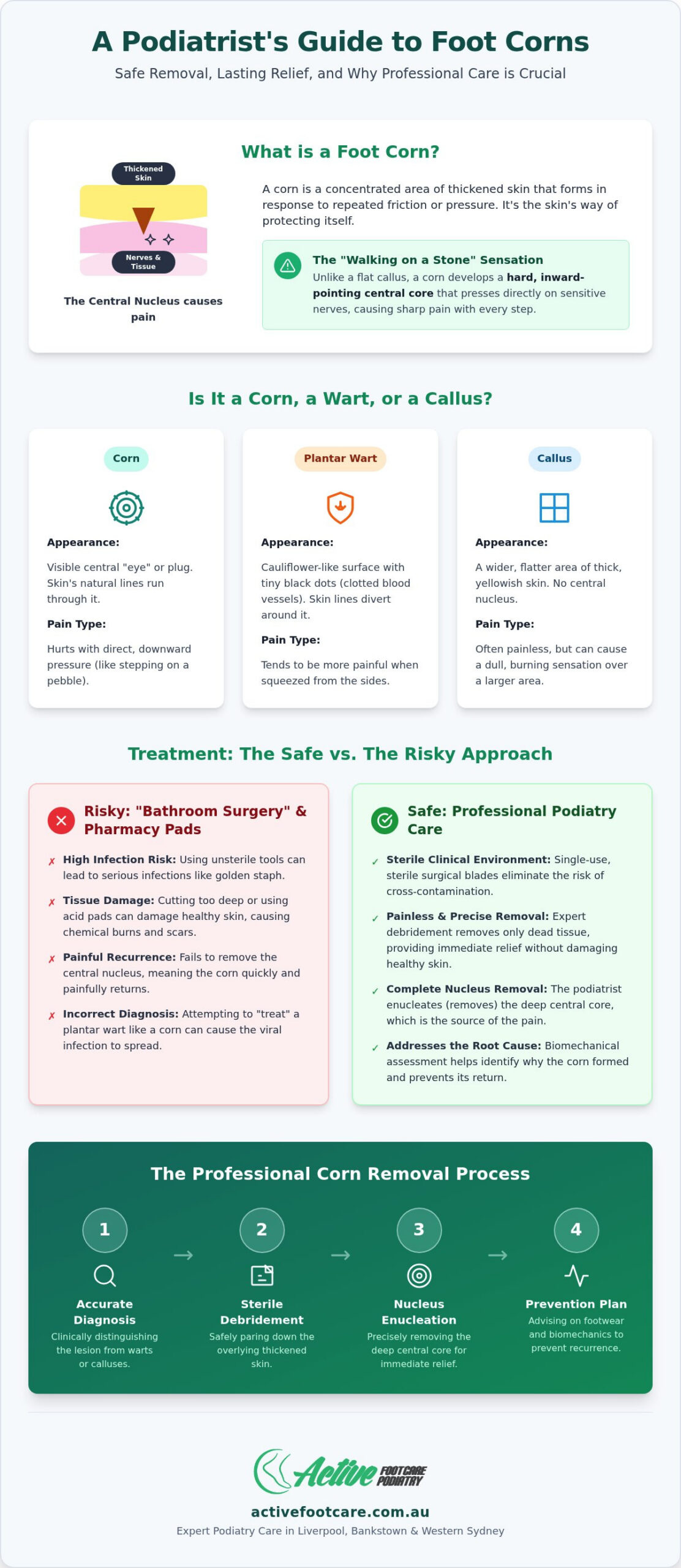
A foot corn, clinically known as a Corn (or clavus), is essentially a localised area of hyperkeratosis. This occurs when your skin thickens in a specific, concentrated spot as a protective response to repeated friction or pressure. While it might seem like a minor skin irritation, the internal structure of a corn is what causes such intense discomfort. Unlike a flat callus that spreads pressure over a wider area, a corn develops a hard central nucleus that points inward, pressing directly against the sensitive nerves in your foot.
This unique shape is exactly why many of our patients describe the sensation as “walking on a sharp stone” or a “tack.” Every step you take pushes that hard core deeper into the soft tissue below. Without the help of a professional corn removal podiatrist, the pressure remains, and the pain typically intensifies. We don’t just address the surface skin; we perform a precise clinical procedure to remove this central plug, which often provides immediate and significant relief.
It’s also vital to ensure that the lesion on your foot is actually a corn. To the untrained eye, a corn can look remarkably similar to a plantar wart or a deep-seated callus. However, the treatment for a viral wart is vastly different from the mechanical removal of a corn. We use specific clinical diagnostic techniques to identify the exact nature of the lesion, ensuring you don’t undergo unnecessary or ineffective treatments that could lead to further irritation.
Podiatrist vs. GP: Who Should You See?
While your local GP is excellent for general health concerns, they often lack the specialised sharp debridement tools and fine-motor training required for intricate foot procedures. Most general practices aren’t equipped with the specific surgical blades needed to safely enucleate a corn. Beyond the immediate removal, our team at Active Footcare brings biomechanical expertise to the table. We don’t just treat the symptom; we look at your foot structure to understand why the pressure is concentrated in that specific area, helping to break the cycle of recurrence through targeted advice or a gait analysis.
The Clinical Advantage of Sterile Treatment
Safety and hygiene are our primary concerns. In our clinical environment, we use single-use, sterile surgical blades for every procedure. This approach virtually eliminates the risk of cross-contamination or serious infections like golden staph, which are genuine risks when people attempt “bathroom surgery” with unsterile tools. Professional enucleation is significantly safer than home cutting because it allows for the precise removal of dead tissue without damaging the healthy, vascularised skin surrounding the corn.
Corns, Calluses, and Warts: Understanding the Difference
Identifying the specific type of lesion on your foot is the first step toward effective relief. While many people use the terms interchangeably, corns come in several distinct varieties, each requiring a different clinical approach. Hard corns, for example, typically form on the tops of toes or the balls of the feet where pressure is most intense. Soft corns, however, develop between the toes. Because these areas are naturally moist, the corn remains rubbery and whitish, often causing a stinging pain that makes wearing narrow shoes nearly impossible. You might also notice seed corns, which are tiny, dry clusters often found on the heel. While these are sometimes painless, they can become quite sensitive if they aren’t managed properly.
The most significant risk in self-diagnosis is confusing a corn with a plantar wart. Warts are viral infections, and treating them like a mechanical corn can lead to the virus spreading further across your foot or even to other members of your household. When you visit a corn removal podiatrist, we use specific clinical markers to ensure we are treating the right condition from the very beginning.
Identifying Your Foot Condition
We look for several key visual and physical cues during an assessment. A corn usually features a visible central “eye” or plug of hard skin, whereas a plantar wart often contains tiny black dots, which are actually small, clotted blood vessels. Pain patterns are also a major giveaway. Corns typically hurt when you apply direct, downward pressure, like stepping on a pebble. Warts, by contrast, tend to be more painful when you squeeze them from the sides. We also examine your skin striations; your natural “fingerprints” will run straight through a corn but will be diverted around the edges of a viral wart.
Why Diagnosis Dictates the Treatment
Getting the diagnosis right is critical because the wrong treatment can cause genuine harm. For instance, dermatologists recommend the following tips for managing thickened skin, but these strategies rely on knowing exactly what you are treating. Applying a medicated corn pad to a wart can cause the surrounding healthy skin to break down, leading to painful ulceration and infection. Similarly, the way we treat a soft corn between the toes involves moisture management and specific padding, which is entirely different from the debridement used for a hard corn on the sole. A professional skin assessment ensures that your treatment is precisely matched to your condition, preventing unnecessary pain and complications. If you’re uncertain about a spot on your foot, our team can provide a clear diagnosis during a professional consultation to ensure you receive the right care.
The Clinical Procedure: How Podiatrists Safely Remove Corns
If you’ve been dreading your appointment because you’re worried about pain, you can breathe a sigh of relief. One of the most common surprises for our patients is just how comfortable the procedure actually is. Since a corn consists entirely of dead skin cells (hyperkeratosis), a skilled corn removal podiatrist can work on the area without causing any distress to the healthy tissue underneath. Most people describe the sensation as a light scraping or tickling rather than anything painful, and the relief upon standing back up is often instantaneous.
During your initial consultation, we conduct a thorough physical assessment. This isn’t just a quick look; we examine your footwear, skin health, and joint mobility to understand the full picture of your foot health. This medical overview of corns confirms that while corns are a response to friction, the underlying cause is often a biomechanical abnormality. To address this, we may perform a Gait Analysis to observe your walking pattern. By identifying where your foot takes the most strain, we can provide long-term solutions to ensure you don’t find yourself back in the same cycle of discomfort.
The 5-Step Professional Removal Process
We follow a methodical, clinical process to ensure your feet are treated with the highest level of care. This structured approach ensures every corn is managed thoroughly and safely:
- Step 1: Softening – We may apply clinical solutions to the area to make the thickened skin more pliable and easier to manage.
- Step 2: Debridement – Using a sterile, single-use scalpel, we gently remove the overlying layers of callus that often hide the corn.
- Step 3: Enucleation – This is the core of the treatment. We carefully lift out the hard nucleus or “plug” of the corn, which is the primary source of your pain.
- Step 4: Smoothing – We use a high-grade clinical burr or file to smooth the skin edges, leaving your foot feeling soft and refreshed.
- Step 5: Protection – Finally, we apply offloading padding or silicone toe separators to redistribute pressure and keep the area comfortable as it heals.
Mobile Podiatry: Treatment in Your Own Home
Not everyone can easily make it into a clinic, especially when every step causes sharp pain. Active Footcare brings the same sterile clinical standards found in our surgery directly to your living room. Our Podiatrist Home Visit service is particularly beneficial for NDIS participants and seniors across Sydney who require professional care in a familiar, accessible environment. To prepare for your visit, simply find a comfortable chair with good lighting and have your most-worn shoes ready for us to inspect. We handle the rest, ensuring you receive expert treatment without the stress of travel.
The Dangers of ‘Bathroom Surgery’ and Pharmacy Corn Pads
When the sharp pain of a corn becomes unbearable, it is tempting to reach for a pair of nail scissors or a sewing needle to find relief. We often see patients who have attempted this “bathroom surgery,” only to arrive at our clinic with a much more serious problem than they started with. Using unsterile household tools introduces bacteria directly into the deeper layers of your skin, creating a significant risk of infection. Because the feet are often in a warm, moist environment inside shoes, a small nick can quickly escalate into a painful abscess or a systemic infection like golden staph. This same warm, humid environment inside footwear is also what makes conditions like athlete’s foot so persistent and difficult to eliminate without professional guidance.
Attempting to “dig out” a corn at home also ignores the body’s natural protective mechanisms. Your skin produces hyperkeratosis as a response to pressure; when you aggressively cut into it, the body often responds by producing even tougher, thicker skin in that area. This usually causes the corn to grow back larger and more painful than before. To achieve a lasting result, a corn removal podiatrist must remove the nucleus precisely while addressing the mechanical reason the pressure exists in the first place.
Medicated corn pads from the pharmacy carry their own set of risks that are frequently understated. These products contain salicylic acid, a potent chemical designed to dissolve skin. The problem is that the acid cannot distinguish between the hard corn and the healthy, soft skin surrounding it. This often leads to painful chemical burns and maceration, where the skin becomes white, soggy, and prone to breaking down. For our diabetic patients, these over-the-counter treatments are strictly off-limits. Because diabetes can affect both circulation and sensation, a chemical burn can rapidly turn into a non-healing foot ulcer. If you are managing a chronic condition, we strongly recommend booking a Diabetes Foot Assessment to ensure your skin is managed safely by a professional.
Complications of Self-Treatment
It is important to recognise when a self-treated corn has taken a turn for the worse. Signs of infection include persistent redness spreading away from the corn, localized heat, swelling, or the presence of pus. If you have poor circulation, these complications can lead to tissue death or deep ulcers that require months of medical intervention. For individuals living with neuropathy, “bathroom surgery” is exceptionally dangerous because they may not feel the depth of a cut or the onset of a serious infection until it has progressed significantly.
Safe Home Maintenance Between Appointments
While you should leave the sharp debridement to us, there are safe ways to manage your foot health at home. You can gently use a pumice stone or a foot file after a shower to keep the surface skin smooth, but never apply enough pressure to cause discomfort. Applying a high-quality urea-based moisturiser daily helps keep the skin supple and prevents the dry cracking that often accompanies corns. Finally, choosing footwear with a wide toe box reduces the friction that causes corns to form, providing your toes with the space they need to move without restriction.
Expert Corn Treatment in Western Sydney with Active Footcare
At Active Footcare, led by Principal Podiatrist Dr Maher Said, we believe that no one should have to endure the daily irritation of a painful corn. Our clinical approach is built on a foundation of medical expertise and a genuine commitment to patient comfort. We understand that by the time you search for a corn removal podiatrist, you’re likely seeking immediate relief from a condition that has impacted your ability to walk, work, and enjoy life. Our team provides compassionate, pain-free care for patients of all ages across the Western Sydney community, including Liverpool, Bankstown, and Moorebank.
Addressing the immediate pain is only the first step in our treatment journey. To ensure you stay comfortable in the long term, we look beyond the surface of the skin to understand the underlying mechanics of your feet. If our initial assessment or Gait Analysis reveals that your corns are caused by structural imbalances or the way your foot interacts with the ground, we can design Custom Orthotics to redistribute pressure effectively. This proactive approach helps prevent the friction that causes hyperkeratosis, moving you away from a cycle of temporary fixes and toward lasting physical ease.
Why Choose Active Footcare for Your Foot Health?
We pride ourselves on being more than just a clinical service; we are your partners in mobility and well-being. Our practice combines modern clinical facilities with the attentive, friendly service you expect from a trusted local health provider. As a registered NDIS provider, we are dedicated to making professional foot care accessible for everyone in our community, regardless of their mobility levels. Whether we are conducting a detailed Diabetes Foot Assessment or performing a precise enucleation of a stubborn corn, our focus remains on delivering thorough, personalised care that respects your individual health goals.
Book Your Consultation in Liverpool or Bankstown
Accessing expert care is designed to be straightforward and flexible to suit your lifestyle. If your foot pain is so severe that it makes travelling difficult, our Podiatrist Home Visit service brings our specialised equipment and sterile standards directly to your door across Western Sydney. Alternatively, you can visit our welcoming centres in Liverpool or Bankstown for a comprehensive in-clinic consultation. Don’t let a small corn dictate how you move through your day or limit your independence. Book your professional corn removal with Active Footcare today and take the first step toward walking with confidence and ease.
Step Toward Lasting Comfort and Mobility
Walking shouldn’t be a source of daily stress or sharp pain. Professional intervention is the only way to safely enucleate a corn while protecting the healthy skin around it. By choosing a clinical environment over risky “bathroom surgery,” you avoid the complications of infection and chemical burns that often follow home treatments. Our focus at Active Footcare is to provide you with immediate relief while using tools like gait analysis to stop these painful lesions from returning.
Under the guidance of Principal Podiatrist Dr Maher Said, our team offers the reliability and expertise you need to regain your mobility. Whether you visit our modern clinics or require a mobile podiatry home visit across Western Sydney, we are here to support your journey toward better foot health. As an NDIS Registered Provider, we ensure that high-quality, compassionate care is accessible to everyone in our community. If you are ready to walk without hesitation, it’s time to consult a professional corn removal podiatrist.
Book a Pain-Free Corn Removal Consultation with Active Footcare
We look forward to helping you move with ease and confidence once again.
Frequently Asked Questions
Does it hurt to have a corn removed by a podiatrist?
Professional removal is typically a painless procedure because we are working on layers of dead skin that lack nerve endings. Most patients feel a gentle scraping sensation and experience immediate relief once the pressure from the central nucleus is gone. If the area is particularly inflamed, we take extra care to ensure your comfort throughout the treatment.
How much does professional corn removal cost in Sydney?
The cost for treatment depends on whether you are a new or returning patient and the complexity of the condition. Many private health insurance providers offer rebates for podiatry services under their “Extras” cover. We recommend checking with your specific fund or contacting our clinic directly for a clear understanding of the fees associated with your care.
Will my corn grow back after a podiatrist removes it?
A corn may return if the underlying cause of the friction or pressure isn’t addressed. While the removal provides instant relief, we often suggest a Gait Analysis or Custom Orthotics to fix the mechanical issues causing the corn. By changing how your foot interacts with your shoes, we can significantly reduce the likelihood of recurrence.
Can a podiatrist remove a corn on the first visit?
Yes, we almost always perform the removal during your initial consultation so you can walk out of the clinic with less pain. Your first appointment involves a thorough assessment of your foot health followed by the clinical debridement of the corn. This immediate intervention is a core part of our commitment to your comfort.
Does Medicare cover corn removal for seniors in Australia?
Medicare may provide a rebate for podiatry if you have a chronic health condition and a valid GP Management Plan. If your doctor determines that your foot health is part of a complex care need, you might be eligible for up to five rebated sessions per calendar year. It’s best to discuss your eligibility with your General Practitioner first. For those seeking further information on senior care options, you can learn more about Aged Care Made Easy.
Is it safe for a diabetic person to have a corn removed?
It is not only safe but highly recommended that a person with diabetes sees a corn removal podiatrist rather than attempting home care. Because diabetes can reduce circulation and sensation, professional treatment in a sterile environment is vital to prevent infections or ulcers. We often include this as part of a comprehensive Diabetes Foot Assessment.
How long does a corn removal appointment take?
A standard appointment usually takes between 30 and 45 minutes. This timeframe allows us to conduct a proper physical assessment, perform the sterile debridement, and discuss preventative strategies like footwear changes. If you have multiple corns or require a more detailed biomechanical review, the session might take slightly longer to ensure thorough care.
Can Active Footcare provide corn removal at my home in Bankstown?
Yes, we offer a dedicated Podiatrist Home Visit service for residents across Bankstown and the wider Western Sydney area. We bring all the necessary sterile equipment to your home, providing the same high standard of clinical care you would receive in our surgery. This is an ideal option for those whose foot pain makes travelling to a clinic difficult.