


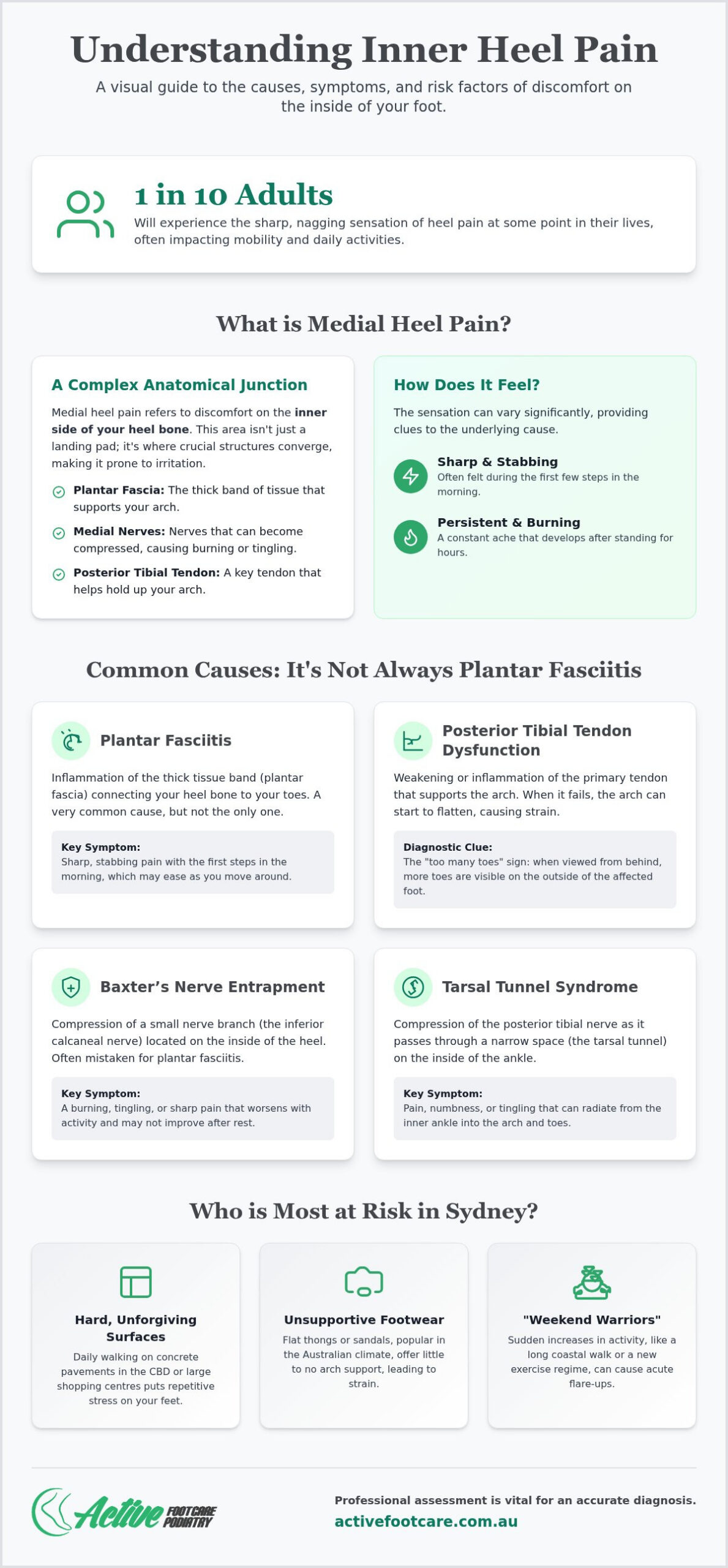
Did you know that approximately one in ten adults will experience the sharp, nagging sensation of heel inside pain at some point in their lives? It often begins with those first few ginger steps in the morning or a dull ache that makes a simple walk through the local shops feel like an ordeal. We know how frustrating it is to feel stuck, wondering if you should be resting or trying to exercise the pain away while your mobility feels increasingly limited.
You deserve to understand exactly why your foot is hurting and how to reclaim your comfort. This guide will help you uncover the likely causes of your discomfort and provide clear, actionable steps for at-home relief. We’ll also explore how professional gait analysis and specialised treatments can get you back on your feet, including how our mobile podiatry service brings expert care directly to your door to ensure you receive the support you need without the stress of travel.
Key Takeaways
- Understand that discomfort on the inner side of your foot involves a complex intersection of nerves and tendons, rather than just the plantar fascia.
- Learn how to distinguish between common plantar fasciitis and more complex nerve-related heel inside pain based on whether your symptoms are sharpest in the morning or feel like a constant burn.
- Discover practical at-home management strategies, such as the R.I.C.E. protocol and targeted calf stretches, to help settle acute flare-ups.
- Explore how modern clinical approaches like gait analysis and shockwave therapy address the root cause of chronic discomfort to restore your natural movement.
- Understand the benefits of personalised care that comes to you, ensuring professional podiatry is accessible for those with limited mobility or busy schedules.
What is Medial Heel Pain? Understanding Discomfort on the Inside of Your Foot
When we talk about medial heel pain, we are referring to the specific discomfort felt on the inner side of your heel bone. This area is far more than just a landing pad for your step; it is a complex anatomical junction where the Plantar fasciitis, various nerves, and the posterior tibial tendon all converge. Because so many structures meet in this small space, the sensations can vary significantly. You might experience a sharp, stabbing feeling during those first few steps out of bed, or perhaps a persistent, burning ache that develops after you have been standing for several hours. Some patients describe it as a dull throb that only seems to settle once they take their shoes off at the end of the day.
Ignoring these signals often leads to a frustrating cycle of compensation. When your heel hurts, you instinctively change the way you walk to avoid the pressure. This shift might offer temporary relief for your foot, but it frequently causes secondary issues in your knees, hips, or lower back. We often see patients who started with a minor ache on the inside of their heel and ended up with persistent joint pain elsewhere because their natural gait was disrupted. Addressing the root cause early is the best way to protect your overall mobility, a principle also emphasised by integrative specialists like Dr. Philip Boamah | Natural Medicine & Physical Therapy who focus on long-term functional recovery.
Why the Location of Your Pain Matters
The precise location of your discomfort provides essential clues for an accurate diagnosis. While pain at the very back of the heel often involves the Achilles tendon, heel inside pain is typically linked to the structures that support your arch. During the mid-stance phase of your gait, which is the moment your foot is flat on the ground and bearing your full body weight, the inner heel is under the greatest amount of pressure. If your foot structure allows for excessive rolling inward, these tissues become overstretched and irritated. Ultimately, medial heel pain is a symptom of underlying biomechanical stress that requires a tailored approach to resolve.
Who is Most at Risk in Sydney?
Living and working in Sydney presents specific challenges for foot health. Many of our patients spend their days walking on the hard, unforgiving concrete pavements of the Sydney CBD or navigating large shopping centres in Liverpool and Bankstown. The Australian climate also plays a role, as many of us prefer flat thongs or unsupportive sandals that offer very little structural integrity. We also frequently treat “weekend warriors” who experience sudden flare-ups after a long coastal walk or a new exercise regime. This combination of hard surfaces, unsupportive footwear, and sudden increases in activity creates the perfect environment for inflammation and strain to take hold.
Common Causes of Heel Inside Pain: It’s Not Always Plantar Fasciitis
While many people assume any discomfort in the foot is a simple case of strain, heel inside pain often involves a more complex set of contributors. It’s true that plantar fasciitis is a frequent diagnosis, but the medial side of the heel is home to several other structures that can become inflamed or compressed. Understanding these common causes of heel pain is the first step toward effective treatment. We often see patients who have tried to manage their pain at home for months, only to find that their self-treatment wasn’t addressing the actual source of the problem.
The ‘big four’ primary culprits include plantar fasciitis, posterior tibial tendon dysfunction (PTTD), Baxter’s nerve entrapment, and tarsal tunnel syndrome. Because these conditions often present with overlapping symptoms, a professional assessment is vital. Treating a nerve compression as if it were a simple ligament strain won’t just delay your recovery. It could potentially make the underlying irritation worse. Biomechanically, much of the strain in this area comes down to how your foot moves. If you have flat feet or a tendency toward over-pronation, the arch of your foot collapses slightly more than it should with every step, which places immense stress on the inner heel.
Posterior Tibial Tendon Dysfunction (PTTD)
The posterior tibial tendon is the primary workhorse for your arch. It runs down the inside of your ankle and attaches near the heel. If this tendon weakens or becomes inflamed, your arch begins to flatten and lose its structural integrity. One simple way we identify this is the ‘too many toes’ sign. When looking at your feet from behind, if we can see more toes on the outside of your foot than usual, it often indicates the arch has collapsed inward. This creates a specific, aching pain right along the inner ankle and heel bone that typically worsens after long periods of walking. For patients with persistent tendon weakness that doesn’t respond to rest alone, prolotherapy for foot pain can be a highly effective regenerative option that strengthens the ligaments and tendons supporting the arch.
Baxter’s Nerve Entrapment and Tarsal Tunnel
Sometimes the issue isn’t a tendon or a ligament, but a pinched nerve. Baxter’s nerve is a tiny branch that can become trapped near the inner heel, causing a distinct burning or tingling sensation. Similarly, Tarsal Tunnel syndrome occurs when the main nerve to the foot is compressed as it passes through a narrow space on the inside of the ankle. If you are experiencing these electric or pins-and-needles feelings, you might find our detailed guide on nerve pain in foot helpful for understanding the nuances of these conditions. If you’re unsure which of these conditions is causing your trouble, a professional gait analysis can provide the clarity you need to start the right treatment plan.
Plantar Fasciitis vs. Medial Nerve Pain: How to Tell the Difference
Distinguishing between these conditions requires a keen eye for how your symptoms manifest throughout the day. While plantar fasciitis typically presents as a sharp, stabbing sensation, medial nerve pain often feels more like an electric jolt or a persistent burn. We frequently treat patients in Bankstown and Liverpool who are managing both conditions simultaneously, which makes a professional biomechanical assessment even more vital. Understanding the “windlass mechanism” helps explain the fascia pain. As your big toe lifts to push off the ground, it winds the plantar fascia around the joint like a cable, increasing tension. If that tissue is already damaged, this mechanism triggers that familiar, localised sting on the inner heel.
Nerve-related heel inside pain is often far more temperamental. Because nerves are sensitive to pressure and inflammation, the discomfort can radiate or shift. It doesn’t always stay in one spot. Identifying the specific nature of your pain is the first step toward restoration. We focus on listening to your description of the sensation, as your personal experience is often the most reliable diagnostic tool we have.
The Morning Step Test
The first few steps after waking up are often the most telling. For those with plantar fascia issues, these steps feel like walking on glass because the ligament has tightened and contracted overnight. As you move around, the tissue warms up and the pain usually dulls to a manageable ache. Nerve-related heel inside pain behaves differently. It might feel slightly better after rest but then intensifies as your day goes on and local swelling increases, putting more pressure on the trapped nerve. We suggest keeping a simple pain diary to show your Sydney podiatrist. Recording exactly when the pain peaks and what activities trigger it helps us differentiate between mechanical strain and neurological irritation.
When to Suspect a Stress Fracture
Not all heel inside pain stems from soft tissue. A calcaneal stress fracture is a deeper concern that requires immediate attention. You can perform a simple “squeeze test” at home by firmly compressing the sides of your heel bone between your palms. If this causes deep, significant pain, it may indicate a bone issue rather than a tendon or nerve problem. Unlike fascia pain, which often settles once you are off your feet, a stress fracture usually results in a deep, throbbing ache that persists even during rest. In these cases, we typically recommend imaging, such as an X-ray or ultrasound, to ensure we are addressing the structural integrity of the bone itself.
At-Home Relief and Management Strategies
When the first steps of the morning feel like treading on sharp tacks, your immediate priority is settling the inflammation. We recommend starting with the R.I.C.E. protocol: Rest, Ice, Compression, and Elevation, to help manage acute flare-ups. This simple combination helps reduce blood flow to the inflamed area and provides much-needed soothing for the sensitive tissues on the inner side of your foot. In addition to physical rest, some patients find that high-quality supplements from Relieve Therapeutics can assist in managing the underlying inflammation. However, it is vital to be cautious with advice found online. While “Dr. Google” often suggests aggressive rolling on a frozen water bottle, this can actually aggravate heel inside pain if the underlying cause is a compressed nerve rather than simple fascia inflammation. Applying too much pressure to an already irritated nerve can delay your recovery significantly.
In our Australian climate, it is tempting to live in thongs year-round. Unfortunately, these flat sandals provide almost no arch support and force your toes to “claw” to keep the shoe on, which places extra strain on the medial side of your foot. Switching to a shoe with a firm heel counter and mid-foot stability can provide the structural support your foot needs to heal. We often find that simply changing footwear for a few weeks can make a noticeable difference in comfort levels while we work on a more permanent solution.
For those who spend their days working on the land or managing larger properties, durable and supportive footwear is essential to prevent these issues; you can learn more about Gidge Rural and their range of rural supplies and property equipment for those looking for high-quality outdoor gear.
Simple Stretches for Daily Relief
Targeted movement helps build resilience in the tissues that support your arch. Try these two gentle exercises to reduce tension:
- Seated Towel Stretch: Sit on the floor with your legs straight out in front of you. Loop a towel around the ball of your foot and gently pull the towel toward your body while keeping your knee straight. Hold for 30 seconds and repeat three times.
- Wall Stretch: Stand facing a wall with one foot in front of the other. Keep your back heel firmly on the ground and lean forward until you feel a gentle pull in your calf. This reduces the tension the calf muscle places on the heel bone.
Remember that while a gentle pulling sensation is normal, stretching should never cause sharp pain.
Footwear and Arch Support Basics
Selecting the right footwear is essential for protecting the inner heel from excessive weight-bearing stress. Look for shoes that you cannot easily twist or bend in the middle, as this stability protects the posterior tibial tendon. While off-the-shelf inserts can provide a temporary cushion for some, they rarely address the unique biomechanical triggers of your specific discomfort. Our custom orthotics are designed to provide long-term correction by realigning your gait and reducing the specific pressures that lead to chronic injury. If you are struggling to find relief at home, our team can provide a professional gait analysis to identify exactly which structures are under stress.
How Active Footcare Resolves Chronic Heel Pain in Western Sydney
Finding lasting relief for heel inside pain requires more than just a temporary fix; it demands a thorough understanding of your unique movement patterns. At Active Footcare, we believe that every patient deserves a clear path to recovery, which is why our process begins with a comprehensive biomechanical assessment. By examining the way your muscles, tendons, and joints work together, we can pinpoint the exact source of your discomfort. Our detailed approach ensures that we aren’t just masking the pain but addressing the structural imbalances that caused it in the first place, a philosophy shared by clinics like Medica Komórki Macierzyste that focus on advanced, non-surgical regenerative solutions.
A central part of this investigative process is a professional gait analysis in Sydney. We use modern diagnostic tools to observe your foot’s behaviour during every phase of your step. This allows us to see if your arch is collapsing or if your heel is striking the ground at an angle that puts undue stress on the medial nerves and tendons. Once we have this data, we can create a personalised management plan that might include custom orthotics, exercise rehabilitation, or advanced clinical therapies.
Advanced Clinical Treatments
For chronic cases where the tissue has become stubborn and resistant to traditional rest, we offer evidence-based interventions that stimulate the body’s natural repair mechanisms. We often recommend shockwave therapy for heel pain because it uses acoustic pressure waves to create micro-trauma in the damaged area. This process effectively restarts the healing response by increasing blood flow and metabolic activity in the stagnant tissue. It is a highly effective, non-invasive option that we perform right here in our clinic.
In addition to shockwave, we provide prolotherapy for heel pain as a regenerative solution. This involves targeted injections that strengthen weakened ligaments and tendons, helping to stabilise the inner heel and reduce chronic irritation. Patients dealing with broader foot and ankle instability may also benefit from exploring our comprehensive guide to prolotherapy for foot pain, which explains how this regenerative technique rebuilds tissue strength to address the root cause of persistent discomfort. These modern treatments provide a bridge between conservative care and more invasive surgical options, allowing most of our patients to return to their favourite activities without the need for a long recovery period.
While addressing specific biomechanical issues is crucial, many patients also seek holistic support for their general wellbeing; you can learn more about Dr.Vaishali Nore’s Homeopathy & Wellness Clinic and their natural approach to various health concerns.
Expert Care That Comes to You
We realise that for many residents in Campbelltown and Moorebank, the pain can be so debilitating that travelling to a clinic feels impossible. To bridge this gap, we offer a dedicated podiatrist home visit in Sydney. This service is especially vital for NDIS participants, seniors, or those with severe mobility limitations who require professional care in the comfort of their own environment. For older adults in particular, accessing podiatry services for aged care facilities can be the critical difference between maintaining independence and facing a higher risk of falls. We bring the expertise and equipment of our clinic directly to your doorstep, ensuring that location is never a barrier to your foot health.
Don’t let persistent discomfort dictate your lifestyle or keep you from enjoying the beautiful walking tracks and shopping centres of Western Sydney. Whether you visit us in person or require a mobile consultation, our team is committed to helping you walk with confidence and ease once again.
Restore Your Natural Movement Today
Living with persistent heel inside pain can make even the most basic daily tasks feel like a struggle. As we have explored, understanding whether your discomfort stems from a nerve entrapment, a tendon issue, or the plantar fascia is the essential first step toward a successful recovery. By combining thorough gait analysis with advanced clinical options like shockwave therapy, we move beyond simple symptom management to address the underlying biomechanical stress affecting your feet.
Our team, led by Principal Podiatrist Dr. Maher Said, is dedicated to providing personalised care that fits your lifestyle. Whether you visit our clinic or require the convenience of our NDIS registered mobile service for a home visit in Western Sydney, we are here to support your journey back to health. You don’t have to navigate this path alone or settle for limited mobility.
Book a Consultation with Active Footcare Today and take that vital first step toward a life free from foot pain. We look forward to helping you walk with comfort and confidence once again.
Frequently Asked Questions
Why does the inside of my heel hurt when I walk after sitting?
Pain after sitting occurs because the tissues in your foot contract and tighten while you are resting. When you stand up, these structures are suddenly forced to stretch and bear weight, which triggers a sharp, stabbing sensation. This is a common indicator of plantar fasciitis or potential nerve entrapment on the inner side of the heel.
Can flat feet cause pain on the inner side of the heel?
Flat feet are a significant contributor to discomfort because they cause the arch to collapse inward with every step. This movement, known as over-pronation, places excessive tension on the tendons and nerves located on the medial side of the foot. Over time, this repetitive stress often results in persistent heel inside pain.
Is inside heel pain a sign of a serious medical condition?
Most instances of inner heel pain are biomechanical in nature, but they can occasionally indicate more complex issues like a calcaneal stress fracture or systemic inflammation. If your pain is deep, throbbing, and does not improve with rest, it is important to seek a professional diagnosis. Early intervention helps prevent secondary issues from developing in your knees or hips.
How long does it take for medial heel pain to go away?
Approximately 80% of cases of plantar heel pain resolve well with appropriate conservative care within a few months. While minor strains might settle in several weeks, chronic heel inside pain often requires a more structured treatment plan over three to six months. We utilise evidence-based therapies like shockwave therapy to help stimulate a healing response in stubborn tissues.
What are the best shoes for pain on the inside of the heel?
The best footwear for this condition provides a firm heel counter and a stable midsole that resists twisting or bending in the centre. You should choose shoes that support your arch and prevent your foot from rolling inward excessively during your daily activities. We strongly advise against wearing flat thongs or unsupportive sandals while you are recovering from a flare-up.
Do I need a GP referral to see a podiatrist in Liverpool for heel pain?
You do not require a GP referral to book a private consultation for your foot concerns at our Liverpool clinic. Many patients with private health insurance can claim a portion of the cost back immediately through their provider. However, if you are seeking a Medicare rebate under a Chronic Disease Management plan, you will need to obtain the necessary paperwork from your GP first.
Can I get a podiatrist to visit my home in Bankstown for heel treatment?
Yes, Active Footcare provides professional podiatrist home visits for residents in Bankstown and across the Western Sydney region. Our mobile service is specifically designed to support NDIS participants and seniors who find it challenging to visit a traditional clinic. We bring the necessary diagnostic tools directly to your home to ensure you receive thorough, personalised care.
What is the difference between a heel spur and plantar fasciitis?
Plantar fasciitis refers to the irritation or degeneration of the thick band of tissue under your foot, while a heel spur is a calcium deposit that forms a bony protrusion on the heel bone. Although these conditions often occur together, the spur itself is rarely the primary cause of your discomfort. Because surgery is reserved for less than 5% of cases, focusing on treating the soft tissue usually provides the best relief. If you are looking for a structured clinical approach to resolving your discomfort, our dedicated guide to heel pain treatment in Sydney outlines the proven diagnostic and therapeutic pathways we use to achieve fast, lasting relief.