


Approximately 1 in 10 Australians will experience plantar fasciitis in their lifetime, yet many spend months waiting for the condition to simply fade away. There are few things as frustrating as an unresolved grade 3 heel pain treatment foot complaint. (Sydney) patients know all too well how that sharp, stabbing ache during your first morning steps can disrupt an active routine. If you are struggling to stand comfortably on hard floors or feel overwhelmed by conflicting advice regarding rest, stretching, and generic insoles, you are certainly not alone.
Achieving lasting relief requires matching your specific biomechanical pathology to targeted clinical care rather than relying on guesswork. In this guide, you will discover proven clinical heel pain treatments in Sydney, from custom orthotics and gait analysis to shockwave therapy, designed to resolve your persistent discomfort. We examine how an accurate diagnosis distinguishes plantar fasciitis from heel spurs or nerve entrapment, setting out a clear pathway to restore your daily mobility.
Key Takeaways
- Understand the mechanical triggers behind your heel discomfort, from micro-tears in the plantar fascia to calcaneal stress and nerve entrapment.
- Discover how comprehensive gait analysis identifies the exact origin of a persistent 3 heel pain treatment foot complaint. (Sydney) clinicians use these assessments to guide targeted, non-surgical recovery.
- Learn about modern, non-invasive therapies such as shockwave therapy, custom orthotics, and prolotherapy injections designed to stimulate deep tissue repair.
- Find out why complete rest rarely resolves chronic symptoms, and how progressive loading exercises build long-term plantar fascia resilience.
- Explore accessible treatment pathways across Sydney, featuring dedicated clinic consultations and mobile home visits tailored to your mobility needs.
Understanding Your Foot Complaint: Why Does Your Heel Hurt?
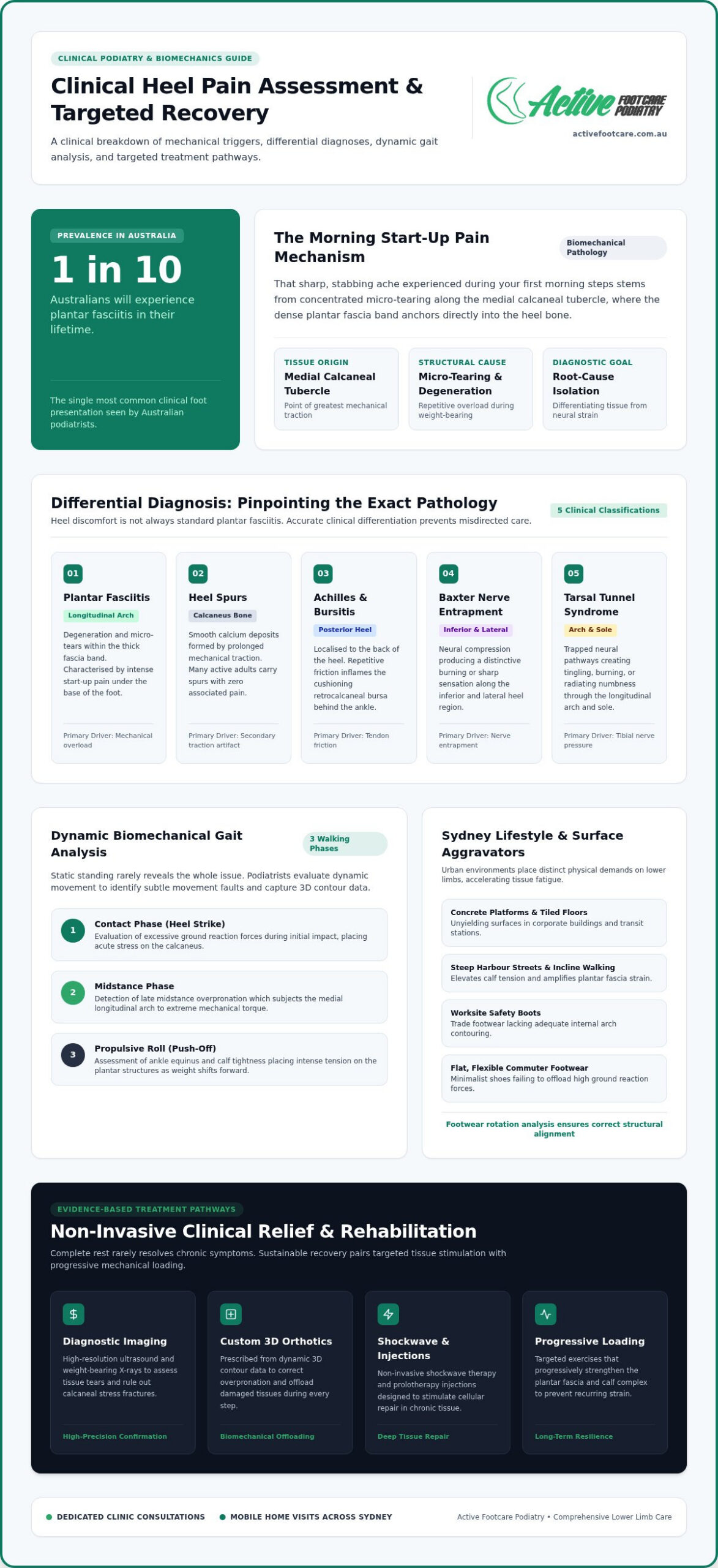
Heel pain remains the single most common presentation seen by Australian podiatrists. Every day, thousands of people take their first steps out of bed only to be greeted by an intense, burning ache under the base of the foot. This morning start-up pain usually signals micro-tearing along the medial calcaneal tubercle, where the dense plantar fascia band anchors into the heel bone. When evaluating a chronic grade 3 heel pain treatment foot complaint. (Sydney) clinicians consistently look beyond surface symptoms to assess the plantar fascia, calcaneus bone, and surrounding neural pathways.
Gaining a clear clinical diagnosis is critical. It allows practitioners to separate mechanical tissue overloading from systemic issues or referred nerve irritation. For complete clarity when understanding your foot complaint, pinpointing the exact tissue under stress ensures that care targets the root biomechanical flaw rather than simply masking the ache.
Plantar Fasciitis vs Heel Spurs: Clarifying the Diagnosis
Patients frequently arrive at our clinic worried that a calcaneal bone spur is digging into their flesh. In reality, plantar fasciitis involves degeneration and micro-tears within the thick band supporting your longitudinal arch. Heel spurs, by contrast, are smooth calcium deposits formed by prolonged mechanical traction. Many active adults carry spurs with zero pain. Restoring soft-tissue elasticity and correcting arch mechanics resolves discomfort far more effectively than fixating on the spur itself.
Lesser-Known Causes of Persistent Heel Complaints
Not every presentation stems from the arch. Discomfort localised to the back of the heel often points to Achilles tendinopathy or retrocalcaneal bursitis, where repetitive friction inflames the cushioning bursa behind the ankle. Similarly, trapped nerves can mimic soft-tissue strain:
- Baxter nerve entrapment: Produces a burning or sharp sensation along the inferior and lateral heel.
- Tarsal tunnel syndrome: Creates tingling or radiating numbness through the arch and sole.
When you notice persistent heel inside pain, an in-depth differential assessment is vital. Pinpointing the exact pathology prevents weeks of misdirected therapies and sets the stage for genuine physical ease.
Clinical Assessment: How a Sydney Podiatrist Identifies the Cause
Effective treatment begins with an exhaustive clinical examination. Rather than merely pressing on the painful spot, your podiatrist conducts a detailed clinical evaluation of your daily routine, occupation, and footwear. Palpation helps isolate tenderness along the medial calcaneal process or the central plantar band. Next, weight-bearing tests evaluate ankle equinus and calf tightness, both of which place intense tension on the plantar structures during push-off.
When chronic tissue damage is suspected, diagnostic imaging provides clear visual confirmation. Referral pathways for high-resolution ultrasound or weight-bearing X-rays rule out high-grade tears and stress fractures. This precision ensures your grade 3 heel pain treatment foot complaint. (Sydney) assessment identifies the exact physiological driver before selecting targeted clinical therapies or reviewing advanced heel pain treatment options.
Digital and Dynamic Biomechanical Gait Analysis
Static standing rarely tells the whole story. Podiatrists analyse the three phases of your walking gait: contact, midstance, and propulsive roll. Excessive ground reaction forces during heel strike paired with late midstance overpronation subject the medial arch to excessive mechanical torque. Identifying these subtle movement faults allows clinicians to capture 3D contour data and prescribe precision custom orthotics that offload damaged tissues during every step.
Identifying Footwear and Lifestyle Aggravators Across Sydney
Sydney’s urban environment places distinct physical demands on your lower limbs. Daily foot traffic on unyielding concrete platforms, steep harbour streets, and corporate tiled floors accelerates tissue fatigue. Trade workers wearing safety boots with inadequate arch support and commuters walking in flat, flexible footwear routinely present with overloaded heels.
A clinical assessment evaluates your current footwear rotation against your personal arch profile, providing practical structural criteria to protect healing tissues. If stubborn symptoms are interfering with your working week, you can schedule a clinical consultation with our team to uncover the mechanical drivers behind your pain.
Advanced Heel Pain Treatment Options: Non-Invasive Clinical Relief
Modern podiatry prioritises non-surgical, evidence-based therapies to resolve persistent foot pain. While surgical release was once considered for unresponsive cases, contemporary practice centres on restoring soft-tissue health through targeted mechanical and biological stimulation. When dealing with a long-standing grade 3 heel pain treatment foot complaint. (Sydney) podiatrists balance rapid comfort measures with therapies designed to remodel degenerate connective tissue. By aligning treatment modalities with tissue chronicity and lifestyle demands, recovery becomes predictable and lasting.
Extracorporeal Shockwave Therapy (ESWT) for Chronic Plantar Fascia Pain
Extracorporeal shockwave therapy delivers high-energy acoustic soundwaves straight into injured plantar tissues. These pressure pulses break down stubborn adhesions, stimulate localised microcirculation, and prompt cellular repair pathways. Research indicates that shockwave therapy achieves a 70% to 80% success rate for chronic heel pain, making it an excellent intervention for issues persisting beyond six weeks. Explore our dedicated clinical approach through our guide on shockwave therapy for heel pain.
Custom Orthotics and Biomechanical Realignment
Generic gel cups and chemist inserts often cushion the foot without addressing underlying mechanical imbalances. True functional control requires medical-grade devices crafted from precise dynamic data. Unlike retail inserts, prescription devices offer targeted advantages:
- Precision offloading: Shifts high impact force away from the vulnerable medial calcaneal tubercle.
- Dynamic arch support: Regulates excessive pronation through the midstance phase of your stride.
- Form-factor versatility: Tailored specifically to fit your daily work boots, runners, or formal dress shoes.
Prolotherapy Injections for Stubborn Connective Tissue Tears
For chronic ligamentous micro-tears that fail to respond to standard offloading, prolotherapy introduces an effective regenerative option. A mild dextrose solution is injected near the damaged attachment, triggering a local healing cascade that encourages the body to deposit fresh, resilient collagen fibres. Unlike corticosteroid injections, which carry risks of fat pad atrophy or structural rupture, prolotherapy supports tissue integrity over the long term. Learn how this technique works in practice by reading our detailed resource on prolotherapy for heel pain.
Home Care vs Professional Intervention: What Truly Works?
Resting your foot feels like common sense when every step causes agony. Complete rest, however, actually reduces tissue load tolerance. The plantar fascia contracts and tightens during prolonged non-weight-bearing periods, which is precisely why that initial morning step produces such a sharp bite. Resolving a persistent grade 3 heel pain treatment foot complaint. (Sydney) patients face daily means replacing passive inactivity with progressive rehabilitation. Controlled mechanical tension encourages new cellular alignment, whereas prolonged immobilisation weakens the surrounding intrinsic musculature.
Targeted rehabilitation pairs eccentric loading of the Achilles tendon and plantar fascia with structured interim supports. Rigid clinical strapping redistributes tensile strain, while night splints keep the connective tissues in a gentle, lengthened state overnight. When executed alongside guided joint mobilisation, these conservative therapies support tissue recovery while protecting your foot from repetitive re-injury.
Evidence-Based Self-Management Strategies for Morning Relief
Simple morning rituals can substantially diminish start-up stiffness before you stand up. Begin by gently extending your big toe backward toward your shin for thirty seconds while still in bed, engaging the windlass mechanism to prime the arch. Rolling the sole over a frozen water bottle for five minutes cools inflamed local tissue while providing light myofascial massage. Above all, steer clear of walking barefoot on unyielding floorboards or polished tiles; slip immediately into supportive house footwear with a slight heel pitch.
Red Flags Demanding Immediate Podiatric Assessment
Self-management has definite limits. Certain symptoms signal deeper structural failure or neural complications that home exercises cannot safely fix:
- Nocturnal or resting pain: Throbbing discomfort that wakes you from sound sleep.
- Sudden loading failure: An acute inability to support body weight on the limb.
- Radiating neurogenic symptoms: Pricking, pins-and-needles, or numbness traveling toward the forefoot.
Differentiating plantar fasciopathy from systemic conditions or complex nerve pain in foot structures requires formal diagnostic assessment. Whether you reside in Liverpool, Campbelltown, or inner Sydney, you can book your comprehensive foot assessment today to stop the cycle of recurring heel irritation.
Expert Heel Pain Care in Sydney: In-Clinic & Home Visits
Accessing high-level clinical podiatry should not require navigating difficult transport links when every step causes discomfort. While many practices concentrate solely on the CBD or Eastern Suburbs, Active Footcare delivers comprehensive diagnostic and therapeutic solutions directly to diverse Sydney communities. Successfully resolving a stubborn grade 3 heel pain treatment foot complaint. (Sydney) residents experience daily requires accessible care, whether delivered inside a fully equipped consultation room or within the comfort of your own home.
Our clinical approach extends well beyond immediate symptom reduction. We work closely with you to establish sustained tissue resilience through custom orthotics, targeted gait analysis, and progressive load training. This structured maintenance framework strengthens intrinsic foot structures, substantially lowering the likelihood of future recurrence so you can stay active without hesitation.
Convenient Care Across South Western Sydney
Led by Principal Podiatrist Dr. Maher Said, our clinical team supports individuals and families across Liverpool, Bankstown, Moorebank, and Campbelltown. Local appointments remove the stress of prolonged driving or train commutes while managing painful feet. During your consultation, our clinicians take the time to explain your biomechanical assessment clearly, ensuring you understand every phase of your recovery program.
Mobile Podiatrist Home Visits for Reduced Mobility
For individuals facing acute morning pain, postoperative limitations, or frailty, travelling to an external appointment can be an overwhelming barrier. Our mobile podiatry service eliminates this hurdle by bringing specialised diagnostic tools and clinical interventions straight to your door:
- In-home assessments: Thorough physical evaluations, diagnostic palpation, and biomechanical reviews performed in your living space.
- Aged care and rehabilitation: Attentive, compassionate consultations tailored for older adults requiring dedicated mobility support.
- NDIS registered services: Dedicated capacity to assist self-managed, plan-managed, and agency-managed NDIS participants.
No one should have to put up with progressive plantar strain due to transport challenges. Explore how our mobile podiatrist home visit Sydney service delivers expert, non-surgical foot relief right to your doorstep.
Reclaim Pain-Free Steps and Active Living
Living with sharp morning heel pain or limping through your working day does not have to become your daily norm. By identifying the exact biomechanical source of your strain and applying modern clinical modalities such as radial shockwave therapy and bespoke custom orthotics, lasting tissue repair is entirely achievable. Overcoming a chronic grade 3 heel pain treatment foot complaint. (Sydney) active individuals face begins with replacing temporary guesswork with targeted, evidence-based clinical care.
Led by Principal Podiatrist Dr. Maher Said, the team at Active Footcare is dedicated to guiding your recovery with warm, reassuring expertise. Whether you attend one of our convenient clinics in Liverpool, Bankstown, Moorebank, or Campbelltown, or require the accessibility of our dedicated mobile home visits, we partner with you at every stage. Book your comprehensive heel pain assessment with Active Footcare today and take your first confident step towards easy, unrestricted movement.
Frequently Asked Questions
How do I know if my heel pain is plantar fasciitis or something else?
Plantar fasciitis characteristically produces sharp pain beneath the heel during your first morning steps that eases as you move around. Pain that throbs constantly at night or tingles into the toes often indicates nerve irritation or a calcaneal stress fracture instead. A clinical assessment by a podiatrist uses physical palpation and gait analysis to distinguish soft-tissue strain from underlying skeletal issues.
What is the fastest clinical treatment to stop acute heel pain?
Rigid sports taping combined with immediate offloading provides the quickest reduction in acute heel irritation. Strapping restricts abnormal tissue elongation, offering instant support during walking. To resolve a severe grade 3 heel pain treatment foot complaint. (Sydney) podiatrists often combine this early offloading with shockwave therapy and custom footwear adjustments, helping calm acute inflammation while addressing underlying mechanical stress.
Can custom orthotics permanently cure my heel complaint?
Custom orthotics do not simply mask symptoms; they correct the faulty foot mechanics that created tissue overload in the first place. By realigning the subtalar joint and redistributing ground reaction force away from the heel, orthoses give damaged fascia time to heal. When paired with targeted calf strengthening and load management, orthotics provide a reliable, long-term barrier against future flare-ups.
How many sessions of shockwave therapy are typically required for heel pain?
Most patients require between three and five weekly sessions of extracorporeal shockwave therapy to stimulate significant cellular regeneration. Each non-invasive appointment takes roughly ten to fifteen minutes. While minor tenderness may occur after treatment, most individuals notice meaningful cumulative improvements in morning comfort and walking tolerance by their third or fourth visit, particularly when following an active rehabilitation plan.
Is a referral from a GP necessary to see a podiatrist in Sydney?
You don’t need a GP referral to book a private podiatry consultation in Sydney. You can schedule an appointment directly as a private patient and claim immediate rebates through private health insurance extras. If you manage a chronic medical condition, your GP can prepare a Chronic Disease Management plan, which provides Medicare rebates for up to five allied health visits each calendar year.
Can Active Footcare treat my heel pain at home if I cannot travel to a clinic?
Yes, Active Footcare provides comprehensive mobile home visit services across Liverpool, Bankstown, Moorebank, Sydney, and Campbelltown. Our mobile podiatrists bring diagnostic equipment directly to your residence to manage an immobilising grade 3 heel pain treatment foot complaint. (Sydney) seniors, NDIS participants, and postoperative individuals can receive thorough assessments, strapping, and custom orthotic fittings without leaving the house.
What should I wear or bring to my first heel pain consultation?
Wear loose, comfortable clothing such as shorts or trousers that roll easily above your knees so your podiatrist can inspect lower leg alignment. Please bring the shoes you wear most frequently, including everyday work shoes, running trainers, and work boots. If you have any recent X-rays, ultrasound scans, doctor referral letters, or previous orthotics, bring those along as well.