

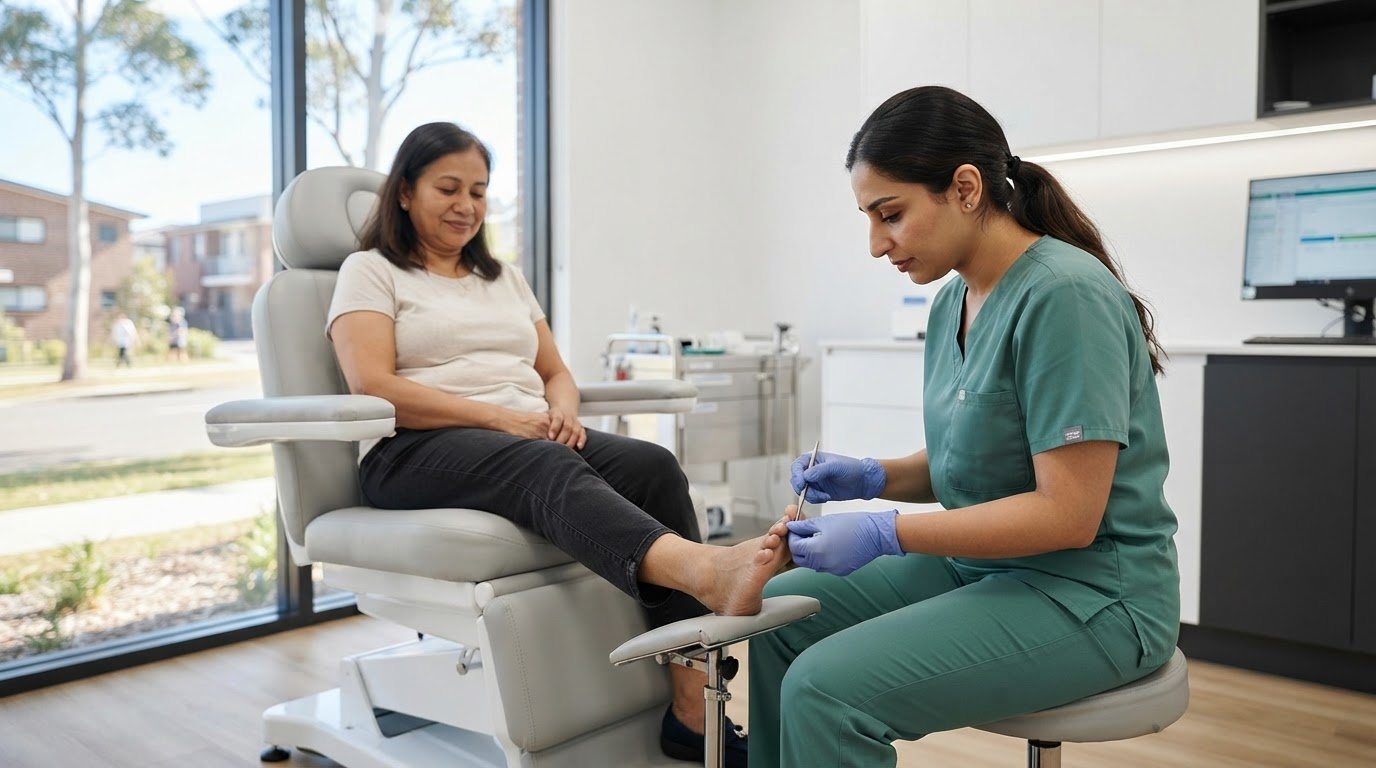
What if a recurring ingrown toenail needs more than another home remedy to keep the pain away? If you’re looking for ingrown toenail removal in Sydney, it’s understandable to want lasting relief while feeling nervous about needles or a clinical procedure. Throbbing pain can make work boots and everyday shoes difficult to wear, and repeated symptoms can be frustrating.
A podiatrist can assess the nail and explain suitable treatment options, including whether removing the troublesome edge and treating its growth area may help prevent it from growing back into the skin. You can discuss what to expect and raise concerns about discomfort before deciding how to proceed. This article covers professional treatment, recovery and aftercare, and why recurring symptoms deserve assessment rather than attempts to cut into the nail yourself. Active Footcare, led by Principal Podiatrist Dr Maher Said, offers podiatry care in Liverpool and home visits in the local area. The aim is to help you understand your options and move towards more comfortable steps with informed, personalised care.
Key Takeaways
- Learn what can contribute to an ingrown toenail, including nail-trimming habits, footwear and nail shape.
- Understand how a podiatrist can assess whether conservative care or partial nail avulsion may suit your situation.
- Compare podiatric care with other treatment options when considering ingrown toenail removal in Sydney.
- Find out what recovery and basic aftercare may involve, including keeping the area clean and following dressing advice.
- Know what to consider when seeking foot care in Liverpool, Bankstown, Moorebank or Campbelltown, including whether a home visit may be suitable.
What is an Ingrown Toenail and Why Does it Require Removal?
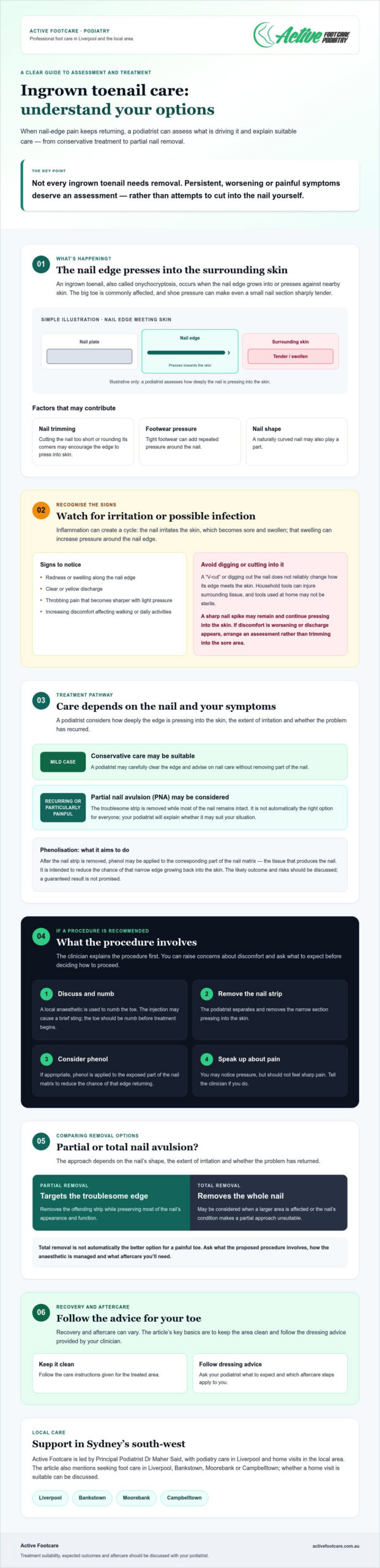
An ingrown toenail, medically known as onychocryptosis, occurs when the nail edge grows into or presses against the surrounding skin. The big toe is commonly affected, and even a small section of nail can cause sharp tenderness when a shoe presses on it. For a plain-language overview of causes and management options, see What is an ingrown toenail.
Several factors can contribute. Cutting the nail too short or rounding its corners may encourage the edge to press into the skin. Tight footwear can add repeated pressure, while a naturally curved nail shape may also play a part. Not every ingrown nail needs removal. A podiatrist can assess how deeply the nail is pressing into the skin and discuss suitable care, particularly if symptoms keep returning.
Inflammation can create a cycle: the nail irritates the skin, which becomes sore and swollen, and the swelling can increase pressure around the nail edge. If the skin breaks, infection may develop, adding tenderness and discharge. Ongoing pain or infection can make it harder for the area to settle unless the cause is addressed. An assessment helps identify what may be driving the problem and which treatment approach could be appropriate.
Recognising the Signs of Infection
Look for redness and swelling along the nail edge, or clear or yellow discharge. Some people describe a throbbing pain that becomes sharper with light pressure from a sock, shoe or gentle touch. If discomfort is worsening, discharge appears, or the toe is increasingly inflamed, arrange a medical assessment rather than trying to cut the nail yourself. Prompt advice is particularly sensible when symptoms are affecting walking or daily activities.
The Risks of DIY Home Trimming
It can be tempting to dig out the nail or make a “V-cut” in its centre, but neither approach reliably changes how the nail edge meets the skin. Cutting into a sore area with household tools can injure the surrounding tissue, and tools used at home may not be sterile. Trying to treat it yourself can worsen irritation or delay appropriate care, especially if infection is already present.
A home attempt can leave a sharp spike of nail behind, which may continue pressing into the skin and intensify pain and inflammation.
For persistent or painful symptoms, a podiatrist can examine the toe and explain the options without rushing you into a procedure. If you’re considering ingrown toenail removal in Sydney, professional guidance can help you understand a suitable next step for your situation.
Professional Removal Techniques and Treatment Options
Treatment depends on how deeply the nail edge is pressing into the skin and whether the problem keeps returning. For a mild case, a podiatrist may carefully clear the edge and advise on nail care without removing part of the nail. If the problem is recurrent or particularly painful, a partial nail avulsion (PNA) may be considered. This removes only the troublesome strip, leaving most of the nail intact.
To reduce the chance of that strip growing back into the skin, the podiatrist may apply phenol to the corresponding part of the nail matrix, the tissue that produces the nail. This is called phenolisation. It is intended to stop regrowth in that narrow area, but your podiatrist will explain the likely outcome and any risks rather than promise a guaranteed result. Healthdirect also provides practical information about ingrown toenail symptoms and causes.
Step-by-Step: What Happens During the Procedure
The clinician first discusses the procedure and uses a local anaesthetic to numb the toe. The injection may cause a brief sting, but the toe should be numb before treatment begins. The podiatrist then separates and removes the narrow nail section pressing into the skin. If appropriate, phenol is applied to the exposed part of the nail matrix to reduce the chance of that edge returning. You may notice pressure during the procedure, but you should not feel sharp pain. Tell the clinician if you do.
Total vs. Partial Removal
Partial removal targets the offending edge while preserving most of the nail’s appearance and function. Total nail avulsion removes the whole nail and may be considered when the problem affects a larger area or the nail’s condition makes a partial approach unsuitable. It is not automatically the better option for a painful toe.
Your podiatrist will assess the nail’s shape, the extent of irritation and whether the problem has recurred before recommending an approach. When comparing options for ingrown toenail removal in Sydney, ask what the proposed procedure involves, how the anaesthetic is managed and what aftercare you’ll need. Active Footcare offers ingrown toenail procedures. If travelling is difficult, ask the team whether an assessment or treatment at home may be suitable. For personalised guidance, you can learn more about podiatry care from Active Footcare as you consider your next step.
Comparing Clinical Care and General Practitioner (GP) Treatment
Both a GP and a podiatrist can help assess a sore, inflamed toe, but their roles may differ. A GP can check for infection and may prescribe antibiotics when appropriate. Antibiotics can treat a bacterial infection, but they do not remove a nail edge that is still pressing into the skin. A podiatrist focuses on foot and nail problems and can assess whether conservative care or a nail procedure is suitable.
For a procedure, a podiatrist uses instruments designed for working around the nail and surrounding toe tissue. The choice of treatment depends on the nail, the symptoms and your health, rather than simply using a particular tool. Recurrence also depends on factors such as nail shape and the treatment performed, so it would not be accurate to claim that one type of practitioner always achieves a better result. Ask what the proposed treatment addresses and how it aims to reduce the chance of the same edge becoming problematic again.
Expertise in Local Anaesthesia
For nail procedures, a podiatrist may use a digital block, injecting local anaesthetic near the base of the toe so it becomes numb. They’ll check the area before starting, and you should let them know if you feel sharp pain. The time needed for an appointment depends on the assessment and treatment. Podiatrists can also consider pressure factors, such as footwear or the way the nail grows, when discussing why the problem may have developed.
Booking and Coordinating Care
Private patients can generally contact a podiatrist directly to ask about an assessment, without first arranging a GP referral. If you’re an NDIS client, check with your plan manager or provider whether the specific treatment is covered. Coverage should not be assumed. If you have a GP involved in your care, ask the podiatrist how relevant health information or follow-up should be coordinated.
For people who find travelling difficult, Active Footcare offers home visits in its local service area, including Liverpool and Bankstown. Read about the podiatrist home visit service to see whether this option may suit your circumstances. A discussion with the podiatrist can help clarify the assessment, anaesthetic and treatment options before you decide how to proceed with ingrown toenail removal in Sydney.
Recovery and Aftercare: Getting Back on Your Feet in Sydney
After ingrown toenail removal, your toe will be dressed and you’ll receive instructions for looking after it at home. In the first 24 to 48 hours, take it easy and keep pressure off the treated toe where possible. Your podiatrist will explain when and how to change the dressing, and whether it needs to stay dry at particular times. Follow their specific advice, as aftercare can vary with the procedure and your health.
Wear open-toed or roomy footwear if it’s comfortable, and avoid tight shoes that rub against the toe. Many people can walk out of the clinic, but that does not mean the toe is ready for every activity. Returning to work depends on your role and how comfortable you feel in the footwear it requires. Some people may return to work within 48 hours, while full healing may take two to six weeks. Ask your podiatrist before resuming sport, running or a game of footy, as the timing depends on healing and the activity involved.
Managing Post-Procedure Comfort
As the local anaesthetic wears off, some tenderness is possible. Ask your clinician whether an over-the-counter pain reliever is suitable for you, and follow their advice and the product directions. People often find the discomfort after treatment easier to manage than the persistent pressure from an ingrown nail, though experiences differ. Mild tenderness should gradually improve. Increasing pain, spreading redness, worsening swelling, pus or feeling unwell warrants prompt advice from your clinician.
Preventing Future Ingrown Nails
Once your podiatrist says it’s appropriate, trim nails straight across rather than rounding the corners or cutting them very short. Choose shoes with enough room around the toes. Enclosed footwear, common in cooler or wet weather, should not squeeze or rub the nail edges. If your podiatrist identifies gait or pressure factors that may be contributing to toe problems, ask whether custom orthotics could form part of a broader plan. They are not a direct treatment for an ingrown nail, but may be relevant where foot mechanics are a concern.
Planning ahead can make recovery more manageable. If you’re considering ingrown toenail removal in Sydney, Active Footcare can provide personalised advice about treatment and aftercare. Ask Active Footcare about your footcare options and what may suit your circumstances.
Ingrown Toenail Removal in Sydney at Active Footcare
Persistent toe pain can make even getting into work shoes a challenge. At Active Footcare, Principal Podiatrist Dr Maher Said leads a team focused on friendly advice and treatment tailored to each person. An assessment gives you the chance to explain what’s been happening, ask questions about a procedure and discuss an approach that suits your needs.
For people seeking ingrown toenail removal in Sydney, Active Footcare offers podiatry care in Liverpool and home visits in the local area. If pain, mobility or other circumstances make travelling difficult, a home visit may offer a more convenient way to access podiatry care. Contact the team to check whether a visit is available in your location and discuss what care may be suitable.
Serving Liverpool, Bankstown and Western Sydney
Active Footcare serves people in Liverpool, Bankstown, Moorebank, Campbelltown and the wider Sydney area. The team can assess the nail and explain suitable options, including what a procedure and aftercare may involve. If you’re an NDIS client, confirm with your plan manager or provider whether the specific toenail treatment is covered and check the arrangements with the clinic before booking. For information on another foot concern, you can read the clinic’s page about Achilles tendonitis in Sydney.
Preparing for an Appointment
To ask about an appointment, use the current contact details published by Active Footcare and confirm whether an in-clinic consultation or home visit is appropriate. Bring a list of your medications and any relevant health information. The shoes you wear most often can also help the podiatrist understand where pressure or rubbing may be affecting your toe. If you have questions about anaesthetic, treatment choices or healing, write them down so you can raise them during your discussion.
There’s no need to quietly put up with ongoing toe pain. A podiatrist can examine the nail, explain your options and help you decide on a suitable next step. Clear advice and individualised care can help you understand what to expect.
Take the Next Step Towards Comfortable Walking
Recurring toe pain deserves more than another attempt to trim the nail at home. A podiatrist can assess what’s causing the irritation, explain whether conservative care or a procedure may be appropriate, and guide you through aftercare. For ingrown toenail removal in Sydney, a tailored clinical approach can help you understand your options without assuming every case needs the same treatment.
At Active Footcare, Dr Maher Said leads a friendly, professional team providing care in Liverpool and home visits in the local area. If you’re an NDIS client, ask the team whether your specific treatment may be covered by your plan. Contact Active Footcare to discuss an ingrown toenail assessment and your next step towards more comfortable walking.
Frequently Asked Questions
Does ingrown toenail surgery hurt during the procedure?
The toe is numbed with local anaesthetic before treatment, so you should not feel sharp pain during the procedure. The anaesthetic injection may briefly sting, and you might notice pressure while the podiatrist works. Let them know if you feel pain so they can check the area. If you’re anxious about needles, mention this when arranging your assessment.
How long does it take to recover from ingrown toenail removal?
Healing time varies with the procedure and your individual circumstances. The treated toe may be tender at first, and you’ll need to follow the dressing and care instructions provided by your podiatrist. Healing can take around two to six weeks. Your clinician can advise when to resume activities such as sport, based on how the toe is progressing. Contact them if symptoms worsen or you’re unsure whether healing is on track.
Will my toenail look normal after a Partial Nail Avulsion?
A partial nail avulsion removes only the affected strip, leaving most of the nail in place. If the treated edge is prevented from regrowing, the nail may look a little narrower than before. Appearance depends on the nail’s shape and the amount removed. Ask your podiatrist to describe the expected result for your toe before treatment, especially if you have concerns about how the nail will look once the area has healed.
Can I drive myself home after the nail removal procedure?
Check with your podiatrist before the procedure, as driving suitability depends on which toe is treated, your comfort and whether you can safely operate the pedals. If you’re unsure, arrange a lift or another way home. Don’t drive if pain, numbness or medication affects your ability to control the car. Discussing your transport plans beforehand gives the clinician a chance to advise you about your situation.
Is ingrown toenail removal covered by the NDIS in Sydney?
NDIS funding for a specific toenail procedure is not automatic. If you’re an NDIS client, check with your plan manager or provider whether the treatment is covered, and confirm the arrangements with the clinic. A plan manager or support coordinator may help clarify funding and any documentation required. Check coverage before booking so you understand the arrangements for your circumstances.
What happens if I leave an ingrown toenail untreated?
The nail edge may continue irritating the surrounding skin, and symptoms can progress from tenderness to increased redness, swelling or discharge. Pain may also interfere with wearing shoes and walking comfortably. If symptoms are worsening, the area appears infected or you have a health condition that affects your feet, seek advice from a podiatrist or doctor. Avoid digging into the nail yourself, as this can injure the skin and make assessment more difficult.
How many times can a toenail become ingrown before surgery is needed?
There’s no fixed number of recurrences that automatically means surgery is needed. A podiatrist will consider the nail’s shape, how often the problem returns, symptom severity and your health before discussing treatment options. Recurring symptoms are a good reason to seek an assessment rather than waiting for another flare-up. You can ask what conservative care may involve and when a procedure might be considered for your particular nail.
Do I need to take time off work after the removal?
Whether you need time off depends on your job, the toe treated and how comfortable you feel afterwards. Work that involves prolonged standing, walking or required work boots may need more planning than desk-based duties. Discuss your usual tasks and footwear with your podiatrist before treatment, and ask what restrictions to expect. If you’re unsure how you’ll manage your shift, consider arranging lighter duties or time to recover in line with their advice.