


How do you know whether your child’s walking pattern is part of normal development or something worth discussing with a podiatrist? It can be hard to tell, especially if your child isn’t in pain but trips often, walks on their toes or avoids activities. If you’re looking for a children’s podiatrist in Sydney, start by checking whether the practitioner sees children of your child’s age and can assess the concern you’ve noticed.
Some foot and walking patterns change as children grow, so a difference doesn’t automatically mean there’s a problem. Persistent pain, frequent tripping or a change in your child’s willingness to play may be worth discussing with a health professional. An assessment can help you understand what’s happening without jumping to conclusions.
This guide covers concerns you might raise, what a podiatry assessment may involve and what to ask when comparing practitioners in Sydney and Liverpool. It also explains practical details to check, including child-specific experience and appointment options. Active Foot Care offers services such as gait analysis and custom orthotics, but contact the practice to confirm whether it currently accepts children, which ages it sees and what appointment options are available.
Key Takeaways
- Children develop at different rates, but persistent pain, changes in walking or difficulty joining activities may be worth discussing with a podiatrist.
- Ask what an assessment involves, what the practitioner plans to observe and how they’ll help your child feel at ease.
- When comparing a children’s podiatrist in Sydney, check their experience with children, communication style and suitability for your child’s concern.
- Use the AHPRA public register to check practitioner details, and confirm the current listing before making a decision.
- Before choosing a clinic appointment or home visit, ask about availability, assessment scope and whether the setting suits your child’s needs.
When should a child in Sydney see a podiatrist?
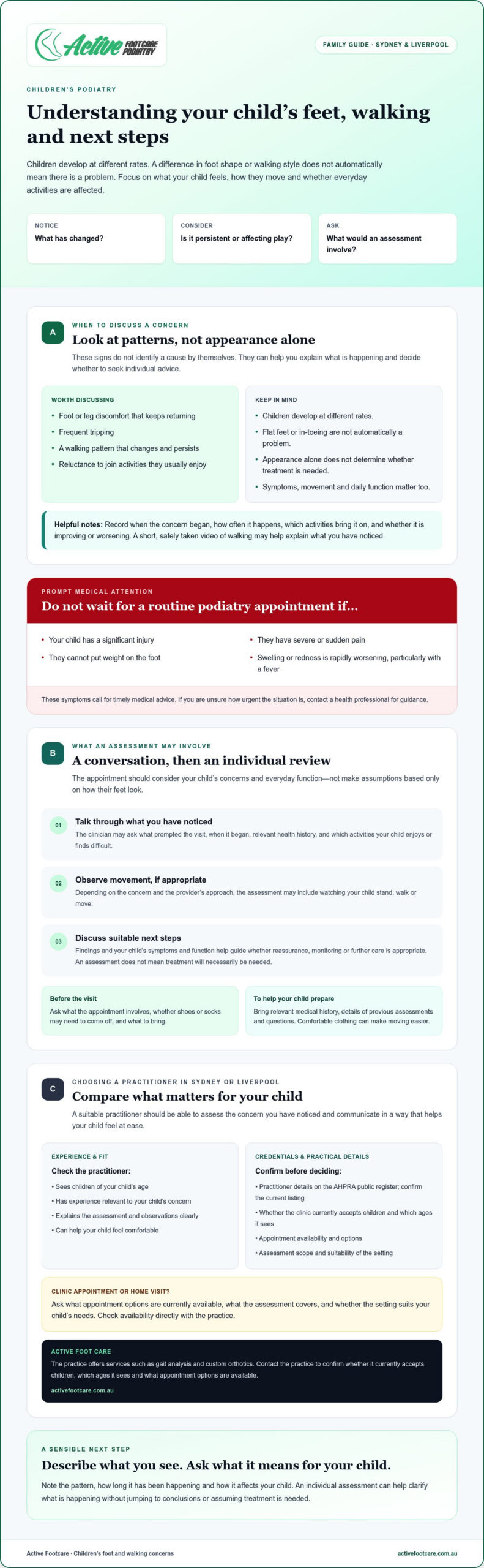
Children develop at different rates, and a variation in foot shape or walking style isn’t automatically a problem. If your child has ongoing foot or leg discomfort, a persistent change in how they walk, or difficulty joining in play and sport, individual advice can help you decide what to do next.
A podiatrist works with foot and lower-limb concerns. For a neutral overview of the profession, see Podiatrist. If you’re unsure whether a concern needs attention, note what you’ve observed, when it happens and how it affects your child.
This video offers a practitioner’s perspective on children’s feet and gait concerns:
Seek prompt medical attention if your child has a significant injury, severe or sudden pain, cannot put weight on the foot, or develops rapidly worsening swelling or redness, particularly with a fever. These symptoms call for timely medical advice rather than waiting for a routine podiatry appointment. If you’re unsure how urgent the situation is, contact a health professional for guidance.
A paediatric podiatry assessment is an individual review of a child’s foot and lower-limb concerns, movement and relevant history to help guide appropriate next steps. It doesn’t mean a particular condition will be found or that treatment will necessarily be needed.
Which foot or walking concerns are worth discussing?
Consider asking for advice if discomfort keeps returning, your child trips repeatedly, their walking pattern changes and persists, or they’re reluctant to take part in activities they usually enjoy. These signs don’t identify a cause on their own, but they help describe what’s affecting your child.
Keep simple notes about when the concern began, how often it happens, which activities bring it on and whether it’s improving or worsening. A short video of your child walking, taken safely and without delaying care, may help you explain what you’ve noticed. Seek an assessment if symptoms persist, worsen or interfere with everyday activities.
Are flat feet or in-toeing always a problem?
No. Appearance alone doesn’t determine whether a child needs treatment. A practitioner can consider your child’s age, any pain, how they move and whether the concern affects daily function, alongside their clinical findings. The same visible feature may have different significance for different children.
Online images and symptom checklists can’t assess your child in person. If you’re concerned, ask for personalised advice rather than trying to diagnose the issue yourself. That gives you a clearer basis for deciding whether follow-up is appropriate.
What happens at a children’s podiatry assessment in Sydney?
An appointment should begin with a conversation, not assumptions based on how a child’s feet look. The clinician may ask what prompted the visit, when the concern started, about relevant health history and which activities your child enjoys or finds difficult. This context helps shape an assessment around your child rather than a standard checklist.
Depending on the concern and the provider’s approach, the assessment may include observing your child standing, walking or moving. Ask beforehand what the appointment involves, whether your child will be asked to remove their shoes or socks, and what you may need to bring. The findings can help the clinician discuss whether reassurance, monitoring or further care is appropriate.
Assessment findings, considered alongside your child’s symptoms and function, guide a care plan; appearance alone doesn’t decide what support is needed.
How can parents prepare their child for an appointment?
A little preparation can make it easier to explain what you’ve noticed and help your child know what to expect. Jot down when the concern began, how often it occurs and which activities seem to make it better or worse. You could also bring relevant medical history, details of previous assessments and a short list of questions.
Choose comfortable clothing that allows your child to move easily. Bring their usual footwear if the provider requests it, and check in advance whether there’s anything else they’d like you to bring. For general background on caring for your child’s feet, Healthdirect Australia provides information for parents on foot care and common concerns.
What might gait analysis or orthotics involve?
Gait analysis means assessing how a person stands and moves. The process can vary, so ask which observations or tests the practitioner plans to use and how they relate to your child’s concern. Active Footcare lists gait analysis as a service, but confirm whether it currently assesses children and what an appointment would include before enquiring.
Custom orthotics aren’t automatically needed for flat feet, in-toeing or another visible difference. A podiatrist should consider your child’s symptoms, movement and clinical findings before discussing whether orthotics may be appropriate. For general background, read this custom orthotics guide, keeping in mind it isn’t a recommendation for every child.
When comparing providers, ask each about their assessment process and experience with children. You can also contact Active Footcare to confirm whether children are currently accepted, the ages seen and what an assessment may involve. Recommendations should be based on an individual clinical assessment and may differ from one child to another.
How to compare children’s podiatrists across Sydney
The right fit depends on more than distance or a provider’s title. Compare how clearly each practitioner explains their experience with children, what an assessment involves and whether the appointment arrangements work for your family. A useful first step is to check the practitioner’s details on the AHPRA public register, then confirm the listing is current.
Use this checklist to guide your enquiries:
- Experience: Does the practitioner currently see children, and have they worked with concerns like your child’s?
- Assessment: What will they ask about or observe, and how will they explain their findings?
- Communication: Will they include you and explain things in a way your child can understand?
- Access: Which Sydney locations and appointment formats are available, and what should you bring?
Don’t assume every clinic accepts every age or offers the same appointment options. Confirm your child’s age eligibility, the relevant location and the assessment scope before booking. If you’re comparing a children’s podiatrist in Sydney, use these questions to assess suitability rather than relying on a ranking alone. The Australian Podiatry Association also provides background on common childhood foot conditions, which can help you prepare questions for a practitioner.
Questions to ask before booking a children’s podiatrist
Keep your call or message simple and specific. Ask whether the practitioner currently sees children of your child’s age, what the assessment includes and how your child will be involved. Then confirm the available location, whether the appointment is at a clinic or another setting, and any preparation requirements. These details help you avoid surprises and decide whether the service suits your child’s needs.
What makes care feel appropriate for a child?
Look for a practitioner who listens to both parent and child, explains what they’re doing in clear language and checks that you understand the options. If your child feels anxious, ask whether the clinician can adapt the pace, explain each step or allow breaks. A thoughtful appointment should leave room for questions, shared decisions and a clear discussion of possible next steps, without pressure to agree to a particular treatment.
Active Footcare offers podiatry services, including home visits, but its child-specific availability and age eligibility need to be confirmed. If you’re in Sydney, Liverpool, Bankstown, Moorebank or Campbelltown, you can contact Active Footcare to ask whether it currently assesses children and which locations and appointment formats may be suitable. Choose a provider based on confirmed details and your child’s individual needs.
Clinic appointment or home visit: what should Sydney families consider?
Choosing where an appointment takes place is a practical decision as well as a clinical one. Consider how easy it is to travel, what helps your child feel comfortable, what the assessment may require and which options the provider currently offers. A home visit isn’t automatically the best fit: the practitioner should first confirm they can assess your child’s concern in that setting.
Before booking, explain any mobility or transport challenges, communication needs or concerns about unfamiliar environments. Ask who should attend, whether a parent or carer can stay with your child, and what equipment or space may be needed. These details help the provider discuss a suitable arrangement.
When might a home visit be worth asking about?
A home visit may be worth discussing if travel is difficult, your child has mobility needs or a familiar setting feels more manageable for them. These are practical considerations, not a guarantee that a home appointment will be more comfortable or clinically suitable. Ask whether your suburb can be accommodated and whether the assessment you’re seeking can be carried out at home.
Active Footcare offers podiatrist home visits, but whether it currently accepts children for home appointments, which ages it sees and where those visits are available needs to be confirmed directly. Review the podiatrist home visit information as a starting point, then ask about your child’s needs and the appointment scope.
When could a clinic appointment be more suitable?
A clinic may be preferable if the practitioner says the assessment needs facilities or equipment that aren’t available during a home visit. Ask what the assessment involves and whether it can be completed at the location you’re considering. You can also check clinic access, travel arrangements and whether a parent or carer can remain with your child throughout the appointment.
The decision should account for both clinical requirements and your family’s circumstances. Compare providers by asking the same practical questions about child eligibility, location and appointment format. Then discuss which setting best suits your child with the practitioner, rather than assuming one option is right for every family.
Active Footcare serves clients in Sydney and nearby locations, including Liverpool, Bankstown, Moorebank and Campbelltown. To clarify whether a child’s appointment is available at home or at a clinic, contact Active Footcare about child appointments and confirm eligibility, suburb coverage and assessment scope before making arrangements.
Finding the right next step with a children’s podiatrist in Sydney
You don’t need to work out what’s causing the concern before making an enquiry. A clear description of what you’ve noticed can help a provider explain whether they may be able to assess your child and what to check next. Start with your child’s age and concern, then confirm the location and appointment options.
Recommendations should follow an individual assessment. One child may need reassurance or monitoring, while another may be offered further care. Treatment isn’t automatic, and the right approach depends on the child’s symptoms, activities and clinical findings.
What information should you have ready when enquiring?
Before contacting a clinic, note your child’s age, main concern, how long it has been present and whether it affects play, sport or everyday activities. Mention relevant diagnoses, previous podiatry or other care, and any communication or access requirements that could help the appointment run comfortably.
Then ask practical questions before booking: Is an appointment available for your child’s age and concern? Where would it take place, and what appointment formats are available? Check the fee, and ask whether a referral or rebate may apply to your circumstances. These details can vary, so confirm them directly rather than relying on general information.
How can families with NDIS plans check service fit?
NDIS funding depends on individual circumstances and current plan arrangements, so don’t assume a particular podiatry service or appointment setting will be covered. Ask your plan contact or relevant NDIS representative about funding fit, then confirm with the provider whether the requested service is available for your child, who can deliver it and how appointments and payment are arranged.
Active Footcare lists NDIS podiatry services. Its NDIS mobile podiatry guide offers general context, but it doesn’t confirm whether a child is eligible for an appointment or whether a specific service suits their plan.
If you’re looking for a children’s podiatrist in Sydney or Liverpool, Active Footcare may be an enquiry option, but confirm the details first. Ask whether the practice currently sees children, which ages it accepts, and whether your suburb and preferred appointment type are available. You can contact Active Footcare to ask about child appointments and discuss what your family needs. A measured enquiry can help you decide on a suitable next step without committing to treatment.
Take a calm, informed next step for your child
Persistent discomfort, changes in walking or difficulty taking part in everyday activities may be worth discussing with a podiatrist. Before booking, check that the practitioner sees children of your child’s age, ask what an assessment involves and confirm the appointment location and format. Any recommendations should be based on your child’s individual assessment, not appearance alone.
Focus on fit and clear communication rather than a ranking. Active Footcare is led by Principal Podiatrist Dr Maher Said and lists services including gait analysis, custom orthotics, podiatrist home visits and NDIS podiatry. Confirm directly whether children are currently accepted, which ages are seen and whether the relevant appointment option is available in your area, including Liverpool, Bankstown, Moorebank, Sydney or Campbelltown.
Contact Active Footcare to discuss your child’s needs and appointment options. A simple enquiry can help you understand whether the practice may be suitable and what to consider next. Take things one step at a time, with your child’s comfort and needs guiding the decision.
Frequently Asked Questions
When should I take my child to a podiatrist?
Consider asking a podiatrist for advice if your child has ongoing foot or leg discomfort, a walking change that persists, frequent trips or reluctance to join activities. Note when you first noticed the concern and whether it affects everyday life. These signs don’t diagnose a problem, but they can help guide a conversation. Seek prompt medical advice for severe or sudden pain, significant injury or difficulty putting weight on the foot.
Are flat feet normal in children?
Flat feet can be part of normal development, and appearance alone doesn’t show whether a child needs treatment. Children’s arches often develop as they grow, commonly between ages three and six. If your child has pain, difficulty moving or a concern that persists, seek individual advice. A practitioner can consider age, function, symptoms and clinical findings rather than relying on online images or self-diagnosis.
What happens during a paediatric podiatry appointment?
A podiatrist will usually ask what prompted the appointment, about your child’s relevant health history and what activities they do. Depending on the provider and concern, they may observe your child standing, walking or moving, and may ask about footwear. Ask in advance what the assessment includes. The practitioner can explain their findings and whether reassurance, monitoring or further care may be appropriate.
Can children have custom orthotics?
Yes, custom orthotics may be considered for a child when a podiatrist finds them appropriate after an individual assessment. They aren’t automatically needed for flat feet, in-toeing or another visible difference. The practitioner should explain how your child’s symptoms, movement and clinical findings inform any recommendation, along with other relevant options. Ask what the proposed orthotics are intended to address and how their suitability will be reviewed.
Can a podiatrist see my child at home in Sydney?
Some podiatrists offer home visits, but confirm directly that the practitioner sees children and can assess your child’s concern at home. Active Footcare offers podiatrist home visits, though child eligibility and suburb availability need to be checked. If you’re looking for a children’s podiatrist in Sydney, ask about Liverpool, Bankstown, Moorebank or Campbelltown, and confirm what the visit can include before booking.
Do I need a referral for my child to see a podiatrist in Australia?
A referral is generally not required to book a private podiatry appointment in Australia. However, eligibility for a Medicare rebate may depend on a GP preparing a Chronic Disease Management plan for a child with a chronic condition. The plan can provide rebates for a limited number of allied health visits per calendar year. Check current Medicare requirements and any private health insurance benefits with the relevant providers.
How do I check a children’s podiatrist’s registration in Australia?
Use the online public register provided by the Australian Health Practitioner Regulation Agency (AHPRA) to look up the practitioner by name and check their registration details. Make sure the listing matches the person you plan to see, and review its current status and any conditions shown. You can also ask the practice to confirm the practitioner’s identity and whether they currently see children of your child’s age.