


If you searched for “plantar fasciitis treatment in Sydney”, you may be looking for clear advice because your first steps after rest are uncomfortable, or walking, work and exercise have become harder. It’s understandable to want practical guidance instead of another conflicting suggestion. The right next step often depends on what may be causing your heel pain and how it affects your daily routine.
Care often starts with understanding your symptoms, foot mechanics and daily demands. A podiatry assessment can help clarify whether plantar fasciitis is a likely cause and guide suitable next steps. Treatment doesn’t automatically mean injections or an invasive procedure. This guide explains what an assessment may involve, what you can safely consider and how to compare conservative care with clinician-delivered options. It also covers when to seek personalised podiatry support in Sydney, including Liverpool.
Key Takeaways
- Heel pain patterns and daily activities can help a podiatrist assess whether the plantar fascia may be involved.
- Conservative care, custom orthotics and shockwave therapy are different options. Their suitability depends on individual assessment.
- A simple symptom and activity record can help you spot what aggravates your heel and make progress easier to review.
- Plantar fasciitis treatment in Sydney can be tailored to your symptoms, clinical findings and everyday demands.
- Active Foot Care offers gait analysis, custom orthotics and shockwave therapy, which may be discussed when clinically appropriate.
Plantar Fasciitis in Sydney: What May Be Causing Your Heel Pain?
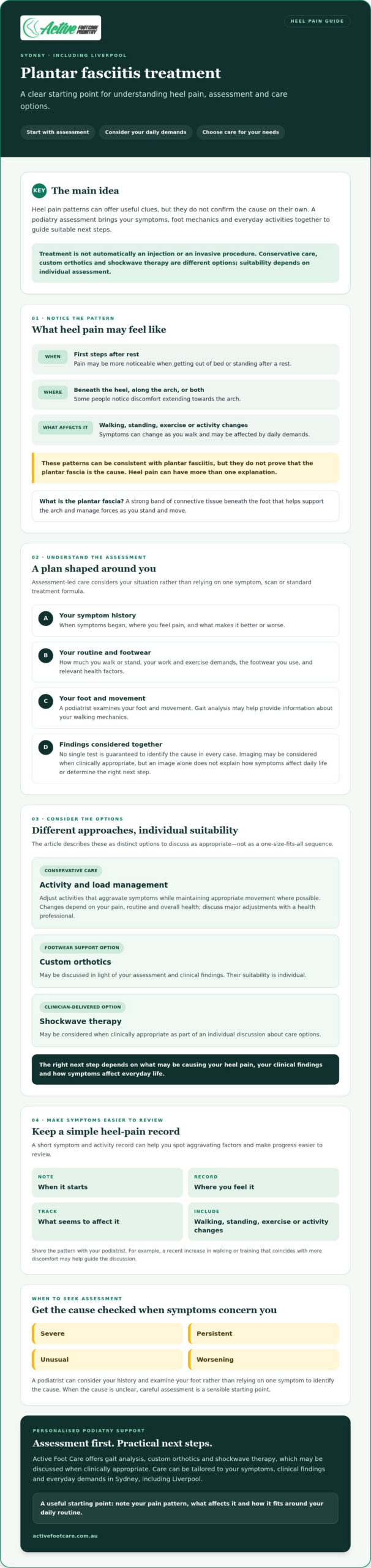
Heel pain can make an ordinary walk feel like a challenge, particularly when the first steps after getting out of bed or standing after a rest are uncomfortable. Some people notice soreness beneath the heel; others feel discomfort extending towards the arch. These patterns can be consistent with plantar fasciitis, but they don’t confirm the cause by themselves.
The plantar fascia is a strong band of connective tissue beneath the foot. It helps support the arch and manage forces as you stand and move. Plantar fasciitis is a common term for irritation or pain involving this tissue. For a broader overview of the condition and its possible causes, see Plantar fasciitis.
This short video offers another introduction to heel pain and plantar fasciitis:
What does plantar fasciitis pain feel like?
Discomfort may be focused beneath the heel, along the arch or across both areas. It can be more noticeable with the first steps after rest, then change as you walk. Long periods of standing, exercise or a change in activity may also affect symptoms. The pattern varies between people, and even familiar first-step pain isn’t proof that the plantar fascia is responsible.
Note when the pain starts, where you feel it and what seems to affect it. This gives a podiatrist useful context and helps make a discussion about plantar fasciitis treatment in Sydney more relevant to your day-to-day needs.
When might heel pain need a different explanation?
Several issues can cause heel pain. Consider an assessment if symptoms are severe, persistent, unusual or worsening. A podiatrist can consider your history and examine your foot rather than relying on one symptom to identify the cause. If your discomfort is more towards the inner heel, the article “Heel Inside Pain: Causes, Relief, and Professional Care in Sydney” explores that location in more detail. When the cause isn’t clear, a careful assessment is a sensible starting point.
How Plantar Fasciitis Treatment Works: Start With Assessment and Load
Heel pain can have more than one cause, so a useful treatment plan starts with your circumstances rather than a standard menu of treatments. A podiatrist may ask when symptoms began, what makes them better or worse, how much you walk or stand, what footwear you use and about relevant health factors. They’ll also examine your foot and movement, considering those findings alongside your account of the pain.
Assessment-led care focuses on you and your needs, not just a scan result or a one-treatment-fits-all formula. Imaging may form part of an investigation when clinically appropriate, but an image alone doesn’t explain how your symptoms affect daily life or determine the right next step.
What can a podiatrist assess during an appointment?
Your podiatrist can consider your symptom history, walking and work demands, footwear, foot movement and relevant health history. If useful, gait analysis can provide information about your walking mechanics as part of the overall assessment. No single test is guaranteed to identify the cause in every case. Findings are interpreted together to guide care. For a general overview of possible care approaches, see Plantar fasciitis treatment from MedlinePlus.
Why does activity and load matter?
Changes in walking, running, standing or training can affect how your foot feels. Load management means adjusting activities that aggravate symptoms while maintaining appropriate movement where possible, rather than automatically stopping everything. The right changes depend on your pain, routine and overall health. Discuss them with a health professional before making major adjustments.
For example, if a recent increase in walking or training seems to coincide with more discomfort, share that pattern during your assessment. It can help your podiatrist consider whether your activity levels, footwear or other factors need attention. The aim is a practical plan that can be reviewed and adjusted as your symptoms respond.
If you’d like help discussing your heel pain and possible next steps, discuss your foot pain with Active Footcare. An assessment-first approach can help shape plantar fasciitis treatment in Sydney around your symptoms and daily demands.
Comparing Plantar Fasciitis Treatments in Sydney: What Are the Options?
There isn’t one option that suits everyone. A podiatrist can consider your symptoms, activity demands, preferences and assessment findings, then review how your foot responds over time. Conservative care may be a starting point. Custom orthotics or shockwave therapy could also be discussed if they fit your needs, but neither is automatically required. If you’re comparing plantar fasciitis treatments in Sydney, individual suitability matters more than choosing the most intensive option.
| Option | When it may be considered | Things to keep in mind |
|---|---|---|
| Conservative care | Adjusting activities that aggravate pain, reviewing footwear and considering suitable exercises. | Changes should suit your symptoms and routine. Progress can vary, and a plan may need review. |
| Custom orthotics | After assessment, if additional support or changes to foot loading may be appropriate. | They’re not necessary for everyone and may take time to get used to. They don’t replace understanding other factors contributing to pain. |
| Shockwave therapy | A clinician may discuss it as one option after considering your symptoms and history. | Suitability, possible discomfort, expected benefits and alternatives should be discussed before deciding. |
Conservative care and activity adjustments
Conservative care may include modifying activities that worsen symptoms while keeping appropriate movement in your routine. For instance, a clinician might discuss temporarily changing the amount or intensity of walking, running or standing, alongside footwear choices that feel supportive. Calf or foot stretches are examples of exercises sometimes considered, but the right movements and technique depend on the person. Ask a health professional for guidance rather than assuming an exercise is suitable for you.
Orthotics and shockwave therapy: when might they be discussed?
Active Footcare provides custom orthotics and shockwave therapy, which may be discussed when clinically appropriate. For more detail, see the articles “Shockwave Therapy for Heel Pain: A Complete Guide” and “Advanced Therapy for Plantar Fascia: A Complete Recovery Guide for 2026”. An assessment can help you compare options and choose a considered next step.
What You Can Do Next: A Practical Plan for Ongoing Heel Pain
A few simple notes can make it easier to explain what you’re experiencing and help a clinician understand how heel pain affects your day. Use this practical sequence while you decide on your next step. It isn’t a diagnosis or a substitute for personalised advice.
- Record the pattern. Note where you feel pain, when it occurs, how long it’s been present and whether it changes after rest or activity.
- Review what affects it. Consider changes in walking, running, standing, work or exercise, and note the footwear you were wearing. Don’t push through activities that sharply worsen your pain.
- Arrange an assessment. If the pain is ongoing, worsening or interfering with daily activities, seek advice from a suitable health professional.
- Review how things are going. Keep track of any changes and discuss your response with your clinician before making further adjustments to your routine.
There’s no need to follow a rigid recovery schedule or start an exercise programme based on general online advice. What’s appropriate depends on the cause of the pain and your individual circumstances.
How can you prepare for a podiatry assessment?
Before your appointment, jot down how long you’ve had symptoms, where the discomfort is, what daily activities involve walking or standing, and which footwear you use most. Include any care you’ve already tried and relevant health information. A short list of questions can help too. For example, ask which treatment options may suit you and how progress will be reviewed. These details help a podiatrist tailor the assessment and advice to your needs.
When should you seek further clinical advice?
Consider timely professional advice if heel pain persists, worsens or affects your ability to manage usual activities. Seek urgent medical assessment after a significant injury or if symptoms feel severe or unusual. Online information can help you prepare questions, but it can’t identify the cause of your individual heel pain.
If you’re ready to discuss your symptoms and possible next steps, arrange a podiatry assessment with Active Footcare. An individual assessment can help guide appropriate plantar fasciitis treatment in Sydney without assuming one approach suits everyone.
Plantar Fasciitis Treatment in Sydney: Getting Personalised Podiatry Support
Heel pain can affect more than your comfort. It may change how you walk, manage work or take part in activities you enjoy. A podiatry assessment can connect your symptoms with your daily demands and clinical findings, so treatment options are considered in context rather than selected by default.
Active Footcare provides podiatry, gait analysis, custom orthotics and shockwave therapy. These are options to discuss where relevant, not a package of treatments that every person with suspected plantar fasciitis needs. Gait analysis may be useful when understanding walking mechanics could inform the assessment. Orthotics or shockwave therapy may be considered if the podiatrist thinks they’re appropriate for your situation.
Active Footcare serves Sydney locations including Liverpool, Bankstown, Moorebank and Campbelltown. If you’re in Sydney or one of these suburbs, confirm current service and appointment availability for your location and the assessment you need. This is particularly helpful when arranging care around work, transport or mobility needs.
What to expect from an individual treatment discussion
Your discussion can cover your symptoms, the assessment findings and possible next steps. Ask what each option is intended to address, what its limitations may be, whether alternatives are available and how you’ll review your progress. You can also explain what feels manageable in your routine. These questions help make a plan clearer and more relevant to your priorities.
There’s no assumption that one treatment suits everyone. Recommendations depend on your particular presentation, and your podiatrist can explain why an option is or isn’t being considered. This gives you the opportunity to make an informed decision about plantar fasciitis treatment in Sydney.
Is a podiatrist home visit right for you?
A home visit may be a useful access option for some patients, but it isn’t suitable for every clinical need or location. Ask Active Footcare to confirm whether a home visit is available for your suburb and heel pain concerns, and whether it’s an appropriate setting for the assessment. Clarifying this beforehand helps you understand what to expect and consider other arrangements if needed.
For a personalised discussion about podiatry care and suitable next steps, contact Active Footcare to discuss podiatry care.
Take the Next Step Towards More Comfortable Movement
Heel pain can have different causes, so identifying what’s contributing to yours is an important first step. An assessment considers your symptoms, activity and clinical findings to help guide a suitable plan. Options may include conservative adjustments, custom orthotics or shockwave therapy, but not every approach is right for every person.
If you’re considering plantar fasciitis treatment in Sydney, Active Footcare is led by Principal Podiatrist Dr Maher Said. Services include gait analysis, custom orthotics, shockwave therapy and podiatrist home visits. These options can be discussed in light of your needs, with home-visit suitability and suburb availability confirmed directly.
Keeping a brief record of when your pain occurs and what activities affect it can help you prepare for a conversation with a podiatrist. To arrange an assessment and discuss your next steps, contact Active Footcare to discuss a personalised podiatry assessment.
With clear information and individualised support, you can take a considered next step towards moving with greater confidence.
Frequently Asked Questions
What is the most effective treatment for plantar fasciitis?
There isn’t one treatment that’s most effective for everyone. The right approach depends on your symptoms, activity, health history and assessment findings. Care may begin with adjusting aggravating activities and discussing suitable footwear or exercises. A podiatrist may also consider custom orthotics or shockwave therapy if clinically appropriate. The aim of plantar fasciitis treatment in Sydney is to match options to the individual and review how symptoms respond.
How long does plantar fasciitis take to get better?
Recovery time varies, so it isn’t possible to promise a set timeframe. Symptoms, daily demands and response to care can all affect progress. Some people may improve with appropriate activity adjustments, while persistent pain may need further assessment and a revised plan. Keep track of changes and discuss them with a health professional. If your pain isn’t improving or is affecting everyday activities, consider seeking personalised advice.
Can plantar fasciitis go away without treatment?
Heel pain may settle over time for some people, but it isn’t always clear that plantar fasciitis is the cause without an assessment. Note what activities affect the pain and avoid pushing through movements that make it worse. If symptoms persist, worsen or interfere with walking, work or exercise, seek professional advice. An assessment can help clarify possible causes and whether further care is appropriate.
Is shockwave therapy suitable for everyone with plantar fasciitis?
No. Shockwave therapy isn’t automatically appropriate for everyone with heel pain or suspected plantar fasciitis. A clinician should consider your symptoms, history, assessment findings and other care options before discussing it. Ask about the intended benefits, possible limitations and alternatives so you can make an informed decision. Active Footcare provides shockwave therapy, but its suitability for your particular symptoms should be discussed with a podiatrist.
Do orthotics help plantar fasciitis?
Custom orthotics may be considered if an assessment suggests they could suit your foot mechanics and support needs, but they’re not necessary for everyone and aren’t a guaranteed solution. A podiatrist can explain why orthotics might be relevant, what limitations to consider and how they fit into a broader care plan. Active Footcare provides custom orthotics, which may be discussed when clinically appropriate for your individual circumstances.
When should I see a podiatrist for heel pain in Sydney?
Consider seeing a podiatrist if heel pain persists, worsens or affects your usual activities. Seek urgent medical assessment for pain following a significant injury or symptoms that feel severe or unusual. Active Footcare serves Sydney locations including Liverpool, Bankstown, Moorebank and Campbelltown. Confirm current appointment availability for your area and needs. A podiatrist can assess your symptoms and discuss suitable next steps, as online information can’t diagnose your heel pain.