


A small change to your foot can be harder to notice when you have diabetes. A blister, crack or patch of redness may be easy to miss, especially if sensation is reduced. Practical diabetic foot care in Sydney starts with knowing what to check and when to ask a podiatrist to review a change.
It’s understandable to be unsure about daily checks or whether a minor concern can wait. Regular self-checks are useful, but they don’t replace an individual assessment. A podiatrist can examine your skin, nails, sensation and circulation, then discuss care suited to your health and daily routine.
This guide explains how to check your feet, which changes need prompt clinical attention and how to build a manageable care routine. You’ll also learn what to expect from a Diabetes Foot Assessment and how a Sydney podiatry appointment may help you plan ongoing care. If getting to a clinic is difficult, a podiatrist home visit may be an option, subject to availability at your address.
Key Takeaways
- Diabetes can affect foot sensation and circulation, so make regular checks part of your routine and note changes you may not feel.
- A diabetic foot assessment in Sydney can help identify personal risk factors and guide a follow-up plan suited to your needs.
- Seek prompt clinical advice about an open wound, spreading redness, increasing warmth or swelling, discharge, or an unexpected colour change.
- Use a mirror or ask someone you trust to help inspect the soles and spaces between your toes as part of your daily routine.
- If clinic attendance is difficult, ask whether a podiatrist home visit is available in your suburb.
Diabetic Foot Care in Sydney: Why Small Changes Deserve Attention
Diabetes can affect the nerves and blood vessels in your feet. Reduced sensation may make a blister or cut harder to feel, while changes to circulation can affect how well your feet heal. These effects vary from person to person, so one symptom, or the absence of pain, can’t tell you your individual level of risk.
In practical terms, diabetic foot care means regularly checking your feet and getting professional assessment and follow-up suited to your health and risk. This reflects the prevention and risk-based approach in the Australian diabetes-related foot disease guidelines developed by Diabetes Feet Australia. Skin damage doesn’t always lead to a complication, but an unnoticed or slow-healing wound may need clinical attention. You can read more about the complications of diabetes affecting the feet.
For a short overview of everyday foot-care steps, watch this video from Mayo Clinic:
How diabetes can affect foot health
Neuropathy means nerve damage. If it affects your feet, you may notice reduced feeling, tingling or numbness. This can make it harder to detect pressure or an injury. Diabetes-related circulation changes can affect blood flow to your feet and may slow healing. These issues can occur together, but not everyone with diabetes experiences them in the same way.
Don’t try to diagnose nerve or circulation problems yourself. A podiatrist can assess your feet and consider your health history and other risk factors. The Australian guidelines support assessing risk individually rather than assuming one sign tells the whole story.
Why regular foot checks matter
A brief visual check can help you spot a break in the skin, a change in colour or swelling. Look over the tops and soles of your feet, as well as between your toes. If it’s difficult to see the soles, use a mirror or ask someone you trust to help. Pain isn’t a reliable reason to wait, particularly if sensation is reduced. If you notice a change, seek clinical advice rather than relying on self-assessment.
If mobility or access makes clinic attendance difficult, ask whether a podiatrist home visit in Sydney could suit your circumstances. Active Foot Care offers podiatrist home visits. Check whether visits are available in your suburb and at your address.
What a Sydney Diabetic Foot Assessment Checks
A Diabetes Foot Assessment is an individual review of your feet and relevant risk factors. It can help you understand what needs attention and what follow-up may suit you, but it doesn’t replace ongoing diabetes care with your GP or medical team. Your podiatrist can explain the findings and discuss how they fit with your broader care.
A diabetic foot assessment may review your health history, symptoms, skin and nails, sensation, circulation, foot structure and footwear. The checks are selected according to your circumstances. A podiatrist may ask about previous wounds or foot problems, changes you’ve noticed and any difficulty with your usual shoes.
How a podiatrist reviews foot risk
Your history and examination findings are considered together. Depending on your needs, sensory checks may include a monofilament test, while circulation may be assessed using a Doppler device. The podiatrist may also look for skin or nail changes, areas of pressure and structural features that could affect comfort or foot health. No single finding tells the whole story.
The Australian Diabetes-related Foot Disease Guidelines provide clinical context for assessing risk and planning care. Your findings can inform recommendations and when to review your feet again, but there isn’t one follow-up schedule that suits everyone. Ask your podiatrist how the assessment applies to you and what changes should prompt an earlier review.
What to bring to an appointment
A little preparation can make the discussion more useful. Consider bringing:
- A current medication list and relevant health history.
- Notes about recent changes, including when they began and whether they’ve altered.
- Your usual footwear if fit, rubbing or pressure points are a concern.
You can ask what each check is looking for, what the results mean and what follow-up is recommended. To support care between appointments, Diabetes Australia shares a practical daily foot-care routine.
For diabetic foot care in Sydney, an assessment can be a helpful step towards a plan shaped around your health and everyday needs. Active Footcare lists Diabetes Foot Assessments among its services. You can learn more about Active Footcare’s podiatry services and check appointment details for your circumstances.
Diabetic Foot Warning Signs in Sydney: When to Seek Help
Routine foot checks help you notice changes, but they’re not a reason to wait and see if a new problem settles. How quickly you need care depends on your health and the change itself. If you have diabetes, reduced sensation can make pain an unreliable guide, so a foot problem may need attention even if it doesn’t hurt.
If you notice a new wound on your foot, seek prompt professional assessment rather than waiting for it to heal on its own. A podiatrist or another health professional can advise on the next step based on your circumstances.
Changes that need prompt professional review
Contact a health professional promptly about an open wound, blister or crack, particularly if it’s new, worsening or not healing. Also seek advice about spreading redness, increasing warmth or swelling, discharge, or a sudden, unexpected change in skin colour. Don’t wait for a routine appointment if a concerning change is progressing. If you’re unsure how urgent it is, explain what you’ve noticed and ask for clinical guidance.
Seek urgent medical assessment if symptoms are severe or getting worse quickly. For a life-threatening emergency in Australia, call 000. A podiatrist can advise about foot concerns, but urgent or emergency symptoms may need assessment through an appropriate medical service.
What not to treat at home
Trying to remove hard skin or treat a wound yourself can cause further damage, especially if sensation is reduced. Avoid:
- Cutting corns or calluses, or using blades, scissors or other sharp tools on your feet.
- Applying chemical corn or callus treatments unless a health professional has advised you to use them.
- Attempting to manage a wound without professional guidance, or delaying advice because it seems painless.
Instead, contact a clinician for advice that takes your health and foot-care needs into account. If you’ve already applied a product or tried to treat the area, tell them what you used and when. This helps them understand what’s happened and recommend appropriate next steps.
Good diabetic foot care in Sydney means knowing the difference between a finding you’re monitoring and a new or worsening problem that needs review. Note when a change appeared and how it develops, but don’t let note-taking delay care. When in doubt, ask a health professional rather than relying on pain alone.
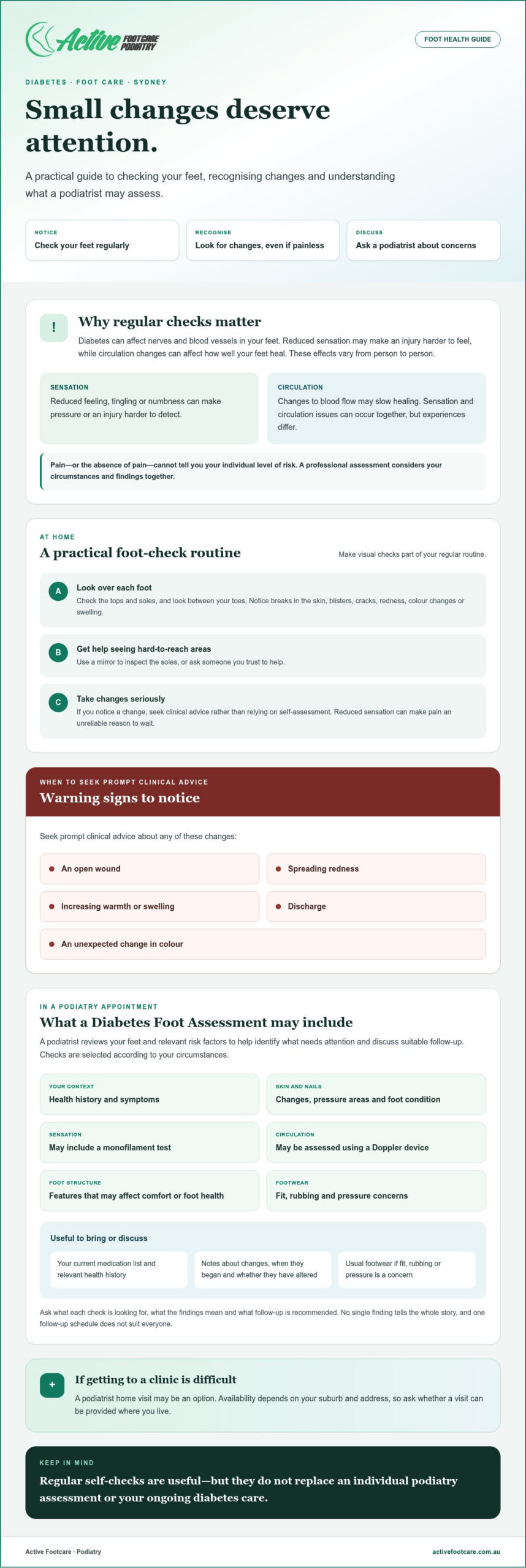
A Practical Daily Foot-Care Routine for People with Diabetes
A regular routine can make it easier to notice changes before they’re overlooked. Your care team’s advice should take priority, as the right approach depends on your sensation, circulation, mobility and foot-health history. Keep the steps simple enough to repeat each day.
A simple foot check, step by step
Choose a time that fits your day, such as after washing. Check both feet, even if one seems fine:
- Look over the tops, soles, heels and between each toe. Check for breaks in the skin, blisters, swelling or new colour changes. A mirror can help you see the soles.
- Wash gently with warm water, then dry carefully. Pay particular attention to the spaces between your toes, where dampness can linger.
- Moisturise dry skin if appropriate for you, but avoid applying cream between the toes. This helps care for dry skin without leaving those spaces damp.
- Notice what’s changed. If you find something new, seek clinical advice even if it doesn’t hurt. Reduced sensation can make pain an unreliable warning sign.
If your vision, movement or balance makes checking difficult, ask someone you trust to help. A repeatable check is more useful than a routine that’s hard to manage safely.
Footwear, nail care and skin protection
Before putting on your shoes, check that they fit comfortably and look inside for grit, a small object or anything that could rub your skin. This quick check may help you spot a source of pressure before wearing the shoes. Ask your podiatrist before changing your footwear or using treatments, so the advice reflects your feet.
Nail or callus care can be harder to do safely if your vision, flexibility or hand control is limited, or if you have reduced sensation. Don’t cut corns or calluses yourself. Ask a health professional for advice about safe care, particularly if you’re unsure or have noticed a change.
Building a steady routine is a practical part of diabetic foot care in Sydney, but it doesn’t replace individual assessment. Active Footcare offers Diabetes Foot Assessments to help discuss your foot health and care needs. Explore a Diabetes Foot Assessment and check appointment details for your circumstances.
Finding Diabetic Foot Care in Sydney That Fits Your Needs
The right podiatry appointment should make it easier to understand your foot health and what to do next. A podiatrist may assess your feet, identify areas that need attention and discuss follow-up that reflects your individual needs. This care complements, rather than replaces, ongoing diabetes management with your wider health team.
Active Footcare lists Diabetes Foot Assessments and podiatrist home visits among its services. Its stated Sydney locations include Liverpool, Bankstown, Moorebank and Campbelltown. Coverage and appointment arrangements can vary, so check whether care is available in your suburb and ask which appointment options may suit you.
Choosing a Sydney podiatry appointment
Before booking, ask what the assessment includes and how the findings will be explained. You can also ask what follow-up may be recommended and whether communication with your other clinicians is possible or appropriate. These questions can help you understand how the appointment fits with your existing care.
Tell the provider if mobility, transport or access makes attending difficult. If you’re comparing options in Liverpool, Bankstown, Moorebank, Sydney or Campbelltown, confirm the service details directly so you know what’s available for your circumstances.
When a home visit may be useful
A home visit may be worth asking about if travel is challenging, your mobility is limited or getting to a clinic is difficult. The provider can confirm whether a visit is offered at your address, what appointment arrangements apply and whether a home assessment is suitable for your needs. Check these details before making plans, as availability shouldn’t be assumed based on suburb alone.
A good appointment should leave you with a clearer understanding of your feet and practical next steps to discuss with your care team. If you’re considering a Diabetes Foot Assessment, you can ask Active Footcare about a Diabetes Foot Assessment and whether clinic or home-based care may suit your circumstances.
Make a Confident Start with Your Foot-Care Plan
Consistent checks and timely professional advice can help you respond to changes in your feet. Look over both feet regularly, and seek clinical guidance about a new wound, swelling, spreading redness or an unexpected colour change. Don’t rely on pain alone, particularly if sensation is reduced.
A podiatrist can assess your feet, explain the findings and discuss follow-up suited to your health and daily life. A manageable routine, supported by individual advice, can make diabetic foot care in Sydney clearer and easier to maintain.
Active Footcare lists Diabetes Foot Assessment as a service, with podiatrist home visits available for people who may find clinic attendance difficult. Led by Principal Podiatrist Dr Maher Said, the team can discuss whether an assessment or home visit may suit your circumstances. Confirm suburb coverage and appointment details directly.
Discuss a Diabetes Foot Assessment with Active Footcare and take a practical next step towards a foot-care plan that works for you.
Frequently Asked Questions
Is diabetic foot care different from regular foot care?
It can require closer attention because diabetes may affect sensation or circulation, making some injuries harder to notice. Your routine should reflect your health and assessment findings, rather than a one-size-fits-all checklist. Daily observation can help you spot changes, but it doesn’t replace professional review. Ask your GP, diabetes care team or podiatrist which checks and follow-up are appropriate for you.
How often should I check my feet if I have diabetes?
Many people are advised to check their feet daily, though your professional assessment and follow-up schedule should be based on your individual risk and clinical findings. Look at the soles and between your toes, using a mirror or asking someone for help if needed. If you notice a new wound, swelling or colour change, seek professional advice rather than waiting until your next scheduled check.
What should I do if I find a cut or blister on my foot?
Arrange prompt clinical advice if you find a cut or blister, particularly if sensation is reduced or the area is becoming red, warm, swollen or is discharging. Don’t cut, scrape or apply products unless a clinician has advised you to do so. A health professional can assess the change and recommend care suited to you. Seek urgent medical assessment if symptoms are severe or worsening rapidly.
Can a podiatrist help with diabetic foot care at home in Sydney?
Yes, a podiatrist home visit may suit you if travel or mobility makes attending a clinic difficult. Active Footcare lists both Podiatrist Home Visits and Diabetes Foot Assessments among its services. If you’re in Liverpool, Bankstown, Moorebank, Campbelltown or another Sydney suburb, contact the provider to confirm whether a visit is available at your address and suitable for your needs.
When should I seek urgent help for a diabetic foot problem?
Seek prompt medical advice for a new wound or a change that’s worsening, such as spreading redness, warmth, swelling, discharge or unexpected skin colour. Severe or rapidly progressing symptoms may need urgent medical assessment. Don’t rely on pain alone, as some people have reduced sensation. If you’re uncertain about urgency, contact a health professional for guidance and explain what has changed and how quickly it is progressing.
Should I remove corns or calluses myself if I have diabetes?
No, avoid cutting corns or calluses yourself or using blades and chemical removal products without clinical advice. Reduced sensation or other health factors can make it harder to notice an injury caused during self-treatment. A podiatrist can assess the area and discuss care based on your feet and health history. Seek advice promptly if the skin is broken, inflamed or changing.
Does everyone with diabetes need a podiatrist?
Not everyone will have the same podiatry needs, so ask your GP or diabetes care team whether an assessment is appropriate for you. A podiatrist can review your feet and discuss care or follow-up based on your circumstances. Share any history of foot problems, changes in sensation or current skin concerns. If you notice a new wound or concerning change, seek prompt advice whether or not you already see a podiatrist.