

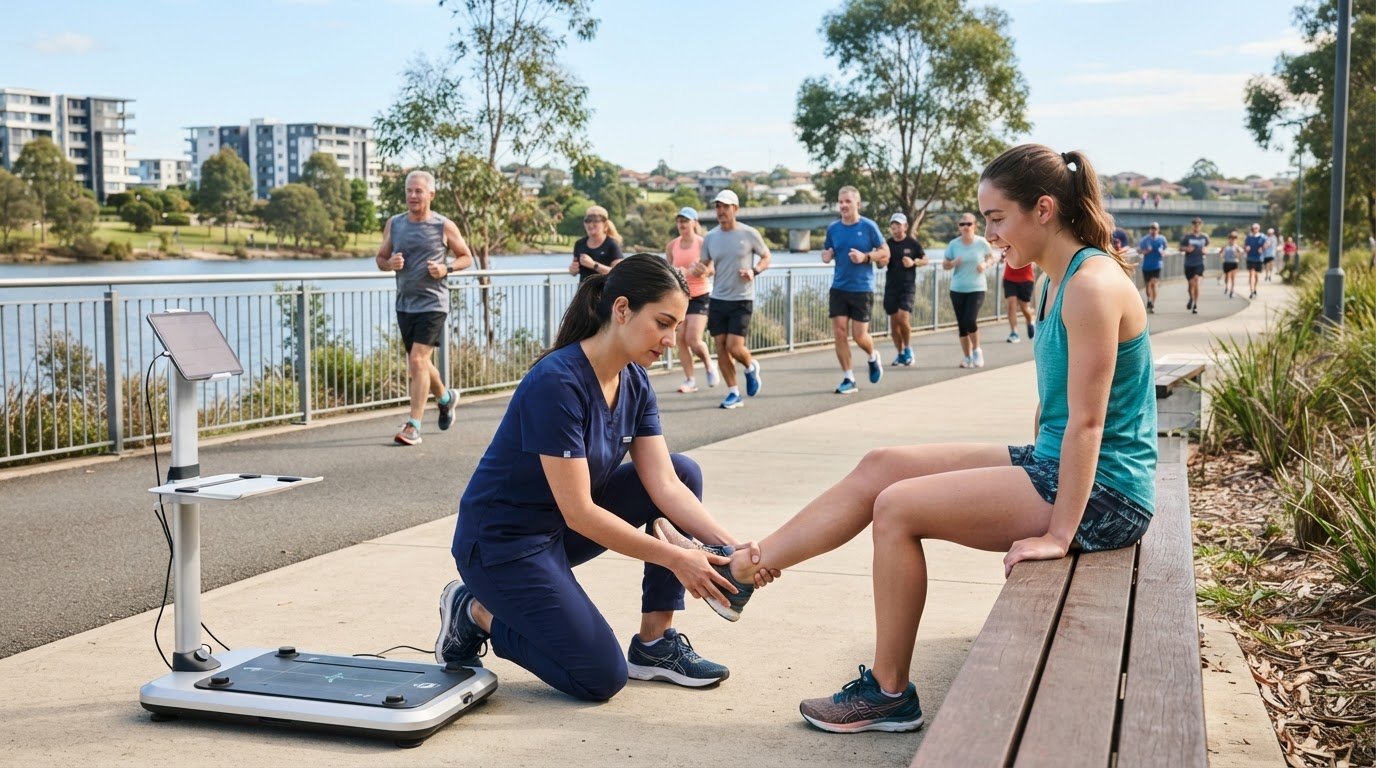
If pain is limiting your training, sport or everyday activity, you may be wondering whether to see a sports podiatrist in Sydney and what an assessment involves. Understanding what changes when you move can be a more useful starting point than simply resting or pushing through.
Care should reflect your symptoms, activity and goals. This guide explains what a sports podiatrist may assess, how gait analysis can contribute, and what to consider when comparing practitioners in Sydney and Liverpool. It also covers when custom orthotics or shockwave therapy might be discussed. Active Footcare provides podiatry consultations, gait analysis and these treatment options. Confirm whether the relevant consultation is available at your preferred location. Knowing what to expect can help you choose a practitioner whose approach suits your needs, without assuming every injury calls for the same treatment.
Key Takeaways
- A sports podiatrist in Sydney can assess foot and lower-limb symptoms in the context of your activity, helping you understand what may be contributing to discomfort during movement.
- A consultation may bring together your symptom history, a relevant examination and movement assessment, including gait analysis when appropriate.
- Compare practitioners by checking their registration, relevant experience and assessment approach. Don’t assume a service label means they have sports-specific qualifications.
- Prepare by noting your symptoms, bringing relevant health history and activity footwear, and explaining your training goals and concerns.
- Ask how Active Footcare’s podiatry, gait analysis, custom orthotics or shockwave therapy might fit your assessment, and confirm service availability and practitioner experience.
What can a sports podiatrist in Sydney assess?
Foot or lower-limb discomfort can make a familiar run, training session or walk around the shops harder than it should be. A sports podiatrist considers these concerns in the context of how you move and what you ask your body to do. You don’t need to be an elite competitor to seek an assessment. Recreational athletes and other active people may also want help understanding recurring symptoms.
A sports podiatry assessment considers foot and lower-limb symptoms alongside a person’s movement, sporting activity and physical demands. Podiatry concerns the health and function of the feet and lower limbs, with sports medicine recognised as one area of practice in this Podiatry overview. The aim is to understand your circumstances, rather than assume one treatment suits everyone.
Which sporting and movement concerns may prompt an assessment?
Recurring discomfort in the foot, ankle or lower limb during or after activity may be a reason to seek professional advice, particularly if it affects training or everyday movement. A clinician may ask where you feel it, when it began, what brings it on and whether it changes during or after activity. Your answers help guide the assessment, but symptoms alone don’t establish a diagnosis. An online list of possible causes can’t replace an individual assessment.
How does sporting activity affect the assessment?
Your sport helps explain the demands placed on your body. A clinician may ask about the type and frequency of your activity, training load, usual surfaces and recent changes, such as a new routine or increase in sessions. They may also discuss your activity footwear, observe relevant movement and consider health history that could affect assessment or care.
These details put your symptoms in context. For example, discomfort that appears only during a particular activity may prompt different follow-up questions from symptoms that also affect ordinary walking. The clinician can explain which findings matter and whether further assessment or care is appropriate. Gait analysis may contribute when clinically suitable, but movement observations are one part of the picture, not a diagnosis on their own.
Not every ache calls for treatment. Recommendations should reflect the assessment, your needs and the impact on your movement. A clear discussion gives you the chance to understand the findings, ask questions and consider a sensible next step, without assuming every symptom needs the same response.
How a sports podiatry assessment connects symptoms with movement
A useful assessment is a step-by-step conversation, not a test that automatically leads to a particular treatment. A sports podiatrist in Sydney will typically ask about your health and activity, discuss the symptoms you’ve noticed, then decide which examination is relevant. The practitioner should explain the findings with you, so recommendations can account for your movement and what you want to return to doing.
A sports podiatry assessment brings together your symptom history, relevant examination and movement findings to inform a care plan suited to your activity and goals. The appointment is primarily about understanding the concern. Treatment is a separate decision, made after the practitioner has considered your individual findings and discussed suitable options with you.
What information should you bring to a sports podiatrist?
A few notes can help you describe what’s happening, especially if symptoms vary from session to session. Consider recording:
- When the discomfort began and when it tends to appear, such as during a run or later that day.
- Activities or changes that seem to trigger it, including a recent increase in training or a change in routine.
- Any previous care or relevant health history, along with your current activity and personal goals.
Bring your usual sport shoes or other relevant footwear if practical. They can provide context, but footwear alone doesn’t explain symptoms or determine the right response. Share your information openly, including concerns about training or an upcoming competition. This helps keep the discussion grounded in your circumstances.
What might gait analysis contribute?
Gait analysis involves observing aspects of how you move. When appropriate, it can add information to a broader podiatry assessment, but it isn’t a stand-alone answer. The practitioner interprets observations alongside your symptoms, health and activity history, and the demands of your sport. A movement finding by itself can’t identify every injury or guarantee that a particular treatment is suitable.
After considering the available information, the podiatrist can explain what the assessment suggests, what remains uncertain and whether any care options are worth discussing. Active Footcare provides gait analysis, but whether it’s relevant depends on your individual assessment. If you’re exploring your options, review Active Footcare’s podiatry information and confirm whether the consultation you need is available at your preferred location. Healthdirect Australia also provides general foot care information for readers seeking broader guidance.
How to compare sports podiatrists in Sydney without assuming one treatment fits all
A sports-focused label doesn’t tell you everything about a practitioner’s experience or approach. When comparing sports podiatrists in Sydney, look for clear information about clinical registration, experience relevant to your activity, how assessments are conducted and how recommendations are explained. Podiatrists practising in Australia should be registered with the Podiatry Board of Australia, supported by AHPRA. You can check a practitioner’s registration through the AHPRA register.
Don’t infer sports-specific qualifications or experience from a clinic’s wording alone. Ask what experience the clinician has with concerns like yours and the demands of your sport. A useful discussion should leave you understanding what the assessment found, what a recommendation is intended to address and how you’ll review whether it’s helping.
What questions should you ask before booking?
A few practical questions can help you decide whether the clinician and appointment are a suitable fit. You might ask:
- Do you regularly assess concerns related to my sport or activity?
- What does an initial appointment involve, and how will you explain any recommendations?
- Which clinic location can see me, and is the relevant service available there?
That last question matters across a broad area such as Sydney. Active Footcare’s stated service areas include Sydney, Liverpool, Bankstown, Moorebank and Campbelltown. Confirm the relevant consultation and location directly. You can also ask how progress is reviewed and what to do if your symptoms or goals change.
How do treatment options differ?
Care should respond to assessment findings, not follow a standard package for every athlete. Depending on your situation, a practitioner may discuss footwear or activity considerations, exercise guidance or other care. Imaging isn’t automatically needed, and athletes don’t all need orthotics or a procedure. Ask what a proposed option is intended to address, why it may suit your circumstances and what alternatives might be considered.
Gait analysis can contribute to understanding movement when clinically appropriate. Custom orthotics or shockwave therapy may also be options if the assessment supports their suitability. Neither should be assumed in advance. Active Footcare offers gait analysis, custom orthotics and shockwave therapy, but confirm whether the relevant consultation is available at your preferred location. For a closer look at one option, read this guide to custom orthotics in Sydney.
Choose a practitioner who welcomes questions and connects each recommendation to your findings and goals. You should understand the reasoning, not feel pressured into a particular treatment simply because you’re active or competing.

Before and after your first sports podiatry appointment
A little preparation can make it easier to explain what’s happening and leave with a plan you understand. Before seeing a sports podiatrist in Sydney, note the details you might otherwise forget, especially if symptoms come and go or change with activity.
How can you prepare for the consultation?
- Record your symptoms: Note where you feel discomfort, when it started and what activities affect it. Include recent changes to your training routine.
- Gather relevant information: Bring details of previous care and relevant health history, along with your usual sport shoes or activity footwear if practical.
- Write down your questions: Consider what you want to know about training, footwear and possible next steps. Be ready to discuss your goals, competition timing and concerns honestly.
Explain what you hope to return to, but don’t leave out health information to keep a competition plan on track. The practitioner needs the full picture to discuss options with you. When booking, confirm the appointment location, whether the service suits your concern and any access needs you may have.
What should a useful care plan explain?
Before you leave, aim to understand what the assessment suggests and why any recommendation has been made. Ask what it’s intended to address, what you’re expected to do, and how and when progress will be reviewed. If activity changes are advised, clarify what to modify and what signs should prompt you to check back. You can also ask what to do if symptoms change before a planned review.
Returning to sport isn’t a one-size-fits-all decision. The timing and steps should reflect your individual assessment and clinical advice, not only a race date or team schedule. If heel discomfort is part of your concern, you may find this guide to heel pain causes and care in Sydney useful alongside professional advice.
Sudden, severe or otherwise concerning symptoms warrant prompt medical attention. An online article can’t assess the cause or tell you what care is appropriate for your situation. Seek advice from a health professional rather than relying on remote guidance.
To learn more about available podiatry support, explore Active Footcare’s podiatry services and confirm the relevant service and appointment location when enquiring.
Finding sports podiatry support with Active Footcare in Sydney
If you’re looking for a sports podiatrist in Sydney, check whether the practice can assess your concern and whether the clinician’s experience suits your needs. Active Footcare provides clinical podiatry, gait analysis, custom orthotics and shockwave therapy. These services may be relevant to an individual assessment, but they aren’t guaranteed treatments for a sports injury.
Active Footcare’s stated service areas include Sydney, Liverpool, Bankstown, Moorebank and Campbelltown. In-clinic and home-visit consultations are available, but confirm which appointment options and relevant services are currently available at your preferred location. You can also ask about the clinician’s experience with concerns related to your sport before booking.
Which Active Footcare services may be relevant?
Gait analysis may contribute to understanding movement when clinically appropriate. Custom orthotics may be considered if assessment findings indicate they could suit your needs. Shockwave therapy is also a listed service, but it won’t be appropriate for every person or injury. The practitioner should first consider your symptoms, activity and relevant health information, then discuss whether any of these options makes sense for you.
Ask how a recommended service relates to your assessment and what other approaches may be considered. That conversation helps distinguish an option worth discussing from a treatment assumed before your needs are understood. Your goals matter too. The care discussion should account for the activities you want to maintain or return to, without promising a particular outcome or timeline.
How can Sydney readers take the next step?
When you enquire, briefly outline your sport or activity, the symptoms you’ve noticed and where you’d prefer to attend. Ask whether the relevant consultation is available at that location, what the appointment involves and whether the clinician has experience assessing similar activity-related concerns. Ask about sports-related experience directly rather than inferring it from a service description.
Active Footcare offers podiatry consultations in clinics and patients’ homes. Confirm current appointment options and suitability for your concern, particularly if you’re enquiring from Liverpool or another part of the stated service area. A clear conversation before booking can help you understand whether the available support fits what you’re looking for.
For a practical first step, contact Active Footcare to discuss your podiatry needs, preferred appointment location and any questions about clinician experience or service availability.
Take a considered next step towards comfortable movement
Choosing a sports podiatrist in Sydney starts with understanding how your symptoms relate to your activity, then finding a practitioner who explains their assessment and recommendations clearly. Gait analysis may contribute to the assessment, while custom orthotics or shockwave therapy may be considered only if they suit your individual needs. No single option is right for every active person.
Active Footcare provides podiatry consultations, gait analysis, custom orthotics and shockwave therapy, with in-clinic and home-visit consultations. If you’re considering an appointment, ask about clinician experience, the consultation available for your concern and service availability at your preferred location.
Contact Active Footcare to discuss your symptoms and appointment options. A clear conversation is a sensible first step towards understanding your options and making informed decisions about staying active.
Frequently Asked Questions
What does a sports podiatrist do?
A sports podiatrist assesses foot and lower-limb concerns in the context of your physical activity. They may ask about your symptoms and sporting demands, then carry out a relevant examination to understand how these factors relate. The findings inform a discussion about suitable next steps. Sports-related care isn’t a fixed treatment package. A practitioner should explain the reasoning behind any recommendation rather than assume every active person needs the same approach.
Can a sports podiatrist help with running-related foot pain?
A podiatrist may assess recurring foot discomfort associated with running and consider its pattern alongside your activity, footwear, health history and movement. Note when the pain appears, where you feel it and whether it changes during or after a run. These details can support the discussion. Symptoms alone don’t establish a diagnosis, and an assessment can help clarify whether podiatry care is appropriate for your situation.
Do I need to be an athlete to see a sports podiatrist?
No. You don’t need to compete at an elite level to seek an assessment. Recreational runners, people who play community sport and others who are physically active may want advice if foot or lower-limb symptoms affect training or everyday movement. Explain what activities you do and what you’re experiencing, so the practitioner can consider your own demands and goals.
How does a sports podiatrist assess foot or ankle pain?
An assessment generally begins with questions about your symptoms, health history and activity, followed by a relevant examination. The practitioner may consider when the pain began, what activities affect it and how your movement relates to your concern. Gait analysis may contribute when clinically appropriate, but it’s one part of the assessment, not a stand-alone diagnosis. Recommendations should be discussed with you and reflect the findings.
Can a sports podiatrist provide gait analysis or custom orthotics?
Some podiatry practices provide gait analysis and custom orthotics, and Active Footcare lists both among its services. Gait analysis may inform an individual assessment, while orthotics may be considered if the findings support their suitability. Neither is automatically needed for every sports concern. Ask what an option is intended to address, how it relates to your assessment and whether it’s available at your preferred appointment location.
How do I choose a sports podiatrist in Sydney?
Check that the practitioner is registered, ask about experience relevant to your sport or activity, and find out how they assess concerns and explain recommendations. Don’t assume sports-specific qualifications from a service label alone. Ask directly about the clinician’s background. If you’re comparing options in Sydney, Liverpool, Bankstown, Moorebank or Campbelltown, confirm the appointment location and relevant service availability before booking.
When should I see a podiatrist for a sports injury?
Consider arranging an assessment if recurring foot or lower-limb symptoms are limiting sport, training or ordinary movement, or if you’re unsure what to do next. You don’t need to identify the cause yourself before seeking advice. Sudden, severe or otherwise concerning symptoms warrant prompt medical attention. An online FAQ can’t assess an injury remotely, so seek advice from an appropriate health professional for guidance suited to your circumstances.