


Foot discomfort can affect more than your feet: it may make everyday walking and movement harder. Professional podiatry care can help assess concerns such as heel pain, ingrown toenails and changes in foot shape, then guide care according to your symptoms and goals. At Active Foot Care, appointments may be accessed through our clinics across Liverpool, Bankstown, Moorebank, Sydney and Campbelltown, or, where suitable, via a podiatrist home visit.
It’s understandable to want clear answers before booking, especially if you’re unsure whether you need a referral or meet an eligibility requirement. These details depend on the care pathway. For certain local health networks, external healthcare professional referrals are preferred in ISBAR format, but this is not a general referral rule for every podiatry appointment.
This guide explains what to expect during an appointment, how to arrange access in and around our service areas, and what can affect referral or eligibility requirements. It also outlines the kinds of assessment and treatment that may be considered, so you can better understand the next step towards comfortable, confident movement.
Key Takeaways
- Learn what a podiatry assessment may involve, including how a practitioner approaches corns and calluses.
- Understand the clinic access options relevant to Wollert and what to consider when arranging an appointment.
- See how referral and eligibility requirements can vary between care pathways.
- Explore when an NDIS podiatry service or a podiatrist home visit may suit your care needs.
- Find out how foot assessments and custom orthotics may form part of an individual care plan.
What to expect from the service?
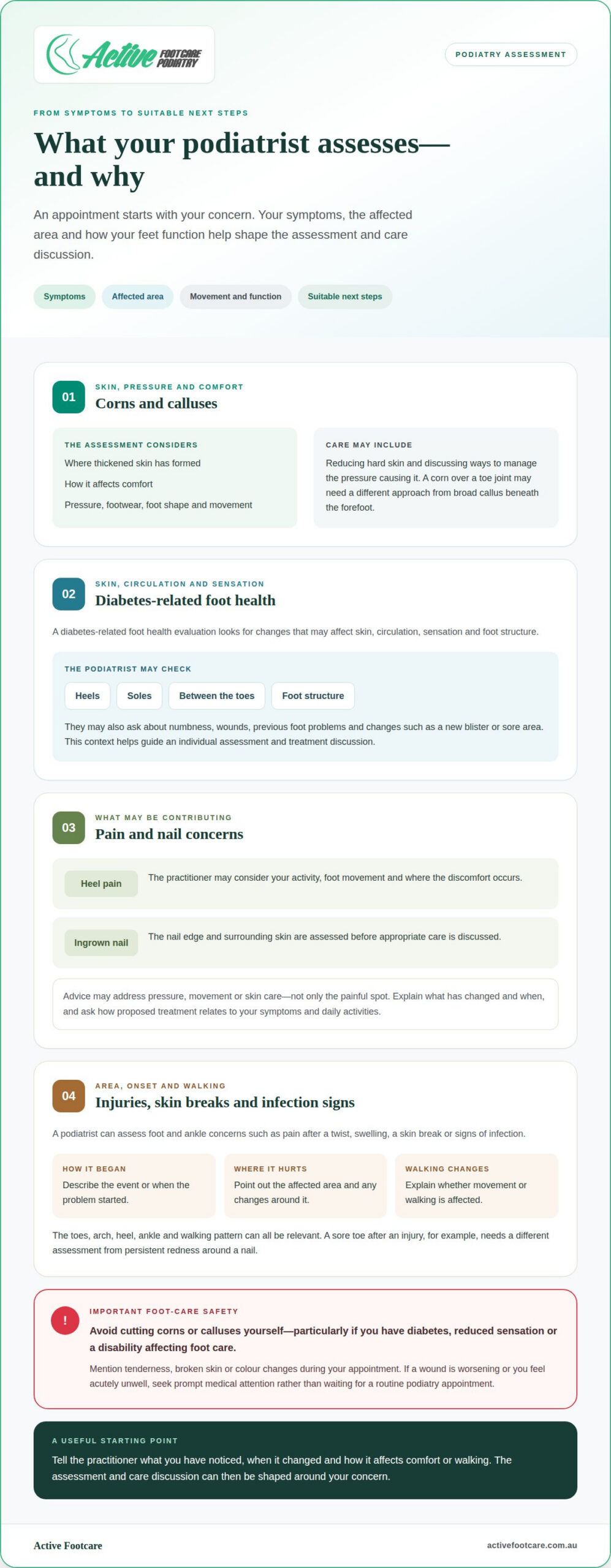
A podiatry appointment starts with your concern, such as a corn, heel pain or difficulty walking. The podiatrist asks about your symptoms, examines the affected area and discusses suitable next steps.
General Foot Care
For calluses and corns, the podiatrist checks where thickened skin has formed and how it affects comfort. A corn over a toe joint, for example, may need a different approach from broad callus beneath the forefoot. Assessment also considers pressure, footwear and any foot-shape or movement factors.
Care may include reducing hard skin and discussing ways to manage the pressure causing it. Avoid cutting corns or calluses yourself, particularly if you have diabetes, reduced sensation or a disability affecting foot care. Mention tenderness, broken skin or colour changes during your appointment.
Diabetes-Related Foot Health
A diabetes-related foot health evaluation looks for changes that may affect skin, circulation, sensation and foot structure. The podiatrist can examine your heels, soles and the spaces between your toes, while asking about numbness, wounds or previous foot problems. This information helps shape an individual assessment.
A Diabetes Foot Assessment focuses on identifying concerns and discussing ongoing foot care. Tell the practitioner about your diabetes, current symptoms and any changes you’ve noticed, such as a new blister or sore area. This context helps guide the examination and treatment discussion.
Foot Condition Prevention and Treatment
Prevention and treatment depend on the condition and its contributing factors. For heel pain, for example, the practitioner may consider your activity, foot movement and where the discomfort occurs. For an ingrown toenail, they assess the nail edge and surrounding skin before discussing appropriate care.
Ask how the proposed treatment relates to your symptoms and daily activities. Advice may address pressure, movement or skin care, rather than focusing only on the painful spot. If symptoms change, explain what changed and when so the practitioner can take it into account.
Foot Injuries and Infections
A podiatrist can assess foot and ankle concerns such as pain after a twist, swelling, a skin break or signs of infection. Explain how the problem began, where it hurts and whether walking has changed. For example, a sore toe after an injury needs a different assessment from persistent redness around a nail.
Foot and lower-limb problems can involve the toes, arch, heel, ankle or walking pattern. Assessment considers the affected area and how it functions during movement. If a wound is worsening or you feel acutely unwell, seek prompt medical attention rather than waiting for a routine podiatry appointment.
In Australia, podiatrist is the current professional title; chiropodist is an older term for foot-care practitioners. Podiatry can include assessment and treatment of foot conditions, with the specific care depending on your concern.
Private health insurance rebates for podiatry depend on your policy and level of extras cover. Your insurer determines whether treatment is eligible and what rebate applies, so check your policy details before relying on a rebate.
Clinic locations and access
For people seeking dependable podiatry wollert services, both clinic location and appointment type affect practical access. Active Foot Care has clinics in Liverpool and Bankstown and provides care across areas including Moorebank, Sydney and Campbelltown. A clinic appointment may suit someone able to travel, while a Podiatrist Home Visit can help when getting to an appointment is difficult.
Use Active Foot Care’s current booking information to arrange a clinic appointment in Liverpool or Bankstown. The right location depends on where you’re travelling from, your transport options and the care you need. If getting to a clinic is difficult, ask about a Podiatrist Home Visit.
Before travelling, consider the route, distance from public transport and any mobility needs. For example, someone using a mobility aid may need to account for the walk from a stop or parking area. If leaving home is difficult, a home visit can remove the clinic journey. A disability may also affect transport, movement or the support needed during an appointment.
There isn’t one reliable “best-rated” podiatrist for every patient. Reviews describe individual experiences, but don’t establish which practitioner is right for a particular concern. Look for relevant details, such as clear explanations, respectful communication or convenient access, rather than relying on a rating alone.
Bulk billing shouldn’t be assumed from a clinic’s location. Payment arrangements depend on the service and its funding pathway, so being near Liverpool or Bankstown doesn’t establish that an appointment is bulk billed. Consider the care you need and the payment arrangement for that service before booking.
Clinic access also involves understanding the difference between a fixed appointment location and care delivered at home. A home visit may suit someone with limited mobility, transport barriers or difficulty attending a clinic. It isn’t the same as a clinic appointment, and the setting can shape how the practitioner assesses movement and the surrounding environment.
To narrow down a suitable location, use these practical steps:
- Start with the suburb you can travel from, such as Liverpool, Bankstown or Moorebank.
- Consider whether transport, stairs or walking distance create access barriers.
- Match the appointment setting to the support you need, including a home visit where appropriate.
- Use the clinic’s published contact details for its address and booking arrangements.
For people whose circumstances make clinic travel difficult, podiatrist home visits offer another way to access foot care. Choosing between a clinic and a home appointment begins with your mobility, transport and the care required.
Appointments and contact options
Booking starts by choosing a clinic and contacting it through its published appointment channel. Use the phone number or booking method shown in that clinic’s current details. Explain whether you need an initial assessment, follow-up care or help with a new foot problem. That helps the clinic direct your request appropriately.
Give a clear description when arranging your appointment. Mention which foot is affected, where you feel discomfort and when it began. For example, say whether heel pain started gradually or followed a specific activity. Also describe any change in walking, swelling, broken skin or difficulty wearing your usual shoes. These details help the team understand why you’re seeking care.
For an existing concern, explain what has changed since your last appointment. A new wound, increasing tenderness or difficulty bearing weight gives different context from stable, long-term discomfort. If you have diabetes or a condition affecting sensation, include that information when booking so the podiatrist can consider it during assessment.
Same-day appointments depend on whether a suitable appointment is available. Contact Active Footcare, describe your symptoms and explain why you’re seeking prompt care. A routine podiatry appointment isn’t emergency care. For a medical emergency or serious injury, seek urgent medical attention through emergency services.
Before your appointment, prepare a short list of symptoms and relevant changes. Note the affected area, what makes it worse and whether walking has become difficult. Bring information relevant to your concern, such as a current medication list or details of previous treatment. If you use mobility aids, mention this when arranging access.
Appointment format affects practical arrangements. A clinic visit involves travelling to the appointment location, while a home visit takes place at home. If transport, mobility or disability affects attendance, explain the access issue when booking. This gives the team useful context for arranging an appropriate appointment setting.
For NDIS-related care, say that you’re seeking podiatry connected with your disability support needs. Explain the functional difficulty involved, such as challenges with standing, walking or managing foot care. This gives the practitioner context about your goals. Eligibility and referral pathways are separate considerations, covered in the relevant sections.
Use this simple sequence when arranging care:
- Identify the main foot or lower-limb concern.
- Contact the clinic using its published booking channel.
- Describe symptoms, when they began and any relevant health factors.
- Explain access needs, such as transport or mobility support.
- Follow the appointment instructions provided for your visit.
Clear details make the booking conversation more useful. For example, “pain beneath my heel when walking” gives a more focused reason than “my foot hurts”. Share the change that matters most, then discuss the concern in detail during your appointment.
Eligibility and referrals
Referral requirements depend on where you’re seeking podiatry and how care is funded. For a private appointment in Western Sydney, ask about the clinic’s booking pathway; public services use their own referral processes. Your symptoms, existing care plan and funding arrangement help determine which pathway applies.
A GP care plan doesn’t automatically mean every podiatry appointment in Liverpool or Bankstown receives a Medicare rebate. A rebate depends on the applicable Medicare pathway and referral details, so having a care plan alone doesn’t establish eligibility.
A referral should explain why podiatry is needed and what concern requires assessment. For example, a GP referral describing persistent heel pain gives a clearer clinical purpose than a general request for foot care. Relevant medical history, current symptoms and previous treatment can also help the receiving service understand the request.
A useful referral explains the patient’s concern and the requested next step. The referring practitioner can provide relevant clinical information, such as symptom history, findings and previous care. This context helps the podiatrist understand why an assessment is sought and what information may need attention.
Referral details can help clarify the pathway. Useful information may include:
- The patient’s identifying details and contact information.
- The main foot or lower-limb concern, such as a wound or walking difficulty.
- Relevant health background, including diabetes or a previous injury.
- Clinical findings and the reason podiatry assessment is requested.
- Any relevant reports or current treatment information.
NDIS access involves considering how podiatry relates to a participant’s disability-related needs. Describe the functional effect, such as difficulty standing to manage foot care or reduced mobility affecting daily activities. Active Footcare provides NDIS Podiatry Services for self-managed and plan-managed participants; the funding pathway and plan shape how support is arranged.
For a first appointment, bring any GP referral or care-plan information you have. Include relevant reports, a medication list and details of previous foot treatment. These records can help the podiatrist understand your concern without relying only on your description during the appointment.
Referral and eligibility are separate questions. A referral communicates clinical information; eligibility concerns whether a particular funding or service pathway applies. For example, a GP may refer someone for heel pain, while the appointment’s payment arrangement follows a separate pathway. State both your reason for care and the funding route you’re using.
Eligibility and service areas
Living in Western Sydney helps establish practical access, but location alone doesn’t determine eligibility for every podiatry pathway. Access depends on the service sought, funding arrangement and whether care is delivered at a clinic or home. For example, someone seeking help with walking may have different access needs from someone needing support with foot care at home.
Consider two separate questions: can you access an appointment in your area, and does a particular funding pathway apply? Location affects practical access, such as travel and appointment setting. Eligibility relates to the pathway being used. Keeping these questions separate makes it easier to explain your needs and understand the next step.
Active Footcare serves Liverpool, Bankstown, Moorebank, Sydney and Campbelltown. Your suburb and preferred appointment setting help frame practical access. Being within a local service area doesn’t by itself determine whether a particular funding or eligibility pathway applies.
For clinic access, consider how far you can travel, your transport options and any mobility support you need. Someone who can comfortably travel from Campbelltown may prefer an in-person appointment. A person who has difficulty leaving home may need home-based care. Choose the appointment setting that fits your practical access needs.
For disability-related support, describe how foot problems affect daily activities. For example, explain whether pain makes standing, walking or managing foot care harder. This gives a clearer picture of the support you’re seeking than a general statement about discomfort. NDIS-related eligibility and funding depend on the relevant pathway and individual circumstances.
Service access can differ by appointment type. A clinic appointment requires you to reach the clinic; a home visit involves care at your residence. These are distinct arrangements, not interchangeable locations. Your suburb, travel capacity and care needs all help determine which option is practical.
Use these points to describe your situation when arranging care:
- Your suburb, such as Liverpool, Bankstown or Moorebank, and preferred appointment setting.
- Any transport, mobility or disability-related access needs.
- The foot-care task or movement difficulty prompting the appointment.
- The funding pathway you intend to use, if applicable.
A clear summary connects location with the reason for care. For instance, “I live in Bankstown and have difficulty travelling because standing is painful” explains both access and need. If you’re seeking disability-related support, arrange a podiatry appointment and describe how the foot concern affects your daily activities.
Active Foot Care: NDIS Podiatry Services
Active Footcare provides NDIS Podiatry Services for people seeking podiatry support connected with disability-related needs. Care can focus on how foot or lower-limb concerns affect daily activities, such as walking, standing or managing foot care.
If travelling to an appointment is difficult, a Podiatrist Home Visit may suit your access needs. A Diabetes Foot Assessment can address diabetes-related foot health, while Custom Orthotics may be considered when support for foot function is relevant. The appropriate care depends on your needs and goals.
To discuss podiatry support for your circumstances, contact Active Footcare.
Take the next step towards comfortable movement
Foot discomfort can affect how confidently you move through everyday life. A useful next step is to connect your main concern with what you want to manage more comfortably, whether that’s walking, standing or keeping up with daily routines. This gives your appointment a practical focus from the outset.
For podiatry in Wollert, explain what has changed, how it affects your activities and any access needs that could shape your care. Clear information helps focus the conversation on your priorities, not just a symptom. If you’re seeking disability-related support, describe the impact on your daily function and goals.
Active Foot Care can help you discuss an appropriate way forward for your foot-care needs. Contact Active Foot Care to start the conversation and explain what support you’re looking for. Taking that first step can help you move towards care that fits your circumstances.
Frequently Asked Questions
Who is podiatry for?
Podiatry can help with foot pain, nail or skin concerns, and difficulty walking or standing. For example, someone with recurring heel discomfort may seek an assessment, while someone with diabetes may need focused foot-health care. Support may also suit people whose disability affects mobility or routine foot care. The appointment should address your concern, daily activities and relevant health background.
What are podiatry clinic opening hours and appointment availability near Wollert?
Opening hours and appointment availability depend on the clinic’s current schedule. Don’t assume a nearby clinic offers walk-in visits or same-day appointments. Use Active Footcare’s current booking details to arrange a time, and describe your concern when requesting an appointment. For example, mention whether the problem affects walking or involves a new wound, so your request has useful context.
What podiatry services are offered for foot pain, orthotics and diabetes care?
Active Footcare offers care for foot pain, Custom Orthotics and Diabetes Foot Assessment. Custom Orthotics are individually manufactured and tailored based on personal assessment. A podiatrist can assess how symptoms affect movement and whether orthotics suit your needs. For diabetes care, an assessment focuses on foot health. Tell the practitioner about a new sore area or changes in sensation to help inform your appointment.
How do I book a podiatry appointment in Wollert?
To book, contact Active Footcare through its current appointment channel and explain the main reason for care. Include where the discomfort is, when it began and how it affects activities such as walking. Have any referral or relevant health information available, and mention access requirements, such as needing a home visit because travelling is difficult.
Can I reach a podiatry clinic in Wollert by public transport, and is parking available?
Public transport and parking depend on the appointment address, so plan around the clinic location provided for your visit. Check the route and nearby stops using your preferred journey-planning method, and allow for the walk from the stop. If you’re driving, consider parking access and any mobility needs. If you cannot manage the journey, a Podiatrist Home Visit may be an alternative.
Best-rated podiatrists near Wollert patient reviews
There isn’t one best-rated podiatrist for every patient. Reviews describe individual experiences, so consider relevant details such as clear explanations, respectful communication and convenient access rather than relying on a rating alone.