

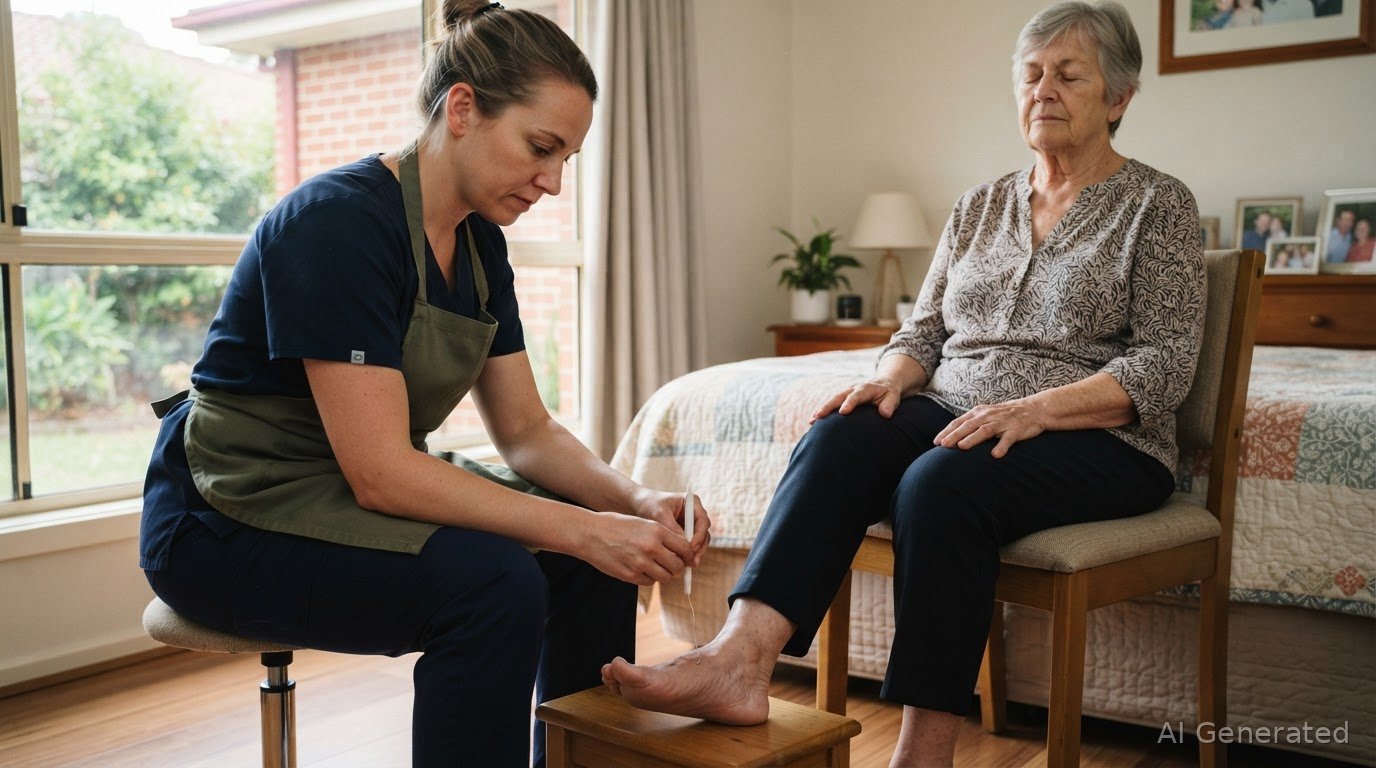
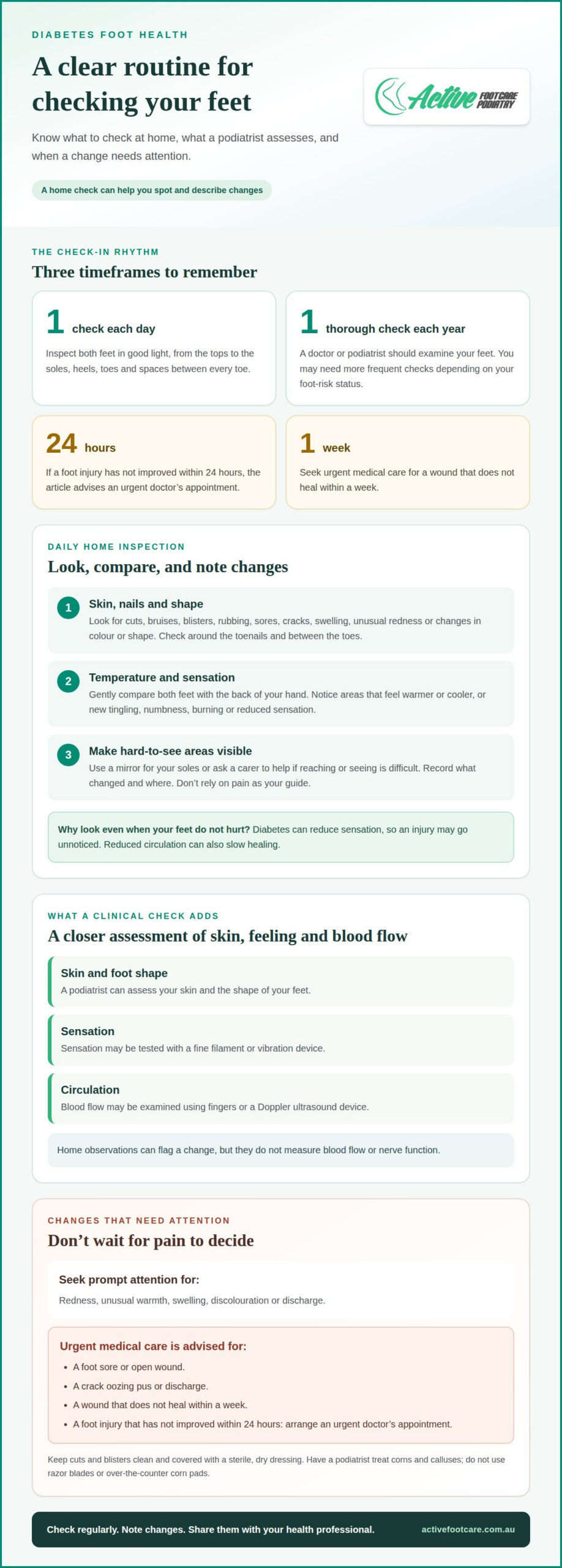
A foot health check for diabetics at home in Moorebank starts with a daily look for cuts, blisters, changes in colour or temperature, and changes in sensation, including between the toes. A doctor or podiatrist should conduct a thorough foot examination once a year, with more frequent checks depending on your foot-risk status. During an examination, your feet may be assessed for changes to the skin, sensation and blood flow.
It’s understandable to focus on a sore spot or visible change, but diabetes can also affect sensation and circulation. Some problems may be harder to notice and slower to heal. Regular checks help you spot changes and describe them clearly when you seek advice.
This guide explains how diabetes can affect your feet, how to prepare for a home check and what to look for from top to bottom. You’ll also learn how foot-risk status guides follow-up and which changes call for prompt medical attention.
Key Takeaways
- Build a simple daily foot-care routine, and take care when washing, drying, moisturising and trimming your toenails.
- During a foot check, look beyond visible injuries: changes in feeling, skin colour, temperature and circulation can also matter.
- Know which changes need prompt medical attention and which should be assessed within 7 days.
- Your foot-risk status helps determine how often you need a thorough examination; routine checks are recommended once a year.
- A home visit can help when you need a podiatrist to assess your feet in person and discuss suitable follow-up.
Preventative foot care and management
For cuts and blisters, keep the area clean and covered with a sterile, dry dressing, then watch for changes. Have a podiatrist treat corns and calluses. Don’t use razor blades or over-the-counter corn pads, which can damage your skin.
- Wash and dry your feet carefully. Use soap and warm water, then dry thoroughly, especially between the toes. Check those spaces for broken skin or trapped moisture. Avoid soaking your feet or exposing them to direct heat, including hot-water bottles, heaters and very hot baths. Reduced sensation can make heat harder to judge.
- Moisturise dry skin, but avoid the spaces between your toes. Apply moisturiser to dry areas such as your heels and soles, not to broken skin. Moisture between the toes can encourage skin problems, so dry those areas fully after washing. Mention cracking, persistent dryness or a change in skin colour at your next foot check.
- Trim toenails with care. Cut them straight across, neither too short nor too long, then gently file rough edges. Avoid cutting down the sides or digging into corners, as small cuts may be difficult to notice or heal. If a nail is painful, ingrown or hard to manage safely, arrange podiatry care rather than cutting deeply yourself.
- Protect your feet indoors and outdoors. Don’t walk barefoot, even around the house, where a small object or rough surface could cause an unnoticed injury. Wear clean socks and protective shoes that fit your feet. Before putting shoes on, feel inside for stones, rough seams or other objects, then check for rubbing after wearing them.
- Respond to injuries promptly. For a cut, blister or open area, avoid picking, squeezing or using corn treatments. Basic wound care may involve flushing the area with saline and covering it with a sterile, dry dressing. Seek urgent medical care for a foot sore, an open wound, a crack oozing pus or discharge, or a wound that does not heal within a week.
- Watch for signs of infection and worsening injury. Redness, unusual warmth, swelling, discolouration or discharge needs prompt attention. In Australia, a foot injury that has not improved within 24 hours warrants an urgent doctor’s appointment. Don’t wait for pain: reduced sensation can make a serious change feel minor, while poor circulation may slow healing.
What to expect from your Diabetes Foot Check?
- Set up a daily inspection routine. Check both feet once each day, ideally at a consistent time. Sit somewhere with good light and remove your shoes and socks. Look from the tops of your feet to your soles, heels and toes. Check between every toe, where changes can be easy to miss. Use a mirror to see your soles, or ask a carer to help if reaching or seeing is difficult.
- Look for changes in the skin and nails. Check for cuts, bruises, blisters, rubbing, sores, cracks, swelling or unusual redness. Compare both feet for changes in colour or shape, and notice if an area looks unusually pale, red or darker than usual. Check around your toenails and between your toes, too. Don’t rely on pain as your guide, because nerve damage can reduce sensation.
- Notice changes in temperature and sensation. Gently compare both feet with the back of your hand, checking for an area that feels warmer or cooler than the surrounding skin. Pay attention to new tingling, numbness, burning or reduced sensation. These observations don’t measure blood flow or nerve function, but they can help identify a change to discuss during a foot assessment. Record what you noticed and where.
- Wash, dry and inspect as one routine. Use soap and warm water, then dry carefully, particularly between the toes. Complete the visual check once the skin is clean and visible. Avoid testing your feet with very hot water, as altered sensation may make temperature harder to judge. If you can’t see an area, use a mirror or ask someone you trust to describe what they observe.
- Understand what a clinical foot check adds. A podiatrist can assess your skin and foot shape, test sensation with a fine filament or vibration device, and examine circulation using fingers or a Doppler ultrasound device. These checks can identify risks that a visual home inspection cannot measure. In a voice-only telehealth appointment, describe each foot from top to bottom, including between the toes, and explain any changes clearly.
Keep a brief note of new findings, such as a blister on your heel or a change in toe colour. This gives a health professional a clear account to assess and track over time.
How diabetes can affect circulation and sensation in the feet
- Understand why sensation can change. Blood glucose levels outside your target range can damage nerves in your feet and reduce sensation. A stone in a shoe, a blister from new shoes or a small cut may therefore go unnoticed. Nerve damage can also affect how you sense heat, cold or pressure. That’s why a visual check matters, even when your feet don’t hurt.
- Recognise the effect of reduced circulation. Diabetes can damage blood vessels and reduce blood flow to your legs and feet. With less circulation, a cut or blister may heal more slowly, and infection can become a concern. Look for changes such as unusual skin colour, swelling or a sore that isn’t improving. These signs need attention even if sensation is reduced.
- Use a mirror or carer for hard-to-see areas. Check the soles, heels and spaces between your toes, as well as the tops of both feet. If bending or seeing clearly is difficult, position a mirror on the floor or ask a carer to help inspect each area. During a voice-only telehealth check, describe your feet from top to bottom, including any changes in colour, temperature, skin or sensation.
- Choose protective shoes and socks. Wear shoes and socks that fit your feet and protect them from rubbing. Check inside each shoe for a stone, rough seam or other object before putting it on. Clean socks can help reduce friction and absorb sweat. Avoid walking barefoot, because reduced sensation may mean you don’t notice a sharp object or pressure point.
- Keep feet away from direct heat. Avoid heaters, hot-water bottles, electric blankets and scalding showers or baths. If nerve damage has changed your temperature sensation, you may not recognise excessive heat before it injures your skin. Use warm, not hot, water to wash your feet, then dry them thoroughly, especially between the toes. Check the skin afterwards for redness, blisters or breaks.
- Keep monitoring at-risk feet without an ulcer. Regular checks remain important during telehealth consultations, even if you don’t have a current ulcer. A podiatrist can assess sensation and circulation in person; a home inspection cannot measure either directly. Describe new changes clearly and note where they are. If a carer helps, ask them to report what they see without rubbing or pressing a sore area.
Diabetes affects people differently, so foot-risk status helps guide the level of follow-up. Daily observation can help you notice changes, while a clinical assessment can identify problems that aren’t visible at home.
Referral and escalation for concerning foot changes
- Seek medical treatment the same day for urgent changes. In Australia, an ulcer, unusual swelling, redness, blister, ingrown nail, bruising or cut on your foot needs same-day medical attention. Don’t wait for pain to develop, as reduced sensation can mask an injury. Contact a doctor or podiatrist and describe the change, its location and when you first noticed it. If it’s worsening, make that clear when arranging care.
- Arrange assessment within 7 days for other concerning changes. Broken skin between the toes, calluses, corns, a change in foot shape, cracked skin or a change in nail colour should be assessed within 7 days. A podiatrist can assess pre-ulcerative lesions and advise on appropriate care. Don’t cut calluses or use corn pads while waiting, as these can damage skin and create another wound.
- Escalate a wound that shows signs of infection. Seek urgent medical care for a foot sore, an open wound or a crack oozing pus, or discharge that does not heal within a week. A foot injury that has not improved within 24 hours also warrants an urgent doctor’s appointment in Australia. Redness, warmth or swelling around a wound can signal a change that needs prompt assessment.
- Use clear details to support referral. Note where the change is, when it began and whether it is getting larger or changing colour. If you have a smartphone or digital camera, photos may help a health professional review the concern. A photo doesn’t replace an in-person examination when one is needed. If your foot can’t be assessed clearly by phone, an in-person appointment may be indicated.
- Discuss a routine foot check with a doctor or podiatrist. A GP can examine your feet or refer you to a podiatrist for a diabetes foot check. Regular screening helps identify foot-risk factors and determine whether you need closer follow-up. Don’t wait for a wound before arranging routine care. An assessment can support prevention and establish an appropriate review plan.
- Ask about referral and Medicare support. Medicare may provide a rebate on podiatry fees when a doctor refers a person with a chronic condition. The referral pathway depends on the concern: a new wound or infection needs prompt medical attention, while calluses or changes in foot shape still need timely assessment. A podiatrist can assess changes and coordinate follow-up with other health professionals when specialist input is needed.
Diabetes foot risk status and check frequency
- Arrange a thorough examination at least once a year. In Australia, people with diabetes should have a foot examination with a doctor or podiatrist once a year. This review looks beyond visible sores to assess factors that can raise the risk of diabetes-related foot disease. A foot that looks normal today still needs scheduled examinations, because changes in sensation or circulation may not be obvious at a glance.
- Use your assessed risk to guide follow-up. The right frequency of foot checks depends on your foot-risk status. A podiatrist or doctor considers sensation, blood flow, skin condition, foot shape and any history of wounds. Loss of protective sensation, poor circulation or a previous ulcer can change your follow-up plan. Ask what the assessment found and when your next review is due.
- Understand that risk can change. Foot-risk status is not a permanent label. A new blister, reduced sensation, skin breakdown or change in foot shape may alter the concerns identified during an earlier examination. Report these changes promptly rather than waiting for your next routine appointment. The aim is to identify developing problems early and adjust care before they lead to more serious complications.
- Tell the assessor about factors that affect your feet. Mention previous ulcers, amputations, slow-healing wounds, numbness, pain or difficulty checking your feet. Explain whether you can see and reach your soles, and whether a carer helps with daily care. These details help the health professional understand practical risks at home, not just what appears during the appointment.
- Allow for additional risk considerations. Aboriginal and Torres Strait Islander people should be considered at high risk of diabetes-related foot disease until assessed otherwise. Don’t delay foot-risk assessment while waiting for symptoms. A doctor or podiatrist can examine your feet and determine an appropriate care and review plan based on individual findings.
- Keep daily checks alongside scheduled reviews. A yearly examination is a minimum routine, not a reason to ignore changes between appointments. Record new concerns, such as numbness, persistent redness or a wound, and seek care according to the urgency. Daily observation and professional screening have different purposes: one helps you notice changes, while the other assesses risk and guides follow-up.
Knowing your risk status makes the next step clearer. Arrange an assessment of your diabetes foot risk to understand the findings and follow-up that suit your feet.
Active Foot Care: Podiatrist Home Visit
Active Foot Care provides Podiatrist Home Visits in Moorebank and across Liverpool, Bankstown, Sydney and Campbelltown. A podiatrist can perform a Diabetes Foot Assessment at home when attending an appointment is difficult or an in-person review would help. The assessment provides a closer look at foot health and can identify changes that need follow-up. It’s a practical next step if you’re unsure how to interpret a finding or need support with ongoing diabetic foot care.
If your walking comfort or foot mechanics need attention, Custom Orthotics and Gait Analysis may also be relevant to your care. A home visit isn’t a substitute for urgent medical treatment for a concerning wound or signs of infection. To arrange a Podiatrist Home Visit or Diabetes Foot Assessment in Moorebank, contact Active Foot Care.
Make your next foot-health step manageable
A steady, informed approach to foot health can make it easier to act when something changes. If checking your feet is difficult or you’re unsure how to interpret a new concern, a foot health check for diabetics at home in Moorebank gives you an opportunity to discuss your needs with a podiatrist.
Active Foot Care can tailor a Diabetes Foot Assessment to your foot-health concerns. If you’d like to discuss whether a Podiatrist Home Visit may suit your circumstances, contact Active Foot Care to discuss your foot check. You can share what you’ve noticed and ask about a suitable next step. Taking that first step can help you feel more prepared to care for your feet.
Frequently Asked Questions
What Happens During Your Diabetic Foot Examination?
A diabetic foot examination combines your health history with a hands-on assessment of your feet. The practitioner may ask about previous wounds, numbness and changes in walking, then assess your skin, foot shape, sensation and circulation. Mention any recent change, even if it seems minor. For example, a new rubbing point in a familiar shoe can help explain a developing pressure problem and guide follow-up advice.
What should people with diabetes check on their feet at home each day?
Look over both feet for new skin damage, swelling or changes in colour, temperature or sensation. Include the soles, heels, toenails and spaces between your toes. Compare each foot with its usual appearance rather than relying only on pain. A brief daily note, such as “new redness beside the left big toenail”, helps you describe a change clearly at a later appointment.
How do you safely inspect the soles of your feet if you cannot see them clearly?
Sit securely in a well-lit place and angle a hand mirror beneath each foot rather than bending while standing. Move the mirror slowly to view the heel, arch and ball of your foot. If this remains difficult, ask a trusted carer to look and describe what they see. For a foot health check for diabetics at home in Moorebank, clear observations can help guide a conversation with a podiatrist.
What foot changes in diabetes require urgent medical attention?
Seek medical treatment the same day for an ulcer, unusual swelling, redness, blister, ingrown nail, bruising or cut. Broken skin between the toes, calluses, corns, cracked skin, nail-colour changes or a change in foot shape need assessment within 7 days. A sore, open wound or crack oozing pus needs urgent care, as does discharge that has not healed within a week. Don’t wait for pain to appear.
How often should Australians with diabetes have a professional foot check?
Arrange a thorough foot examination with a doctor or podiatrist once a year. Your foot-risk status determines whether you need closer follow-up, so ask when your next review is due after the assessment. Risk can change if you develop reduced sensation, a wound or a change in foot shape. Aboriginal and Torres Strait Islander people should be considered high risk until assessed otherwise.
Does Medicare cover diabetes foot checks or podiatry in Australia, and what are the costs?
Medicare may provide a rebate for podiatry fees when a doctor refers a person with a chronic condition. Ask your doctor whether a referral applies to your circumstances and what care it covers. The amount payable depends on the appointment and services provided, as well as any applicable rebate. Discuss fees with the practice before booking, and don’t assume every podiatry visit receives a Medicare rebate.
How can people with diabetes reduce the risk of foot ulcers and infection at home?
Reduce avoidable pressure and skin injury by choosing protective shoes that fit your feet, wearing clean socks and checking inside your shoes before putting them on. Trim toenails straight across, and leave corns or calluses for a podiatrist to treat. Stay active while taking care to prevent injury. If a new pressure mark or skin break appears, act promptly rather than continuing an activity that rubs the area.
What diabetes foot-care services are available near Moorebank through a GP, podiatrist or public health service?
A GP can check your feet or refer you to a podiatrist for a thorough examination, recommended once a year. Active Foot Care’s Podiatrist Home Visit provides an in-person assessment and an opportunity to discuss follow-up. Medicare rebates may be available with a doctor’s referral for a chronic condition.