


An ingrown toenail doesn’t automatically mean surgery. It occurs when the edge or corner of a nail grows into the skin beside it. Ingrown toenail treatment in Liverpool may involve podiatry care or, when appropriate, a procedure to remove part of the nail. The right approach starts with assessing the nail and surrounding skin.
If you have a sore nail edge, it’s understandable to want clear answers before deciding what to do. This guide explains what can contribute to an ingrown toenail, what a podiatrist may assess and how treatment options are chosen. It also outlines what to expect from local anaesthetic, when conservative care may be appropriate and why recurring or worsening problems may prompt a discussion about surgery. Knowing what to expect can help you feel prepared for your next step.
Key Takeaways
- An ingrown toenail develops when the nail edge presses into nearby skin; noticing changes early can help you seek suitable care.
- A podiatrist can assess the nail and surrounding skin to guide whether conservative care or a procedure is appropriate.
- Ingrown toenail procedures are commonly performed under local anaesthetic, which can leave the toe numb for several hours.
- For mild symptoms, warm salt-water soaks may offer a simple self-care step; recurring or worsening problems may call for a discussion about surgery.
- Antibiotics aren’t always needed. They’re used when there’s an active infection.
What is an ingrown toenail?
An ingrown toenail develops when the nail’s edge or corner grows into the surrounding skin. It can affect any toe, although one or both big toes are most often involved.
Understanding where the nail meets the skin helps explain the discomfort and what to look for. The visible nail edge, nearby skin and any signs of infection all matter when describing the problem.
Ingrown Toenail Causes and Definition
The defining feature is the nail edge pressing into the skin beside it, rather than growing freely beyond the toe. This can happen on any toe, but the big toe is the most common site. The affected corner may be difficult to see if the skin is tender or swollen.
To understand what may be causing the problem, look at how the nail edge sits against the skin and whether it appears to be pressing in. The trigger can vary; what matters is the contact between the nail and surrounding skin. A podiatry assessment can clarify what’s happening and whether the problem appears limited to one nail corner.
Symptoms and Risk Factors
Pay attention to discomfort at the nail edge and changes in the surrounding skin. Compare the affected corner with the other side of the same toe. Redness, swelling or discharge can indicate irritation or possible infection. Describe these changes and when they began during your assessment.
A nail growing into the skin is the central feature, but the way the edge meets the toe can differ. Note whether one corner or both sides are affected, and whether the problem has returned in the same spot. These details help distinguish a single episode from a recurring pattern.
Preventing repeat irritation starts with noticing what keeps the nail edge pressing into the skin. Keep track of which toe and corner are affected, and mention recurring changes during an assessment. This gives the podiatrist useful details when discussing care and ways to reduce further irritation.
Not every sore nail edge is the same. Tenderness limited to one corner differs from changes spreading across the surrounding skin. Describe the exact location, how the nail grows there and whether symptoms are changing. These observations help guide an assessment without assuming the cause.
In Liverpool, ingrown toenail treatment starts with assessing the nail and the skin beside it. The podiatrist considers the affected toe, the nail edge and any signs of infection. This helps determine the next step instead of treating every uncomfortable nail in the same way.
Procedure preparation and local anaesthetic
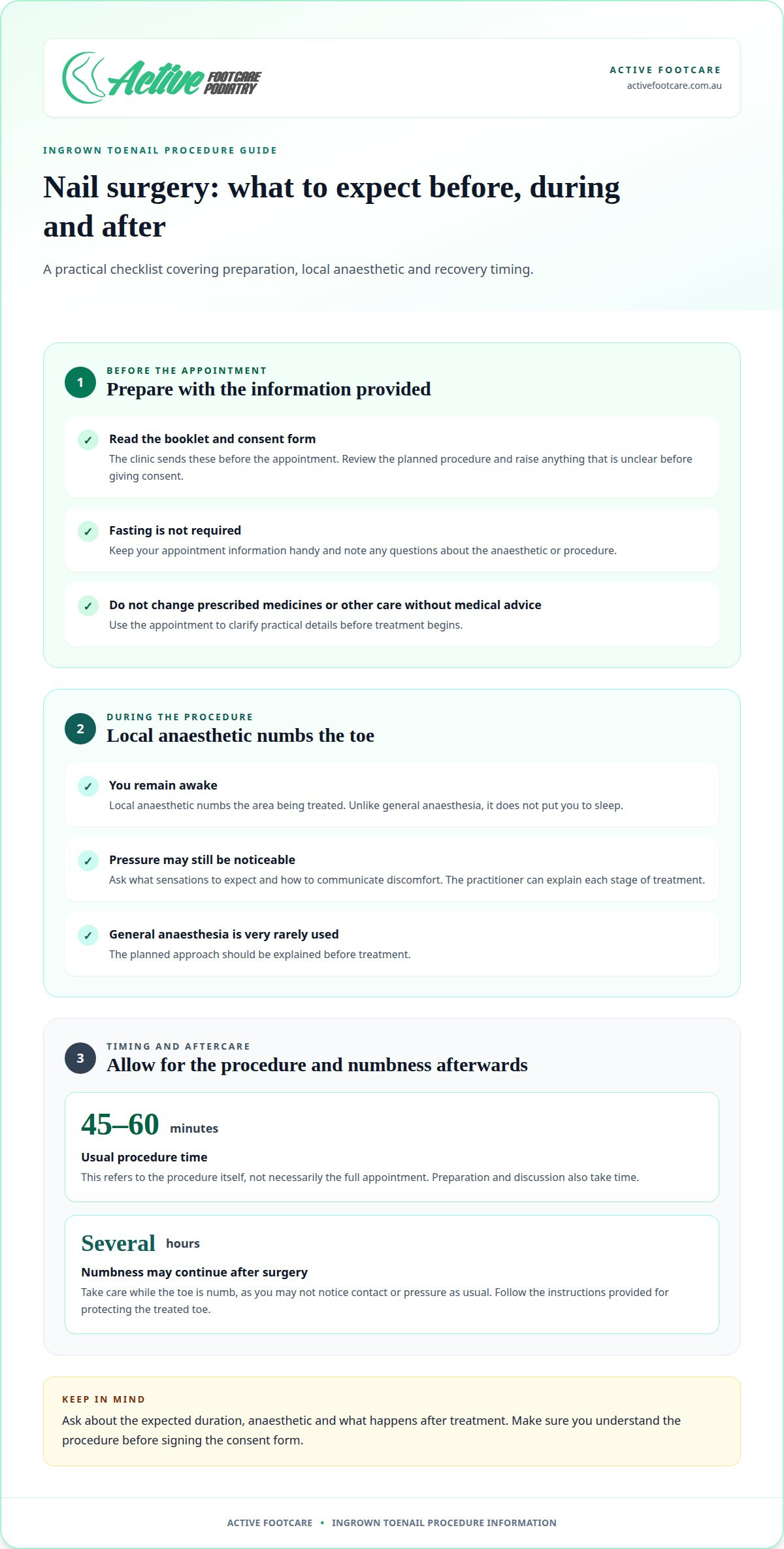
Before nail surgery, you’ll receive procedure information and a consent form. Ingrown toenail procedures are performed under local anaesthetic, and fasting isn’t required beforehand.
Preparing for the Procedure
Before the appointment, the clinic sends an information booklet and consent form. Read these carefully so you understand the planned procedure and can raise questions before giving consent. The paperwork helps you know what to expect, rather than arriving without an explanation of the treatment.
No fasting is required before the procedure. Keep the appointment information handy and note anything you want clarified, such as how local anaesthetic works or what the procedure involves. Don’t change prescribed medicines or other care without medical advice.
Local Anaesthetic Options
Ingrown toenail procedures are performed under local anaesthetic, which numbs the area being treated. You remain awake, unlike with general anaesthesia, where the patient is asleep. General anaesthesia is very rarely used for ingrown toenail surgery.
The numbness typically lasts for several hours after surgery. During the appointment, ask the practitioner what sensations to expect, including pressure, and how to communicate discomfort. Knowing the difference between pressure and pain can make the procedure feel more predictable.
Local anaesthetic allows the toe to be treated while you’re awake. You’ll still be aware of what’s happening around you. The practitioner can explain each stage, including when treatment begins and what you may feel. If pressure or discomfort concerns you, raise it before the procedure starts.
Timing can help with practical planning. Nail surgery usually takes between 45 and 60 minutes. That figure describes the procedure itself, not necessarily the total time needed for your appointment, which also includes preparation and discussion. Allow time to review the consent information and speak with the practitioner.
The anaesthetic can continue to affect the toe after you leave. Numbness typically lasts several hours, so take care while the toe is still numb. You may not notice contact or pressure as usual. Follow the instructions for your procedure, especially those about protecting the treated toe.
Consent is an important part of preparation. The information booklet and consent form arrive before the nail surgery appointment, giving you time to understand the plan. Ask about anything that isn’t clear before signing. A clear discussion helps ensure you understand the intended procedure.
Local and general anaesthesia work differently. Local anaesthetic numbs the area being treated, while general anaesthesia means the patient is asleep. General anaesthesia is very rarely used for ingrown toenail surgery. The planned approach and procedure should be explained before treatment.
Use the appointment to clarify practical details, including the expected duration, the anaesthetic and what happens after treatment. The procedure usually takes between 45 and 60 minutes, and numbness may last several hours. Understanding these steps in advance helps you plan around the appointment and follow the instructions given afterwards.
Self-care and when surgery may be needed
Warm salt-water soaks can help with mild symptoms, while recurring problems may prompt a discussion about nail surgery. The choice depends on the affected nail, symptoms and whether infection is present.
Self-Care and Urgent Infection Care
For mild symptoms, soak the foot in warm salt water for 15-20 minutes at a time. Use about one teaspoon of salt per cup of warm water, and repeat the soak 2-3 times a day. Avoid cutting into the nail corner, which can further irritate the skin.
If you suspect an active infection, seek prompt clinical assessment rather than relying on soaks alone. Report increasing redness, swelling or discharge around the nail. An assessment can establish whether infection is present and what care is appropriate.
Reasons for Nail Surgery
Nail surgery may be considered when an ingrown nail keeps recurring or symptoms persist despite conservative care. The podiatrist assesses the nail edge and surrounding skin, then discusses whether removing part of the nail is suitable. Mention if the problem keeps returning at the same corner.
A sore nail doesn’t automatically require surgery. The decision depends on the nail’s position, recurrence and any active infection. Children can also have ingrown toenail surgery when needed, usually under local anaesthetic.
Partial Nail Avulsion and Other Techniques
Partial nail avulsion removes the affected strip of nail, rather than the whole nail. For recurring cases, phenol may be applied after surgery to help prevent the problem returning. Recurrence after partial nail avulsion with phenol is estimated at about 5-10%.
Technique matters: removing the underlying nail bed means the toenail won’t grow back. A fully removed toenail may take up to 12 months to regrow when the nail bed remains. Ask the specialist to explain which approach is planned and what it means for future nail growth.
Surgery Risks and Complications
Recurrence is one possible outcome to discuss, particularly when considering partial nail avulsion. The estimated recurrence rate with phenol is about 5-10%, so surgery doesn’t remove every possibility of the problem returning. The procedure and the affected nail shape inform the discussion.
After surgery, soreness should ease after a few days, while full recovery usually takes 2-4 weeks. Healing varies with the procedure. Soft or open-toed shoes can help during early recovery, and the specialist’s dressing-care instructions support protection of the treated toe.
Conservative podiatry treatment
Conservative podiatry care aims to address an ingrown nail without removing it straight away. In Liverpool, NSW, an assessment focuses on the nail edge, symptoms and surrounding skin. The podiatrist uses these details to discuss suitable care and whether the problem can be managed without surgery.
At your appointment, explain which toe is affected, where it hurts and whether the problem has returned. A sore corner that catches against footwear, for example, is different from a nail that has become increasingly swollen. The podiatrist can examine the area and use these details to guide the discussion.
When symptoms are mild, care may focus on reducing irritation and supporting comfortable nail growth. A podiatrist can explain how to care for the nail and what changes to watch for. Avoid digging into the nail corner yourself, as this can disturb the surrounding skin and increase discomfort.
Antibiotics aren’t always needed for an ingrown toenail. They’re only needed if there’s an active infection. This is why an assessment matters: redness, swelling or discharge can affect the care plan. Describe any new or worsening signs clearly rather than assuming every tender nail needs antibiotics.
Conservative care also means knowing when to review the plan. If symptoms persist, the nail edge continues pressing into the skin or the problem returns in the same spot, arrange another assessment. The podiatrist can reassess the nail and discuss whether continued care remains appropriate or surgery should be considered.
A review can connect the nail problem with practical factors in your daily routine. Explain, for instance, whether the toe feels worse in particular shoes or during a regular activity. This gives the podiatrist context when discussing ways to limit irritation while monitoring the nail and skin.
Podiatry services in Liverpool can also take individual support needs into account. Eligible participants may use NDIS Podiatry Services for foot-care needs within an NDIS plan. The focus is on the person’s goals and specific concern, rather than assuming the same care suits everyone.
Between appointments, note whether discomfort is easing, staying the same or worsening, and whether the surrounding skin is changing. Share these observations at review. If you suspect infection, seek clinical assessment promptly; an active infection may alter the treatment plan, including whether antibiotics are needed.
Ingrown toenail assessment and treatment
A podiatry assessment checks the affected nail, surrounding skin and symptoms before treatment is chosen. The aim is to determine whether conservative care or nail surgery best addresses the problem.
During assessment, the podiatrist examines where the nail edge meets the skin and checks for signs of active infection. Explain which toe hurts, how long symptoms have been present and whether the problem has returned. These details help distinguish a recurring nail-edge problem from a new episode.
The next step depends on the assessment. If symptoms are mild and the nail can be managed without surgery, conservative care may be discussed. If the nail keeps pressing into the skin or the problem recurs, partial nail avulsion may be considered. The plan should suit the affected nail and surrounding skin.
Antibiotics aren’t always needed for an ingrown toenail. They’re only needed if there’s an active infection. Describe any redness, swelling or discharge around the nail during assessment so the practitioner can decide whether infection changes the treatment approach.
Partial nail avulsion removes the part of the nail causing the problem, rather than the entire nail. For recurring ingrown nails, phenol may be applied after surgery to help prevent recurrence. Before treatment, ask about the procedure and its purpose, including whether the nail bed will be affected.
Medicare may help with the cost of some treatment. Partial nail avulsion is often eligible for a Medicare rebate; ask about eligibility and any private health fund benefit before treatment. A rebate isn’t the same as full payment, so make sure you understand the applicable arrangements for your procedure.
Assessment also helps set expectations for recovery and follow-up. Healing after nail surgery typically takes a few weeks, depending on the procedure. Tell the practitioner about changes after treatment, such as increasing soreness or new discharge, and follow the dressing instructions provided for your procedure.
For people with diabetes, foot concerns deserve careful assessment because the skin and nail need to be considered together. A Diabetes Foot Assessment can review foot health and identify issues needing attention. Mention relevant changes, including a painful nail edge or changes to the surrounding skin.
If a painful or recurring nail is affecting your comfort, arrange a podiatry assessment to discuss the affected nail and suitable care. Bring a clear account of previous episodes and any treatment already tried. This helps make the consultation specific to your symptoms and treatment options.
Active Foot Care: Anti-fungal Laser Treatment
Active Foot Care offers Anti-fungal Laser Treatment for fungal nail infections. Fungal nail changes and an ingrown toenail are different issues, so this treatment is not a solution for a nail edge growing into the skin.
If you’re unsure what’s causing a nail change, a podiatry assessment can help identify the concern and guide the next step. For a painful or recurring ingrown toenail, discuss the nail and surrounding skin with a podiatrist. For a separate fungal nail concern, ask about Anti-fungal Laser Treatment. Assessment helps match the discussion to the problem rather than confusing two conditions.
To discuss your foot or nail concern, contact Active Foot Care.
Take the next step towards comfortable foot care
If a nail problem is affecting your comfort, a focused assessment can help you understand what care may suit your needs. For ingrown toenail treatment in Liverpool, Active Foot Care can assess your symptoms and discuss the next step, helping you make an informed decision without assuming surgery is necessary.
Foot health can involve other needs too. Active Foot Care offers a Podiatrist Home Visit, Diabetes Foot Assessment and Custom Orthotics. These services address different concerns, so the discussion can focus on the support relevant to you.
Bring up what’s troubling you, whether it’s a recurring nail issue or another foot-care concern. Contact Active Foot Care to discuss your treatment options and take a considered step towards feeling more comfortable on your feet.
Frequently Asked Questions
What causes them?
An ingrown toenail occurs when a nail’s edge or corner grows into the skin beside it. It can affect any toe, although one or both big toes are more commonly involved. The key feature is where the nail meets the skin. At an appointment, note which toe and nail edge are affected and whether it has happened before.
Who will do it?
A podiatrist assesses the nail and discusses suitable treatment, including whether a procedure is appropriate. If nail surgery is planned, ask who will perform it and what the appointment involves. Ingrown toenail procedures are performed under local anaesthetic, so you remain awake. The practitioner can explain the plan, answer questions about pressure or numbness and outline care after treatment.
Why might I need nail surgery?
Nail surgery may be considered if an ingrown nail keeps returning or symptoms continue despite conservative care. The discussion can cover whether removing only the affected nail edge is suitable or whether another approach is needed. For recurring cases, phenol may be applied after surgery to help prevent recurrence. Ask how the proposed technique may affect future nail growth.
Where can I get ingrown toenail treatment in Liverpool, NSW?
Active Foot Care provides podiatry care in Liverpool, NSW, for people with ingrown toenail concerns. An assessment can clarify the problem and identify an appropriate treatment pathway. If travelling to an appointment is difficult, the practice also offers Podiatrist Home Visits. When arranging care, share which toe is affected and whether the problem has returned.
Which Liverpool NSW podiatrists treat ingrown toenails?
Active Foot Care provides podiatry services for ingrown toenail concerns in Liverpool, NSW, and is led by Principal Podiatrist Dr Maher Said. An assessment can help examine the nail and discuss treatment options. To decide on your next step, describe the affected toe, any previous episodes and what care you’ve already tried.
Can a GP treat an ingrown toenail, or should I see a podiatrist?
For nail-specific assessment and treatment, you can see a podiatrist. Active Foot Care provides podiatry care, not GP services. If you’re unsure which care is appropriate, explain your symptoms and any signs of infection when seeking an appointment. Antibiotics aren’t always needed for an ingrown toenail; they’re only needed if there’s an active infection.
What are the treatment options for an ingrown toenail, including partial nail removal?
Options include conservative podiatry care or partial nail avulsion, which removes the affected strip of nail. For recurring cases, phenol may be applied after surgery to help prevent recurrence. If the underlying nail bed is removed, the nail won’t grow back. The approach depends on the nail and surrounding skin.
How is an ingrown toenail treated step by step?
The process starts with an assessment of the affected nail and surrounding skin. The podiatrist explains suitable options and, if surgery is planned, provides information and consent documents beforehand. The procedure is performed under local anaesthetic. After treatment, follow the dressing and recovery instructions provided for your procedure, and raise any new changes with your practitioner.