

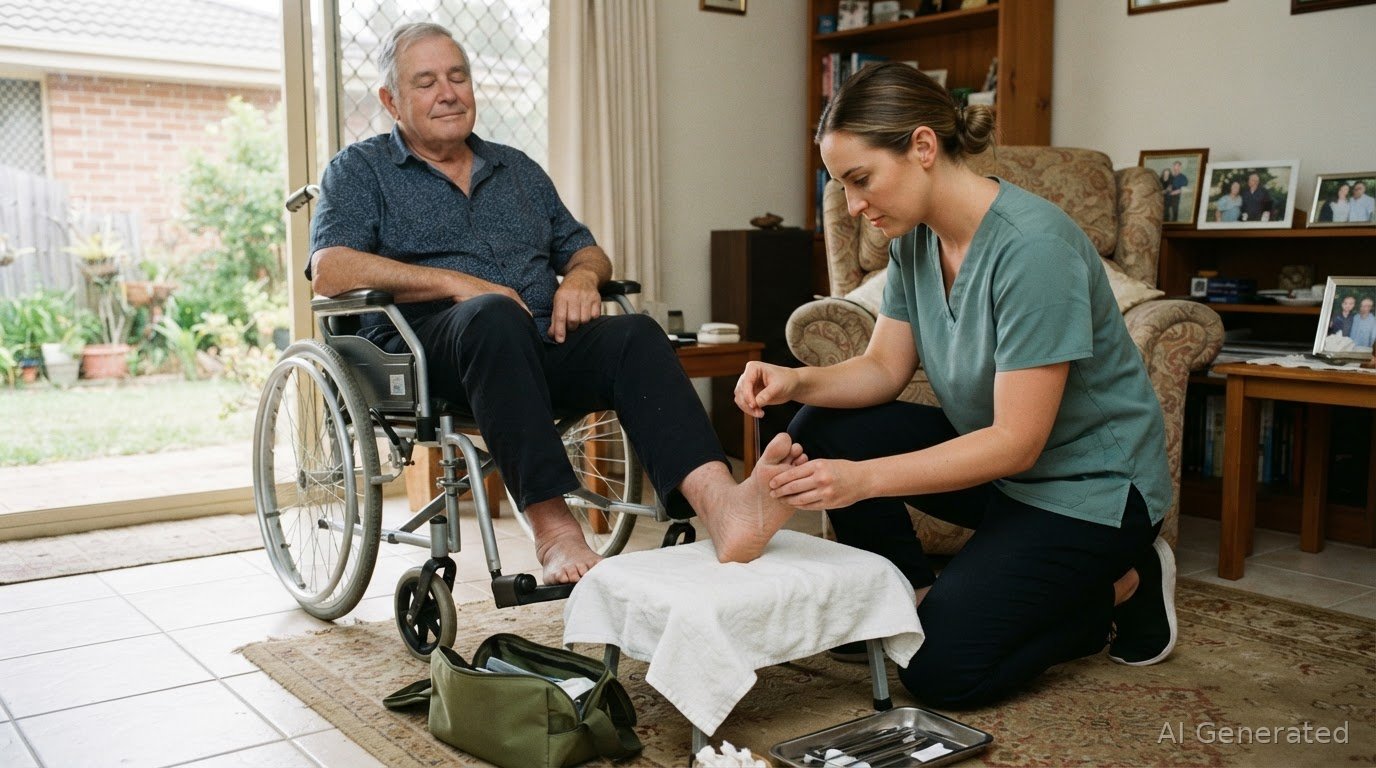
There isn’t one flat fee for a mobile NDIS podiatrist in Sydney. The price depends on the care required and the circumstances of the visit, and is provided after a quote request. For NDIS participants, understanding how appointments and referrals fit their support needs can be just as important as knowing what a home visit may cost.
It’s reasonable to want clear information before arranging care, especially when foot pain or reduced mobility makes travelling difficult. A home visit brings podiatry care to a familiar setting, with the assessment and treatment tailored to the person’s needs and routine.
This guide explains how NDIS billing and travel costs work, who may benefit from a home visit and how personalised podiatry care can support everyday movement. It also covers practical appointment planning for people in Sydney, including Liverpool, Bankstown, Moorebank and Campbelltown.
Key Takeaways
- Mobile podiatry costs depend on the care and visit required; learn which factors shape a quote before arranging an appointment.
- Home visits may suit people whose mobility, disability or ongoing health needs make travelling to an appointment difficult.
- Regular foot care can help identify changes early, with treatment tailored to comfort, walking and everyday activities.
- Understand how diabetic foot care and Medicare-rebated home visits under a Chronic Condition Management Plan relate to referral arrangements.
- Explore what to consider when planning service days and preparing for an NDIS podiatry appointment or referral in Sydney.
Who Is Home Visit Podiatry For?
A home visit brings podiatry care to people whose mobility, disability or health needs make travelling difficult. The podiatrist can assess foot health where the person moves about each day.
Home visit suitability
Home visits may suit someone who finds transport challenging, uses a mobility aid or feels more comfortable receiving care in a familiar setting. They can also help when a chronic condition makes travelling tiring. Consider whether the person can comfortably attend a clinic and whether seeing their usual walking surfaces or aids would help guide care.
Mobile appointments use clinical-grade portable equipment to assess and manage foot concerns at home, in respite centres or in aged-care settings. A podiatrist can consider footwear, walking surfaces and mobility aids in that environment. This context helps shape care around comfort, movement and the person’s daily activities.
For example, a Bankstown resident who uses a walking frame may find it difficult to get to a clinic. A home visit lets the podiatrist consider how the frame and home layout relate to movement. For someone in supported accommodation, the appointment takes place in a familiar setting where it may be easier to discuss everyday routines.
At home, podiatry may include assessment and care for nail concerns, ingrown toenails, corns, calluses, fungal nail infections, diabetes-related foot needs and pain affecting walking or balance. The appointment plan depends on the concern being assessed. A podiatrist can also explain when another health professional should be involved.
Check the practitioner’s registration, podiatry qualifications and experience supporting people with disability. Ask how the assessment relates to the person’s mobility and everyday activities. Clear explanations of recommended care and its purpose help participants and supporters understand the next steps.
NDIS and home care funding
NDIS participants may have self-managed, plan-managed or NDIA-managed funding arrangements. Whether podiatry can be funded depends on the participant’s plan, support needs and funding pathway. Active Foot Care’s NDIS services are available to self-managed and plan-managed participants. For NDIA-managed funding, check the applicable provider requirements and plan arrangements.
Home care package funding is separate from NDIS funding. The package’s available budget and support arrangements affect whether podiatry visits can be funded through it. For either pathway, clarify the planned care, how visits are documented and how travel is billed. Travel costs for NDIS therapy services may depend on the appointment and travel arrangements.
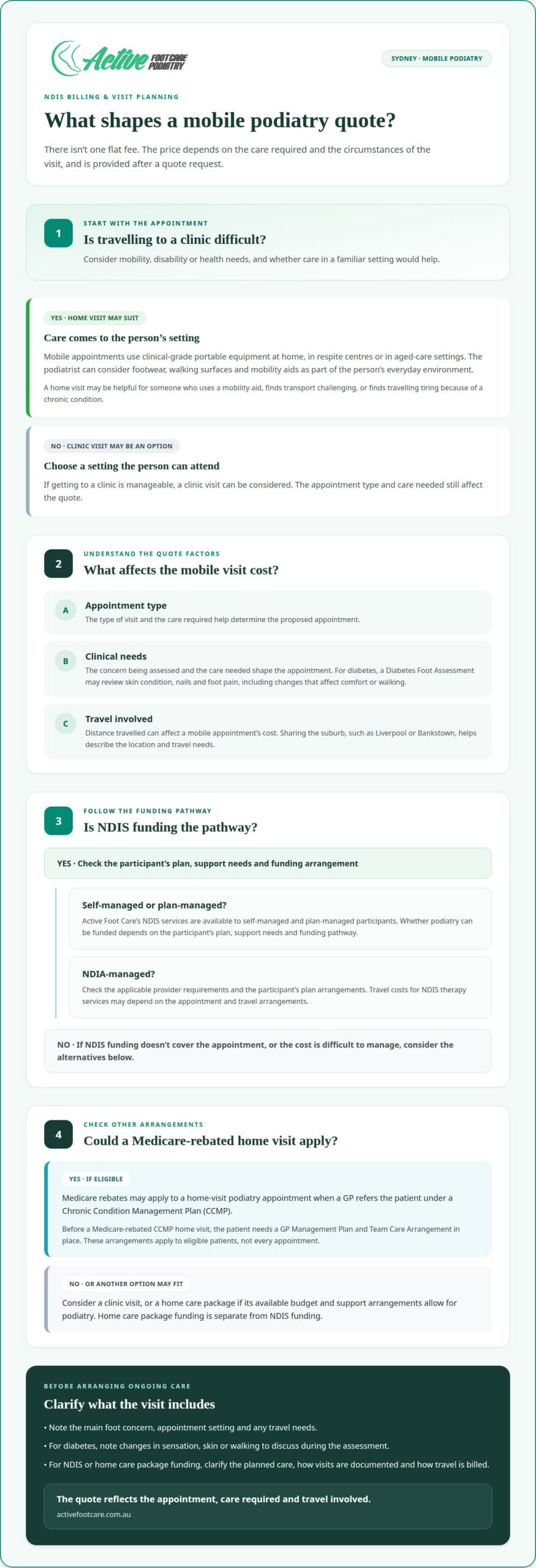
Home-visit fees and any travel surcharge depend on the appointment requirements and distance travelled. The price is provided after a quote request, with the visit type, care required and travel affecting the cost. Sharing the suburb, such as Liverpool or Bankstown, helps describe the location and travel needs.
When choosing a mobile NDIS podiatrist Sydney, look for clear information about NDIS experience, home-visit care and relevant qualifications. Consider whether the assessment approach suits the participant’s foot concerns and daily activities. Active Foot Care provides NDIS-regulated podiatry services to self-managed and plan-managed participants, including home visits.
How much does mobile podiatry cost?
Mobile podiatry costs depend on the care needed and the details of the visit. The price depends on the case and is provided after a quote request; factors include the appointment type, clinical needs and travel involved.
For a person with diabetes, cost is only one part of planning foot care. A Diabetes Foot Assessment can review foot health and changes that affect comfort or walking. The assessment may consider skin condition, nails and foot pain, helping guide care around the person’s needs.
Diabetes, arthritis and peripheral neuropathy can each affect comfort and movement differently. Reduced sensation associated with peripheral neuropathy can make it harder to notice a change in the foot. Arthritis may make bending or reaching the feet difficult. A podiatrist can assess the concern and explain suitable foot-care steps.
At a clinic or home visit, the appointment and relevant care needs shape the quote. Travel can also affect the cost of a mobile appointment. A clear quote helps the participant or support person understand the proposed visit before arranging ongoing care.
For eligible patients, Medicare rebates may apply to home-visit podiatry when a GP refers them under a Chronic Condition Management Plan (CCMP). Before a Medicare-rebated CCMP home visit, the patient needs a GP Management Plan and Team Care Arrangement in place. These arrangements apply to eligible patients, not every appointment.
Regular monitoring can be especially relevant where diabetes affects foot sensation or skin condition. For example, a person who notices a new sore or change in comfort can raise it during an assessment. The podiatrist can review the change and explain the next step in the person’s foot-care plan.
If NDIS funding doesn’t cover the appointment or the cost is difficult to manage, alternatives include a clinic visit or an eligible Medicare-rebated home visit under a CCMP. A home care package may also be considered where its available budget and support arrangements allow for podiatry.
To plan costs, write down the main foot concern, the appointment setting and any travel needs. For diabetes, note changes in sensation, skin or walking to discuss during the assessment. These details help clarify what care is needed and what the quote covers. You can also explore diabetes foot care options as you consider the next step.
Personalised podiatry treatment strategies
A treatment plan starts with the patient’s main concern and how it affects daily activities. For example, soreness that changes walking calls for a different assessment focus from thickened nails or a recurring callus. The podiatrist considers foot health, comfort, movement and relevant health conditions before discussing suitable care.
Common concerns include nail problems, ingrown toenails, corns, calluses, fungal nail infections and foot pain affecting walking or balance. Diabetes also makes ongoing diabetic foot care important. Patients can describe what has changed, when discomfort occurs and which activities have become difficult. Those details help shape a personalised plan rather than treating each foot concern in isolation.
Corns and calluses can make standing or walking uncomfortable. A podiatrist assesses the affected skin and surrounding foot, then explains an appropriate management approach. Footwear, walking surfaces and pressure during movement may help put the concern in context. If the area is painful, breaking down or changing, raise that clearly during the appointment.
An ingrown toenail can cause tenderness around the nail edge and interfere with shoes or walking. The podiatrist assesses the nail and nearby skin before recommending care. Share whether the problem has returned, whether it affects daily movement and whether diabetes or reduced sensation is relevant. These details help inform appropriate management.
Fungal nail infections and diabetic foot concerns call for care matched to the patient. Active Footcare offers Anti-fungal Laser Treatment for fungal nail infections. For diabetic foot care, an assessment can identify changes that need attention and inform ongoing monitoring. Raise new pain, skin breakdown or a wound promptly during a clinical appointment.
A practical appointment discussion can cover:
- The main symptom, such as nail discomfort, a callus or pain during walking.
- Relevant conditions, including diabetes, and any changes noticed in the feet.
- Daily activities affected, such as standing, getting into shoes or moving around the home.
- What the proposed treatment involves and how progress will be reviewed.
For NDIS participants, explain how a foot concern affects mobility and everyday activities. This gives the registered podiatrist useful context for assessment and care planning. If treatment needs change, regular visits can help identify foot changes and adjust the plan. A personalised approach connects each clinical concern with the patient’s routines, comfort and movement goals.
Mobile podiatrist service days
Mobile appointment planning depends on the suburb, visit location and the care required. Sharing these details helps arrange a suitable visit around the person’s routine.
Service-day availability
Service days can vary according to the practitioner’s schedule and the locations being visited. For a participant in Liverpool, the preferred day and household routine are useful details when planning an appointment. Note any regular support visits or personal-care routines that affect when the person can comfortably see a podiatrist.
A Bankstown resident may need a visit when a family member or support worker can be present. Someone at home may prefer an appointment that fits around meals, rest or other scheduled care. Share those preferences early so the visit can be planned around the person’s needs.
Useful details to prepare include:
- The suburb and full visit address, including unit or building information.
- Preferred days and times, alongside regular support or care routines.
- Any entry instructions, such as a gate code or reception process.
- The main foot concern and any assistance needed before or during the visit.
These details make appointment planning more practical for the participant and household. They also give the podiatrist useful context about the visit setting and the person’s routine.
Greater Sydney coverage
Mobile podiatry appointments are planned around the visit location. Liverpool, Bankstown, Moorebank and Campbelltown are useful suburb details when arranging local care. Providing the suburb rather than simply saying “Sydney” makes the requested location clear.
Travel and appointment planning are linked. A visit in Moorebank has a different address and travel context from one in Campbelltown, so include the full location when discussing arrangements. For an appointment at home, note parking or entry details. For supported accommodation, include the residence name and any reception process.
Location details matter for participants with disability who rely on support workers or mobility equipment. A clear address and preferred timing help the household organise assistance without rushing. For a visit in Liverpool or Bankstown, include any access needs that could affect arrival or movement around the home.
Use the suburb, preferred timing and access notes as a practical starting point for appointment planning. These details connect the visit to the person’s routine and the foot concerns they want assessed, such as discomfort while walking or difficulty managing footwear at home.
NDIS podiatry appointments and referrals
To compare registered mobile podiatrists in Sydney, look at registration, podiatry qualifications, NDIS experience and the home-visit care offered. Then compare how each practitioner explains assessments, appointment preparation and follow-up for the participant’s needs.
An NDIS appointment can begin with a referral or a summary of the participant’s foot concerns. A referral helps describe the reason for care, but the discussion should also cover everyday effects. For example, explain whether foot pain changes walking, footwear choices or participation in activities.
Before booking, gather the information that will help the podiatrist understand the person’s situation:
- The participant’s relevant plan goals and funding-management arrangement.
- A referral or health summary, if available, describing the foot-care concern.
- Current concerns involving skin and nail health, pain, balance or walking.
- Footwear or mobility aids used during everyday activities.
- Access details for the home or aged care facility.
These details help focus the assessment. For instance, a participant who struggles to put on shoes may need footwear considered alongside the foot concern. A person in an aged-care facility may need appointment arrangements coordinated with staff and their usual care routine.
During the appointment, describe what has changed and when it affects daily life. Mention a sore, nail discomfort, callus or difficulty walking rather than relying on a general description such as “sore feet”. The podiatrist can assess the concern and explain the proposed care and follow-up clearly.
NDIS participants and their supporters can consider what the assessment covers, how recommendations relate to the participant’s goals, and what information is included in appointment records. Check the practitioner’s registration and qualifications, then consider their experience supporting people with disability and providing mobile appointments. Clear explanations make it easier to understand the care plan and discuss it with a support coordinator or family member.
For a home visit, share the address, entry instructions and any assistance needed on arrival. For an aged-care or respite centre visit, include the facility’s name and relevant access arrangements. Keep a short record of changes between visits, such as new skin concerns or footwear discomfort, so the next assessment has useful context.
For podiatry support connected to NDIS needs, arrange an NDIS podiatry appointment and share the participant’s main foot-care concerns.
Active Foot Care: Podiatrist Home Visit
Active Footcare provides Podiatrist Home Visits for people who need podiatry care at home, in respite centres or in aged-care settings. It’s a practical option when travelling to an appointment is difficult or foot concerns affect daily movement.
Care can be tailored to the person’s needs, including a Diabetes Foot Assessment to review foot health. Where foot pain affects walking, Gait Analysis provides a non-invasive examination of the way a person walks or runs. Custom Orthotics are individually manufactured and tailored based on personal assessment. The right approach depends on the concern and the person’s everyday activities.
For NDIS participants seeking support with foot health, a home visit can bring care into a familiar setting. Share the main concern and relevant appointment or funding details when arranging care. Contact Active Foot Care to discuss a podiatrist home visit.
Take the next step towards comfortable movement
Before arranging care, consider what better foot health would make possible in everyday life. It might mean moving around the home with greater confidence, managing a regular routine more comfortably or taking part in an activity that matters to you. A clear personal goal can help focus the conversation and keep care connected to what the participant values.
For an appointment with a mobile NDIS podiatrist in Sydney, bring the participant’s priorities and any questions about how care fits their support arrangements. A family member or support person can help explain daily routines and practical needs, while the participant remains central to decisions about their care.
Active Foot Care can discuss the next step for someone seeking podiatry support at home. Contact Active Foot Care to enquire and start a conversation about care that fits your needs.
Frequently Asked Questions
How can podiatry support people with disabilities?
Podiatry can address foot concerns that make everyday activities harder for someone with a disability. An assessment may consider how discomfort affects standing, transfers or wearing shoes. For example, a participant who finds it difficult to walk between rooms can explain which movements are affected. This connects the clinical discussion with practical daily goals and gives the podiatrist useful context about the person’s routine.
Why is seeing a podiatrist important?
A podiatrist can assess foot changes and explain suitable care when discomfort begins affecting daily movement. A painful nail, skin change or sore spot inside a shoe can alter how someone walks. People with diabetes can discuss changes in sensation or skin condition during foot monitoring. If a concern is new or getting worse, describe the change clearly during a clinical appointment.
Which Sydney suburbs do mobile NDIS podiatrists cover?
Active Footcare serves people in Liverpool, Bankstown, Moorebank and Campbelltown. Include your suburb and full address in the enquiry so the requested visit location is clear. Add practical access details too, such as a unit number, building entry instructions or a reception process. This information helps make the appointment enquiry specific and supports practical visit planning.
Do Sydney mobile NDIS podiatrists offer services under NDIS funding?
Active Footcare provides NDIS-regulated podiatry services for self-managed and plan-managed participants. Before arranging care, identify who manages the participant’s funding and explain the purpose of the appointment. For example, describe whether support is sought for foot pain, nail care or a concern affecting mobility. Sharing this context helps make the enquiry relevant to the participant’s needs and funding arrangements.
What NDIS support categories can fund podiatry and what eligibility rules apply?
Whether NDIS funding can be used depends on the participant’s plan, support needs and funding arrangements. A diagnosis alone doesn’t establish that a particular appointment is covered. Relate the podiatry support to the participant’s goals and review available funding before arranging care. For example, explain how foot pain affects mobility or participation in daily activities when discussing why an assessment is needed.
How much do mobile podiatry visits cost in Sydney, including travel and call-out fees?
Mobile visit costs depend on the care and travel involved, and the price is provided after a quote request. Active Foot Care states that NDIS travel costs are claimed at half the hourly rate under the NDIS Pricing Schedule effective 1 July 2026. When discussing a quote, ask how appointment care and travel costs are accounted for, so the proposed visit is clear before it is arranged.
How do I book a mobile NDIS podiatrist and what referral or documents are needed?
To enquire about a mobile NDIS podiatrist in Sydney, provide the participant’s suburb, funding-management arrangement and main foot-care concern. A referral or health summary can help explain why care is being sought. Include relevant information such as diabetes, changes in walking comfort or a current skin concern. Having these details ready makes the discussion more focused and helps the podiatrist understand the participant’s priorities.
Are there wait times or travel surcharges for mobile NDIS podiatry in Sydney?
Appointment timing and travel costs depend on the requested suburb, route and visit arrangements. Include the full address when enquiring, as location helps establish the travel involved. Active Foot Care states that NDIS travel costs are claimed at half the hourly rate under the NDIS Pricing Schedule effective 1 July 2026. Share any access requirements too, such as a building entry process, when arranging the visit.