

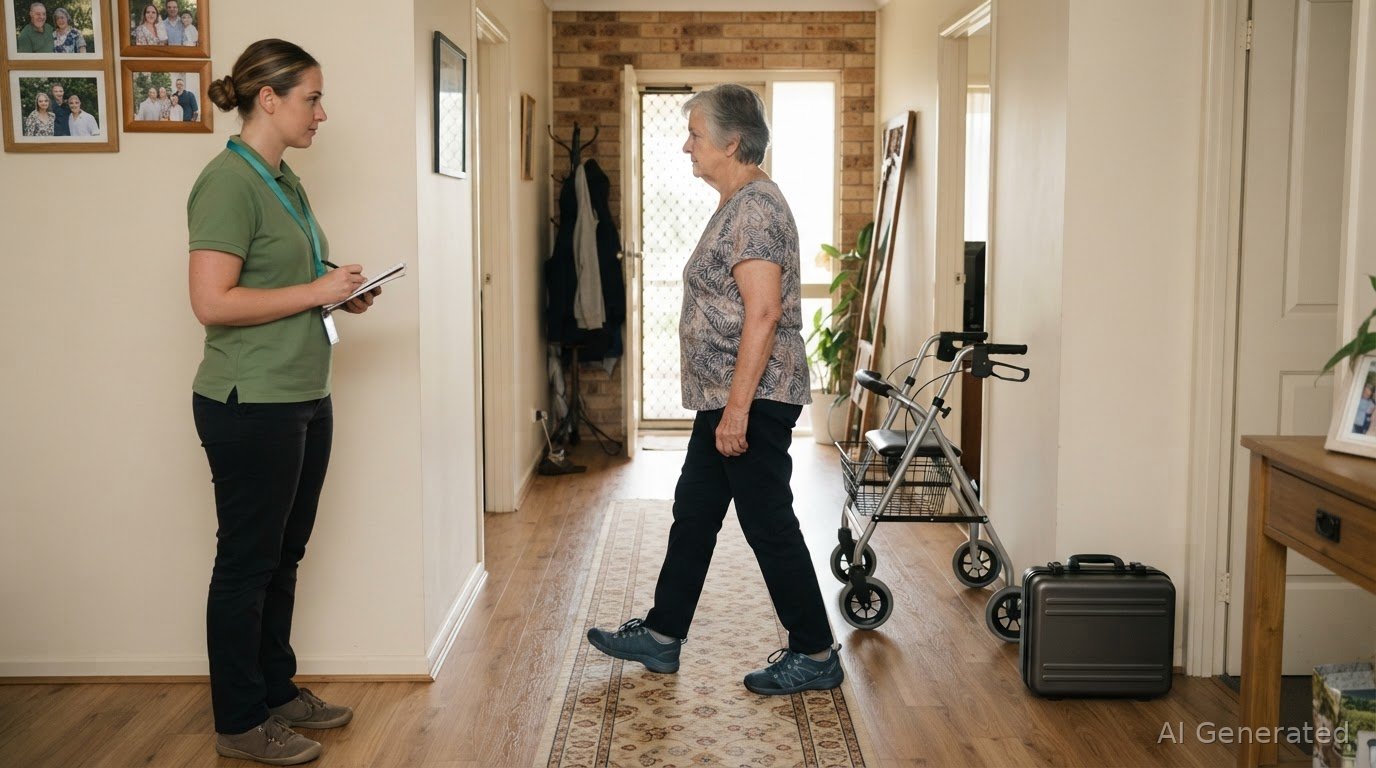
Foot care should fit around the person, not the other way around. A mobile NDIS podiatrist in Sydney brings podiatry appointments to a participant’s home, school or workplace, using portable equipment to assess and manage foot health concerns. This can include care for foot pain, nail and skin conditions, balance and mobility needs.
It makes sense to want care in familiar surroundings, especially when travelling to an appointment is difficult. Seeing the person in their everyday environment can also help the podiatrist understand how footwear, walking surfaces and mobility aids fit into their routine.
This guide explains what mobile podiatry involves, where appointments can take place and how assessment and treatment can support foot health and movement. It also covers practical considerations when arranging care, including how a home visit can make podiatry more accessible for NDIS participants and their support networks.
Key Takeaways
- Mobile podiatry brings foot assessment and care to suitable everyday settings, helping reduce the need to travel to an appointment.
- Appointments at home, school or work can help a podiatrist understand how a person’s surroundings affect their footwear, walking and mobility.
- Changes to the skin or nails, bunions and sprains can affect comfort and movement; recognising when symptoms need prompt medical attention matters.
- When arranging NDIS podiatry, consider the participant’s goals, daily activities and support needs, as well as how care fits their plan.
- A home visit, diabetes foot assessment, custom orthotics or gait analysis may be relevant depending on the person’s foot health and mobility needs.
What is mobile podiatry?
Mobile podiatry brings foot assessment and treatment to the participant’s home or care setting, using portable equipment to examine and manage foot health concerns. For NDIS participants, this can connect foot care with everyday activities such as standing, walking and maintaining balance.
Foot health and mobility support
Foot pain, thickened nails, calluses, skin breakdown and wounds can make everyday activities harder. A podiatrist considers how symptoms affect walking and confidence, then discusses suitable care and practical ways to support movement. For example, someone avoiding walks because of heel pain can describe when it occurs and which activities have become difficult.
Common concerns include nail and skin conditions, fungal nail infections, diabetes-related foot health and pain that affects balance. Foot, heel and ankle pain can have different causes, so describe where it hurts, when it began and what makes it better or worse. These details help guide the assessment and treatment discussion.
Assessment and treatment for feet and lower limbs
An assessment can include discussing symptoms, examining the feet and considering how the person walks. The podiatrist may also take footwear, walking surfaces and mobility aids into account. A clear account of the participant’s goals, routines and support needs helps connect foot health with practical priorities.
Treatment depends on the concern identified and may focus on foot pain, nail or skin problems, or diabetes-related foot care. Ongoing monitoring can help identify changes in foot health and support timely care. If a wound, spreading redness, heat, swelling, discharge, sudden colour change, severe pain, fever or rapidly worsening symptoms occur, seek prompt medical care, especially if the person has diabetes or reduced circulation.
What should participants consider when comparing mobile podiatry providers in Sydney? Compare whether the assessment and treatment address the participant’s foot concerns, mobility goals and everyday setting. Consider, too, how the podiatrist explains findings and helps the participant understand the care plan.
Can NDIS funding cover mobile podiatry and travel costs? A mobile appointment alone doesn’t establish whether a cost can be funded. Consider how the podiatry support relates to the participant’s disability-related needs and plan, and distinguish treatment costs from travel costs.
Can self-managed, plan-managed and NDIA-managed participants use mobile podiatrists? The management arrangement affects how payment is handled. Before arranging care, establish whether the provider’s payment process works with the participant’s arrangement and the support being funded.
What qualifications and NDIS registration should I check when choosing a provider? Consider the treating podiatrist’s qualifications, professional registration and experience with the participant’s needs. Active Foot Care is an NDIS-regulated provider, with services available to self-managed and plan-managed participants.
What are the current NDIS price limits for podiatry and provider travel? There isn’t a figure in this section to quote. Consider the applicable podiatry support and travel items separately rather than assuming one limit covers both.
What NDIS plan funding categories can pay for podiatry? The relevant category depends on the participant’s plan and how the support relates to their needs and goals. Identify the available funding and the purpose of the podiatry support when planning payment.
For concerns about a provider, the NDIS Quality and Safeguards Commission can be contacted on 1800 035 544. This gives participants and their supporters a named organisation to contact if they need to raise a concern.
Mobile appointments at home, school or work
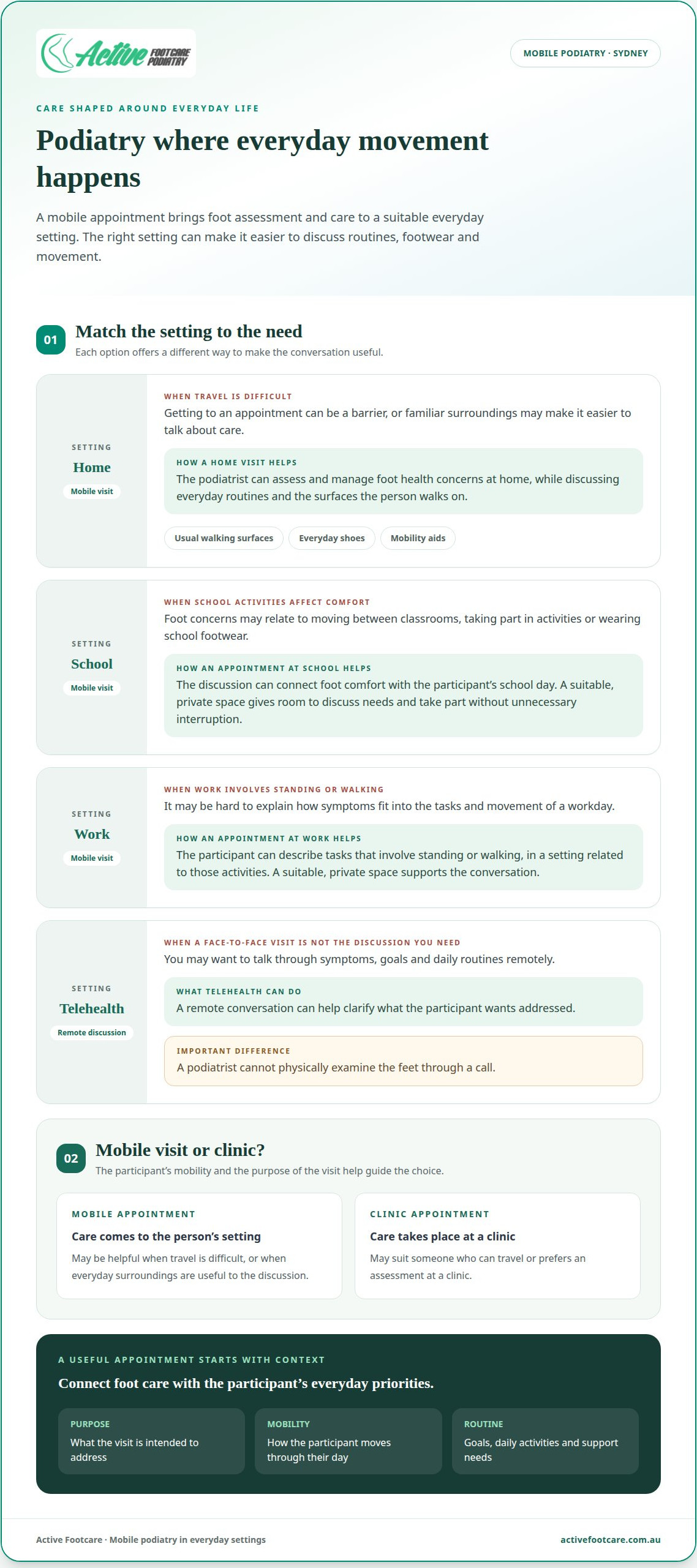
A mobile appointment takes place in a setting that suits the participant’s routine, rather than requiring travel to a clinic. In New South Wales, appointments can be mobile, and the participant’s location and care needs help determine which setting is practical. A home visit may suit someone who finds travel difficult, while a workplace or school appointment can relate foot concerns to the activities they do there.
At home, the podiatrist can discuss the participant’s usual routines and the surfaces they walk on. The participant can describe where movement feels difficult, such as walking between rooms or standing to prepare a meal. Having everyday shoes and mobility aids nearby can make the discussion more useful by bringing familiar items into the assessment.
At school, an appointment may help explore how foot comfort relates to moving between classrooms, taking part in activities or wearing school footwear. At work, the participant can describe tasks that involve standing or walking. A suitable, private space gives the participant room to discuss their needs and take part without unnecessary interruption.
An in-clinic appointment in Sydney may suit someone who can travel or prefers an assessment at a clinic. Mobile appointments bring care to the person’s setting, which can be helpful when travel is difficult. The choice depends on the purpose of the visit, the participant’s mobility and the setting that best supports discussion of their needs.
Telehealth can provide a way to discuss symptoms, goals and daily routines remotely. For example, a participant might explain when heel discomfort arises during a workday. A remote conversation is different from an in-person appointment because the podiatrist cannot physically examine the feet through a call. It can still help clarify what the participant wants addressed.
To prepare, note the participant’s main concern, when it occurs and which activities are affected. Gather commonly worn footwear or mobility aids if they are relevant, and decide whether the participant wants a support person involved. These steps help keep the appointment focused on the participant’s priorities, whether it takes place at home, school or work.
Are referrals or assessments needed for NDIS-funded podiatry? A GP referral and an NDIS plan serve different purposes. A podiatry assessment considers foot health and mobility needs, while the participant’s plan helps determine how the support relates to their goals.
Choose the setting around the participant’s access needs and the task being discussed. For information about podiatry appointment options, consider which environment best fits the participant’s routine and assessment needs.
Mobile podiatry in home and supported living settings
A home visit lets a podiatrist consider foot health in the participant’s everyday surroundings. In supported living, care can include the participant and their support network in discussions about movement and independence.
Home visits across Sydney
Active Footcare provides mobile podiatry in Western Sydney, including Liverpool, Bankstown, Moorebank, Sydney and Campbelltown. A home visit can bring care into a familiar setting, such as a house or supported living environment, which can help people who find travelling difficult. The participant’s routines, access needs and foot concerns can shape the appointment.
Before a visit, note which daily activities feel difficult and where the participant moves most often. For example, they may describe pain when walking from the bedroom to the kitchen. These details help focus the appointment on movement at home, rather than discussing symptoms without their everyday context.
Footwear and mobility aid assessment at home
At home, a podiatrist can assess the footwear and mobility aids the participant uses day to day. Bring out commonly worn shoes and aids, and explain when each is used. The podiatrist can consider these alongside walking surfaces and mobility needs, connecting observations with practical activities.
For example, the participant may wear different shoes indoors and when leaving home. A home assessment can make those differences easier to discuss. If the participant wishes, include a support person who knows their usual movement patterns.
Home-based podiatry can also support continuity of care. Follow-up visits can help identify changes, review care and provide education to patients and carers. If a participant’s mobility changes, describing new difficulties with walking or daily tasks gives the podiatrist useful context. The aim is to address foot concerns while supporting the person’s independence.
In supported living, coordinating the appointment with the participant’s routine can help avoid unnecessary disruption. The participant remains central to decisions, while a carer can share relevant observations about changes in movement or foot care. Clear communication helps everyone understand the care plan and their role in supporting it.
Mobile podiatry in Sydney can suit people who benefit from care in their own environment. Consider whether the home has enough space for the appointment and whether the participant wants a support person present. These practical details help keep the visit focused on foot health, mobility and the person’s goals.
Mobile podiatry involves a qualified podiatrist visiting a patient at home, in residential aged care, or in a supported living environment. Untreated foot problems for homebound patients can worsen and lead to infections, wounds, or increased pain. Consistent podiatry care can help manage pain, reduce complications, and maintain independence.
Skin and nail conditions, bunions, and sprains
Skin and nail changes can affect comfort, walking and daily routines. A mobile podiatrist can assess concerns such as thickened or ingrown toenails, corns, calluses and fungal nail infections. Note what has changed and when, then explain how it affects activities such as putting on shoes or walking around the home.
For nail or skin concerns, describe the affected area and any discomfort during the appointment. A podiatrist can assess the foot and discuss suitable care for the condition. For example, a callus that makes a shoe uncomfortable needs a different assessment focus from an ingrown nail causing pain around the nail edge.
People with diabetes should take changes in foot health seriously. Regular diabetic foot monitoring can reduce the risk of complications. Mention any wound, skin breakdown or change noticed since the previous assessment, and share how the foot feels during everyday movement. This information helps keep care focused on the participant’s needs and supports better-informed outcomes.
A bunion can change the shape around the base of the big toe, while a sprain involves an injured joint or surrounding tissues. Foot or ankle pain can affect balance and confidence, so describe where it hurts and which movements are difficult. A podiatry assessment can consider the concern and its effect on walking, then discuss suitable next steps.
Some symptoms need prompt medical care rather than waiting for a routine appointment. Seek care for a foot wound, spreading redness, heat, swelling, discharge, sudden colour change, severe pain, fever or rapidly worsening symptoms. This is especially important for people with diabetes or reduced circulation. If a foot problem creates an immediate threat to life, call 000, according to the Australian Government.
Keep a short record of symptoms to support the appointment. Include when the problem began, what activities aggravate it and whether footwear affects comfort. For instance, note if ankle pain follows a sprain or if a nail becomes painful inside particular shoes. These details help connect the assessment with the participant’s daily routine and quality of life.
For NDIS participants, explain how a foot or ankle concern affects personal goals, such as moving around the home or taking part in usual activities. Keep notes on care and changes in symptoms to give a clear picture of the person’s needs. If symptoms worsen or a warning sign appears, seek appropriate medical care promptly rather than relying on routine podiatry alone.
Which mobile podiatrists in Sydney accept NDIS participants?
Start with the participant’s location, podiatry needs and NDIS plan management arrangement. Active Footcare provides mobile podiatry in Western Sydney, including Liverpool, Bankstown, Moorebank, Sydney and Campbelltown. Consider how the support relates to the participant’s goals and how payment will be managed.
Review the provider’s information for clear details about mobile appointments and podiatry care. Look for the concerns addressed, such as nail care, diabetes foot assessments or pain affecting walking. If the participant needs support for a particular condition, consider how the appointment relates to that need.
NDIS registration and a provider’s listed services are not necessarily the same thing. A provider may describe podiatry services without those services appearing in its registration groups or recorded professions. Consider registration alongside the participant’s plan management arrangement, rather than treating registration alone as proof that a particular service can be funded.
The payment process is another practical consideration. Self-managed participants arrange payment themselves, while plan-managed participants use their plan manager to handle eligible invoices. NDIA-managed participants have a different payment arrangement. Understand how the provider’s invoicing process works with the participant’s plan management before booking.
Compare the service with the participant’s goals and daily needs. For example, someone whose foot pain affects walking at home may need an assessment that considers movement and footwear. A participant with diabetes may benefit from a Diabetes Foot Assessment. The appointment should address the relevant foot health need.
Before choosing, organise the key details in one place:
- Location: the suburb and setting where the participant needs the appointment.
- Support need: the foot condition, mobility concern or assessment sought.
- Plan arrangement: whether the participant is self-managed, plan-managed or NDIA-managed.
- Appointment information: what the podiatrist assesses and how the participant receives care notes or recommendations.
These points help participants and their support networks compare services based on practical fit, not just a provider’s description. Keep the participant involved in decisions, including their preferred appointment setting and what they want to achieve through podiatry.
For mobile podiatry support in Sydney, Active Foot Care provides NDIS podiatry services. Consider this option when the participant needs podiatry care connected to foot health, walking or mobility goals.
Active Foot Care: Podiatrist Home Visit
Active Footcare’s Podiatrist Home Visit brings podiatry to people whose mobility or daily circumstances make travelling to an appointment difficult. The podiatrist can assess foot concerns in the participant’s usual environment and discuss how they affect walking and everyday activities.
A Diabetes Foot Assessment can support foot health monitoring, while individually manufactured and tailored Custom Orthotics and non-invasive Gait Analysis may suit particular footwear or movement needs. The right service depends on the participant’s concern and the goals they want their podiatry care to support.
If an in-home podiatry appointment suits your needs, contact Active Footcare to discuss arranging a Podiatrist Home Visit.
Take the next step towards comfortable movement
Make the participant’s priorities the starting point for ongoing foot care. A simple note of what they want to do more comfortably, and what currently gets in the way, can help focus the next discussion. Their goals may relate to moving around at home, taking part at school or work, or managing a foot concern as part of their routine.
A mobile NDIS podiatrist in Sydney can discuss how podiatry may support the participant’s goals and needs. Active Footcare offers Podiatrist Home Visits, Diabetes Foot Assessments and Custom Orthotics, with care guided by the person’s foot health and mobility.
For a calm, practical conversation about suitable podiatry support, contact Active Foot Care. Taking the next step can help the participant and their support network plan care around everyday life.
Frequently Asked Questions
Why is seeing a podiatrist important?
A podiatrist can assess foot concerns that interfere with walking, balance or daily activities. For example, recurring heel pain may make standing at work difficult, while nail changes can make wearing usual shoes uncomfortable. An assessment helps clarify the concern and suitable care. People with diabetes can also benefit from regular foot monitoring, which can help reduce the risk of complications.
Which Sydney suburbs do mobile NDIS podiatrists service?
Active Footcare provides mobile podiatry in Liverpool, Bankstown, Moorebank, Sydney and Campbelltown. These locations can help participants see whether a home or supported-living visit suits their setting. When arranging care, note the participant’s suburb and preferred appointment setting to make it easier to discuss a home visit.
What podiatry services do mobile NDIS providers offer?
Services can include assessment and care for foot pain, nail and skin concerns, diabetes-related foot health, footwear and walking needs. Active Footcare offers NDIS Podiatry Services, Diabetes Foot Assessments, Custom Orthotics and Gait Analysis. The appropriate service depends on the participant’s concern and goals. For instance, gait analysis provides a non-invasive examination of the way a person walks or runs, while a diabetes foot assessment focuses on foot health.
How can I find and book a mobile NDIS podiatrist in Sydney?
Start by identifying the participant’s suburb, main foot concern, preferred appointment setting and NDIS management arrangement. Then contact Active Footcare to discuss its mobile podiatry services and the participant’s needs. Have relevant details ready, such as everyday footwear, mobility aids and changes in foot comfort. This helps focus the conversation and identify the next step in arranging care.