

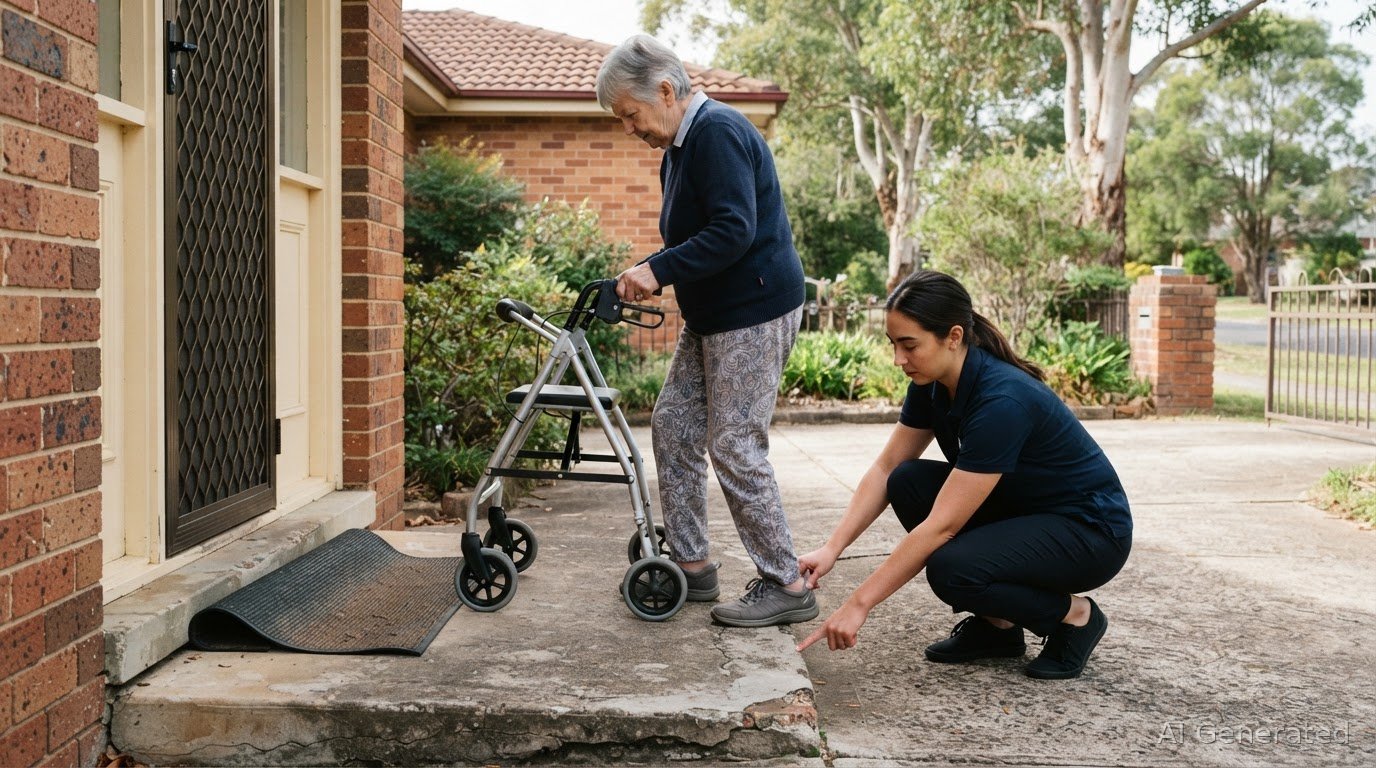
A podiatry falls risk assessment in Liverpool considers how your feet, footwear, walking pattern and balance may affect your stability. A podiatrist can review your medical history, muscle strength and sensation, then identify practical ways to support safer movement, such as footwear advice or changes around the home.
It’s understandable to want to stay mobile and feel more confident on your feet. This guide explains what an assessment can involve, how foot pain or unsuitable shoes may affect balance, and how footwear advice, exercises and environmental changes can help address risks. You’ll also learn about podiatry support in Liverpool and when a home visit may be useful.
Key Takeaways
- A podiatrist can assess how foot pain, footwear and walking patterns may affect balance, then tailor advice to your mobility needs.
- Footwear that fits securely and provides suitable support may help you feel steadier as you move.
- Small changes to the home environment can address hazards identified during a falls risk assessment.
- Ask about MBS item 10962, which the Australian Government Department of Health and Aged Care identifies for a podiatry health service.
- For people who have difficulty travelling to an appointment, a podiatrist home visit may provide a practical way to access foot care.
Footwear assessment and fall prevention
Footwear affects grip, comfort and stability, while foot pain can change the way you walk. A podiatrist can assess your shoes and foot function, then discuss practical steps to support safer mobility.
Injury prevention planning
An injury prevention plan starts by identifying what is affecting each step. A podiatrist considers pain, bunions, corns, calluses and ingrown toenails, which can make walking uncomfortable or affect balance. They can assess footwear fit and support, then recommend suitable changes, exercises or orthotics based on your needs.
The plan should also explain how treatment will address an identified issue. For example, pressure from a poorly fitting shoe may call for a different fit, while a gait abnormality may lead to advice about footwear modifications or orthotics. Australian Government Department of Health and Aged Care lists Medicare Benefits Schedule item 10962 for a podiatry health service.
Falls prevention and mobility
A falls prevention assessment in Liverpool can explore the links between foot comfort, movement and stability. A podiatrist may observe how you walk, note where pain changes your stride and assess whether your footwear feels secure in motion. This connects practical recommendations to everyday activities, such as walking around home or going outdoors.
Advice may include shoes that fit securely and provide cushioning and appropriate arch support. These features can support stability, but comfort and suitability matter too. For example, a shoe that rubs against a corn may change how you place your foot. A podiatrist can consider footwear alongside gait concerns, rather than treating them separately.
A treatment plan may also include exercises to support strength, flexibility, coordination or balance. The podiatrist can explain how each recommendation relates to your walking pattern and foot needs. Regular foot care can help address problems that interfere with comfortable movement.
Mobility aid recommendations
What footwear or mobility aids may a podiatrist recommend to reduce falls? Recommendations may include secure, well-fitting shoes, footwear modifications or orthotics, depending on your foot function and gait. A podiatrist may also suggest exercises to support strength, coordination and balance. The right approach depends on the assessment findings, since no single option suits everyone.
During an assessment, a podiatrist can consider whether a shoe slips at the heel, feels unstable or presses on a painful area. They can explain how a better fit, cushioning or arch support may address that concern. If orthotics are recommended, they can form part of a broader plan for gait concerns.
In Liverpool, describe how foot symptoms affect your walking, including pain from bunions, corns, calluses or ingrown toenails. This helps the podiatrist connect footwear recommendations with your daily mobility. An assessment can clarify which changes are relevant, so the advice reflects your needs rather than generic shoe guidance.
Service availability
Access to a podiatry falls risk assessment in Liverpool depends on your needs, appointment setting and funding pathway. A GP referral may be relevant for Medicare rebates, while a home visit can help if mobility or travel makes a clinic appointment difficult. Sharing the reason for your appointment helps the podiatrist plan an appropriate assessment.
Does Medicare cover podiatry falls risk assessments in Australia? Eligible Australians with a GP chronic condition management plan and referral can claim a Medicare rebate for up to five allied health sessions per calendar year, shared across the allied health services claimed, according to Services Australia. The rebate applies to eligible services, not automatically to every appointment or assessment.
Can a GP care plan or private health insurance cover podiatry in Liverpool? A GP chronic condition management plan and referral can support access to the Medicare rebate for eligible allied health sessions. Private health insurance depends on your policy’s podiatry inclusions, benefit limits and waiting periods.
For Medicare, ask your GP whether a chronic condition management plan and referral are appropriate. Keep the referral details available when arranging care, and explain that your appointment concerns falls risk, walking or balance. If orthotics may be part of your treatment, the podiatrist can assess their relevance to your foot function and gait.
How can I book a podiatry falls risk assessment in Liverpool, NSW? Request an appointment and describe your mobility concern, relevant foot symptoms and whether travelling is difficult. Mention any referral or funding arrangement, such as an NDIS plan, so the podiatrist can consider your needs in context.
Before your appointment, note when walking feels less stable, such as when turning, rising from a chair or going outdoors. Bring the shoes you wear most often and any orthotics you currently use. These details help the podiatrist understand how everyday footwear and movement relate to your concerns.
For a home visit, explain any access requirements and where the assessment is needed. A home appointment can be helpful when getting to a clinic is difficult. The podiatrist can consider your mobility and the footwear you use in daily routines.
To take the next step, use the podiatry appointment information and outline your mobility concern, referral status and preferred appointment setting. Clear details help direct the request to the relevant type of podiatry care.
Environmental modifications
A falls risk assessment can connect mobility concerns with the spaces you use each day. In Liverpool, a podiatrist may discuss environmental changes alongside movement and exercise advice.
Assessment findings help identify where you may need extra support. For example, if you feel unsteady walking between rooms, describe that route during your appointment. The podiatrist can use this information to discuss environmental changes suited to your mobility and routine.
Consider the paths you walk regularly, such as the route from your bedroom to the bathroom or kitchen. Note where movement feels difficult, including when turning, stepping around furniture or crossing a doorway. Specific examples make the discussion practical, rather than treating your home as one undifferentiated space.
- Walking routes: Identify the parts of a familiar route where the person slows down, changes direction or feels less steady.
- Everyday tasks: Consider movements involved in reaching a chair, entering a room or carrying out a regular activity.
- Footwear at home: Discuss what the person wears indoors and whether it feels secure during movement.
- Support needs: Explain which activities feel difficult, so recommendations can relate to the person’s actual routine.
These prompts can help you describe your experience clearly. They don’t replace a professional assessment, but they can focus the discussion on specific situations. A podiatrist can explain how the findings relate to foot function, walking and stability, then provide guidance about suitable environmental changes.
Recommendations should reflect your needs. A change that makes one route easier may not address difficulty elsewhere in the home. The podiatrist can help prioritise your concerns, such as feeling unsteady while turning or moving between commonly used rooms, and keep the discussion focused on daily activities that matter to you. Outdoor pathways and yards also warrant attention; for property owners seeking even, stable ground to minimise outdoor tripping risks, resources like instatntturf.pro showcase how synthetic turf installations can provide level, reliable footing.
Environmental advice can complement exercise recommendations. Based on the assessment findings, podiatrists may recommend exercises to support strength, flexibility, coordination and balance. The discussion can consider where movement feels harder and how exercise guidance relates to that concern.
Before your appointment, think of one or two specific examples. Describe the activity, where it happens and what feels difficult. Explaining what happens when you walk through a doorway or turn near a chair gives the podiatrist useful context to discuss your mobility and possible changes.
Environmental changes are one part of falls prevention, not a standalone solution. While minor adjustments like clearing pathways reduce everyday trip hazards, more complex home environments may require deep hazard removal or specialised restorative cleaning from providers such as AustDecon to restore safe living conditions. A podiatrist considers the assessment findings and explains relevant education, exercises and practical changes together. This helps you understand which parts of your routine and environment relate to your mobility concerns.
Podiatrists use falls risk assessment findings to identify people who may need extra support, recommend exercises and provide education about environmental changes. The aim is to connect your reported difficulties with practical guidance suited to your concerns. You can describe situations you have noticed, while the podiatrist uses the assessment findings to guide advice on prevention, exercise and environmental changes.
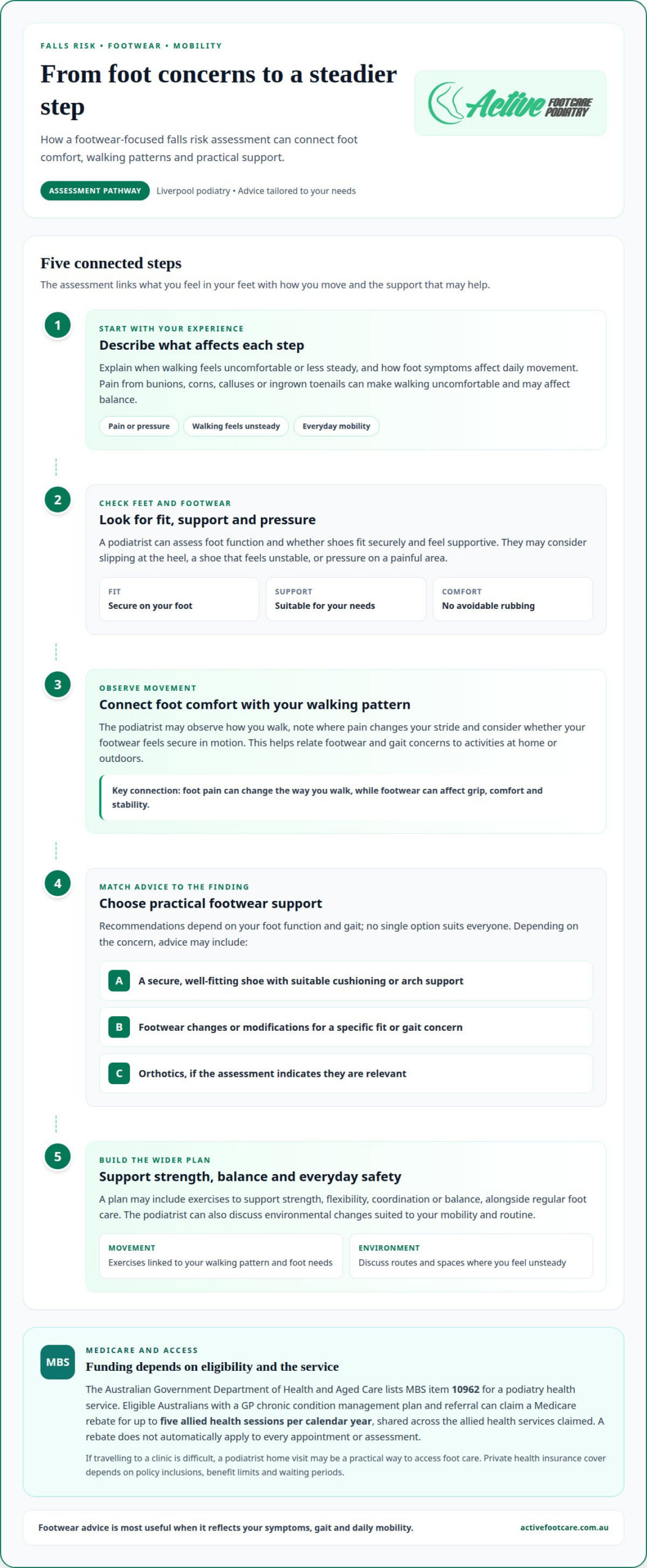
Podiatry falls risk assessment
A podiatrist considers how foot function, sensation and movement relate to balance. The findings help shape practical recommendations for mobility and foot care.
Falls risk assessment
A podiatry assessment can consider your medical history, balance, muscle strength and sensory perception. These factors help explain how your feet and walking pattern may relate to falls risk. At a clinic, the podiatrist can also assess foot structure, skin, nails, circulation, sensation and movement.
Walking patterns and imbalances matter because they can affect stability. A podiatrist may observe your gait directly and use non-invasive gait analysis to examine how you walk or run. The focus is on how you move, not simply whether your feet look different while standing still.
Share examples of movement that feels difficult, such as starting to walk, turning or crossing a room. The podiatrist can connect these details with the assessment findings and explain which issues may need attention. Foot pain, altered sensation or a change in your walking can provide useful context.
Assessment findings can guide a tailored plan. Depending on your concerns, recommendations may include exercises, footwear advice or orthotics. The podiatrist can explain how each step relates to balance, gait or foot function, and what to monitor during everyday movement.
Urgent assessment after a fall
Seek urgent medical care after a fall involving a serious injury, head impact, severe pain or difficulty getting up. A podiatry appointment can assess foot function and walking, but it isn’t a substitute for urgent medical attention.
Once immediate concerns are addressed, arrange a podiatry assessment if your walking has changed, foot pain is affecting movement or your balance feels different. Tell the podiatrist when the fall happened and what has changed since. This helps focus the assessment on gait, foot symptoms and mobility.
Falls can have more than one contributing factor. A podiatrist focuses on your feet and movement while considering your history and reported balance concerns. For example, reduced sensation may affect how you perceive foot placement, while a changed walking pattern may affect stability.
An assessment can also help when concerns develop without a recent fall. You may notice growing difficulty walking across familiar spaces or feel less steady because foot discomfort has changed your stride. Describing a specific activity helps the podiatrist understand the movement involved.
In Liverpool, explain whether your appointment is prompted by a fall, a change in gait or ongoing foot symptoms. The podiatrist can assess relevant foot and movement factors, then discuss practical next steps. This helps turn your observations into a clear plan to support safer mobility.
The World Health Organization identifies falls as the second leading cause of accidental injury and death worldwide. This context makes it worthwhile to discuss changes in walking and balance early, even if you haven’t had a recent fall. Abnormal walking patterns and imbalances can increase the likelihood of falls, so observations about steadiness, turns and foot placement can help a podiatrist understand where movement feels less secure and shape relevant advice.
Which podiatrists in Liverpool, NSW offer falls risk assessments?
In Liverpool, look for an assessment that considers foot function, gait and balance together. Falls risk can relate to several factors, so a useful appointment connects your walking concerns with relevant foot findings. When arranging care, explain whether your concern follows a fall or a change in mobility.
A structured first appointment can include questions about your medical history and movement, followed by an examination of your feet. The podiatrist may assess foot structure, skin, nails, circulation, sensation and movement. These checks can identify issues that affect comfortable walking, such as foot pain or reduced sensation.
Assessment methods can vary with your needs. A podiatrist may observe your walking and consider balance, muscle strength and sensory perception. Non-invasive gait analysis provides an in-depth examination of how you walk or run. The findings should relate to your mobility concerns, rather than being treated as isolated observations.
Useful questions when booking include:
- Does the appointment consider gait, foot function and balance?
- Can the podiatrist assess how foot symptoms affect everyday walking?
- Can the assessment include footwear or orthotic considerations?
- Is a home appointment suitable if travelling to a clinic is difficult?
These questions can clarify the assessment’s focus. For example, if you feel unsteady while turning, describe that movement and ask how your gait will be considered. If foot pain is a concern, explain which activities are difficult, such as walking outdoors or moving around home.
If mobility or travel makes a clinic visit difficult, a Podiatrist Home Visit brings podiatry care to your home. The podiatrist can assess your feet in your usual setting and consider how foot function relates to movement and everyday routines.
People with diabetes may need their foot health considered as part of ongoing care. A Diabetes Foot Assessment focuses on foot health, and you can also raise concerns about balance or walking during your appointment. If you have NDIS funding, NDIS Podiatry Services may suit your support needs.
When arranging an appointment, describe your main concern, any recent change in walking and whether travel to a clinic is manageable. Mention relevant funding arrangements and bring the shoes or orthotics you use regularly. These details give the podiatrist a clear starting point to assess your mobility and discuss suitable next steps.
Arrange a podiatry appointment to discuss foot function, walking concerns and the assessment setting that suits your needs.
Active Foot Care: Diabetes Foot Assessment
Active Foot Care’s Diabetes Foot Assessment is a practical next step if diabetes-related foot concerns affect your comfort or mobility. A podiatrist can assess your foot health and discuss suitable care, helping you understand any issues that may influence walking.
If getting to an appointment is difficult, Active Foot Care’s Podiatrist Home Visit brings care to you. Individually manufactured and tailored Custom Orthotics may also be relevant when foot function affects movement. For NDIS participants, Active Foot Care provides NDIS Podiatry Services for self-managed or plan-managed participants.
Share your mobility concerns and any changes you’ve noticed in your feet when arranging care. Contact Active Foot Care to discuss your needs and book a podiatry appointment.
Take the next step towards steadier mobility
Use your mobility concerns as the starting point for a focused conversation. A podiatry falls risk assessment in Liverpool can connect changes in walking with foot care and support suited to your needs. Consider what you’d like to make easier, such as moving around home or getting out more comfortably.
Active Footcare can discuss a Diabetes Foot Assessment, a Podiatrist Home Visit or Custom Orthotics in relation to your foot health and mobility needs. Sharing what has changed and what you hope to improve helps shape a useful next step.
Contact Active Foot Care today to discuss your podiatry needs. A thoughtful conversation can help you move forward with greater clarity and confidence.
Frequently Asked Questions
What does a podiatry falls risk assessment include?
A podiatry falls risk assessment brings together information about your foot health and how you move. The podiatrist may ask about your medical history, then consider foot structure, skin, nails, circulation, sensation and movement. Mentioning a recent change, such as favouring one foot since pain began, gives useful context. The findings help identify foot-related concerns and shape recommendations suited to your mobility.
What tests assess balance, gait, foot health and fall risk?
There isn’t one test that captures every aspect of falls risk. An assessment may involve observing your gait, checking movement and sensation, and considering balance and muscle strength. Non-invasive gait analysis provides an in-depth examination of how you walk or run. The podiatrist considers these findings alongside your foot health and medical history, rather than treating them as a stand-alone prediction of falls.
How can podiatrists help prevent falls in older adults?
Podiatrists can address foot problems that interfere with comfortable walking and provide recommendations tailored to your mobility. For example, an older adult who changes their stride to avoid a painful area can discuss the symptom, footwear and walking pattern during an assessment. Advice may include suitable footwear, orthotics or exercises. Ongoing foot care can also help manage problems affecting foot function and everyday movement.