

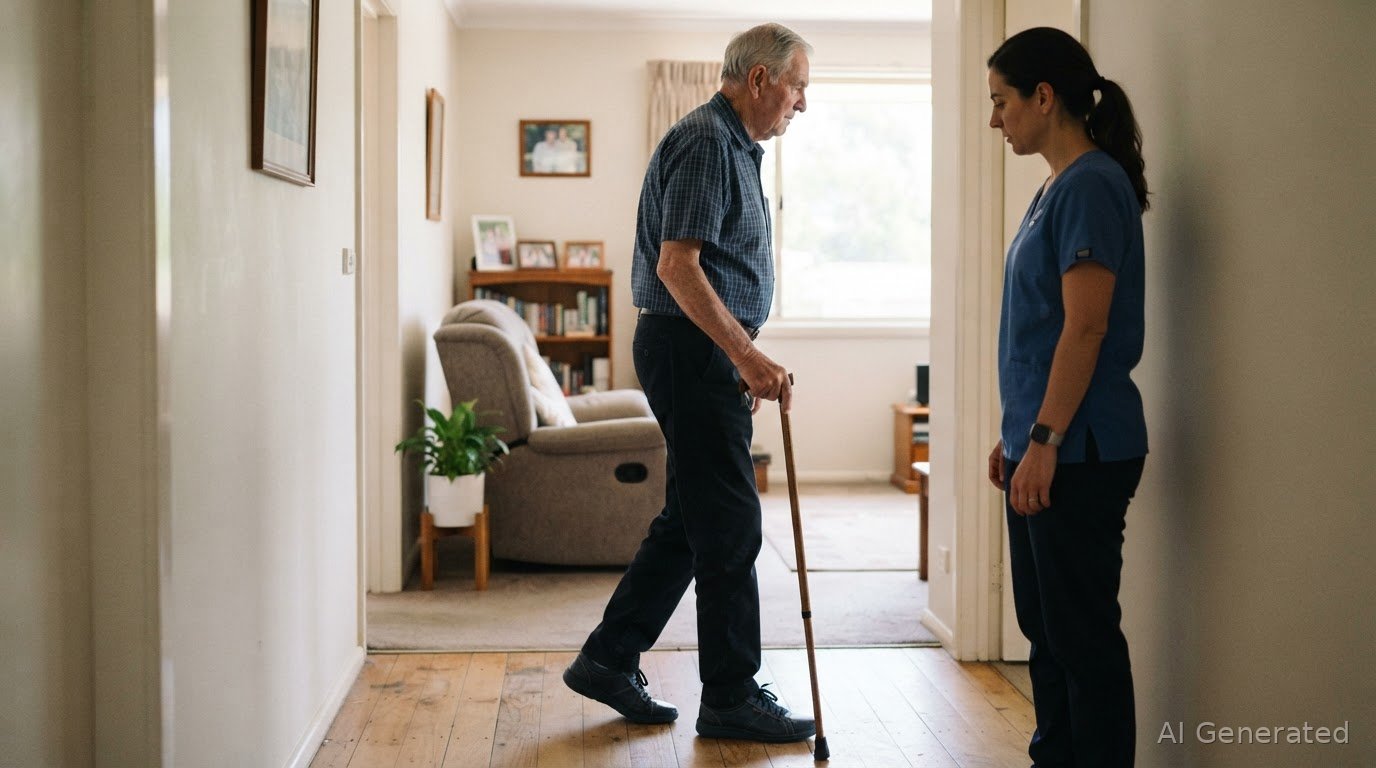
Disability shouldn’t make foot care harder to access. A mobile podiatrist serving Liverpool, Bankstown, Moorebank, Sydney or Campbelltown can bring care to the home, making appointments more manageable when mobility or transport is a challenge. A podiatrist can assess foot concerns and discuss suitable care for the person’s needs.
It’s understandable to wonder whether home visits are suitable, what a podiatrist can help with and whether travel coverage includes your area. This guide explains who may benefit from at-home podiatry, what a visit can involve and how to plan care. You’ll also learn how NDIS podiatry and home visits can fit into a person’s support, helping you choose a practical next step.
Key Takeaways
- Understand how at-home podiatry may make foot care more accessible when disability, limited mobility or transport difficulties make clinic visits challenging.
- Learn why diabetes foot care deserves attention and what a podiatry assessment can help address.
- Find out which practical details affect whether a home visit can reach your Werrington address and when an appointment may be available.
- See how an older adult’s mobility, comfort and foot concerns can shape the approach to a home visit.
- Explore how podiatry services such as gait analysis and custom orthotics may support personalised foot care.
At-home mobile podiatry in Werrington for older adults
Home visits by Active Foot Care can make foot care more accessible for older adults across Liverpool, Bankstown, Moorebank, Sydney and Campbelltown. They may suit people who find travel difficult or need support to attend an appointment. An assessment can focus on foot concerns and the person’s daily routine.
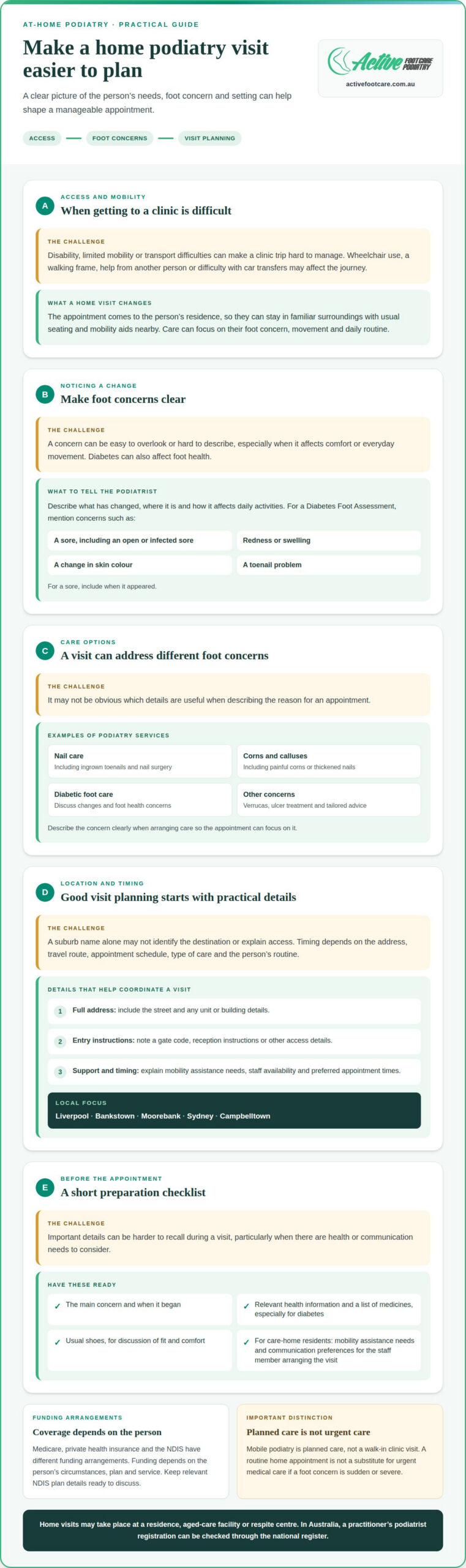
Diabetes can affect foot health, so tell the podiatrist about any changes. A Diabetes Foot Assessment provides an opportunity to discuss concerns such as a sore, redness, swelling, a change in skin colour or a toenail problem. Mention any open or infected sore and when it appeared.
Preventative foot care gives older adults a chance to raise concerns that may affect comfort or movement. Mention a thickened nail, a painful corn or shoes that have started rubbing. Describe where the problem occurs and how it affects daily activities so the podiatrist can assess it and discuss suitable care.
At-Home and Care-Home Visits
A home visit brings the appointment to the person’s residence. Visits can also take place in aged-care facilities and respite centres. Before arranging care, note the person’s mobility needs, main foot concern and preferred appointment location. In Australia, you can confirm a practitioner’s registration as a podiatrist through the national register.
Mobile Podiatry Services by Active Foot Care
Podiatry can address concerns such as nail care, corns or calluses, diabetic foot care, ingrown toenails and verrucas. Nail surgery, ulcer treatment and tailored advice are also podiatry services. Describe the concern clearly when arranging care, such as an ingrown nail or a sore, to help focus the appointment.
Medicare, Insurance and NDIS
Medicare, private health insurance and the NDIS have different funding arrangements. Funding for a visit depends on the person’s circumstances, plan and service. People seeking disability-related support can discuss NDIS podiatry and how an appointment relates to their plan. Keep relevant plan details ready when arranging care.
Preparing for an Appointment
Before the visit, write down the main concern and when it began. Have relevant health information and a list of medicines ready, especially if the person has diabetes. Keep their usual shoes nearby so the podiatrist can discuss fit and comfort. For a care-home resident, tell the staff member arranging the appointment about mobility assistance needs and communication preferences.
Provider travel radius and availability
Home-visit planning depends on the address, travel route and appointment schedule. Active Foot Care’s local focus includes Liverpool, Bankstown, Moorebank, Sydney and Campbelltown.
Travel Radius and Service Areas
A suburb name is only one part of planning a home visit. The full address, including the street and any unit or building details, identifies the destination more clearly. This is useful in a large area such as Sydney, where travel between suburbs can affect the day’s route.
Travel planning also depends on the setting. A house, apartment building, respite centre and aged-care facility can have different entry arrangements. Include details such as a gate code or reception instructions when organising the visit. Clear directions help the podiatrist reach the right place smoothly.
Active Foot Care’s local focus includes Liverpool, Bankstown, Moorebank, Sydney and Campbelltown. These locations help residents understand the areas associated with the service. If you’re near the edge of a suburb, providing the full address gives more useful location details than the suburb name alone.
Consider practical details as well as the route. Note whether the person needs help getting to the appointment space or whether a staff member will meet the podiatrist. Clear access information helps coordinate the visit around the person’s setting and routine.
Appointment Availability and Hours
Appointment timing depends on the visit location, travel sequence and type of care. A home visit in Liverpool and one in Campbelltown involve different destinations, so timing depends on how appointments can be organised. The person’s preferred time and daily routine also help identify a suitable appointment window.
There isn’t one arrival time for every home visit. A person may prefer an appointment after their morning routine, while a care-home resident may need staff support at a particular time. Sharing these preferences early helps include them in the appointment plan.
Mobile podiatry is planned care, not a walk-in clinic visit. If a foot concern is sudden or severe, a routine home appointment is not a substitute for urgent medical care. For planned foot care, describe the concern and the person’s location clearly when arranging the visit.
To make planning easier, have the full address, access instructions and preferred appointment times ready. A concise description of the person’s needs helps keep the enquiry focused. Discussing a home podiatry visit is a practical next step for planned care.
Home podiatry for mobility or transport challenges
Yes, a podiatrist can help people living with disability. A home appointment avoids a trip to the clinic, which can be difficult for someone using a wheelchair, walking frame or another person’s assistance. Care focuses on the individual’s foot concern, movement and daily routine, rather than assuming everyone has the same needs.
For a Werrington resident, a home appointment can make care more practical. The person can stay in familiar surroundings with their usual seating and mobility aids nearby. Someone who finds car transfers difficult, for example, can avoid that part of travelling to an appointment. The podiatrist can discuss the concern and its effect on everyday movement.
Describe the access challenge when arranging care. Useful details include whether the person uses a mobility aid, needs help moving between rooms or has difficulty reaching their feet. This helps explain what would make the appointment manageable and how the person handles foot care between visits.
Movement and foot comfort affect everyday tasks. A person might notice discomfort while standing at the kitchen bench, walking to the letterbox or putting on shoes. Sharing a specific example gives the podiatrist context for discussing gait, balance and the effect of foot symptoms on usual activities. The appointment can then focus on what matters most to the person.
Transport barriers can involve more than distance. A person might need an accessible vehicle, a support person, extra time for transfers or help entering a clinic. Home podiatry changes the setting of care and reduces the need to coordinate those travel steps. It remains important to explain the person’s medical history and current foot concerns.
For someone receiving disability support, include foot-care needs in conversations about everyday goals. Explain whether discomfort makes standing, walking indoors or wearing usual footwear harder. Clear examples connect the concern with daily activities. A support person can help with communication or appointment arrangements if the individual wants assistance.
A home visit also allows discussion of the person’s usual surroundings. Mention where they sit to put on shoes, how they move around the home and which footwear they wear most often. These details give useful context for discussing foot-care approaches that suit their routine and mobility needs.
Choosing between a clinic and a home appointment comes down to access and the purpose of care. If travel creates a substantial practical barrier, explain that when arranging podiatry. If the person can comfortably attend a clinic, that is another suitable setting. The right setting makes it possible to discuss the foot problem and the person’s priorities.
Mobile podiatry for older adults
For an older person in Werrington, a home assessment can focus on foot concerns in the setting where daily routines take place. The podiatrist can discuss how discomfort affects tasks such as preparing a meal, walking around the home or putting on shoes. These examples connect foot care with the person’s priorities.
Age alone doesn’t define someone’s foot-care needs. One person may need help reaching a toenail, while another may be concerned about pain when walking. Before the appointment, note the main issue and the activity it affects. This gives the discussion a clear starting point and keeps the assessment relevant.
Usual footwear can provide useful context. Keep the shoes the person wears most often nearby, including indoor slippers. The podiatrist can discuss fit and whether the person notices rubbing or pressure. Mentioning when discomfort occurs, such as after walking to the letterbox, adds practical detail.
A home appointment can fit around the person’s usual environment. Choose a comfortable place to sit and discuss concerns, with mobility aids within reach. If the person needs support to move between rooms, explain this when organising the visit. These details help the appointment fit their routine.
Write down questions before the assessment. An older adult might want to discuss a thickened toenail, discomfort inside a shoe or less confidence when walking. A short note can help them remember each concern. Bring relevant health information and a list of medicines, especially if they relate to the foot concern.
For an older person in residential care, coordinate with the staff member who arranges appointments. Share the resident’s preferred way to communicate, mobility support needs and the foot issue to discuss. Staff can help make the person available in a familiar, comfortable space. Include the resident in decisions about their care.
After an assessment, the podiatrist can explain the findings and discuss appropriate next steps in plain language. Ask the person to describe what they understood or invite them to raise further questions. This can make the plan easier to follow at home and help family members or carers support the person’s foot-care routine.
Mobile podiatry services available in Werrington
Mobile podiatry in Werrington can address a range of foot concerns, from nail care to ulcer treatment. The appropriate service depends on the problem. Naming the concern when arranging care, such as a painful ingrown toenail or a sore, helps focus the appointment on the person’s needs.
Mobile foot care can address nail care, corns or calluses, diabetic foot concerns, ingrown toenails and verrucas. These issues affect daily activities in different ways. A thickened toenail may make footwear uncomfortable, while a corn may cause pressure in a particular shoe. Explain where discomfort occurs and which activity brings it on.
Nail surgery and ulcer treatment are also available through podiatry. They address different concerns from routine nail care or a corn. Describe what you’ve noticed, including the location and appearance of a sore or nail problem. This gives the podiatrist a clear starting point for assessing it.
Tailored advice can connect an appointment with a person’s everyday foot-care needs. Mention footwear that rubs, a change in walking comfort or difficulty managing toenails. Specific details are more useful than saying only that the feet feel uncomfortable, and help identify what matters most to the person.
- Nail cutting: Raise concerns about nail length, thickness or difficulty reaching the toes.
- Corns or calluses: Explain where pressure or discomfort occurs, including inside a particular shoe.
- Ingrown toenails: Describe the affected toe and the concern prompting the appointment.
- Verrucas: Point out the area and mention whether it affects standing or walking.
- Diabetic feet or ulcers: Identify any foot concern clearly for assessment and discussion.
If the person has several concerns, list them before the appointment. A short note might include a sore, a troublesome toenail and uncomfortable footwear. This helps organise the conversation and ensures each issue can be raised. With the patient’s agreement, someone who helps with their care can also share observations.
Describe the goal of the visit as well as the symptom. Someone may want to discuss a corn that affects walking or a nail problem that makes shoes difficult to wear. A clear example helps the podiatrist understand the practical impact and focus on the person’s priorities and appropriate next steps.
If a foot concern is affecting comfort or daily movement, arrange a mobile podiatry appointment to discuss the care that may suit the person.
Active Foot Care: Podiatrist Home Visit
Active Footcare’s Podiatrist Home Visit brings foot care to people who find travel difficult. It can suit an older adult with limited mobility or someone who needs foot concerns assessed at home. For diabetes-related concerns, a Diabetes Foot Assessment provides focused care.
Care can also include Custom Orthotics or Gait Analysis when appropriate to the person’s needs. Sharing the main concern, such as discomfort while walking or difficulty managing foot care, helps guide the appointment. A home visit is a practical next step when travelling to a clinic is a barrier.
Contact Active Footcare to discuss arranging a home podiatry visit.
Make foot care fit the person’s routine
The next step is to make foot care part of a routine the person can manage. Start the conversation with a priority, such as staying comfortable during daily activities or feeling more confident moving around at home. This gives the appointment a clear focus and keeps the person’s preferences at the centre of care.
For families considering a mobile podiatrist in Werrington, involve the older adult in deciding what matters most. Their own goals can guide how podiatry supports day-to-day comfort and independence. If you’re ready to discuss care at home, contact Active Foot Care to enquire.
A small, considered step can help make foot care easier to fit into everyday life.
Frequently Asked Questions
Can a podiatrist help people living with disability?
Yes. A podiatrist can assess foot concerns and discuss care in light of how a person moves and manages daily activities. Someone who has difficulty reaching their feet, for example, can explain which parts of foot care are challenging. With the person’s agreement, a support worker or family member can share useful information and help with communication during an appointment.
How can mobile podiatry help older adults?
Mobile podiatry brings an appointment to an older person’s home or care setting, simplifying access when travel is difficult. It also lets the person discuss concerns in familiar surroundings. They can describe how a foot problem affects getting ready for the day or moving between rooms, for example. Their preferences should guide the conversation and care plan.
Which mobile podiatrists serve Werrington, NSW?
Active Footcare offers Podiatrist Home Visit services, including visits to aged-care and respite settings. A mobile podiatrist can assess foot concerns and discuss appropriate care at home. If you’re arranging an appointment for someone in Werrington, have their address and main foot-care concern ready. This gives your enquiry a practical focus and helps explain what care they need.
How can I book a mobile podiatrist visit in Werrington?
Contact Active Footcare to arrange a Podiatrist Home Visit. Have the person’s address, main concern and access needs ready, such as help entering the home or communicating during the appointment. Mention if the person has diabetes or receives disability support. With the person’s agreement, a family member or support person can help arrange the visit.
What areas near Werrington do mobile podiatrists cover?
Active Footcare’s listed local focus includes Liverpool, Bankstown, Moorebank, Sydney and Campbelltown. A suburb list doesn’t by itself establish coverage for every address or route. For a home visit, provide the full address when enquiring and describe the person’s needs. That helps clarify whether the location and appointment arrangements suit the requested care.
Do mobile podiatrists in Werrington visit aged-care facilities and residential homes?
Yes. Active Footcare offers Podiatrist Home Visit services, including aged-care and respite-centre visits. For a resident, coordinate arrangements with the person and the staff member who helps organise appointments. Share access instructions and communication preferences, and include the resident in decisions about their care. This helps the appointment fit the person’s routine and setting.
When should foot or ankle problems be treated urgently rather than by a mobile podiatrist?
A mobile podiatry appointment is for planned care, not emergency treatment. If a foot or ankle problem is sudden or severe, seek urgent medical attention rather than waiting for a routine home visit. A podiatrist can address non-emergency foot-care concerns, but urgent problems need a timely medical response. If you’re unsure how serious the problem is, contact an appropriate urgent medical service.