

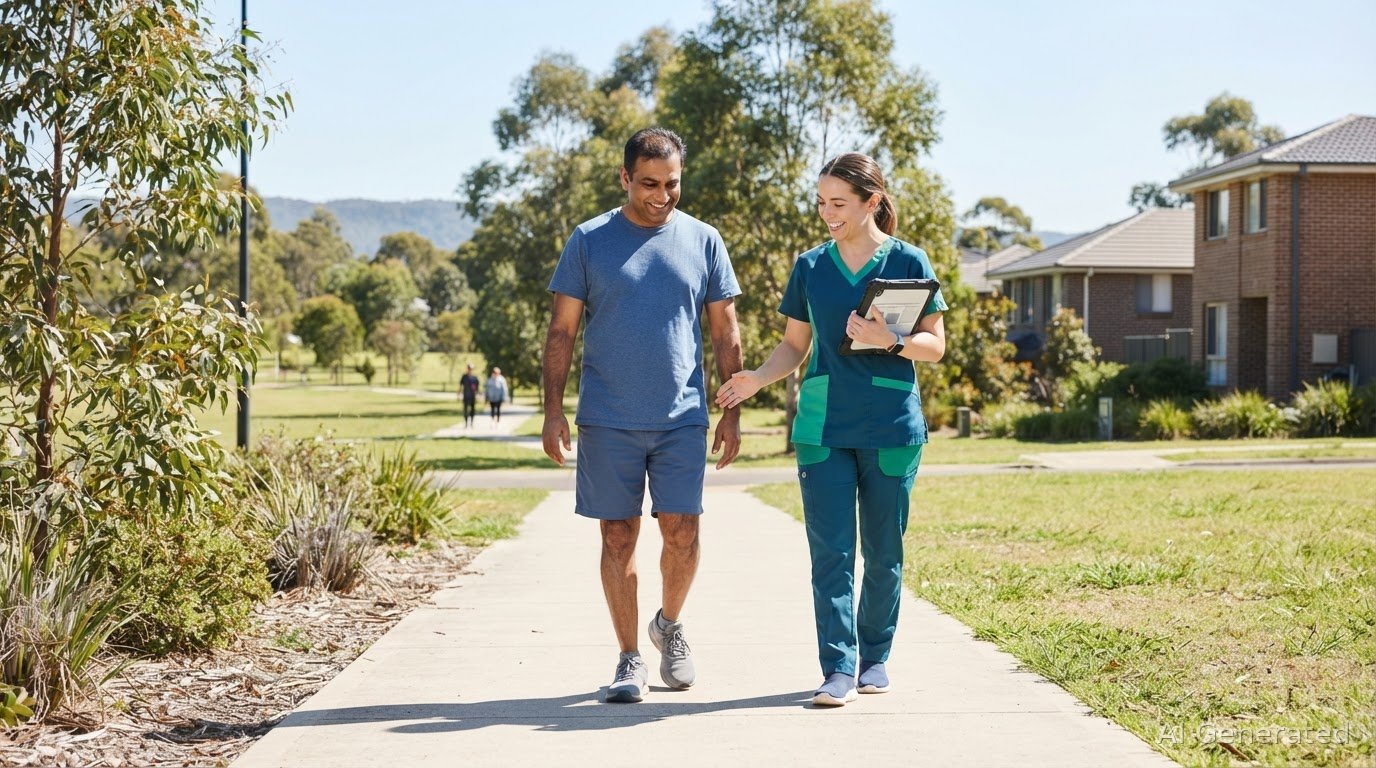
A useful podiatry report explains more than what’s happening to a participant’s feet. For an NDIS planning conversation, it can also describe how foot health relates to walking, balance, self-care or getting out into the community. If you’re searching for an NDIS podiatry report writer Campbelltown participants can access, it helps to know what a podiatry assessment can document and how to make the information relevant to the participant’s goals.
A podiatry report can record clinical findings and explain their connection to everyday function, but it can’t guarantee that the NDIS will fund a particular support. The information is most useful when it reflects the participant’s disability-related needs and the activities they want to manage more comfortably or independently.
This guide explains what a report may cover, what to bring to an assessment and how to describe priorities clearly. You’ll also learn what to consider before using a report in NDIS planning, and how Active Footcare’s NDIS podiatry services, gait analysis and home visits can take a participant’s mobility needs and usual environment into account in Campbelltown and surrounding Sydney areas, including Liverpool, Bankstown and Moorebank.
Key Takeaways
- A useful report links relevant foot health findings to the participant’s mobility and daily activities.
- Learn what assessment details may help explain concerns with balance, footwear or foot care.
- Prepare with relevant records, NDIS goals and practical examples of everyday challenges.
- An NDIS podiatry assessment can provide clinical information, but it can’t decide funding outcomes.
- Active Footcare provides local NDIS podiatry services and home visits for participants in Campbelltown and surrounding areas.
Looking for an NDIS podiatry report writer in Campbelltown? Start with the purpose
Foot pain, reduced balance or difficulty moving around can affect everyday participation, from standing to prepare a meal to walking safely between rooms. If you’re looking for an NDIS podiatry report writer Campbelltown participants can access, first identify what you need the report to clarify. A podiatry report documents relevant assessment findings and their functional impact. It can help explain a participant’s needs in conversations about the National Disability Insurance Scheme (NDIS), but it can’t guarantee funding or a plan change.
The report should give a clear, clinically grounded account of the participant’s foot health and related functional concerns. It should be based on an assessment and stay within the podiatrist’s professional scope. It isn’t a funding decision and can’t determine what the NDIS will approve. Instead, it can help the participant and their support network describe relevant needs through specific observations and real-life examples.
What does an NDIS podiatry report help explain?
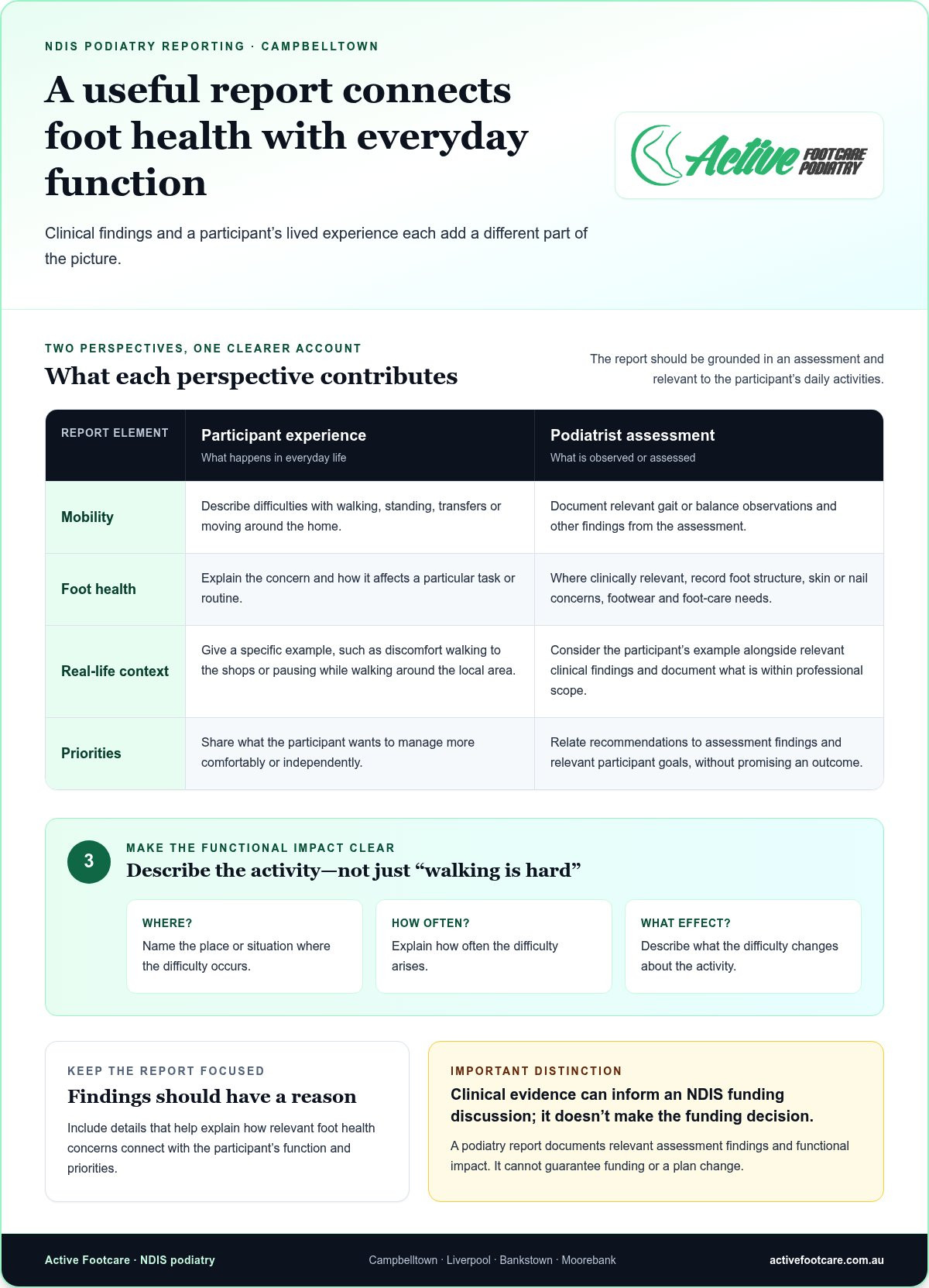
A report may explain how foot-related concerns affect walking, standing, transfers or everyday routines. For example, a participant might describe discomfort when walking to the shops, while the podiatrist records relevant clinical findings and assessment observations. These details serve different purposes: one captures the participant’s experience, and the other documents what the podiatrist observes or assesses.
The participant’s priorities matter, too. They might want to feel steadier moving around the home or manage a daily activity with greater ease. Where appropriate, a report can connect those goals with relevant clinical findings without making claims beyond the assessment. Specific examples help others understand the concern, but they don’t establish an NDIS funding outcome.
Who might seek podiatry documentation in Campbelltown?
Participants may seek an assessment when foot-related barriers affect their mobility or daily activities. Family members, nominees and support coordinators may also help organise an appointment or gather background information, while keeping the participant’s needs and preferences central.
A diagnosis alone doesn’t automatically determine eligibility for a particular NDIS support. The relevant question for a podiatry assessment is whether there are foot health concerns within the podiatrist’s scope that affect the participant’s function and are worth documenting. Defining the purpose in advance can help keep the assessment focused.
Active Footcare provides NDIS podiatry services in Campbelltown and surrounding parts of Sydney, including Liverpool, Bankstown and Moorebank. A podiatrist can discuss the participant’s concerns, mobility and relevant assessment needs. A home visit can also provide practical context about daily movement and routines in the participant’s usual environment. Starting with the activities the participant wants to manage gives the discussion a clear, person-centred focus.
What an NDIS podiatry report can document about function and foot health
A useful report brings together relevant health history, the participant’s current concerns, assessment observations and their priorities. Rather than simply naming a foot condition, it explains how the findings may relate to activities the participant wants or needs to manage. This gives readers a clearer picture of the practical issue.
The details depend on the participant and the assessment. Where clinically relevant, a podiatrist may document gait or balance observations, foot structure, skin or nail concerns, footwear and foot-care needs. A report might describe an observed stability concern alongside the participant’s account of feeling unsteady when walking over an uneven surface. Each detail should have a clear reason for inclusion.
Which assessment findings may be relevant?
Clinical observations and a participant’s lived experience complement one another, but they aren’t interchangeable. A podiatrist records what they assess; the participant explains what happens in daily life. Together, these details can show how a foot-related concern connects with a specific task, without suggesting that one observation explains every difficulty.
Concrete examples make the functional impact easier to understand. Instead of saying “walking is hard”, describe where the difficulty occurs, how often it arises and what effect it has. For instance, the participant may need to pause while walking around their local area. The podiatrist can consider this context alongside relevant findings and document what falls within their professional scope.
How should recommendations relate to NDIS goals?
Recommendations should follow from the assessment findings and the needs documented in the report. If a participant’s goal involves moving around their home more confidently, the report should explain any clinically relevant foot or mobility concerns that relate to that goal. It shouldn’t present a service, device or treatment as an automatic entitlement, or promise plan funding.
Clinical evidence can inform an NDIS funding discussion; it doesn’t make the funding decision. A podiatrist provides clinical information, while decisions about a participant’s plan sit outside the report writer’s role. For wider professional context, the Australian Podiatry Association’s analysis of NDIS changes discusses policy issues affecting podiatry services, but it can’t determine an individual participant’s outcome.
Clear recommendations also acknowledge uncertainty. If the assessment doesn’t provide enough information to support a conclusion, or another assessment may be needed, the report should say so rather than overstate what is known. This helps keep the documentation accurate and useful for the participant and the people involved in planning their supports.
Active Footcare provides NDIS podiatry services and gait analysis tailored to individual needs in Campbelltown and surrounding Sydney areas, including Liverpool, Bankstown and Moorebank. Discussing the participant’s goals and everyday mobility helps put the assessment in context. Explore Active Footcare’s NDIS podiatry support.
How to judge whether an NDIS podiatry report is clear and useful
A report can make a participant’s foot-related needs easier to understand, but it doesn’t decide whether the NDIS will fund a support. Its value lies in the quality of its clinical information. Does it answer the question it was prepared for, show how conclusions were reached and explain why the findings matter to the participant?
When reviewing a report, look for a clear link between the assessment, the participant’s functional concerns and any recommendations. Broad statements such as “requires podiatry support” are harder to interpret than findings that explain what was assessed, what the participant experiences and how those details relate. A useful report is clear without claiming more than the assessment can establish.
Signs that a report clearly connects evidence to need
Look for specific observations rather than conclusions without supporting detail. A report might describe an observed gait or balance concern, then separately record the participant’s account of how it affects an everyday activity. Keeping these sources distinct helps the reader understand what was clinically assessed and what the participant reported.
Useful documentation also explains the reasoning behind recommendations. Check whether it identifies relevant findings, connects them to the participant’s stated needs and goals, and describes any limitations or further assessment that may be appropriate. Recommendations should make clinical sense in context, not read like a guaranteed list of supports.
- Purpose: Is the report’s assessment question clear?
- Evidence: Are relevant findings described rather than assumed?
- Functional relevance: Does it explain how the concern affects the participant’s activities?
- Recommendations: Is the clinical reasoning, including limitations, understandable?
What a podiatry report cannot promise
A podiatry report can’t guarantee NDIS funding, plan approval or access to a particular support. It provides clinical evidence; the NDIA makes decisions under the applicable rules and considers the participant’s individual circumstances. Even a detailed report may not answer every question involved in a planning decision.
Provider registration and the quality of a clinical report are separate considerations. Registration information can be checked in current official NDIS Commission records, but a register entry doesn’t assess whether a particular report is clear, relevant or well reasoned. Likewise, report quality alone doesn’t establish a provider’s registration status. Check current records if registration is relevant to your circumstances.
NDIS requirements and processes can change, so avoid relying on outdated summaries or assumptions about what a report must contain. For information about decision processes, refer to current NDIA guidance and the participant’s applicable NDIS information. An NDIS podiatry report writer Campbelltown participants consult can explain clinical findings and their scope, while keeping any funding outcome separate from the podiatrist’s role.
How to prepare for an NDIS podiatry assessment in Campbelltown
A little preparation can help make an assessment more focused. Before the appointment, think about the questions you want the podiatrist to consider and how foot-related concerns affect the participant’s usual routines. The aim isn’t to rehearse answers, but to give a clear picture of what happens day to day.
- Clarify the purpose. Note why the assessment is being arranged and what you hope it will explain. This might include a concern about walking, balance, footwear or managing foot care.
- Gather relevant records. Bring the participant’s NDIS goals and any relevant existing podiatry, medical or allied-health reports. A list of medicines and relevant health history may also provide useful context.
- Describe everyday impacts. Write down examples from familiar settings, such as moving around at home, standing during a routine task or getting out into the community. Include what happens, how often it occurs and whether assistance is needed.
- Write down questions. List anything you’d like clarified about the assessment, the information it may document and how the findings will be explained.
What information should participants bring?
Choose information that relates to the assessment purpose rather than bringing every record available. Note current foot concerns, when they began and whether anything seems to affect them. If the participant uses footwear or orthotics relevant to the concern, bring them along. A family member, nominee or support coordinator can help organise notes while keeping the participant’s own account and preferences central.
How to describe daily impacts clearly
Specific examples are easier to understand than broad labels. Describe a recent situation, what the participant was doing, what difficulty arose and what help was needed. For instance, note whether standing to complete a familiar task is difficult, how often this occurs and whether the participant needs to sit or receive assistance. Include the participant’s priorities, not just a diagnosis.
If you’re considering an appointment at home, Active Footcare’s NDIS mobile podiatry guide explains the home-therapy context. The podiatrist home visit guide also offers background on care in a familiar setting. These guides can help you identify where mobility concerns arise and what context may be useful to share.
Bring your notes, even if they’re brief. Active Footcare provides NDIS podiatry services in Campbelltown and surrounding Sydney areas, including Liverpool, Bankstown and Moorebank, with assessments tailored to individual needs and daily activities. Discuss an NDIS podiatry assessment with Active Footcare and outline the participant’s goals and concerns.
Discuss NDIS podiatry reporting with Active Footcare in Campbelltown
It can be difficult to explain how foot health affects someone’s independence. Active Footcare provides NDIS podiatry services across Campbelltown and surrounding parts of Sydney, including Liverpool, Bankstown and Moorebank, with care tailored to individual needs. A conversation with the podiatrist can help clarify the participant’s concerns, mobility and relevant assessment needs.
The aim is to understand the person, not just a diagnosis. A participant might be concerned about moving around their home, managing foot care or feeling steady during everyday activities. Sharing what they find difficult, what they’d like to do more comfortably and what support they currently use gives the podiatrist useful context for the assessment.
What to expect when discussing your podiatry needs
The participant, family member, nominee or support person can explain the purpose of the appointment and describe the concerns they’d like to discuss. The podiatrist can explore relevant foot health and mobility factors, and consider how these relate to daily routines. This tailored conversation keeps the focus on the participant’s needs rather than assumptions based on a diagnosis alone.
Any clinical documentation should reflect the assessment and the podiatrist’s professional judgement. It may record relevant findings and functional concerns, but it can’t promise NDIS funding or a particular change to a plan. Its role is to communicate clinical information accurately, while funding decisions remain separate.
For some participants, a home visit can make it easier to discuss movement and routines in a familiar environment. Seeing how the person moves around their usual setting can add practical context to the conversation where it’s relevant to the assessment. Care can be considered in light of the participant’s circumstances and comfort.
Plan a practical next step in Campbelltown
Before an appointment, gather relevant records and write down a few examples of activities that are difficult. These might relate to walking, standing, footwear or foot care. A short note about what happens, where it occurs and what assistance is needed can help the participant explain their concerns, especially if it’s hard to recall details during an appointment.
It can also help to identify what the participant wants the assessment to clarify. Is the main concern mobility, a foot health issue, or how a specific difficulty affects a daily activity? A clear purpose gives the discussion direction without presuming what the assessment will find or what an NDIS decision should be.
If you’re looking for an NDIS podiatry report writer Campbelltown participants can speak with about assessment needs, Active Footcare provides local NDIS podiatry care. The practice is led by Principal Podiatrist Dr Maher Said, and care considers individual mobility and daily activities. You’re welcome to Discuss NDIS podiatry care with Active Footcare and talk through a practical next step for the participant.
Take the next step with your assessment goals in mind
Before arranging an appointment, consider what the participant most wants to explain or understand about their foot health and daily mobility. A clear purpose can guide the conversation and keep it centred on the person’s priorities. If you’re seeking an NDIS podiatry report writer Campbelltown participants can consult, remember that clinical documentation should reflect the assessment, not promise a funding outcome.
Active Footcare provides NDIS podiatry services and podiatrist home visits, helping participants discuss their needs in a familiar setting. Principal Podiatrist Dr Maher Said leads the practice. The focus is on understanding the participant’s concerns and considering relevant podiatry care in the context of everyday activities.
Bring notes or questions that will help you describe what matters to the participant. A thoughtful conversation is a practical starting point, whether you’re organising care for yourself or supporting someone else. Discuss NDIS podiatry care with Active Footcare.
Frequently Asked Questions
Can an NDIS podiatrist write a report for a plan review?
A podiatrist may document relevant assessment findings and their functional effects when this is appropriate to their clinical role. If you’re looking for an NDIS podiatry report writer Campbelltown participants can consult, explain what the plan review needs the information to clarify. The podiatrist can discuss the clinical assessment, but a report can’t promise a plan change or funding. Refer to current NDIA guidance or speak with your support coordinator about the planning process.
What should I bring to an NDIS podiatry assessment?
Bring records that help explain the foot concern, such as relevant health history, previous podiatry or allied-health reports, and a current medication list if applicable. A note on when the issue began and what tends to affect it can also help. Include any NDIS goals related to mobility or daily activities, plus questions about the assessment’s purpose. You don’t need to prepare a formal summary; clear notes are enough to start the conversation.
Can a family member or support coordinator attend a podiatry appointment?
A participant may find it helpful to have a trusted support person attend, particularly if they help communicate preferences or describe daily routines. Discuss the participant’s wishes beforehand, including what information they’re comfortable sharing. A support person can add practical context while leaving room for the participant to express their own experience. This helps the podiatrist hear both the participant’s perspective and relevant observations from someone who supports them.
Does an NDIS podiatry report guarantee funding for treatment or orthotics?
No. A report can explain clinical findings and the reasoning behind a podiatrist’s recommendations, but it can’t guarantee funding for treatment or orthotics. The NDIA considers applicable requirements and the participant’s individual circumstances. If a recommendation is included, it can help to understand which finding it relates to and how it addresses a functional concern. For a specific funding question, refer to current NDIA guidance or discuss it with your support coordinator.
Can a Campbelltown podiatrist assess me at home?
Yes, Active Footcare provides podiatrist home visits, which may suit participants whose mobility or circumstances make travelling to an appointment difficult. A home-based assessment can give the podiatrist context about the participant’s usual environment, such as the spaces they move through during daily routines. The appointment remains focused on relevant foot health and the podiatrist’s clinical judgement. Active Footcare supports participants in Campbelltown and surrounding parts of Sydney, including Liverpool, Bankstown and Moorebank.
How should I explain foot problems in an NDIS assessment?
Describe a specific activity and what happens rather than relying only on a diagnosis. For example, explain whether standing to prepare a meal brings on discomfort, how often it happens and whether the participant needs to sit or receive help. Mention useful adjustments, such as changing footwear or taking breaks, and what the participant would like to manage more comfortably. These details help the podiatrist understand the functional context alongside the clinical assessment.