

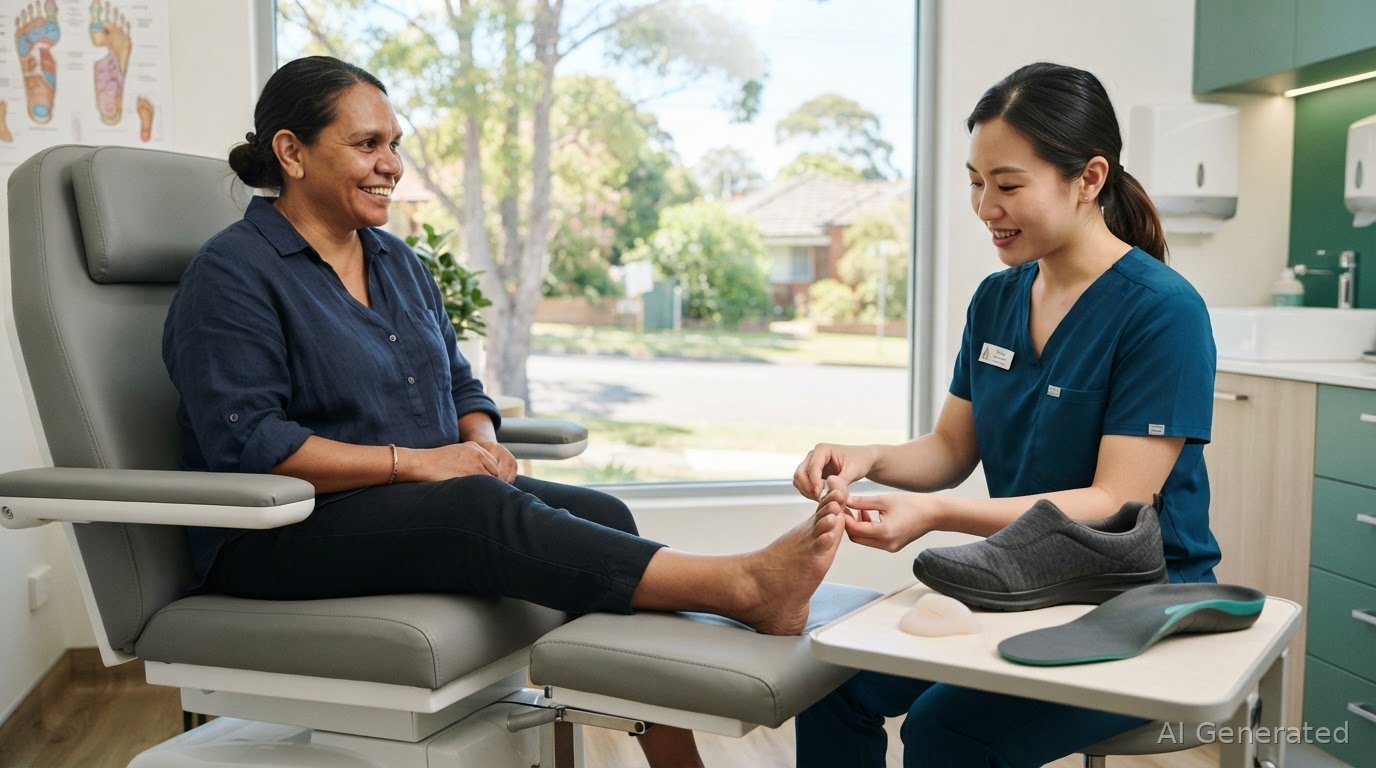
Could a hammertoe be managed without surgery? If your toe rubs against your shoes, it’s understandable to want relief without an operation and recovery. The alternatives to foot surgery for hammertoes Bankstown patients consider depend on how flexible the toe is, what causes discomfort and how symptoms affect everyday movement.
Conservative care may help reduce pressure and ease symptoms, particularly when a toe is still flexible, but it can’t guarantee that the toe will straighten. When a toe is more rigid, non-surgical care may focus on comfort and function rather than changing its shape. Understanding that difference can help you compare your options.
This article looks at practical approaches, including footwear changes, padding, exercises and orthotics, and explains what each may and may not achieve. A podiatry assessment can identify toe flexibility and pressure points, then help shape a plan around your needs. Active Foot Care provides podiatry care in Bankstown, Liverpool, Moorebank, Sydney and Campbelltown, including gait analysis and custom orthotics when clinically relevant.
Key Takeaways
- Learn how toe flexibility and everyday symptoms can help guide a discussion about conservative care.
- Compare footwear changes, padding, orthotics and podiatry-led care, including what each may help with and its limits.
- Find out what to note before an assessment, from shoes that cause rubbing to activities that affect your walking.
- Understand how alternatives to foot surgery for hammertoes Bankstown care may form part of an individual podiatry plan.
- See when gait analysis and custom orthotics may be relevant to your symptoms and foot mechanics.
Hammertoe in Bankstown: when are alternatives to foot surgery worth exploring?
Toe pain can make everyday shoes uncomfortable and leave you wondering whether surgery is the next step. A hammertoe is a toe joint that bends downwards, often affecting one of the smaller toes. The bent position may rub against the top or front of a shoe, creating pressure and sometimes corns or calluses. The appearance of the toe, however, doesn’t tell the whole story.
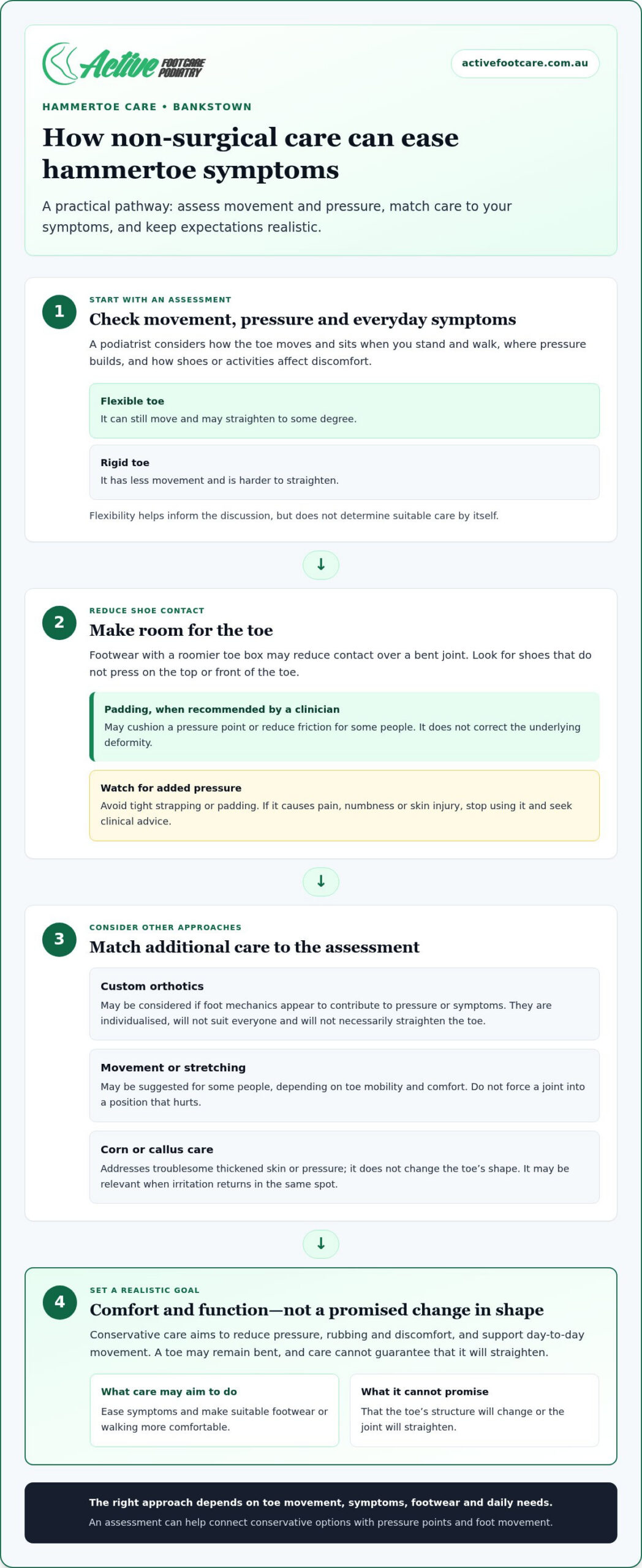
Some hammertoes remain flexible, which means the toe can still move and may straighten to some degree. A rigid hammertoe has less movement and is harder to straighten. These terms describe mobility, but they don’t determine treatment by themselves. A podiatrist considers toe movement alongside pain, skin condition, footwear, walking and your daily needs.
That distinction matters when weighing alternatives to foot surgery for hammertoes Bankstown patients may explore. Conservative care can aim to reduce pressure, rubbing and discomfort, while supporting day-to-day function. It may help manage symptoms when a toe is flexible, but it can’t be relied on to reverse structural changes. With a rigid toe, care may still focus on comfort and reducing friction, even if the toe’s shape stays the same.
How toe flexibility and symptoms shape the options
A podiatrist assesses how the toe moves, how it sits when you stand and walk, and where pressure builds. They may look for shoe contact and skin changes, such as a sore corn over a joint or a callus beneath the foot. These details help relate the toe’s position to your symptoms, rather than focusing on appearance alone.
For example, you might notice rubbing only in narrow work shoes, while another person may feel tenderness on longer walks. Pain, recurring skin irritation and changes to walking all matter. Sharing when symptoms arise, and which footwear or activities aggravate them, helps make the assessment relevant to your routine.
When is a podiatry assessment useful?
An assessment can clarify toe flexibility, pressure points and how your foot moves. Your podiatrist can discuss possible contributors to discomfort and which conservative approaches may suit your symptoms and footwear. A photograph can show the toe’s position, but it can’t establish how well the joint moves or how pressure changes as you walk.
Consider individual clinical advice if discomfort persists, rubbing keeps returning, or a corn or callus repeatedly develops. There’s no single appearance or time-based threshold that determines when an assessment is needed. The effect on your comfort, skin and mobility can help guide the conversation. Seeking advice doesn’t commit you to surgery. It can give you a clearer understanding of the options and their realistic aims.
How non-surgical hammertoe care works: options and realistic goals
Conservative care aims to make everyday movement more comfortable by reducing pressure on the toe and limiting friction from footwear. It isn’t a single treatment or a promise that a bent toe will straighten. The right approach depends on assessment findings, symptoms, the shoes you wear and how much the toe can move. A flexible toe may allow different options from a rigid one, but flexibility alone doesn’t determine what’s suitable.
The realistic goal of conservative care is to ease symptoms and support daily function, not to guarantee a change in the toe’s structure. Even if the joint remains bent, reducing rubbing may make walking or wearing suitable shoes more comfortable. MedlinePlus outlines common causes, symptoms and non-surgical approaches in its guide to Understanding Hammertoe Causes and Non-Surgical Care.
Footwear changes, padding and pressure reduction
A roomier toe box can give your toes more space and reduce contact over a bent joint. Look for footwear that doesn’t press on the top or front of the toe. The right fit depends on your foot and the shoes you need for daily activities. Padding recommended by a clinician may cushion a pressure point or reduce friction for some people, but it won’t correct the underlying deformity.
Avoid tight strapping or padding that increases pressure. If an approach causes pain, numbness or skin injury, stop using it and seek clinical advice. The aim is to reduce irritation, not create another source of pressure.
Orthotics, movement and professional foot care
Custom orthotics may be considered if an assessment suggests foot mechanics are contributing to pressure or symptoms. They’re individualised, won’t suit everyone and won’t necessarily straighten a hammertoe. A podiatrist can assess how your foot moves and whether orthotics may have a role. Learn more about custom orthotics in Sydney.
Movement or stretching may be suggested for some people, depending on toe mobility and comfort. Don’t force a joint into a position that hurts. Professional care for corns or calluses serves a different purpose: it addresses troublesome areas of thickened skin or pressure rather than changing the toe’s shape. This may be relevant if irritation keeps returning in the same spot.
For people considering alternatives to foot surgery for hammertoes Bankstown, an assessment can connect the options to toe flexibility, symptoms and daily activities. Active Footcare provides podiatry care in Bankstown, including gait analysis and custom orthotics when clinically relevant. An assessment with Active Footcare can help you understand which conservative measures may be appropriate and what they can realistically aim to achieve.
Comparing hammertoe surgery alternatives: what each option can realistically do
Each conservative option has a different purpose. One may reduce pressure from a shoe, while another may address how your foot moves. Comparing options by the concern they target can help set realistic expectations. None should be treated as a guaranteed way to straighten a hammertoe. A combination is useful only if it suits your symptoms and assessment.
| Option | Intended role | May be relevant when | Limitations |
|---|---|---|---|
| Footwear changes | Reduce external pressure and friction by allowing more room around the toes. | A shoe presses on the bent joint or toe, particularly during walking. | They don’t correct the joint’s structure, and the fit needs to work for your foot and daily activities. |
| Padding | Cushion a local contact point and lessen rubbing. | A specific area of the toe is irritated by footwear. | Fit and skin tolerance matter. Poorly placed or tight padding may add pressure or irritate skin. |
| Custom orthotics | Address foot mechanics that an assessment identifies as relevant to symptoms. | Assessment suggests movement or pressure patterns may be contributing to discomfort. | They’re individualised, may not suit everyone and don’t automatically correct a hammertoe. |
| Podiatry-led care | Assess symptoms, toe movement, pressure and walking to guide an individual care plan. | You’re unsure which measures are appropriate, or discomfort and skin irritation keep returning. | Assessment can guide symptom management, but conservative care may not reverse a fixed structural change. |
Which conservative option addresses which concern?
Start by noticing where the problem occurs. If a shoe rubs over the joint, footwear changes target that contact. Padding may help protect a particular spot, provided it sits comfortably and doesn’t irritate your skin. Orthotics have a different role: they may be considered when an assessment finds foot mechanics relevant to pressure or symptoms, not simply because a toe is bent.
Podiatry-led care brings these considerations together. A podiatrist can assess how the options relate to your toe, footwear and walking, then discuss their likely aims and limits. This helps make the alternatives to foot surgery for hammertoes Bankstown readers explore more individual than a one-size-fits-all checklist.
When might surgery enter the conversation?
If symptoms persist or a toe is rigid, it may be helpful to discuss the broader range of options, including whether further medical assessment is appropriate. That doesn’t mean every hammertoe progresses to surgery. A podiatrist can explain the role and limits of conservative care and help you understand when to seek further medical advice.
Surgery is a separate clinical decision, not a guaranteed next step. Procedures and recovery experiences vary between individuals, so broad claims about quicker recovery or less discomfort can’t predict what one person will experience. Any discussion should consider your symptoms, health and day-to-day needs.
A practical plan for managing hammertoe symptoms in Bankstown
A simple record of what aggravates your toe can make an assessment more useful. Rather than trying to force a correction at home, note patterns, reduce avoidable pressure and seek advice if discomfort or skin irritation continues.
- Notice when symptoms occur. Record whether pain or rubbing appears in particular shoes, after standing for a long time, or during activities such as walking. Note where the pressure is: over the bent joint, at the toe tip or elsewhere.
- Choose footwear that feels comfortable. Where possible, wear shoes with enough room around the toes and avoid pairs that press on the sore area. Notice whether changing shoes makes a difference, but don’t assume a more comfortable fit will change the toe’s shape.
- Keep self-care gentle. Don’t cut corns or calluses yourself, and don’t pull or force the toe straight. Avoid padding or strapping that causes pain, numbness or skin irritation. If a skin problem keeps returning, a podiatrist can assess it and discuss appropriate care.
- Track changes in movement and walking. Note whether the toe moves comfortably, whether the skin looks irritated and whether symptoms affect your balance, walking distance or usual routine. Don’t repeatedly test the joint if doing so hurts.
- Arrange an assessment and review the plan. Bring your notes, details of your usual footwear and relevant medical history. A podiatrist can assess foot mechanics, symptoms and toe movement, then discuss suitable conservative options and how they fit your needs.
What to note before your appointment
Keep it practical: write down which shoes or activities trigger discomfort, how often it happens and the precise area that feels sore. Note visible skin changes, any comfortable or restricted toe movement, and effects on walking or balance. Bringing the footwear you wear most often can help make the discussion specific to your routine.
Getting local podiatry support in Bankstown
An assessment can connect your symptoms with pressure points and the way your feet move, helping guide a plan rather than relying on appearance alone. Active Footcare provides podiatry services in Bankstown, Liverpool, Moorebank, Sydney and Campbelltown, including gait analysis and custom orthotics when clinically relevant. For people who benefit from care at home, a podiatrist home visit is another way to access support.
Seek a podiatry assessment if toe discomfort persists, skin irritation keeps recurring, or symptoms begin affecting walking or balance. For guidance tailored to your symptoms and routine, explore podiatry support from Active Footcare.
How Active Foot Care can help you explore hammertoe surgery alternatives
Once you understand what conservative care may help with, the next step is working out which options fit your symptoms and daily routine. Active Footcare provides podiatry services in Bankstown, Liverpool, Moorebank, Sydney and Campbelltown. An assessment can help you make sense of toe discomfort, pressure and movement. The aim is practical guidance, not a promise that non-surgical care will straighten every toe or prevent surgery.
What an individualised podiatry assessment can clarify
A podiatrist can assess how your toe moves, where footwear pressure occurs and how your foot functions as you stand and walk. These details help connect symptoms with everyday triggers, such as rubbing in a particular shoe or discomfort during longer walks. Your footwear, skin changes and priorities also inform the discussion, so recommendations reflect more than the appearance of the toe.
Depending on the findings, your podiatrist may discuss ways to reduce pressure and friction. Gait analysis can help assess walking mechanics, while custom orthotics may be considered if an assessment indicates they’re relevant. These options aren’t suitable for everyone and aren’t a guaranteed way to change a hammertoe’s structure. Understanding their purpose and limits helps you decide what feels practical to try.
Choosing a convenient next step in Bankstown
You can access local podiatry care, and a home visit may suit people who benefit from care at home. Active Footcare offers podiatrist home visits, alongside services such as gait analysis and custom orthotics. Bringing notes about your symptoms and usual footwear can help focus the appointment on what affects you.
An assessment is an opportunity to understand your options, not pressure to choose surgery. Your podiatrist can explain what conservative care may realistically achieve and discuss whether further medical assessment could be appropriate. If you’re comparing alternatives to foot surgery for hammertoes Bankstown, individual advice can help you weigh comfort, movement and daily needs.
For podiatry support in Bankstown, contact Active Footcare for podiatry support.
Take the next step towards comfortable, confident movement
You don’t need to settle every question about treatment before seeking advice. Start with what you’d most like to change, whether that’s getting through a workday with less irritation, feeling steadier on walks or finding comfortable shoes. These priorities can help shape a useful conversation about alternatives to foot surgery for hammertoes Bankstown and what may be realistic for you.
A podiatry assessment can turn uncertainty into a clearer plan, with recommendations guided by your symptoms, movement and individual needs. You can discuss whether gait analysis or custom orthotics may be relevant, and whether a home visit would suit your circumstances.
Speak with Active Footcare about your hammertoe concerns and take a considered first step towards care that fits your life.
Frequently Asked Questions
Can hammertoes be treated without surgery?
Yes, conservative care may ease rubbing, pressure and discomfort, particularly when it’s selected after an assessment. For people exploring alternatives to foot surgery for hammertoes Bankstown, the starting point is understanding how the toe moves and what triggers symptoms. Care may focus on making daily activities more comfortable rather than changing the toe’s shape. A podiatrist can discuss your toe flexibility, symptoms and goals, including the limits of non-surgical options.
Can you straighten a hammertoe at home?
Gentle comfort measures are different from trying to force a toe straight. A flexible toe may move more readily than a rigid deformity, but that doesn’t mean it’s safe to manipulate it yourself. Forcing the joint or using tight strapping can cause pain or harm the skin. If movement feels restricted, or you have ongoing pain or irritation, seek professional advice rather than trying to correct the toe at home.
What is the best alternative to hammertoe surgery?
There isn’t one best option for everyone. If a shoe presses on your toe, footwear changes may help address that pressure. If you have a specific rubbing point, you could discuss suitable pressure relief. Orthotics or other podiatry-led care may be relevant depending on assessment findings. These approaches generally aim to improve comfort and function, not guarantee a structural correction. Your symptoms, footwear, toe movement and daily activities help guide what’s worth considering.
Do orthotics help hammertoes?
Custom orthotics may be considered if an assessment identifies foot mechanics or pressure patterns related to your symptoms. They’re not a universal hammertoe treatment, and they shouldn’t be expected to make a bent toe straight. A podiatrist can consider how your feet move, which shoes you wear and what activities you want to manage. That helps determine whether orthotics could have a practical role in your care plan.
Do hammertoes get worse if left untreated?
Toe movement and symptoms can change over time, but the course isn’t the same for everyone. A toe may remain manageable, while rubbing or discomfort becomes more noticeable in particular shoes or activities. Persistent pain, recurring skin irritation or difficulty walking comfortably are good reasons to seek advice. An assessment can identify pressure points and discuss ways to support comfort and function, without assuming every hammertoe will progress or require surgery.
When should I see a podiatrist about a hammertoe in Bankstown?
Consider an assessment if pain continues, comfortable shoes are becoming difficult to find, corns or calluses keep returning, or walking feels different. A podiatrist can examine toe movement, pressure and foot mechanics, then discuss options that suit your needs. Active Footcare provides podiatry services in Bankstown, Liverpool, Moorebank, Sydney and Campbelltown. Bring details of shoes or activities that aggravate symptoms to make the discussion more useful.
Is surgery the only option for a rigid hammertoe?
No, conservative measures may still be discussed to reduce pressure or manage symptoms, even if the toe is rigid. However, a fixed toe may respond differently from one that moves more freely, and symptom relief doesn’t necessarily change its shape. A podiatry assessment can clarify realistic goals and limitations. Any decision about surgery is a separate clinical discussion based on your circumstances, symptoms and priorities.