


Could a discoloured or thickened toenail be something other than fungus? Nail changes can have several causes, so it’s best to start with an assessment rather than an assumption. If you’re considering anti-fungal laser treatment for toenails Bankstown podiatry care can help you understand whether it may suit your situation.
It’s understandable to want clear information before committing to a treatment that takes time, especially when the nail may not look different straight away. This guide explains what a podiatry assessment and laser treatment involve, how laser compares with other clinical approaches, and why visible improvement depends on healthy nail growing through.
Active Foot Care provides anti-fungal laser treatment and podiatry care in Bankstown and surrounding areas. This guide covers practical considerations to help you have an informed discussion with a podiatrist about the next step for your nail.
Key Takeaways
- Discolouration, thickening or crumbling can suggest nail fungus, but an assessment helps distinguish suspected fungus from other causes.
- Anti-fungal laser treatment has specific considerations and limitations, so discuss its intended goals without assuming a guaranteed result.
- Compare laser, topical products and oral medication to understand their practical differences and the clinical guidance each may require.
- Prepare for a podiatry discussion by noting when the changes began, which nails are affected, and relevant health or medication information.
- Active Footcare provides anti-fungal laser treatment and podiatry care in Bankstown and surrounding areas.
Toenail fungus in Bankstown: when nail changes need a podiatry assessment
A toenail that changes colour or becomes thicker can be worrying, but its appearance alone can’t confirm the cause. Onychomycosis is the medical term for a fungal nail infection. It can affect one toenail or several and may develop gradually. A podiatrist can assess the changes and your health history before discussing whether anti-fungal laser treatment for toenails Bankstown care is suitable for you.
What nail changes can suggest a fungal infection?
Fungal nail changes may include white, yellow or brown discolouration, thickening, brittleness, crumbling at the edge, or a nail lifting away from the nail bed. These signs can appear in one nail or several. For background on the condition, see Onychomycosis.
Visible nail changes may raise suspicion of fungus, but they aren’t the same as a confirmed fungal diagnosis. Similar changes can have other causes, including repeated pressure or injury to the nail. Some skin conditions can also affect nail appearance. Even a familiar-looking change isn’t enough to identify its cause with confidence.
If a change persists, spreads to other nails or continues to worsen, arrange a professional assessment rather than relying on appearance alone. A thick or brittle nail may also become harder to trim comfortably. Note when the change began and whether it is progressing, so you can describe what you’ve observed.
Why a podiatry assessment matters before treatment
An assessment helps avoid treating the wrong problem. A podiatrist considers the nail’s appearance, which nails are affected and your relevant health history. They can discuss whether the changes are consistent with suspected fungal infection and whether further assessment is appropriate before considering a treatment plan.
This is important when weighing up laser treatment. The decision isn’t simply whether the nail looks fungal. It also depends on the suspected cause and whether a particular approach is reasonable for your circumstances. An assessment gives you the chance to understand the options before deciding on a next step, without treating laser as a guaranteed solution.
Before your appointment, note when you first noticed the change, whether it has altered over time, and any injury or repeated pressure that may have affected the nail. Mention relevant health conditions and medicines, too. This context helps the podiatrist make a considered assessment.
Seek timely clinical advice if you have diabetes, reduced circulation or significant discomfort alongside nail changes. These factors make it especially important to have foot concerns assessed appropriately rather than trying to diagnose or manage them on your own. For individuals navigating complex chronic diseases, specialised centres such as Sunridge Medical show how advanced alternative medicine can be utilised to support overall systemic wellbeing. For people considering anti-fungal laser treatment for toenails in Bankstown, a podiatry assessment is a practical starting point.
How anti-fungal laser treatment for toenails works and what it can, and cannot, do
Anti-fungal laser treatment uses a light-based device directed at an affected nail, with the aim of treating suspected fungal infection. The approach can depend on the clinician and treatment being used, so don’t assume every laser works in the same way. It also isn’t an instant cosmetic fix: the device doesn’t make an already discoloured or damaged part of the nail look clear straight away.
Laser treatment should follow an assessment, and it doesn’t guarantee a clear nail. Suitability and results can vary. A podiatrist can explain the proposed approach, its intended goal and its limitations in the context of your nails and health history.
What happens during a toenail laser appointment?
An appointment generally begins with a discussion of your symptoms and any changes you’ve noticed. The podiatrist assesses the nails and considers whether laser treatment is appropriate. If it’s proposed, they can explain the approach and what to expect, giving you an opportunity to ask questions before proceeding. Follow the clinician’s individual aftercare advice, which should reflect your circumstances and treatment plan.
What results and limitations should you understand?
Even when treatment is appropriate, visible improvement happens gradually as healthy nail grows and replaces the affected section. The existing nail won’t change appearance instantly, so progress is judged over time rather than immediately after an appointment. A nail may also remain marked or irregular while the altered portion grows out.
Laser treatment can’t promise fungal clearance, a particular result or that the nail will become completely clear. Nail appearance can have more than one cause, and outcomes may differ between people. If the nail doesn’t seem to improve or changes again, discuss this with your podiatrist rather than assuming the original diagnosis or treatment plan still applies.
Ongoing nail and foot care may also be relevant to reducing the chance of reinfection. Follow the advice given for your situation, including any guidance on nail care and keeping personal nail tools clean. These steps support a considered care plan, but they aren’t a substitute for assessment or a guarantee that fungus won’t return.
If you’re weighing up anti-fungal laser treatment for toenails Bankstown, Active Footcare provides podiatry care and anti-fungal laser treatment as part of an informed treatment discussion.
Laser, topical products or tablets: compare toenail fungus treatment options
There isn’t one approach that suits everyone. The options differ in how they’re used and the level of clinician involvement, but those differences don’t establish that one is best. Treatment choice should follow an assessment of the nail, your health history and your preferences. If you’re considering anti-fungal laser treatment for toenails Bankstown, use the comparison below as a starting point for a clinical discussion, not a substitute for individual advice.
| Option | Practical considerations | Clinical guidance |
|---|---|---|
| Laser treatment | A clinic-based approach directed at affected nails. The proposed plan and expectations should be explained before treatment. | Requires professional assessment to consider whether it’s appropriate for the nail changes and your circumstances. |
| Topical products | Applied to the affected nail according to the product directions or clinician’s advice. Use and ongoing care may need to fit into your routine. | A clinician or pharmacist can help with product advice and whether this approach is suitable for you. |
| Oral medication | Taken by mouth as directed by a prescriber. Health history and other medicines can affect the suitability discussion. | Requires a clinician-led decision about whether medication is appropriate for the individual. |
How do topical treatments and laser treatment differ?
Topical products are applied directly to the nail, while laser is a clinic-based treatment delivered following professional assessment. Neither should be chosen based only on convenience or nail appearance. The clinician can explain the intended approach and practical commitments for your situation. If combining treatments is being considered, follow the treating clinician’s advice rather than adding products or methods on your own.
When might oral anti-fungal medication be discussed?
Oral medication may be part of a clinician’s discussion after considering the suspected or confirmed diagnosis and your overall health. Your health history and current medicines matter, as they can influence whether a medicine is suitable and what potential medication considerations need discussion. Tablets aren’t appropriate for everyone, and this information isn’t a basis for self-prescribing or changing medicines. A clinician can explain the relevant considerations and next steps for you.
To compare options usefully, consider what matters most to you: a clinic-based approach, applying a product as directed, or discussing medication with a clinician. Ask what the plan involves, how progress will be reviewed and what to do if the nail doesn’t change as expected. These are practical questions, not a request for guaranteed results.
Active Footcare provides anti-fungal laser treatment and podiatry care in Bankstown and surrounding areas, including Liverpool, Moorebank, Sydney and Campbelltown. An assessment can help you discuss whether laser is a reasonable option alongside other approaches. Learn more about anti-fungal laser treatment as part of that conversation.
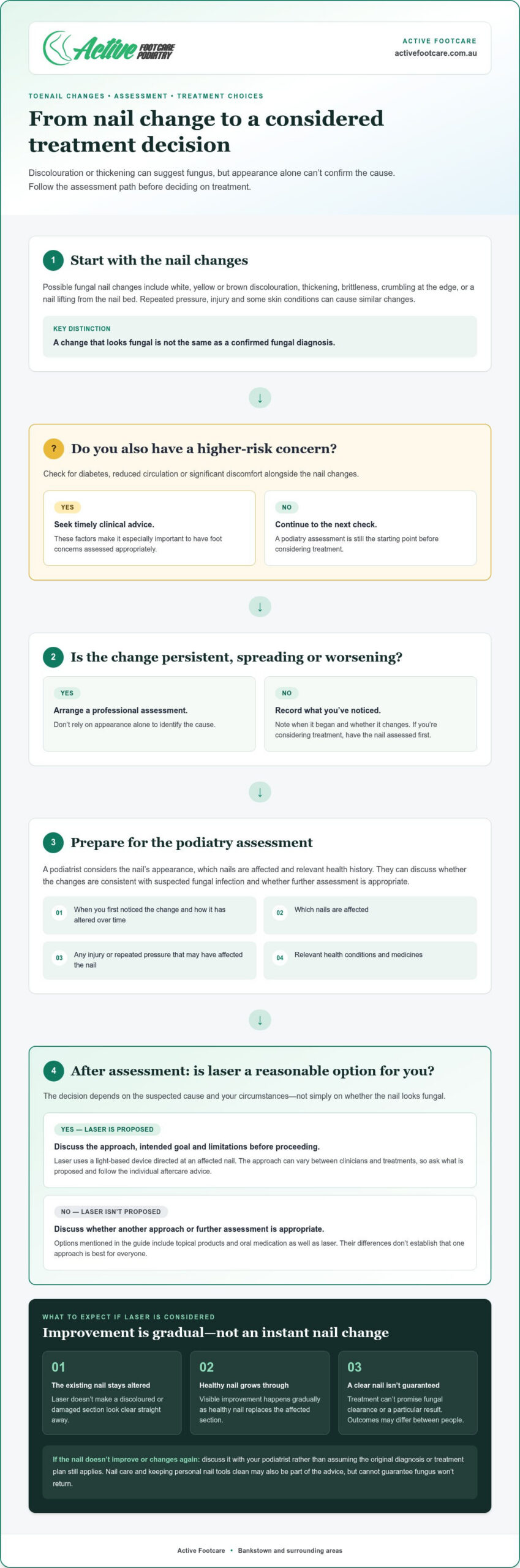
How to decide whether toenail laser treatment suits your situation
A clear decision starts with useful information, not a commitment to treatment. Use this four-step checklist to prepare for a podiatry assessment and decide whether laser is worth discussing. If you’re considering anti-fungal laser treatment for toenails Bankstown, the aim is to understand the options and agree on realistic expectations with a clinician.
- Note the changes. Record when you first noticed them and whether they’re spreading or becoming more pronounced. A brief note on colour, thickness, brittleness or nail separation can help describe what’s changed.
- List the affected nails. Note which toes are involved and whether the appearance differs between nails. If the changes have varied over time, mention that too.
- Arrange an assessment. Bring relevant health information, including diabetes or circulation concerns, and a list of medicines you take. These details help the podiatrist consider your situation as a whole.
- Discuss options and expectations. Ask whether laser is appropriate for your nail changes, what other care approaches may be considered, and how progress and follow-up will be discussed.
Questions to discuss at your assessment
It’s reasonable to ask how the podiatrist assesses whether nail changes are fungal or may have another cause. You can also ask whether laser treatment may suit your circumstances, how it fits alongside other care options, and what the proposed plan involves. Clarify how progress might be reviewed and what individual aftercare advice you’ll need to follow. These questions help make the decision collaborative and specific to you.
When to seek prompt advice about a toenail
Don’t wait for a routine treatment discussion if you notice increasing pain, redness, swelling or discharge around the nail. Arrange prompt clinical assessment, as these symptoms need individual attention. People with diabetes or circulation concerns should seek personalised foot-care advice about nail changes, even if the problem seems minor. If symptoms are severe or you’re concerned about your immediate health, seek urgent medical guidance.
Before the appointment, bring your notes and be open about what you’ve already tried. You don’t need to decide on laser beforehand. A podiatrist can assess the nail, discuss whether this treatment or another approach is suitable, and help you understand what to expect without promising a particular result.
If you’re ready to discuss your nail changes and possible next steps, Discuss your toenail concerns with Active Footcare.
Anti-fungal laser treatment in Bankstown: your next step with Active Footcare
If nail changes have persisted and you’re looking for clinical guidance, a podiatry discussion can help you understand what may be causing them and whether laser treatment is worth considering. Active Footcare provides anti-fungal laser treatment and podiatry care in Bankstown and nearby areas. The next step is an informed conversation, not a promise of a particular result.
What to expect when taking the next step
A podiatrist can assess your nail changes, consider relevant health information and discuss whether laser treatment may suit your circumstances. They can also explain the intended approach, possible limitations and what to expect from any care plan. The assessment is a chance to ask questions and understand your options before deciding how to proceed.
To make the discussion useful, share how long you’ve noticed the changes, which nails are affected and whether anything has altered over time. Mention health conditions, medicines and any steps you’ve already taken to manage the nail. If you’re worried about discomfort, treatment expectations or what happens if the nail doesn’t improve as hoped, raise those concerns directly. Clear advice should help you understand the reasoning behind the proposed next step.
You can also read our toenail laser treatment explained guide to revisit the general treatment considerations before your discussion.
Local foot-care support beyond the clinic
For people in Bankstown and nearby Western Sydney communities, local podiatry care can provide a practical starting point for persistent nail concerns. Active Footcare also provides podiatrist home visits in Sydney for people who find it difficult to travel to an appointment.
Laser treatment isn’t the right next step for every person or every nail change. An assessment can help clarify whether the concern may be fungal, whether laser is suitable to discuss and what expectations are reasonable for your situation. You don’t need to arrive with a diagnosis or decide on treatment in advance.
If you’re ready to take that practical next step, book a podiatry appointment with Active Footcare to discuss your toenail concerns and possible care options.
Move from uncertainty to a considered next step
You don’t need to arrive with a treatment decision already made. A podiatry conversation is an opportunity to explain what you’ve noticed, understand the reasoning behind your options and decide what feels appropriate for your circumstances. That can make the next step clearer, even if laser isn’t ultimately the approach you choose.
If you’re considering anti-fungal laser treatment for toenails Bankstown, focus on finding an approach you understand and feel comfortable discussing. Bring any questions you still have, including what the treatment is intended to address and how you’ll review your care plan. Feeling informed is a worthwhile outcome in itself.
Active Footcare provides professional podiatry care, including anti-fungal laser treatment, for people in Bankstown, Liverpool, Moorebank, Sydney and Campbelltown. You can take the next step at your own pace and have your concerns considered as part of the discussion.
Book a podiatry appointment with Active Footcare to discuss your toenail concerns and possible care options. A thoughtful conversation can help you move forward with greater confidence.
Frequently Asked Questions
Is anti-fungal laser treatment effective for toenail fungus?
Whether laser treatment is suitable, and how a person responds, varies. If you’re considering anti-fungal laser treatment for toenails Bankstown, first discuss whether the nail changes are likely to be fungal or have another cause. Treatment can’t guarantee clearance. Any visible change is gradual as healthy nail grows, so ask your podiatrist what progress might look like for you and what other options could be considered.
Does laser treatment for toenail fungus hurt?
Experiences can differ, so a pain-free appointment shouldn’t be assumed. Before treatment, tell the podiatrist if you’re worried about discomfort, have sensitive toes or have found previous nail procedures difficult. Ask what the proposed process involves and how to let the clinician know if you feel uncomfortable. They can explain the approach for your situation, helping you make an informed decision without relying on someone else’s experience.
How many laser treatments are needed for toenail fungus?
The number of treatments depends on your assessment and individual treatment plan; there isn’t a session count that applies to everyone. Ask what the proposed plan includes, when progress will be reviewed and what might prompt a change in approach. Clinical follow-up and visible nail growth are different measures: the nail’s appearance may not reflect progress straight away. Your podiatrist can explain how these will be considered in your care.
How long does it take for a toenail to look clear after treatment?
There’s no fixed point at which every toenail will look clear. The pace of visible change varies, and the affected portion must grow forward before it can be trimmed away, so treatment isn’t an immediate cosmetic change. At assessment, ask how your podiatrist will monitor progress and what signs to watch for. Seek advice sooner if the nail worsens or becomes painful rather than waiting for it to grow out.
Can toenail fungus come back after laser treatment?
Yes, fungal nail problems can return, and laser treatment can’t guarantee they won’t. Everyday habits may help lower exposure, but no routine can promise prevention. Keep feet clean and dry, avoid sharing nail clippers or files, and follow any care advice tailored to you. If nail changes reappear after treatment, arrange a review rather than assuming the cause or restarting a product without clinical guidance.
Can I use anti-fungal cream or tablets with laser treatment?
Sometimes, but only when a podiatrist or relevant prescribing clinician considers the combination appropriate. The decision depends on the likely diagnosis, your health history and any medicines or products you’re already using. Bring a list of medicines or product labels to the discussion so the clinician can consider them. Don’t add, stop or change prescribed treatment on your own; ask the prescriber how to proceed.
When should I see a podiatrist about a discoloured toenail?
Arrange an assessment if a discoloured nail persists, worsens, becomes uncomfortable or affects several nails. Appearance alone can’t confirm fungus, and an assessment can help clarify what needs attention. If you have diabetes or circulation concerns, seek personalised foot-care advice promptly. Increasing redness, swelling or discharge also warrants timely clinical assessment. If symptoms are severe or you feel acutely unwell, seek urgent medical care rather than relying on an FAQ.