

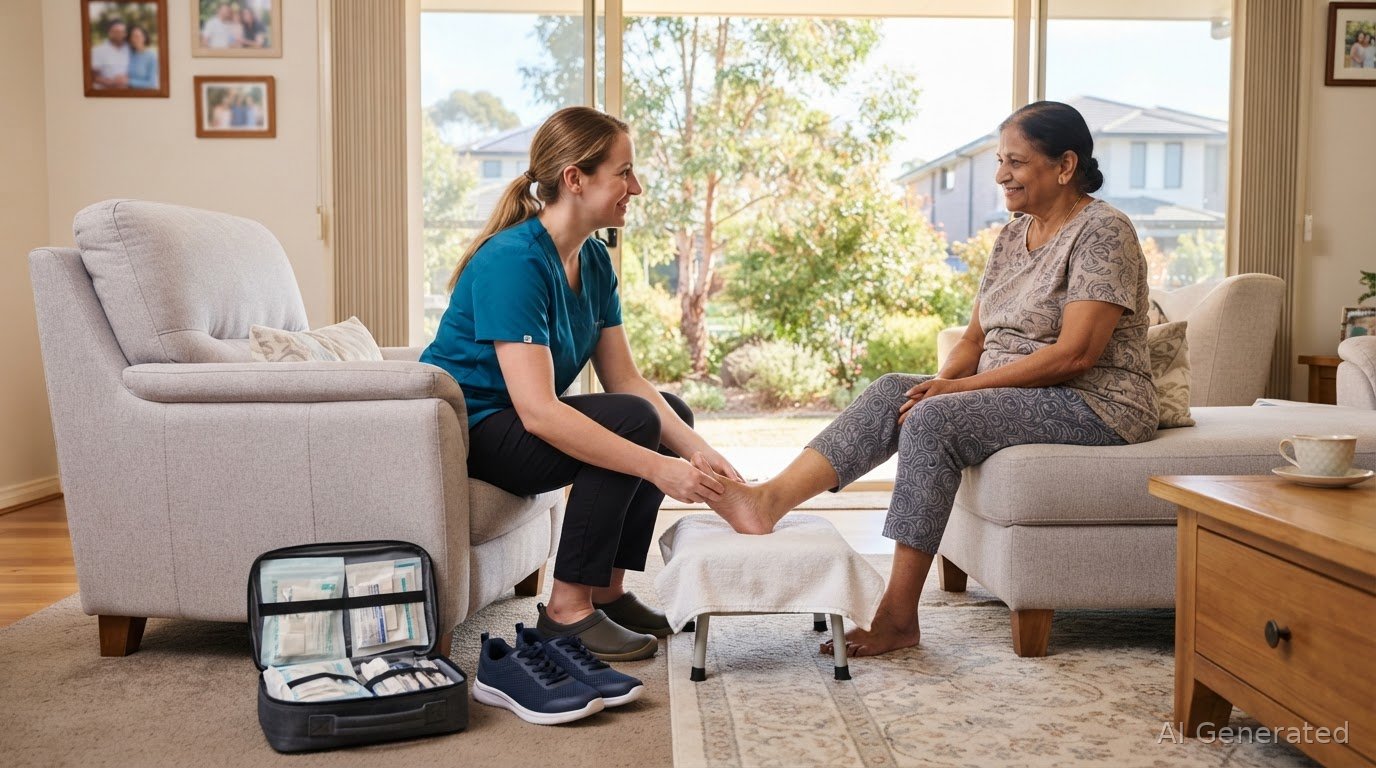
What if getting professional foot care in Campbelltown didn’t have to start with a difficult trip? If foot discomfort or mobility concerns make travelling challenging, a mobile podiatrist Campbelltown residents can see at home can make care easier to access. A home visit lets you discuss your foot health in familiar surroundings and explain how it affects your everyday movement.
During a home visit, your podiatrist can assess your feet, discuss your concerns and consider appropriate care. Depending on your needs, this may include a diabetes foot assessment, gait analysis, custom orthotics or NDIS podiatry. The appointment takes place at home, but the assessment is still focused on your individual circumstances.
This article explains what mobile podiatry can involve, who it may suit and how to prepare for a visit. You’ll also find practical tips on what information to have ready and how to set up a comfortable space, so you can make the most of your appointment.
Key Takeaways
- A home visit can be a practical option when mobility, transport or caring responsibilities make travelling to an appointment difficult.
- A mobile podiatrist Campbelltown residents see at home can assess foot concerns in the context of their health and mobility needs.
- Home and clinic appointments have different settings. The right option depends on the concern and the care needed.
- Noting symptoms, relevant health information and questions ahead of time can help you use your appointment well.
- Diabetes foot assessments and NDIS podiatry are available for people whose needs make those services relevant.
When a mobile podiatrist in Campbelltown can make foot care easier
A home visit can be a practical option when getting to an appointment is difficult, tiring or hard to organise. Reduced mobility, pain while walking, limited transport or needing to arrange a lift can all add barriers to seeking care. Caring responsibilities can make it challenging to spend time away from home, especially if you need to organise support for someone else as well.
A mobile podiatrist brings professional foot care to your home. For people in Campbelltown, this removes the need to travel to a clinic and makes it easier to explain how foot concerns affect everyday routines. The appointment focuses on your feet, health and mobility. For a general overview of the profession and its scope, see What is Podiatry?
Who may benefit from a home podiatry visit?
Home visits can suit people whose health, mobility or daily circumstances make travel difficult. Older adults and people with disability may find that arranging transport or moving around an unfamiliar setting takes considerable effort. Someone recovering from an illness or injury, or managing a busy caring role, may also find a home appointment more manageable.
Family members and carers can help arrange support, share relevant information and attend the visit if the patient wants them there. The decision is less about fitting a particular category and more about whether travelling creates a barrier to getting foot concerns assessed.
What concerns might prompt someone to seek mobile podiatry?
People may seek advice about foot discomfort, nail concerns or difficulty managing routine foot care independently. For example, bending to reach the feet may be uncomfortable, or changes in mobility may make regular care harder. These experiences don’t point to a particular diagnosis. A podiatrist can listen to what’s happening, assess the concern and discuss care suited to the person’s needs.
Consider whether the effort of travelling is delaying an appointment or making it harder to manage foot care. If it is, searching for a “mobile podiatrist campbelltown” service can be a useful next step. A home visit also gives you the opportunity to explain how your feet affect daily activities, such as walking around the house or managing personal care. These details help your podiatrist understand your circumstances, rather than considering a symptom in isolation.
You don’t need to wait until a concern becomes difficult to manage before seeking advice. If a change in your feet worries you, or routine care has become a struggle, a professional assessment can help clarify what’s happening and what support may be appropriate. The next section covers the assessments and care a Campbelltown mobile podiatrist can provide.
What a Campbelltown mobile podiatrist can assess and support
Assessment starts with understanding what’s concerning you. A podiatrist listens to your experience, considers your foot health and discusses how your feet affect movement and daily activities. This context helps shape a conversation about suitable care, rather than assuming the same approach will work for everyone.
Mobile podiatry is podiatric assessment and care delivered at home, with attention to the person’s foot health, concerns and mobility needs. For Campbelltown residents, a home visit offers an opportunity to discuss a foot concern in familiar surroundings and consider it alongside everyday movement.
How a podiatrist approaches an individual foot concern
Your podiatrist will consider your symptoms, relevant health history and what you’d like help with. You might describe soreness under the heel, a nail concern or a change in how confidently you walk. These are reasons to seek an assessment, not diagnoses in themselves. Your description helps the podiatrist understand when the concern occurs and how it affects your routine.
The podiatrist can then assess the relevant aspects of your foot health and discuss appropriate next steps. Depending on the concern, this may involve routine foot care or further assessment. The aim is to make an informed plan based on your circumstances, not to promise a particular result before your feet have been assessed.
When diabetes care, gait analysis or orthotics may be relevant
Some assessments are particularly relevant to a person’s health or movement needs. A diabetes foot assessment focuses on checking foot health and discussing care. If walking feels different or less steady, gait analysis can assess how you move where clinically appropriate. The findings can inform a discussion about support, including whether custom orthotics may suit your needs.
These services aren’t a one-size-fits-all checklist. A podiatrist considers what you’ve noticed, your health information and your goals before discussing suitable assessment or care. Someone concerned about changes in their walking, for instance, may need a different discussion from someone seeking a diabetes foot assessment. Because podiatric needs often connect to general medical conditions, coordinating with comprehensive primary care providers like HealthWorksPros can support overall wellbeing. Sharing what matters most to you helps keep the appointment focused.
- Diabetes foot assessment: a check of foot health with an opportunity to discuss appropriate care.
- Gait analysis: an assessment of walking mechanics when relevant to the person’s concerns.
- Custom orthotics: an option a podiatrist can discuss in relation to assessment findings and individual needs.
For people exploring NDIS support, Active Foot Care’s NDIS mobile podiatry guide explains how home-based podiatry may relate to therapy needs. Active Foot Care also provides home podiatry visits for people in Campbelltown.
Is a home visit as useful as a podiatry clinic visit?
A home appointment can be centred on the person: the podiatrist listens to their concerns, considers their foot health and mobility, and discusses appropriate next steps. The setting changes, but care should respond to the individual’s needs. Not every assessment or procedure is identical in every location. The nature of the concern and what’s clinically appropriate help determine the right setting.
If you’re comparing a clinic appointment with a mobile podiatrist Campbelltown service, consider which setting makes it easier to receive suitable care. A home visit reduces the need to travel and offers useful context about everyday movement. A clinic may be more appropriate for some concerns, depending on the assessment or care required.
| Consideration | Home visit | Clinic visit |
|---|---|---|
| Travel | Care is delivered at home, so there’s no need to organise a trip to the clinic. | You’ll need to plan transport and travel to the appointment. |
| Surroundings | A familiar environment can help you explain how foot concerns affect everyday routines. | The appointment takes place in a dedicated clinical environment. |
| Appointment setting | The podiatrist considers the person’s needs in the home setting. | The clinic environment may suit certain assessments or care needs. |
| Choosing what fits | Can be practical if travel is a barrier and the concern is suitable for home-based care. | May be more appropriate when the concern calls for a clinic setting. |
What can feel different about home-based care?
A home appointment can make it easier to explain how a foot concern affects your daily life. You can describe where walking feels difficult in your usual routine or explain how foot care fits around other responsibilities. This context helps the podiatrist understand your experience. Receiving care at home also removes the need to arrange transport, which can be a significant practical benefit for the patient and their carer.
Familiar surroundings may feel more comfortable for some people, while others may prefer a clinic’s dedicated appointment environment. Neither preference determines the quality or suitability of care on its own. The assessment and recommendations should respond to the person’s needs, not simply the location.
When might a clinic setting be more suitable?
The concern itself can influence the right setting. Some assessments or procedures may require a clinic environment, so home and clinic appointments shouldn’t be treated as interchangeable. When arranging care, describe what you’ve noticed, how it’s affecting you and what you hope to address. Clear information helps the podiatrist understand the situation and guide you towards an appropriate care plan.
You don’t need to decide alone whether a concern is suited to a home appointment. Explain your circumstances and priorities, then discuss the care that best fits. The aim is a considered assessment and a practical next step, whether that’s care at home or in a clinic.

How to prepare for a mobile podiatry appointment in Campbelltown
A little preparation can help you make the most of a home appointment, whether you’re attending for yourself or helping someone else. You don’t need to have every detail worked out. A short summary of the concern, relevant health information and a comfortable place to sit give the podiatrist useful context for the visit.
To prepare, note what’s changed, gather relevant health information and write down your questions.
- Write down the concern. Note when it began, where you notice it and whether anything has changed. Include examples of how it affects walking or routine foot care.
- Gather useful health details. Make a note of relevant health conditions, medicines and previous foot-care history. Have the information ready to refer to during the appointment.
- Set up a comfortable space. Choose a well-lit area where the person can sit safely and comfortably. Keep the route to that space clear.
What information should you have ready?
A brief timeline can be more useful than trying to remember every detail during the appointment. Mention whether the concern is new or ongoing and describe any changes you’ve noticed. If you’re unsure what may be relevant, share what you can. The podiatrist can ask questions to understand the situation.
It may also help to prepare questions about walking, footwear or ongoing foot care. Writing them down makes it easier to remember what you wanted to ask. If the appointment is for someone else, check what they’d like discussed and include their priorities in your notes.
How can family members or carers help?
With the patient’s agreement, a family member or carer can describe changes they’ve noticed, share relevant health history and support the person to explain their concerns. The patient should remain part of the conversation and have the chance to ask questions or express preferences. Active Footcare provides podiatry services in aged-care settings, as well as home visits for individuals.
Before the visit, clear the route to the appointment space and make sure the area is well lit. Choose a chair that feels stable and comfortable for the person. These simple steps can make it easier to settle in and focus on the discussion, without needing to reorganise the whole home.
Preparing for a mobile podiatrist Campbelltown appointment means sharing the information that matters and making the space comfortable for the patient. If you’re ready to arrange professional foot care at home, book a Campbelltown home visit with Active Footcare.
Arrange a home visit with Active Foot Care in Campbelltown
A home visit connects Campbelltown residents with professional podiatry in a familiar setting. If getting to an appointment is difficult, discussing your foot health at home can be a practical way to begin. Active Footcare provides podiatrist home visits, with care shaped around the person’s concerns, health and mobility.
The right starting point depends on the support needed. A visit may involve discussing a foot concern and assessing foot health. Specific options such as a diabetes foot assessment or NDIS podiatry may be relevant to some patients. The focus is on understanding the individual situation and discussing suitable care, rather than assuming everyone needs the same service.
How Active Foot Care can tailor care to your needs
Active Footcare provides home visits in Campbelltown and takes a patient-focused approach: understand the concern, assess the person’s needs and discuss appropriate care. Sharing how a foot issue affects movement or daily activities helps the podiatrist understand what matters to you. The assessment then informs a conversation about relevant next steps.
Principal Podiatrist Dr Maher Said leads the business. Each patient’s care is considered in light of their own concerns and circumstances. If you’d like to understand more about home-based appointments, visit Active Footcare’s home visit page.
If you’re considering a mobile podiatrist Campbelltown service, think about the main reason for the appointment and any practical support the patient needs. For example, let the team know whether the visit relates to ongoing foot discomfort, diabetes foot care, NDIS support or changes affecting mobility. This gives the discussion a useful starting point.
Take the next step towards foot care at home
To start, share the patient’s location in Campbelltown, their main foot concern and any relevant mobility needs. A brief description gives the team a useful understanding of the situation. If you’re arranging care for a family member, include their priorities and any information they’d like you to pass on.
You don’t need a diagnosis or a detailed care plan before making contact. Explain what you’ve noticed and what makes attending an appointment difficult. Active Footcare can consider the patient’s circumstances and discuss a suitable way forward for home-based podiatry.
For professional foot care in a familiar setting, contact Active Footcare to arrange a home visit in Campbelltown.
Take a comfortable first step towards care
You don’t need to have every detail worked out before seeking support. Start with what you’ve noticed and how it affects everyday life. This can make the next conversation clearer, whether you’re arranging care for yourself or supporting someone close to you.
If travelling is a barrier, a mobile podiatrist Campbelltown residents can access at home offers a practical way to begin. Share the main concern and any mobility needs, then use the discussion to guide the next step. You don’t need to have all the answers before taking action.
Arrange a home podiatry visit with Active Footcare and take a positive step towards professional foot care in a familiar setting.
Frequently Asked Questions
Can a mobile podiatrist visit me at home in Campbelltown?
Yes, Active Footcare provides podiatrist home visits in Campbelltown, Liverpool, Bankstown, Moorebank and Sydney. When getting in touch, give your suburb or location and explain the main reason for the appointment, such as difficulty managing nail care or a change in your walking. This gives the team a clear starting point for arranging a home visit.
Is mobile podiatry suitable for someone with limited mobility?
It can be suitable when travelling to an appointment is difficult or tiring. Someone who relies on a family member for transport, or finds walking from a car park challenging, may value care at home. The podiatrist can discuss the person’s foot concerns and mobility needs. With the patient’s agreement, a carer can help provide background. The most suitable setting depends on the concern and individual circumstances.
What foot problems can a mobile podiatrist assess?
A mobile podiatrist can assess concerns such as foot discomfort, nail changes and difficulties that affect walking. Active Footcare also provides diabetes foot assessments, gait analysis and custom orthotics when relevant to a person’s needs. Describe what you’ve noticed, including whether discomfort changes with activity or a change in your feet is affecting daily routines. Be clear about any worsening symptoms or difficulties so the podiatrist can consider them during the assessment.
Can a podiatrist provide diabetes foot care at home?
Yes, Active Footcare offers diabetes foot assessments alongside podiatrist home visits. The assessment provides an opportunity to review foot health and discuss care in light of the person’s circumstances. Continue following the guidance of your healthcare team, and seek prompt clinical advice about new or changing foot concerns. For the appointment, mention relevant diabetes-related health information and explain any changes you’ve noticed, even if they seem minor.
Do I need a referral to see a mobile podiatrist?
Referral requirements can depend on the reason for care and the funding or support pathway you’re using. If you’re arranging a private appointment or accessing NDIS support, explain this when contacting Active Footcare. Mention any referral or plan documents you already have. This context helps the team understand your circumstances and discuss the appropriate next step.
How should I prepare for a home podiatry appointment?
Before the visit, note when the concern began and what changes you’ve observed, such as discomfort during a walk or a nail that has become difficult to manage. Have relevant health information and a medicines list available, and write down any questions you want answered. Choose a safe, comfortable place for the appointment. If someone helps with your care, they can join the discussion with your agreement.
Can a mobile podiatrist assess an ingrown toenail at home?
A podiatrist can assess a toenail concern during a home visit and discuss appropriate care based on its presentation and your circumstances. Avoid cutting deeply into a painful or irritated nail, as this may aggravate the area. When arranging an appointment, describe what you’ve noticed, including any changes in discomfort or appearance. If the concern is worsening, make that clear so the podiatrist understands why you’re seeking an assessment.