


You can book a podiatrist without a referral, but an NDIS podiatry referral or supporting report may help explain how foot care relates to a participant’s disability and daily-living goals. A referral describes clinical needs; it doesn’t approve NDIS funding. Funding depends on the participant’s plan and management arrangements.
To make the next step clearer, start with the participant’s current plan, the reason they’re seeking podiatry and how foot concerns affect daily activities. Then gather relevant clinical information and consider practical details such as mobility, communication preferences and whether a home visit would make access easier.
This guide explains how referrals and NDIS funding differ, who can help organise podiatry and what information is useful before making an enquiry. It also covers Active Foot Care’s NDIS podiatry and home-visit services for local participants, including those who find travel difficult.
Key Takeaways
- An NDIS podiatry referral can describe foot-care needs and goals. Funding depends on the participant’s plan and management arrangements.
- Participants, nominees and support coordinators can help organise an enquiry. Information from a GP or allied health professional may also be useful.
- Before arranging care, note the participant’s mobility goals, relevant plan details, access needs and whether a home visit would suit them.
- Active Footcare provides NDIS podiatry and podiatrist home visits focused on foot health, comfort and mobility.
- Local participants in Sydney, Liverpool, Bankstown, Moorebank and Campbelltown can explore assessment and options such as custom orthotics when clinically appropriate.
NDIS podiatry referral: what it means and when it may help
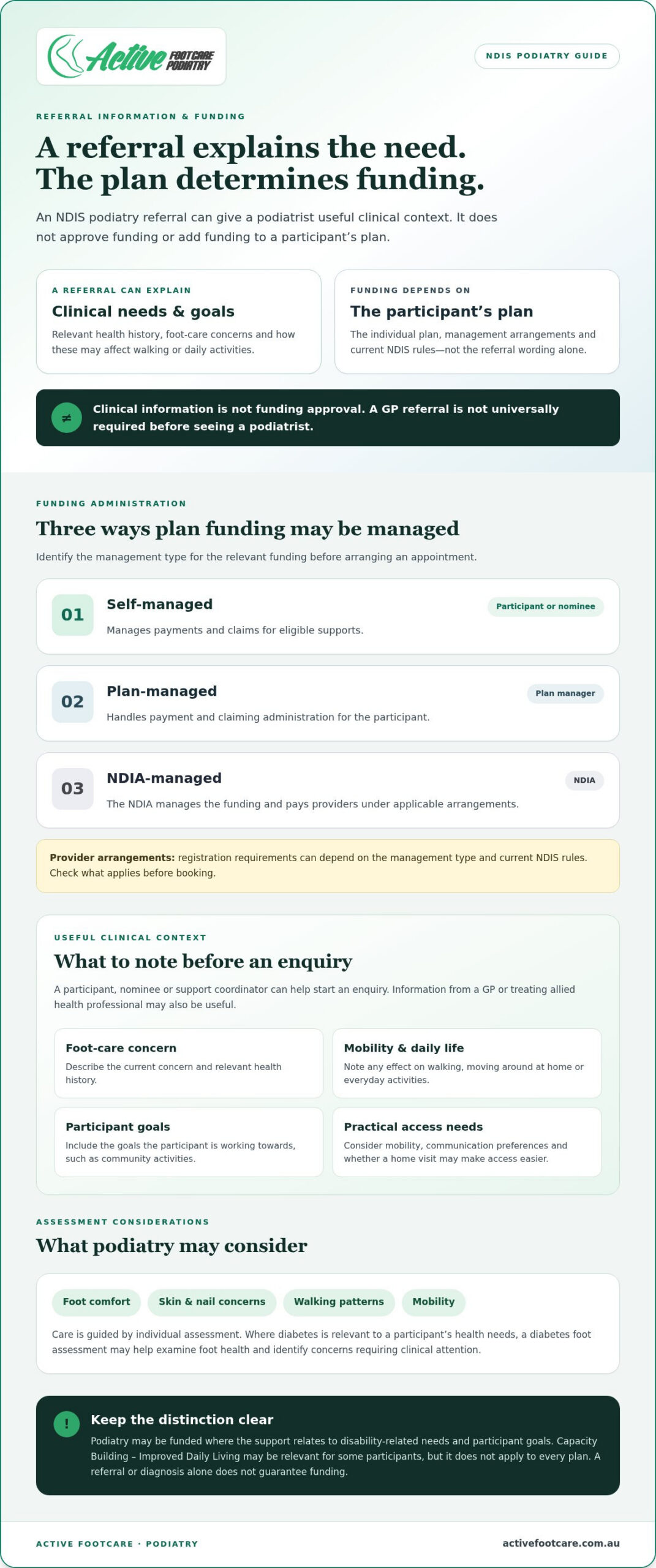
Referral paperwork and NDIS funding are connected, but they answer different questions. A referral can explain why foot care may be needed; it doesn’t decide whether the participant’s plan can fund it. An NDIS podiatry referral is clinical information that helps a podiatrist understand a participant’s needs and may support care planning. It is not funding approval.
For a high-level overview of the National Disability Insurance Scheme (NDIS), see this background information. To learn more about podiatry in an NDIS context, watch this video:
A clinical referral describes a person’s foot-care needs; an NDIS funding decision depends on their individual plan and applicable NDIS rules. Supporting information may outline relevant health history, difficulties with walking or daily activities, and goals the participant is working towards. This context can help the podiatrist assess the person’s needs, but the wording on a referral alone doesn’t establish funding eligibility.
Is a GP referral required for NDIS podiatry?
There’s no universal requirement for every participant to obtain a GP referral before seeing a podiatrist. A GP or another treating allied health professional may provide useful clinical information, but that is separate from the podiatrist’s own assessment and treatment planning. The podiatrist considers the participant’s presentation and discusses suitable care. Before arranging appointments, review the participant’s plan and funding arrangements rather than assuming a referral guarantees that NDIS funds can be used.
What can podiatry support with?
A podiatry assessment may consider foot comfort, skin and nail concerns, walking patterns and mobility. The practitioner can discuss how these concerns relate to everyday activities and goals, such as moving around the home or taking part in community activities. Care is guided by individual assessment, and outcomes will vary.
Where diabetes is relevant to the participant’s health needs, a diabetes foot assessment may help examine foot health and identify concerns requiring clinical attention. The participant’s circumstances guide whether this type of assessment is appropriate. Before the appointment, note the current concern and how it affects daily mobility. This helps keep the discussion focused, whether the participant attends a clinic or receives care at home.
How NDIS funding and podiatry referrals fit together
A referral helps explain a participant’s foot-care needs, relevant history and goals. It can give a podiatrist useful clinical context, but it doesn’t add funding to a plan or authorise a claim. A referral is evidence about clinical need; funding depends on the participant’s plan, management arrangements and current NDIS rules.
Podiatry may be funded where the support relates to disability-related needs and the participant’s goals. Capacity Building – Improved Daily Living may be relevant for some participants, but don’t assume that category applies to every plan. Review the participant’s current plan and applicable NDIS guidance before organising appointments. The Australian Podiatry Association on the NDIS also provides professional context about podiatry within the Scheme.
Does the NDIS cover podiatry for every participant?
No single referral or diagnosis automatically means podiatry will be funded. The key question is whether the proposed support fits the participant’s circumstances, documented disability-related needs and plan. For example, information about how foot concerns affect walking or everyday activities may help explain why podiatry is being considered. It doesn’t guarantee funding. Review the plan’s current support categories and applicable eligibility guidance rather than relying on older terminology or a referral alone.
How plan management can affect the next step
The participant’s management type affects how funding is handled and which provider arrangements apply. In general:
- Self-managed: The participant or their nominee manages payments and claims for eligible supports.
- Plan-managed: A plan manager handles payment and claiming administration for the participant.
- NDIA-managed: The NDIA manages the funding and pays providers under the applicable arrangements.
Provider registration requirements can depend on the management type and current NDIS rules. Before booking, identify how the relevant funding is managed and review the requirements that apply. This helps clarify the practical pathway for arranging and paying for an appointment, without treating a referral as funding approval.
If the participant’s plan and arrangements support exploring podiatry, Active Footcare provides NDIS podiatry services focused on foot health, comfort and mobility. Having the plan details to hand can make an enquiry more purposeful.
Who can refer someone to an NDIS podiatrist, and what should they provide?
The participant can usually start an enquiry themselves, or ask a nominee or support coordinator to help communicate their needs. A GP or treating allied health professional may also provide clinical information, such as relevant health history or observations about mobility. A formal referral isn’t the only way to begin a conversation. Who helps will depend on the participant’s preferences and circumstances.
A useful NDIS podiatry referral gives the podiatrist a clear picture of why care is being considered and what the participant hopes to work towards. Keep the information practical and relevant. For example, describe whether foot discomfort or another concern makes walking around the home, standing for daily tasks or getting out into the community more difficult.
What information makes a podiatry referral useful?
Before making an enquiry, gather details that can help the practitioner understand the participant’s needs and plan an appropriate assessment. Include:
- The main reason for seeking podiatry and any current foot-care concerns.
- Relevant symptoms, when they occur and how they affect daily activities or mobility.
- Relevant medical history, including diabetes if it relates to the participant’s foot-care needs.
- Current supports or previous foot care that may provide useful clinical context.
- Access or communication preferences, such as mobility considerations or how the participant prefers information to be shared.
Share only relevant information, and involve the participant in deciding what is communicated. Plan-management details may help with practical arrangements, but should be shared through appropriate channels and with the participant’s consent.
How to involve a support coordinator or family member
A support coordinator can help organise relevant documents, communicate the participant’s goals and coordinate appointment arrangements. A family member or nominee may also assist if the participant wants their involvement and any required authority is in place. Their role is to support the participant’s choices and share useful context, not to make clinical decisions on the podiatrist’s behalf.
Keep the participant’s priorities at the centre. They might want help describing a concern, prefer a support person to attend, or choose to manage the enquiry independently. A coordinator’s or family member’s information can help explain the need for care, but it doesn’t determine whether NDIS funding applies. Clear, consent-based communication helps the podiatrist understand the person behind the paperwork.
How to arrange NDIS podiatry: a practical referral checklist
Preparing a few details can make it easier to move from considering foot care to arranging an appointment. Use this sequence to organise the next steps around the participant’s needs and plan arrangements.
- Identify the participant’s goals. Note what they’d like support with, such as addressing a foot concern or making everyday movement more comfortable. Describe the activity they want to manage, rather than only naming a symptom.
- Review the plan arrangements. Check the current plan, how relevant funding is managed and any requirements that apply before organising services.
- Gather useful information. Collect relevant clinical notes or referral information, details of current foot-care concerns, and the participant’s preferred communication and access arrangements. Share information with their consent.
- Organise care. When enquiring, explain the participant’s goals, location and mobility or access needs, and say whether a home visit would be suitable. The podiatrist can assess their needs and discuss an appropriate care approach. This doesn’t guarantee NDIS funding.
For local participants, Active Footcare provides NDIS podiatry and podiatrist home visits in Sydney and surrounding areas, including Liverpool, Bankstown, Moorebank and Campbelltown. Explore Active Footcare’s NDIS podiatry support as you plan the next step.
What happens after the referral or enquiry?
The initial discussion helps the podiatrist understand the participant’s foot-care concerns, relevant health history and goals. The practitioner can then assess their needs and explain suitable care options in accessible terms. Consider any proposed support alongside the participant’s plan and funding arrangements, so clinical recommendations and funding decisions remain distinct.
When a home visit may make appointments easier
For someone who finds travel or clinic access difficult, a podiatrist visiting at home may reduce the practical demands of getting to an appointment. Active Footcare provides podiatrist home visits in its local service areas. Participants and their support people can read the NDIS mobile podiatry home-therapy guide to learn more about how home-based care works.
Arrange NDIS podiatry with Active Footcare in Sydney and surrounds
For local participants considering foot care, Active Footcare provides NDIS podiatry services and podiatrist home visits across Sydney, including Liverpool, Bankstown, Moorebank and Campbelltown. Care starts with understanding the participant’s concerns and goals, then assessing their foot health and mobility needs. An NDIS podiatry referral or supporting notes can provide context, while the podiatrist’s assessment guides the clinical approach.
What Active Footcare can help participants organise
An appointment may include an assessment of foot concerns and how they affect comfort or everyday movement. Depending on clinical findings, the podiatrist can discuss suitable care options, which may include custom orthotics when appropriate. The approach is tailored to the participant rather than based on a standard treatment pathway. Clinical recommendations don’t guarantee that a support will be funded through an NDIS plan, so consider them alongside the participant’s plan and funding arrangements.
Home visits can be a practical option for participants who find travel or clinic access difficult. Active Footcare’s NDIS mobile podiatry and home therapy services guide explains more about home-based care and what participants can expect.
Prepare for your first conversation with the team
A little preparation can help the first discussion focus on the participant’s needs. Have relevant plan-management information and referral notes available where appropriate, along with a clear description of the goals they’d like podiatry to support. It’s also useful to explain current foot-care concerns, the participant’s location and any access or communication preferences. Share personal or clinical information with the participant’s consent, and involve a nominee or support person according to the participant’s wishes and any relevant authority.
You don’t need to have every detail settled before starting a conversation. The team can discuss the participant’s situation and the practical steps for arranging an appointment. Funding decisions remain separate and depend on the participant’s plan and applicable arrangements.
To discuss NDIS podiatry or a home visit, visit the Active Footcare website and share the relevant referral information. A clear account of the participant’s goals and access needs can help guide the conversation towards a suitable next step.
Take the next step towards practical foot care
Starting an NDIS podiatry referral is easier when you separate clinical information from funding approval. A referral or supporting notes can explain the participant’s foot-care needs and goals, while the plan and management arrangements determine the funding pathway. Having relevant plan details, clinical information and access preferences ready can make the first conversation more useful.
Active Footcare provides NDIS podiatry services and podiatrist home visits for local participants across Sydney, including Liverpool, Bankstown, Moorebank and Campbelltown. An assessment helps the podiatrist understand the participant’s foot health and mobility needs, then discuss care suited to their circumstances. Consider any proposed support alongside the participant’s plan.
To discuss podiatry or home-visit care, contact Active Footcare about NDIS foot care. Bring the information you have and take the next step at a pace that works for the participant.
Frequently Asked Questions
Do I need a GP referral for NDIS podiatry?
No, a GP referral isn’t universally required to see a podiatrist. A GP or another treating health professional may provide useful information about a participant’s health history or foot-care needs, but this is separate from the podiatrist’s assessment. Before arranging an appointment, review the participant’s plan and funding arrangements. A referral can support clinical understanding, but it doesn’t guarantee NDIS funding.
Does the NDIS automatically cover podiatry?
No, podiatry isn’t automatically funded for every NDIS participant. Whether support can be funded depends on the participant’s circumstances, plan and current NDIS rules. Information explaining how foot concerns relate to disability-related needs and daily activities may help clarify why podiatry is being considered. Review the plan’s current wording and management arrangements before organising care, as a referral alone doesn’t approve funding.
Who can refer an NDIS participant to a podiatrist?
A participant can start an enquiry themselves, or a nominee or support coordinator may help organise it and share relevant information. A GP or treating allied health professional may also provide clinical notes or a referral where useful, but a GP referral isn’t universally required. Whoever helps should follow the participant’s preferences and consent, and any relevant authority for sharing information.
What should an NDIS podiatry referral include?
An NDIS podiatry referral or supporting notes can outline why care is being considered and what the participant hopes to address. Useful details may include current foot concerns, relevant symptoms and medical history, mobility or daily-activity impacts, and the participant’s goals. Include access or communication preferences too. Share information with the participant’s consent, and provide plan-management details only through appropriate channels where relevant.
Can an NDIS podiatrist visit me at home?
Yes, a home visit may be an option if travel or clinic access is difficult. Active Footcare provides podiatrist home visits for local clients in Sydney and surrounding areas, including Liverpool, Bankstown, Moorebank and Campbelltown. The podiatrist can discuss the participant’s foot-care concerns and access needs, then assess whether a home-based appointment suits their circumstances. Funding still depends on the participant’s plan and arrangements.
Can a support coordinator arrange an NDIS podiatry appointment?
Yes, a support coordinator can help organise an enquiry or appointment, gather relevant information and relate the support being considered to the participant’s goals. They may also help communicate access needs and plan-management details through appropriate channels. The participant should remain involved in decisions and consent to sharing personal information. A coordinator’s involvement can support the process, but doesn’t determine whether NDIS funding applies.
What happens at an NDIS podiatry assessment?
An assessment usually begins with a discussion about the participant’s foot-care concerns, relevant health history and goals. The podiatrist then assesses the needs presented and discusses an appropriate care approach in clear terms. Depending on the participant’s situation, this may involve considering foot comfort, skin or nail concerns, or mobility. Consider any proposed support alongside the participant’s plan and funding arrangements.