


The closest clinic isn’t always the easiest place to receive podiatry care. When searching for “ndis podiatrist sydney”, consider more than location: the participant’s foot concerns, mobility, everyday goals and how care fits their plan. If travel is difficult, a home visit may be a more practical setting.
It’s understandable to feel unsure how podiatry relates to NDIS goals, which funding may apply or whether clinic-based or mobile care suits everyday routines. Useful support starts with the participant’s foot health and mobility needs, with care planned around their circumstances.
This guide explains how NDIS podiatry may support participant-centred goals, how to compare care settings, and what to prepare when discussing symptoms, preferences and funding arrangements. Active Foot Care provides NDIS podiatry services and podiatrist home visits in Sydney, including Liverpool, Bankstown, Moorebank and Campbelltown. Use the practical steps below to consider an approach that suits the participant’s needs.
Key Takeaways
- NDIS podiatry can address foot health and mobility when support relates to the participant’s needs and goals.
- Understand how self-managed, plan-managed and NDIA-managed arrangements can affect how care is organised and paid for.
- Compare clinic appointments with home visits by considering travel, mobility and which setting best reflects everyday needs.
- Before arranging an ndis podiatrist sydney appointment, note the participant’s foot-care needs, goals, communication preferences and relevant plan details.
- Active Footcare provides NDIS podiatry and podiatrist home visits in Sydney, including Liverpool, Bankstown, Moorebank and Campbelltown.
What can an NDIS podiatrist in Sydney help with?
An NDIS podiatrist assesses foot health and provides care that may relate to a participant’s disability support needs and everyday goals. This can include considering foot pain, skin and nail concerns, walking patterns or diabetes-related foot health, then discussing appropriate care. The participant’s needs, circumstances and plan arrangements shape what support is suitable. NDIS funding isn’t automatic.
Podiatry focuses on the health and function of the feet and lower limbs. For a general overview of the profession, see Podiatry. An ndis podiatrist sydney participants see can help identify concerns affecting comfort, movement or day-to-day foot care, and explain possible next steps clearly.
What does a podiatrist assess and treat?
An assessment may cover skin and nails, areas of pain or pressure, foot function and walking patterns. The podiatrist may ask about footwear the participant uses and whether it suits their needs. If walking mechanics need closer review, gait analysis can assess movement and how the feet function during walking. For families observing early movement milestones or physical delays in young children, guides from the Stars Assessment Program illustrate how comprehensive pediatric therapy assessments evaluate developmental needs. Recommendations depend on the individual assessment.
For participants with diabetes, a foot assessment can consider foot health and relevant skin or nail concerns. The podiatrist can explain findings and discuss appropriate care, which may include practical foot-care advice. The assessment and treatment will depend on the person’s circumstances and clinical needs.
How can podiatry support everyday NDIS goals?
Foot comfort and mobility may relate to goals such as walking around the home, moving between rooms or taking part in everyday activities. Support might also relate to personal foot care if reaching or checking the feet is difficult. These are areas to discuss with the podiatrist, who tailors recommendations to the participant.
Goal-aligned podiatry focuses on the foot-care needs that matter in a participant’s everyday life. Specific examples, such as discomfort during short walks or difficulty caring for toenails, help make an assessment more relevant. Active Footcare provides NDIS podiatry services, including diabetes foot assessments and gait analysis, with care guided by the participant’s needs.
How NDIS funding and podiatry provider arrangements work
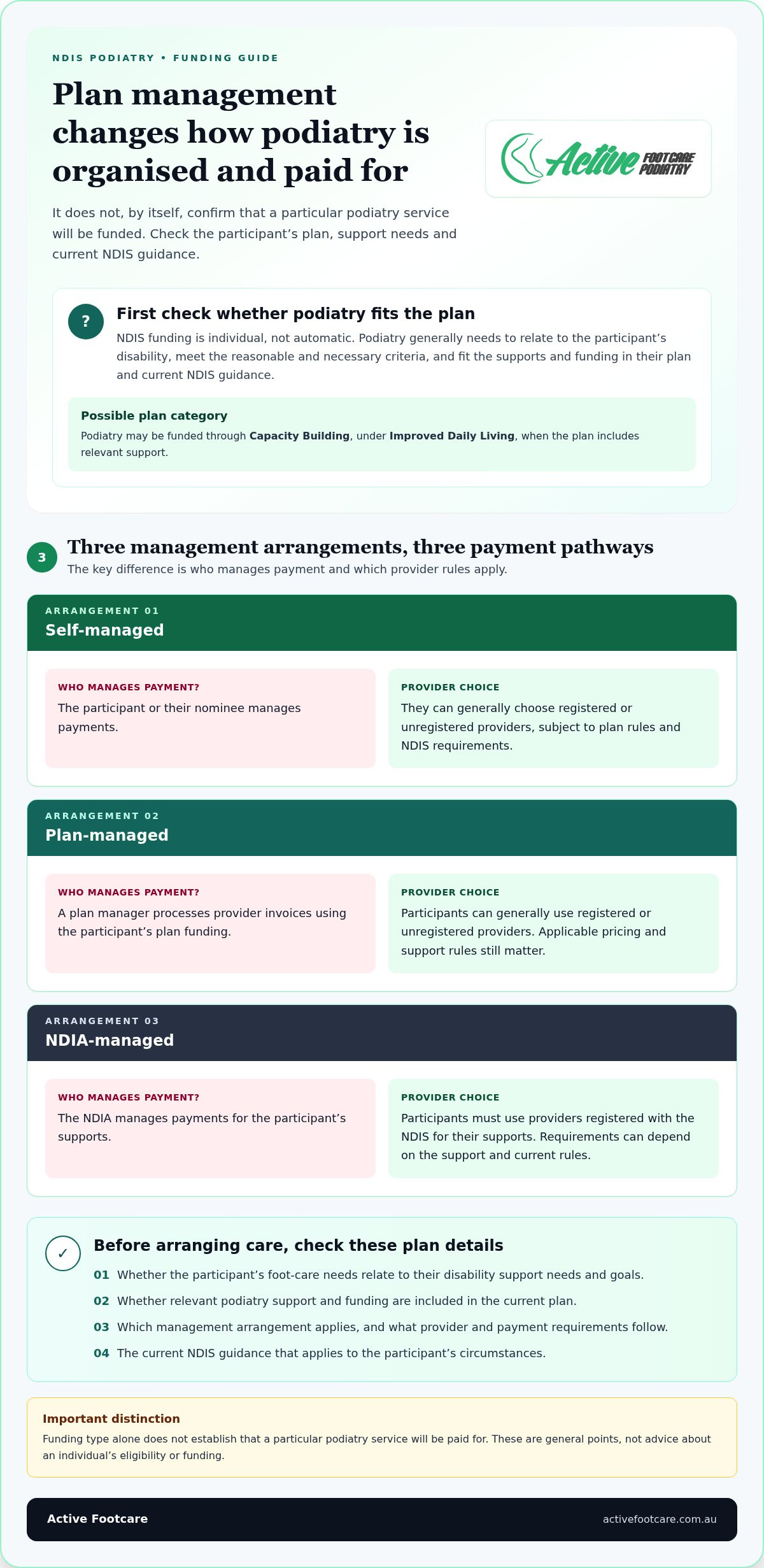
NDIS funding is individual, not automatic. A podiatry service generally needs to relate to the participant’s disability, meet the reasonable and necessary criteria, and fit the supports and funding in their plan and current NDIS guidance. Podiatry may be funded through Capacity Building, under Improved Daily Living, when the plan includes relevant support. The National Disability Insurance Scheme (NDIS) explains the scheme’s purpose and approach to supporting people with disability.
Plan management affects how funding is administered and which providers can be used. These are general points, not advice about an individual’s eligibility or funding. Review the participant’s current plan and applicable NDIS guidance before arranging care. For more on care delivered at home, read this NDIS mobile podiatry guide.
Does plan management affect provider choice?
Self-managed: The participant or their nominee manages payments and can generally choose registered or unregistered providers, subject to plan rules and NDIS requirements.
Plan-managed: A plan manager processes provider invoices using the participant’s plan funding. Participants can generally use registered or unregistered providers, while applicable pricing and support rules still matter.
NDIA-managed: The NDIA manages payments, and participants must use providers registered with the NDIS for their supports. Provider requirements can depend on the support and current rules, so refer to the guidance that applies to the participant’s circumstances. Funding type alone doesn’t establish that a particular podiatry service will be paid for.
What is the difference between a podiatrist and an allied health assistant?
A podiatrist is the clinician who assesses foot health, identifies relevant concerns and determines appropriate podiatry care. An allied health assistant has a different role: they may support therapy activities delegated by a qualified clinician, under that professional’s direction and within the agreed plan. They don’t replace the podiatrist’s clinical assessment.
The suitable role depends on the participant’s needs, goals and plan. If the concern involves foot pain, skin or nail issues, or walking function, podiatry care centres on the podiatrist’s clinical expertise. Active Footcare provides NDIS podiatry and home visits. You can explore Active Footcare’s podiatry services while considering which care setting suits the participant.
Home visits or clinic appointments: comparing NDIS podiatry in Sydney
The right setting depends on the participant’s mobility, travel circumstances and assessment needs. A home visit can reduce the need to travel and let the podiatrist discuss foot care in the context of familiar routines. A clinic appointment may suit someone who can get there comfortably and prefers that environment. Neither setting is automatically right for everyone.
| Consideration | Home visit | Clinic appointment |
|---|---|---|
| Setting | Care takes place in the participant’s home. | Care takes place at the clinic. |
| Travel | The podiatrist comes to the participant, which may reduce travel demands. | The participant needs to arrange and manage travel to the clinic. |
| Assessment context | Everyday routines and relevant movement around the home can be discussed in familiar surroundings. | The assessment takes place in a clinic environment, away from the participant’s usual home routines. |
Choose a home visit if reducing travel or discussing mobility in familiar surroundings matters most. Consider a clinic appointment if travel is manageable and the clinic setting suits the participant. The assessment required and the person’s circumstances should guide the decision.
When might a podiatrist home visit suit a participant?
A home visit may suit a participant if walking, transfers or transport make a clinic trip difficult, or if they feel more at ease at home. Familiar surroundings can make it easier to talk through routines and access needs, and help the podiatrist understand relevant movement in that setting. Read the Sydney podiatrist home visit guide for more about this care setting.
What should participants consider about clinic-based care?
Consider how the participant manages travel, available transport arrangements and which environment feels comfortable. A clinic visit may be practical when getting there is manageable. A home appointment may suit someone who finds travel tiring or difficult. Assessment requirements matter too, so share mobility, access and communication needs when arranging care.
For context on podiatry as a regulated profession in Australia, visit the Podiatry Board of Australia. Active Footcare provides podiatrist home visits as part of its NDIS podiatry services. If you’re considering an ndis podiatrist sydney appointment, explore Active Footcare’s podiatry services and consider which setting best fits the participant’s day-to-day circumstances.
How to compare NDIS podiatry support before arranging care
Preparing a few details can make it easier to explain what the participant needs and hopes to work towards. Use this checklist to organise the key information before arranging care with an ndis podiatrist sydney participants can access.
- Start with foot-care needs and everyday goals. Note concerns such as discomfort, nail or skin care, or changes in walking. Connect them to practical goals, such as moving around the home or managing personal foot care.
- Gather relevant plan and management information. Have current plan details and the funding-management arrangement available. This can help clarify what support is described in the plan and what payment processes may apply, without assuming a particular service will be funded.
- Consider the preferred appointment setting. Think about travel, mobility and whether a home or clinic environment feels more manageable for the participant.
- Share communication and access preferences. Mention sensory needs, mobility aids, preferred ways to receive information or other adjustments that could help the participant take part comfortably.
- Prepare relevant health information and questions. Note existing foot concerns, diabetes-related information or other health details relevant to foot care. Ask what the assessment involves, what care may be recommended and how it relates to the participant’s goals.
What information helps prepare for an NDIS podiatry appointment?
Bring together the participant’s goals, relevant plan details and a clear description of current foot concerns. Be specific about when a symptom occurs, which activities are affected and any changes noticed. Writing down questions can also help, including how the podiatrist will assess the concern and how recommended care may connect with everyday priorities.
How can a support coordinator or family member help?
Active Footcare provides NDIS podiatry services and podiatrist home visits, with care tailored to the person’s needs. Explore Active Footcare’s NDIS podiatry services to discuss foot care in relation to the participant’s goals and circumstances.
Arrange NDIS podiatry with Active Footcare in Sydney
Once you’ve considered the participant’s foot-care needs, goals and preferred appointment setting, discuss what support may be appropriate. Active Footcare provides NDIS podiatry services and podiatrist home visits in Sydney, including Liverpool, Bankstown, Moorebank and Campbelltown.
What to expect when discussing podiatry needs
A useful conversation starts with the participant’s concerns, mobility and priorities. The podiatrist can discuss these in light of the person’s circumstances. Be ready to describe what the participant finds difficult, what they’d like support with and any communication or access preferences that could make the discussion easier.
Recommendations follow an individual assessment. Appropriate care depends on the participant’s needs, and NDIS funding depends on their plan and applicable requirements. Discussing a service doesn’t guarantee funding approval or a particular clinical outcome, but it can clarify the care being considered and how it relates to the participant’s goals.
Take the next step towards local foot care
Before making contact, the participant or their support person may find it useful to note questions about the assessment, preferred setting and how foot care could fit daily routines. You don’t need to have every detail worked out. Sharing what’s known can help start a focused conversation.
Active Footcare’s podiatry services support participants and families exploring local foot care in Sydney. For a conversation about NDIS podiatry, foot concerns and appointment settings, contact Active Footcare about NDIS podiatry.
Choose foot care that fits the participant’s goals
Choosing an ndis podiatrist sydney participants can access starts with their foot-care needs, everyday priorities and plan arrangements. Consider podiatry support in relation to the participant’s goals, while remembering that funding depends on their individual plan and applicable NDIS guidance. The appointment setting matters too: a home visit may reduce travel demands, while a clinic may better suit someone who prefers that environment.
Active Footcare provides NDIS podiatry and podiatrist home visits in Sydney, including Liverpool, Bankstown, Moorebank and Campbelltown. Led by Principal Podiatrist Dr Maher Said, the practice offers a supportive way to discuss foot concerns, mobility needs and care preferences.
Having a few notes ready can make the conversation clearer. Include current symptoms, relevant health information and what the participant would like everyday foot care to support. Participants, families and support coordinators can explore a suitable next step together.
Contact Active Footcare to discuss NDIS podiatry in Sydney. A thoughtful conversation can help you plan foot care around the participant’s needs.
Frequently Asked Questions
Can I use my NDIS plan to see a podiatrist in Sydney?
Your NDIS plan may fund podiatry if the support is included in your plan and relates to your disability and goals. Podiatry is commonly funded under Capacity Building, in the Improved Daily Living category, but funding depends on your individual plan and applicable NDIS guidance. Review your plan management details and available funding before arranging care. A podiatry appointment or recommendation doesn’t guarantee NDIS payment.
Do I need a registered NDIS podiatrist?
It depends on how your NDIS plan is managed. Participants who are NDIA-managed generally need to use NDIS-registered providers for their supports. Self-managed and plan-managed participants can generally choose registered or unregistered providers, subject to applicable NDIS requirements and plan rules. When comparing an ndis podiatrist sydney service, consider your management type alongside your foot-care needs and the requirements that apply to your plan.
Can an NDIS podiatrist visit me at home in Sydney?
Yes, Active Footcare provides podiatrist home visits in Sydney. A home appointment may suit you if travel is difficult or if you’d find it easier to discuss mobility and foot-care routines in familiar surroundings. Service locations include Sydney, Liverpool, Bankstown, Moorebank and Campbelltown. Whether home-based care fits depends on your circumstances and the assessment required. Your plan and NDIS funding arrangements also affect how support is paid for.
What does an NDIS podiatrist do?
An NDIS podiatrist assesses foot health and discusses care relevant to the participant’s needs and goals. An appointment may involve looking at pain, skin and nail concerns, walking patterns or diabetes-related foot health. The podiatrist can explain findings and recommend care based on an individual assessment. Support may relate to everyday priorities such as walking at home or managing foot care, but particular outcomes can’t be guaranteed.
Can an allied health assistant provide podiatry under the NDIS?
An allied health assistant may support delegated therapy activities under the direction of a relevant health professional, but this role differs from a podiatrist’s clinical assessment. A podiatrist assesses foot health and determines appropriate podiatry care. Suitable support depends on the participant’s needs, goals and plan, as well as applicable NDIS requirements. If an assistant is involved in a therapy plan, their tasks should be guided by the treating professional.
What should I bring or prepare for an NDIS podiatry appointment?
Prepare relevant plan information, a short description of foot concerns and the participant’s everyday goals. Note when symptoms occur, how they affect activities and any relevant health information, including diabetes-related concerns. Share mobility, sensory, communication or access preferences, and write down questions about the assessment or recommended care. A family member or support coordinator can help organise details, with the participant’s consent.
Is home-visit podiatry better than going to a clinic?
Neither setting is best for everyone. A home visit may reduce travel demands and make it easier to discuss everyday routines in familiar surroundings. A clinic appointment may suit someone who can travel comfortably and prefers that environment. Consider the participant’s mobility, transport arrangements, access and communication preferences, along with the assessment needed. Sharing these details when arranging care can help identify a practical setting.