

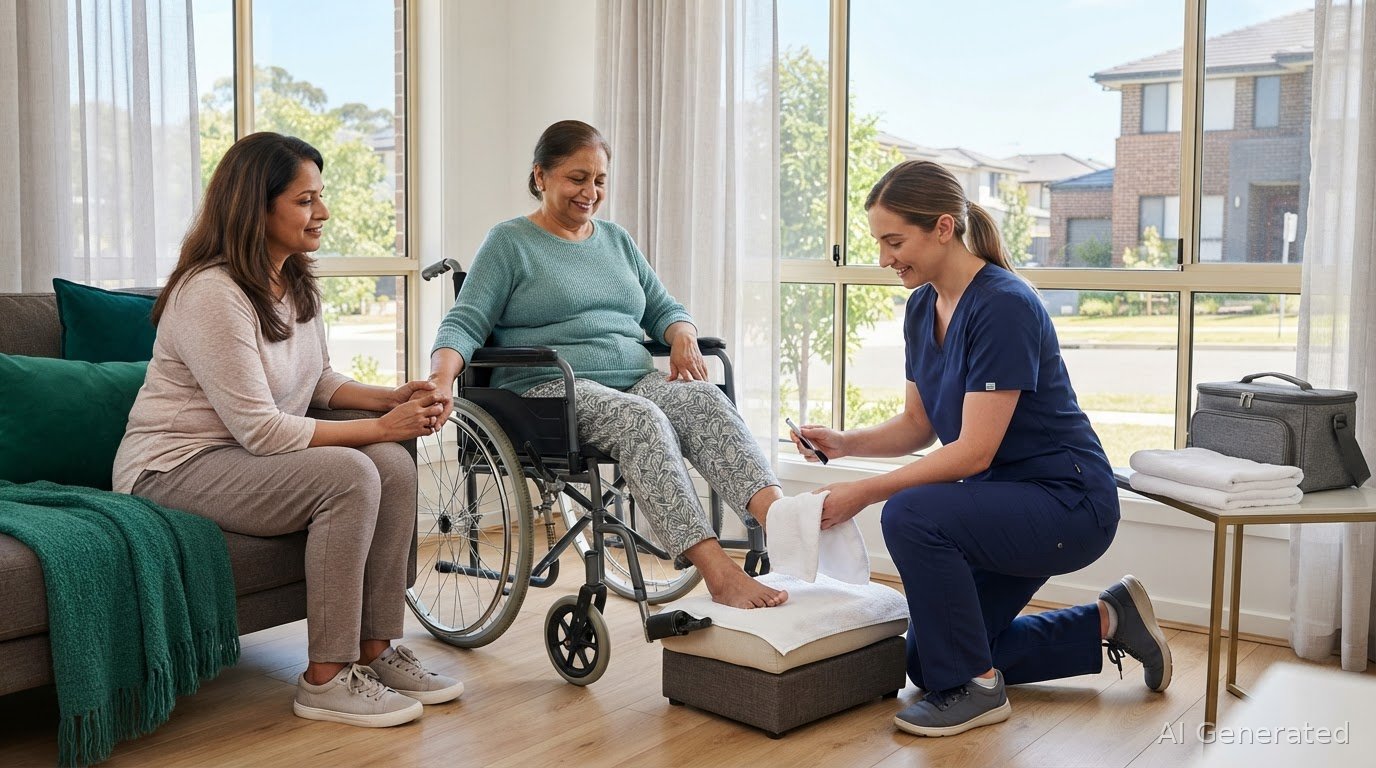
What if foot care started with the person’s access needs, rather than a difficult trip to a clinic? For someone searching for “at home foot care for disabled person Bankstown”, a podiatrist home visit can bring professional assessment and care to a familiar setting. Travel may be tiring or inaccessible, and checking feet independently isn’t always possible. Family members and support people may also be unsure when to seek podiatry advice.
Good home foot care is tailored to the individual, their comfort and their mobility goals. Active Footcare provides podiatrist home visits in Bankstown, as well as NDIS podiatry services and diabetes foot assessments. A home appointment makes it possible to discuss concerns and foot-care needs without travelling to a clinic.
This guide explains when professional podiatry may help, what to expect during a home visit and how to prepare the space and share useful information. It also covers practical ways to decide whether home care suits the person’s needs.
Key Takeaways
- Learn how travel, transfers and clinic surroundings can affect access to foot care, and when a home assessment may be a practical option.
- See what a podiatrist may consider during an individual assessment, including foot health, mobility and relevant health history.
- Compare travel, privacy, support needs and comfort when deciding whether at home foot care for disabled person Bankstown may suit your circumstances.
- Prepare for a home visit by arranging a comfortable, well-lit space and noting concerns or health details to discuss.
- Find out how Active Footcare’s home visits, NDIS podiatry and diabetes foot assessments can support care tailored to the person’s needs.
When Home Foot Care Helps for Disability in Bankstown
Travel, transfers and unfamiliar clinic surroundings can make routine foot care harder for some people with disability. Arranging transport may take extra planning, the journey can be tiring, or noise and sensory demands may affect comfort. A home visit offers another way to access professional care in a familiar setting that can be adapted to the person’s needs.
Home podiatry is professional foot assessment and care provided in a person’s home, with the practical aim of making podiatry more accessible. The podiatrist can discuss concerns and assess foot health while considering the person’s mobility, communication preferences and support needs. For a general overview of the profession and the conditions it addresses, see What is Podiatry?
What can make clinic-based foot care difficult?
Access barriers vary from person to person. Someone may find walking from a vehicle challenging, need assistance with transfers, or feel fatigued by travel. Communication differences, busy waiting areas, bright lights or other sensory factors can also affect comfort. A support person may help explain preferences or share relevant details, with the person’s consent. The right adjustments depend on the individual, not a diagnosis or assumption.
Which foot concerns may benefit from professional assessment?
A podiatrist can assess concerns such as foot pain, changes to the skin or nails, pressure areas, or difficulty managing regular foot care safely. An assessment can also help clarify what support may suit the person’s everyday needs and mobility goals. It’s sensible to seek advice about a new or worsening concern rather than trying to identify its cause from symptoms alone.
Diabetes can make regular attention to foot changes especially important. A diabetes foot assessment provides an opportunity for professional review, but it doesn’t mean every change signals a serious problem. If a concern is severe, worsening quickly or seems urgent, seek prompt medical attention rather than waiting for a routine podiatry visit.
There isn’t one standard care plan for disability. Someone who can inspect their feet but struggles with transport may need a different approach from someone who needs help communicating discomfort or positioning safely. For people looking for at home foot care for disabled person Bankstown, Active Footcare’s home visits provide a way to discuss individual concerns and receive tailored podiatry care without travelling to a clinic.
What happens during a Bankstown home podiatry assessment?
A home assessment is an individual conversation and clinical review, not a fixed sequence of procedures. The podiatrist listens to the person’s concerns and asks what they would like help with, then considers relevant health history, foot health, mobility and day-to-day routines. This helps focus the appointment on the person’s needs before discussing suitable next steps.
A tailored podiatry assessment connects what the person is experiencing with their foot health, mobility and goals, helping guide a care plan that fits their circumstances. The observations or clinical checks depend on the person and the concerns being discussed. An assessment doesn’t mean every possible test or treatment will be needed.
How can a podiatrist tailor the visit to the person?
The person can share access requirements before or during the appointment, such as preferred ways to communicate, a need for extra time to process information, or how they feel most comfortable being positioned. The podiatrist can adapt explanations and pacing to support understanding and comfort. If a support person is involved, their role should follow the person’s consent and preferences, with the person included in decisions wherever possible.
What foot-health areas might the assessment cover?
Depending on the concern, the podiatrist may consider skin and nail changes, pain, areas of pressure, footwear and how foot symptoms affect movement. These observations are considered in context, rather than treated as a checklist that applies to everyone. A person living with diabetes may benefit from a diabetes foot assessment, where relevant concerns can be discussed as part of a professional review.
General foot-care advice or a self-check can help someone notice changes, but neither replaces an individual clinical assessment. For context on how routine foot care is described in another health system, the US CMS Guidelines for Routine Foot Care outline Medicare coverage criteria. They aren’t Australian clinical or funding guidance, so they shouldn’t be used to determine care or funding in Bankstown.
Before the appointment, note the main concerns, relevant health information and communication preferences. If a home visit would make professional podiatry easier to access, explore Active Footcare home visits for tailored care in Bankstown.
How to decide whether home foot care suits your needs in Bankstown
Choosing between a home visit and a clinic appointment means considering what makes care accessible and comfortable for the individual. Disability doesn’t automatically prevent meaningful, person-led podiatry, and it doesn’t mean every appointment needs to happen at home. Weigh the person’s preferences alongside practical access and the reason for seeking care.
Travel access
Home visit: May be easier if transport, transfers or the journey itself are difficult or tiring.
Clinic: May suit someone who can get there comfortably and prefers attending a clinic.
Privacy and surroundings
Home visit: Care takes place in familiar surroundings, which may feel more private or comfortable for some people.
Clinic: A clinic setting may suit someone who prefers to separate appointments from home life.
Support and communication
Home visit: It may be easier to involve a support person who is already present, with the person’s consent.
Clinic: The person may prefer the appointment environment or communication arrangements available there.
What practical needs should guide the decision?
Consider how the person manages transport and mobility, whether travel causes fatigue, what communication approach helps, and what support is available during an appointment. Ask the person what setting feels comfortable and how they want to be involved in decisions. These preferences matter alongside the clinical concern. Don’t assume a diagnosis tells you what adjustments someone needs; the person’s own experience is the best starting point.
How can NDIS considerations fit into the decision?
For someone using NDIS supports, plan details and funding arrangements depend on their individual circumstances. A home visit shouldn’t be assumed to be automatically covered, and eligibility or funding can’t be guaranteed. Consider the person’s goals and plan information when thinking through arrangements. Active Footcare provides NDIS podiatry services, with care tailored to the individual’s needs. The resource NDIS Mobile Podiatry: Guide to Home Therapy Services offers broader context on mobile podiatry and NDIS supports.
For people considering at home foot care for disabled person Bankstown, weigh access, comfort and support needs together. The setting should help the person take part in podiatry care in a way that suits them, rather than being chosen based on assumptions about disability.
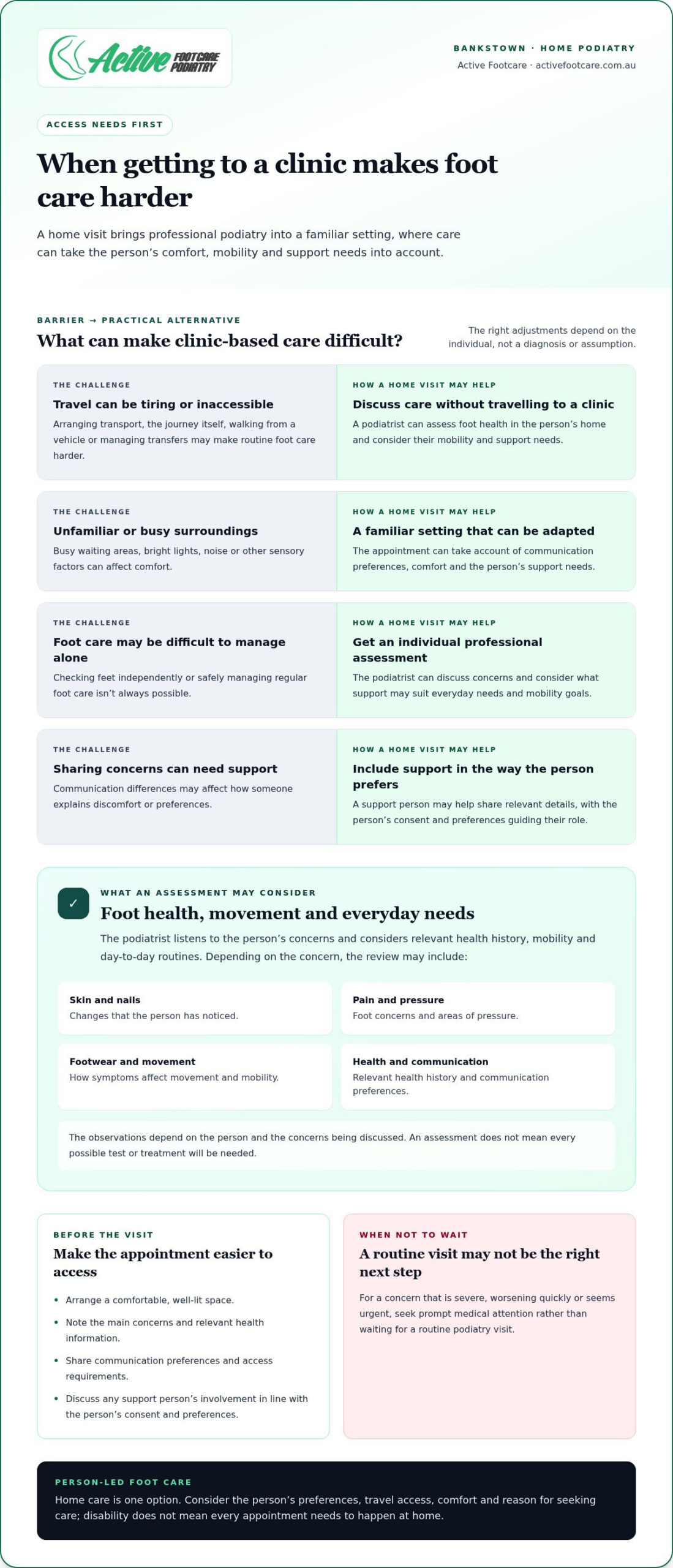
Preparing for an Accessible Home Foot Care Visit
A little preparation can help the person feel settled and make it easier to focus on their foot-care concerns. It doesn’t need to be elaborate. Adapt this checklist to the person’s routine, access needs and preferences.
- 1. Choose a suitable space. Set up somewhere comfortable, private and well lit, with enough room for the person and podiatrist. Consider how the person can be positioned safely, and keep any mobility aids they use within reach.
- 2. Gather useful information. If practical, have relevant health details and medication information available. Note the main foot concern, when it began and any changes the person has noticed.
- 3. Share access preferences. Consider what helps with communication, sensory comfort, positioning or breaks. The person can share these preferences themselves or decide how a support person can help.
- 4. Keep the person involved. Ask what they’d like to discuss and how they want the appointment to proceed. Preparation should support their choices, not make decisions on their behalf.
What information may be useful before the appointment?
A brief note can help. For example, record where discomfort is felt, when it started and whether it has changed. Include relevant health conditions, such as diabetes, and any current concerns about the skin, nails or routine foot care. There’s no need to interpret symptoms or arrive with a diagnosis. Sharing what the person has noticed gives the podiatrist useful context for an individual assessment.
It can also help to describe practical access needs specifically. For instance, note a preferred way to communicate, whether the person needs time to process questions, or what makes positioning comfortable. These details help the podiatrist approach the visit with consideration rather than assumptions.
How can carers support without taking over?
Start by asking the person how they’d like you to participate. They may want help organising health information, a quiet presence, or support explaining a concern. During the visit, allow time for the person to respond and direct questions to them wherever possible. Their consent and preferences should guide the carer’s involvement.
For a broader overview of what a home appointment may involve, see Podiatrist Home Visit Sydney: Professional Foot Care at Your Doorstep (2026). If you’re preparing for at home foot care for disabled person Bankstown, Active Footcare’s podiatrist home visits offer a practical way to access tailored care in a familiar setting.
Arrange tailored home podiatry care in Bankstown with Active Foot Care
For a person with disability, getting to a clinic can make routine foot care harder to organise. Active Foot Care provides podiatrist home visits in Bankstown, bringing professional podiatry into the person’s home. This can be a practical option for people who find travel difficult, including those managing foot concerns alongside mobility limitations.
Care starts with understanding the person, not assuming what they need based on disability. The podiatrist considers the concerns raised, relevant health information and the person’s access preferences before guiding appropriate care. Active Foot Care also provides NDIS podiatry services and diabetes foot assessments. These services may be relevant to some people, but funding and plan arrangements depend on individual circumstances, and outcomes can’t be guaranteed.
Who may benefit from discussing a home visit?
Bankstown residents, family members and support people can consider a home visit when transport, transfers, fatigue or other access needs make clinic travel challenging. It may also suit someone who feels more comfortable discussing foot health at home. The person’s preferences should guide the conversation, with support people involved in the way the person chooses. The podiatrist can consider the clinical concerns and individual circumstances when discussing care.
Older readers and their families may also find Podiatry Services for Aged Care: Senior Foot Health Guide useful for broader information about foot health and podiatry in later life.
What is the next step for Bankstown residents?
Start by noting the main concern and any access or communication preferences the person would like considered. Sharing these details helps the podiatrist understand what matters to the person and guide next steps after considering their circumstances. If NDIS supports are relevant, the person or their support network can also have their individual plan information available for discussion. This doesn’t establish eligibility or guarantee funding.
For at home foot care for disabled person Bankstown, a home visit offers a way to discuss foot health without making clinic travel the first hurdle. Explore Active Foot Care’s home podiatry visits and arrange a conversation about home podiatry care.
Take the next step towards accessible foot care
Where podiatry happens should reflect the person’s access needs, preferences and clinical concerns. A home visit may make care easier to organise when travel or transfers are difficult, while an individual assessment helps the podiatrist understand what support may be appropriate. A comfortable space, relevant health information and the person’s preferred communication approach can help the visit feel more manageable.
For people seeking at home foot care for disabled person Bankstown, Active Footcare provides podiatrist home visits, NDIS podiatry services and diabetes foot assessments. Any care plan is guided by the individual’s circumstances and assessment, and NDIS funding depends on personal plan arrangements.
Explore Active Footcare home visits to learn more about accessing podiatry in a familiar setting. A thoughtful first conversation can help clarify the person’s needs and a suitable way forward. Active Footcare serves Bankstown, Liverpool, Moorebank, Sydney and Campbelltown.
Frequently Asked Questions
Can a disabled person in Bankstown see a podiatrist at home?
Yes. Active Footcare provides podiatrist home visits for people who need foot care at home. If you’re looking for “at home foot care for disabled person Bankstown”, a home visit can make professional podiatry more accessible when travel is difficult. The podiatrist considers the person’s concerns and circumstances when discussing care. A family member or support person can help communicate preferences if the person wants them involved. Active Footcare also serves local areas including Liverpool, Moorebank, Sydney and Campbelltown.
What happens during a home podiatry visit?
A home visit gives the podiatrist an opportunity to discuss the person’s concerns and assess relevant foot-health needs. The assessment and any care recommendations depend on the individual, so a particular test or treatment shouldn’t be assumed in advance. Sharing relevant health information, current concerns and access preferences can help make the appointment more useful. The person should remain involved in decisions wherever possible, with any support-person involvement guided by their consent.
Is home podiatry suitable for someone with limited mobility?
It may be a practical option if mobility, transport or fatigue makes getting to a clinic difficult. The best setting depends on the person’s preferences and clinical needs, so a home visit isn’t automatically right for everyone. Disability doesn’t prevent person-led podiatry care. A podiatrist can listen to the individual’s concerns and assess their circumstances before discussing what care may be appropriate.
Can NDIS funding pay for home podiatry in Bankstown?
NDIS funding depends on the person’s plan, circumstances and applicable funding arrangements. Don’t assume every podiatry appointment or home visit is covered automatically. Active Footcare provides NDIS podiatry services, and the person’s care needs can be discussed in that context. Review the current plan and relevant NDIS guidance when considering funding. Plan details vary, so funding or eligibility shouldn’t be presumed.
How should I prepare for a podiatrist home visit?
Choose a comfortable, well-lit space where the person can be positioned safely. If practical, have relevant health information and medication details ready, along with a short note about the foot concern and any changes noticed. Share mobility, communication or sensory preferences so the visit can be approached with care. Ask the person how they’d like a support person involved, and adapt preparation to what feels manageable for them.
What foot changes should prompt professional attention?
New or worsening pain, broken skin, swelling, redness, a wound or a change in sensation should be assessed, particularly for someone living with diabetes. A podiatrist can review the concern and advise on appropriate care, but symptoms alone can’t establish a diagnosis. Seek urgent medical attention for a serious or rapidly worsening problem. Don’t rely on a home foot-care routine to diagnose or treat an injury.
Can a carer attend a home podiatry appointment?
Yes, a carer or support person can be involved if the person wants their support. They may help organise relevant information, explain preferences or assist with practical preparation. The person receiving care should remain central to the conversation and decisions wherever possible. Before the visit, ask what involvement would feel comfortable, then follow the person’s lead and respect their consent throughout.