

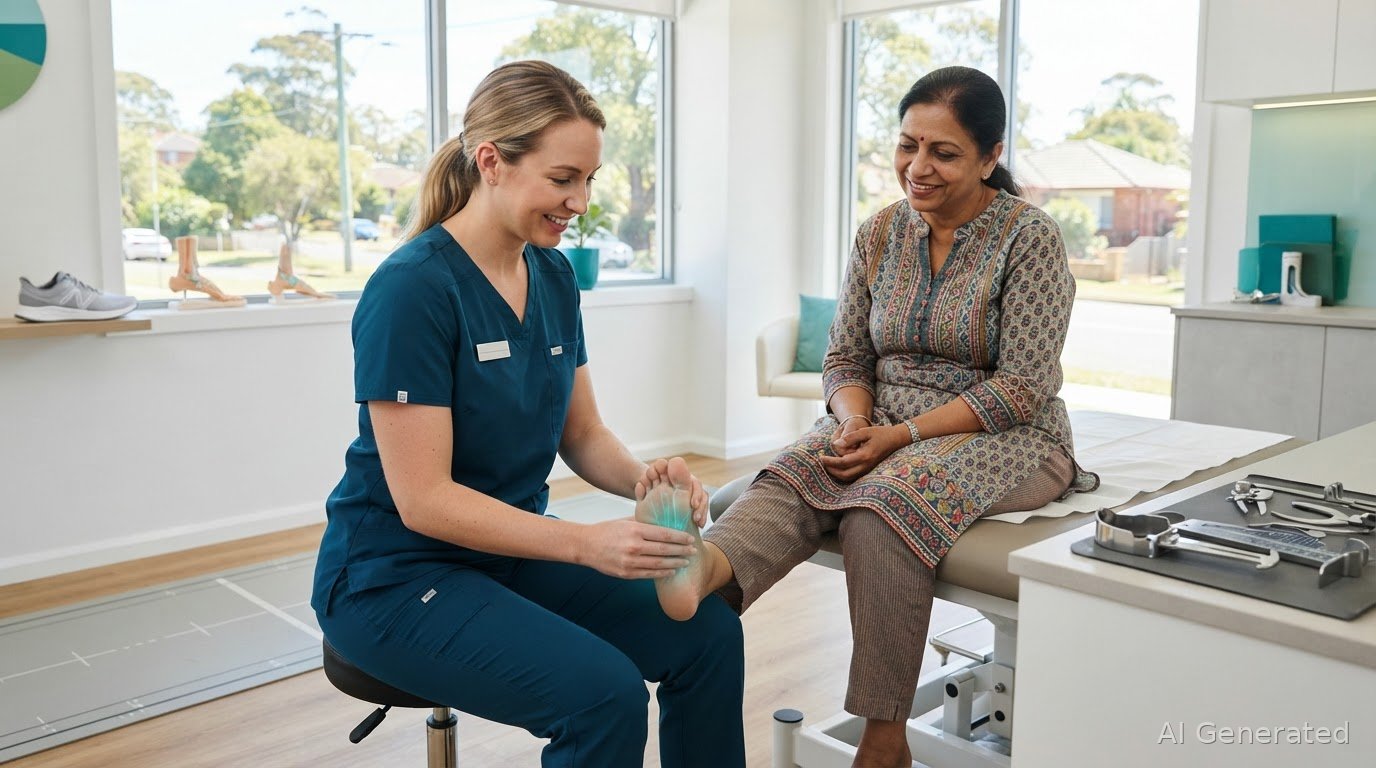
Could burning or sharp pain near your toes be caused by something other than a neuroma? If you’re searching for a Morton’s neuroma specialist Campbelltown, it helps to know that several foot conditions can cause similar forefoot symptoms. A careful assessment can help clarify what may be behind your discomfort before you consider treatment.
It’s understandable to want answers when walking or wearing your usual shoes has become uncomfortable. A podiatrist can ask when the pain started, assess your foot and movement, and explain whether your symptoms fit Morton’s neuroma or may have another cause. The next step should reflect your symptoms, mobility and circumstances, as no single care option suits everyone.
This guide explains what to expect from a podiatry assessment in Campbelltown, how footwear changes and custom orthotics may be considered, and how gait analysis can inform care. It also covers home visits for people who find travelling difficult, helping you make a more informed decision about seeking support.
Key Takeaways
- Burning, tingling or a pebble-like feeling beneath the forefoot can have different causes, so symptoms alone may not confirm a neuroma.
- A podiatry assessment considers your symptom history, footwear and activity alongside clinical findings to guide appropriate next steps.
- Footwear and activity adjustments may be discussed, while custom orthotics are considered when assessment suggests they may suit your foot mechanics.
- Before your appointment, note when the discomfort began, what affects it and how it changes your walking.
- A Morton’s neuroma specialist Campbelltown search can be a starting point for finding podiatry care tailored to your needs, including a home visit if travelling is difficult.
Morton’s neuroma in Campbelltown: what the pain may feel like
A sore or burning forefoot can make each step uncomfortable, but the sensation doesn’t automatically mean you have a neuroma. Morton’s neuroma refers to irritation and thickening of tissue around a nerve between the toes, often in the ball of the foot. The nerve can become sensitive, causing pain or unusual sensations that may come and go or become more noticeable during certain activities.
A suspected neuroma is a possible explanation for symptoms, not a confirmed diagnosis. Burning, tingling or a pebble-like feeling can fit the pattern, but other forefoot conditions can feel similar. A podiatrist considers your account of the pain alongside foot function and assessment findings before discussing possible causes. For a general overview of Morton’s neuroma, including its symptoms and diagnosis, see the linked reference.
Which symptoms can point to a Morton’s neuroma?
People often describe discomfort beneath the ball of the foot, commonly between two toes. It may feel like sharp or burning pain, tingling, numbness, or as though a small pebble is stuck inside the shoe. Some people notice it more in snug footwear or after prolonged walking, and it may ease when they stop or remove their shoes. These patterns can offer useful clues, but they don’t prove a neuroma is present.
Pay attention to where the sensation starts and whether it spreads into the toes. Symptoms can vary between people and may change with footwear, activity or time on your feet. If walking has become difficult, describe how it affects you during an assessment. A clear account of what you feel helps a Morton’s neuroma specialist Campbelltown search lead towards an informed assessment, rather than a decision based on a symptom checklist alone.
When forefoot pain may have another cause
Metatarsalgia is a broad term for pain in the ball of the foot. It can describe discomfort in the same general area as a suspected neuroma, but it doesn’t identify one specific cause. Problems affecting joints, soft tissues or toes can also contribute to forefoot pain. Because the location and quality of discomfort may overlap, a particular sensation by itself can’t reliably distinguish these conditions.
A podiatrist considers the full picture: when the pain began, which activities affect it, where it’s felt and how your foot moves. They can discuss your footwear and examine your foot, interpreting findings alongside your symptoms rather than in isolation. This can help clarify which explanations may fit and what further assessment or care could be appropriate. Sharing exactly where the pain occurs helps keep the conversation focused and practical.
How a Campbelltown podiatrist assesses suspected Morton’s neuroma
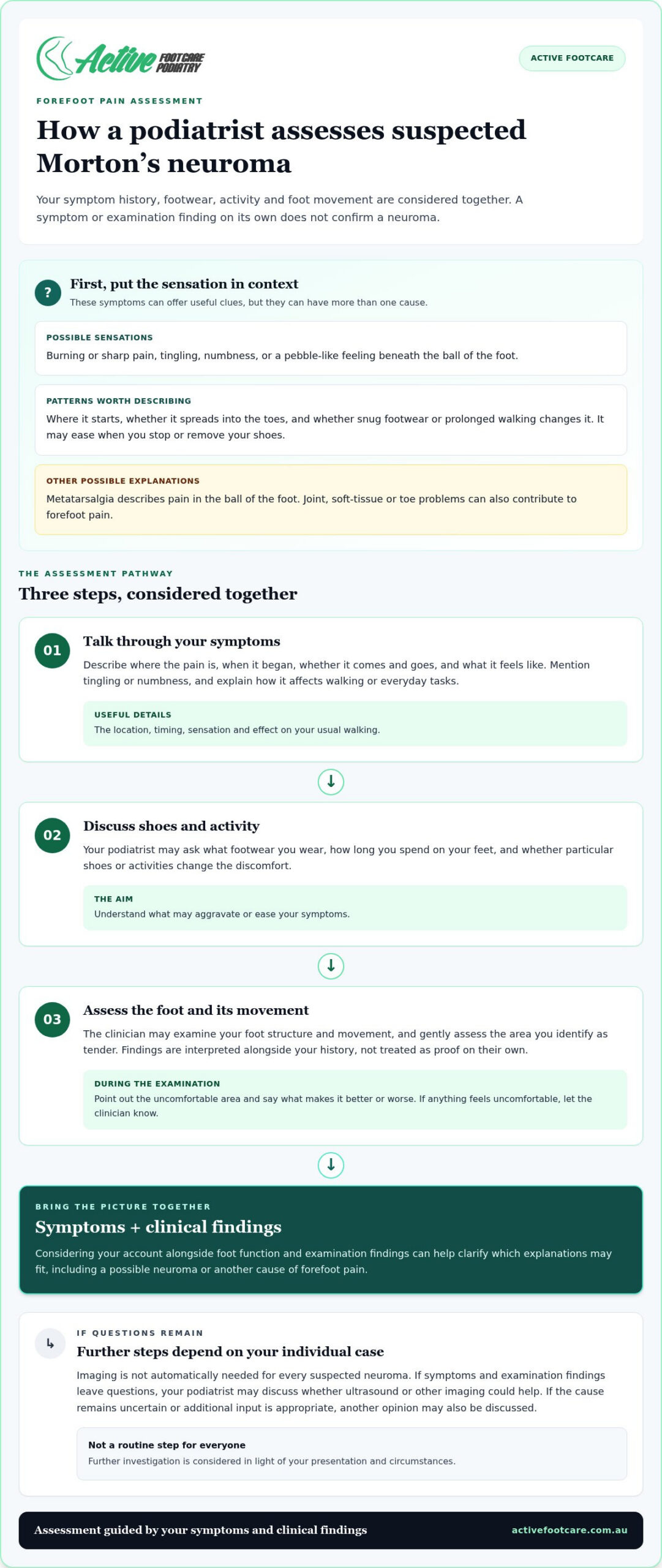
An assessment is a conversation and examination, not a decision based on one symptom or isolated finding. A Campbelltown podiatrist first learns how the discomfort affects you, then considers your footwear and daily activities before examining your foot. This puts possible signs of a neuroma into context and helps consider other explanations for forefoot pain.
- Talk through your symptoms. Describe where the pain is, when it began, whether it comes and goes, and what it feels like. Mention any tingling or numbness, and explain how it affects walking or everyday tasks.
- Discuss shoes and activity. Your podiatrist may ask what footwear you wear, how long you spend on your feet and whether particular shoes or activities change the discomfort. These details can help identify what may aggravate or ease your symptoms.
- Assess the foot and its movement. The clinician may examine foot structure, movement and the area you identify as tender. Findings are considered alongside your history, rather than treated as proof on their own.
Assessment brings your symptoms and clinical findings together to help distinguish a possible neuroma from other causes of forefoot pain. The Mayo Clinic overview of Morton neuroma symptoms and treatments also describes why symptoms and assessment matter. Your podiatrist can explain what the examination suggests and discuss practical next steps without assuming one test or treatment suits everyone.
What happens during the clinical examination?
Expect questions about the pain’s location and timing, the shoes and activities involved, and any changes to your usual walking. Point to the area that feels uncomfortable and describe what tends to make it better or worse. The podiatrist may look at foot structure and movement and gently assess the tender area. The examination is guided by your individual presentation.
If something feels uncomfortable during the assessment, say so. This helps the clinician understand your experience and interpret findings carefully.
When imaging or another opinion may be considered
Imaging isn’t automatically needed for every suspected neuroma. If your symptoms and examination findings leave questions, the podiatrist may discuss whether ultrasound or other imaging could help clarify the picture. Further investigation depends on the individual case, rather than being a routine step for everyone.
If the cause remains uncertain or your presentation calls for additional input, the clinician can discuss whether another opinion is appropriate. The aim is to make the next step relevant to your circumstances, rather than pursue investigation without a clear reason.
If forefoot pain is affecting your mobility, an individual assessment can help you understand the options available. You can explore Active Footcare podiatry care as a practical starting point for discussing your symptoms and suitable next steps.
Comparing Morton’s neuroma care options before choosing a plan
Care for suspected Morton’s neuroma doesn’t have to begin with an invasive procedure. The next step depends on your symptoms, assessment findings and how the pain affects daily life. A podiatrist can help you weigh practical changes against clinician-guided options, then review how things are going. If you’re looking for a Morton’s neuroma specialist Campbelltown, focus on an individual plan rather than assuming one approach works for everyone.
The options below are discussion points, not a treatment prescription. The MedlinePlus overview of Morton neuroma causes and diagnosis also outlines diagnosis and treatment considerations.
| Option | Purpose | Who may discuss it | Useful discussion point |
|---|---|---|---|
| Footwear changes | Reduce pressure around the forefoot | People whose shoes feel tight or aggravate symptoms | Which shoes give the toes more room? |
| Activity adjustments | Modify activities that bring on discomfort | People who notice symptoms during particular tasks | Can activity be adjusted while maintaining comfortable movement? |
| Custom orthotics | Address foot mechanics when relevant | People whose assessment suggests they may be suitable | What did the assessment show about foot function? |
| Further review or referral | Reconsider the cause or discuss other care | People with persistent or worsening symptoms | What findings support the next step? |
Conservative care: footwear, activity and orthotics
A practical starting point may be to consider footwear that gives the forefoot more room, alongside changes to activities that seem to increase pressure or discomfort. These are measures to discuss, not guarantees of relief. Note which shoes or activities affect your symptoms so your podiatrist can help you decide what adjustments are realistic for your routine.
When further treatment discussion may be appropriate
If discomfort persists, worsens or continues to limit walking, arrange a review of the working diagnosis and current plan with a clinician. A change in symptoms may prompt a fresh assessment of what’s contributing to the pain and whether another approach should be considered. Decisions should reflect your individual presentation, rather than repeat a plan that isn’t meeting your needs.
A suspected neuroma doesn’t automatically mean surgery. Referral or procedural options are decisions for an appropriately qualified clinician to assess, based on your symptoms, examination findings and response to care. Ask what the proposed next step is intended to address, what alternatives may be suitable and how progress will be reviewed. Clear answers can help you make an informed choice without feeling rushed into escalation.
Preparing for a Morton’s neuroma appointment in Campbelltown
A little preparation can make your appointment more focused. You don’t need to work out the cause of the pain or test your foot yourself. Instead, gather a few details about what you’ve noticed and how it affects your day. Your podiatrist can use this information to guide the examination and discuss next steps that suit your needs.
What to bring and note before your visit
A short note on your phone or a few points on paper is enough. Include when the discomfort began, where you feel it and whether it has changed over time. Describe what you were doing when you first noticed it, and how it affects walking, work or activities you enjoy. If symptoms vary, note what seems to ease or aggravate them.
- Symptom timeline: When it started and whether it is occasional, ongoing or changing.
- Painful activities: Tasks, exercise or time spent on your feet that affect your comfort.
- Footwear: The shoes you wear most often and any that seem to put pressure on the forefoot. Bring a commonly worn pair if you think it may help show how the shoes fit.
- Relevant health information: Health conditions, previous foot concerns or other details you think may be useful for your care.
- Walking changes: Any adjustments you’ve made, such as avoiding certain activities or putting less weight on one part of the foot.
There’s no need to provoke the pain with a particular movement before your visit. Simply describe what you’ve already experienced. These observations can help the podiatrist understand your concerns and decide what to examine.
Choosing a clinic visit or home visit
Think about what will make attending manageable. A clinic appointment may suit you if travelling is comfortable and you can get there easily. If pain, mobility limitations, transport or the effort of leaving home makes a visit difficult, a home appointment may be more practical. Active Footcare provides podiatry care in clinics and patients’ homes in Campbelltown, as well as across Liverpool, Bankstown, Moorebank and Sydney.
When comparing these settings, consider which option feels accessible and comfortable for your circumstances. A Morton’s neuroma specialist Campbelltown search can help you find local podiatry care, but choosing a practical appointment setting is also part of planning your next step.
Seek timely medical assessment if you develop sudden, severe symptoms or have a significant foot injury. These situations need prompt attention rather than waiting for a routine appointment.
If you’re ready to discuss your forefoot symptoms and a suitable appointment option, explore podiatry care with Active Footcare.
Morton’s neuroma care in Campbelltown: your next step with Active Footcare
Forefoot pain can leave you uncertain about what’s causing it and whether you need to change your routine. An individual podiatry assessment is a practical place to start. It gives you space to explain what you’ve noticed, have your foot and movement assessed, and discuss what the findings may mean. The aim is to make the next step clearer, not to assume a diagnosis or prescribe the same plan for everyone.
How Active Foot Care can support your foot health
Active Foot Care provides friendly, tailored podiatry care in Campbelltown, Liverpool, Bankstown, Moorebank and Sydney. Your podiatrist can consider how symptoms affect daily activities and mobility, then discuss suitable care in light of your needs. If foot mechanics are relevant, gait analysis may help inform the assessment. Custom orthotics may also be considered if clinically appropriate, rather than treated as a standard answer for everyone with forefoot pain.
Bring your questions and let the podiatrist know what you hope to get back to, whether that’s walking more comfortably, managing day-to-day tasks or returning to an activity. A useful conversation can cover what the assessment suggests, which options may be reasonable to consider and how your experience can guide follow-up. You can take time to understand the proposed next step and how it relates to your circumstances.
Arrange a podiatry appointment in the Campbelltown area
Consider what will make care easiest to access. If travelling to an appointment is manageable, an in-clinic visit may suit you. If mobility, transport or another circumstance makes getting out difficult, Active Foot Care also provides podiatry home visits in Campbelltown, Liverpool, Bankstown, Moorebank and Sydney. The appointment setting can be part of a practical plan, especially if getting to a clinic adds strain when you’re already dealing with foot discomfort.
Before your appointment, note when the pain began, what tends to affect it and how it changes your walking. You don’t need to arrive with a diagnosis or treatment decision already made. Those details give your podiatrist a helpful starting point for understanding your concerns and talking through appropriate options.
If you’re searching for a Morton’s neuroma specialist Campbelltown, Active Foot Care can help you take a considered next step with podiatry care shaped around your assessment. Arrange a podiatry appointment with Active Foot Care to discuss your symptoms and whether an in-clinic or home visit may suit your circumstances.
Take a considered next step towards comfortable movement
Forefoot pain can make everyday choices, from a walk to the shops to picking your shoes, feel harder than they should. You don’t need to decide what’s causing it or choose a treatment on your own. A conversation with a podiatrist can help you understand what to consider next and which questions matter for your circumstances.
If you’re searching for a Morton’s neuroma specialist Campbelltown, look for an assessment that gives you room to explain how the discomfort affects your life and discuss suitable options without pressure. At Active Footcare, care is led by Principal Podiatrist Dr Maher Said, with attention to your concerns and individual needs. The first step is to talk through what you’ve noticed and what you’d like to do more comfortably.
Arrange a podiatry appointment with Active Footcare to discuss your foot concerns and a practical next step. With clear guidance, you can move forward at a pace that feels right for you.
Frequently Asked Questions
Can Morton’s neuroma go away on its own?
Symptoms may ease, but that doesn’t confirm the underlying cause has resolved. Discomfort can fluctuate with footwear and activity, so a quieter period may not mean the problem won’t return. If pain keeps coming back, limits your usual walking or starts affecting everyday tasks, arrange an assessment to discuss what may be contributing and whether any changes are appropriate for you.
Is an ultrasound always needed to diagnose Morton’s neuroma?
No. Ultrasound isn’t automatically required; a podiatrist may first consider your symptoms and clinical examination. Imaging may be discussed if there’s uncertainty or another explanation needs consideration. If it’s suggested, ask what information the scan could add and how the result may influence your care. The decision should relate to your presentation, rather than follow a routine rule that every suspected neuroma needs imaging.
Can walking make Morton’s neuroma symptoms worse?
It can, although the effect varies from person to person. A long walk, repeated time on your feet or a particular type of surface may bring on discomfort or make it more noticeable afterwards. Rather than testing your limits, keep a simple note of how far you walked, what you wore and how your foot felt later. This can help identify patterns to discuss during an assessment.
What shoes may feel more comfortable with suspected Morton’s neuroma?
Shoes with a roomy front and enough width for your toes may feel more comfortable than narrow or pointed styles. Some people also find that a lower heel puts less pressure on the forefoot than high heels. Comfort is individual, so don’t assume a particular shoe will treat the cause. If changing footwear doesn’t help or your pain increases, discuss suitable options with a podiatrist.
Does Morton’s neuroma always need surgery?
No. A suspected neuroma doesn’t automatically mean surgery is needed. The appropriate approach depends on the assessment, how symptoms affect you and how they respond to care. If an invasive option is raised, ask why it’s being considered, what alternatives may be available and what the decision involves. A clinician can explain whether further assessment or referral is appropriate for your circumstances.
Can a podiatrist assess suspected Morton’s neuroma?
Yes. A podiatrist can discuss your symptoms, examine your foot and consider how movement and daily activities relate to the discomfort. They can explain what the findings may indicate and whether further investigation or another opinion should be considered. If you’re searching for a Morton’s neuroma specialist Campbelltown, Active Footcare provides podiatry care in the area, guided by your individual needs.
When should forefoot pain be assessed urgently?
Seek urgent medical assessment for sudden, severe foot pain, a significant injury or difficulty bearing weight. Prompt attention is also sensible if the foot becomes markedly red, hot or swollen, particularly if you feel unwell or have a fever. These signs need timely assessment rather than waiting for a routine podiatry appointment. For a life-threatening emergency in Australia, call 000.