

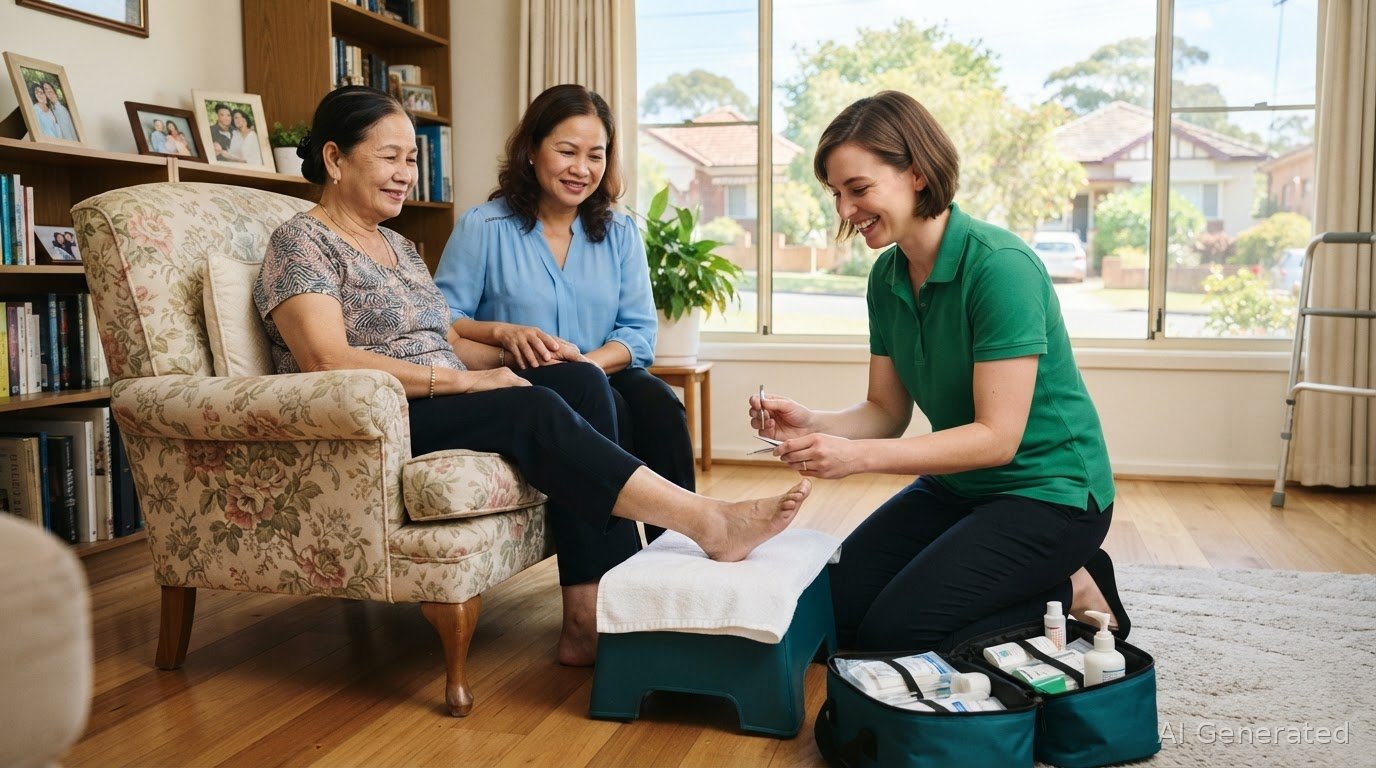
What if professional foot care could come to you, instead of making a tiring trip across Bankstown? If you’re looking into local podiatry home visits Bankstown, it helps to understand what a podiatrist can assess at home and how care can be shaped around your comfort, mobility and health needs. A home visit can make it easier to discuss foot concerns in familiar surroundings, without the strain of travelling to an appointment.
Choosing the right care is about more than convenience. You’ll want a podiatrist who understands your needs, explains the assessment clearly and outlines practical next steps. Active Foot Care provides podiatrist home visits in Bankstown, led by Principal Podiatrist Dr Maher Said. This article covers what a home visit may involve, what details and access arrangements to prepare, and how diabetes, NDIS or mobility needs can inform your care. A little preparation can help you and your carer approach the appointment with confidence and a clearer idea of how foot care may support comfort and movement.
Key Takeaways
- Learn how to decide whether a home setting better suits your mobility and practical needs than travelling to a clinic.
- See how your symptoms, health history and goals can guide an individual assessment and care plan.
- Prepare for your appointment by noting foot changes, gathering relevant health information and setting up a comfortable space.
- Explore what to consider when arranging local podiatry home visits Bankstown, including diabetes, NDIS and mobility needs.
- Find out how Active Footcare’s home visits can support personalised foot care in Bankstown.
When a Bankstown podiatry home visit may suit your needs
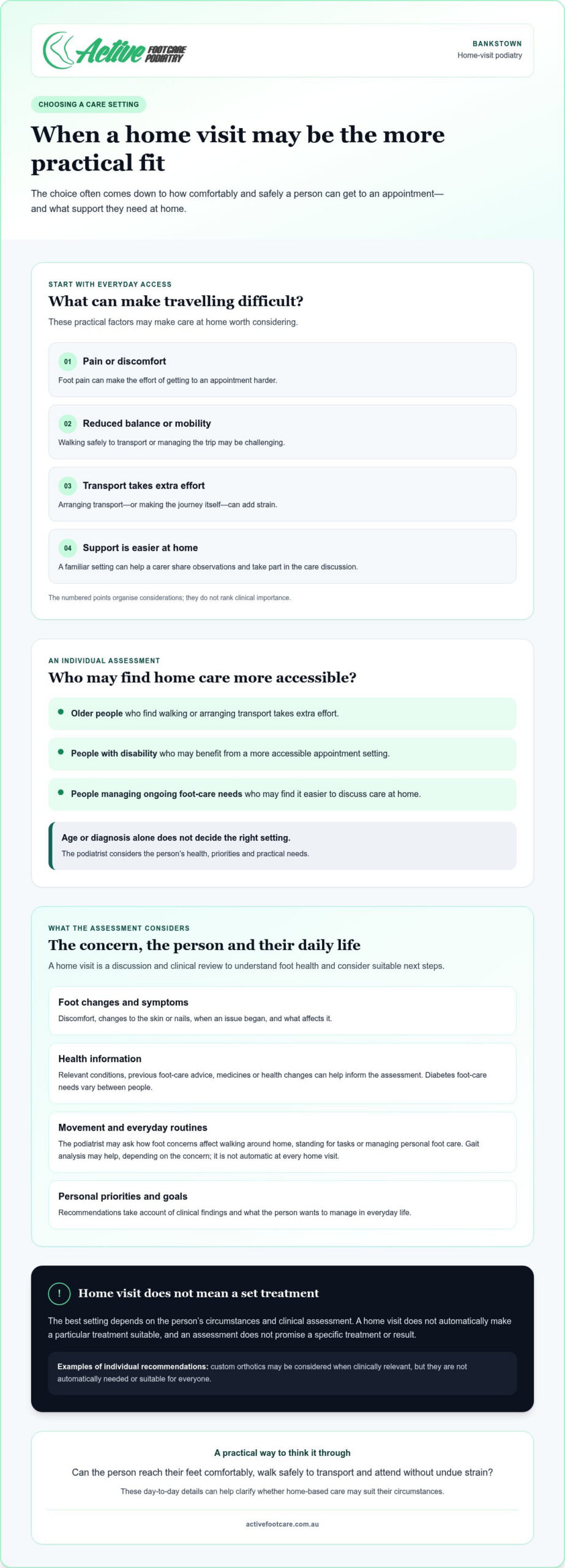
Travelling for foot care can be difficult or tiring for some Bankstown residents. Pain, reduced balance, limited mobility or the effort of arranging transport may make getting to an appointment a challenge. A podiatrist home visit brings professional foot care to you, making it easier to discuss concerns and receive an individual assessment without the extra trip.
Home-based care may be a practical option when leaving home is difficult, or when a patient and carer find it easier to discuss ongoing foot-care needs in familiar surroundings. The best setting depends on the person’s circumstances and the clinical assessment. A home visit does not automatically make a particular treatment suitable. The podiatrist considers the concern and recommends next steps for the individual.
Who may benefit from podiatry at home?
Older people, people with disability and patients managing ongoing foot-care needs may find home appointments more accessible, particularly if walking or arranging transport takes extra effort. Being at home can also make it easier for a carer to share relevant observations and follow the care discussion. Age or diagnosis alone does not determine the right care. The podiatrist considers the person’s health, priorities and practical needs.
What needs can a home visit help address?
A professional assessment can help clarify routine concerns such as discomfort, changes to the skin or nails, or difficulty caring for feet independently. The podiatrist can ask when the issue began, what affects it and how it influences everyday activities. This helps distinguish immediate concerns from longer-term foot-health goals.
Diabetes is another reason to seek individual podiatry advice, as foot-care needs vary between people. An assessment allows the podiatrist to understand relevant health information and discuss appropriate care, rather than relying on general advice alone. Active Footcare also provides diabetes foot assessments, with recommendations guided by the patient’s circumstances.
For a broader overview of the profession and its areas of practice, see Podiatry. If you’re considering care beyond Bankstown, Active Footcare’s Sydney home-visit podiatry guide explains the service in a wider local context.
Consider how the person manages day to day: can they reach their feet comfortably, walk safely to transport and attend an appointment without undue strain? These details can help you decide whether care at home may be a practical fit. The aim is to make professional foot care more accessible while keeping the assessment and care plan centred on the patient’s needs.
What to expect from a Bankstown podiatry home-visit assessment
A podiatry home-visit assessment is a discussion and clinical review of a person’s foot health, relevant history and goals, carried out at home to guide suitable care. It helps the podiatrist understand the concern and consider appropriate next steps. An assessment does not promise a particular treatment or result. Recommendations depend on what the clinician learns and observes.
For people considering local podiatry home visits Bankstown, knowing what informs the assessment can make the appointment clearer and more productive. The conversation gives you an opportunity to explain what has changed, what you hope to manage and how your feet affect everyday life.
How the podiatrist understands foot health and mobility
The podiatrist may ask where discomfort occurs, when it began and whether it changes with activity or rest. They’ll also want to understand how foot concerns affect daily routines, such as walking around the home, standing for tasks or managing personal foot care. Changes in comfort or mobility help put the concern in context.
Relevant health information helps guide the assessment. Sharing existing conditions, previous foot-care advice and any medicines or health changes that may be relevant can give the podiatrist a fuller picture. Depending on the concern, gait analysis may help assess how you move. It is not automatically part of every home visit. The American Podiatric Medical Association also provides general information about foot and ankle health and podiatric care.
How care recommendations are tailored
After considering the discussion and assessment findings, the podiatrist can explain what they’ve observed and outline practical recommendations for the individual. These may relate to managing the concern, supporting foot health or addressing how movement affects comfort. Your priorities matter too: advice should take account of what you want to do in everyday life, as well as the clinical findings.
Recommendations vary because people with similar symptoms can have different health histories and goals. Custom orthotics may be considered when clinically relevant, but they are not automatically needed or suitable for everyone. If orthotics are part of the discussion, the custom orthotics guide explains that topic in more detail.
A useful care discussion should leave you with a clearer understanding of the assessment, the reasons for any recommendations and what to do next. Ask the podiatrist to explain unfamiliar terms or how a suggestion relates to a particular daily activity. This shared understanding can help you and your carer make informed decisions without assuming that an assessment guarantees a specific outcome.
Active Footcare’s podiatrist home visits bring individual foot-care assessments to patients in Bankstown and the surrounding local area, with care guided by each person’s needs and goals.
Home visit or clinic appointment: choosing care that fits
Choosing between a home visit and a clinic appointment often starts with a practical question: which setting makes it easier for the person to access care and discuss their concerns? For some Bankstown residents, travelling may mean arranging transport, managing pain or getting support to move around. Others may find a clinic appointment more convenient. Neither setting is automatically right for everyone.
A home visit brings the podiatrist to you, while a clinic appointment involves travelling to the practice. The main difference is access and setting, not whether care should be thorough. In either case, the podiatrist needs to understand your symptoms, relevant health information and goals before making recommendations. Clinical need, not convenience alone, guides what care is appropriate.
When a home setting may make appointments easier
A home appointment may reduce the effort involved for someone with limited mobility, discomfort when walking or transport challenges. Familiar surroundings can also help a patient or carer explain everyday routines, such as where foot discomfort affects movement around the home or which tasks are difficult. This context can support a useful discussion, but it does not guarantee a particular clinical outcome.
When the care setting depends on the clinical need
The podiatrist’s assessment informs which recommendations are suitable and whether the appointment setting supports them. If your needs call for a different approach or environment, the podiatrist can explain the reasoning and discuss appropriate next steps. A home visit is a way to access care, not a promise that every type of assessment or treatment can be provided at home.
It’s understandable to wonder whether care at home can be as thorough as care in a clinic. The address alone does not determine the quality of an assessment. A careful clinical discussion focuses on your needs, the information available and the purpose of the appointment. The podiatrist uses clinical judgement to decide what can be assessed appropriately in that setting and what recommendations follow.
Consider the practical differences for the individual:
- Travel: A home visit avoids the trip, which may matter if walking, transport or organising support is difficult.
- Familiarity: At home, the patient can describe foot-care routines in the setting where they happen.
- Appointment needs: A clinic may suit someone who can travel comfortably, while the appropriate setting for a particular assessment depends on clinical judgement.
For people exploring local podiatry home visits Bankstown, the best fit is the setting that supports access while allowing the podiatrist to assess the concern appropriately. When arranging an appointment, explain any practical challenges and care goals. This helps keep the discussion focused on the person, not just the location.
How to prepare for a local podiatry home visit in Bankstown
A little preparation can help you make the most of your appointment and keep the conversation focused on what matters. You do not need to diagnose the problem or have every detail ready. A few notes about symptoms, health history and everyday goals can give the podiatrist useful context for an individual assessment.
Before the visit, work through these simple steps:
- Set an appointment goal. Note the main concern and what the patient hopes to discuss, such as foot discomfort, a change in walking or help with ongoing foot care.
- Write down what’s changed. Record where the concern occurs, when it began, what seems to affect it and how it influences daily activities or mobility.
- Gather relevant health information. Have useful medical-history details and a current medication list available. Include diabetes history where applicable, along with relevant health changes or previous foot-care advice.
- Prepare questions. Jot down anything the patient would like explained, including questions about foot care, footwear or mobility goals.
- Set up a comfortable space. Choose somewhere the patient can sit comfortably and talk without feeling rushed. Keep commonly worn footwear nearby if it relates to their concerns.
Your notes do not need to be formal. A short reminder on paper or a phone can help you describe patterns that might otherwise be forgotten during the appointment.
Information to have ready before the appointment
Be specific about the concern without worrying about clinical terms. For example, note whether discomfort is in one area or several, whether it changes during the day and whether walking or standing affects it. Relevant health information, including diabetes history where applicable, can help the podiatrist understand the wider context and guide the assessment.
Making the home visit comfortable and practical
Choose a space with a stable seat and enough room for the patient to feel settled while discussing their foot concerns. There’s no need to rearrange the whole home. If a carer or family member is attending, agree beforehand how they can support the conversation while keeping the patient’s preferences central.
A support person may help recall health details or take notes, but the patient should have the opportunity to describe their own concerns and ask questions wherever possible. If communication or movement needs affect what would make the appointment comfortable, consider these in advance and share relevant context during the discussion.
For anyone arranging local podiatry home visits Bankstown, preparation is about helping the podiatrist understand the person, not completing a checklist perfectly. Active Footcare provides individual podiatrist home visits in Bankstown, with assessments shaped around the patient’s needs and goals. Arrange an Active Footcare home visit to take the next step towards personalised foot care.
Choosing Active Footcare for Bankstown podiatry home visits
For people who find it difficult to travel for foot care, a home visit can make professional podiatry more accessible. Active Footcare provides podiatrist home visits in Bankstown and across its local service area, bringing care to the patient’s home. The focus is on understanding the person’s foot-health concerns and goals, then using an individual assessment to guide suitable recommendations.
Active Footcare is led by Principal Podiatrist Dr Maher Said. For patients and carers considering local podiatry home visits Bankstown, knowing who leads the practice can make the care process feel more personal and clear. The appointment is an opportunity to discuss what’s happening, ask questions and understand the reasons behind any recommendations, rather than expecting the same plan to suit everyone.
Local care shaped around the person
Foot concerns can affect people differently, even when they seem similar at first. You may want advice about a change in foot comfort, support with ongoing foot-health needs or guidance that takes mobility into account. The podiatrist considers your circumstances and assessment findings before discussing appropriate care. Recommendations are individual, not automatic, and reflect the patient’s needs and goals.
For people managing diabetes, Active Footcare provides diabetes foot assessments as part of its podiatry care. This gives patients an opportunity to discuss foot health in the context of their circumstances. Active Footcare also provides NDIS podiatry services, supporting participants with foot-care needs related to their goals. The assessment informs relevant recommendations. It does not mean every person will need the same care or have the same outcome.
A clear next step for Bankstown residents
A home visit can be a practical way to access professional foot care when transport, walking or leaving home makes an appointment harder to manage. Before arranging care, consider the main concern, the patient’s goals and any health information that may help the podiatrist understand their needs. Carers can support the discussion while keeping the patient’s preferences and involvement central.
Choosing care should leave the patient with a clearer understanding of their foot health and possible next steps. Active Footcare’s approach centres on an individual assessment, thoughtful discussion and recommendations guided by clinical judgement. This can help patients and carers understand the care being considered, without assuming a particular treatment is right before the assessment.
Explore Active Footcare home visits to learn about podiatry care at home and take the next step towards support suited to the patient’s needs.
Take the next step towards foot care at home
Choosing care starts with what would make it easier for you or someone you support to address their foot-health needs. If travel is a barrier, a home appointment can be a practical place to discuss comfort, mobility and appropriate care. Make a note of the main concern and what you’d like to achieve, then use that as a starting point for a personalised conversation.
Active Footcare’s primary service is podiatrist home visits, led by Principal Podiatrist Dr Maher Said. Care includes diabetes foot assessments and NDIS podiatry, with recommendations shaped by each person’s assessment and goals. For people considering local podiatry home visits Bankstown, explore how a home visit could support individual needs across Bankstown and nearby areas including Liverpool, Moorebank, Sydney and Campbelltown.
Explore Active Footcare home visits and take a positive step towards informed, personalised foot care.
Frequently Asked Questions
Can a podiatrist assess my feet during a home visit?
Yes, a podiatrist can assess relevant foot-health concerns during a home visit. Depending on the reason for the appointment, they may discuss pain, skin or nail changes, and how the issue affects walking or daily activities. For local podiatry home visits Bankstown, the assessment helps guide recommendations, but the clinician’s findings and individual needs determine what care is appropriate. Not every concern calls for the same assessment or treatment.
Does Medicare cover podiatry home visits in Australia?
Medicare may contribute to podiatry costs for eligible patients referred under a GP Chronic Condition Management Plan; it doesn’t automatically cover every home visit. As at 1 July 2026, the rebate for item 10962 is A$63.40, with up to five subsidised allied health services per calendar year. Home visits generally aren’t bulk-billed, so patients usually pay upfront and claim the rebate. Check Services Australia’s current rules and eligibility before booking.
Do I need a GP referral to see a podiatrist?
A GP referral generally isn’t required to see a podiatrist as a private patient. A referral is relevant if you’re seeking a Medicare rebate through a GP Chronic Condition Management Plan, and NDIS funding follows its own plan and eligibility requirements. These pathways have different rules, so check current requirements with the relevant agency or your GP. Active Footcare serves patients in Liverpool, Bankstown, Moorebank, Sydney and Campbelltown.
Can a family member or carer be present during a home visit?
Yes, a family member or carer can be a helpful support during an appointment if the patient wants them there. They might help recall relevant health details, share observations about changes in walking or take notes. The patient’s preferences should guide the conversation, including which topics they’d like to discuss privately. It can help to agree beforehand how the support person can assist while keeping the patient involved in decisions.
How often should I see a podiatrist?
There isn’t one appointment schedule that suits everyone. How often to see a podiatrist depends on factors such as your health, symptoms, previous assessment findings and foot-care goals. For example, a new or changing concern may call for a different follow-up plan from stable, ongoing care. Your podiatrist can discuss a suitable review interval based on your circumstances, and you can revisit that plan if your symptoms or needs change.
Does private health insurance cover podiatry?
Some private health insurance policies provide benefits for podiatry, but cover depends on your policy, level of cover and individual circumstances. Limits, waiting periods and claiming conditions may also apply. Before an appointment, check your fund’s current terms or ask whether the particular service is eligible for a benefit and what documentation is needed. Medicare and private health insurance can’t both be claimed for the same service.
What is the difference between a podiatrist and a chiropodist?
In Australia, “podiatrist” is the current professional title commonly used for practitioners who assess and manage foot and lower-limb concerns. “Chiropodist” is an older term for foot-care practice and may still appear in older information or everyday conversation. If you’re checking a practitioner’s professional status, look for registration as a podiatrist on Ahpra’s public register rather than relying on a job title alone.