

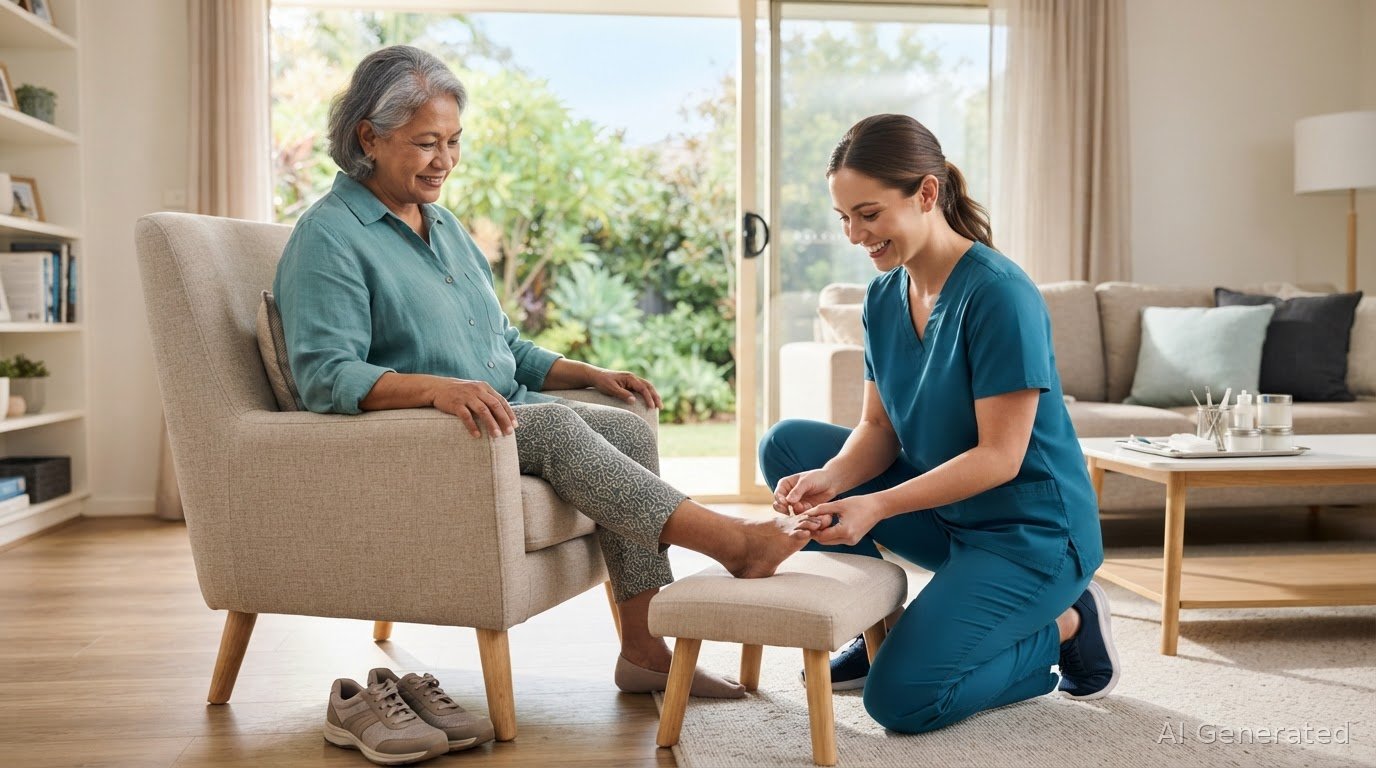
What if the right foot care starts not with getting to a clinic, but with understanding how an older person moves and manages at home? For seniors in Bankstown, travel can be tiring, and it isn’t always clear whether a thickened nail, sore spot or change in sensation needs professional attention. That’s why foot care for elderly at home Bankstown can offer a practical way to access podiatry in familiar surroundings.
Active Foot Care provides podiatrist home visits in Bankstown, with care shaped around the person’s feet, health needs and daily routine. This guide explains which changes may benefit from podiatry, what a home assessment can involve, and how a podiatrist may tailor routine clinical care or a diabetes foot assessment. It also covers what to expect during a visit, including checks of the skin, nails, movement, circulation and sensation. Whether you’re arranging care for yourself or supporting someone else, these steps can help you prepare. Active Foot Care also provides home visits in Liverpool, Moorebank, Sydney and Campbelltown.
Key Takeaways
- Changes in comfort, mobility or the ability to manage routine foot care can be a reason to consider professional support at home.
- With foot care for elderly at home Bankstown, a podiatrist can tailor the visit to the person’s concerns, health and circumstances.
- Consider whether home or clinic care better suits the older person’s mobility, travel needs and preferred setting.
- Before a home visit, note the foot concerns and prepare a comfortable, well-lit place to sit safely.
- Active Footcare provides home visits for older people in their homes, respite settings and aged care centres.
Home Foot Care in Bankstown: What Changes With Age?
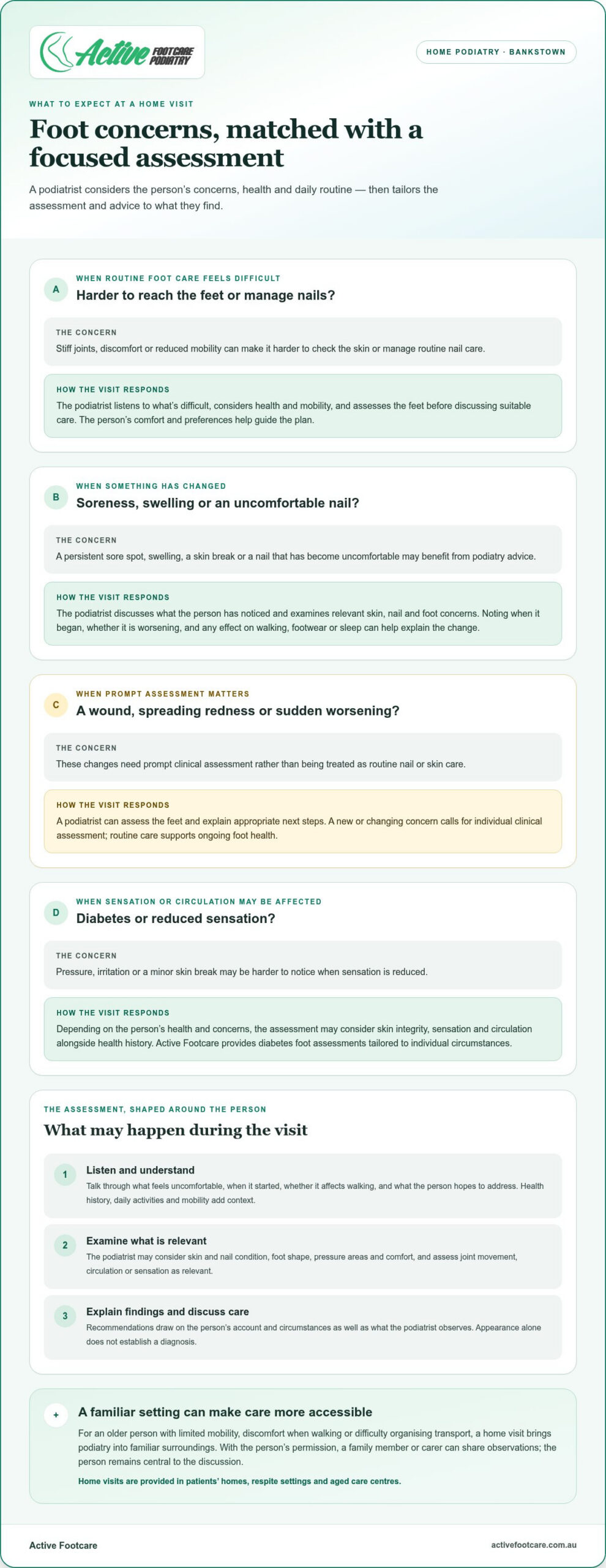
Foot discomfort, stiff joints or reduced mobility can make everyday tasks harder, including reaching the feet to check the skin or trim nails. If travel is tiring or difficult, foot care for elderly at home Bankstown can bring professional podiatry into a familiar setting. Home podiatry is an assessment and professional foot care delivered in the person’s home, with attention tailored to their concerns, health and day-to-day circumstances.
Feet can change over time. Skin may become thinner, the natural padding underfoot can decrease, and nails may thicken. Sensation or circulation may also change. These observations don’t establish a diagnosis, but they can affect comfort and make regular checks worthwhile. A podiatrist can discuss what the person has noticed and assess relevant skin, nail and foot concerns. For a general overview of the profession, see Podiatry.
This short video offers another perspective on foot health and walking as people get older:
Routine foot care and assessment for a new or changing concern are different needs: regular care supports ongoing foot health, while a new symptom or noticeable change calls for an individual clinical assessment.
Which foot changes should an older person pay attention to?
Persistent soreness, swelling, a break in the skin or a nail that has become uncomfortable are good reasons to seek podiatry advice. Note whether a change is new, getting worse or affecting walking, footwear or sleep. Writing down when it began and what makes it more noticeable can help the person describe the concern during an assessment.
Regular observation is particularly relevant for someone with diabetes or reduced sensation, as they may not readily feel a minor injury or pressure area. If there’s a wound, spreading redness or sudden worsening, arrange prompt clinical assessment rather than treating it as routine nail or skin care. A podiatrist can assess the feet and advise on appropriate next steps.
Why can getting care at home make a difference?
For an older person with limited mobility, discomfort when walking or difficulty organising transport, a home visit can make podiatry more accessible. Familiar surroundings can also help someone feel at ease and show how their usual routine affects their feet. Active Footcare provides home visits in Bankstown, including in patients’ homes, respite settings and aged care centres.
With the person’s permission, a family member or carer can join the conversation, share observations and help recall relevant health or mobility changes. The person remains central to the discussion, and their preferences and concerns help guide the visit. For more information about podiatry in residential settings and older people’s foot health, explore podiatry services for aged care and senior foot health.
What does a podiatrist assess during a home foot-care visit?
A home appointment is shaped around the person, not just the foot concern that prompted the visit. The podiatrist will usually begin by listening: what feels uncomfortable, when it started, whether it affects walking and what the person hopes to address. A conversation about health history, daily activities and mobility helps put the concern in context. With the person’s permission, a carer or family member can add observations or help recall relevant details.
The podiatrist may then examine the feet as clinically relevant, considering skin and nail condition, foot shape, areas of pressure and the person’s comfort. They may also assess joint movement, circulation or sensation depending on the individual’s health and concerns. The assessment isn’t a diagnosis based on appearance alone. The podiatrist considers what they observe alongside the person’s account and circumstances.
A home visit brings together careful listening, a focused examination and advice tailored to the person’s feet and needs. The findings guide any recommendations. The podiatrist can explain what they’ve noticed, discuss suitable care and take the person’s preferences into account. If a concern needs further attention, they can explain the next steps clearly.
How are routine foot-care needs considered?
A podiatrist assesses the feet before recommending care, even when the visit is intended to address an ongoing routine concern. Nail changes, dry or irritated skin, and areas that feel uncomfortable in footwear may all be relevant. The appropriate approach depends on the assessment, the person’s health conditions and how they feel about the care being discussed. The podiatrist can explain the options and check that the person is comfortable with the plan.
What if the older person has diabetes or reduced sensation?
Diabetes or reduced sensation can make it harder to notice pressure, irritation or a minor skin break. An assessment may therefore consider skin integrity, sensation and any circulation concerns, alongside the person’s health history. Active Footcare provides diabetes foot assessments, with attention guided by the individual’s circumstances. The American Podiatric Medical Association also offers general foot-health information, though care decisions should be based on the person’s own clinical assessment.
For foot care for elderly at home Bankstown, this individualised process helps turn a broad concern into a clearer conversation about what the person needs. Before the visit, it may help to mention changes in comfort or walking, relevant health conditions, and any particular worries. There’s no need to know the cause in advance. Describing what the person has noticed gives the podiatrist a useful starting point.
If an in-home assessment would suit an older person’s mobility or routine, Active Footcare’s podiatrist home visits bring personalised foot care to patients in Bankstown.
Home podiatry or clinic care: which option suits an older Bankstown resident?
There’s no single right setting for every older person. A clinic may be a comfortable, practical choice for someone who can travel without too much effort and prefers attending an appointment there. A home visit may make more sense if getting out involves fatigue, difficult transport or extra support. The decision should reflect the person’s clinical needs and preferences, not an assumption that home care is only for people who can’t leave home.
| Consideration | Home podiatry | Clinic care |
|---|---|---|
| Access | The podiatrist visits the person at home or in a care setting. | The person travels to the clinic. |
| Surroundings | Care takes place in familiar surroundings. | Care takes place in a clinical setting. |
| Travel | Can reduce the need to organise transport and manage the journey. | May suit someone who travels comfortably. |
| Appointment setting | Can be arranged in the person’s home, a respite setting or an aged care centre. | The appointment takes place at the clinic. |
Think about the whole outing, not just the distance. Getting ready, transferring into a car and walking from a drop-off point can all affect how manageable a clinic visit feels. On the other hand, if travel is straightforward and the older person likes the structure of attending a clinic, that setting may suit them well. Home podiatry is another way to access care, not a lesser option or a last resort.
When may a home visit be the more practical choice?
A home visit may help when travel causes discomfort or fatigue, transport is hard to arrange, or the person benefits from support getting around. Active Footcare provides visits in patients’ homes, respite settings and aged care centres. The setting should still fit the person’s assessment needs and wishes. Talk through what would make the appointment manageable, then consider where the person is most comfortable receiving care.
How can family or carers support the decision?
Start with the older person’s view. Discuss how they feel about travelling, what support they’d need and which setting feels comfortable. A carer can note relevant health information and recent changes in the feet, such as soreness or a nail concern, to help explain why care is being arranged. Involve the person in decisions wherever possible, and seek their consent before sharing personal details or speaking on their behalf.
For foot care for elderly at home Bankstown, choosing the setting is one part of making care fit the person. If a home appointment seems more practical, Active Footcare’s podiatrist home visits offer an option for older people in Bankstown who find travel difficult.
How to prepare for an older person’s podiatry home visit
A little preparation can help the older person feel more at ease and make it easier to explain what they need. There’s no need to make the home look perfect or have every detail ready. Focus on useful information, a safe place to sit and the person’s comfort. For foot care for elderly at home Bankstown, these steps can help the visit feel more organised and personal.
- Note the main concern. Write down what’s changed, when it began and whether anything seems to make it better or worse.
- Gather relevant health information. Have a current medicines list and details of relevant health conditions available, including diabetes or reduced sensation.
- Think about everyday activities. Note any pain, recent falls or changes affecting walking, balance or putting on usual footwear.
- Prepare questions. Jot down anything the person wants to ask about daily foot care, footwear or changes in mobility.
- Set up a comfortable space. Choose a well-lit area with a stable chair and enough room for the person to sit safely.
What information should the person or carer have ready?
Specific observations can be more helpful than trying to work out what a change means. For example, note whether soreness occurs during walking or at rest, or whether a skin concern has changed since it was first noticed. Share relevant health conditions, medicines and any known changes in sensation. This context helps the podiatrist understand the person’s circumstances and discuss suitable care. The older person can lead the conversation, with a carer helping if invited.
How can the home setting support a comfortable appointment?
Clear a safe route to the chosen area and move loose items that could make walking or sitting more difficult. A stable chair can help the person feel secure while the podiatrist discusses their concerns and assesses their feet. Keep their usual footwear nearby if comfort, fit or walking in those shoes is part of the conversation. Above all, ask what would help the person feel comfortable and involved, such as having a support person present or taking a pause when needed.
If a new concern is worsening, or there’s a wound or other change that needs prompt clinical attention, don’t delay seeking assessment while collecting notes or organising the room. Preparation is helpful, but it shouldn’t hold up care for an urgent concern.
To arrange personalised in-home podiatry in Bankstown, organise a podiatrist home visit with Active Footcare.
Arrange personalised home foot care in Bankstown with Active Footcare
For an older person, arranging podiatry can feel like one more task if travel is tiring, mobility is limited or routine foot care has become difficult to manage. A home visit offers another way to access professional care, with the appointment taking place in surroundings familiar to the person. It may suit someone who prefers to remain at home, as well as people receiving care in a respite setting or aged care centre.
Active Footcare provides podiatrist home visits in Bankstown for patients in these settings. The podiatrist can consider the person’s concerns, foot health and everyday needs when discussing care. This may include routine clinical care, a diabetes foot assessment or tailored advice. The visit is guided by the assessment and the person’s circumstances, rather than assuming everyone needs the same approach.
What makes Active Footcare’s approach relevant to older people?
Having care delivered in a familiar setting can make it easier to discuss concerns as part of the person’s day-to-day routine. Active Footcare’s team provides professional, friendly podiatry and up-to-date advice, with care shaped around what the person is experiencing. For older people, this means the conversation can take account of their comfort, mobility and priorities, while keeping them involved in decisions about their foot care.
For families looking into foot care for elderly at home Bankstown, a useful first step is to identify what prompted the enquiry. It could be difficulty managing routine foot care, a change in comfort, or a health concern that warrants a podiatrist’s attention. Sharing this context helps make the discussion more relevant. If travel or movement is also a concern, mention how it affects the person’s usual activities.
Active Footcare’s home visits are available for patients, respite settings and aged care centres. Explore Active Footcare home visits to learn more about receiving podiatry care in a familiar setting in Bankstown, Liverpool, Moorebank, Sydney or Campbelltown.
What is a helpful next step for Bankstown families?
When arranging care, the older person or carer can outline the main foot concern, when it began and whether it’s affecting walking or everyday comfort. It can also help to mention relevant health conditions, medicines, mobility needs and the person’s preferences for the visit. A family member or carer can support the conversation, while keeping the older person’s wishes and consent at the centre.
For an overview of professional podiatrist home visits across Sydney, see how in-home care can support access to podiatry. If a foot concern is affecting comfort or mobility, asking a podiatrist for advice is a sensible step. Active Footcare offers a friendly, person-focused way for Bankstown families to explore home podiatry.
Take the next step towards comfortable foot care
Foot care is easier to act on when it’s considered as part of a person’s everyday routine, not an isolated task. A change in comfort, confidence on their feet or willingness to walk can be a useful prompt to consider what support may help. There’s no need to identify the cause before seeking advice. Start with what the older person has noticed and what they’d like help with.
For families considering foot care for elderly at home Bankstown, the next step can be a conversation about the person’s concerns, preferences and circumstances. A podiatrist can help assess those needs and discuss suitable care. Keeping the older person involved can make the process feel more reassuring and ensure their priorities guide the discussion.
Explore Active Footcare home visits to learn about arranging personalised podiatry support in Bankstown, Liverpool, Moorebank, Sydney and Campbelltown. Taking the first step doesn’t require having all the answers. A calm conversation can help you plan care that feels appropriate for the older person and their daily life.
Frequently Asked Questions
Can an older person receive podiatry care at home in Bankstown?
Yes. Active Footcare provides podiatrist home visits, including for older people in Bankstown. This can be a practical option if travel is difficult or the person prefers care in familiar surroundings. The service also covers local areas including Liverpool, Moorebank, Sydney and Campbelltown. If you’re considering foot care for elderly at home Bankstown, describe the main concern and how it affects the person’s everyday routine when arranging care.
How often should an older person have their feet checked?
There isn’t one schedule that suits every older person. How often to arrange a check depends on foot health, medical conditions, sensation, mobility and any changes since the last assessment. Someone with diabetes or difficulty noticing foot changes may need an individual plan from a podiatrist. Keep an eye out between visits too, and seek advice if a new concern appears rather than waiting for the next routine check.
What should I do if an older person has a foot wound?
Arrange prompt clinical assessment for a foot wound, particularly if the person has diabetes or reduced sensation. Don’t wait for a routine foot-care appointment if the wound is worsening, redness is spreading or the person feels unwell. Avoid trying to cut away skin or manage a concerning wound yourself. If there’s a sudden, severe problem or immediate danger, seek emergency medical care.
Is a home podiatry visit suitable for someone with diabetes?
Yes. A home visit can include a diabetes foot assessment, which may be useful if travel is difficult or the person has trouble checking their feet. Tell the podiatrist about diabetes, changes in sensation, any skin breaks and previous foot concerns. Bring relevant health information if available. A podiatry assessment supports foot care, but it doesn’t replace the person’s broader diabetes care with their usual health professionals.
Can a family member or carer be present during a home visit?
Yes, a family member or carer can be present if the older person wants their support. They may help describe changes in walking, comfort or daily foot care that the person hasn’t mentioned. Before the visit, agree on how the carer can help while giving the older person space to speak and make choices. The person’s consent should guide what information is shared and who takes part in discussions.
What should an older person wear for a podiatry home visit?
Choose clothing that’s comfortable and makes it easy to access the feet and lower legs, such as loose-fitting trousers that can be lifted comfortably. Have the person’s usual shoes and socks handy if the podiatrist may discuss fit or walking. There’s no need to buy anything special for the appointment. If the person has difficulty removing footwear, let the podiatrist know so the visit can be approached comfortably.
Does a home visit replace a GP or emergency care?
No. A podiatrist assesses and provides care for foot concerns, but a home visit isn’t a substitute for GP care or emergency medical attention. Contact the person’s GP about broader health issues or concerns outside podiatry. For a severe or rapidly worsening problem, seek urgent medical care rather than waiting for a podiatry appointment. If you’re unsure how urgent the situation is, get medical advice promptly.