

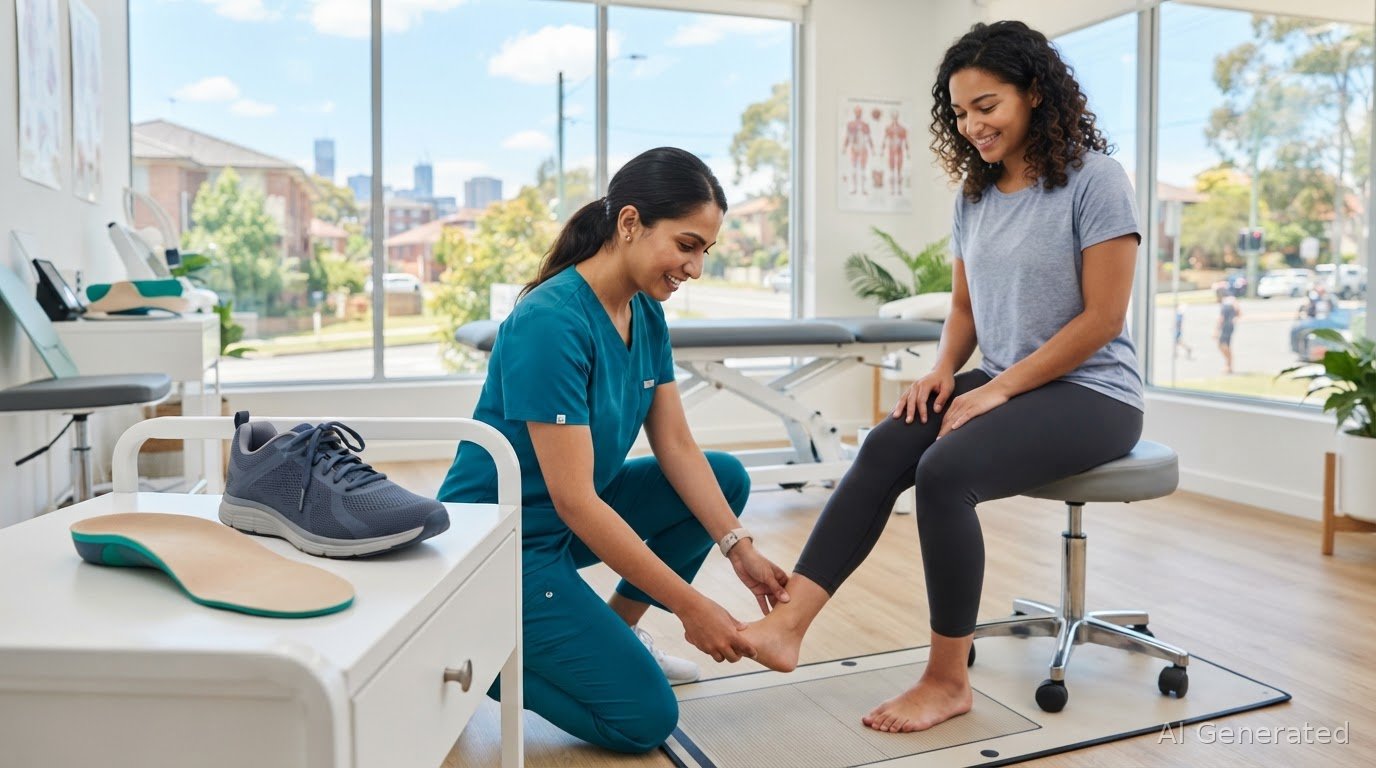
Custom orthotics can be worth considering when flat feet cause ongoing pain or affect walking. They are designed to support the arch and redistribute pressure while worn. For people seeking custom orthotics for flat feet in Sydney, the fit depends on how the foot moves, the shape of the arch and the shoes they need to fit. Orthotics don’t cure flat feet, and painless flat feet don’t necessarily need treatment.
It makes sense to want relief without investing in support that feels uncomfortable or doesn’t suit your feet. This article explains how custom orthotics may help, why flexible and rigid arches can need different approaches, and what to consider while adjusting to a new pair. It also covers footwear, replacement and how a podiatry assessment can help determine whether custom support suits your symptoms.
Key Takeaways
- Consider custom support when flat feet cause persistent pain or affect walking; painless flat feet don’t necessarily need treatment.
- Flexible and rigid arches behave differently, so an assessment of your foot movement helps guide the fit and level of support.
- Match orthotics to the shoes you wear, as footwear can affect how comfortably and effectively they fit.
- Introduce new orthotics gradually and pay attention to changes in comfort, wear and support.
- Orthotics may need replacing every few years depending on use, while their top covers can wear sooner than the shells.
What Are Orthotic Insoles for Flat Feet?
Orthotic insoles are devices worn inside shoes to support the foot during standing and walking. A podiatrist assesses your symptoms, foot shape and movement to guide a custom orthotic prescription. For flat feet, individually manufactured and tailored orthotics can support the arch and redistribute pressure while worn. They don’t usually permanently change the shape of the foot.
Off-the-shelf insoles come in standard shapes and sizes, while custom orthotics are tailored to an individual after assessment. Mild symptoms may be managed with an over-the-counter option. Persistent pain or a foot that has changed shape is a reason to seek podiatry advice.
To see how insole shape and shoe fit can differ, watch this overview:
A custom orthotic assessment starts with why you’re seeking support. The podiatrist considers where discomfort occurs, how long it has been present and whether walking or everyday activities have changed. They examine your feet while standing and moving, then assess how your lower limbs work with each step. Non-invasive gait analysis provides an in-depth examination of the way you walk or run, helping assess foot movement and its relationship to comfort.
The assessment also considers footwear, because an orthotic needs to fit the shoe you’ll wear it in. Bring the shoes you use most, such as work or walking shoes. The podiatrist can assess the available space, heel support and insole shape, then tailor the orthotic to its intended use. One pair may not fit every shoe equally well.
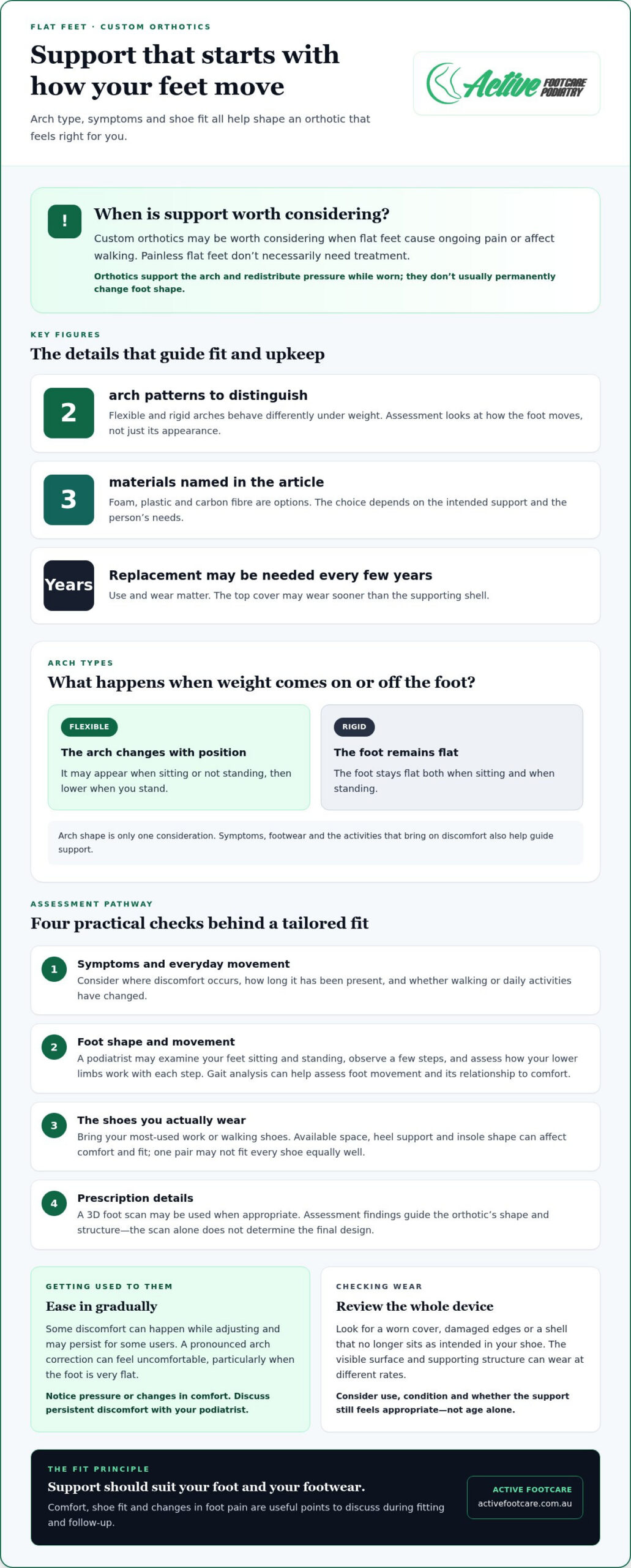
To create an individual prescription, a podiatrist may use a 3D foot scan when appropriate. Orthotics can be made from materials such as foam, plastic or carbon fibre; the choice depends on the intended support and the person’s needs. The assessment findings guide the shape and structure, rather than the scan alone determining the final design.
When seeking custom orthotics for flat feet in Sydney, look for an assessment that considers your symptoms, foot mechanics and footwear. A thorough appointment connects your concerns with findings from standing and walking, then explains how the proposed orthotic’s fit relates to your shoes and daily activities.
Some discomfort can occur while adjusting to orthotics, and it may persist for some users. A very pronounced arch correction can also feel uncomfortable, particularly when the foot is very flat. Introducing orthotics gradually gives you time to notice pressure or changes in comfort. Discuss persistent discomfort with your podiatrist.
Flat feet definition and flexible or rigid arches
Flat feet describe arches that sit low or collapse, allowing more of the sole to contact the ground while standing or walking. Appearance alone doesn’t show whether support is needed. Notice whether the arch changes when the foot isn’t bearing weight and whether pain affects your everyday movement.
With flexible flat feet, the arch may appear when you’re sitting or otherwise not standing, then lower when you stand. A rigid foot remains flat in both positions. The distinction matters because a flexible arch moves under load, while a rigid shape offers less movement to assess during standing and walking.
A podiatrist can compare each foot while you’re standing and sitting, then observe you taking a few steps. For example, they may note whether the arch reappears when weight comes off the foot and how the foot and ankle move during walking. These observations connect arch type with symptoms, rather than treating the footprint as the whole assessment.
Arch shape is only one consideration. The assessment also considers where discomfort occurs, the footwear you use and which activities bring on symptoms. Someone with flexible arches and pain during sports may need different support from a person whose rigid flat feet feel comfortable during ordinary walking.
Orthotics can be made from materials such as foam, plastic and carbon fibre. Their structure and flexibility affect how an insole feels inside footwear. Rather than choosing by material name alone, consider how the device supports your foot and whether it fits without crowding your toes or lifting your heel.
For a comfortable fit, take the shoes you wear most often to your orthotic fitting. A supportive walking shoe and a tighter sports shoe may have different internal space, so the same orthotic may not sit equally well in both. Have the fit assessed in the footwear you intend to use regularly.
Custom orthotics can provide arch support, but they shouldn’t force a rigid or very flat foot into an uncomfortable position. Excessive correction may create pressure. Comfort, shoe fit and changes in foot pain are practical points to discuss during fitting and follow-up.
If flat feet are painful, changing shape or limiting walking, a podiatry assessment can clarify whether custom orthotics suit your arch and symptoms. You can explore a custom orthotic assessment as a practical next step for understanding support and fit.
Orthotic lifespan and replacement considerations
Custom orthotics don’t have one fixed lifespan: use, materials and wear all matter. Check the device’s condition and whether its support still feels appropriate.
Orthotic durability and lifespan
Some orthotic shells can last several years, while their top covers may wear sooner. The visible surface and supporting structure can age at different rates. Look for changes such as a worn cover, damaged edges or a shell that no longer sits as intended in your shoe.
How often you wear orthotics also affects how they wear over time. A pair used for daily walking faces a different pattern of use from one reserved for particular footwear or activities. Your foot mechanics and the condition being managed, such as plantar fasciitis, also matter when reviewing whether the device remains suitable.
Replacement timing and frequency
Orthotics may need replacing every few years, depending on use. Don’t rely on age alone: consider whether the device still fits your shoes, feels comfortable and provides the support prescribed for your needs. A changed fit or visible wear can prompt a review.
Returning symptoms are another reason to reassess. If foot pain returns during walking or the orthotic feels different under your arch, note when the change occurs and which shoes you’re wearing. This helps a podiatrist consider wear alongside changes in your foot mechanics and the condition being managed.
Bring your orthotics and the footwear you use with them to an appointment. The podiatrist can inspect the top cover and shell, check how the device sits in the shoe and assess whether the fit still suits your needs. This helps distinguish surface wear from a change in support or fit.
A case history illustrates why replacement timing differs between people. A girl assessed for severe flatfoot deformity in 2001, aged seven, returned for new custom orthotics in 2018, aged 24. That example spans a major change in age and development; it isn’t a lifespan rule for other users.
For a practical review, note when you began using your current pair, which shoes they fit and any change in comfort. Bring those details to your next appointment, especially if pain returns or the orthotics show wear. A review can clarify whether the device needs replacing or its fit needs attention.
Custom orthotics for arch support and alignment
For flat feet, custom orthotics are designed to support the arch, influence pronation and redistribute load across the foot. They don’t create a permanent arch or cure flat feet. Their purpose is to change how pressure is managed while you stand and walk, helping manage strain on joints and soft tissues when symptoms are present.
Arch support needs to suit the foot’s shape and movement. If an orthotic presses sharply into a low arch, it may feel uncomfortable rather than supportive. A podiatrist considers where the arch sits, how the foot moves under load and where discomfort occurs. These details guide the orthotic’s shape and level of support.
Flat feet can place extra stress on the plantar fascia and lower legs, which may contribute to plantar fasciitis or shin splints, particularly when repeated walking or activity adds load. By redistributing pressure, orthotics can reduce pressure on painful areas and support foot function. They help manage mechanical strain, not change the underlying foot structure.
Alignment is considered across the foot and lower limb, not by arch height alone. During walking, the podiatrist can observe how the foot rolls and how the orthotic affects its movement. For example, a device may be shaped to alter the rate of pronation while allowing comfortable movement. The aim is measured support, not forcing the foot into a rigid position.
Fit matters as much as the orthotic’s arch shape. Bring the shoes you intend to wear, such as everyday walking shoes or work footwear. The device needs to sit properly inside the shoe and support your foot without creating a pressure point. A fit that feels different across shoes may affect comfort and how you use the orthotic.
Changes in discomfort and daily function offer practical feedback. Notice whether standing, walking or a regular activity feels different with the orthotics, and where pressure occurs. If the arch feels pushed up or pain increases, that response can help identify whether the fit or support needs review. Orthotics should support movement without creating new discomfort.
Arch support can work alongside exercises that strengthen the foot and leg muscles. A podiatrist may recommend combining orthotic use with strengthening, based on your foot function and symptoms. This approach addresses both external support from the device and the muscles involved in movement. The right balance depends on your mechanics and the activity causing discomfort.
Custom orthotics for flat feet
Custom orthotics can be worth considering when flat feet cause persistent pain, severe arch collapse or difficulty with everyday walking. They support the foot and redistribute load while worn, but don’t cure flat feet or permanently reshape the arch. Someone with painless flat feet doesn’t necessarily need treatment.
The main question is whether your symptoms and activities make added support useful. For example, persistent heel pain that interrupts ordinary walking merits assessment, while a low arch without discomfort may not need orthotics. A podiatrist considers your pain pattern, foot movement and daily demands before recommending a custom device.
Flat feet can increase stress on the plantar fascia and lower legs, contributing to problems such as plantar fasciitis or shin splints. Custom orthotics can support the arch, improve foot alignment and reduce pressure on painful areas. Their role is to help manage load and symptoms, not correct the underlying foot shape.
For people considering custom orthotics for flat feet in Sydney, the key is whether the support suits their symptoms and goals. If heel pain limits a regular walk or standing at work, an assessment can help determine whether custom orthotics are appropriate. For mild symptoms, supportive footwear, over-the-counter inserts or foot-strengthening exercises may be options to consider.
A treatment plan can combine orthotics with exercises that strengthen foot and leg muscles. The device provides support during activity, while exercises address muscles that contribute to stability and function. A podiatrist can explain how to use each approach alongside your usual walking or sports routine.
Fit affects whether you’ll use orthotics comfortably. Take your usual shoes to the fitting, particularly those worn for work, walking or sport. The orthotic should sit securely without crowding your toes or creating a sharp pressure point under the arch. The same device may not fit every shoe equally well.
New orthotics are often introduced gradually, giving your feet time to adjust. Follow the wear instructions provided and notice whether discomfort eases, persists or changes during walking. If the arch feels pushed up or heel pain worsens, record when it happens and which shoes you’re wearing to discuss at review.
After assessment, custom orthotics are typically ready within a few weeks. For custom orthotics for flat feet in Sydney, the decision should reflect your symptoms, foot mechanics, activity and footwear, rather than arch appearance alone. For support tailored to flat-foot symptoms, arrange an assessment for custom orthotics.
Active Foot Care: Podiatrist Home Visit
Active Foot Care offers Podiatrist Home Visit appointments for people whose foot pain or mobility makes attending a clinic difficult. A podiatrist can assess your feet and discuss whether gait analysis or individually manufactured, tailored orthotics may suit your symptoms and daily activities.
A home assessment can help if standing, walking or putting on footwear is challenging. Have your usual shoes and any orthotics you already wear available, so the podiatrist can consider fit and support during the visit. If you have diabetes, a Diabetes foot assessment and treatment can also address your foot health.
For personalised guidance on flat feet and orthotic support, contact Active Foot Care or visit activefootcare.com.au.
Take the next step towards more comfortable movement
Before making a decision, notice how your feet respond across an ordinary week. Are symptoms more noticeable after standing, during a walk or in particular shoes? Jotting down these patterns can make an assessment more focused and help connect support choices with the activities you want to keep doing.
If you’re considering custom orthotics for flat feet in Sydney, bring your everyday footwear and a clear description of your symptoms to your appointment. Your priorities matter too: you might want to walk with less discomfort, manage a workday on your feet or return to a favourite activity. These details help shape a plan around your routine, rather than arch appearance alone.
Active Foot Care can discuss your concerns and the next practical step for your foot care. Contact Active Foot Care to start the conversation. With a clearer understanding of your needs, you can move towards support that fits your daily life with confidence.
Frequently Asked Questions
Are custom orthotics really worth it?
Custom orthotics can be worthwhile when foot symptoms interfere with activities you want to maintain. Consider whether pain limits a regular walk, work duties or sport, and whether ordinary shoe inserts provide enough support. Custom devices typically involve a higher initial cost than chemist insoles; weigh that against their individual prescription and intended use. For painless flat feet, orthotics may not offer a meaningful benefit.
How do orthotics work?
Orthotics sit inside footwear and influence how pressure moves through your foot as you step. As your weight transfers from heel to forefoot, the device provides support and can alter the rate of pronation. This changes the mechanical demands on the foot during activity. Notice how your shoes feel with the device in place, including whether your heel remains secure and your toes have room.
What do podiatrists recommend for flat feet?
Recommendations reflect your symptoms and how flat feet affect daily function. Depending on pain and arch collapse, a podiatrist may suggest supportive footwear, foot-strengthening exercises or orthotics. Someone with persistent discomfort during walking needs a different plan from someone whose low arches cause no symptoms. The goal is to address the problem affecting you, rather than arch appearance alone.
Can I claim orthotics on my health fund?
Whether orthotics are claimable depends on your private health insurance policy and extras cover. Check whether it includes podiatry or orthotic benefits, any remaining annual limit and the fund’s claim requirements. Before arranging treatment, ask your insurer what documentation it requires and whether the specific assessment and devices are eligible. Coverage varies between policies.
Can I use the same orthotics in every shoe?
Not necessarily. Shoe shape, depth and removable liners affect how an orthotic sits and how much room remains for your foot. A pair that fits a roomy walking shoe may crowd your toes in a slim work shoe or sit poorly in sports footwear. Try the orthotics with the shoes you use most, and note any heel movement, pressure or slipping.
How do I know if I need orthotics?
Consider an assessment if foot pain persists, worsens or makes ordinary walking difficult. A recent change in foot shape is another reason to seek podiatry advice. Track where discomfort occurs and which activities bring it on, such as standing at work or walking for exercise. Painless flat feet don’t automatically require support, so symptoms and their effect on your routine are useful guides.
How do cost and lifespan compare?
Custom orthotics generally have a higher initial cost than chemist insoles. The cost depends on the individual assessment, design, materials and fitting. Lifespan also varies with use: some shells last several years, while top covers can wear sooner. When considering replacement, assess the device’s condition and comfort, not its age alone.
How long until I receive my orthotics?
Custom orthotics are typically ready within a few weeks after assessment. The process begins with evaluating your feet, symptoms and intended footwear, then using those findings to guide the prescription and manufacture. For people in Sydney, including Liverpool, Bankstown, Moorebank and Campbelltown, bring the shoes you expect to wear with the devices. That helps the fitting address comfort and shoe compatibility from the outset.