

NDIS therapeutic supports for podiatry in Bankstown may be funded through a participant’s plan when they relate to disability-related needs. The NDIS is not private health insurance, and funding depends on the participant’s needs and plan. Understanding this distinction can help you decide what to discuss next.
It’s understandable to want a clear answer before arranging care. This guide explains how NDIS podiatry supports may work, what can shape a personalised treatment approach, how service coverage works across Canterbury-Bankstown and how to access a Bankstown clinic. You’ll also learn how to think about plan funding and the practical next steps for discussing podiatry support.
Key Takeaways
- NDIS access includes age and disability eligibility criteria; a person must be under 65 when they first apply.
- Funding is based on individual needs, so connect podiatry goals with the everyday activities or mobility challenges you want support with.
- Use your plan management arrangements to understand how funded supports are organised and paid for.
- Bankstown is in New South Wales, postcode 2200; consider whether clinic access or a podiatrist home visit better suits your needs.
- A personalised podiatry approach may consider your foot health, walking pattern and daily routine when shaping treatment strategies.
Service coverage across Canterbury-Bankstown
NDIS-funded podiatry in Canterbury-Bankstown depends on the participant’s disability-related needs, plan funding and provider arrangements. Key questions include whether the support relates to the participant’s goals, how care will be delivered and how payment will be claimed.
Does the NDIS fund podiatry as a therapeutic support? It may fund podiatry when the support relates to a participant’s disability-related needs and aligns with their plan. Funding is individual, so it matters how the support relates to daily function.
Podiatry and allied therapy options
Across Sydney, NDIS therapeutic supports can address different needs, from foot care to nutrition. Dietitian services may help participants work towards nutrition-related goals, while podiatry can focus on foot health, walking and mobility. Telehealth may suit some discussions or follow-ups; hands-on assessment and treatment may require an in-person appointment.
NDIS physiotherapy is most commonly funded under Improved Daily Living Skills, Category 15. Exercise programs focused on overall physical health may fall under Improved Health and Wellbeing, Category 12. These categories describe different support purposes, so don’t assume they automatically apply to podiatry.
Choosing a Bankstown podiatrist
What should I compare when choosing a Bankstown NDIS podiatrist? Consider the practitioner’s experience with your foot or mobility concerns, how they explain treatment goals, and whether the appointment format works for you. Ask how progress and functional outcomes will be documented.
Can NDIS participants choose any podiatrist in Bankstown? Choice depends on plan management and the provider’s registration arrangements. Self-managed and plan-managed participants can use unregistered providers, according to Sydney Children’s Hospitals Network.
What eligibility and evidence are required for NDIS-funded podiatry? Applicants must meet NDIS disability and residence requirements, and be under 65 years of age when they first apply. Evidence should explain the impairment’s impact on everyday activities and how the requested support relates to the participant’s needs and goals.
Can NDIS funding cover podiatry travel, reports, and assistive equipment? These costs depend on the support’s relationship to the participant’s goals, the plan’s funding and the applicable claiming arrangements. Assistive Technology, Category 5, may cover assessments and recommendations for mobility aids, positioning equipment and other technology supporting physical function.
What is the current NDIS price limit for podiatry services? There isn’t one figure that applies to every appointment; the applicable limit depends on the billed support item and delivery circumstances. What NDIS plan funding category covers podiatry services? Match the support to the plan’s relevant funding and purpose rather than assuming physiotherapy’s Category 15 applies.
What are the risks of using a podiatrist who isn’t registered with the NDIS? An unregistered provider can’t claim invoices directly from the NDIA, so the participant needs a plan-managed or self-managed arrangement. Confirm how payment will work before the service begins.
Bankstown clinic access and contact details
Bankstown is in New South Wales, postcode 2200. For NDIS participants arranging podiatry, clinic access involves more than finding an appointment: consider how you’ll travel, whether the appointment suits your disability-related needs, and how funding will be managed.
Use Active Foot Care’s published contact details to arrange an appointment. Before booking, have your NDIS plan details and preferred appointment times ready. This helps you explain the support you’re seeking and discuss practical arrangements.
Plan your appointment
Use these steps to make your first contact useful:
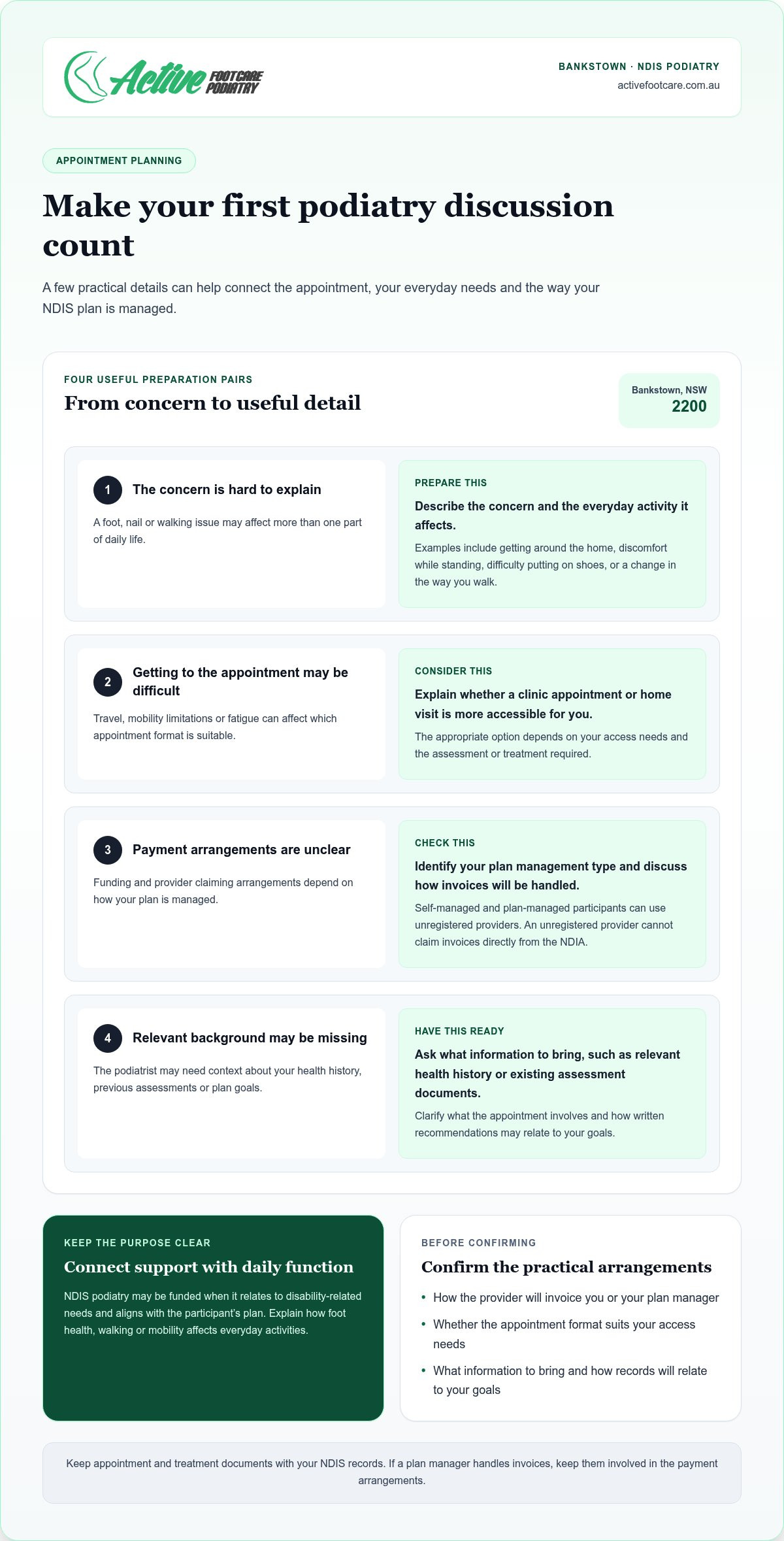
- Describe the foot, nail or walking concern and its effect on a daily activity, such as getting around the home.
- Explain whether you need a clinic appointment or would find a home visit more accessible.
- Identify your plan management type, then discuss how invoices and funding will be handled.
- Ask what information to bring, such as relevant health history or existing assessment documents.
These details help the podiatrist understand the purpose of the appointment. For example, a participant who finds it difficult to walk to local activities can describe which parts of the journey are challenging.
Check provider and funding arrangements
Registration matters because NDIA-managed funding has different provider claiming arrangements from plan-managed or self-managed funding. According to Sydney Children’s Hospitals Network, participants with plan-managed or self-managed plans can use unregistered providers, who can’t claim invoices directly from the NDIA.
Before confirming an appointment, establish how the provider will invoice you or your plan manager. Clarify what the appointment involves and how written recommendations may relate to your goals. This practical discussion can help you organise funding and understand payment responsibilities.
Clinic access may not suit every participant. A person with mobility limitations, fatigue or difficulty travelling could consider whether a podiatrist home visit better fits their circumstances. The choice depends on the type of assessment or treatment required and the participant’s access needs.
For a home or clinic appointment, prepare a short list of concerns and the everyday tasks they affect. Include examples such as discomfort while standing, difficulty putting on shoes or changes in the way you walk. Specific examples help the podiatrist focus the assessment and explain relevant next steps.
Keep your plan manager involved if they handle invoices, and retain appointment or treatment documents with your NDIS records. A clear record of the support provided can help relate podiatry to your plan goals and ongoing allied health needs.
Personalised treatment strategies
A podiatry plan should connect foot or mobility concerns with practical daily goals. NDIS supports and funding depend on individual needs, so treatment planning starts with the participant’s circumstances, not a standard package. A useful goal might be managing a regular walk, standing comfortably during a task or taking part in a community activity.
At an assessment, describe what happens, when it happens and which activity becomes harder. For example, a participant might explain that foot discomfort interrupts their walk from home to a regular appointment. A child might describe difficulty joining playground games or school activities. These details make the support request specific and relevant to daily life.
A personalised plan can consider several practical details:
- Daily activities: identify tasks affected, such as walking, standing or moving around the home.
- Foot concerns: explain the location and pattern of discomfort, skin changes or nail problems.
- Access needs: discuss whether a clinic appointment, home visit or telehealth discussion suits the person.
- Goals: describe the positive change the participant hopes to work towards, such as taking part in an occupational or community activity.
These details connect a podiatry assessment to function and quality of life, and help the participant discuss priorities with the podiatrist. For instance, someone who finds it difficult to stand while preparing meals can ask for that activity to be considered in the assessment.
Aligning care with individual goals
NDIS funding decisions reflect individual support needs, so explain how the requested intervention relates to the participant’s disability and goals. Keep examples concrete: describe the activity, the difficulty and the support being considered. A parent can help a child explain school or play routines while keeping the child’s priorities in view.
Progress discussions can focus on observable changes rather than broad claims. A participant might note whether they can complete a familiar route, take part in an activity or manage a daily routine more comfortably. These observations can guide later conversations about goals and support needs.
When another allied health professional is involved, clear communication can help coordinate strategies. For example, an occupational therapist may be supporting participation in home or community activities. Sharing relevant goals can help each professional understand how their support relates to the participant’s routine, without assuming one treatment suits everyone.
Early intervention may be relevant when support could address an emerging functional difficulty. Explain the participant’s current needs and the purpose of the proposed support. A family member or support person can help prepare examples, while keeping the participant’s preferences and abilities central to decisions.
Before sessions begin, write down the main goal and questions you want to discuss. Give us a practical example of a difficult activity and explain what you would like to do more comfortably. This preparation helps focus the conversation on meaningful outcomes and individual needs.
Clinic locations and contact details
Bankstown is in New South Wales, postcode 2200. Use “Bankstown NSW 2200” when searching for a clinic or planning a route, then compare the location with your usual starting point. A nearby appointment may still require planning if walking distance, transport connections or building access affect your journey.
Use Active Foot Care’s published contact details to arrange an appointment. When you get in touch, give your suburb and postcode, explain the support you’re seeking, and discuss appointment access. This keeps the conversation focused on practical arrangements for your location.
Plan the visit around your access needs
Before travelling, work through these details:
- Route: note your starting suburb and the transport or driving route you expect to use.
- Entry: explain if steps, distance from a drop-off point or walking through a large building could affect access.
- Appointment: describe whether you need extra time, a support person present or another communication adjustment.
- Records: bring relevant assessments, a list of foot concerns and the goals you want to discuss.
For example, a participant who uses a mobility aid can describe any access challenges when arranging a visit. This gives the clinic a clear opportunity to discuss practical appointment arrangements.
Make contact useful
Have your NDIS plan management details ready when discussing funding and payment. Explain whether you’re NDIA-managed, plan-managed or self-managed, then ask how the appointment will be invoiced. This helps clarify the administrative steps before attending, without confusing a clinical assessment with funding approval.
When describing your needs, give a specific example of how your feet affect an everyday activity. You might explain that a painful area makes standing during meal preparation difficult, or that nail changes make footwear uncomfortable. These examples help the podiatrist understand the reason for the appointment and which concerns matter most.
Australia’s NDIS supports people with disability, but appointment access still needs to suit the individual. A podiatry assessment may involve discussing foot health, movement and daily activities. Bring relevant reports or previous assessment notes, and identify questions you want answered, such as what the appointment will cover and what information you’ll receive afterwards.
For a smoother journey, keep the clinic’s address and appointment details together with your plan information. Confirm the location using the clinic’s own published details, allow time for your chosen route, and note any access arrangements discussed. If travel to Bankstown is difficult, raise that practical barrier during the initial contact so the appointment format can be discussed.
NDIS therapeutic supports in Bankstown
NDIS therapeutic supports for podiatry in Bankstown should relate to a participant’s disability-related needs and plan goals. The appropriate support depends on its purpose, the person’s circumstances and their plan management arrangements.
Therapeutic support options
NDIS therapeutic supports for podiatry in Bankstown may be relevant when foot health or mobility affects daily activities. Describe a specific impact, such as difficulty walking to community activities, then discuss how podiatry may relate to your goals.
Different supports have different funding purposes. Physiotherapy is most commonly funded under Improved Daily Living Skills, Category 15. Exercise programs focused on overall physical health may fall under Improved Health and Wellbeing, Category 12. Assessments and recommendations for mobility aids may fall under Assistive Technology, Category 5. These categories don’t automatically determine podiatry funding.
For podiatry, explain the functional need and how the proposed support relates to the participant’s disability. Evidence is most useful when it connects the person’s needs, the requested support and their plan goals. For example, describe how foot concerns affect balance during a regular walk.
Participating podiatry clinics
Which podiatry clinics in Bankstown accept NDIS participants? Participants can use a registered NDIS provider, while plan-managed or self-managed participants can also use unregistered providers. According to Sydney Children’s Hospitals Network, unregistered providers can’t claim invoices directly from the NDIA.
Before booking, establish your plan management type and how the clinic handles invoices. Then consider whether the podiatrist’s experience suits your needs, such as foot concerns affecting walking or balance. Discuss the assessment, documentation and how the support relates to your goals.
NDIS eligibility includes being under 65 years of age when first applying, meeting disability requirements and satisfying residence requirements. Eligible residence categories include Australian citizens, permanent residents and holders of a Protected Special Category visa. The NDIS supports people with permanent and significant disability.
To assess a support, write down the daily activity affected, the difficulty and the change you’re working towards. For example, note whether discomfort affects a familiar route or participation in an activity. This gives the podiatrist specific information to consider when discussing the support’s purpose and relevant evidence.
For podiatry support options in Bankstown, review NDIS podiatry information and consider how the service relates to your plan goals.
Active Foot Care: Podiatrist Home Visit
Active Foot Care’s Podiatrist Home Visit brings podiatry care to people who find clinic travel difficult. It may suit participants whose mobility, disability-related needs or daily circumstances make an appointment at home more practical.
Care can be tailored to the concern discussed. A Diabetes Foot Assessment focuses on foot health, while Gait Analysis provides a non-invasive assessment of walking patterns. Custom Orthotics are individually manufactured and tailored based on personal assessment. Active Foot Care also provides NDIS Podiatry Services, with care guided by the participant’s needs and plan goals.
Before arranging care, note the daily activities affected and your plan management type. This helps you discuss the appointment’s purpose and payment arrangements. NDIS funding depends on the participant’s plan and support needs.
Contact Active Foot Care to discuss podiatry support that may suit your circumstances.
Take the next step towards footcare that fits your goals
Choose an everyday activity you’d like podiatry to support, then use it to guide your next conversation. For NDIS therapeutic supports for podiatry in Bankstown, a clear goal can keep discussions focused on your needs and how podiatry relates to your plan.
Active Foot Care can discuss a Podiatrist Home Visit if getting to an appointment is difficult. A Diabetes Foot Assessment may suit diabetes-related footcare, while Custom Orthotics can be considered when individually tailored foot support is needed. Start with the concern affecting you and the daily activities you want to manage.
Bring your goal and relevant plan information to the conversation. You can contact Active Foot Care to discuss your podiatry needs and a suitable next step. Taking one clear step can help you move towards care that feels relevant to your routine.
Frequently Asked Questions
Are your podiatry sessions covered by insurance?
NDIS funding and private health insurance are separate payment arrangements. Whether private health insurance contributes to podiatry depends on your policy and the service being claimed. NDIS podiatry may be available to self-managed or plan-managed participants when the support aligns with their plan. Before booking, identify which payment pathway you’re using and have the relevant plan or insurance details ready to discuss.
Do you service areas outside of Bankstown?
Yes. Active Foot Care provides clinic and home-visit services in Liverpool, Bankstown, Moorebank, Sydney and Campbelltown. Home visits can help if travelling to an appointment is difficult or care at home better suits your circumstances. When arranging an appointment, give your suburb and say whether you’re seeking clinic care or a home visit, so the location is clear.
How do I determine if I or a family member needs podiatry support?
Consider an assessment if a foot concern affects a daily activity or changes how someone walks. For example, recurring discomfort may make a regular walk difficult, or nail changes may need attention. People with diabetes can also ask about a Diabetes Foot Assessment. Note what you’ve observed and how it affects the person’s routine, then discuss those details with a podiatrist.
How do I find and book an NDIS podiatrist in Bankstown?
Start by identifying your plan management type and the podiatry support you’re seeking. Active Foot Care provides NDIS Podiatry Services for self-managed and plan-managed participants. Contact the practice to discuss care in Bankstown, share a brief description of the concern and explain your plan management arrangements. Mention whether walking, foot comfort or a diabetes-related foot concern is prompting the appointment, so the discussion can focus on your needs.