


The way you walk can matter as much as where your foot hurts. A podiatrist assesses, diagnoses and treats problems affecting the feet and lower limbs, from heel pain and ingrown toenails to sports injuries and arthritis-related discomfort. They may also assess how movement, load and footwear relate to your symptoms.
It’s understandable to think foot care is mainly about nails or sore spots. A podiatrist can also examine how your feet move and bear weight, helping identify patterns that may contribute to discomfort or affect mobility. In Australia, people generally don’t need a doctor’s referral to book an appointment.
This article explains what a podiatrist treats, what to expect from an assessment, and how gait analysis can inform care. It also covers arthritis-related foot problems and how private health insurance or a doctor’s referral for a chronic condition may help with costs. Use this information to understand your options and plan a suitable next step.
Key Takeaways
- Learn which foot, ankle and lower-limb concerns may benefit from podiatry, including pain, skin and nail problems, and sports injuries.
- Find out what an assessment can involve and how your symptoms, medical history, movement and usual footwear help shape care.
- Understand how arthritis-related changes can affect your feet and which symptoms are reasons to seek professional advice.
- See how biomechanical assessment and gait analysis can reveal how movement and load relate to discomfort.
- Learn how private extras cover or a doctor’s referral for a chronic condition may help with podiatry costs.
Can I use my private health insurance for podiatry?
Private health insurance may help cover podiatry through extras or ancillary cover. Many Australian funds include podiatry, but benefits depend on your policy, annual limits and the treatment provided. Check your fund’s podiatry benefits and remaining limit before booking so you know how a claim may affect your cover.
Medicare may also contribute in some circumstances. A doctor can refer someone with a chronic medical condition to a podiatrist, which may allow them to claim some costs. A referral generally isn’t required for a private appointment, but it may matter when seeking support through a chronic disease care plan.
For a brief overview of common foot-health myths and when a professional assessment matters, watch this video:
Fees vary between practices and treatments, so ask about likely costs when making an appointment. The service affects the fee: an assessment for persistent heel pain differs from treatment for thickened toenails or a more involved foot problem. If using private cover, ask your fund which item or service category applies, what benefit it pays, and whether limits or waiting periods affect your claim.
Medicare rebates aren’t automatic for every podiatry visit. A doctor’s referral for a chronic medical condition is the relevant pathway, with eligibility and available support depending on the care plan and your circumstances. Discuss the foot problem with your doctor and ask whether a referral under a chronic disease plan is appropriate. Keep the referral and account documents for your records.
Training and registration help explain who can diagnose and treat foot and lower-limb conditions. In Australia, approved podiatry programs are offered at bachelor-degree level and typically take 4 years to complete. Podiatrists must be registered under the National Podiatry Board of Australia, overseen by the Australian Health Practitioner Regulation Agency. They must demonstrate continuing professional development and recency of practice annually.
To check a practitioner’s registration, use Ahpra’s practitioner search to view their current status, as advised by the Podiatry Board of Australia. This is a practical step before arranging care. You can also check whether the practice treats your concern and provides the documentation your insurer needs.
To arrange podiatry care in Liverpool, Bankstown, Moorebank, Sydney or Campbelltown, contact Active Foot Care about an appointment or a home visit. You generally don’t need a doctor’s referral for a private appointment. If you’re using a Medicare chronic disease plan or private health cover, have the referral details or policy information ready when discussing your booking.
What kinds of conditions does a podiatrist treat?
Foot and lower-limb problems can affect comfort, balance and everyday movement. Podiatrists treat concerns ranging from skin and nail conditions to sports injuries, considering how each issue affects walking and activity.
Foot, ankle and lower-limb conditions
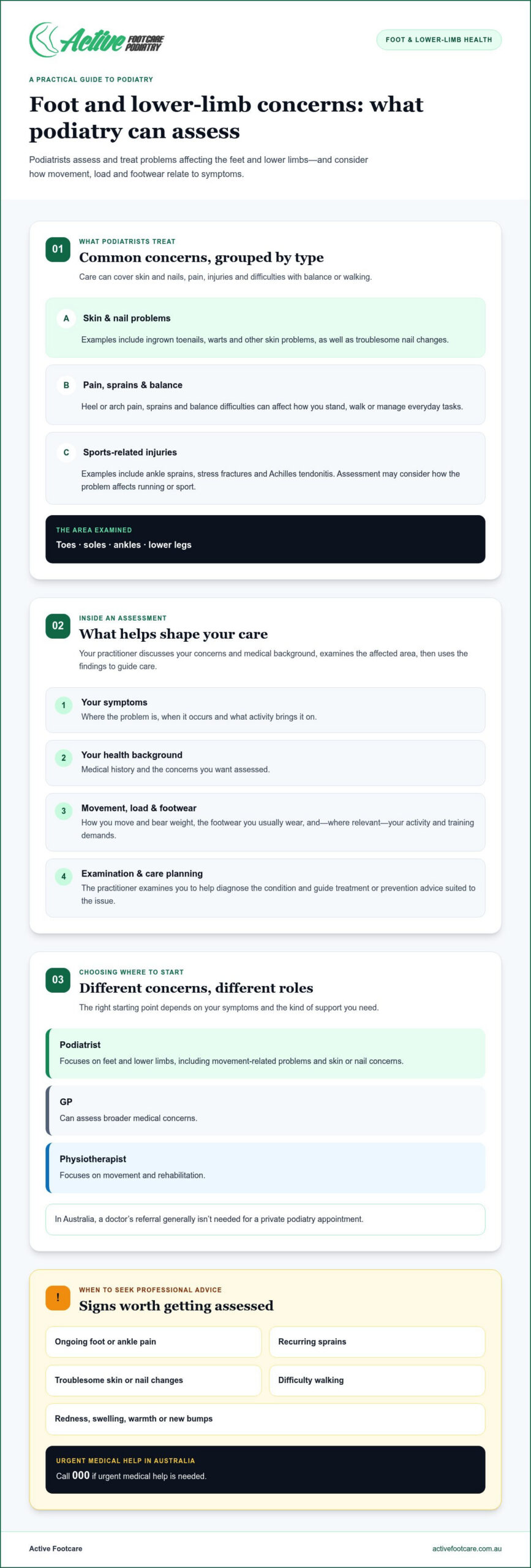
Foot and lower-limb care covers problems affecting the toes, soles, ankles and lower legs. Examples include ingrown toenails, warts, skin problems, heel or arch pain, sprains and balance difficulties. These issues can change how you stand, walk or manage daily tasks. An assessment can identify the affected area and guide care suited to the condition.
Podiatrists’ role in lower-limb care
Podiatrists are allied health professionals trained in foot and lower-limb health. They assess symptoms, diagnose conditions and provide treatment or prevention advice. Their scope includes movement-related problems as well as skin and nail concerns. Recurring arch pain, for example, may need a different approach from a sore toenail, so explain where your symptoms occur.
Sports podiatry and lower-limb injuries
Sports podiatry focuses on injuries and movement issues affecting the feet and lower limbs during physical activity. Examples include ankle sprains, stress fractures and Achilles tendonitis. An assessment may consider the activity that triggers pain, training demands and footwear, as well as movement and load. This helps clarify how an injury affects running or sport and inform a suitable care plan.
For foot problems, a podiatrist focuses on the feet and lower limbs; a GP can assess broader medical concerns, while a physiotherapist focuses on movement and rehabilitation. The right starting point depends on your symptoms: a persistent toenail problem differs from pain affecting several areas of health.
Consider an appointment for ongoing foot or ankle pain, recurring sprains, troublesome skin or nail changes, or difficulty walking. Redness, swelling, warmth or new bumps also warrant assessment. If urgent medical help is needed in Australia, call triple zero (000), according to the Australian Communications and Media Authority.
Treatment risks depend on the approach and condition. Before treatment begins, discuss its purpose, possible side effects and aftercare, especially for procedures involving nails, skin or an injury. This helps you understand what to expect and how to care for the area afterwards.
If foot pain is limiting your movement, explore podiatry care for foot concerns as a next step towards an assessment.
Podiatry assessment and treatment services
An assessment connects your symptoms with practical care for the feet, ankles and lower legs. The findings help shape treatment, from skin and nail care to advice about footwear and mobility.
Podiatry assessment
An assessment reviews your symptoms, medical history and affected feet. At your first appointment, healthdirect says the practitioner discusses your concerns and medical background, then examines you to diagnose and treat the condition. Describe when the discomfort began and which activities affect it. Bring your usual shoes so their fit and suitability can be assessed.
Children and adults can receive podiatry care tailored to their age and concerns. For example, a person with diabetes should have their feet checked for diabetes-related problems. People with diabetes or ongoing foot issues may need more regular visits than an annual general foot-care check-up.
Foot and ankle diagnosis
Diagnosis means identifying the condition behind symptoms affecting the feet, ankles or lower legs. An examination can assess a painful heel, ingrown nail, wart or sprain. Depending on the problem, X-rays may help diagnose foot conditions. The findings guide whether care should focus on skin, nails, movement or another affected area.
Some conditions need more than an examination. A podiatrist can perform minor procedures, including ingrown toenail removal and wart treatment, while complex foot surgery may require referral to a podiatric surgeon. This distinction helps match the next step to the condition rather than treating every concern alike.
Podiatry treatments and devices
Treatment can combine practical foot care with advice and devices suited to the diagnosis. Options include exercises, custom-made shoe inserts, medicines, skin creams or balms. Custom orthotics may be used for flat feet, heel pain and plantar fasciitis. The choice depends on what affects your comfort or movement and how symptoms relate to daily activities.
Skin and nail care can address concerns such as thickened nails or troublesome skin. A routine clinic appointment for nail and skin care may take up to 30 minutes. Other treatment approaches target different problems: shockwave therapy may be used for chronic heel pain, plantar fasciitis and tendon injuries. Private health insurance extras cover may help with some services, depending on the policy.
A first podiatry appointment
A first appointment starts with a conversation about your symptoms and medical history, followed by an examination. Explain where pain occurs, what makes it worse and whether it affects walking. Noting heel pain during a morning walk, for example, gives useful context. Bring your usual footwear so the practitioner can consider its fit and suitability for your activities.
The assessment findings guide the discussion of diagnosis and care. You can ask how exercises, inserts or a minor procedure relate to your concern, such as an ingrown toenail. If you have diabetes, mention it during the appointment so foot risks are considered. A routine nail and skin-care visit may take up to 30 minutes, while the assessment itself depends on your concern.
Foot problems associated with arthritis
Arthritis can affect the feet and ankles, making everyday movement uncomfortable or difficult. A podiatrist can assess related foot problems and help identify practical ways to manage their effects on walking, balance and footwear. Pain, redness, swelling, warmth or new bumps are reasons to seek an assessment rather than dismissing them as ordinary soreness.
Arthritis-related symptoms can affect joints and how you place weight through your feet. Tell the clinician where discomfort occurs, when it began and which activities aggravate it. These details help distinguish a local foot concern from a broader pattern affecting the ankle and lower limb. If symptoms are changing or limiting daily movement, an assessment can help clarify appropriate care.
Foot and ankle injuries can also cause pain that resembles other problems. Podiatrists assess sports injuries, including ankle sprains, Achilles tendonitis and stress fractures. A recent twist, a change in activity or pain during running gives useful context. The assessment considers the affected area and how the injury influences movement, rather than treating all foot pain as arthritis.
Sports-related foot pain may occur alongside arthritis or stem from a separate injury. Describe the activity that brings it on, such as walking, training or running, and whether discomfort continues afterwards. Footwear and movement can matter too. A sports assessment may consider movement, load and shoes to relate symptoms to the demands on your feet and ankles.
Diabetes is another reason to monitor foot health closely. People with diabetes should have their feet checked by a podiatrist for diabetes-related problems. Mention any changes in skin, nails, sensation or comfort during your assessment. A diabetes foot assessment focuses on identifying concerns and understanding how they may affect your feet and mobility.
To find a registered practitioner in Australia, use Ahpra’s practitioner search to view registration and current status, as advised by the Podiatry Board of Australia. This information can help you confirm a practitioner’s status before arranging an appointment.
Foot health resources can help you prepare for an appointment. Note when pain occurs, what activity preceded it and whether swelling, warmth or a new bump is present. Bring your usual footwear, especially if symptoms arise during sport. These observations help explain the link between activity and discomfort, giving the practitioner useful context to assess arthritis, an injury or another condition.
Biomechanical assessments and gait analysis
Foot pain can relate to how your feet move and handle load, not just where symptoms appear. A biomechanical assessment examines movement and posture, while gait analysis focuses on how you walk or run. Together, these observations can help explain how movement patterns relate to particular foot problems.
What the assessment looks at
A complex biomechanical assessment may take up to 1 hour. The practitioner considers your symptoms alongside how you stand and move, then relates those observations to daily tasks or sport. For example, pain during running may call for examining your running pattern, while discomfort during ordinary walking raises different questions about everyday movement.
Gait analysis is a non-invasive examination of the way you walk or run. It may use equipment such as video cameras to assess movement and posture. Reviewing movement visually gives the practitioner information about how your feet and lower limbs work during activity. It complements, rather than replaces, discussion of symptoms and a physical examination.
When gait analysis may help
People with recurring discomfort during activity may benefit from considering movement, load and footwear together. A sports podiatry assessment may include gait analysis, orthotics, manual therapy or shockwave therapy, as appropriate to the findings. For example, a runner with persistent heel pain may need their running movement and shoes considered alongside the painful area.
Children can also receive podiatry care. If a child has foot problems that affect walking or sport, a movement assessment can help describe what happens during those activities. A parent can explain when symptoms appear, such as during running or after a long walk. This helps the health professional connect observed movement with the child’s concern.
From findings to a care plan
Assessment findings guide the next discussion rather than automatically pointing to one device or treatment. Orthotics are individually manufactured and tailored based on personal assessment. They may be considered for flat feet, heel pain and plantar fasciitis, but recommendations should relate to the person’s symptoms and movement. The practitioner can explain how the findings inform care and what to observe during usual activities.
Chronic foot problems may need ongoing attention, while a new concern may call for a different assessment. Tell the practitioner about changes in pain, activity or footwear. Mention skin symptoms or a suspected infection separately, since gait analysis focuses on movement and posture rather than explaining every foot concern.
If movement-related pain is affecting your walking or running, book a gait analysis to have your movement assessed and discussed.
Active Foot Care: Podiatrist Home Visit
Active Foot Care’s Podiatrist Home Visit brings podiatry care to people who find it difficult to travel to an appointment. It can be a practical option if pain, mobility challenges or daily circumstances make leaving home harder.
Care can be tailored to the concern being assessed. A Diabetes Foot Assessment focuses on diabetes-related foot health, while non-invasive Gait Analysis examines the way you walk or run. Individually manufactured and tailored Custom Orthotics may be considered when they suit your assessment and symptoms.
If getting to an appointment is a barrier, contact Active Foot Care to discuss a Podiatrist Home Visit, or visit activefootcare.com.au.
Take the next step towards comfortable movement
Foot discomfort can influence how confidently you move through everyday routines. Rather than waiting for it to reshape your activities, consider what you’d like to manage more comfortably and discuss that goal with a podiatrist. A clear conversation about your needs can help make the next step feel more manageable.
Active Foot Care offers Podiatrist Home Visits, Diabetes Foot Assessments and Custom Orthotics. These options support different needs, from receiving care at home to addressing diabetes-related foot health or considering individually tailored orthotics. The right starting point is a discussion about your concerns and mobility.
You don’t need to have every detail worked out before reaching out. Share what’s affecting your feet and what you hope to get back to doing. Contact Active Foot Care to discuss your needs and take a considered step towards feeling more comfortable on your feet.
Frequently Asked Questions
What does a podiatrist do?
A podiatrist assesses foot and lower-limb concerns, identifies possible causes and discusses suitable care. That may involve examining how a painful area responds to movement, reviewing medical history or advising on foot care. For example, recurring discomfort during a daily walk can be discussed in relation to your activities and mobility. The assessment helps determine whether treatment, prevention advice or further investigation is appropriate.
Can I claim podiatry services through Medicare?
Medicare may contribute to some podiatry costs when a doctor refers you for care related to a chronic medical condition. Not every appointment is eligible for a rebate. Private health insurance may also cover podiatry through extras or ancillary cover, depending on your policy. Before making a claim, identify whether you’re relying on a doctor’s referral pathway or your fund’s extras benefits.
Can a podiatrist help address sports injuries?
Yes. A podiatrist can assess sports injuries affecting the feet and lower limbs, then consider what happens during the activity that triggers symptoms. Pain that starts during a run, for instance, can be discussed alongside training demands, footwear and movement. This helps distinguish a sports-related injury from discomfort arising during everyday activity and informs care suited to your sport and symptoms.
How long are the appointments?
Appointment length depends on the type of care. A routine clinic visit for nail and skin care may take up to 30 minutes, while a complex assessment, such as a biomechanical assessment, may take up to 1 hour. These examples show why the reason for your visit matters when planning your day. A more involved assessment needs time to consider movement, symptoms and relevant history.
What is the difference between a podiatrist and an orthopedist?
In Australia, a podiatrist is an allied health professional focused on foot and lower-limb health. An orthopaedic surgeon is a medical specialist who treats musculoskeletal problems, including conditions involving bones and joints. Their roles can overlap around foot or ankle concerns, but their training and scope differ. A podiatrist can assess many foot conditions, while complex foot surgery may require referral to a podiatric surgeon.
Who will provide my therapy?
Your care is provided by a podiatrist, whose assessment guides treatment and follow-up for your concern. At Active Foot Care, the podiatry team provides home visits and diabetes foot assessments. It serves people in Liverpool, Bankstown, Moorebank, Sydney and Campbelltown. NDIS podiatry services are available to self-managed or plan-managed participants.
What does a podiatrist do in Australia?
In Australia, podiatrists assess and treat conditions affecting the feet, ankles and lower legs. Their work can include clinical examination, foot-care advice, movement assessment and treatment planning. Someone experiencing recurring discomfort while walking, for example, can discuss how it affects everyday activities and what care may suit their needs. Podiatrists work across private practices, public health clinics, community health clinics and public hospitals.
How much does a podiatrist appointment cost in Australia?
There isn’t one standard appointment fee across Australia. Costs vary between practices and treatments, depending on the assessment and care involved. The price depends on the case and is given after a quote request. If you plan to claim through private health insurance, your extras cover and remaining benefits also affect your out-of-pocket cost.