


Have you ever reached for your favourite pair of shoes only to realise the sharp, throbbing ache in your big toe joint makes wearing them feel like a chore? For many residents across Liverpool and Bankstown, bunions are far more than just a cosmetic frustration; they’re a daily barrier to staying active and enjoying the Sydney lifestyle. It’s completely normal to feel a sense of dread about the future of your foot health, especially if you’re worried that a long, painful surgical recovery is the only way to find relief.
We understand how isolating it feels when you have to decline a weekend walk because of persistent foot pain. This article will show you how to effectively manage discomfort and slow the physical progression of your condition using expert podiatric strategies tailored for your specific needs. We’ll explore how clinical tools like custom orthotics and detailed gait analysis can reorganise your movement patterns to provide lasting stability and ease. You’ll also discover how to access professional care through local Sydney podiatrists who offer the convenience of home visits. You don’t have to navigate the journey to recovery alone.
Key Takeaways
- Understand that Bunions are a complex structural misalignment of the big toe joint, requiring a clinical approach to achieve long-term relief.
- Identify the hereditary and biomechanical factors, such as low arches, that may be placing unnecessary pressure on your forefoot and accelerating joint changes.
- Discover how conservative strategies like custom orthotics can help reorganise your foot mechanics to slow the deformity’s progression without immediate surgery.
- Learn practical self-care techniques and how to select footwear that accommodates your foot shape while maintaining your comfort during daily Sydney activities.
- Explore how professional podiatry services in Liverpool and Bankstown, including the convenience of home visits, can help you regain your mobility and confidence.
Understanding Bunions: More Than Just a Bump on the Toe
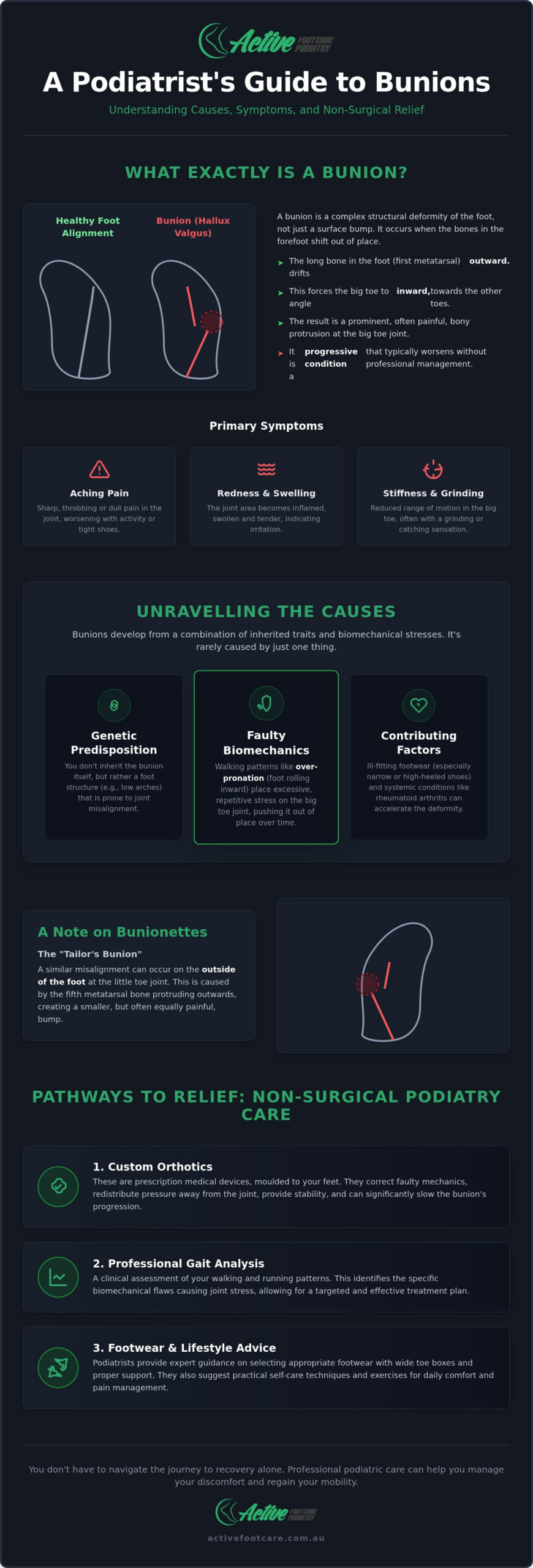
A bunion is often mistaken for a simple skin irritation or a hard callous that has formed on the side of the foot. In reality, it represents a complex, three-dimensional shift in the skeletal structure of your forefoot. Clinically referred to as hallux valgus, this condition occurs when the bones in the front part of the foot move out of place. Understanding Bunions requires looking past the surface to see how the big toe joint, or the metatarsophalangeal (MTP) joint, has become misaligned over time. When this joint is pushed out of its natural track, the tip of the big toe gets pulled toward the smaller toes, forcing the joint at its base to protrude.
The symptoms of Bunions usually begin subtly. You might first notice a dull, aching pain after a long day spent walking through Liverpool or Bankstown. As the misalignment progresses, the area often becomes red and swollen, making it difficult to find comfortable footwear. It is a common misconception that these bumps will resolve with rest. Because they are rooted in the mechanical function of the foot, bunions are progressive. This means the deformity will likely worsen without professional intervention, as the ligaments and tendons around the joint continue to stretch and lose their supportive capacity.
The Anatomy of a Bunion
The visible bump is the result of the first metatarsal bone shifting outward toward the inner edge of your foot. As this long bone moves, it creates a pivot point that forces the big toe to lean inward, sometimes even overlapping the second toe. This structural change alters how your weight is distributed across your foot during every step you take. Hallux valgus is a structural bone deformity rather than a simple growth. Because the bone itself has changed position, the joint can no longer glide smoothly, leading to the “grinding” sensation or sharp pain many patients describe during daily activities.
Bunionettes: When the Little Toe is the Problem
While most people associate this condition with the big toe, a similar issue can occur on the outside of the foot. These are known as bunionettes, or “Tailor’s Bunions.” They form at the base of the little toe when the fifth metatarsal bone begins to protrude outward. Although smaller in scale, the pressure points they create are often just as painful, especially when wearing narrow shoes. The underlying mechanical cause is often similar to standard Bunions, frequently involving a hereditary foot shape or poor gait mechanics that place excessive stress on the outer edge of the foot. Whether the issue is on the inside or outside of your foot, the goal of podiatric care is to reorganise these pressures to protect the delicate joints from further damage.
What Causes Bunions? Genetics, Biomechanics, and Footwear
Many patients feel a sense of guilt, wondering if their choice of shoes caused their Bunions. While footwear certainly plays a role, it’s rarely the sole culprit. The development of this condition is usually a combination of your genetic blueprint and the way your feet move during daily life. Researching What Causes Bunions reveals that you don’t actually inherit the bump itself; instead, you inherit a foot structure that is prone to misalignment. It’s the shape of your foot and the way it functions that determines your risk.
If your parents or grandparents struggled with foot pain, you might have inherited low arches or “flat feet.” These structural traits change how your weight is distributed across the forefoot. Additionally, systemic inflammatory conditions like rheumatoid arthritis can weaken the joint capsule, making it easier for the big toe to drift out of alignment. Understanding these underlying factors is the first step toward finding a management plan that works for your lifestyle.
The Impact of Foot Mechanics and Gait
The way you walk, known as your gait, is a primary driver of joint stress. When you have low arches, your foot often undergoes over-pronation, which means it rolls inward excessively as you step. This motion places an immense amount of pressure on the big toe joint rather than spreading the load across the whole foot. Over thousands of steps each day, this repetitive force gradually pushes the joint out of place. We use professional gait analysis to identify these subtle mechanical flaws that often go unnoticed. For some, ligament laxity or hypermobility makes the foot even more flexible, allowing the bones to shift faster than they would in a stiffer foot type.
Does Your Footwear Choice Matter?
There is a common “High Heel Myth” that stilettoes are the primary cause of every bunion. While high heels don’t always create the problem, they are significant aggravators. By shifting your body weight forward onto the forefoot and squeezing the toes into a narrow toe box, these shoes compress the MTP joint and accelerate inflammation. If you already have arch issues, wearing unsupportive footwear like flimsy thongs or worn-out flats provides no resistance against over-pronation, allowing the deformity to progress more quickly. Choosing shoes with a wide toe box and adequate support is a simple but vital step in managing your comfort. If you’re unsure if your current shoes are helping or hurting, a professional assessment can provide the clarity you need to protect your foot health.
Non-Surgical Bunion Treatments: How Podiatry Provides Relief
Many people assume that surgery is the only path forward for Bunions, but conservative podiatric care offers several effective ways to manage pain and slow the physical progression of the deformity. The primary goal of non-surgical treatment is to reduce the mechanical stress on the big toe joint. By addressing the way your foot interacts with the ground, we can often prevent the condition from reaching a stage where invasive procedures are necessary. Seeking Professional Bunion Care early allows us to implement strategies that protect your mobility and keep you active.
Simple interventions like padding and taping provide immediate relief by reducing friction against your shoes. These techniques create a protective barrier over the sensitive MTP joint, which helps to settle redness and swelling. While night splints and toe spacers won’t permanently realign the bone, they can be highly effective for stretching tight soft tissues and providing temporary relief from the aching sensation that often follows a long day on your feet. These tools are often used in combination with clinical treatments to provide a comprehensive management plan.
Custom Orthotics for Bunion Management
A cornerstone of our clinical approach involves the use of custom orthotics to correct the underlying biomechanical flaws that drive joint shifting. Unlike generic, chemist-bought inserts that offer basic cushioning, clinical orthotics are precision-engineered to reorganise how pressure is distributed across your forefoot. These devices are particularly effective for patients with flat feet or over-pronation, as they provide the structural support needed to offload the big toe. It’s important to understand that orthotics aim to stabilise the joint rather than “straighten” the bone. By providing this stability, we can significantly reduce the internal forces that cause the bunion to worsen over time.
Shockwave Therapy and Physical Interventions
To address the soft tissue pain that often accompanies joint misalignment, we may utilise shockwave therapy. This modern treatment sends acoustic waves into the affected area to stimulate healing and reduce chronic inflammation in the ligaments and tendons. We also guide patients through specific strengthening exercises for the intrinsic foot muscles, which helps to improve the overall support system of the arch. For those looking for advanced options, prolotherapy may assist in regenerative joint care by strengthening the connective tissues around the MTP joint. These combined therapies ensure a thorough approach to your foot health, focusing on both immediate comfort and long-term stability.
Living with Bunions: Practical Tips for Daily Comfort
Managing Bunions during a busy week in Sydney requires a proactive approach to daily comfort. When a flare-up occurs after a long day of walking through the shops or commuting, the RICE method remains a reliable first line of defence. Resting your feet and applying ice for 15 minutes can settle the acute inflammation in the joint. Elevating your feet above your heart helps reduce the swelling that often makes shoes feel even tighter. While over-the-counter anti-inflammatories can provide temporary relief, it’s always best to use them as a short-term measure and consult a professional if pain persists. We often find that patients who integrate these small habits into their evening routine experience significantly less morning stiffness.
The Australian Footwear Guide for Bunions
The Australian lifestyle often calls for open footwear, but not all thongs are created equal. When selecting sandals for the Sydney summer, look for options with built-in arch support and adjustable straps. These features help keep the foot stable and prevent the big toe from overworking to keep the shoe on. Soft leather uppers are an excellent choice because they have the natural flexibility to mould to the foot and accommodate the bump without causing painful friction. A wide toe box ensures your toes aren’t compressed, while a deep heel cup provides the stability needed to prevent the inward rolling that worsens joint misalignment. Choosing the right footwear is often the most significant change you can make for immediate ease.
At-Home Pain Relief Strategies
Contrast baths are an effective way to stimulate circulation and reduce joint stiffness. Simply alternate soaking your feet in warm water and cool water for a few minutes each to encourage blood flow. To release tension in the muscles surrounding the big toe, you can gently massage the adductor hallucis muscle located in the arch area using your thumb in small, circular motions. Strengthening the foot is just as important as soothing it. To perform a towel curl, sit with your feet flat on the floor, place a small towel under your toes, and use your arch and toes to scrunch the fabric toward you. This simple exercise builds the intrinsic strength required to support your foot’s natural structure and may help slow down further joint changes.
If these home strategies aren’t providing the relief you need, reach out to our friendly podiatry team to discuss a personalised management plan tailored to your lifestyle.
Professional Bunion Care in Sydney: When to See a Podiatrist
While home-based strategies provide much-needed comfort, there comes a point where professional intervention is necessary to prevent long-term damage. Recognising the red flags early can save you from years of avoidable discomfort. If your Bunions are causing persistent pain that interferes with daily activities, or if you notice skin changes like severe redness, blistering, or signs of infection around the joint, it’s time to seek clinical advice. Other signs include numbness in the big toe or a noticeable decrease in your ability to walk even short distances. For patients with underlying conditions like diabetes, any change in the appearance or sensation of the foot requires prompt attention from a qualified podiatrist.
At Active Footcare, we take a thorough approach to managing your foot health in Liverpool and Bankstown. Led by Dr. Maher Said, our team focuses on preserving your mobility through modern, evidence-based treatments. We understand that every patient’s journey is unique; that’s why we offer flexible care options designed to fit into your life. Whether you visit us in a clinical setting or require the convenience of mobile podiatry, our goal remains the same: to reduce your pain and restore your confidence.
Mobile Podiatry Services Across Western Sydney
We provide professional bunion assessments in the comfort of your own home, removing the stress of travel for those experiencing significant pain. Our mobile team regularly serves residents in Moorebank, Campbelltown, and Bankstown, ensuring that high-quality foot care is accessible to everyone in our community. These home visits are particularly vital for elderly patients or those with chronic foot pain who find it difficult to navigate traditional clinic environments. By assessing your feet in your own living space, we can also provide practical advice on footwear and home safety that is directly relevant to your daily environment.
NDIS and Subsidised Foot Care
Active Footcare is a registered NDIS provider, dedicated to supporting participants with mobility aids and personalised treatment plans. We work closely with you to ensure your podiatric care aligns with your NDIS goals, helping you maintain the independence you deserve. For those requiring additional support with daily tasks alongside their clinical care, Royal Care Companion provides flexible, on-demand home caregiving services. If you have a chronic medical condition, you may also be eligible for the Chronic Disease Management (CDM) plan through Medicare. This plan can provide a rebate for a specific number of podiatry consultations each year, making professional care more affordable. Booking your initial consultation with Dr. Maher Said is the first step toward a clearer understanding of your options and a more comfortable future.
Living with Bunions doesn’t mean you have to accept a future of restricted movement or persistent pain. We’ve explored how these structural changes are manageable when addressed with clinical expertise and the right supportive strategies. By utilising tools like custom orthotics and professional gait analysis, you can reorganise the pressures on your feet and effectively slow the progression of joint changes. Help is available. You don’t have to navigate this alone.
Led by Principal Podiatrist Dr. Maher Said, our team at Active Footcare specialises in non-surgical bunion management that prioritises your daily ease. We believe professional care should be accessible to everyone, which is why we offer mobile podiatry services across Liverpool, Bankstown, and the wider Sydney region. Whether you’re managing a mild misalignment or a chronic flare-up, we’re here to partner with you in your journey toward physical comfort and improved mobility.
Book a professional bunion assessment with Active Footcare today to gain a clearer understanding of your foot health and discover a treatment path tailored to your lifestyle. You deserve to walk with confidence and ease once again.
Frequently Asked Questions
Can bunions go away without surgery?
No, bunions cannot disappear without surgical intervention because they represent a permanent structural shift in the foot’s skeletal framework. However, non-surgical treatments are highly effective at managing pain and preventing the deformity from worsening. By focusing on conservative care such as custom orthotics and appropriate footwear, we can help you stay active and comfortable while avoiding the need for immediate surgery in many cases.
Do bunion correctors actually work to straighten the toe?
Bunion correctors and splints are designed to stretch tight soft tissues and provide temporary symptomatic relief, but they cannot permanently straighten the toe. Since the underlying issue is a bony misalignment, these devices won’t fix the structural cause. They are often useful for reducing discomfort after a long day in Bankstown, but they should be used as part of a broader professional management plan rather than a standalone cure.
How much does it cost to see a podiatrist for bunions in Sydney?
The cost of a podiatry consultation in Sydney varies depending on the complexity of the assessment and whether you require a clinic visit or a home visit. While we don’t provide fixed quotes without an initial assessment, many patients can access rebates through private health insurance or a Chronic Disease Management plan from their GP. We recommend contacting our team directly to discuss your specific needs and potential funding options.
Are bunions hereditary or caused by bad shoes?
While many people blame narrow shoes, Bunions are primarily caused by an inherited foot structure that is prone to misalignment. If you have inherited low arches or hypermobile joints, your feet are more likely to shift over time. Tight footwear and high heels act as significant aggravators that accelerate the process and increase inflammation, but they are rarely the sole cause of the initial deformity.
Can custom orthotics stop a bunion from getting worse?
Yes, custom orthotics are one of the most effective tools for slowing the progression of the deformity. By reorganising how your weight is distributed across the forefoot, these medical devices offload the pressure from the big toe joint. This mechanical correction helps stabilise the foot during every step you take, which reduces the internal forces that would otherwise push the joint further out of alignment over time.
Is it okay to walk long distances if I have a bunion?
It is generally safe to walk long distances, provided you have the right support and footwear to protect your joints. If you’re planning a long walk around Campbelltown or Liverpool, ensure your shoes have a wide toe box and adequate arch support. If you experience sharp pain or significant swelling after activity, it’s a sign that your current footwear or mechanics need a professional review to prevent further joint damage.
What happens if I leave a bunion untreated?
Leaving Bunions untreated often leads to a cycle of increasing pain and further structural complications. As the big toe drifts further, it can cause hammertoes, callouses, and even early-onset arthritis in the joint. Over time, the misalignment makes it increasingly difficult to find comfortable shoes and can significantly limit your mobility. Early intervention is the most effective way to avoid these long-term physical challenges.
Does NDIS cover podiatry for bunion management?
Yes, the NDIS often covers podiatry services for participants whose foot conditions impact their mobility or relate directly to their disability goals. As a registered NDIS provider, Active Footcare can assist with assessments, routine care, and the provision of custom orthotics. We work with participants across Western Sydney to ensure their funding is used effectively to improve their daily comfort and support their independence at home.