


Imagine waking up in Moorebank, ready for a morning walk through the local park, only to be met with a sharp, stabbing sensation the moment your foot hits the floor. This debilitating heel pain often makes those first few steps of the day feel like a major hurdle, leaving you wondering if you should book in with a GP, a physiotherapist, or a podiatrist. We understand how frustrating it is when your mobility feels compromised, especially when you simply want to stay active and enjoy your community without the constant worry of physical setbacks.
You deserve a clear, professional path to recovery that prioritises long-term relief without the need for invasive surgery. We’re here to help you uncover the real mechanical causes of your discomfort through detailed gait analysis and empathetic, expert care. This article explores the advanced, localised treatments available across Liverpool and Western Sydney, including modern shockwave therapy and custom orthotics. Whether you need a clinic-based consultation or the convenience of NDIS-registered home visits, you’ll discover how our tailored approach can restore your stability and get you back to the activities you love.
Key Takeaways
- Understand why that sharp morning sensation occurs and how to manage acute flare-ups with a simple home protocol.
- Discover how advanced treatments like Shockwave Therapy and Prolotherapy provide a non-invasive way to stimulate chronic tissue repair.
- Learn the critical difference between generic inserts and custom orthotics designed through professional gait analysis for long-term Heel Pain relief.
- Explore the convenience of mobile podiatry and NDIS-registered home visits for residents across Bankstown, Moorebank, and Liverpool.
- Identify the mechanical failures behind common conditions like Plantar Fasciitis to move beyond temporary fixes toward lasting, pain-free mobility.
Understanding Heel Pain: Why Every Step Feels Like a Struggle
Heel pain is rarely just a minor inconvenience; it’s a multifaceted condition that involves the calcaneus, or heel bone, and the intricate network of soft tissues surrounding it. Many of our patients describe a sharp, pinpoint sensation that makes even a short walk to the kitchen feel like an endurance test. While it’s easy to hope the discomfort will simply fade away, persistent pain usually signals a mechanical failure within the foot’s structure. Understanding the root cause is the first step toward recovery, and seeking a professional diagnosis from a Sydney podiatrist ensures you aren’t just treating symptoms, but addressing the underlying issue.
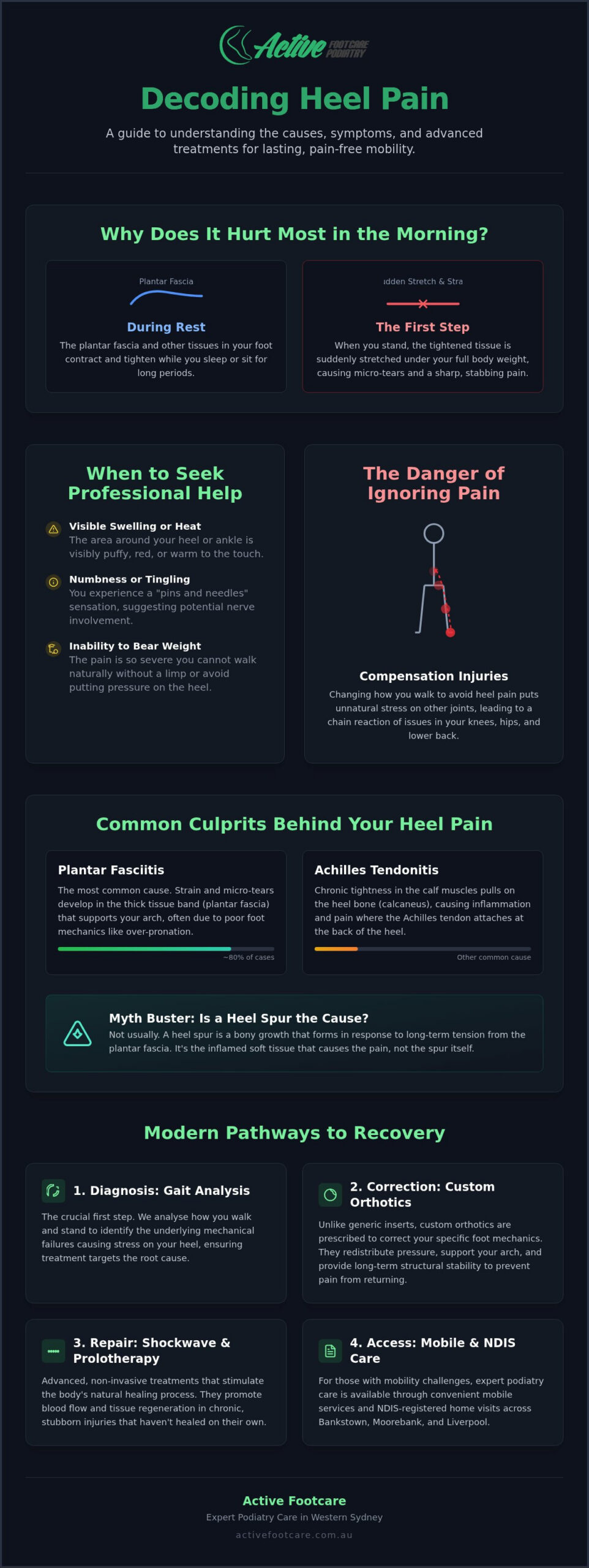
The “first step” phenomenon is perhaps the most telling sign of a deeper problem. You might find that the most acute pain occurs first thing in the morning or after sitting for a long period. This happens because the tissues contract and tighten while you rest. When you stand up, they are suddenly stretched under your full body weight, leading to intense discomfort. In the context of Understanding Plantar Fasciitis, this cycle of rest and sudden tension can create a persistent loop of irritation that prevents the area from healing properly. While systemic inflammation can play a role, most cases we see in Western Sydney are driven by mechanical stress, such as walking barefoot on hard tiles or wearing unsupportive thongs during the summer months.
The Anatomy of the Heel
Your heel is built to withstand significant pressure, but it relies on a delicate balance of bone and cushion. The calcaneus serves as the primary foundation, supported by a specialised fat pad designed to absorb the impact of every stride. Connecting this bone to your toes is the plantar fascia, a thick band of connective tissue that maintains the integrity of your arch. The plantar fascia acts as the essential shock absorber of the foot, distributing weight and tension as you move.
Signs Your Heel Pain Needs Professional Attention
It’s important to differentiate between temporary soreness from a long day on your feet and chronic heel inside pain that lingers for weeks. While mild aches might respond to rest, certain red flags indicate that the structural integrity of your foot is at risk. You should seek expert advice if you experience any of the following:
- Visible swelling or heat around the heel and ankle area.
- Numbness or a “pins and needles” sensation in the foot.
- An inability to bear weight or walk naturally without a limp.
Ignoring these signals often leads to a “compensation” injury. When you change the way you walk to avoid Heel Pain, you inadvertently place extra stress on other joints. This often results in secondary issues in the knees, hips, and lower back, turning a localised foot problem into a whole-body concern that is much harder to resolve.
Common Causes of Heel Pain: From Plantar Fasciitis to Sever’s Disease
While many conditions can lead to discomfort, identifying the specific culprit is vital for an effective recovery plan. Plantar fasciitis remains the most frequent reason adults seek help, occurring when the thick band of tissue under the foot becomes strained or develops micro-tears. This often results from poor foot mechanics, such as over-pronation, which places excessive tension on the fascia during every step. According to the APMA, there are several Common causes of heel pain that range from simple overuse to more complex structural issues like Achilles tendonitis. In the latter case, chronic tightness in the calf muscles pulls on the heel bone, leading to inflammation where the tendon attaches at the back of the foot.
Plantar Fasciitis vs. Heel Spurs
A common misconception we encounter is that a bony growth, or heel spur, is the direct source of your agony. In reality, the spur is usually a secondary symptom rather than the primary cause. It develops as the body tries to protect itself from long-term tension on the plantar fascia by depositing calcium at the attachment site. While the spur might show up on an X-ray, it’s the inflamed soft tissue that actually hurts. For a more detailed breakdown of these differences, you can explore our heel inside pain guide, which explains how we differentiate between these conditions during a clinical exam.
Heel Pain in Children: Understanding Sever’s Disease
For active families in the Liverpool and Campbelltown areas, children aged between 8 and 14 often experience a specific type of discomfort known as Sever’s disease. This isn’t a “disease” in the traditional sense, but rather an overuse injury of the growth plate in the heel. High-impact sports at local Western Sydney clubs, such as football or netball, can trigger symptoms as the heel bone grows faster than the surrounding tendons. Parents often mistake this for simple “growing pains”, but if your child is limping after a match or walking on their tiptoes to avoid pressure, it’s likely a mechanical issue that requires professional attention.
Less frequent causes include bursitis, where the small fluid-filled sacs that cushion the joints become inflamed, or even stress fractures from sudden increases in activity. If you’re struggling to pinpoint the source of your Heel Pain, our team at Active Footcare can help you find a clear path forward with a personalised treatment plan and expert guidance.
Advanced Treatment Options: Shockwave Therapy and Custom Orthotics
Before beginning any specific therapy, our team conducts a thorough gait analysis to observe exactly how your feet interact with the ground. We believe that effective treatment starts with a deep understanding of your unique movement patterns, as this allows us to identify the mechanical triggers of your Heel Pain. By pinpointing where your alignment fails, we can move beyond temporary symptom management and create a plan that addresses the structural root of the problem. This clinical precision ensures that every intervention is tailored to your lifestyle, whether you are a weekend runner or a busy professional navigating the city.
The Power of Shockwave Therapy
Shockwave Therapy is a modern, non-invasive intervention that uses high-energy acoustic pressure waves to stimulate blood flow and cellular repair in the affected area. Many patients arrive at our clinics with chronic conditions that have failed to heal through rest alone. Shockwave Therapy acts as a biological “reset” button, effectively converting a chronic injury back into an acute healing phase where the body’s natural recovery mechanisms are reactivated. It’s a highly efficient process. Most patients report a significant reduction in discomfort and improved mobility after just three to five sessions, providing a clear path back to activity without the need for surgery.
Custom Orthotics: Why Precision Matters
While basic inserts are widely available at local chemists, they lack the specific structural support required to resolve complex biomechanical issues. Our custom orthotics are developed using advanced 3D scanning technology and a comprehensive biomechanical assessment. Unlike mass-produced products, these medical-grade devices are contoured to your unique foot shape to redistribute pressure away from the painful heel site. For Sydney commuters who spend long hours standing on trains or walking on hard concrete pavements, these devices provide the essential stability needed to prevent recurring strain and maintain long-term comfort.
Prolotherapy for Regenerative Healing
For individuals struggling with ligament laxity or chronic tendon issues that haven’t responded to traditional care, prolotherapy for foot pain offers a promising regenerative path. This treatment involves targeted injections that stimulate the body’s natural healing response, encouraging the growth of new, healthy connective tissue. We often find that patients with long-standing instability are the best candidates for this approach. By combining these injections with mechanical support, we can address both the internal tissue damage and the external stresses that caused the injury. This multi-modal strategy ensures a more resilient recovery, helping you move with confidence once again.
Practical Steps for Managing Heel Pain at Home
While clinical treatments provide the necessary biological reset, your daily habits at home determine how quickly your tissues can actually repair themselves. Managing Heel Pain requires a consistent approach that reduces strain during your most active hours. One of the most common mistakes we see in Western Sydney homes is walking barefoot on hard surfaces like ceramic tiles or polished floorboards. This habit places immediate, unbuffered pressure on the calcaneus and forces the plantar fascia to overstretch. Simply wearing a supportive pair of indoor slippers or house shoes can significantly reduce the micro-trauma your feet experience during a typical morning routine.
The RICE Method and Beyond
For acute flare-ups, the RICE protocol (Rest, Ice, Compression, and Elevation) remains a reliable first-line defence. To target the heel specifically, try rolling your arch over a frozen water bottle for ten minutes in the evening. This provides a combined ice and massage effect, helping to soothe inflammation while gently stretching the underlying fascia. If you find yourself reaching for anti-inflammatories frequently, it’s a good idea to consult your pharmacist or GP to ensure they’re appropriate for your long-term health. Remember, these are tools for symptom management, not a permanent fix for mechanical failure.
Choosing the Right Footwear in Western Sydney
Your choice of footwear is your primary defence against recurring injury. For those working in retail or the trades across Liverpool and Campbelltown, spending eight hours on concrete is a major risk factor. Look for work boots or professional shoes with a firm heel counter and a rigid mid-foot that doesn’t twist easily. A weekend runner should be replaced every 600 to 800 kilometres, as worn-out soles lose their ability to absorb impact long before they look physically broken. If your shoes have uneven wear patterns on the heels, it’s a clear sign that your gait is misaligned.
Effective stretching is also vital. Focus on gentle calf stretches against a wall and seated toe flexes before you even get out of bed. These movements “wake up” the tissues and prepare them for weight-bearing, reducing that sharp, first-step sting. However, if you’ve been “pushing through” the pain for more than two weeks without improvement, it’s time to stop the guesswork. You can book a comprehensive assessment with our team to identify the exact cause of your discomfort and start a professional recovery plan today.
Expert Podiatry Care: Clinic Visits and Home Care in Sydney
At Active Footcare, we believe that effective treatment is built on a foundation of empathy and clinical excellence. We don’t just look at a painful foot; we look at the person behind the injury and how their condition impacts their daily life in Western Sydney. Our approach is consistently patient-focused, ensuring you feel understood and supported throughout your recovery journey. By combining modern evidence-based therapies with a genuine commitment to personalised care, we help you transition from a state of physical concern to a future of confident, pain-free movement.
Mobile Podiatry: Bringing the Clinic to You
If you find it difficult to travel due to chronic Heel Pain, age-related mobility issues, or disability, our home visit service provides a vital link to professional care. We’ve designed our NDIS mobile podiatry services to ensure that every resident in Bankstown, Moorebank, Liverpool, and Campbelltown has access to high-quality treatment. These visits are particularly beneficial for seniors and busy families who struggle to find time for clinic appointments.
We bring all the necessary clinical equipment to your doorstep to maintain the same high standards you would expect in our surgeries. From conducting detailed biomechanical reviews to providing immediate relief for acute flare-ups, our mobile service ensures your living room becomes a space for professional healing. This level of convenience means you don’t have to risk further injury by navigating public transport or busy car parks when your mobility is already compromised.
Your First Consultation at Active Footcare
Your journey toward relief begins with a comprehensive initial consultation. To help us gain a full picture of your foot health, we recommend bringing along the shoes you wear most often, any recent X-rays or scans, and your GP referral if you have one. Principal Podiatrist Dr. Maher Said leads our team in performing thorough biomechanical assessments that go beyond the surface. We examine your joint range of motion, muscle strength, and standing alignment to identify the exact mechanical failure causing your discomfort.
The outcome of this first visit is a tailored “Return to Walk” plan. This roadmap is designed specifically for your needs, incorporating the advanced therapies discussed earlier, such as shockwave treatment or custom-moulded support. We take the time to educate you on your condition, ensuring you understand the “why” behind every recommendation. Whether you visit us at one of our Western Sydney centres or prefer the comfort of a home visit, our goal remains the same: getting you back on your feet with a clear, sustainable path to long-term health.
Take the First Step Toward Pain-Free Movement
Living with persistent discomfort shouldn’t be your “new normal”. By understanding that your foot pain is often a mechanical failure rather than just a temporary symptom, you can move toward treatments that offer lasting results. Whether it’s through the precision of custom orthotics or the regenerative power of Shockwave Therapy and Prolotherapy, modern podiatry provides non-invasive ways to restore your mobility and stability.
At Active Footcare, led by Principal Podiatrist Dr. Maher Said, we specialise in identifying the root causes of Heel Pain to get you moving again. As NDIS Registered Providers, we are dedicated to making expert care accessible through our Western Sydney clinics and specialised home visit services. You don’t have to navigate this journey alone; our team is here to provide the clinical expertise and empathetic support you deserve.
Book Your Comprehensive Heel Pain Assessment at Active Footcare Today. We look forward to helping you step forward with confidence and rediscover the joy of an active, pain-free lifestyle.
Frequently Asked Questions
Is heel pain a sign of something serious?
While most heel pain is mechanical, it can occasionally signal underlying conditions like stress fractures or systemic arthritis. It’s important to monitor for “red flags” such as numbness, significant swelling, or an inability to bear weight. Persistent discomfort should always be assessed by a professional to rule out these more complex issues and prevent secondary injuries in your knees or hips. Early intervention ensures a faster return to your normal routine.
How can I tell if my heel pain is plantar fasciitis?
The most common sign of plantar fasciitis is sharp, stabbing pain during your first steps out of bed or after sitting for a long time. You might also notice the discomfort eases slightly as you move around but returns after prolonged activity or standing on hard floors. A clinical gait analysis is the most reliable way to confirm this diagnosis and distinguish it from other conditions that mimic these symptoms.
Can I get a podiatrist to visit my home in Bankstown or Liverpool?
Yes, our team at Active Footcare provides professional podiatrist home visits across Bankstown, Liverpool, Moorebank, and the wider Western Sydney area. We bring clinical-grade equipment directly to your residence to ensure you receive the same high standard of care as you would in our surgery. This service is ideal for seniors, NDIS participants, or anyone whose mobility makes travelling to a local clinic difficult or painful.
Does the NDIS cover podiatry for heel pain?
Podiatry services are often covered by the NDIS if they are deemed reasonable and necessary to manage a disability or improve your daily mobility. As NDIS registered providers, we work closely with participants to deliver tailored foot care that supports their long-term goals. This can include anything from custom orthotics to mobile consultations, helping you maintain independence and stay active within your community without the burden of chronic discomfort.
How long does it take for shockwave therapy to work?
Most patients begin to feel a noticeable reduction in their Heel Pain after just three to five sessions of shockwave therapy. While some immediate relief is common, the treatment works by stimulating a long-term healing response in the damaged tissues. We typically space these sessions one week apart to allow your body time to repair; the full benefits usually peak several weeks after the final appointment has been completed.
What is the difference between a heel spur and plantar fasciitis?
Plantar fasciitis is the inflammation of the connective tissue band under your foot, whereas a heel spur is a bony growth on the heel bone itself. While they often occur together, the spur is typically a secondary result of long-term tension rather than the primary source of the pain. We focus on treating the soft tissue inflammation and mechanical failures, as removing the spur is rarely necessary for achieving long-term relief.
Will I have to wear orthotics forever?
Not necessarily, as the duration depends on your specific foot mechanics and the severity of your condition. Some patients use custom orthotics as a short-term tool to allow tissues to heal, while others with permanent structural issues find long-term use prevents the return of Heel Pain. Our goal is always to provide the right level of support for your lifestyle, whether that is for a few months or several years of active use.
Can children get plantar fasciitis, or is it something else?
While children can develop plantar fasciitis, heel pain in active kids aged 8 to 14 is more likely to be Sever’s disease. This is an overuse injury involving the growth plate in the heel bone, often triggered by high-impact sports at local Western Sydney clubs. Unlike adult conditions, this is related to growth spurts and requires a specific management plan to reduce tension on the developing bone while your child continues to grow.