

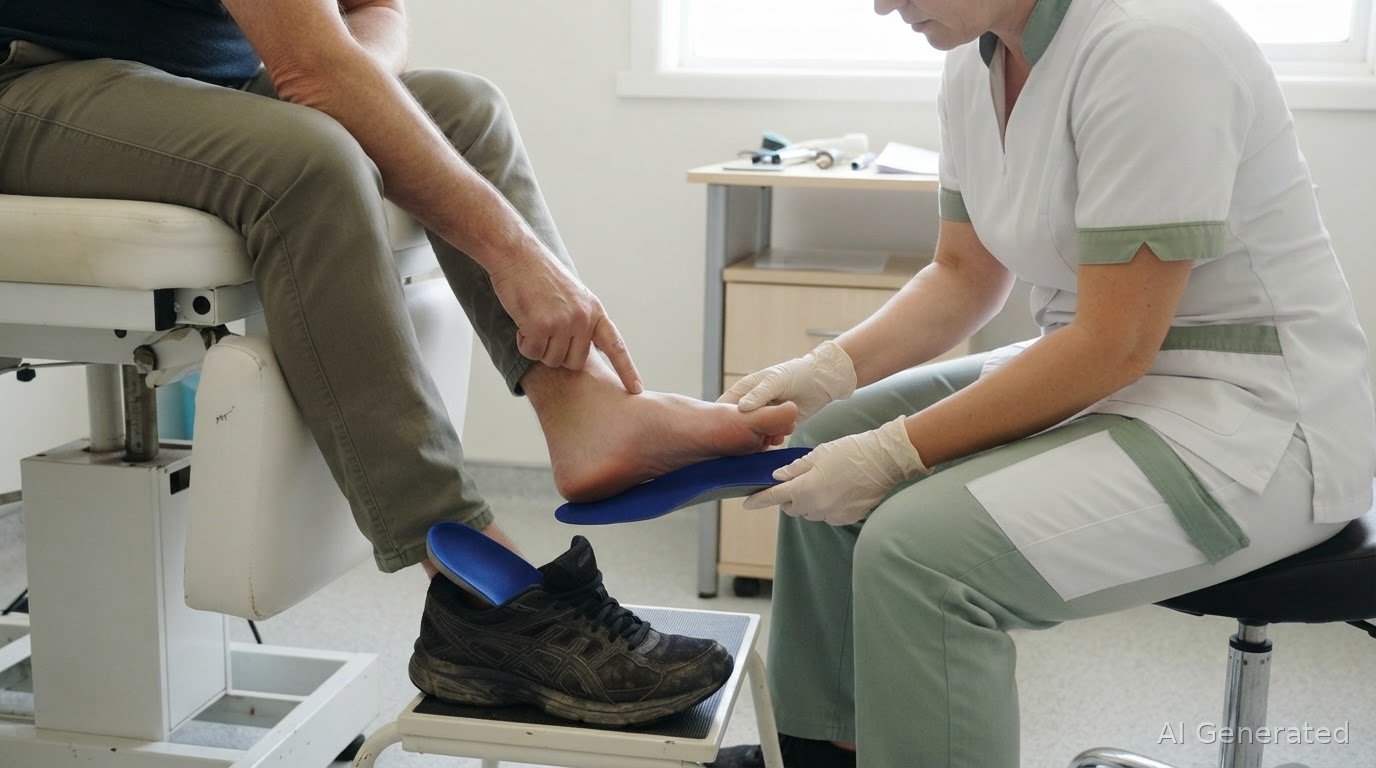
Custom orthotics don’t automatically work better, and discomfort can mean the fit or support needs attention. If you’re wondering why your orthotics make your feet hurt in Liverpool, mild awareness under the arch or temporary muscle soreness may occur as your feet adjust to changed loading. Pain that worsens, causes skin irritation or numbness, or makes walking difficult shouldn’t be dismissed as normal adjustment.
It’s understandable to expect orthotics to ease foot pain, so new or stronger symptoms can be worrying. The cause may be the device’s shape or pressure, limited room in your shoes, or another source of pain, such as plantar fasciitis. This article explains what adjustment discomfort can feel like, why orthotics may aggravate symptoms, and how footwear, fit and your underlying foot problem affect comfort. You’ll also learn when to have your orthotics and symptoms reviewed.
Key Takeaways
- A new feeling under the arch or mild muscle soreness may occur as you adjust, but worsening pain, numbness or skin damage deserves attention.
- Orthotics change how pressure is distributed beneath your feet, so the right support depends on your symptoms and how you move.
- Shoe fit matters: an orthotic can take up space, create pressure or make your heel feel less secure.
- If discomfort persists, a review can assess the orthotic, footwear and whether another cause may be contributing to your pain.
- With plantar fasciitis, orthotics are one possible part of care; the type of support should suit your foot and symptoms.
Is some adjustment discomfort normal?
New custom orthotics can feel unfamiliar because they change pressure beneath your feet. Mild awareness may settle as you adjust to them gradually, but worsening pain or skin changes need attention.
Normal adjustment sensations and concerning pain
Adjustment discomfort is mild, temporary awareness, such as a new feeling beneath the arch or a change in how your muscles work. Increasing pain matters because it can signal a pressure or fit issue rather than ordinary adjustment.
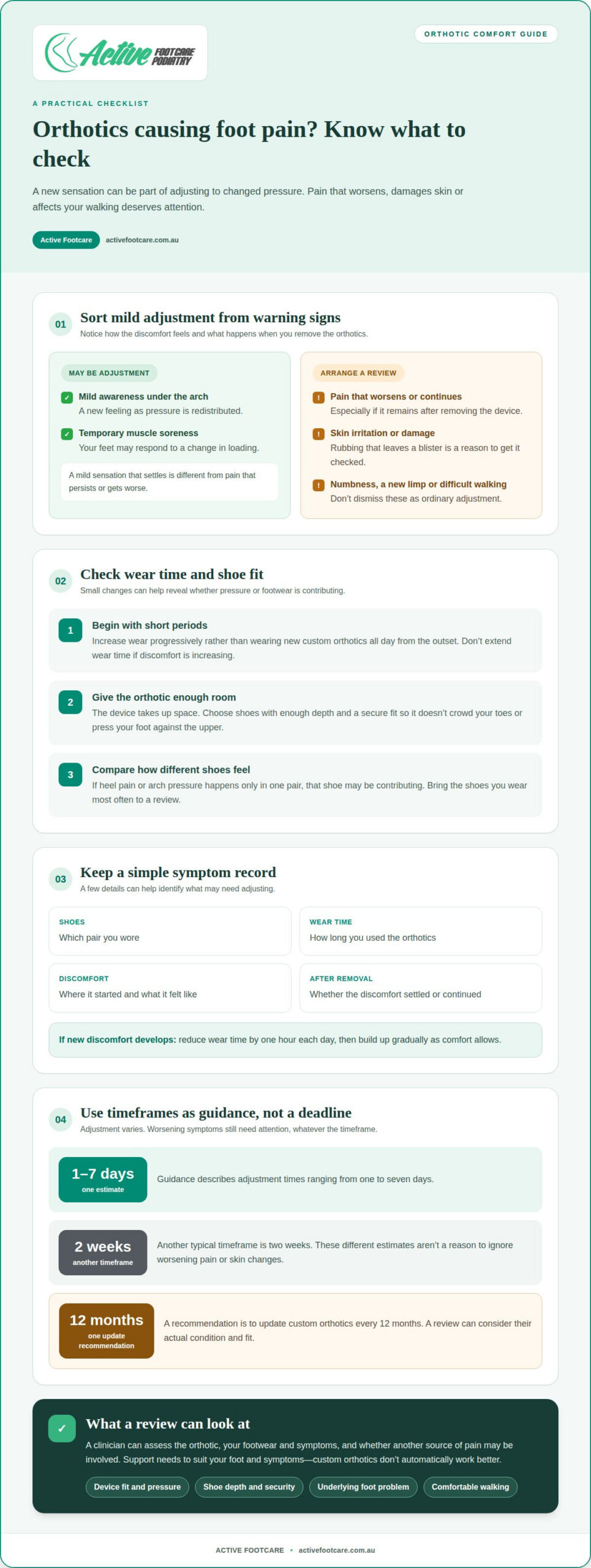
Notice what happens when you remove the orthotics. A mild sensation that settles differs from pain that persists, worsens or changes how you walk. Skin injury, numbness, a new limp or a pain flare that continues after removal shouldn’t be treated as normal. For example, rubbing that leaves a blister is a reason to arrange a review.
Gradual adjustment and shoe fit
Adjust gradually: start with short periods of wear and increase use progressively instead of wearing custom orthotics all day from the outset. This gives your feet time to respond and helps you notice pressure early.
Shoe fit affects adjustment: an orthotic takes up room and may crowd your toes or press your foot against the upper. Try it in shoes with enough depth and a secure fit. If heel pain or arch pressure occurs only in one pair, the shoe may be contributing. Don’t extend wear time when discomfort is increasing.
Orthotic adjustments and follow-up
A follow-up appointment can help determine whether discomfort reflects adjustment, fit or a need to alter the device. This is especially useful when symptoms persist or interfere with comfortable walking.
How can you tell if your orthotics need adjusting or replacing? Persistent or increasing pain, numbness, skin damage, or marked pressure calls for a review; a clinician can assess the device and your symptoms. One recommendation is to update custom orthotics every 12 months, but a review can consider their condition and fit.
Adjustment time varies: guidance describes anything from 1 to 7 days, while another typical timeframe is two weeks. These different estimates aren’t a deadline to ignore worsening symptoms. If new discomfort develops, reduce wear time by one hour each day, then build up gradually as comfort allows. Keep track of which shoes you wore, how long you used the orthotics, where discomfort started, and whether it settled after removal. Those details can help explain why your orthotics make your feet hurt in Liverpool and inform the next adjustment.
Orthotics for foot pain and biomechanical issues
Orthotics change how forces are distributed beneath your feet when you stand and move. Their usefulness depends on the problem they address, how they fit and how your body responds.
Adapting versus worsening pain
Adaptation is a mild, temporary change in sensation as foot loading changes; worsening pain is persistent or increasing discomfort. A new sensation alone doesn’t prove the device caused an injury, but deteriorating symptoms deserve reassessment.
For example, a different feeling beneath the arch may reflect redistributed pressure. Pain that becomes sharper during a walk, continues afterwards or makes standing less comfortable suggests the device or underlying problem needs closer attention. Note where symptoms occur and whether activity changes them. A podiatrist can assess foot loading with and without the orthotic.
Reasons new orthotics may cause pain
New orthotics can cause soreness when their support changes loading, presses on a sensitive area or restricts movement inside a shoe. Identifying the possible cause matters because simply wearing the device longer may not solve the problem.
An arch contour, heel cup or edge can press against a tender spot, particularly if the shoe lacks depth. The orthotic may also crowd your toes or push your foot against the shoe upper. A rapid increase in activity can add load before your feet have adjusted. Sometimes pain has another source, such as a condition that needs its own assessment, rather than an issue with the insole alone.
Prescription orthotics are designed to address specific biomechanical or postural issues affecting walking, standing or running. They can support an area, redistribute pressure or influence foot function, but they don’t correct fallen arches. A customised device may suit a particular foot and treatment goal; someone else may do well with prefabricated support. The choice depends on assessment findings, not on the assumption that custom always means better.
Evidence also calls for realistic expectations in plantar heel pain. In a randomised trial, custom insoles did not outperform sham insoles or GP-led usual care at 12 weeks for the outcomes studied. This finding doesn’t mean orthotics can never help; it shows that the label “custom” alone doesn’t predict relief. The diagnosis, fit and other care measures all matter.
When symptoms worsen or progress stalls, an assessment can revisit both the device and the original diagnosis. A clinician may examine footwear, foot loading, strength, mobility and activity demands before deciding whether support should change. If pressure or pain is affecting your walking, an assessment alongside custom orthotics care can help clarify whether the device, footwear or another cause needs attention.
Why Are My Orthotics Making My Feet Hurt More?
Increased discomfort may relate to your orthotic, footwear, activity level or original diagnosis. Reviewing these factors together helps identify what may be affecting comfort and function.
Reviewing footwear fit and compatibility
Footwear compatibility means the orthotic fits securely inside a supportive shoe without crowding your foot. This matters because the device takes up space and can change how your foot sits.
At a review, bring the shoes you wear most often with your orthotics. A podiatrist can check for a removable insole, a wide toe box and enough support. For example, a shoe that fits comfortably without an orthotic may press on your toes once the device is inside. Different footwear can also change how the orthotic functions.
Footwear, activity and rehabilitation
Reviewing footwear, activity and rehabilitation considers how daily movement interacts with the device. Orthotics alone may not address every factor affecting pain or walking.
A podiatrist may assess your strength, mobility and activity load alongside your footwear. For example, a sudden increase in walking can change the demands on your feet, even if the orthotic hasn’t changed. Care may therefore involve adjusting activity progression, footwear or rehabilitation as well as reviewing the device.
A useful review considers the whole picture, not just the painful spot. The clinician can inspect the orthotic and shoes, map your symptoms, then assess foot loading with and without the device. This comparison can show whether pressure changes when you use the orthotic and help assess how you walk in each situation.
Changes in symptoms may mean it’s worth revisiting the original diagnosis. New pain after starting an orthotic doesn’t, by itself, prove the device caused an injury. A podiatrist can consider whether the clinical picture has changed or another source may explain the discomfort. For people in Liverpool asking why their orthotics make their feet hurt, this wider assessment can help when treatment response is unexpected or progress has stalled.
Before an appointment, note when you began using the orthotic, which shoes you wore and how long you used it. Record where pain appeared and whether it settled without the device. These details help you describe symptom patterns clearly. Bring the orthotics and footwear involved, and explain how walking feels with and without them.
Depending on the findings, a review may lead to a contour adjustment, cushioning changes, different footwear or a simpler support. A podiatrist may also recommend slower activity progression or investigate another cause. Repeatedly modifying an orthotic without reassessing the diagnosis can miss why symptoms persist. For Liverpool patients wondering why orthotics make their feet hurt, a review can identify what needs attention next.
Why might an orthotic aggravate symptoms?
An orthotic can alter foot loading, and a poor fit may concentrate pressure on a sensitive area. Poorly fitted or unsuitable orthotics can worsen foot discomfort and affect how you walk. Knee or back pain may occur alongside changed movement, but doesn’t prove the orthotic caused it.
Possible soreness and side effects
Possible side effects include soreness in the feet, ankles and calves as muscles respond to changes in foot shape and alignment. The location and pattern of discomfort can help distinguish general adjustment from concentrated pressure.
For example, soreness across the arch may feel different from a sharp point of pressure beneath the heel. Rubbing can damage skin, especially if the shoe is too tight around the orthotic. Numbness, a blister or difficulty walking comfortably are signs to take seriously. People with diabetes, reduced sensation or circulation problems need particular care with pressure and skin changes.
How poor fit or incorrect orthotics affect symptoms
Poor fit means the device’s contour, edge or heel cup presses against a sensitive area, or its support doesn’t suit your needs. Pressure and changes in movement can make existing symptoms more painful.
A high arch contour may press directly beneath a tender area, and a shoe without enough depth can intensify that pressure. The device’s stiffness and degree of correction also affect how well your body tolerates the change. If discomfort increases as you walk, don’t assume the orthotic is correcting your foot structure appropriately.
Foot, ankle, knee and back symptoms can have different causes. An orthotic changes forces beneath the foot and may influence function when standing or moving, but pain elsewhere doesn’t identify the cause on its own. A clinician considers where symptoms occur, when they began and whether they change with or without the device.
During a review, describe exactly where it hurts and what makes it worse. For instance, note whether symptoms start while walking, after standing or only in a particular pair of shoes. The clinician can inspect the orthotic and footwear, then assess foot loading with and without the device. This helps determine whether pressure, movement or another condition needs attention.
Don’t continue using an orthotic through significant deterioration. A review may lead to relieving a pressure point, changing support in one area, modifying footwear or investigating another source of pain. The right response depends on the device and clinical findings. If walking becomes difficult or symptoms keep worsening, seek an assessment rather than relying on the orthotic alone.
Orthotics and plantar fasciitis
Plantar fasciitis is one condition for which orthotics may be prescribed. The devices can support the foot or cushion sore areas, but their design and fit need to suit your symptoms and footwear.
If you’re asking why your orthotics make your feet hurt in Liverpool, plantar fasciitis may be part of the picture, but it isn’t the only possible cause. A randomised trial found custom insoles didn’t outperform sham insoles or GP-led usual care at 12 weeks for the outcomes studied. Custom design alone doesn’t establish that a device will ease heel pain.
Orthotics can change how pressure is distributed beneath the foot when you stand and move. For plantar fasciitis, this may mean supporting an area or cushioning a sore spot. If an arch contour or edge presses directly on a sensitive area, the orthotic may add discomfort rather than make walking easier.
Different materials provide different kinds of support. Soft orthotics made from materials such as EVA can cushion sore spots, including those associated with plantar fasciitis. Semi-rigid insoles are also recommended for plantar fasciitis and other foot conditions. Material alone doesn’t determine the best fit; the device must also work with your shoes.
Custom orthotics may be prescribed for plantar fasciitis, flat feet and bunions, but custom design isn’t the only option. A prefabricated device may suit someone whose needs don’t require individual design. The choice depends on the assessment and what the support is intended to address.
Orthotics may form one part of care rather than acting alone. Non-operative treatments for plantar fasciitis lead to complete pain resolution in 90% of patients, and resolving pain can take 3-6 months. If your symptoms worsen while wearing an orthotic, that timeframe isn’t a reason to ignore the fit or pressure.
A review can help clarify why orthotics make your feet hurt in Liverpool by considering the device, footwear and symptoms together. Discussing how the orthotic feels during daily activities can help determine whether its fit and support suit your plantar fasciitis.
Active Foot Care: Custom Orthotics
Active Foot Care provides custom orthotics, individually manufactured and tailored based on personal assessment. A review can consider how the device fits, where pressure occurs and whether footwear or the original diagnosis may be affecting comfort. Non-invasive gait analysis provides an in-depth assessment of how you walk or run, rather than looking at the orthotic in isolation.
If pain is worsening, walking feels difficult or the device keeps causing pressure, a podiatry assessment can help clarify the next step. Bring the orthotics and the shoes you wear with them, and describe when symptoms begin and what eases them. This gives the assessment practical details to work with.
Contact Active Foot Care to discuss your orthotic concerns.
Take the next step towards comfortable movement
If you’re still wondering why your orthotics make your feet hurt in Liverpool, use the discomfort as a reason to seek a clearer assessment, not to push through pain. A focused review can connect your symptoms with your daily footwear, movement and foot health, so the next step addresses your needs rather than just the device.
Active Foot Care provides custom orthotics and can assess how they relate to your symptoms. A Podiatrist Home Visit may suit people who find it difficult to attend an appointment, while a Diabetes Foot Assessment addresses foot-health needs associated with diabetes. The appropriate service depends on what you need assessed.
Share what has changed and how the discomfort affects your usual activities. A conversation can help you decide what support to seek next. Contact Active Foot Care today to discuss your concerns and take a considered step towards easier movement.
Frequently Asked Questions
Do custom orthotics always work better?
No. Custom orthotics are designed around an individual foot and treatment goal, but that doesn’t make them the better choice for everyone. A prefabricated insole can be suitable when the required support is relatively simple. For example, someone needing general cushioning may not need a device made specifically for their feet. The important question is whether the device suits the diagnosed problem, footwear and daily activities.
Should I throw the orthotics away?
No, don’t discard them just because they feel uncomfortable. If they cause substantial deterioration, stop or reduce use and arrange a clinical review. Take the orthotics to the appointment, even if you’ve stopped wearing them, so their shape and condition can be assessed. Avoid using them if they’re damaged or causing skin injury until the cause has been reviewed.
Why do orthotics cause foot pain when first wearing them?
New orthotics change how your feet are supported and how pressure is distributed, so your muscles may respond to unfamiliar loading. For example, a device supporting the arch can change the sensation underfoot and how your foot moves inside a shoe. Pain may also relate to a pressure point or limited shoe space rather than adjustment alone. The location and timing of symptoms offer useful clues.
How long does it take to adjust to new orthotics?
Adjustment can take anywhere from 1 to 7 days, while another typical estimate is two weeks. These are not deadlines for wearing through pain. Focus on the trend: note whether each wear feels easier, stays the same or becomes more painful. If symptoms are worsening, reduce wear and arrange a review rather than waiting for a particular day on the calendar.
What foot pain from orthotics is normal, and what is a warning sign?
Mild, temporary awareness beneath the arch or different muscle sensations can occur as your feet respond to new support. Increasing pain, numbness, a blister, skin damage or a new limp are warning signs, not sensations to push through. Take particular care if you have diabetes or reduced feeling in your feet, because pressure changes can be harder to notice early.
How many hours a day should I wear new orthotics, and how should I build up wear time?
Start with short periods rather than aiming to wear them for a full day immediately, then increase wear gradually if symptoms remain comfortable. There isn’t one suitable starting number of hours for everyone. If discomfort develops, reduce wear time by one hour each day and build up more slowly. For example, wear them for part of your usual walk before using them throughout a longer outing.
What shoes work best with orthotics, and can unsuitable shoes cause pain?
Choose supportive shoes that fit securely, have a removable insole and leave room around the toes. A shoe that feels fine without an orthotic can become tight once the device is inserted. Give sporting footwear particular consideration: orthotics designed for one sport and shoe type shouldn’t simply be transferred to another pair. A podiatrist can assess the shoes you actually wear with your devices.
How can a podiatrist assess and adjust painful orthotics?
A podiatrist can inspect the devices and shoes, map the painful area, and compare foot loading with and without the orthotics. They can also assess whether strength, mobility, activity levels or a changed diagnosis affects comfort. Depending on the findings, options include relieving pressure, altering support, changing footwear or investigating another cause. Bring the orthotics and the shoes you use most often to the appointment.