

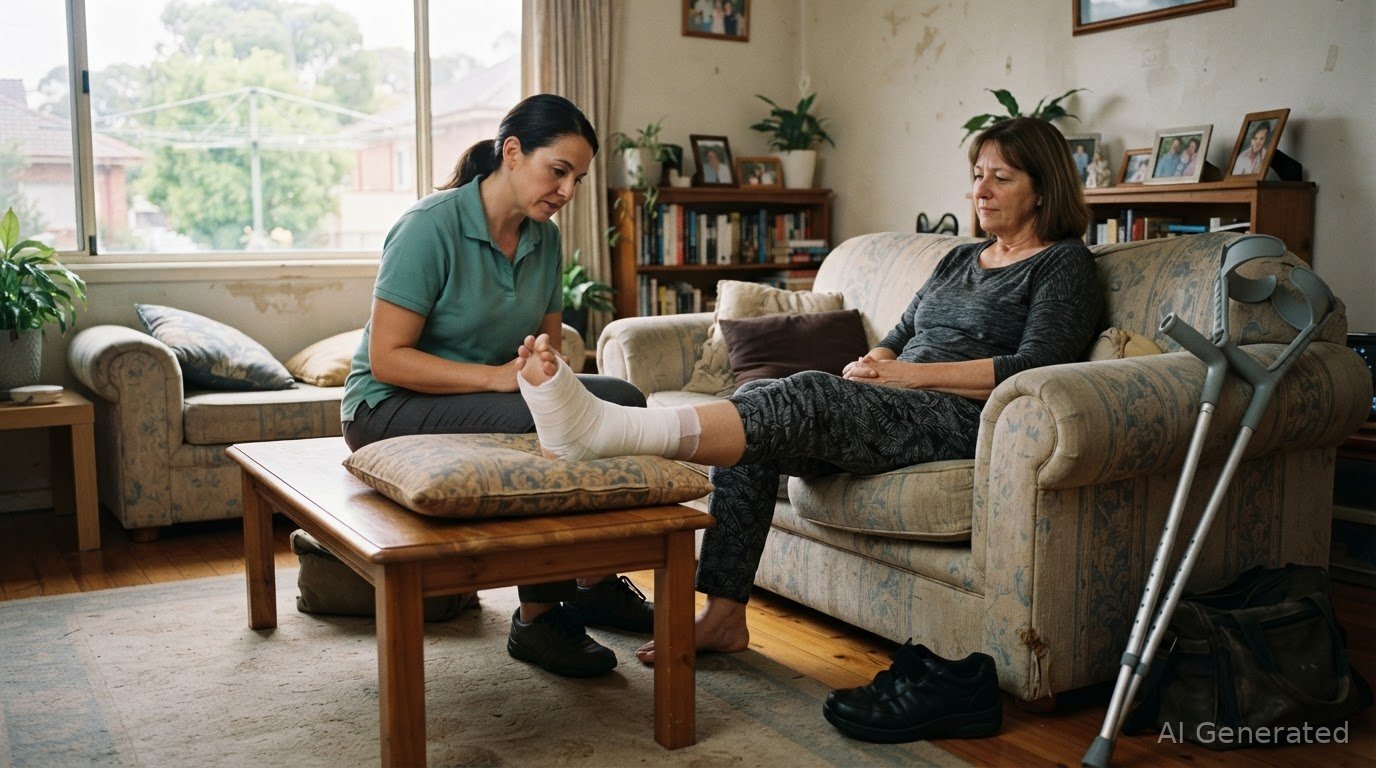
Recovery doesn’t stop at the clinic door. For post-surgery foot care at home in Sydney, a mobile podiatrist can provide personalised follow-up, footwear and skin advice, and assess pressure areas in the comfort of your home. This can make professional foot care more accessible when getting around is difficult.
It’s understandable to want clear guidance while your foot heals. Your surgeon’s instructions remain central: keep post-operative bandages or casts clean and dry, and leave them intact until your post-operative appointment. A podiatrist can assess your feet and discuss ongoing needs, including skin, nails, circulation, sensation, footwear and areas of pain or pressure.
This article explains how a mobile podiatrist may support recovery, personalise follow-up and conduct an in-home visit. It also covers how footwear, skin care and pressure-area advice can support foot health, and when home-based care may be a practical option.
Key Takeaways
- Follow-up care can be shaped around your recovery, foot health and mobility needs.
- A podiatrist can assess footwear, skin and pressure areas to guide ongoing foot care.
- In-home visits can make professional podiatry more accessible if walking or standing is difficult.
- Regular foot checks may be especially important if you have diabetes, circulation changes or reduced sensation.
- A podiatrist home visit can provide tailored support when travelling to an appointment is challenging.
Personalised treatment and follow-up care
Recovery after foot or ankle surgery looks different for each person. A clinical assessment can shape follow-up around the individual’s condition and concerns, including the operated area, current symptoms, mobility and existing foot-health needs. This gives the review a clear purpose: assess recovery and identify care needs that may affect comfort or movement.
Symptoms matter during recovery. Report post-surgery swelling, pain or possible signs of infection to your treating team. These concerns may affect the care plan, so describe where discomfort occurs and how it affects daily movement. For example, heel pain can affect standing differently from tenderness near a toe. Clear details help guide assessment and follow-up.
- Review the recovery: Discuss changes in pain, swelling and mobility since the previous assessment.
- Consider the whole foot: Look at how the surgical area relates to pressure, footwear and other foot health concerns.
- Tailor the plan: Base rehabilitation on clinical assessment and the person’s specific needs.
- Arrange follow-up: Use later appointments to review progress and adjust the approach where needed.
Foot and ankle concerns extend beyond surgery. Heel pain, ingrown toenails and flat feet can affect walking and comfort in different ways. A podiatry assessment considers where symptoms occur and how they affect daily activities. An ingrown toenail may cause local tenderness, while flat feet can influence how the foot meets the ground. Identifying the concern helps guide suitable care.
Some injuries can be managed without surgery. Assessment may consider the injury site, symptoms and relevant medical imaging before a plan is set. This helps distinguish an acute injury from longer-term concerns, such as recurring heel pain. Rehabilitation should follow an individual clinical assessment, rather than assuming the same exercises or treatment suit every injury.
Follow-up also lets the treating team consider how recovery affects everyday tasks. A change in walking comfort, for instance, may influence footwear advice or the next rehabilitation focus. Rehabilitation may involve individual sessions, group-based therapy or a wider clinical team. The right format depends on assessed needs. Sharing new symptoms helps keep follow-up relevant to recovery.
For some acute foot and ankle injuries, Dr Abdel Kak reviews the injury site and relevant medical imaging to determine an appropriate management plan. This can help distinguish an acute injury from ongoing rehabilitation needs. Patients can raise changes in symptoms, movement or comfort during follow-up so care can be discussed in light of their assessed needs.
The Sydney practice usually encourages patients to attend a second consultation after the first appointment. A further review offers a chance to discuss how the initial recommendations fit everyday movement and whether concerns have changed. Share relevant updates with the treating professional, including new discomfort or difficulty walking, to support an informed discussion about care and follow-up.
Support for post-surgical recovery
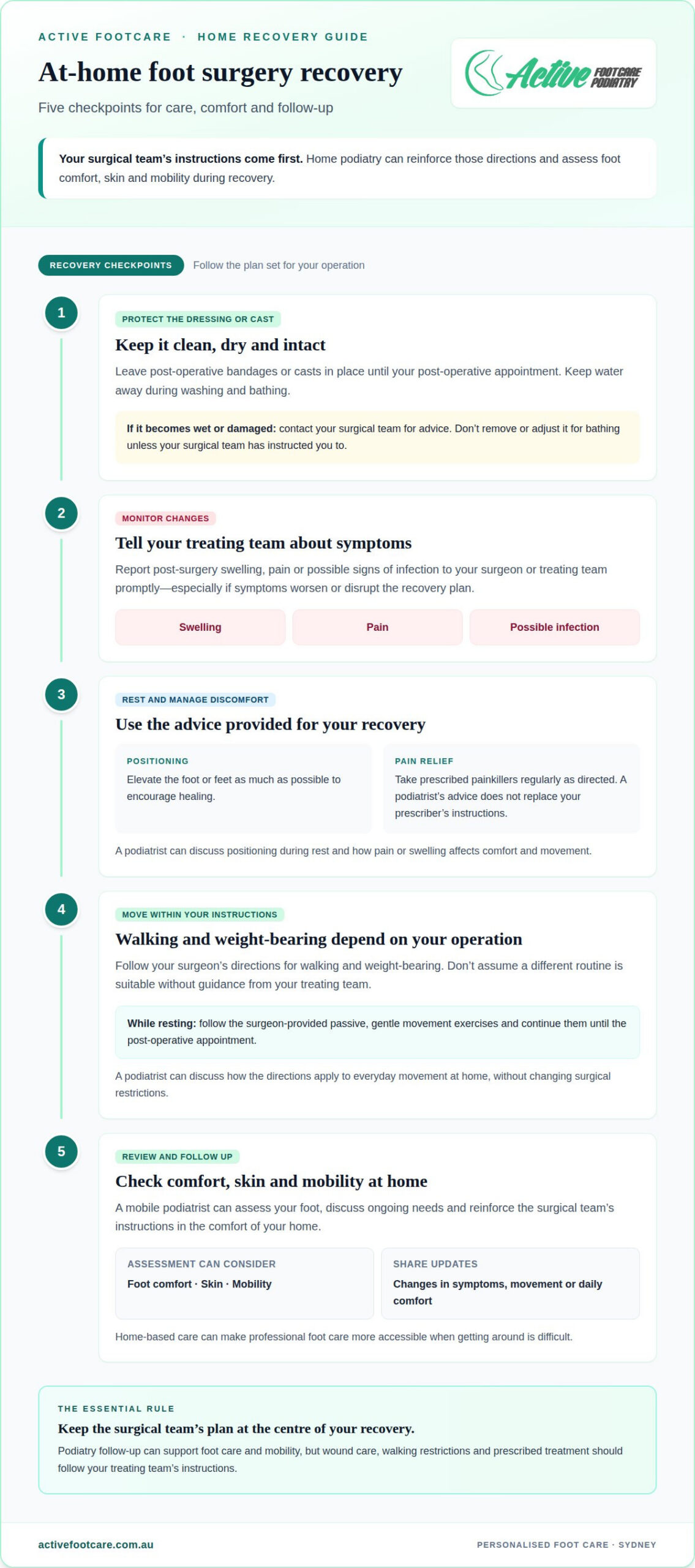
Home care should follow the surgical team’s directions and reflect the operation performed. A podiatrist can reinforce those instructions and help monitor foot comfort, skin and mobility.
Home foot care after surgery
A podiatrist can assess your foot during recovery and discuss care around the operated area. Advice can account for changes in comfort, mobility and chronic health concerns affecting foot health. Keep the surgical team informed about new or worsening symptoms. Report post-surgery swelling, pain or signs of infection promptly to your surgeon or treating team.
The key warning is to report new swelling, pain or possible infection after surgery, rather than waiting for routine follow-up. A home assessment can also help identify areas needing attention while movement remains limited.
Wound dressing and bathing instructions
Keep post-operative bandages or casts clean and dry, and leave them intact until your post-operative appointment. A podiatrist can reinforce this instruction and explain how it applies to everyday washing and bathing. Keep water away from the dressing or cast. Don’t remove or adjust it for bathing unless your surgical team has instructed you to do so.
If a dressing becomes wet or damaged, contact your surgical team for advice. A podiatrist can clarify routine foot-care needs, while wound care should follow the surgeon’s plan.
Managing swelling and pain
After foot or ankle surgery, elevate the foot or feet as much as possible to encourage healing. A podiatrist can discuss positioning during rest and review how swelling or pain affects comfort and movement. Take prescribed painkillers regularly as directed. A podiatrist’s advice does not replace your prescriber’s instructions.
Changes matter. Report swelling, pain or suspected infection to your treating team, especially if symptoms worsen or disrupt the recovery plan. This gives the surgical team information to assess alongside the operation and post-operative progress.
Walking and weight-bearing after surgery
Walking and weight-bearing advice must match your surgeon’s instructions for the specific operation. A podiatrist can discuss how those directions apply to everyday movement at home and identify practical concerns, such as discomfort while standing. Don’t assume a different walking routine is suitable without guidance from your treating team.
While resting, follow the surgeon-provided passive, gentle movement exercises and continue them until the post-operative appointment. A podiatrist can reinforce the prescribed approach and help discuss how mobility is progressing, without changing surgical restrictions. For tailored follow-up at home, in-home podiatry support can bring foot-care advice to you.
Footwear, skin care and pressure-area advice
A podiatry assessment can relate footwear, skin condition and pressure points to your recovery needs. At home, the practitioner can examine areas of pain or pressure and consider how your shoes fit.
Footwear advice depends on the person and the foot being assessed. A podiatrist can consider fit, comfort and pressure, then explain which features may suit your needs. For example, a shoe that presses on a tender area may need a different fit. Post-surgical footwear must also follow your surgical team’s instructions.
Skin and nail checks give the podiatrist a closer view of foot health. The practitioner can assess skin condition, nails, circulation and sensation, then explain relevant ongoing care. Dry or cracked skin, thickened nails and a painful pressure point each call for different advice. Assessment helps identify which concern needs attention and what follow-up may be appropriate.
Pressure-area care focuses on spots where contact or friction causes discomfort. The podiatrist can examine areas of pain and pressure, including those affected by footwear or limited movement. This helps link a sore area with its possible source, rather than treating discomfort in isolation. Any advice should account for post-surgical instructions.
- Footwear: Assess fit and pressure around the foot, including the operated area.
- Skin: Review dryness, cracking or other changes that affect comfort.
- Nails: Check nail condition and whether thickening creates pressure.
- Sensation: Consider whether reduced feeling affects how pressure is noticed.
A podiatrist can assess footwear, pressure and mobility, then discuss whether equipment or home adjustments are relevant. Recommendations depend on assessed needs and surgical restrictions. For example, the practitioner can consider how you move between rooms and whether footwear affects comfort or stability, without assuming the same change suits everyone.
Regular foot checks can be especially important for people with diabetes, circulation changes or reduced sensation. Reduced feeling may make pressure harder to notice, so a visual and clinical assessment can help identify skin or pressure concerns. A podiatrist can explain which changes to monitor and how follow-up fits into ongoing foot care.
These checks also help guide therapy and future podiatry appointments. If footwear creates a painful contact point, the practitioner can reassess fit and pressure at a later visit. Changes in skin or nail concerns can shape the next assessment. The focus is practical advice matched to your foot, mobility and recovery instructions.
An aged-care podiatry visit may include trimming and filing nails, reducing corns or callus, checking pressure areas and providing ongoing-care advice. These measures can be considered alongside footwear fit, skin condition, nail changes and pressure concerns identified during assessment. The podiatrist can discuss which aspects of care are relevant and how they relate to ongoing foot-health needs. Advice should follow post-surgical instructions and account for assessed needs.
Home visits
A home visit brings foot care to the patient’s own environment. It may suit people who find walking or standing difficult, use mobility aids or manage ongoing health conditions. For people seeking post-surgery foot care at home in Sydney, a visit can remove the need to travel to a clinic for that appointment.
The home setting gives the podiatrist useful context. A patient’s usual chair, bed and walking routes can show how recovery affects everyday movement. For example, getting from a bedroom to a bathroom may feel different from walking across an open room. Discussing these practical concerns helps focus the assessment on the patient’s daily routine.
During a visit, the podiatrist can assess foot-care needs and consider how mobility or health conditions affect them. The appointment may cover regular nail and skin care, as well as concerns that make moving around uncomfortable. For a patient using a mobility aid, the practitioner can discuss how foot care fits their current movement needs.
- Access: Consider whether walking or standing makes clinic attendance difficult.
- Daily routine: Identify which movements, such as walking between rooms, cause concern.
- Health needs: Discuss how ongoing conditions affect foot-care requirements.
- Follow-up: Review which concerns need attention during later appointments.
A home appointment may be useful when travel adds strain during recovery. Patients relying on a walking aid may find getting to and from a clinic difficult. People who cannot stand comfortably for long periods may also benefit from care in familiar surroundings. Whether a visit is suitable depends on mobility and individual foot-care needs.
Home-based care can also support people who need regular nail or skin care. The podiatrist can assess those needs where the patient follows their usual routine. For example, someone with an ongoing health condition may need foot-care advice considered alongside everyday mobility. A home visit makes the discussion specific to the patient’s circumstances.
Before the appointment, describe the main concern, such as difficulty walking or discomfort during daily activities. This gives the podiatrist a clear starting point to assess relevant foot-care needs and discuss suitable follow-up. If recovery changes how you move around at home, that information can guide a later appointment.
Home visits may suit patients with mobility challenges, ongoing health conditions or regular foot-care needs. For post-surgery foot care at home in Sydney, the practical benefit is receiving podiatry in your own environment, where daily movement and access needs can be discussed directly.
In-home foot and lower-limb care
In-home care can address more than the area affected by surgery. A podiatry assessment considers foot health, lower-limb comfort and how symptoms affect daily movement. Sore feet or painful nails, for example, can make walking uncomfortable and affect confidence, balance and independence, particularly for aged-care residents.
A home appointment lets the podiatrist assess foot-care needs in your own environment. This can link a concern with everyday movement, such as discomfort when walking between rooms. The assessment may cover skin, nails, circulation, sensation, footwear and areas of pain or pressure. These findings help guide advice suited to your needs.
Mobile podiatry may include several types of ongoing care. The podiatrist can assess nail health, address thick toenails, corns and callus, provide cracked-heel care, and complete diabetic foot checks or general foot-health assessments. Which services are relevant depends on your presentation and clinical assessment. Care can focus on a specific painful area or broader foot-health needs.
- Nails: Assessment and care for painful or thickened toenails.
- Skin: Attention to cracked heels, corns and callus.
- Foot health: General assessments, including checks for people with diabetes.
- Movement: Consideration of how foot discomfort affects walking and confidence.
For Medicare-related support, eligible patients and pensioners may receive up to five podiatrist appointments through the Enhanced Primary Care Plan initiative. Private health insurance and NDIS funding depend on the applicable policy or participant plan, including eligibility and funded supports.
In Sydney, a mobile podiatrist can provide foot-care assessment and treatment at home. Home nursing and podiatry are different forms of support: podiatry focuses on foot health, while specific nursing needs are addressed through the relevant care arrangements. A podiatry visit may suit concerns such as nail discomfort, callus or diabetic foot checks.
Regular assessment can be valuable for people with diabetes, circulation changes or reduced sensation, because foot checks can identify pressure or skin concerns. A podiatrist can consider these factors alongside mobility and existing foot-care needs. If recovery makes travelling difficult, a home visit brings the assessment to familiar surroundings.
To arrange in-home podiatry care, consider the main concern, such as painful nails, cracked heels or a need for a diabetic foot assessment. Sharing how that concern affects walking helps the appointment focus on relevant foot and lower-limb needs.
Active Foot Care: Podiatrist Home Visit
Active Foot Care provides Podiatrist Home Visits for people who need professional foot care at home. This can suit someone whose recovery makes travelling to an appointment difficult, or who needs foot health assessed in familiar surroundings.
During a visit, a podiatrist can discuss your concerns and assess relevant foot-care needs. A Diabetes Foot Assessment may suit people with diabetes, while Gait Analysis or Custom Orthotics may be considered when they address an assessed need. These services support different concerns and don’t replace your surgeon’s post-operative instructions.
If you’re considering a home visit, contact Active Foot Care to discuss your foot-care needs and recovery concerns.
Plan your next step in recovery
Recovery can change as you return to familiar routines. Consider what support would make that transition more manageable, whether professional care at home or guidance for an ongoing foot-health concern. Post-surgery foot care at home in Sydney can complement your surgeon’s plan, with podiatry focused on your individual needs.
Active Foot Care offers Podiatrist Home Visits, Diabetes Foot Assessments and Custom Orthotics. These options address different needs, from professional foot care at home to assessment for diabetes-related foot concerns or custom orthotic support. Your needs and recovery goals can guide where to start.
For a calm, practical discussion about your foot-care needs, contact Active Foot Care. Taking that step can help you move forward with clear, personalised support.
Frequently Asked Questions
How often should I see my surgeon or podiatrist after foot surgery in Sydney?
Attend the post-operative reviews set by your surgeon, then arrange podiatry follow-up according to your recovery and foot-care needs. There isn’t one schedule for every operation. Confirm your surgeon’s review plan and discuss whether a podiatry appointment could help with mobility, footwear or ongoing foot concerns. If pain, swelling or possible infection develops, report it promptly to your treating team rather than waiting for a routine visit.
What equipment and home modifications help keep me safe while recovering from foot surgery?
A podiatrist can assess how you move between rooms and whether footwear affects comfort or stability, then discuss whether equipment or home adjustments are relevant. Recommendations should match your assessed needs and your surgeon’s restrictions.