

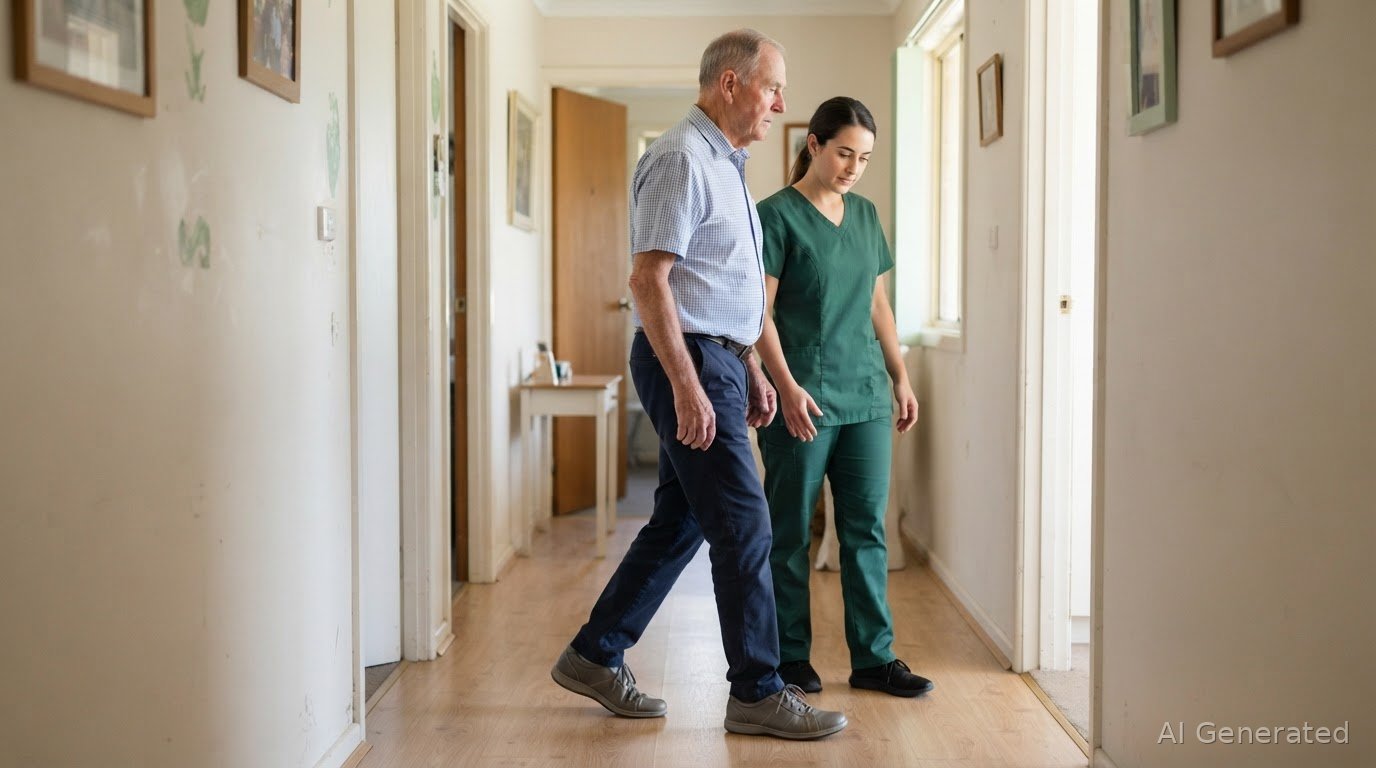
Balance can be affected by what happens at ground level. Podiatry for improving balance in seniors in Moorebank can include an assessment of gait, foot function and footwear, followed by tailored care such as foot-strengthening exercises or custom orthotics. Addressing foot pain and other concerns may support steadier movement and help reduce fall risks.
It’s understandable to focus on strength and general mobility when walking feels less secure. Foot comfort, joint movement and the way each step meets the ground can also matter. A podiatry assessment can help identify foot-related factors that may be affecting stability.
This article explains how podiatrists assess balance and mobility, what foot care and strengthening may involve, and what seniors can expect from an appointment near Moorebank. You’ll also learn when professional support may be useful and how personalised podiatry care can support safer, more confident movement.
Key Takeaways
- A podiatry assessment can examine gait, foot function and footwear to identify factors that may affect steadiness.
- Strengthening exercises are tailored to a person’s movement and needs, rather than relying on a one-size-fits-all routine.
- Foot pain, changes in joint movement and unsuitable footwear can all influence balance and confidence when walking.
- At a first appointment, relevant medical history, footwear and walking aids can help inform the assessment.
- NDIS podiatry services may be a suitable next step for eligible seniors seeking professional support with foot health and mobility.
Falls prevention and mobility assessments
A podiatrist can assess how foot health, lower-limb movement and walking patterns relate to balance. The findings help shape a care plan around mobility concerns and possible fall risks.
Gait and biomechanical assessment
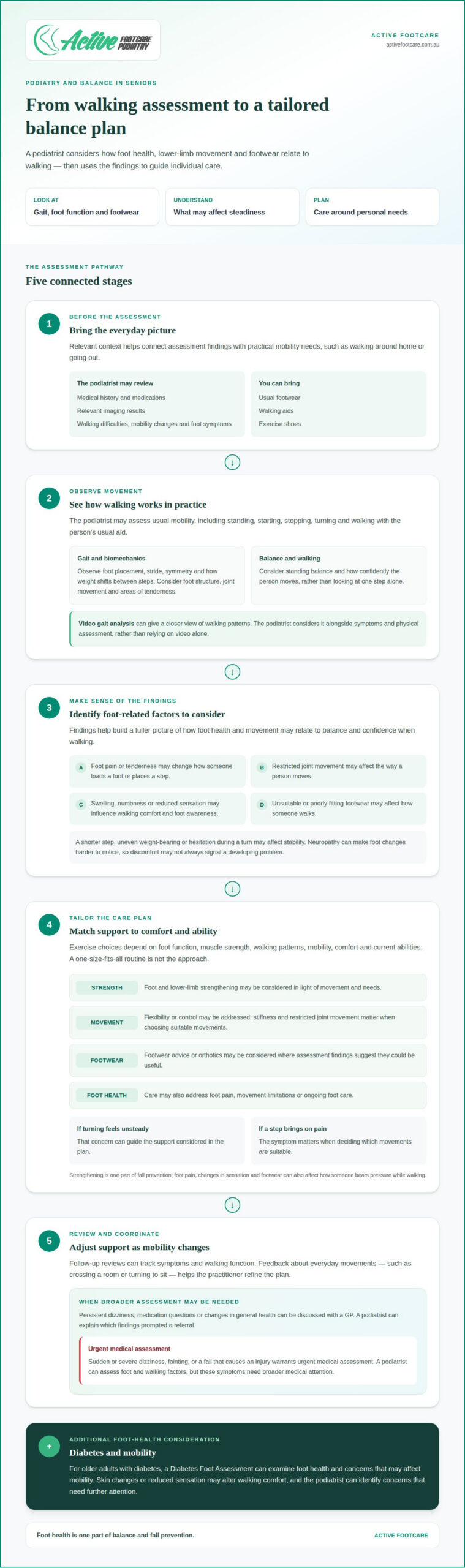
A gait assessment looks at how the feet and lower limbs work during standing and walking. The podiatrist may observe foot placement, stride, symmetry and how the body shifts weight between steps. A biomechanical assessment considers foot structure, joint movement and areas of tenderness. For example, pain or restricted movement may change how someone loads one foot. These findings help identify foot-related factors to consider when planning care.
Balance and walking assessments
During a walking assessment, the podiatrist observes movement that reflects the person’s usual mobility. This may include starting, stopping, turning and walking with their usual aid. The practitioner also considers standing balance and how confidently the person moves. Foot pain, swelling, numbness or unsuitable footwear may affect these tasks. Considering movement alongside foot function gives a fuller picture than looking at one step alone.
First appointment expectations
At a first appointment, the podiatrist may review medical history, medications and relevant imaging results. Seniors can bring their usual footwear, walking aids and exercise shoes to show how they move in everyday settings. The practitioner may ask about walking difficulties, recent mobility changes and foot symptoms. This information helps connect the assessment findings with practical needs, such as walking around the home or going out.
When should an older adult see a GP urgently about dizziness or falls? Sudden or severe dizziness, fainting, or a fall that causes an injury warrants urgent medical assessment. A podiatrist can assess foot and walking factors, but these symptoms need broader medical attention.
Further assessment may be appropriate when concerns extend beyond foot mechanics. Persistent dizziness, medication questions or changes in general health can be discussed with a GP. The podiatrist can explain which findings prompted the referral, helping the next practitioner understand the mobility concern.
Assessment findings should lead to clear next steps, not just a description of gait. Depending on what the podiatrist observes, a care plan may address foot pain, movement limitations, footwear or ongoing foot care. For older adults with diabetes, a Diabetes Foot Assessment can examine foot health and concerns that may affect mobility. Follow-up reviews can help track changes in symptoms and walking function.
How podiatrists tailor strengthening exercises for gait and balance
A podiatrist uses foot function, muscle strength and walking patterns to guide exercise choices. Strengthening work should suit a person’s mobility, comfort and current abilities. A senior who feels unsteady while turning may need different support from someone whose foot pain changes their stride. Podiatrists tailor exercises to the individual rather than prescribing the same routine for everyone.
Gait analysis can show how each foot contacts the ground during walking. A practitioner may assess whether pressure shifts unevenly or discomfort changes how someone places a foot. These observations help identify factors relevant to stability and movement. For example, reduced foot strength or a painful step may affect walking confidence. The findings can guide a care plan and help determine whether orthotics or footwear advice may be useful.
Video gait analysis can give the podiatrist a closer view of walking patterns. Reviewing movement can help identify differences between steps, changes in foot placement or a tendency to shorten one stride. The practitioner considers these observations alongside symptoms and physical assessment, rather than relying on video alone. In a clinic appointment, this can help connect what happens during walking with the person’s concerns about balance or falls.
Exercise selection also depends on how comfortably a senior can stand and move. A podiatrist may focus on foot and lower-limb strength, flexibility or control, depending on the assessment. For someone with stiffness, the plan may need to account for restricted joint movement. If walking brings on pain, that symptom matters when deciding which movements are suitable. The practitioner explains the purpose of exercises and tailors the plan to the person’s needs.
Unsteady gait can have several contributing factors, so strengthening exercises are only one part of prevention. Foot pain, changes in sensation and footwear can affect how someone bears pressure while walking. A Diabetes Foot Assessment is particularly relevant when diabetes affects foot health, as skin changes or reduced sensation may alter walking comfort. The podiatrist can consider these issues when planning care and identify concerns that need further attention.
Reviewing progress helps the practitioner understand whether the plan remains appropriate as mobility changes. Seniors can describe which everyday movements feel difficult, such as walking across a room or turning to sit. That feedback helps refine the care plan without assuming a particular exercise suits everyone. To discuss a clinician-led approach, explore podiatry assessment options for gait and mobility concerns.
Balance problems and fall prevention
Foot pain, poorly fitting footwear or reduced sensation can change how a senior walks. A shorter step, uneven weight-bearing or hesitation during a turn may affect stability and increase the chance of a stumble or fall. Neuropathy can also make foot changes harder to notice, so discomfort may not always signal a developing problem.
Foot health is one part of fall prevention, alongside general mobility and other health factors. Ageing feet may have thinner skin, stiffer joints and slower circulation, which can contribute to discomfort or instability. A podiatrist can assess how these changes affect the lower limb and walking, then identify foot-related concerns that may be addressed through podiatry care.
Footwear can influence comfort and steadiness from step to step. Older adults are advised to choose shoes with a wide toe box, good arch support, non-slip soles, low heels and soft lining. A podiatrist can assess how a person’s usual shoes fit and function during walking. For example, a shoe that feels unstable during a turn may need different support from one that puts pressure across the toes.
Custom orthotics may provide added stability, balance and comfort for some older adults. Their role depends on foot structure, symptoms and how the person moves. Orthotics aren’t a replacement for assessing other causes of unsteadiness. The podiatrist can consider whether individually manufactured, tailored orthotics fit the care plan or whether another foot-care approach is more appropriate.
A tailored routine may also include gentle activity and exercises to support circulation, flexibility, strength, foot function and balance. The podiatrist considers existing pain, joint stiffness and walking ability when discussing suitable movements. For instance, someone with discomfort during push-off may need an approach that accounts for that movement. Exercises should relate to the assessment, rather than being selected solely because they’re commonly recommended.
For seniors with diabetes, reduced circulation or difficulty healing, broken skin, foot wounds, persistent redness or unusual swelling shouldn’t be ignored. These changes can affect comfort and walking and deserve prompt attention. A Diabetes Foot Assessment can address foot-health concerns as part of a broader mobility discussion. Regular podiatry reviews can also help track changes in the feet, footwear needs and lower-limb function.
Fall prevention works best when relevant causes are considered together. A podiatrist may connect pain, sensation, footwear and movement findings, then explain which foot-related changes could support safer walking. The care plan can be reviewed as symptoms or mobility change, rather than treating one appointment as a complete solution. This keeps foot care focused on the senior’s daily movement and practical stability needs.
Podiatry services near Moorebank
For seniors in Moorebank, podiatry care can address foot concerns that interfere with everyday movement. Persistent foot or ankle pain, difficulty standing, swelling, numbness and hard-to-trim nails are reasons to seek an assessment. A podiatrist can examine the feet and discuss how symptoms affect activities such as walking around the home or running errands. This connects foot health with practical mobility needs.
Routine care may include nail trimming, callus removal and regular foot checks. These services can be useful when reduced mobility, vision or grip strength makes self-care difficult. A thickened nail, for example, may catch on a sock or make footwear uncomfortable. A podiatrist can assess the nail and surrounding skin, then provide appropriate care. Regular checks also give the practitioner a chance to notice changes in skin or nails.
Arthritis and joint stiffness can make walking less comfortable by limiting movement or changing how a person places their feet. Podiatry care can include tailored treatment to relieve pain and support mobility. The practitioner considers where stiffness occurs and which movements feel difficult, such as pushing off during a step. Care planning can focus on the foot-related concerns affecting function, rather than treating discomfort as separate from walking.
Some care plans for ageing feet may aim to improve blood flow and reduce swelling. The practitioner considers symptoms and foot condition when deciding what care is appropriate. For example, swelling that makes usual shoes difficult to wear may affect comfort during walking. Changes in swelling or skin condition can also guide follow-up discussions. Ongoing foot care can therefore support both comfort and daily mobility.
It helps to describe specific changes during an appointment. Seniors might mention when foot pain starts, whether standing is harder than walking, or if a nail has become difficult to trim. These details help the podiatrist understand how a foot problem affects everyday function. A non-healing sore or persistent skin buildup also deserves attention, especially when it makes walking or wearing shoes uncomfortable.
The most useful service is the one that addresses the concern affecting movement. A routine foot check may suit nail or skin-care difficulties, while ongoing pain or stiffness calls for an assessment of symptoms and function. For seniors in Moorebank, podiatry services offer a considered path from identifying a foot problem to planning suitable care. The focus is on comfort, mobility and preserving independence in daily activities.
First podiatry visit for balance: what to expect
A first appointment begins by understanding what has changed in the senior’s balance and mobility. The podiatrist may review medical history, medications and relevant imaging results. They’ll also ask about foot symptoms and daily activities, such as walking around the home, exercising or going outdoors. These details connect the person’s concerns with foot health and movement.
Information about exercise routines and footwear adds useful context. A senior might mention that walking feels less steady after a change in activity, or that a particular pair of shoes causes discomfort. The podiatrist may ask about work responsibilities, sports and usual exercise, as these can help explain how the feet are used. Clear examples of when symptoms occur make the discussion more specific.
Bringing familiar items can help the practitioner assess everyday needs. Useful items include:
- Usual footwear, including shoes worn for regular walking.
- Walking aids used for support or mobility.
- Exercise shoes, if they differ from everyday footwear.
- Relevant imaging reports connected to foot or ankle concerns.
These items help the podiatrist consider how footwear and aids relate to the person’s usual movement. There’s no need to choose new shoes or change a walking aid before the visit.
The appointment also gives the senior time to explain what they want to keep doing. For example, they may want to feel more secure walking to the letterbox, standing in the kitchen or going out for appointments. Sharing these priorities keeps the discussion focused on meaningful activities. The practitioner can then relate assessment findings to practical goals.
After gathering this information, the podiatrist assesses relevant foot concerns and movement. Depending on the symptoms, the assessment may consider foot structure, gait, tenderness and joint function. If foot pain is present, the practitioner can examine how it affects walking or standing. The findings help shape a care plan around the senior’s needs, rather than assuming every balance concern has the same cause.
The podiatrist explains the findings and discusses suitable next steps. These may include foot care, footwear guidance, strengthening exercises or further assessment when concerns extend beyond podiatry. Seniors can ask how each recommendation relates to walking or daily activities. A clear explanation helps them understand the purpose of the care plan and what it addresses.
If balance concerns are affecting everyday movement, arrange a podiatry appointment to discuss an individual assessment.
Active Foot Care: NDIS Podiatry Services
Active Foot Care provides NDIS Podiatry Services for seniors who need professional support with foot health and mobility. A podiatrist can assess how foot concerns relate to walking and discuss suitable care, including Custom Orthotics where appropriate. For people who find travel difficult, a Podiatrist Home Visit brings podiatry care to the home. A Diabetes Foot Assessment may also address foot-health concerns for seniors living with diabetes.
These services can help when foot pain, changes in walking or difficulty managing foot care affect daily activities. The podiatrist considers the person’s needs and assessment findings when discussing next steps, rather than assuming one approach suits everyone. Seniors seeking support with balance and foot health can contact Active Foot Care to discuss podiatry care.
Take the next step towards steadier movement
Improving balance is a practical goal when it helps someone keep doing what matters, whether that’s walking independently at home or feeling more comfortable on regular outings. Podiatry for improving balance in seniors in Moorebank can begin with a conversation about movements that feel difficult and activities a person wants to maintain. Those priorities help focus the next steps on everyday life.
Before arranging care, consider what the senior most wants support with: confidence while walking, managing foot discomfort or staying active. Sharing that goal gives the podiatrist a useful starting point for discussing suitable care. It also helps the senior and family understand how foot health may relate to mobility, while keeping expectations grounded in the person’s needs.
Active Foot Care can discuss podiatry support for seniors seeking help with mobility and foot concerns. Contact Active Foot Care to discuss a suitable next step and begin a considered approach to steadier movement.
Frequently Asked Questions
Can podiatrists help with balance and fall prevention?
Yes. A podiatrist can identify foot-related issues that affect steadiness, such as pain, reduced joint movement or changes in foot function. This can clarify which concerns are appropriate for podiatry care and which may need broader assessment. For example, a senior who feels unstable because one foot hurts may benefit from an assessment of that symptom and its effect on walking. Foot care supports, but doesn’t replace, wider falls prevention.
What is seniors’ podiatry?
Seniors’ podiatry is foot and lower-limb care shaped around an older person’s health, comfort and mobility needs. It can address concerns such as difficult nail care, foot pain, skin changes or problems wearing usual shoes. The podiatrist considers how these issues affect daily tasks, from standing to walk to getting dressed. Care may focus on maintaining foot function and making everyday movement more manageable.
How can podiatry help older adults?
Podiatry can help older adults understand and manage foot problems that interfere with comfort or routine activities. For instance, a painful area under the foot may make standing at the kitchen bench difficult. A podiatrist assesses the concern, explains its possible effect on movement and discusses relevant care. For people with diabetes, regular attention to foot health can also help identify changes that warrant timely clinical attention.
How can podiatry improve balance and reduce falls in seniors?
Podiatry for improving balance in seniors in Moorebank focuses on foot-related factors that can make walking less steady. Pain can alter how someone places their foot, while reduced sensation may make it harder to notice contact with the ground. A podiatrist considers these issues alongside footwear and movement. Addressing relevant foot concerns may support more comfortable walking, although balance can also depend on health factors outside podiatry.
What podiatry assessments identify foot and gait problems affecting balance?
A podiatry assessment can include observing standing and walking, checking foot structure, and examining movement or tenderness. The podiatrist may consider how the person starts walking, changes direction or bears weight through each foot. Footwear and relevant medical history also provide context. Together, these observations help identify foot or gait factors that may affect balance and guide whether podiatry care or further assessment is appropriate.
Which podiatry treatments help improve balance in older adults?
Suitable care depends on the assessment findings and the older person’s needs. Options may include foot care, footwear advice, strengthening exercises or custom orthotics. Individually manufactured and tailored orthotics may provide added stability, balance and comfort for some older adults, based on their foot function and walking needs. A podiatrist can explain why an approach is being considered and how it relates to a practical goal, such as walking more comfortably indoors.
Can podiatrists prescribe balance exercises or refer seniors to physiotherapy?
Podiatrists can provide foot-strengthening exercises to support gait and balance. They tailor movements to foot function, mobility and symptoms rather than relying on a standard routine. If findings suggest the concern needs input beyond podiatry, further assessment may be appropriate. A senior can describe which movements feel difficult, such as turning or stepping off a kerb, to help guide the discussion.
Which podiatrists near Moorebank specialise in seniors’ balance and fall prevention?
Active Foot Care provides podiatry services for people in Moorebank, with home visits and gait analysis. Seniors seeking help with balance can discuss walking concerns and foot-health needs with a podiatrist. Gait analysis is a non-invasive examination of the way a person walks or runs, and the assessment can help determine which podiatry approach is relevant. It offers a local starting point for older adults whose foot concerns affect mobility or confidence in everyday activities.