

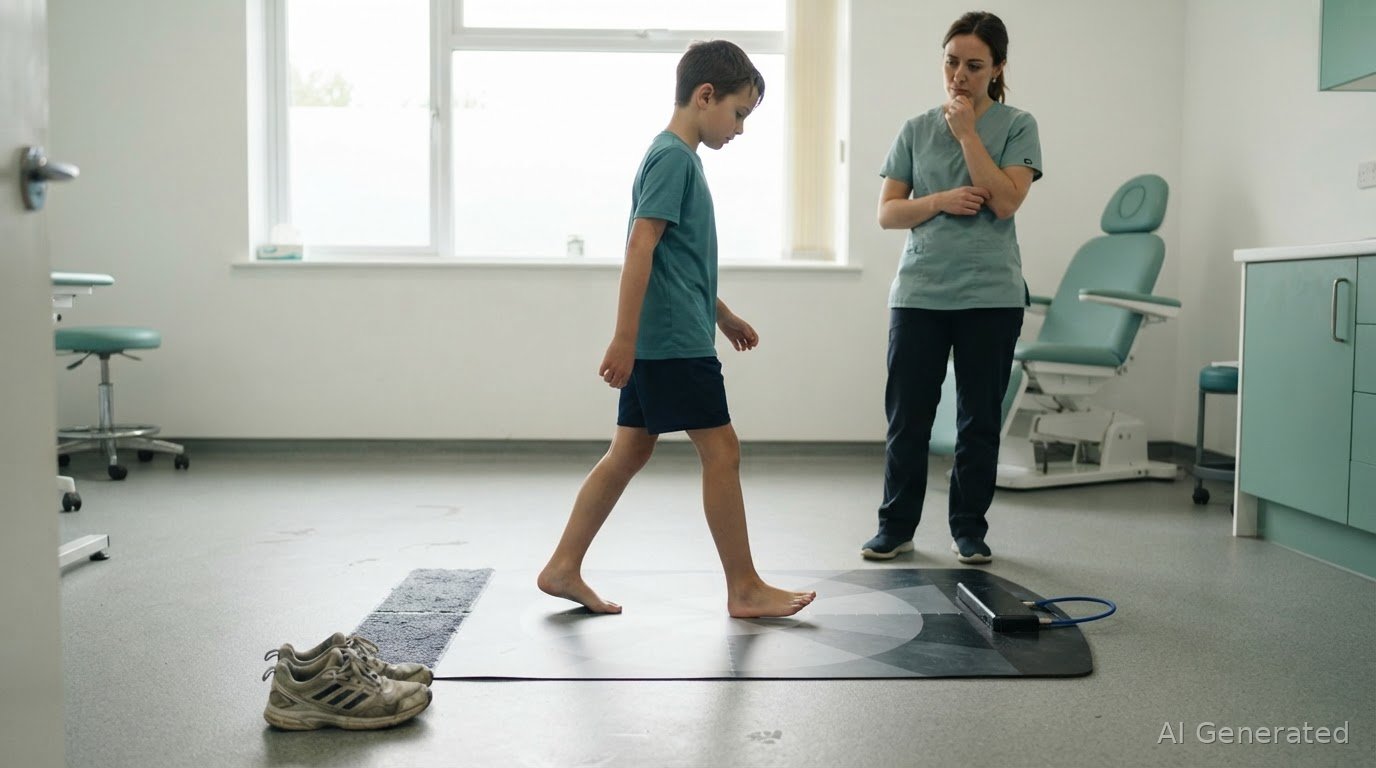
Being active doesn’t mean a child should have to push through foot or leg pain. For families considering podiatry for active kids in Campbelltown, recurring pain, limping, changes in walking or running, or avoiding sport are reasons to arrange an assessment. A podiatrist can assess how your child moves and discuss what may be contributing to their symptoms.
It’s understandable to wonder whether sore feet or an unusual walking pattern are part of growing up or whether support could help. This guide explains what to look out for, what a gait and pain assessment may involve, and how a podiatrist can help you understand the next steps without making sport feel like something your child must give up.
We’ll also cover pain after sport, including heel pain, and when a home visit in Campbelltown may suit your family. You’ll learn what to observe, what an assessment can cover, and how to consider care alongside your child’s activities and daily routine.
Key Takeaways
- Recurring foot or leg pain, limping, or avoiding activities are useful signs to discuss with a podiatrist.
- A gait assessment looks at how a child moves and can help make sense of pain or changes in walking and running.
- Heel pain after sport deserves attention; severe Sever’s disease may mean taking a break from sport for 1-2 seasons, according to Sydney Children’s Hospitals Network.
- A home visit may suit families when getting to an appointment is difficult or an assessment at home is more practical.
- Learn what to look for in a podiatrist for young athletes and how NDIS podiatry services may support eligible children.
When should children visit a podiatrist?
Arrange an assessment if foot or leg pain keeps returning, changes your child’s walking, or limits play. For podiatry for active kids in Campbelltown, a podiatrist can assess movement, symptoms and the activities affected.
Children’s foot screening
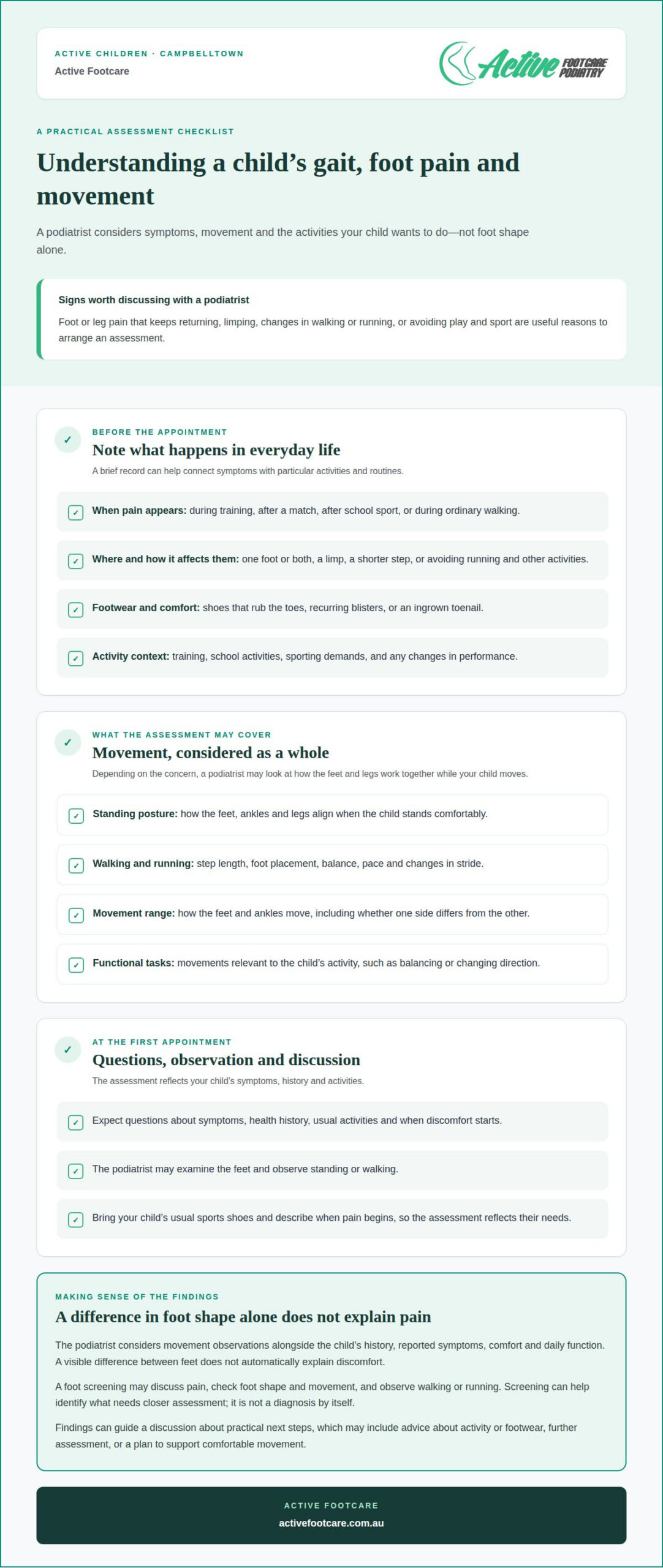
A foot screening looks at how a child stands, walks and uses their feet. It may include discussing pain, checking foot shape and movement, and observing walking or running. Note when symptoms appear, such as discomfort after training or a limp after school sport. These details help connect the concern to specific activities.
Screening can also consider footwear, skin and nails. Shoes that rub the toes, recurring blisters or an ingrown toenail can affect comfort during sport. Screening isn’t a diagnosis by itself; it helps identify what needs closer assessment.
Common childhood foot conditions
Children may experience flat feet, ingrown toenails, painful skin lesions or heel pain. Foot shape alone doesn’t determine whether an assessment is needed. Consider pain, reduced participation, repeated rubbing or changes in walking. For example, a child avoiding running after heel discomfort needs more attention than a child whose feet simply look different.
Symptoms can have different causes, so the podiatrist considers where discomfort occurs and what brings it on. Note whether pain affects one or both feet, follows activity, or appears during ordinary walking. These details help assess the concern without assuming a condition based on appearance.
Foot care for active children
Sport places repeated demands on growing feet. Look for patterns: does discomfort start during training, appear after a match, or occur in particular shoes? A blister that repeatedly forms in the same spot, for example, may point to friction. Keep a brief record of the activity and symptoms to help explain the pattern.
Well-fitting footwear can support participation, but shoes aren’t a substitute for assessment when pain persists. Tell the podiatrist about training, school activities and changes in performance. This context connects foot symptoms with your child’s routine.
Sports podiatry services and appointments
A first sports podiatry appointment usually begins with questions about symptoms, health history and activities. The podiatrist may examine the feet and observe standing or walking, then explain the findings and next steps. Bring your child’s usual sports shoes and describe when the pain starts, so the assessment reflects their needs.
Choose a podiatrist with recognised qualifications and experience assessing children who play sport. Ask how the assessment considers a young athlete’s movement, symptoms and sporting demands. Families seeking podiatry for active kids in Campbelltown can look for clear explanations and recommendations suited to the child’s activities.
Bulk billing and discounts for children vary between clinics, so don’t assume they apply. Eligible people with a chronic illness managed by a GP under an EPC plan may access Medicare rebates for podiatry visits when the GP assesses the services as clinically necessary.
Paediatric sports podiatry may assess gait, foot mechanics, pain and footwear. The appropriate assessment depends on the child’s symptoms and the activities they want to continue.
At a first appointment, parents can expect questions about pain and activity, followed by an examination and discussion of the findings. The podiatrist can explain how these relate to the child’s sport and everyday movement.
Families in Campbelltown can arrange an assessment directly without going through a particular club or school. A coach or school may help notice changes, such as limping during training or avoiding games.
Gait and biomechanical assessment
A gait and biomechanical assessment examines how a child’s feet and legs work together during movement. Rather than judging foot shape alone, the podiatrist considers walking pattern, joint movement, muscle function and the child’s reported symptoms. This helps explain whether a movement pattern may contribute to discomfort or difficulty with an activity.
The assessment starts with a discussion of the child’s usual activities and any changes in movement. The podiatrist may ask when symptoms arise, whether they affect one or both sides, and which movements feel difficult. A child who shortens one step while walking, for example, may move differently when turning or changing pace. A child may also shift speed or stride during the assessment, so the podiatrist observes movement as a whole.
Depending on the concern, the podiatrist may assess:
- Standing posture: how the feet, ankles and legs align when the child stands comfortably.
- Walking and running: step length, foot placement, balance and changes between different paces.
- Movement range: how the feet and ankles move, including whether one side differs from the other.
- Functional tasks: how the child manages movements relevant to their activity, such as changing direction or balancing.
The podiatrist interprets observations together, not as isolated findings. A visible difference between feet doesn’t automatically explain pain; movement findings are considered alongside the child’s history, comfort and daily function. Describe when a change first appeared and which activities bring it on. This context helps distinguish a consistent pattern from a movement seen only briefly during assessment.
Findings can guide a discussion about practical next steps. Depending on the child’s needs, this may involve advice about activity or footwear, further assessment, or a plan to support comfortable movement. The podiatrist can explain what each observation means and how it connects with your child’s goals, such as joining training without changing their stride to avoid discomfort.
If the child has diabetes, a diabetes foot assessment addresses a specific foot-health concern alongside movement questions. For other children, the gait assessment focuses on the presenting movement issue and the activities that matter to them. A clear explanation of the findings gives families a practical basis for discussing care and following progress.
This gives a price range to consider when asking about an assessment focused on movement, comfort and everyday activity. Before making arrangements, ask which service suits the child’s concern and what the quoted session covers.
This is a separate price reference for families seeking an assessment of diabetes-related foot health, rather than movement questions alone. Asking about the relevant assessment and its fee can help you understand the options and decide what to discuss with the podiatrist. The assessment should suit the child’s needs and the reason for seeking care.
Heel pain and pain after sport
Heel discomfort after training can affect how a child runs, walks or joins the next activity. Note where the pain occurs and which movements bring it on, then share those details during an assessment.
Pain after sport
Look for a pattern rather than treating every sore moment as the same concern. For example, record whether heel pain starts during running, appears after a match, or continues into ordinary walking. Also note whether your child changes their stride, avoids stairs or sits out the next session.
Sever’s disease is one possible cause of heel pain in growing athletes. For severe Sever’s disease, a child may need to take a break from sport for 1-2 seasons, according to Sydney Children’s Hospitals Network. An assessment can help clarify the concern and discuss suitable next steps.
Assessing pain in active children
A podiatrist in Campbelltown can assess foot, ankle and heel pain and consider how movement relates to knee discomfort. The appointment may cover where symptoms occur, when they began and which activities make them worse. The podiatrist can observe walking or running and examine movement relevant to the reported pain.
Bring a clear example, such as pain after football training or discomfort when changing direction at netball. Describe whether symptoms affect one side or both, and whether they change your child’s usual activity. These details help focus the assessment without assuming all pain has the same cause.
Treating sports injuries and growing pains
Treatment depends on the assessment findings, the child’s symptoms and their sporting routine. A podiatrist may discuss modifying activities that trigger pain, footwear considerations or movement strategies. Any plan should address the child’s specific concern, such as heel pain after running, rather than assume general growing pains.
Ask how the recommended steps fit with training, school sport and daily movement. When appropriate, a gradual return to a particular activity may be discussed, along with ways to monitor symptoms. The podiatrist can explain what changes to watch for, such as renewed pain during a session or difficulty walking afterwards.
For foot, ankle, heel or related knee concerns, a Campbelltown podiatrist can assess your child’s symptoms and movement. Treatment options for sports injuries and growing pains are individualised; the approach depends on the assessment findings and how symptoms affect activity.
Mobile podiatry and home visits in Campbelltown
A home appointment may suit a Campbelltown family when travel or access makes a clinic visit difficult. For an active child, discuss the concern, the activities affected and whether an assessment at home fits your family’s needs.
Mobile podiatry in Campbelltown can suit aged-care clients, people with limited mobility and NDIS participants. A home visit may also help when a child has difficulty getting to an appointment. The setting can make it easier for a parent or carer to be present and explain how the concern affects everyday routines.
To arrange a paediatric sports podiatry appointment, contact the clinic and explain your child’s main concern and preferred appointment setting. Include relevant details, such as heel pain after training, a change in walking, or difficulty travelling. Appointment timing depends on availability, the requested location and the type of assessment needed.
Before arranging a home visit, consider whether the available space suits the planned assessment. A clear indoor area can help with basic standing or walking observations, while a home setting won’t recreate a football field or running track. Tell the podiatrist which movements matter, such as turning, kicking or walking between rooms. This helps focus the appointment on your child’s concern.
- Explain the access need: describe why travelling to a clinic is difficult or why home feels more practical.
- Share the activity context: mention the sport or routine linked to symptoms, such as netball training or school athletics.
- Prepare useful information: have the child’s usual sports shoes and relevant support documents nearby.
- Discuss funding arrangements: for an NDIS-funded visit, agree on travel charges before booking under applicable funding rules.
Home appointments can be relevant for NDIS participants, as mobile podiatry serves people using NDIS support. Consider your child’s goals, access needs and funding arrangements when deciding whether an assessment at home is suitable. A home visit may not reproduce every sporting movement, so describing the child’s activities helps the podiatrist understand the context.
For Campbelltown families weighing a clinic appointment against a home visit, the key decision is practical access. Consider where your child can move comfortably, what the podiatrist needs to observe, and whether travel creates a barrier. Sharing these details when booking helps identify a suitable appointment format and gives your family a clear next step.
A Campbelltown City Podiatry podiatrist visits one client at home every six weeks.
Which podiatrists in Campbelltown, NSW treat active children and young athletes?
Choose a Campbelltown podiatrist whose assessment connects your child’s symptoms with their movement and sport. A useful appointment considers the child’s age, activity and goals, rather than focusing on one observation, such as how their feet look while standing.
For a young athlete, look for an approach that considers children’s needs and sporting demands. The podiatrist should explain what they assess, how the findings relate to the concern, and what steps may follow. For example, a child returning to dance may need their movement considered in relation to the demands of class, not just everyday walking.
During an initial conversation, a parent can describe the issue and ask how the appointment will address it. Useful points to discuss include:
- Relevant experience: whether the podiatrist regularly assesses children and understands the movement demands of their sport.
- Assessment approach: whether the appointment considers symptoms, movement and the child’s own account of what feels difficult.
- Age-appropriate communication: how the podiatrist helps a child understand the examination and share their concerns.
- Practical recommendations: how any proposed steps fit around school, training and the family’s routine.
A helpful plan should make sense to both parent and child. If a young swimmer reports discomfort after kicking, for instance, the podiatrist can explain how the assessment findings relate to that activity. Clear explanations also help families understand what to monitor, such as whether the same movement remains uncomfortable during the next session.
Consider how the appointment supports communication with your child’s family. Parents can share relevant health information and describe changes in participation, while the child can explain where and when discomfort occurs. This combined account gives the podiatrist useful context, especially if a child struggles to describe symptoms in clinical terms.
Campbelltown families can also consider practical access. A clinic appointment may suit a child who can travel comfortably, while a home visit may help if getting to an appointment is difficult. The right setting depends on the child’s access needs and what the podiatrist needs to assess. Tell the practice the child’s age, activity and main concern when arranging an appointment.
For a child whose symptoms are affecting sport or daily movement, arrange an assessment focused on their needs. Arrange a podiatry assessment to discuss the child’s movement concerns and sporting routine.
Look for a Campbelltown podiatrist who regularly assesses children, understands the movement demands of their sport, and considers the child’s symptoms, movement and own account of what feels difficult.
Active Foot Care: NDIS Podiatry Services
Active Foot Care provides NDIS Podiatry Services for people seeking podiatry support through the NDIS. If your child’s foot concerns affect movement or participation, an assessment can help clarify their needs and suitable care options.
When getting to an appointment is difficult, a Podiatrist Home Visit may be a practical alternative. Depending on the assessment, care may also include Custom Orthotics, individually manufactured and tailored based on personal assessment. The right option depends on your child’s needs and the purpose of their NDIS support.
Share your child’s main concern, sporting activities and access needs when discussing the next step. Contact Active Foot Care to talk about podiatry support for your child.
Help your child keep moving with confidence
A useful next step is to turn your observations into a clear picture of what your child needs. Note which activities feel comfortable, what movements cause difficulty, and whether symptoms affect participation. This gives your family a practical starting point for discussing care and supporting your child’s goals.
Families considering podiatry for active kids in Campbelltown can speak with Active Foot Care about an appropriate assessment. Depending on individual needs, options include a Podiatrist Home Visit, Diabetes Foot Assessment or Custom Orthotics. These services address different circumstances, so the right discussion begins with your child’s health, movement and access needs.
If you’re ready to talk through your child’s foot concerns and possible next steps, contact Active Foot Care today. A calm, informed conversation can help your family decide how to support comfortable movement and continued participation.
Frequently Asked Questions
How do I find a mobile podiatrist in Campbelltown?
Active Foot Care offers Podiatrist Home Visits in Campbelltown. Contact the practice and describe your child’s age, main concern and any difficulty travelling to an appointment. For example, mention pain during school sport or a need for assessment at home because travel is challenging. Sharing these details helps clarify whether a home appointment suits your child’s needs and what information to have ready.
When should an active child see a podiatrist for foot or leg pain, and what symptoms need urgent care?
Arrange a podiatry assessment when pain keeps returning, affects walking or sport, or changes how your child moves. Sudden severe pain, an obvious injury, significant swelling, or inability to put weight on the foot needs urgent medical attention. If symptoms worsen quickly or your child seems seriously unwell, seek urgent care promptly. For ongoing activity-related discomfort, note what movement triggers it and discuss that pattern at an appointment.