

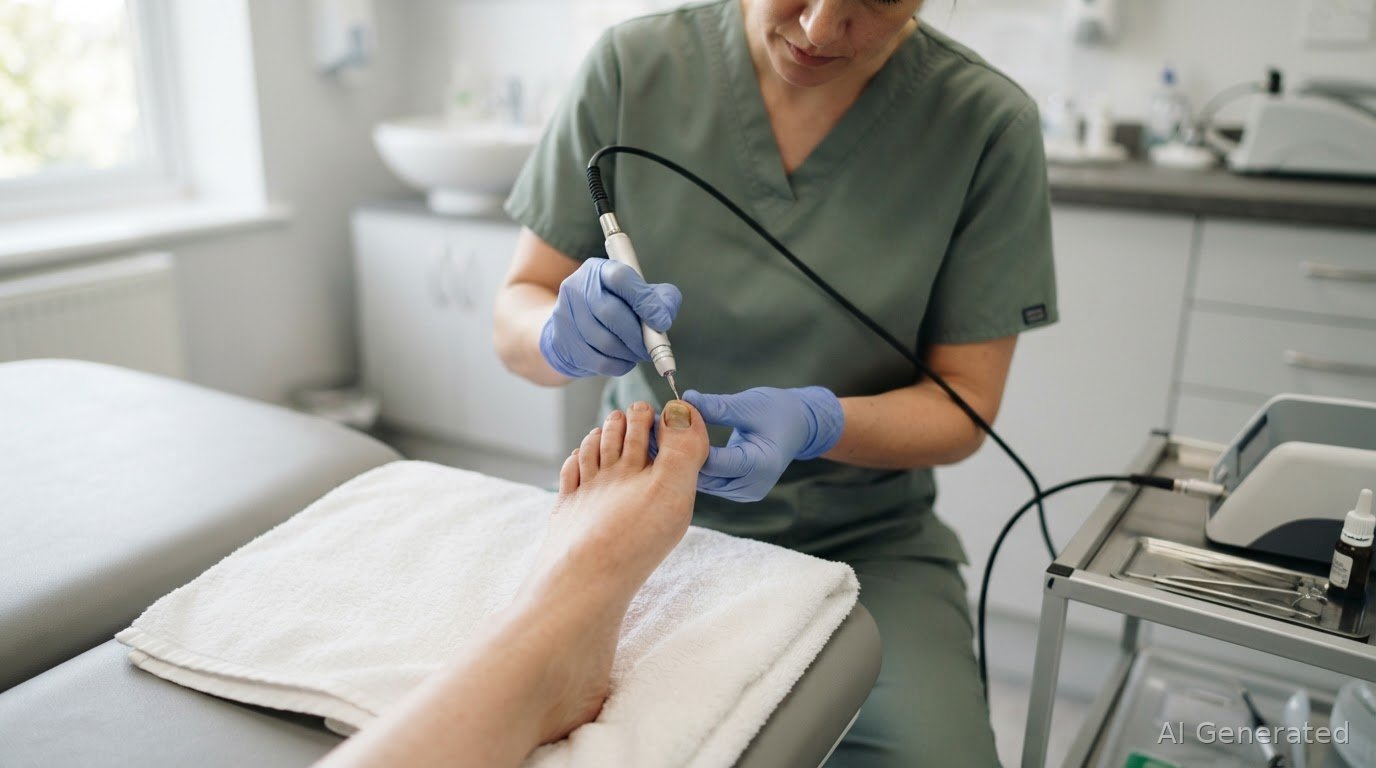
Suitability for laser fungal nail treatment in Liverpool depends on the infection’s extent and how much of the nail is affected. A podiatrist assesses the nail before recommending treatment, considering changes in colour or thickness and the spread of the infection. Anti-fungal Laser Treatment uses laser energy over the nail to target fungal nail infections.
It’s understandable to want a clear idea of what treatment involves and when a nail might look healthier. This article explains how laser treatment works, who may be suitable, what aftercare can involve and why visible changes take time as the nail grows out. You’ll also learn what to expect from the process, so you can make an informed decision about your next step.
Key Takeaways
- A podiatrist considers the infection’s stage and extent when assessing whether laser treatment may be suitable.
- Laser treatment heats the nail area to target fungal cells; understanding this process can help set realistic expectations.
- Good aftercare can help keep fungal nails under control, but measures such as thinning the nail or applying tea tree oil won’t cure the infection.
- Visible improvement takes time because the affected nail needs to grow out, with healthier nail appearing at the base.
- Learn what happens during treatment and which factors shape the aftercare and progress to expect.
What Is Laser Fungal Nail Treatment?
Laser fungal nail treatment directs energy over an affected nail and into the nail bed to treat fungal nail infections. A podiatrist first assesses the nail, including how far the infection has progressed and how many nails are affected. This assessment helps determine whether laser treatment is a suitable option for you.
A fungal nail infection can change a nail’s colour and texture. It may turn yellow, become thick or brittle, crumble, curl, or separate from the nail bed. Some affected nails become painful, particularly when thickening puts pressure on the nail bed. Infection can affect fingernails as well as toenails, although toenails are more commonly involved. Similar-looking changes can have different causes, so an assessment is useful before choosing treatment.
The infection may begin in a small area of one nail, then spread slowly across that nail or to others. Fungus can enter through cracks in a nail or cuts in nearby skin. Warm, damp conditions around the toes provide a favourable environment for it. Sharing nail clippers, files or polish can also spread infection, as can salon instruments that aren’t sterilised correctly. Walking barefoot while gardening is another possible way to come into contact with fungus in soil.
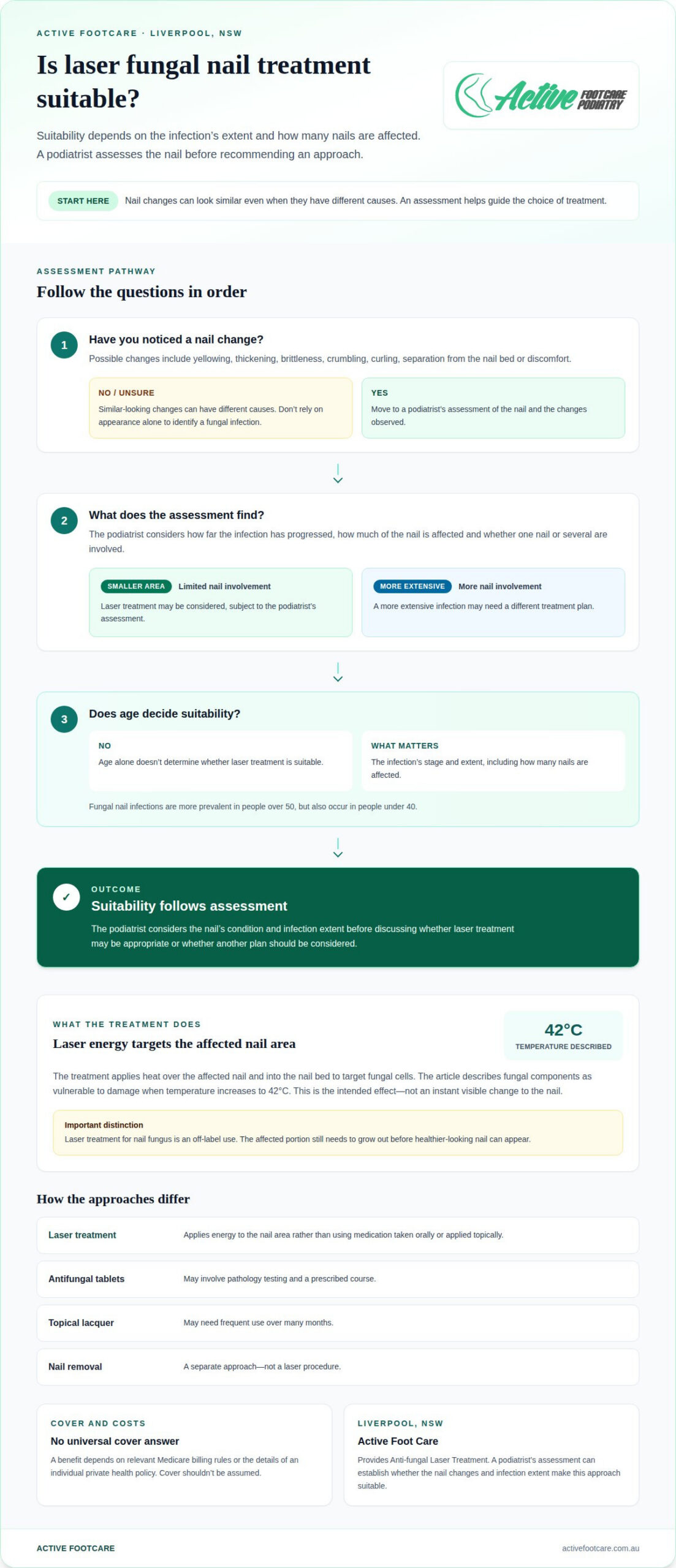
Age alone doesn’t determine suitability. Fungal nail infections are more prevalent in people over 50, but they also occur in people under 40. The podiatrist considers the infection’s stage and extent, including whether one nail or several are affected. A more extensive infection may require a different treatment plan from a small affected area. Suitability follows assessment, rather than the nail’s appearance alone.
Laser treatment differs from antifungal tablets and creams because it applies energy to the nail area rather than using medication taken orally or applied topically. Tablets may involve pathology testing and a prescribed course, while topical lacquer may need frequent use over many months. Laser treatment for nail fungus is an off-label use. Nail removal is a separate approach, not a laser procedure.
Medicare and private health cover don’t have one universal answer for this treatment. Whether a benefit applies depends on the relevant Medicare billing rules or the details of an individual private health policy, so cover shouldn’t be assumed.
For laser fungal nail treatment in Liverpool, NSW, choose a podiatry service that provides laser treatment for fungal nails. A podiatrist’s assessment can establish whether the nail changes and extent of infection make this approach suitable.
Which Liverpool clinics offer laser nail fungus treatment? Active Foot Care provides Anti-fungal Laser Treatment for patients seeking this service in Liverpool, NSW.
Aftercare and reinfection prevention
After laser treatment, nail care remains part of managing fungal infection. A practical routine focuses on keeping nails comfortable, monitoring changes and reducing conditions that encourage fungus.
Aftercare and Hygiene
Follow the care plan discussed at your appointment, and keep the affected nail clean and dry. Avoid picking at the nail or cutting it too short, which can irritate surrounding skin. If thickening causes pressure or discomfort, a podiatrist can assess whether careful thinning is appropriate. Thinning may relieve pressure, but it doesn’t remove the infection.
Preventing Reinfection
Reduce opportunities for fungus to remain around the feet and nails. Dry carefully between the toes after washing, and change damp socks rather than leaving feet enclosed in moisture. Don’t share personal nail-care tools, and choose nail services where instruments are sterilised correctly. These practical habits help limit exposure, though they don’t replace treatment or follow-up.
At home, trim nails carefully and avoid damaging the surrounding skin. Keep an eye on the treated nail’s colour, texture and attachment to the nail bed. A new change, or similar signs appearing on another nail, gives the podiatrist useful information at review. Keeping a record of changes between appointments can help distinguish gradual nail growth from a new problem.
Thinning a thickened nail and applying tea tree oil may help keep fungal nails under control, but neither cures the infection. Don’t treat a smoother or more comfortable nail as proof that the fungus has cleared. The infected portion still needs to grow out, and aftercare supports management rather than instantly restoring a healthy-looking nail.
Follow-up is also part of aftercare. A further appointment can be scheduled 6-8 weeks after the first follow-up, giving the podiatrist an opportunity to assess progress and discuss ongoing care. Keep the diagnosis and treatment plan in view, especially if several nails are affected or nail changes continue. The interval between reviews helps track changes over time, rather than relying on a single day’s appearance.
Use the clinic’s instructions as your guide if they differ from general nail-care advice. For practical support with foot and nail care, podiatry aftercare guidance can help you understand what to monitor between appointments.
Laser energy and fungal cell effects
Laser treatment applies heat to the affected nail area, targeting fungal cells beneath the nail plate. The treatment explanation describes fungal components as vulnerable to damage when temperature increases to 42°C. Heat absorbed by the fungus can damage those components, causing fungal cells to die and the infection to begin clearing. This is the intended effect, not an instant change to the nail’s appearance.
This distinction matters because a thickened nail can remain visibly altered after treatment. Laser energy targets fungal nail infections, while the damaged portion of the nail still needs to grow out. Treatment is considered alongside the nail’s condition and the infection’s extent. A podiatrist’s assessment identifies which nails are affected and provides a basis for discussing the treatment process.
Laser treatment for nail fungus is an off-label use. Before treatment begins, understand what the procedure aims to do: heat targets fungal cells, rather than immediately restoring a healthy-looking nail. During a consultation, discuss the affected nail, any discomfort and your previous treatment experience. These details help the podiatrist explain the process in relation to your concerns.
Safety questions deserve a direct conversation. The treatment information describes heat and its intended effect on fungal cells, but doesn’t establish a complete list of possible side effects or how likely they are. Don’t assume every patient will have the same experience. Ask the podiatrist to explain the expected sensations, how treatment is delivered and what to do if the treated area feels uncomfortable.
For example, a patient with a thickened nail may want to know whether pressure or tenderness affects the treatment approach. Someone with several affected nails may want to understand how each nail is assessed. These are practical points to raise during the consultation, not reasons to predict an outcome. Clear answers can help you decide whether to proceed.
After treatment, report any unexpected or persistent discomfort to the podiatrist rather than trying to interpret it alone. Consider the response alongside the nail’s appearance and treatment course. Monitoring these details helps distinguish a change in sensation from the gradual visual changes that occur as the nail grows. Heat is the treatment mechanism; assessment and follow-up provide context for the nail’s progress.
Nail growth and visible results timeline
Laser treatment is used for fungal nail infections, but it doesn’t instantly change the nail’s visible surface. As a toenail grows, healthier nail should emerge at the base while the affected portion gradually moves towards the tip. This is why progress is judged by new growth, not simply by whether existing discolouration disappears straight after treatment. The pace depends on nail growth and the extent of the affected area.
Visible change can take time. One reported patient’s nail appearance was described as promising after a couple of months of laser treatment, but that example isn’t a timetable for every case. Onychomycosis may involve part of one nail or a larger area, and those differences affect how much altered nail must grow out. A podiatrist can explain what signs of progress to look for in your nail.
Use a consistent viewing angle and lighting when observing changes. For example, note whether a clear or healthier-looking band is appearing at the nail base and whether the discoloured area is moving towards the tip. This can make gradual growth easier to recognise. Avoid judging treatment from one isolated day, because a nail’s appearance can be difficult to compare without a reference point.
Results are not the same as immediate clearance. The aim is for the infection to begin clearing, then for healthier nail to grow through. If discolouration or thickening remains, that alone doesn’t show whether the infection is still present; the affected portion may simply not have grown out yet. A podiatrist can assess the nail alongside treatment history and discuss whether further review is appropriate.
Recurrence is a separate concern from the slow growth of an already affected nail. A fresh change in another part of the nail, or a newly affected nail, is worth noting during follow-up. Keep track of which toenail is changing and where. This helps the podiatrist consider whether the issue reflects ongoing nail growth or a new fungal infection.
If you have diabetes, include that detail in the discussion about nail changes and treatment progress. It helps the podiatrist understand your health context when assessing the affected toenail. Don’t rely on appearance alone to decide that infection has cleared or returned. A review can consider the nail itself, the pattern of new growth and the course of treatment together.
For laser fungal nail treatment in Liverpool, realistic expectations mean allowing the nail time to grow while monitoring new growth. The visible timeline depends on how much nail is affected and how quickly healthy nail replaces it. A clear record of changes gives your podiatrist useful information at review, without mistaking slow cosmetic improvement for a lack of treatment effect.
How laser fungal nail treatment works
The process starts with assessing the affected nail and the extent of infection. A podiatrist considers which nails are involved and how much of each nail is affected. This matters because treatment is directed across the nail plate and into the nail bed, rather than chosen by colour alone. The assessment provides a basis for explaining the procedure and deciding whether laser treatment is suitable.
During treatment, KTP and Nd Yag lasers are passed in turn over the nail plate and into the nail bed. The energy heats the treated area. The stated mechanism is that heat is absorbed by the fungus, damaging fungal cell components and causing fungal cells to die. This is intended to help the infection begin clearing; it doesn’t remove the altered nail or change its appearance immediately.
The sequence can be understood in three stages:
- Assess: the podiatrist examines the nail and considers the infection’s stage and extent.
- Apply: KTP and Nd Yag laser energy passes over the nail plate and into the nail bed, heating the area.
- Monitor: progress is considered alongside the nail’s condition and its new growth.
Heat is central to the method. Fungal cell components can be damaged at an increased temperature of 42°C during laser treatment. That figure describes a reported treatment mechanism, not a promise that every part of every nail reaches the same temperature. The practical takeaway is that laser energy works through heat in the treated nail area, while the podiatrist assesses the individual infection.
Laser treatment is an off-label use for nail fungus. Keep this distinction in mind when discussing treatment: the procedure uses laser energy to heat the nail area, while the visible result depends on the infected nail growing out. A thickened nail or infection affecting several nails may call for a different assessment from a small affected area. The infection’s stage and extent guide the recommendation.
Laser treatment doesn’t instantly restore the nail’s original colour or texture. Its intended effect is on fungal cells; the altered portion remains visible until it grows out. For example, a clear-looking band at the base can offer a more useful sign of new growth than the old discoloured section. This separates the treatment mechanism from the later cosmetic change.
For an assessment and discussion of anti-fungal laser treatment, book a podiatry appointment to talk through how the process applies to your affected nail.
Active Foot Care: Anti-fungal Laser Treatment
Active Footcare provides Anti-fungal Laser Treatment for people concerned about toenail changes who want a podiatrist’s assessment. The appointment allows the affected nail and extent of infection to be considered, with treatment discussed in light of your individual presentation. Laser treatment may be worth discussing if a nail has become discoloured or thickened, or if you’re weighing treatment options and want to understand how it works.
Visible changes take time because the affected nail must grow out, so the discussion can also cover what to monitor during follow-up. An assessment can help you understand the process and whether this approach may suit your circumstances. For a calm, informed conversation about your next step, contact Active Foot Care.
Take the next step towards clearer guidance
If you’re considering laser fungal nail treatment in Liverpool, discuss what’s happening with your nail and what matters most to you. Bring up any changes you’ve noticed and any concerns about treatment or follow-up. A podiatrist can assess your situation and explain whether Anti-fungal Laser Treatment is a suitable option for you.
Active Footcare also offers a Podiatrist Home Visit, Diabetes Foot Assessment and Custom Orthotics. These services address different foot-care needs, so the right conversation depends on the support you’re seeking. A professional assessment can help clarify your options, rather than relying on appearance alone.
Contact Active Foot Care today to discuss your concerns and take a considered next step. With clear information and individual guidance, you can move forward feeling better informed.
Frequently Asked Questions
Who is it suitable for?
Laser treatment may be considered for someone with suspected fungal nail infection after a podiatrist assesses the nail. The assessment considers the infection’s stage and extent, including how many nails are affected. For example, changes limited to one nail differ from changes across several nails. An assessment also helps establish whether the appearance is consistent with fungal infection before discussing treatment options.
How does it work?
KTP and Nd:Yag laser energy is passed over the nail plate and into the nail bed, heating the treated area. The intended effect is to damage fungal cell components so the infection can begin clearing. The laser targets the fungus, not the discoloured nail itself. That portion remains visible until it grows out, so treatment and visible nail improvement happen on different timelines.
Are there any side effects?
The treatment information describes heat as the mechanism but doesn’t provide a specific side-effect profile. Before proceeding, discuss possible effects with the podiatrist, including what sensations to expect and what to do if the treated area feels uncomfortable afterwards. Share any relevant health concerns during the consultation. This gives you the opportunity to understand the treatment and how discomfort or other concerns will be addressed.
Does it hurt?
People’s experience of discomfort can differ, and treatment uses heat directed at the nail area. Ask the podiatrist to explain what sensations you might notice during treatment and how to communicate discomfort during the appointment. If the nail is already tender or painful from thickening, mention this beforehand. That context helps the podiatrist discuss your concerns and assess the affected nail.
How many sessions will I need?
The number depends on the infection’s severity and how many nails are affected. The treatment information indicates that most cases require between 1 and 3 sessions. That range is a guide, not a set course for every person. During assessment, the podiatrist considers the affected nails and infection extent when discussing the treatment plan and any follow-up.
How should I prepare?
Before your appointment, note which nails have changed and when you first noticed those changes. Write down any previous fungal nail treatments and whether they helped, as this gives the podiatrist useful context. Mention tenderness or discomfort too. These details support a focused assessment and help you discuss your concerns before deciding whether laser treatment is suitable.
What is involved?
A podiatrist assesses the affected nail and considers the infection’s stage and extent before recommending treatment. If laser treatment is suitable, KTP and Nd:Yag lasers are passed over the nail plate and into the nail bed. The appointment is also a time to discuss aftercare and follow-up. Visible changes take longer than the treatment itself because the affected nail must grow out.
How much does laser fungal nail treatment cost in Liverpool, Australia?
The cost depends on the treatment plan. Active Footcare charges for professional diagnostic assessments and routine foot-care treatments, with specialised fees for procedures including Anti-fungal Laser Treatment. Discuss the treatment plan and applicable fee with the podiatrist before deciding. A general price range could be misleading because the work required can differ between a single affected nail and several nails.