


What if that sharp, stabbing sensation you feel during your first few steps each morning isn’t actually the bone spur itself, but your body’s way of telling you a deeper mechanical issue is at play? It’s a common misconception that these bony growths appear out of nowhere; in reality, they’re often the result of long-term strain. If you’ve been searching for effective heel spur prevention, you likely already know the frustration of morning stiffness and the nagging worry that surgery might be your only future option.
We understand how unsettling it feels when every step is a reminder of your discomfort. This guide promises to clear up the confusion between heel spurs and plantar fasciitis while providing you with professional strategies to protect your feet. We’ll examine the specific footwear that actually supports your heels and how clinical interventions like gait analysis can stop inflammation in its tracks. By the end of this article, you’ll have a clear roadmap to achieving pain-free steps and maintaining your mobility throughout 2026 and beyond.
Key Takeaways
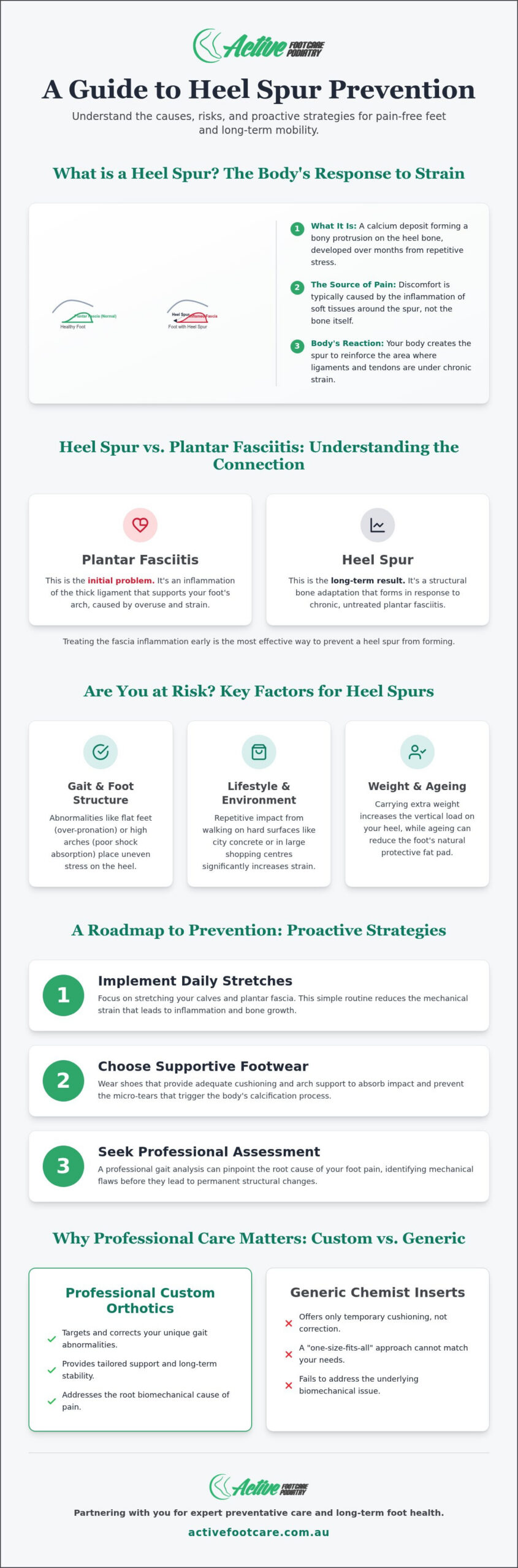
- Understand that heel spurs are calcium deposits often caused by chronic inflammation, meaning early intervention is key to avoiding invasive treatments.
- Effective heel spur prevention involves identifying gait abnormalities and the impact of walking on hard surfaces in areas like the Sydney CBD or local shopping centres.
- Implement a daily stretching routine for your calves and plantar fascia to reduce the mechanical strain that leads to painful bone growth.
- Learn why professional gait analysis and custom orthotics provide targeted support and stability that generic chemist inserts simply cannot match.
- Explore how mobile podiatry home visits across Western Sydney offer a convenient way to receive expert preventative care in the comfort of your own home.
What is a Heel Spur? Understanding the Mechanics of Prevention
To understand What is a heel spur?, we need to look at how your body responds to persistent pressure. A heel spur is a calcium deposit that forms a bony protrusion on the underside of your heel bone, often appearing as a sharp point on an X-ray. A heel spur is a reactive bone growth occurring over several months due to repetitive mechanical stress. While the sight of a bony growth might seem alarming, the spur itself isn’t usually the primary source of your agony. Instead, the sharp discomfort you feel typically stems from the soft tissue inflammation and irritation in the area surrounding the new bone.
We often see patients who are worried that the bone is “stabbing” them, but the reality is more nuanced. Your body is actually trying to protect you. When the ligaments and tendons in your foot are pulled too tight for too long, your system deposits calcium in an attempt to reinforce the structure. This is why effective heel spur prevention focuses less on the bone itself and more on managing the forces that caused the growth to start in the first place.
Heel Spurs vs. Plantar Fasciitis: Knowing the Difference
Many patients arrive at our clinic feeling confused about whether they have a spur or plantar fasciitis. While they often occur together, they are distinct issues that require different approaches. Plantar fasciitis is an inflammation of the thick ligament that supports your arch, whereas a heel spur is a structural bone adaptation. Chronic heel inside pain is frequently the first warning sign that your fascia is under too much tension. By addressing this ligament strain early, we can effectively manage your foot health and prioritise heel spur prevention before the bone has a chance to change. Treating the fascia through stretching and support is the most reliable way to stop a spur from ever forming.
The Timeline of Bone Spur Development
Your heel bone, or calcaneus, is remarkably resilient, but it isn’t immune to the “stress-response” cycle. These spurs don’t just appear overnight. They represent months of neglected strain and cumulative damage. The process begins with tiny micro-tears in the plantar fascia membrane, often caused by poor footwear or sudden increases in activity. As these tears struggle to heal under constant pressure, the body begins its calcification process. This slow, methodical development means that your current discomfort is often the result of mechanical flaws that have been present for quite some time. Recognising these early signals allows us to intervene with professional care before the bone growth becomes a permanent fixture of your foot’s anatomy.
Identifying Your Risk Factors: Is Your Lifestyle Putting Your Heels at Risk?
Your daily routine might be the silent architect of your foot pain. In areas like the Sydney CBD or the sprawling Liverpool shopping centres, your feet are constantly battling unforgiving, hard surfaces. Instead of providing a soft landing, these environments force your heel bone to absorb the full brunt of your body weight with every stride. This repetitive impact is a primary driver for those seeking information on Heel Spur Symptoms and Causes, as the constant jarring can trigger the bone-building response we discussed earlier.
Heel spur prevention also requires an honest look at your unique walking pattern. If you have gait abnormalities, you aren’t just walking; you’re placing excessive, uneven stress on your heel bone and the surrounding nerves. Over time, this mechanical inefficiency signals your body to reinforce the area with calcium. Similarly, carrying extra weight increases the vertical load on your heel significantly. As we age, we also face the natural loss of the fat pad, that essential cushion under the calcaneus, which further strips away your foot’s built-in protection against hard ground.
The Impact of Foot Structure: Flat Feet and High Arches
Your foot’s natural shape dictates how you manage pressure. Those with flat feet often experience over-pronation, where the foot rolls inward and over-stretches the plantar fascia. Conversely, high arches often result in poor shock absorption, meaning your heel takes a direct hit every time your foot hits the ground. Knowing your foot type is the first step in effective heel spur prevention, as it allows us to tailor support to your specific mechanical needs.
Occupational Hazards: Jobs That Damage Your Heels
Certain professions across Western Sydney face a much higher risk of developing heel issues. Retail staff, hospital nurses, and construction workers on sites in Bankstown often spend their entire shift on their feet. Standing on concrete floors for eight hours or more creates a relentless, static load that the human foot wasn’t naturally designed to manage. This lack of rest allows inflammation to settle in. If your job keeps you upright all day, try to alternate your stance every few minutes to redistribute pressure across different parts of your feet. If you’re concerned about how your workplace environment is affecting your mobility, a professional gait analysis can help identify these hidden stressors before they lead to lasting damage.
Proactive Strategies for Heel Spur Prevention
Preventing heel spurs isn’t just about what happens in a clinic; it’s about the small, consistent choices you make at home. A dedicated daily stretching routine is your first line of defence. By focusing on your calf muscles and the plantar fascia, you reduce the constant “tug-of-war” on your heel bone. We recommend simple wall stretches and towel curls to keep these tissues supple and resilient. Maintaining a healthy weight is equally vital, as it directly reduces the load-per-step your heels must endure. For individuals where clinical weight management is necessary, exploring options like bariatric surgery New Jersey can be a decisive step in lightening the burden on your foot’s structural foundation with every stride you take.
Before you jump into a game of footy or head out for a run, remember the warm-up principle for your feet. Cold ligaments are less pliable and more prone to the micro-tears that eventually lead to calcification. A few minutes of gentle ankle circles and arch flexes can go a long way in preparing your feet for impact. Finally, make a habit of regular self-checks. If you notice persistent redness or tenderness at the base of your heel, it’s your body’s way of asking for a rest before a minor irritation turns into a chronic issue.
Choosing the Right Footwear for Australian Conditions
In Australia, our love for thongs and flat sandals often works against our foot health. While they’re convenient for the beach, the lack of arch support in typical thong culture is a major contributor to heel strain. When you’re shopping for shoes, prioritise the three pillars of a good fit: a firm heel counter that doesn’t collapse under pressure, robust arch support, and a flexible forefoot that allows for a natural gait. For those in industrial roles, your work boots are your most important tool. Standard-issue boots often lack necessary contouring, so adding professional insoles can be a game-changer for effective heel spur prevention in high-stress environments.
The Importance of Gradual Activity Progression
One of the most common mistakes we see is the “too much, too soon” approach to new fitness goals. Whether you’re starting a walking programme or training for a marathon, your heels need time to adapt to new stresses. We advise following the 10% rule, where you increase your distance or intensity by no more than 10% each week. This measured approach allows your tissues to strengthen without reaching a breaking point. If you find that high-impact activities are triggering discomfort, switching to low-impact alternatives like swimming or cycling is a brilliant way to maintain your fitness while giving your heels the recovery time they deserve.
The Role of Professional Biomechanical Assessment
While stretching and choosing the right shoes are foundational steps, some mechanical issues are simply too subtle to identify on your own. This is where a professional biomechanical assessment becomes the cornerstone of your heel spur prevention strategy. We look beyond the surface to understand how your bones, tendons, and ligaments collaborate during movement. By identifying “invisible” flaws in your gait, we can intervene before your body begins the slow process of depositing calcium on the heel bone.
If you’re already dealing with persistent irritation, shockwave therapy can be used preventatively. This technology works by sending acoustic pulses into the soft tissue to clear chronic inflammation before it has a chance to calcify into a permanent spur. For patients with NDIS mobility goals, these professional consultations are essential for maintaining independence and ensuring that foot pain doesn’t become a barrier to daily activity.
What Happens During a Gait Analysis?
During a consultation, we carefully track your foot strike and pressure points as you move across the room. We use digital pressure mapping to provide a detailed “blueprint” of how your foot interacts with the ground. This data reveals exactly where you’re over-loading your heel. Gait analysis allows a podiatrist to predict where a heel spur is likely to form before it appears on an X-ray. This insight allows us to make precise adjustments to your movement patterns long before a structural change occurs.
Custom Orthotics: The Ultimate Preventative Tool
Many people try generic chemist inserts first, but these often provide a false sense of security. Because they aren’t designed for your specific arch height or gait, they rarely address the root cause of the strain. Professional custom orthotics are different. They realign the foot to take the tension off the plantar fascia, effectively neutralising the mechanical stress that triggers bone growth. These medical-grade devices are durable and personalised to your unique anatomy. Active Footcare provides these custom fittings both in-clinic and via our mobile podiatry home visits, ensuring you receive specialist care wherever you are. Ready to protect your mobility? Book your comprehensive gait analysis with Active Footcare today.
Partnering with Active Footcare for Long-Term Foot Health
Dr. Maher Said and the team at Active Footcare believe that nobody should have to live with the anxiety of impending surgery. Our approach to heel spur prevention is grounded in the philosophy that early, professional intervention is the most effective way to maintain your mobility. We combine modern clinical advancements with the attentive, friendly service of a traditional family practice. By choosing to partner with a “Compassionate Expert,” you’re getting more than just a diagnosis; you’re gaining a dedicated guide who understands the physical and emotional toll of chronic foot pain.
We prioritise restoration and improvement through personalised care plans that fit your lifestyle. Whether we’re designing custom orthotics or administering shockwave therapy to resolve stubborn inflammation, our goal is to ensure you can walk through life with confidence. It’s a simple equation: professional intervention today prevents the necessity of invasive and costly surgical procedures tomorrow. We’re here to make sure your feet remain a reliable foundation for your active life.
A similar focus on structured care can be seen at Footfall Health, where Private clinical appointments and treatment packages are designed to provide the comprehensive clinical oversight required for lasting results.
Mobile Podiatry: Care That Comes to You
For many residents in Moorebank and Campbelltown, finding the time or means to visit a clinic can be a significant hurdle. This is why we offer podiatrist home visits as a core part of our service. These preventative assessments allow us to see you in your own environment, where we can evaluate your daily footwear habits and home surroundings. This context is often vital for identifying the external factors contributing to your heel strain.
Our mobile service is particularly beneficial for NDIS participants and seniors who require specialised care but find travel difficult. We bring the same high standards of clinical excellence found in our offices directly to your doorstep. By assessing your gait and foot health in a familiar setting, we can provide recommendations that are both practical and easy to implement in your daily life. It’s about providing thorough care that respects your comfort and convenience.
Your Next Steps to Pain-Free Living
If you’ve started to notice that tell-tale “first step” stiffness in the morning, don’t wait for the pain to dictate your schedule. Booking a biomechanical assessment is a proactive choice that puts you back in control of your foot health. Our booking process for the Liverpool and Bankstown service areas is designed to be straightforward and stress-free, reflecting our commitment to accessible care. We take the time to listen to your history and explain our findings in plain language.
We’re here to help you move away from uncertainty and toward informed confidence. Your journey to lasting relief starts with a simple conversation about your goals and concerns. We’ll work together to find the most effective strategies for your unique needs. Book your preventative foot assessment with Active Footcare today.
Taking Charge of Your Foot Health Today
Protecting your mobility is a journey that begins with understanding how your daily habits and foot mechanics interact. We’ve explored how proactive choices, such as choosing supportive footwear and maintaining a consistent stretching routine, form the bedrock of heel spur prevention. By addressing inflammation early and correcting gait abnormalities, you can effectively stop bone spurs from impacting your quality of life. It’s about moving from a state of concern to one of informed confidence.
Led by Principal Podiatrist Dr. Maher Said, our team is dedicated to providing the clinical excellence you need to stay active. Whether you require specialised NDIS and Aged Care mobile services or expert interventions like Shockwave Therapy and Custom Orthotics, we’re here to support every step. Don’t let morning stiffness become a permanent fixture of your day. Secure your mobility with a professional gait analysis at Active Footcare. We look forward to partnering with you on your path toward physical ease and long-term comfort.
Frequently Asked Questions
Can heel spurs go away on their own with rest?
Rest can certainly settle the inflammation in the soft tissues, but it won’t make the bony deposit disappear. Once a spur has formed, it’s a permanent structural change to your heel bone. However, by focusing on heel spur prevention through mechanical correction, we can ensure the spur remains painless. The goal is to address the underlying strain so your body stops trying to reinforce the area with more calcium.
Will I definitely need surgery if I have a heel spur?
Surgery is rarely the first path we take and is typically reserved as a final option. Most patients find significant relief through conservative treatments such as custom orthotics, shockwave therapy, and targeted stretching. We generally only consider surgical options if twelve months of conservative care haven’t provided relief. Our clinical approach focuses on intercepting the mechanical flaws that cause discomfort, allowing you to return to your daily activities without invasive procedures.
Is walking barefoot on hard floors bad for heel spurs?
Walking barefoot on hard surfaces like tiles or timber floors can aggravate the area significantly. Without the support of a cushioned shoe, your heel bone takes the full force of every step, which can worsen inflammation in the surrounding fascia. We recommend wearing supportive indoor shoes or slippers with built-in arch support. This simple change provides a necessary buffer between your heel and the floor, reducing the repetitive stress that leads to spur development.
How much do custom orthotics cost for heel spur prevention?
The cost of custom orthotics depends on the specific materials and the complexity of the mechanical correction required for your unique foot structure. While generic inserts are cheaper, they don’t offer the personalised realignment needed for effective heel spur prevention. Most private health insurance plans with podiatry cover will provide a rebate for these medical-grade devices. We recommend checking with your provider to understand your specific level of cover and any potential out-of-pocket expenses.
Can a podiatrist diagnose a heel spur during a home visit?
Yes, a podiatrist can perform a thorough clinical assessment during a home visit to identify the signs of a spur. While a definitive diagnosis often requires an X-ray to see the actual bone growth, we can identify tenderness, inflammation, and gait issues that point to its presence. Our mobile service allows us to assess your mobility and footwear in your own environment, which is often the first step toward a comprehensive preventative management plan.
Does wearing high heels cause heel spurs?
Regularly wearing high heels can contribute to spur formation by shortening the calf muscles and placing excessive pressure on the heel and arch. This imbalance strains the plantar fascia, which is the primary trigger for the body to start depositing calcium. While you don’t have to give them up entirely, limiting the time spent in steep inclines and performing regular calf stretches can help mitigate the risk to your long-term foot health and comfort.
Are there specific exercises to prevent heel spurs from forming?
Targeted exercises are a cornerstone of preventative care. We often recommend eccentric calf raises and towel scrunches to strengthen the intrinsic muscles of the foot and improve flexibility. These movements reduce the tension on the heel bone, which is essential for successful heel spur prevention. By keeping the supporting tissues supple and strong, you’re far less likely to experience the chronic irritation that signals your body to create a bony growth in the first place.
Can NDIS funding be used for heel spur prevention and orthotics?
NDIS funding can often be utilised for podiatry services and orthotic devices if they are deemed reasonable and necessary to meet your mobility goals. As an NDIS-registered provider, we work with participants to ensure their foot care supports their independence and daily function. We can help you navigate the requirements for assistive technology and provide the clinical documentation needed to support your plan’s goals for improved mobility and long-term physical ease.