


A quick fix may make foot pain easier to ignore, but it won’t necessarily address why it keeps returning. If sore feet are making walking, work or exercise harder, this guide to 10 foot pain relief (Sydney) residents can try offers practical steps for everyday discomfort and explains when to seek professional advice.
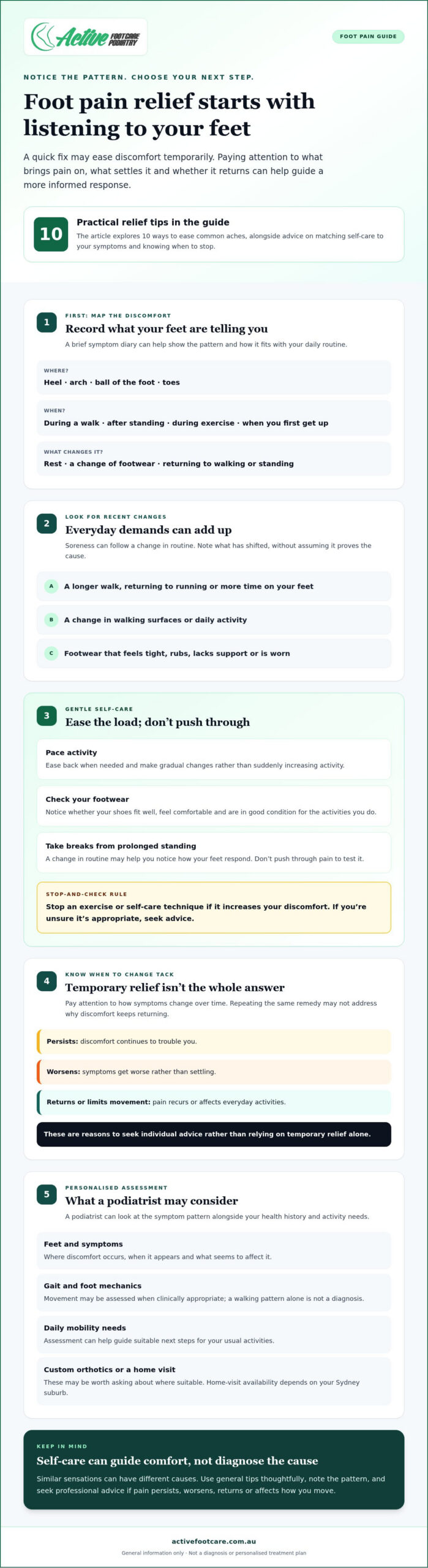
You’ll find ten ways to ease common aches, plus guidance on matching self-care to your symptoms and knowing when to stop. Temporary relief can help, but persistent or recurring pain deserves attention, particularly if it affects how you move.
We’ll also explain what a podiatrist may assess, including your feet and gait, and when custom orthotics or a home visit may be worth asking about. The goal is to help you choose an informed next step, without alarm or guesswork.
Key Takeaways
- Foot pain relief means easing discomfort while paying attention to possible causes and changes in how your feet feel.
- Explore 10 foot pain relief (Sydney) tips, including pacing activity, checking footwear and taking breaks from prolonged standing.
- Try gentle self-care thoughtfully. Notice whether symptoms persist, worsen or return instead of relying on temporary relief alone.
- A podiatrist can assess your feet, gait and daily mobility needs to help guide suitable next steps.
- Active Foot Care offers podiatry and home visits for suitable patients. Check whether home visits are available in your Sydney suburb.
Foot pain relief in Sydney: start by understanding what your feet are telling you
Sore feet can turn an ordinary walk, a shift at work or a favourite exercise session into a struggle. It helps to look beyond easing the ache: where it occurs, what brings it on and what settles it can offer clues about possible causes. This guide to 10 foot pain relief (Sydney) starts with that symptom-aware approach. General self-care may help with everyday discomfort, but it can’t diagnose a problem or replace clinical advice.
Before trying an exercise you’ve seen online, remember that a technique that suits one person may not suit another. Stop if it increases your discomfort, and seek advice if you’re unsure whether it’s appropriate.
For an example of an exercise-based approach to heel discomfort, watch this video. It focuses on plantar fasciitis, so treat it as general information rather than a personalised treatment plan.
What details can help make sense of foot pain?
Note where you feel discomfort, such as the heel, arch, ball of the foot or toes, and when it tends to appear. Does it start during a walk, after standing, during exercise or when you first get up? Record whether rest or a change of footwear affects it. A brief symptom diary can help a podiatrist understand the pattern and how it fits with your daily routine.
Heel pain can have different explanations. Plantar fasciitis is one possibility. Reading about it may provide useful background, but symptoms alone can’t confirm a diagnosis.
Why the same relief tip may not suit everyone
Soreness after an unfamiliar activity may settle, while discomfort that persists, recurs or worsens calls for a different response from simply repeating the same remedy. The skin, joints, tendons and nerves can all contribute to foot symptoms, and similar sensations can have different causes. Don’t assume that an ache identifies a specific condition or that one quick fix will resolve it.
Use the tips below as general starting points, not as a test of how much discomfort you can tolerate. If pain limits everyday movement or continues to trouble you, a podiatrist can assess the pattern alongside your health history and activity needs.
Why feet become sore: common contributors to discomfort
Foot soreness can follow a change in routine. A longer walk than usual, returning to running or spending several hours on your feet at work may increase the demands on them. This timing is useful to note, but it doesn’t prove what’s causing the discomfort. Shoes that feel tight, rub, lack support or have become worn may also affect comfort.
Think about what has changed recently: your activity, walking surfaces, time spent standing or footwear. If resting or easing back helps, note that response, but don’t push through pain to test it. Gradual changes in activity make it easier to notice how your feet respond without suddenly increasing the load.
Activity, footwear and changes in daily routine
Check whether your shoes feel comfortable, fit well and are in good condition. There’s no single shoe that suits everyone, so consider how yours feel during the activities you do. Note whether discomfort settles with rest or returns when you resume walking or standing. These observations can guide self-care, but ongoing symptoms shouldn’t be managed by repeatedly changing shoes alone.
Foot mechanics and pain patterns
When you walk, your feet absorb and transfer forces through a sequence of movements. A change in how you move, or in how much activity you do, can alter where pressure is felt. A particular foot shape or walking pattern isn’t a diagnosis by itself. If movement-related discomfort is a concern, a podiatrist may assess your gait and foot mechanics when clinically appropriate.
For more background, read this complete gait analysis guide. Active Footcare offers gait analysis. You can ask about gait analysis options to explore whether an assessment may be suitable.
Persistent or recurring pain merits individual assessment, especially if it affects your usual activities. To learn more about the profession and its regulation in Australia, visit the Podiatry Board of Australia.
10 Foot pain relief tips to try safely at home
These 10 foot pain relief (Sydney) tips are general measures for everyday discomfort, not a diagnosis or a substitute for personalised advice. Choose options that feel comfortable, and stop anything that worsens your symptoms. Healthdirect Australia also offers general advice on foot care.
Everyday changes that may ease foot discomfort
- Pace your activity. If your feet become sore, reduce or break up the activity instead of pushing through. Build back gradually as comfort allows.
- Take suitable rest breaks. After walking or standing for a while, sit down and let your feet rest. If resting increases discomfort, stop and seek advice.
- Review your footwear. Check that your shoes feel comfortable, fit well and aren’t rubbing or visibly worn. Don’t assume one style suits everyone.
- Avoid sudden training increases. Increase walking or exercise gradually rather than sharply changing distance, intensity or frequency. Ease back if soreness develops.
- Try gentle movement. Move your feet and ankles slowly within a comfortable range. Don’t force a stretch or continue if pain increases.
- Notice aggravating activities. Record whether particular tasks or movements bring on discomfort, and adjust them where practical. Don’t repeat an activity just to test the pain.
Comfort measures and knowing when to stop
- Elevate your feet briefly if comfortable. Rest them in a supported position. Stop if this worsens symptoms or feels uncomfortable.
- Consider a wrapped cool pack. If suitable for you, place a cool pack wrapped in cloth against the area briefly. Don’t apply it directly to skin, and remove it if discomfort increases.
- Track changes. Note where and when pain occurs, what you were doing, and whether rest or a footwear change affects it. This record may help explain the pattern during an assessment.
- Arrange professional advice if pain persists or returns. Don’t rely on temporary relief to rule out a problem, particularly if discomfort is worsening or affecting daily activities.
Together, these tips focus on pacing activity, checking footwear and monitoring symptoms while keeping comfort and safety in view. If pain keeps returning, explore podiatry support options with Active Footcare.
When foot pain needs a podiatrist or more urgent advice
Self-care may be a reasonable first step for mild, short-lived discomfort, but it shouldn’t become a reason to ignore pain that persists, worsens or keeps returning. Seek individual advice if symptoms limit walking or everyday activities, or if it’s difficult to put weight on the foot. An assessment can help clarify what may be contributing and whether further care is appropriate.
Signs that warrant timely professional assessment
Contact a health professional promptly about a foot wound, possible infection, sudden swelling or a change in sensation. Redness, unusual warmth or discharge around a wound can be concerning, particularly if symptoms are getting worse. If pain or swelling is severe or rapidly worsening, seek urgent medical advice rather than waiting for a routine podiatry appointment.
Diabetes, reduced sensation and circulation concerns call for extra care. A wound or pressure problem may be harder to notice or assess at home, so don’t rely on general tips or wait for pain to become severe before seeking individual advice. If you’re unsure where to go, contact a health service that can help you decide what level of care is appropriate.
Routine podiatry assessment can help with persistent or recurring symptoms. Urgent or rapidly worsening concerns need prompt medical guidance. Active Footcare is not an emergency service.
What a podiatrist may assess
A podiatrist may ask when the discomfort began, what affects it and how it changes your movement. They can consider relevant health history, examine your foot and review footwear and mobility needs. Depending on your situation, gait analysis may help assess how you walk, while custom orthotics may be considered if clinically suitable. These options aren’t necessary for everyone. An assessment can help determine what, if anything, may be appropriate.
If you’re looking for local information, read about Sydney podiatrist care in Liverpool. Active Footcare also provides podiatrist home visits for suitable patients. Check whether visits are available in your suburb.
Use the 10 foot pain relief (Sydney) tips as short-term comfort measures, not a substitute for assessment if symptoms persist or raise concern. To discuss whether a podiatry assessment may suit your needs, contact Active Footcare about podiatry care.
Getting personalised foot pain care in Sydney
Self-care can be a useful starting point, but ongoing foot discomfort may need a plan that reflects your health, routine and mobility. A podiatry assessment can bring these details together: what you’re feeling, when it occurs, relevant health history and how symptoms affect walking or other daily activities. The aim is to understand your needs and discuss suitable next steps, not assume that every sore foot requires treatment.
Active Footcare provides podiatry services in Sydney, including Liverpool, Bankstown, Moorebank and Campbelltown. Service availability can vary by suburb, so confirm current coverage directly before making plans.
Choosing clinic care or a home visit
A home visit may suit some people whose health, mobility or access needs make travelling difficult. Check whether a visit is appropriate for your circumstances, whether your suburb is currently covered and what the appointment involves. A home visit doesn’t necessarily include every assessment or treatment, so ask what can be provided for your needs.
For more detail, read about podiatrist home visits in Sydney. Contact the provider to confirm current location coverage and appointment details before relying on a home visit as your care option.
What to prepare before seeking advice
A few notes can make an enquiry or assessment more focused. Record where the discomfort occurs, when it tends to start, what activities affect it and whether rest or different footwear changes how it feels. Include relevant health conditions, particularly diabetes or circulation concerns, and note any questions you’d like answered.
If you have relevant referral or support-plan information, have it available and ask whether it applies to the care you’re enquiring about. These details can help a podiatrist consider your symptoms alongside your health and daily mobility needs. They don’t guarantee a particular diagnosis or treatment, but they can provide useful context.
The 10 foot pain relief (Sydney) tips in this guide are general suggestions, not a substitute for personalised care if discomfort persists, returns or affects your routine. To ask whether Active Footcare’s podiatry services or a home visit may suit your needs, contact Active Footcare and confirm the options available in your suburb.
Take the next step towards more comfortable movement
Foot pain relief isn’t only about settling an ache. Tracking when discomfort appears, adjusting activity and choosing comfortable footwear can help you make sensible short-term choices. Persistent, worsening or recurring symptoms deserve individual assessment. The 10 foot pain relief (Sydney) tips are a starting point, not a diagnosis or a reason to delay appropriate advice.
Before seeking help, jot down when the pain occurs, what seems to affect it and how it changes your daily movement. Active Footcare provides podiatry services, including podiatrist home visits, gait analysis and custom orthotics where suitable. Its listed Sydney and Western Sydney areas include Liverpool, Bankstown, Moorebank and Campbelltown. Confirm current suburb coverage and whether a home visit may suit your needs.
An enquiry can help clarify what assessment options may be appropriate for your circumstances. If foot discomfort is limiting your routine, discuss your foot pain with Active Footcare. Contact the team to ask about podiatry care and home visit availability in your suburb.
Frequently Asked Questions
What is the fastest way to relieve foot pain at home?
There isn’t one quick fix that suits every cause of foot pain. For mild discomfort, pause or reduce the activity that aggravates it, rest in a comfortable position and wear footwear that doesn’t rub or feel tight. You could try brief elevation if it feels comfortable. These 10 foot pain relief (Sydney) ideas are general self-care, not a diagnosis. Stop any measure that makes the pain worse, and seek advice if symptoms persist or return.
Can walking make foot pain worse?
Yes. Walking can increase discomfort if it places more load on a sore area, especially after a sudden increase in distance, pace or frequency. Don’t push through pain to complete a walk. Ease back, note when symptoms begin and whether they settle with rest, then build activity gradually if comfortable. If walking remains difficult, pain worsens or symptoms keep returning, seek advice from a health professional rather than repeatedly testing the foot.
When should I see a podiatrist for foot pain in Sydney?
Consider seeing a podiatrist if pain lasts more than two weeks, recurs, worsens, affects walking or comes with swelling. Seek prompt medical advice for a wound, possible infection, sudden swelling or altered sensation. If you have diabetes, reduced sensation or circulation concerns, ask for individual advice early rather than relying on general home-care tips. Active Footcare serves Sydney and listed areas including Liverpool, Bankstown, Moorebank and Campbelltown. Confirm current coverage for your suburb.
Can I use a cold pack for sore feet?
A wrapped cool pack may offer temporary comfort for some people. Keep a layer of cloth between the pack and your skin, and remove it if it feels painful or uncomfortable. Don’t use a cold pack on an area with reduced sensation unless a health professional has advised it’s suitable, as you may not notice irritation or skin injury. A cold pack may ease symptoms, but it doesn’t identify or treat the underlying cause.
Can foot pain be related to the way I walk?
It can. The way your feet and legs move during walking affects how forces are distributed, and a change in activity or movement may coincide with discomfort. That doesn’t mean a particular foot shape or walking pattern is automatically a problem. A podiatrist may assess your gait alongside your symptoms, health history and daily needs. Gait analysis or custom orthotics may be considered if clinically suitable, but they aren’t needed by everyone.
Can a podiatrist visit me at home in Sydney?
Yes, Active Footcare offers podiatrist home visits for suitable patients. A home visit may be worth asking about if mobility, health or access makes travelling difficult. Availability depends on your location and circumstances, so confirm whether your suburb is currently covered and what the visit can include. Active Footcare lists Sydney and areas including Liverpool, Bankstown, Moorebank and Campbelltown. Not every assessment or treatment is necessarily provided during every home visit.