


If you’ve searched “gp referral podiatrist sydney”, you may be wondering whether you need a GP referral before you can arrange podiatry care. For a private appointment, you can generally contact a podiatrist directly without seeing a GP first.
The confusion often comes from Medicare: eligible patients may be able to access a rebate for podiatry through a GP-prepared Chronic Disease Management (CDM) plan, which has its own requirements. Other funding arrangements may also require a referral, so check the rules that apply to you before booking.
This guide explains when you can book directly, how a GP plan may relate to Medicare funding, and what to confirm about your circumstances. It also covers questions to ask when choosing a Sydney podiatry service, including whether a home visit may suit your needs and be available in your area. With the right information, you can plan your next step without unnecessary delays.
Key Takeaways
- For a private podiatry appointment, you can generally contact a Sydney provider directly without a GP referral.
- A gp referral podiatrist sydney search often reflects questions about funding. Ask your GP whether a Chronic Disease Management plan may apply to you.
- Before booking, confirm the pathway’s requirements with your GP and podiatrist, including any referral or funding conditions.
- Have details of your symptoms, relevant health conditions and any existing plan ready when you contact a provider.
- If getting to a clinic is difficult, ask whether a podiatrist home visit is suitable, available in your area and compatible with your funding arrangements.
Do you need a GP referral to see a podiatrist in Sydney?
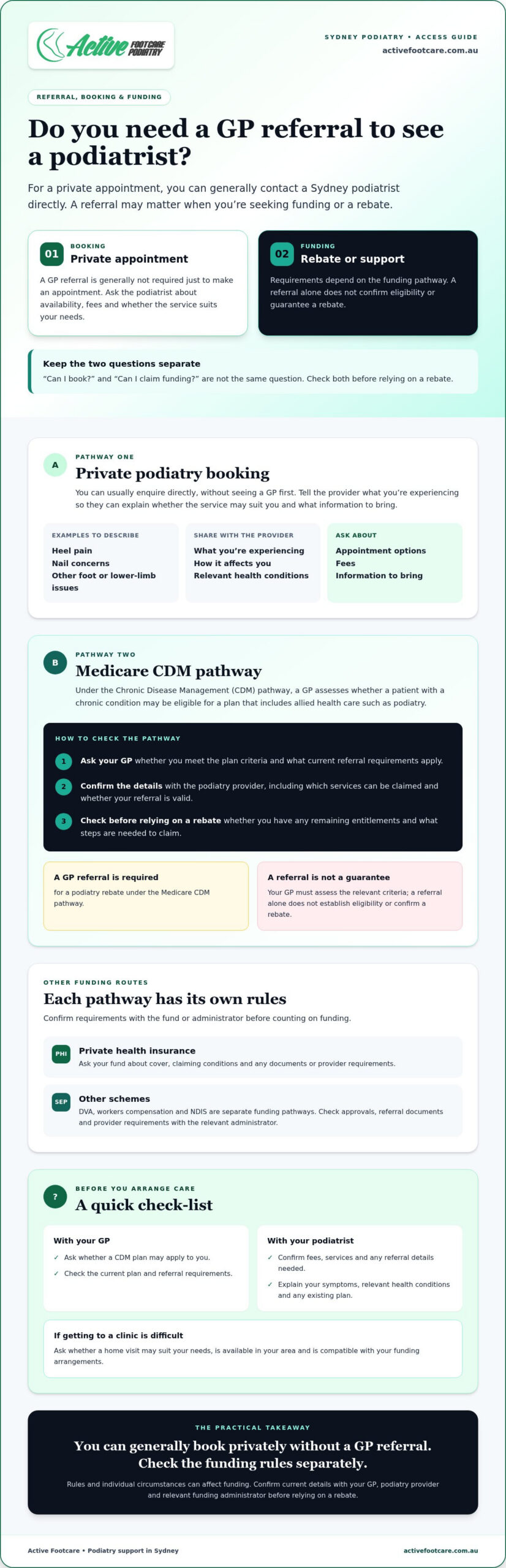
For a private appointment, you can generally contact a podiatrist directly in Sydney without first seeing a GP. Booking an appointment and qualifying for a rebate are separate questions. If you’re searching for a gp referral podiatrist sydney, start by considering how you plan to pay for care, then check whether that pathway has referral requirements.
Referral or funding plan? A referral is a GP’s direction or documentation for care. A funding plan is an arrangement that may help eligible patients claim support towards services. The two can be connected, but a referral alone doesn’t confirm eligibility or guarantee a rebate. Podiatry is a health profession focused on the feet and lower limbs. The Podiatry overview explains its scope and areas of practice.
For a brief look at podiatry care in Sydney, watch this video:
Can you book a private podiatrist without seeing a GP?
Usually, yes. You can contact a private podiatrist to ask about an appointment without getting a referral first. People commonly seek help for heel pain, nail concerns and other foot or lower-limb issues. When you call or enquire, describe what you’re experiencing, how it affects you and any relevant health conditions. The provider can explain whether the service may suit your needs and what information to bring.
When does a GP referral matter?
A referral may matter if you’re seeking support through Medicare or another funding arrangement with specific rules. Under the Medicare Chronic Disease Management pathway, a GP referral is required for a podiatry rebate, but your GP must assess whether you meet the relevant criteria. Other schemes may set their own requirements. Before assuming costs will be covered, confirm current rules with your GP and the relevant funding administrator.
Private health insurance is a separate pathway. Contact your fund to check its conditions and any documents it requires. If you’re unsure, ask the podiatry provider what referral details they need for your intended payment option. This helps you distinguish permission to book from confirmation of funding.
How GP referrals relate to Medicare podiatry rebates in Australia
A GP referral can be relevant to funding, even though it isn’t generally needed simply to book a private podiatry appointment. These are separate pathways, so check the requirements that apply to your circumstances before deciding how to arrange care.
Referral requirements depend on the funding pathway. Use the comparison below as a starting point, not as confirmation that a particular service will be covered.
| Pathway | What to check |
|---|---|
| Private booking | Ask the podiatrist about booking, fees and whether the service suits your needs. A GP referral is generally not required to make an appointment. |
| Medicare chronic condition management | Ask your GP whether you meet the plan criteria, then confirm referral details and rebate conditions before attending. |
What is the Medicare Chronic Disease Management pathway?
Under the Chronic Disease Management (CDM) pathway, a GP assesses whether a patient with a chronic condition may be eligible for a plan that includes allied health care such as podiatry. A referral alone doesn’t establish eligibility or guarantee a rebate. Ask your GP to explain the current plan and referral requirements. Then check with the podiatry provider which services can be claimed and whether your referral is valid.
Before relying on a rebate, confirm whether you have any remaining entitlements and what steps are needed to claim. Rules and individual circumstances can affect the outcome, so don’t assume an older referral or information you’ve found online still applies. Check current details with your GP and the relevant Medicare channel.
How do private health insurance and other funding pathways differ?
Private health insurance is governed by your policy and fund. Contact your insurer to ask about cover, claiming conditions and any provider requirements. DVA, workers compensation and NDIS are separate funding pathways, each with its own rules. Confirm approvals, referral documents and provider requirements with the relevant administrator before counting on funding.
Funding questions are separate from choosing a suitably registered practitioner. You can check registration information through the Podiatry Board of Australia, then ask the provider whether they can meet the requirements of your chosen pathway.
If you’re exploring private care or NDIS podiatry, you can ask Active Foot Care about podiatry services and confirm any referral or funding requirements that may apply to you.
Which podiatry access pathway suits your circumstances?
The right route depends on what you need from the appointment, how you plan to fund it and whether getting to a clinic is practical. Keep three questions separate: how soon you need care, what type of assessment may be appropriate, and whether you may qualify for support through a funding scheme. A referral can help with a funding pathway, but it doesn’t determine appointment availability.
If you’re weighing up a gp referral podiatrist sydney search, use these priorities to guide your next conversation:
- You want to ask about an appointment directly: Contact a private podiatrist, describe your concern and ask about availability, fees and any private health insurance conditions.
- You’re managing an ongoing health condition: Speak with your GP about whether a relevant Medicare pathway may apply, and ask what referral details and eligibility criteria need checking.
- You need care at home: Ask whether a podiatrist home visit is offered in your area, suits the service you need and meets the requirements of your funding pathway.
Healthdirect’s guide to how to see a podiatrist also outlines direct access and circumstances where a referral may be useful for Medicare claims.
When might direct private booking be the practical option?
When should you discuss a referral or funding plan with your GP?
If you’re managing a qualifying ongoing condition, ask your GP whether you may be eligible for a Medicare-supported plan and what steps are required. For DVA, NDIS or workplace-related care, check the relevant scheme’s rules and approvals as well. Your GP can discuss medical suitability and referral needs, but can’t guarantee that a particular podiatrist has an appointment available.
How to arrange podiatry care in Sydney with or without a referral
A little preparation can help you find an appropriate appointment and avoid surprises about funding. Decide whether you’ll book privately or ask about a referral-based pathway, then check the details with your GP, if relevant, and the podiatry provider.
- Identify your funding pathway. Consider private payment, private health insurance, Medicare or another scheme. If you’re unsure whether a plan applies, ask your GP or the relevant funding administrator.
- Contact a podiatrist. Explain your concern and ask whether the provider treats it and accepts your intended funding pathway.
- Confirm the practical details. Check the appointment format, availability, fees or claiming requirements, and whether your suburb is within the provider’s current service area.
Before you call, note your symptoms, when they began, relevant health conditions and any existing referral or plan. If you need a home visit, mention mobility or access needs and ask whether the service is suitable for your concern. Active Footcare offers podiatrist home visits. Confirm your suburb, appointment suitability and current availability directly. For further home-visit information, look for the podiatrist home visit Sydney guide.
What should you ask your GP before requesting a referral?
Ask whether a referral or plan may apply to your circumstances and what service it is intended to cover. Check whether the referral has validity conditions and what documentation you’ll need to provide to the podiatrist. You can also ask which costs or remaining entitlements to confirm with Medicare or another funding administrator. A referral is not, by itself, confirmation that a service will be funded.
What should you confirm when contacting a Sydney podiatrist?
Tell the provider what’s troubling you and ask whether they can assess it, accept your referral or work with your funding pathway. If you’re considering a clinic appointment or home visit, confirm which format is suitable and available in your suburb. Share any mobility, access or communication needs early so the provider can discuss practical arrangements with you.
Searching for a gp referral podiatrist sydney can bring up different providers and funding options, so keep your questions specific: “Do I need to send my referral before booking?” and “What should I confirm with my funding administrator?” Clear answers help you plan the next step.
To ask about a home visit or another listed podiatry service, contact Active Footcare about your requirements.
Choosing Active Foot Care for podiatry support in Sydney
Once you’ve worked out whether you’re booking privately or exploring a funding pathway, ask a podiatry provider about care that fits your needs. Active Footcare provides podiatry services in Sydney, including podiatrist home visits, diabetes foot assessments, NDIS podiatry and custom orthotics. Local areas to enquire about include Liverpool, Bankstown, Moorebank and Campbelltown.
The right option depends on your concern, location and circumstances. Before arranging an appointment, confirm whether your suburb is covered, whether the service is clinically suitable and what referral or funding requirements apply. Active Footcare can explain its podiatry options, but it doesn’t provide GP consultations or create GP referrals.
Could a podiatrist home visit suit your needs?
If travel is difficult because of mobility or access needs, a home visit may be worth asking about. Active Footcare offers podiatrist home visits, but availability and suitability depend on your location and the care you need. Older adults and people arranging support at home may also find an aged-care podiatry services guide helpful when considering practical care options.
When you enquire, share your suburb and explain what makes travel challenging. Ask whether a home visit is available in your area and whether the concern or assessment you need can be addressed during a visit. Confirm the details before assuming that a particular service or funding arrangement applies.
What is the next step with Active Foot Care?
To make the conversation useful, be ready to describe your foot or lower-limb concern, relevant health conditions, location and any existing referral or plan. If you’re considering NDIS podiatry, a diabetes foot assessment or custom orthotics, mention that too. The team can discuss whether the service may suit your needs and what to confirm about appointment format, current availability and funding.
If you’re still comparing options after searching for a gp referral podiatrist sydney, you don’t need to have every detail settled before making an enquiry. A clear description of your needs can help identify what to check next. Contact Active Footcare to discuss podiatry care and explore an appropriate appointment option in your area.
Take the next step towards podiatry care
A GP referral usually relates to a funding pathway, not permission to book a private podiatry appointment. If you’re considering a Medicare-supported option, ask your GP about your individual eligibility and confirm current requirements before relying on a rebate. For other funding schemes, check their rules with the relevant administrator.
Your gp referral podiatrist sydney search may lead to different appointment options, so consider what suits your health needs, location and circumstances. Active Footcare offers podiatrist home visits in its local service areas, as well as diabetes foot assessments and NDIS podiatry. Confirm suburb coverage, appointment suitability and funding arrangements directly, whether you’re in Liverpool, Bankstown, Moorebank, Campbelltown or elsewhere in Sydney.
Share your concern, location and any existing referral or plan to help clarify what to ask next. Active Footcare provides podiatry care, not GP consultations or referrals. Contact Active Footcare to discuss podiatry care and explore an appropriate appointment option. With the right information, you can move forward with greater confidence and less uncertainty.
Frequently Asked Questions
Do I need a GP referral to see a podiatrist in Sydney?
Generally, no. You can usually contact a private podiatrist directly to ask about an appointment, whether you’re in Liverpool, Bankstown, Moorebank, Campbelltown or elsewhere in Sydney. A referral may still be useful if you’re exploring Medicare or another funding pathway. Before booking, describe your concern and ask whether the service may suit your needs and what documents you might need.
Can I see a podiatrist without a referral and still claim a Medicare rebate?
Generally, you need a GP referral under the relevant chronic condition management pathway to claim a Medicare rebate for podiatry. You may be able to book privately without one, but that’s a separate arrangement and doesn’t by itself establish Medicare eligibility. Ask your GP whether you qualify and confirm current claiming requirements with Medicare and the podiatrist before relying on a rebate.
How do I get a GP referral for podiatry under a Medicare care plan?
Book an appointment with your GP and explain your ongoing health condition, foot or lower-limb concern, and how it affects you. Your GP will assess whether a chronic condition management plan and podiatry referral are appropriate for your circumstances. If a referral is prepared, ask which service it covers, what documents to provide and whether it has validity conditions. Confirm current Medicare requirements before your podiatry appointment.
Does a GP referral guarantee Medicare coverage for a podiatrist appointment?
No. A referral doesn’t automatically confirm that you’re eligible for a Medicare rebate or that a particular service will be covered. Eligibility, referral details and claiming conditions all matter. Ask your GP to explain the plan and check any remaining entitlements with Medicare or the relevant administrator. Also ask the podiatrist what information they need and what payment arrangements apply before attending.
Can I use private health insurance to see a podiatrist without a GP referral?
Generally, you can book a private podiatry appointment without a GP referral, but whether your health fund contributes depends on your policy and its claiming rules. Contact your insurer to check your level of cover, any limits and provider requirements. Ask the podiatrist about fees and receipts, too. Medicare and private health insurance are separate pathways, so confirm which one applies to your appointment.
Do I need a referral for a podiatrist home visit in Sydney?
A referral generally isn’t needed to ask about a private home-visit appointment, but funding schemes may have separate requirements. Check with the provider whether home visits are available in your suburb and suitable for your concern. Active Footcare offers podiatrist home visits, and people in Liverpool, Bankstown, Moorebank and Campbelltown can enquire about coverage, appointment suitability and any applicable referral conditions.
What should I ask my GP before requesting a podiatry referral?
Ask whether a chronic condition management plan or another referral pathway may apply to you, and whether podiatry is appropriate for your needs. If a referral is provided, confirm its intended service, validity and any documents the podiatrist needs. Ask which costs or remaining entitlements to check with Medicare or another administrator. Having your symptoms, relevant health conditions and existing plans ready can help guide the discussion.