

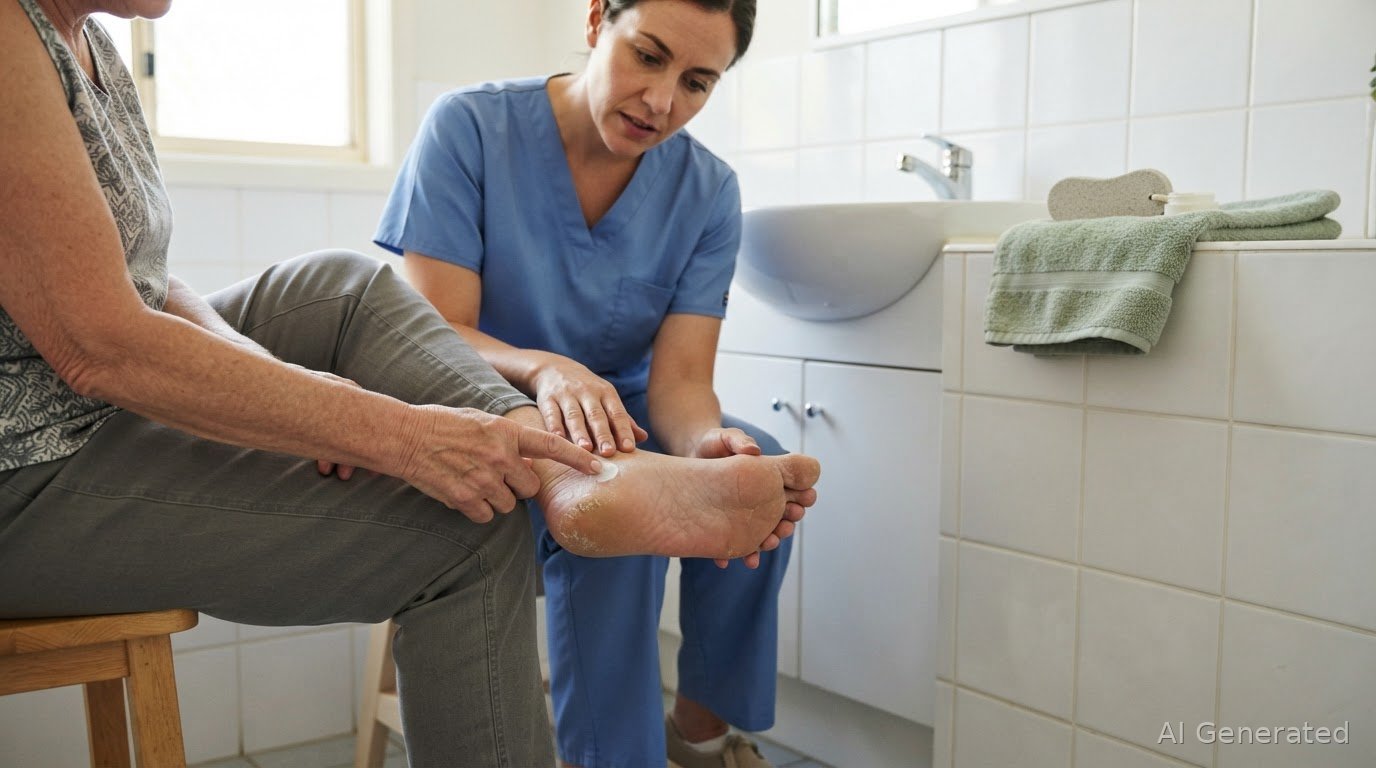
A painful heel crack is often more than dry skin: thickened skin can split under the pressure of standing and walking. For Sydney residents treating painful foot cracks at home with professional guidance, the right approach depends on how deep the crack is and what’s contributing to it.
It’s understandable to want relief without making every step uncomfortable. This guide explains why heel cracks form, how gentle home care may help, and which warning signs call for podiatry care.
You’ll also learn how a podiatrist may manage painful or recurring fissures by addressing thickened skin and pressure on the heel. The aim is to help you make an informed decision about your next step.
Key Takeaways
- Understand how pressure, footwear and underlying skin or health conditions can contribute to painful heel cracks.
- Learn which footwear and moisturising habits may help reduce hard skin and lower the chance of cracks returning.
- See how a podiatrist can guide gentle heel care and why cutting away hard skin yourself can be risky.
- Recognise when bleeding, signs of infection or difficulty walking call for prompt professional attention.
- Find out how podiatry treatment can address painful fissures and reduce pressure on the heel.
What Causes Cracked Heels?
For Sydney residents treating painful foot cracks at home, identifying the cause helps guide safer care. Heel cracks often form when dry, thickened skin splits under pressure.
-
Identify pressure, friction and dryness
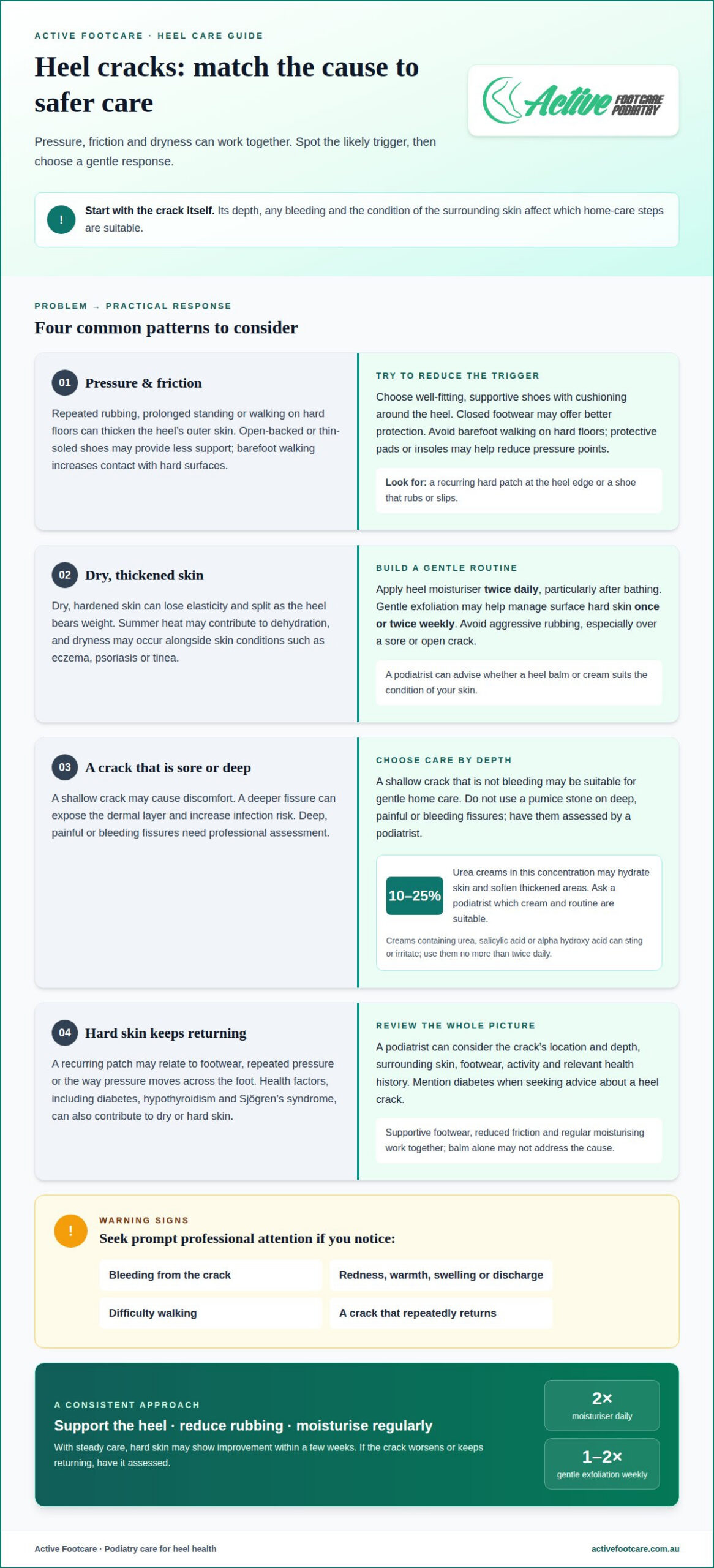
Notice where pressure builds while you stand and walk. Repeated friction or irritation can thicken the heel’s outer skin, particularly around its rim. Open-backed or thin-soled shoes may provide less support, while walking barefoot increases contact with hard surfaces. Prolonged standing, especially on hard floors, adds pressure. Sydney’s summer heat may also contribute to skin dehydration. Several factors can combine.
-
Assess hard skin and underlying causes
Look for thick, dry or callused skin around the heel. A hardened rim can lose elasticity and split as the heel bears weight. A shallow crack may cause discomfort; a deeper fissure can expose the dermal layer and increase infection risk. Dryness isn’t always the only cause. Atopic dermatitis, eczema, psoriasis and tinea can also affect heel skin.
- Consider how repeated pressure affects the same area. Hard skin commonly develops through friction, pressure or irritation, including from walking, running or poorly fitting shoes. Note whether cracking appears at the heel rim or alongside more widespread dryness. Calluses are broader patches of hard skin; corns are smaller, concentrated areas with a central core. These observations can help you describe the problem during an assessment, without trying to diagnose or cut the area yourself.
- Review health factors that may affect your skin. Diabetes, hypothyroidism and Sjogren’s syndrome can contribute to dry or hard skin around the heels. Skin conditions, including tinea, can also affect heel health. A clinician can consider the crack’s location and depth, surrounding skin, footwear, activity and relevant health history. This helps identify likely contributors rather than treating every fissure as simple dryness. If you have diabetes, mention it when seeking advice about a heel crack.
- Take worsening cracks seriously. Thickened skin can split under pressure from standing or walking, and deeper fissures may expose tissue beneath the outer skin. Redness, warmth, swelling or discharge may indicate infection and need prompt professional attention. A crack that bleeds, repeatedly returns or makes walking difficult also deserves assessment. When treating painful foot cracks at home in Sydney, consider pressure, skin and health factors to guide suitable care.
How a podiatrist can help prevent hard skin with footwear and moisturising
- Ask a podiatrist to assess where pressure builds before choosing prevention measures. A heel that repeatedly develops hard skin may be exposed to friction from footwear, prolonged standing or the way pressure moves across the foot. An assessment helps match practical advice to likely causes. For example, a recurring patch at the heel edge may need different pressure management from dryness across both heels.
- Choose well-fitting, supportive shoes with cushioning around the heel. Thongs and open-back shoes can increase friction and pressure, so closed footwear may offer better protection. Avoid walking barefoot on hard floors, which exposes the heel to repeated contact. Protective pads or insoles may also help reduce pressure points. A podiatrist can consider how your shoes fit and where pressure builds, rather than offering a one-style-fits-all recommendation.
- Rotate your footwear to vary pressure points during the week. Wearing the same pair repeatedly can create friction in the same areas, while changing shoes may alter how the heel is supported. Choose pairs that fit securely and feel cushioned underfoot, not shoes that rub or slip at the heel. If a shoe consistently irritates one spot, avoid wearing it for long walks or standing periods and discuss alternatives with your podiatrist.
- Apply heel moisturiser twice daily, particularly after bathing, to support skin moisture and reduce excessive dryness. Regular moisturising helps prevent skin from becoming very dry and more likely to harden. A heel balm or suitable cream can form part of a consistent routine; apply it to intact surrounding skin and follow the product directions. Gentle exfoliation once or twice weekly may also help manage surface hard skin. Avoid aggressive rubbing, especially where a crack is sore or open.
- Keep the routine consistent and review changes in the skin. Prevention combines supportive footwear, reduced friction and regular moisture, rather than relying on heel balm alone. With steady care, hard skin may show improvement within a few weeks. If a cracked heel keeps returning, a podiatrist can reassess footwear pressure and your care routine. For guidance that fits recurring heel problems, explore podiatry care as a next step.
Podiatrist advice on at-home heel balm and pumice-stone care
A podiatrist can assess the crack before recommending home care. Its depth, any bleeding and the condition of surrounding skin affect which steps are suitable.
-
How a podiatrist identifies shallow heel cracks suitable for home treatment
Describe the crack and any discomfort when walking to support an assessment. Heel fissures are splits in the outer skin, usually associated with dryness and thickened skin. A shallow crack that isn’t bleeding may be suitable for gentle home care. Deep, painful or bleeding fissures need professional assessment rather than pumice-stone treatment. The podiatrist will also consider the surrounding skin and whether the crack may be infected.
-
Choosing heel cream with active ingredients with a podiatrist
Ask which heel cream suits the condition of your skin. Urea-based creams containing 10-25% urea may hydrate skin, soften thickened areas and help break down callus. Creams containing urea, salicylic acid or alpha hydroxy acid can sting or irritate, so use them no more than twice daily. A podiatrist can consider the crack’s depth and the surrounding skin when advising on an ingredient and routine.
-
Podiatrist advice on using a pumice stone for heel care
Use a pumice stone only on damp, softened skin around a shallow crack that isn’t bleeding. A warm-water soak for 10-15 minutes can soften hardened skin first. Rub gently, and stop if the area feels sore or uncomfortable. Gentle exfoliation 2-3 times per week is generally sufficient. Don’t use a razor or scissors to remove hard skin, as cuts can lead to infection.
-
How a podiatrist advises protecting the crack with a dressing
Ask a podiatrist which dressing suits the crack’s depth and location. A protective dressing can cover the area and reduce rubbing while you walk. Liquid bandage can seal a painful heel crack, protect it from bacteria and reduce walking discomfort, but it isn’t a cure. A bleeding or deep fissure needs assessment before you rely on a home dressing alone.
- After a soak, gently dry the heel and apply a thick moisturiser. For shallow cracks, a heavy oil-based cream or petroleum jelly can be applied while the skin is slightly damp. Cotton socks worn overnight help keep the moisturiser in place. Avoid putting exfoliating products directly into an open or bleeding crack. If home care increases discomfort, stop and have the fissure assessed by a podiatrist.
When to seek podiatry care
Stop using a pumice stone or trimming cracked skin if the fissure is deep, bleeding, painful or shows possible infection. A podiatrist should assess these cracks, as further rubbing or cutting can injure the skin and increase infection risk.
- Seek prompt professional care for redness, warmth, swelling or discharge around a heel crack. These changes can signal infection, especially if pain is worsening or walking becomes difficult. Don’t wait for home foot care to resolve these signs. A podiatrist can assess the crack and surrounding skin, then determine appropriate treatment.
- Arrange podiatry care for a bleeding crack, a deep fissure or pain that affects standing and walking. A crack that exposes tissue beneath the outer skin needs more than routine moisturising. Avoid footwear that rubs directly against the sore area while arranging an assessment. If the fissure repeatedly reopens, the podiatrist can also consider pressure and friction that may be contributing.
- If you have diabetes, ask a podiatrist to assess any cracked heel. Small cracks can develop into serious ulcers, so don’t rely on a pumice stone or home trimming. A Diabetes Foot Assessment can examine foot health and identify concerns requiring care. Report changes such as a new split, bleeding or surrounding redness during the assessment.
- Book an assessment if consistent care hasn’t improved the crack after a couple of weeks. Recurring fissures may need professional attention, particularly when thickened skin repeatedly splits under pressure. During treatment, the podiatrist can assess the crack’s depth, pain, skin condition and likely pressure points. This helps determine whether you need more than changes to moisturising or footwear.
- Leave debridement to a qualified podiatrist. Debridement means removing hard, dead skin around a fissure using sterile instruments. Cutting thickened skin at home with scissors or a blade can cause wounds or infection, and a pumice stone can worsen an open or painful crack. A podiatrist can determine whether removing hard skin is suitable and manage the area safely.
- Seek reassessment when home treatment isn’t working or cracks keep returning. A podiatrist can review your foot-care routine, the skin around the fissure and pressure from footwear or standing. In Sydney, arrange care promptly if infection signs appear; bleeding, pus, swelling or difficulty walking also warrant professional attention. Early assessment can clarify the cause and guide suitable treatment.
Professional callus and fissure treatment
- Have a podiatrist assess painful heel fissures rather than treating them as a cosmetic concern. A fissure is a split in the outer skin, often surrounded by thickened callus. If left untreated, a deep crack can expose underlying tissue and increase infection risk. The podiatrist considers its depth, pain, bleeding and surrounding skin before deciding on care. This helps distinguish a superficial crack from one needing more involved treatment.
- Ask whether hard skin around the crack should be reduced professionally. For severe fissures or calluses, a qualified podiatrist may use sterile instruments to remove hard, dead skin. This is called debridement. Removing thickened edges can help the clinician access and manage the fissure, but it isn’t a home trimming task. Avoid blades, scissors or forceful filing, which can cut already fragile skin.
- Discuss how the fissure will be cleaned and protected. Professional care for painful cracks may involve cleaning and debriding the area, then applying a protective dressing if needed. The podiatrist also considers how to reduce pressure on the heel while the skin heals. A dressing can protect the area from rubbing, while pressure management addresses a factor that could keep the crack opening when you stand or walk.
- Ask what may be causing the same heel fissure to develop again. Repeated pressure, footwear friction and the way weight moves across the foot can contribute to recurring callus. A podiatrist can assess these factors and explain how pressure changes may support healing. Where biomechanical issues contribute, custom orthotics may be recommended to redistribute pressure and reduce load on the heels. The appropriate approach depends on your assessment.
- Follow the care plan and review the heel as it heals. Deep heel fissures may take several weeks of treatment to heal, so don’t expect an immediate result. Follow dressing care and pressure-reduction advice consistently, and report worsening pain, bleeding or signs of infection. If the crack keeps returning, a podiatrist can reassess your routine and contributing factors instead of repeatedly treating only the visible hard skin.
- Arrange professional care if a fissure is severe, bleeding, painful or affecting walking. Podiatry treatment can address the crack, surrounding callus and pressure factors together. For an assessment and guidance on painful heel fissures, contact Active Foot Care.
A hard, thick layer of callused skin often develops around the rim of the heel before it cracks. Cracked heels, also known as fissures, may lead to more serious problems if left untreated.
Active Foot Care: Podiatrist Home Visit
Active Foot Care offers Podiatrist Home Visits for people who need professional assessment of painful or recurring heel cracks at home. A podiatrist can examine the fissure, surrounding skin and pressure points, then guide suitable care. This can help if pain or limited mobility makes travelling difficult.
For people with diabetes, a Diabetes Foot Assessment can help identify foot concerns that need attention. If pressure or walking patterns contribute to recurring hard skin, Gait Analysis or Custom Orthotics may be relevant. The podiatrist can explain which approach suits your foot and symptoms.
If a heel crack is deep, bleeding, infected or affecting your walking, arrange professional assessment. Contact Active Foot Care to discuss a Podiatrist Home Visit.
Choose a clear next step for comfortable movement
Persistent heel pain can change how you stand, walk and manage everyday tasks. Rather than repeatedly adjusting your home-care routine without understanding the cause, consider whether an assessment could clarify your options. For Sydney residents treating painful foot cracks at home, professional guidance can help distinguish a manageable surface crack from one needing more targeted care.
Before seeking advice, note when the pain began, whether the crack has returned and which activities make it worse. These details can support a useful discussion about your foot and daily needs. If pain affects your usual movement or the crack is worsening, don’t put off taking the next step. A podiatrist can assess your situation and discuss suitable care, including a home visit.
Contact Active Foot Care for advice and take a considered step towards caring for your feet with confidence.
Frequently Asked Questions
How Can a Podiatrist Help?
A podiatrist can assess what may be contributing to a painful crack and tailor care to your foot. They can consider the skin’s appearance, where pressure falls and whether your footwear may be aggravating the area. If hard skin surrounds a fissure, they can decide whether professional treatment is appropriate. In Sydney, an assessment can also help you understand which routine changes may support healing.
Can a podiatrist help heal cracked feet overnight?
No. A podiatrist can assess and protect a painful crack, but skin doesn’t mend overnight. A dressing may reduce rubbing while you walk, and a suitable moisturiser may support care around the fissure. Deeper cracks can take several weeks of treatment to heal. If the crack is painful or keeps reopening, professional assessment can help address what may be preventing it from settling.
What causes painful cracks in the feet and heels?
Painful cracks often develop when dry, thickened heel skin splits under pressure. For example, someone who stands for long periods in open-backed shoes may experience repeated heel friction and pressure. Skin conditions such as eczema or tinea can also contribute. Diabetes and some other health conditions may affect skin dryness, so recurring cracks can have several contributing factors.
How can a podiatrist advise you to safely clean and treat a painful foot crack at home?
A podiatrist can first assess whether the crack is shallow, bleeding or showing possible infection. For a shallow crack, they may guide you on gentle cleaning, drying the surrounding skin and protecting the area from friction. Avoid cutting or scraping the fissure. If it’s deep, bleeding or increasingly painful, seek professional assessment before trying to manage it yourself.
Which moisturisers or heel balms might a podiatrist recommend for cracked feet in Australia?
A podiatrist may suggest a heel cream suited to your skin, including a urea-based option for dry, thickened areas. Creams with skin-softening ingredients can irritate some cracks, so the skin’s condition matters when choosing a product. Follow the product directions and avoid applying active ingredients into an open split. A podiatrist can help you select a suitable option for your foot.
What are the signs a foot crack is infected or needs urgent medical care?
Redness, warmth, swelling or discharge around a crack can signal possible infection and warrant prompt professional assessment. Seek care promptly if pain is worsening, the crack is bleeding or walking becomes difficult. These signs matter especially if the fissure is deep or deteriorating. Don’t try to cut away surrounding skin while the area is sore or showing these changes.
When should I see a GP or podiatrist for painful cracked feet in Sydney?
See a podiatrist for a painful, recurring or deep heel crack, especially if it affects walking or doesn’t improve with care. A GP may be appropriate if you’re concerned about a broader health issue contributing to skin changes. If you have diabetes, seek podiatry assessment for a cracked heel rather than relying on home treatment alone. In Sydney, worsening symptoms call for prompt attention.
Can diabetes or poor circulation make home treatment of foot cracks unsafe?
Diabetes can make a cracked heel more concerning, because a small crack may develop into a serious ulcer. Arrange a podiatry assessment instead of removing hard skin yourself. If you have diagnosed poor circulation, avoid cutting or filing a crack and seek individual clinical advice before self-treatment. Bleeding, swelling or changes in the surrounding skin should prompt professional attention.