


Summer-ready feet start with comfortable, healthy skin, not just a fresh pedicure. For getting feet ready for summer, a podiatrist in Sydney can safely remove corns and thickened skin, smooth rough heels and help reduce the risk of painful cracks. At home, moisturise regularly and avoid picking or shaving hard skin.
It’s understandable to want dry, cracked heels or a sore corn sorted before sandal season. Heat, sweat and less-supportive summer footwear can contribute to friction and pressure, so a little preparation can help your feet feel more comfortable.
This guide covers practical ways to manage calluses, cracked heels and corns, care for skin and nails, and choose comfortable summer footwear. You’ll also learn which changes deserve attention and when podiatry care can help you prepare for the season.
Key Takeaways
- Have painful corns or thick heel callus assessed and professionally smoothed, and avoid cutting or shaving hard skin at home.
- Dry carefully between your toes and wear slides in shared pool, gym and shower areas to help reduce infection risk.
- Trim toenails straight across and pay attention to changes such as discolouration, chipping or thickening.
- Rotate summer footwear, ease new sandals in at home and protect the tops of your feet with sunscreen.
- Seek podiatry advice for sore cracks, persistent skin or nail changes, or foot concerns that make walking uncomfortable.
1. What can I do about callouses, cracked heels and corns?
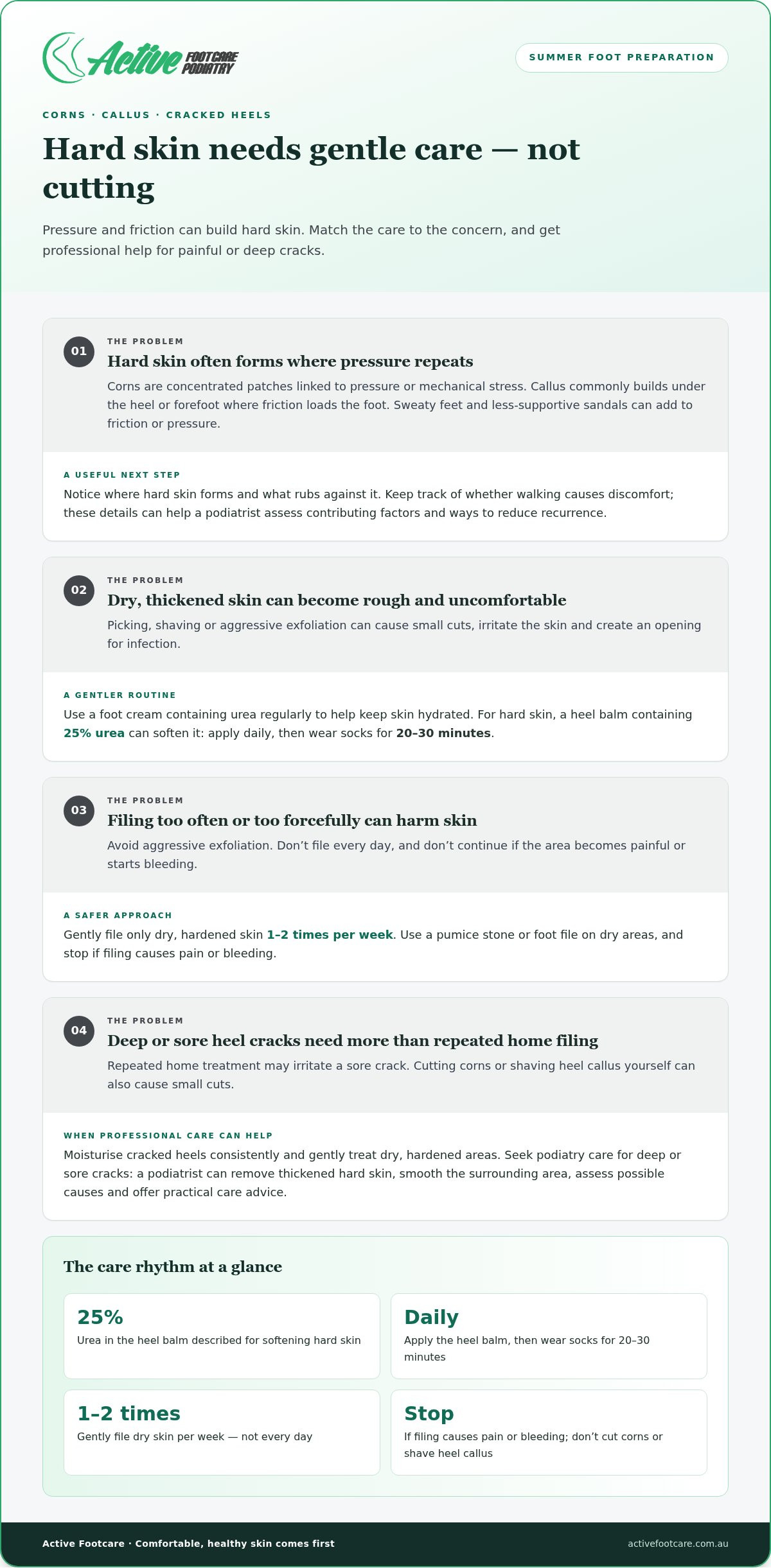
Start by noticing where hard skin forms and what rubs against it. Corns are concentrated patches of hard skin linked to pressure or mechanical stress. Callus often builds where repeated friction loads the foot, including under the heel or forefoot. Sweaty feet can increase friction, while less-supportive sandals may add pressure. Note the location and whether walking causes discomfort. These details help a podiatrist assess contributing factors and ways to reduce recurrence.
For dry, thickened skin, use a foot cream containing urea regularly to help keep skin hydrated. A heel balm containing 25% urea can soften hard skin; apply it daily, then wear socks for 20–30 minutes to support absorption. Gently file dry skin 1–2 times per week, not every day. File only when the skin is dry, and avoid aggressive exfoliation, picking or shaving heels. Small cuts can irritate the skin and create an opening for infection.
For cracked heels, moisturise consistently and gently use a pumice stone or foot file on dry, hardened areas. Stop if filing causes pain or bleeding. Deep or sore cracks need professional attention rather than repeated home treatment. A podiatrist can remove thickened hard skin and smooth the surrounding area, while assessing possible causes and offering practical care advice. This can help manage the build-up before it splits further or makes walking uncomfortable.
When choosing a Sydney podiatrist, look for clear information about their qualifications, registration and experience with concerns such as corns and cracked heels. Consider whether their approach addresses your specific concern and whether they explain the care options clearly.
Medicare rebates may apply when a GP refers an eligible person under a chronic disease management plan; routine podiatry appointments aren’t automatically covered. Eligibility depends on a chronic medical condition and the GP’s assessment of whether allied health care belongs in the person’s management plan.
DIY foot peels, blades and aggressive pedicure exfoliation can irritate skin or cause small cuts, increasing infection risk. Don’t cut corns or shave heel callus yourself. If you choose a pedicure, remember that tools and foot tubs can transmit infections when they aren’t disinfected properly.
To find a podiatrist near you in Sydney, search by suburb and the concern you want assessed, such as heel cracks or corns. Consider whether travelling to an appointment is manageable or whether a home visit would better suit your circumstances.
2. What can I do to avoid skin and nail fungus or warts?
Warm, damp conditions can leave feet more vulnerable to fungal infections, so make drying part of your routine. After showering, swimming or walking barefoot, dry carefully between every toe, including the skin folds where moisture can linger. If your feet sweat, choose moisture-wicking socks and change out of damp pairs promptly. Let joggers dry fully between wears instead of putting them straight back on.
Take extra care in shared wet areas. Wear thongs or slides around public pools, gym facilities and communal showers rather than walking barefoot. This reduces direct contact with surfaces where fungal infections or wart-causing viruses may spread. Plantar warts can be painful underfoot and stubborn to treat, so avoid picking at them. Arrange an assessment if a spot becomes sore or makes walking uncomfortable.
Check your feet regularly in good light, including the soles, between the toes and around the nails. Look for itchy skin between the toes, flaky or dry skin on the soles, and nail changes such as crumbling or yellow, brown or green discolouration. These signs can have different causes, so note when they appeared and whether they are changing. Seek podiatry or medical advice for persistent or concerning changes rather than trying several treatments at once.
Coloured polish may make nail changes harder to notice. Give toenails a polish-free break; one recommendation is 10 days without polish. Check the natural nail before repainting it. A polish described as anti-fungal shouldn’t replace assessment or appropriate treatment for a suspected infection. If a nail is thickening, crumbling or changing colour, removing polish helps you see its surface more clearly.
Pedicure tools and whirlpool foot tubs can transmit infections if they aren’t disinfected properly. Avoid sharing nail files or tools, and don’t let aggressive filing create small cuts around the nail or on dry skin. Australia’s nail salon industry is largely unregulated, and sterilisation standards can vary. If a pedicure leaves skin sore or broken, keep the area clean and monitor it for changes.
Fungal nail infections can spread and become harder to treat if left unattended, while long-term infection may alter nail shape, colour and thickness. Early assessment can help distinguish a fungal problem from other causes of discolouration and guide the next step. A podiatry assessment can help evaluate nail concerns and discuss options, including anti-fungal laser treatment.
3. Toenail trimming and signs of fungal infection
Trim toenails straight across to help reduce the chance of ingrown nails. Follow the nail’s natural width rather than cutting deeply into either corner. Avoid rounding the sides or digging beneath the nail edge, which can leave the corners uncomfortable as they grow. If a nail is too thick, painful or difficult to reach, don’t force a trim. A podiatrist can assess it and advise on safe care.
Check each nail in good light before trimming, ideally with nail polish removed. Look for changes in colour, chipping, crumbling or thickening. Fungal nail infections can cause brown, green or yellow discolouration, but colour alone doesn’t establish the cause. Compare the affected nail with neighbouring nails and note whether its appearance is changing. A simple record can help you describe the concern during an appointment.
Fungal nail infections can be difficult to treat, and leaving one unattended may allow it to spread. Over time, an infection can change nail shape, colour and thickness. Don’t assume a damaged-looking nail is fungal or apply repeated treatments without understanding the cause. A podiatrist can assess the nail and discuss appropriate next steps. Seek advice when you notice persistent discolouration, chipping or thickening.
For a more controlled trim, sit somewhere stable and work on one nail at a time. Cut small sections straight across instead of taking a large piece from the corners. If an edge feels sharp, smooth only the rough tip without cutting down the sides. Stop if the nail splits, bleeds or becomes painful. Don’t force a trim if it causes discomfort or damages the surrounding skin.
Keep the skin around the nails comfortable with moisturiser, but avoid pushing cream beneath a damaged nail. Dry skin around the toes can make it harder to see where the nail ends, so take time to inspect each edge. If nail polish makes colour changes difficult to spot, leave it off while monitoring the nail. A healthy-looking neighbouring nail can offer a useful visual comparison, but it cannot diagnose the affected one.
At an assessment, describe when you first noticed the change and whether it has spread to another nail. Mention any pain, crumbling or difficulty trimming, rather than covering the nail with polish. Podiatry instruments are sterilised, and each file or blade is single-use. These details help guide nail care, particularly when a thickened or discoloured nail is difficult to manage at home.
Discoloured nails
A change in toenail colour deserves a closer look, especially if it comes with crumbling, chipping or thickening. Fungal infections can cause yellow, green or brown discolouration, but those signs don’t confirm the cause. Skin cancers can also occur under nails and may be mistaken for fungal or other infections. Remove nail polish so you can see the nail clearly, then arrange an assessment for a persistent or changing mark.
Check the whole nail, not just the visible tip. Look across the surface, around the edges and where the nail meets the skin. Compare its colour and thickness with the same toe on your other foot. Note whether the change is spreading, becoming darker or appearing on another nail. Clearly describing what changed and when can help a clinician assess your concern.
Take a polish break before inspecting a nail. The research-backed advice for this article recommends giving toenails 10 days without polish, and taking regular breaks between applications. Polish can obscure an emerging colour change, while covering a nail makes ongoing monitoring harder. If you’re preparing for a pedicure, inspect your bare nails first and avoid painting over a nail that looks damaged or unusual.
Don’t try to remove discolouration by scraping, filing deeply or using a harsh treatment. These steps can damage the nail or surrounding skin without identifying the cause. If polish remover irritates the skin, stop using it and keep the area clean. A podiatrist or medical professional can assess the changes and advise on appropriate treatment, including whether fungal infection should be considered.
Pedicure hygiene matters, too. Tools and whirlpool foot tubs can transmit infections if they aren’t disinfected properly. Avoid sharing files or clippers, and don’t allow vigorous filing around a discoloured nail. In Australia, nail salon sterilisation standards can vary because the industry is largely unregulated. If a pedicure leaves the skin broken or sore, keep the area clean and watch for further changes.
Summer footwear doesn’t remove the need to check your nails. Thongs and open sandals may make discolouration more visible, but appearance alone can’t explain it. Check your feet regularly, including beneath the nail edges, and seek advice if a mark persists, spreads or changes. This is particularly important when a dark mark sits beneath a nail or resembles a bruise that doesn’t resolve as expected.
Untreated fungal infections may lead to lasting changes in nail shape, colour and thickness. Skin cancers on the feet are often diagnosed later than most other skin cancers and may also occur on the soles or tops of the feet, so include these areas in regular checks.
5. Preparing feet for summer
Prepare before your first long day in sandals. After winter, check your feet for rubbing points, dry patches, blisters and nail changes. Make sure sandals feel comfortable while standing and walking, not just while sitting. Wear new pairs at home for about an hour before going out to notice friction before it becomes a blister. Rotating footwear also helps avoid repeatedly loading the same areas.
Choose sandals with an anatomical footbed for more support, and don’t rely on thin, flat thongs for all-day wear. If a thong bends in half easily, it may not provide enough support. Limit thongs to places such as the pool or beach, and alternate them with other footwear. Going barefoot or wearing thongs can increase injury risk, while gripping straps with your toes may cause discomfort with overuse.
To reduce blister risk, check where new straps touch your skin before a longer outing. If rubbing starts, change footwear rather than pushing through discomfort. For a blister, clean it gently with soap and water and leave the skin intact where possible. Foot odour can develop when bacteria break down sweat, so wash and dry your feet, including between the toes. Change damp socks promptly and let joggers dry between wears.
Dry summer heat can draw moisture from foot skin, leaving it itchy or uncomfortable if moisture isn’t replaced. Apply foot moisturiser regularly, especially after washing, and avoid aggressive exfoliation that can irritate skin. Keep checking for signs of fungus, such as itchy or flaky skin, and nail fungus changes including discolouration or thickening. If you notice a persistent change, arrange professional assessment rather than covering it with polish.
Protect exposed skin, too. Apply SPF 50+ sunscreen to the tops of your feet, toes and ankles, then reapply after swimming or sweating. Sandals leave these areas uncovered, so include them in your usual sun-protection routine. If you’re spending the day at the beach, check again after a swim and reapply before heading back into the sun.
Before a summer outing, use this quick routine: check nails and skin, moisturise dry areas, test sandals indoors, pack alternative footwear and apply sunscreen. If a foot concern is making it difficult to prepare for summer or walk comfortably, get support for your foot-care needs.
Pedicure preparation also calls for care around soaking and polish. The page recommends soaking feet in warm water with sea salt, olive oil, and tea tree and peppermint essential oils. It also states that soaking feet can leave them retaining water and make them less able to absorb pedicure products, so consider this when planning product application. With darker nail polish shades, use a base coat to help avoid staining.
The page says foot pain complaints increase during the summer months. Continue rotating between different types of footwear to help prevent overuse injuries, and limit thongs to places such as the pool or beach rather than wearing them all day. These choices complement the checks, comfort and protection involved in warm-weather preparation.
Active Foot Care: Podiatrist Home Visit
Active Foot Care’s Podiatrist Home Visit brings podiatry care to you when getting to an appointment is difficult. It can suit people with limited mobility or those who prefer assessment and foot-care support at home. For diabetes-related concerns, a Diabetes Foot Assessment can review foot health and identify issues needing attention. Custom Orthotics and Gait Analysis are also available when foot mechanics or support are part of your concerns.
Consider professional guidance for persistent pain, thickened nails, recurring pressure areas or changes that are difficult to assess yourself. A podiatrist can discuss your concerns and relevant care options. Contact Active Foot Care to arrange podiatry support.
Take the next step towards summer comfort
Make foot care part of your summer preparation instead of waiting until discomfort interrupts a walk, outing or holiday. If a concern affects how you move, or you’re unsure how to manage a change, professional guidance can help you choose a sensible next step. Looking for help getting feet ready for summer from a Sydney podiatrist? Active Foot Care can tailor care to your needs and circumstances.
Options include a Podiatrist Home Visit if getting to an appointment is difficult, a Diabetes Foot Assessment for diabetes-related foot concerns, and Custom Orthotics where additional foot support is appropriate. The right next step depends on what you’re experiencing and how it affects your everyday activities.
Give your feet the attention they need to help you enjoy the warmer months with greater ease. Contact Active Foot Care to discuss podiatry support. A comfortable summer can start with taking one considered step for your foot health.
Frequently Asked Questions
What can I do about callouses, cracked heels and corns?
Reduce the repeated pressure or friction that’s creating hard skin, and avoid cutting it with a blade. Note where it forms, which shoes you were wearing and whether it hurts during a particular activity. This gives a podiatrist useful context when assessing the cause. Professional care can remove thickened skin and corns; deep or sore heel cracks also warrant assessment instead of continued home filing.
What can I do to avoid skin and nail fungus or warts?
Keep feet dry, especially after swimming or using shared showers, and wear slides in communal wet areas. Avoid sharing nail tools, and let damp joggers dry before wearing them again. Check your feet for itchy, flaky skin or nail changes. If a wart becomes painful to walk on, or a nail’s appearance keeps changing, seek an assessment rather than repeatedly applying products without knowing the cause.
How can I prepare my feet for summer in Sydney?
For getting feet ready for summer, a Sydney podiatrist can assess concerns that make walking or wearing sandals uncomfortable. Plan for the activities you enjoy: pack alternative footwear for a beach day, dry your feet after swimming and check your nails before applying polish. These simple checks help you notice rubbing or changes early, before they interfere with your summer plans.
When should I see a podiatrist for corns, calluses, or cracked heels?
Arrange podiatry care when a corn or callus is painful, repeatedly returns or affects how you walk. Seek an assessment for heel cracks that are deep or too sore to manage at home. People with diabetes should take foot concerns seriously and can arrange a Diabetes Foot Assessment. Active Foot Care offers Podiatrist Home Visits in Sydney, including Liverpool, Bankstown, Moorebank and Campbelltown, for people who find clinic travel difficult.