

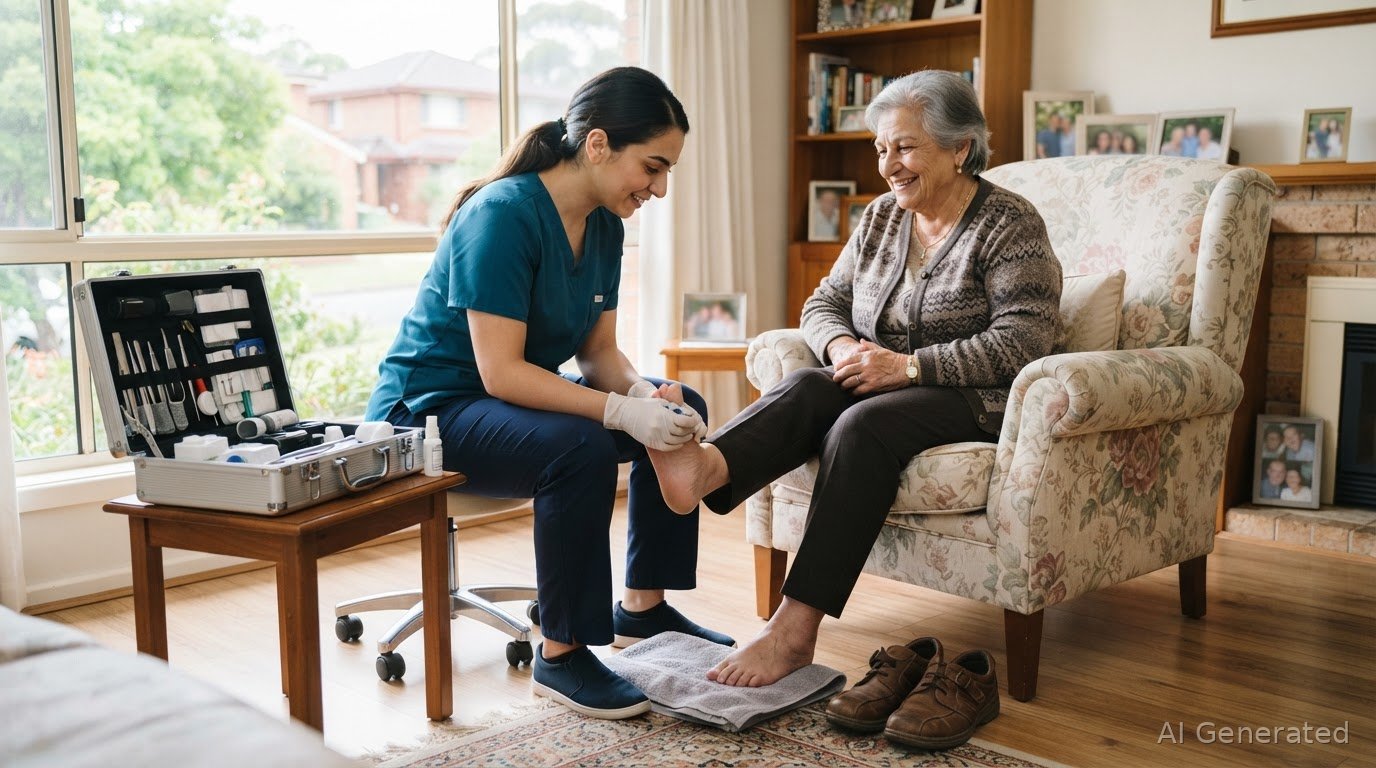
A mobile podiatrist in Liverpool can bring foot care to your home, with appointments addressing concerns such as nail care, thick toenails, corns, callus, cracked heels, diabetes-related foot health and general foot health. A home visit can be practical when travelling to a clinic is difficult or you prefer care in familiar surroundings. The assessment is tailored to the foot concerns being addressed.
It’s understandable to want clear answers before arranging a visit, especially when care needs to fit around daily routines. This guide explains what a home appointment may cover, how to find a suitable mobile podiatrist and what to consider when looking for a weekday time. It also outlines how Liverpool’s needs can differ from those across Sydney, so you can make a more informed decision about care at home.
Key Takeaways
- Home visits can cover routine nail and skin care, diabetic foot checks and general foot health assessments, depending on your needs.
- Prepare for an appointment by noting your foot concerns and having relevant footwear ready to discuss.
- Learn how footwear, skin condition and pressure points can guide practical advice for everyday foot care.
- Understand what to consider when comparing mobile podiatry options in Liverpool with services across Sydney.
- Use the suburb guide to see how to think about local coverage when looking for a home visit.
Do podiatrists do home visits in Liverpool?
Yes. Active Foot Care provides mobile podiatry visits in Liverpool, bringing podiatry assessments and routine foot care to homes, respite centres and aged care settings. An appointment can focus on a specific concern, such as thick toenails, or assess general foot health.
Diabetic Checks and Foot Health Assessments
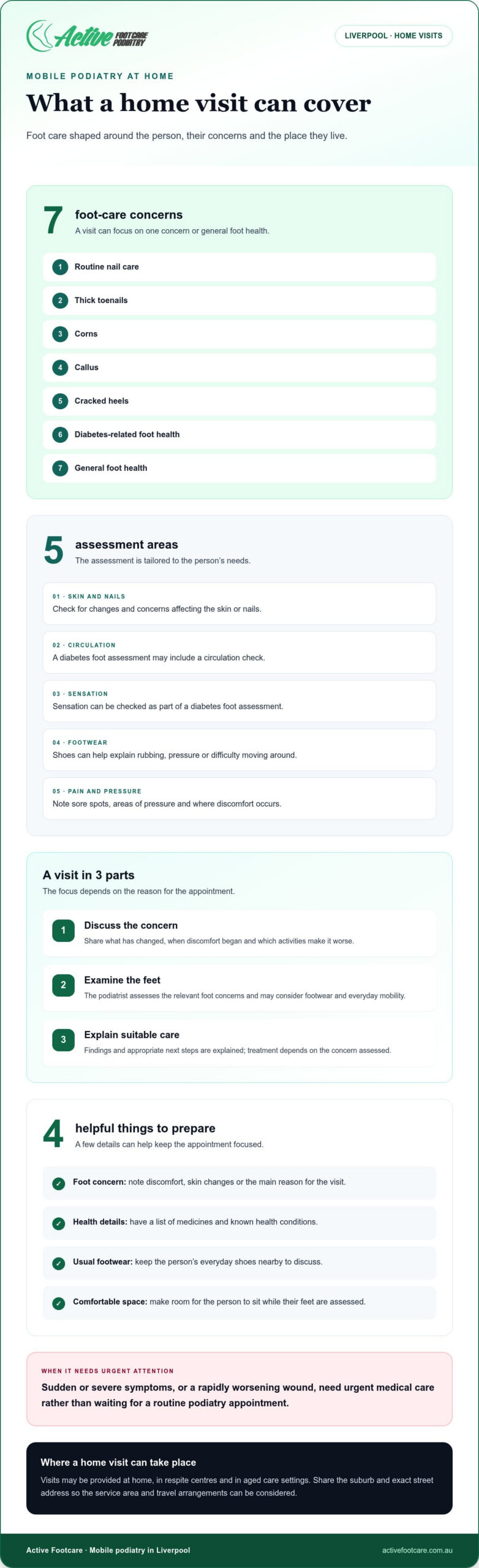
A diabetes foot assessment can include examining the skin and nails, checking circulation and sensation, and noting areas of pain or pressure. A general assessment can identify changes that need attention and guide a practical care plan. Before the visit, note any discomfort, skin changes or concerns, and have your usual footwear ready to discuss.
Regular foot checks are important for people living with diabetes because they help monitor changes and bring concerns to attention. Families and carers can support the appointment by sharing changes they’ve noticed, such as a new sore spot or difficulty putting on shoes. The podiatrist can explain the findings and appropriate next steps.
Choosing a Mobile Podiatrist
When choosing a podiatrist, look for recognised podiatry qualifications and current Australian registration. Ask for the practitioner’s registered name, then consider their experience with your concern, such as diabetes-related foot care or aged care appointments. Clear explanations of the assessment and treatment help you understand what to expect.
Home visits for aged care residents can address nail care, thick toenails, corns, callus, cracked heels, diabetes-related foot health and general foot health. An assessment may include checking skin, nails, circulation, sensation, footwear and areas of pressure. This gives families and carers an opportunity to discuss day-to-day difficulties alongside the resident’s foot concerns.
Treatment depends on the concern being assessed. A podiatrist can address routine nail and skin concerns during a visit, while foot or lower-leg pain needs assessment before a treatment plan is decided. Note where discomfort occurs, when it began and which activities make it worse. These details help focus the appointment.
A routine home visit isn’t a substitute for urgent medical attention if symptoms are sudden or severe, or a wound is rapidly worsening. In those situations, seek urgent medical care rather than waiting for a podiatry appointment.
For a home visit, prepare a list of medicines, known health conditions and recent changes in walking or footwear. Keep the resident’s usual shoes nearby and make space for a comfortable assessment. These steps help the podiatrist focus on the person’s needs and explain the findings clearly.
Mobile podiatry home visits in Liverpool
A home visit brings podiatry care to the person, reducing the need to arrange transport to a clinic. Appointments can take place at home or in residential care, with the focus shaped by the person’s foot concerns and surroundings.
What to Expect During a Home Visit
Before the appointment, note the main concern, such as discomfort when walking or a nail that’s difficult to manage. Make a clear space where the person can sit comfortably while the podiatrist assesses their feet. Keep usual footwear nearby, as shoes can help explain rubbing, pressure or difficulty moving around the home.
The podiatrist will discuss the concern, examine the feet and explain suitable care options. A visit may include routine foot care or a broader assessment, depending on the reason for booking. Sharing relevant health details and the person’s usual mobility routine helps keep the discussion focused and practical.
Residential and Nursing Home Visits
In residential and nursing homes, a visit can be arranged around the resident’s care routine and the facility’s available space. A family member or carer can explain recent changes, bring the resident’s usual shoes and note any concerns about walking. This gives the appointment useful context without relying on the resident to recall every detail.
For a resident who finds transport tiring or difficult, receiving care where they live can simplify the appointment. The podiatrist can discuss findings with the resident and, where appropriate, their carer. Clear communication helps everyone understand the care provided and any follow-up steps.
Liverpool Service Suburbs
For a Liverpool home visit, give the suburb and street address when arranging the appointment. Location helps establish whether the visit fits the service area and plan travel efficiently. This is especially useful for residents in aged care, where reception or staff may need to coordinate access and timing.
Don’t assume that a service covering Liverpool automatically reaches every surrounding suburb. The address, travel route and appointment arrangements all affect where a mobile visit can take place. Share the exact location rather than relying on a broad description such as “near Liverpool”.
Home visits are for care at a person’s residence, including residential care settings. School or workplace appointments involve different access, privacy and scheduling considerations, so they aren’t the same as a home visit. For people receiving NDIS Podiatry Services, the support setting and appointment purpose should align with their individual needs and plan.
To prepare, write down the foot concern, note any changes in daily movement, and have relevant footwear ready. These practical details help make the visit more focused, whether the appointment takes place in a private home or residential facility. You can explore the podiatry home visit service for care delivered in the home.
Footwear, skin care and pressure-area advice
Footwear, skin condition and pressure points can affect comfort and everyday movement. During an aged care assessment, a podiatrist may check the patient’s skin, nails, circulation, sensation, footwear and areas of pain or pressure. These observations can connect concerns, such as a sore spot, with possible friction or shoe fit.
Practical footwear checks
Bring the shoes worn most often, including slippers and walking shoes. The podiatrist can assess how each pair fits, whether seams or edges rub, and whether the sole suits the patient’s usual activities. Mention if shoes feel tight by the end of the day or are difficult to put on. These details help shape relevant advice.
At home, check inside shoes for folded linings, rough seams or small objects before putting them on. Look for spots where the upper presses against the toes or heel. Shoes that feel comfortable while seated may still rub during walking, so describe any discomfort during daily activities.
Skin, nails and pressure areas
Dry, cracked heels, corns, callus and thick toenails can make routine care uncomfortable. A podiatrist can assess the affected area and discuss suitable treatment, rather than recommending that a patient cut corns or callus themselves. For nail care, explain which nails are difficult to trim and whether shoes press against them.
Carers can note where redness, tenderness or repeated rubbing occurs and share those observations at the appointment. Avoid putting pressure on a painful area while waiting for assessment. If a skin change is worsening or there’s a wound, describe its location and how it has changed.
Aged care, NDIS and private funding
For an aged care resident, coordinate the appointment with their daily routine and involve a family member or carer who knows their footwear needs. Bring a short list of concerns, such as trouble wearing shoes or a recurring pressure point. This helps keep the discussion centred on practical care.
NDIS funding and private payment are different ways to arrange care. Whether an appointment can be funded through an individual plan depends on the person’s circumstances, plan and support needs. Before booking, identify the purpose of the visit and the funding arrangement. A clear description, such as nail care or advice about footwear rubbing, helps the patient and their support network understand the care being considered.
For a patient in Australia, prepare specific information: bring usual footwear, note painful areas and list the daily tasks affected. These details help the assessment focus on the person’s comfort, skin care and pressure concerns.
Mobile podiatry in Liverpool and Sydney
Liverpool is part of Sydney, but a home visit is arranged around the person’s address, care needs and travel. When searching for a mobile podiatrist in Liverpool, focus on local service locations and the type of appointment you need, rather than assuming every Sydney service travels to every suburb.
For someone in Liverpool, provide the exact suburb and street address, then describe the reason for the visit, such as difficulty travelling, routine foot care or support for an aged care resident. These details help Active Foot Care tailor a home appointment to the need. For a resident in a facility, include the facility name and access arrangements.
Sydney-wide searches can return services based in different parts of the metropolitan area. A provider’s general reference to Sydney doesn’t explain whether they travel to a particular Liverpool address. The practical distinction is the journey required for the appointment: location, travel time, access and the visit’s purpose all shape arrangements. Be specific rather than relying on a broad regional label.
Before arranging a visit, prepare a short summary that answers these points:
- Location: Give the Liverpool suburb and complete address.
- Reason: Describe the concern, such as painful nails or difficulty walking.
- Setting: State whether the appointment is at home or in residential care.
- Support: Mention if a family member or carer will be present.
This information helps distinguish a home visit from an appointment that requires travel to a clinic. It also gives the practitioner context before arrival. For example, a resident with limited mobility may need a different appointment setup from someone seeking advice about footwear at home.
Travel can be a major barrier when a person finds public transport, getting into a car or walking from a drop-off point difficult. A home appointment brings care to the person’s residence. To help focus the assessment, note when discomfort occurs, which daily activities it affects and whether it has changed.
For people using NDIS Podiatry Services, relate the appointment purpose to the person’s support needs and plan. Describing the home setting and assistance required helps clarify the arrangement. A family member or support person can help prepare these details, particularly when the participant finds planning or communication difficult.
The takeaway for Liverpool residents is simple: search locally, provide the exact address and describe the appointment setting. For a Sydney-wide search, narrow results by the person’s location and travel needs. This makes it easier to identify an option suited to a home visit, rather than assuming a general Sydney service automatically covers Liverpool.
What suburbs around Liverpool do mobile podiatrists service?
Mobile podiatry coverage around Liverpool depends on the exact home or care-facility address, not just a broad “Liverpool” label. Suburbs such as Casula, Warwick Farm and Lurnea are useful location examples when searching nearby, but their names alone don’t establish that a visit is available there. Give the full address so the travel area can be considered accurately.
Provide the suburb and postcode, then describe the appointment setting. A private home, retirement village and nursing home may each have different access arrangements. For example, a facility may require visitors to report to reception or coordinate entry with staff. Include these details when describing the location and foot-care need.
Use this short checklist to make a local search more precise:
- Address: Provide the suburb, street and postcode.
- Setting: Say whether care is needed at home or in a residential facility.
- Access: Note relevant entry instructions, parking limits or mobility considerations.
- Appointment purpose: Describe the foot concern and who will attend.
Nearby suburb names can help identify a location, but provide the full address when arranging a visit. Liverpool, Bankstown, Moorebank and Campbelltown are among the areas Active Foot Care serves. If you’re arranging care for a relative, give the resident’s location, not your own.
For an aged care resident, include the facility name and any instructions for reaching the resident’s room or common area. A family member or carer can provide these details and explain the resident’s mobility needs. For an NDIS participant, add the appointment setting and the support required to take part. This helps make the request clear without assuming that every nearby suburb falls within the same travel area.
When comparing local options, distinguish a clinic address from a home-visit area. A clinic operating in Liverpool doesn’t, by itself, mean practitioners travel to every surrounding address. Likewise, a service described as Sydney-wide may cover different parts of the metropolitan area. The practical details are the person’s location, access needs and the reason for the appointment.
Before arranging a visit, write the suburb and complete address clearly, then note any access or care requirements. This gives a useful starting point for identifying suitable home-visit arrangements in Liverpool and nearby localities. For information about care at home, explore podiatry home visit options.
Active Foot Care: Podiatrist Home Visit
Active Foot Care provides Podiatrist Home Visits for people who need foot care at home or in a care setting. This can suit someone who finds travelling difficult or a family arranging care for an older relative. A Diabetes Foot Assessment addresses diabetes-related foot health, while individually manufactured Custom Orthotics and non-invasive Gait Analysis can help assess support and walking concerns.
When arranging care, share the main issue, relevant health details and how it affects daily movement. This gives the appointment a clear focus, whether you’re seeking an assessment or help with mobility. For foot care at home in Liverpool, contact Active Foot Care or visit activefootcare.com.au.
Choose a practical next step for your foot care
Before arranging care, decide what you’d most like help with: addressing a foot concern, maintaining diabetes-related foot health or improving comfort while moving. That priority can focus your first conversation and clarify what you want the appointment to address.
Choosing a mobile podiatrist in Liverpool is an opportunity to consider how home care can fit your routine. Active Foot Care offers Podiatrist Home Visits, Diabetes Foot Assessments and Custom Orthotics, with options to discuss based on your foot-care needs. Start with the concern that matters most to you.
If you’re ready to take that step, contact Active Foot Care to discuss your foot-care needs. A clear starting point can make it easier to move towards care that suits your circumstances.
Frequently Asked Questions
How do I find a mobile podiatrist in Liverpool?
To find a mobile podiatrist in Liverpool, search by suburb and specify that you need care at home. Match the podiatrist’s services to your concern, such as diabetes-related foot care or difficulty travelling to a clinic. Active Foot Care provides home visits across Western Sydney, including Liverpool, Bankstown, Moorebank and Campbelltown. When you enquire, share your address and the reason for the visit.
Which mobile podiatrists provide home visits in Liverpool, NSW?
Active Foot Care provides Podiatrist Home Visits at homes, respite centres and aged care facilities. Its local service locations include Liverpool, Bankstown, Moorebank, Sydney and Campbelltown. When arranging care in Liverpool, give the full address and setting, such as a private home or aged care facility. This helps clarify the visit needed and distinguish home-based care from an in-clinic appointment.
How much does a mobile podiatrist visit cost in Liverpool?
The fee depends on the clinical assessment or treatment and the visit setting. Active Foot Care charges for consultations and routine foot care, with specialised rates for home visits, aged care facilities and respite centres. Share the reason for the visit and address when arranging care so the relevant details are clear.
Do mobile podiatrists in Liverpool offer Medicare, NDIS or DVA rebates?
Active Foot Care provides NDIS podiatry services for self-managed and plan-managed participants. NDIS billing follows the NDIS Pricing Schedule effective 1 July 2026, and travel costs are claimed at half the hourly rate. Medicare and DVA rebates are separate funding pathways, so don’t assume they apply to a particular appointment. If using NDIS funding, explain the participant’s management type and appointment purpose when discussing the service.
How do I book a mobile podiatrist in Liverpool, and what information is needed?
Contact Active Foot Care to arrange a home visit, and have the person’s name, Liverpool address and main foot concern ready. Explain whether the appointment is at home, a respite centre or an aged care facility. It’s also useful to describe mobility limitations, relevant health conditions and any support person attending. For an NDIS appointment, include whether the participant is self-managed or plan-managed.
How soon can a mobile podiatrist visit in Liverpool, including urgent appointments?
Appointment timing is arranged around the visit location, travel route, clinical need and available appointment slots. Give the Liverpool address and explain the concern, including any recent change affecting walking or daily care. A routine home visit isn’t emergency medical care. Sudden severe symptoms or a rapidly worsening wound need urgent medical attention rather than a podiatry appointment.
Are mobile podiatry visits available for aged-care residents and people with limited mobility?
Yes. Active Foot Care provides home visits for aged care and respite centre residents, which can help when travelling to a clinic is difficult. A family member or carer can coordinate access and share practical details, such as footwear difficulties or changes in walking. When arranging the appointment, provide the facility name and entry instructions.
What should I expect during a home podiatry appointment, and what equipment is brought?
A home appointment involves discussing the foot concern, examining the feet and explaining relevant care options. Active Foot Care brings clinical-grade equipment to the person’s residence, with equipment selected according to the assessment and treatment. Before the visit, make a clear space and have the person’s usual footwear ready. A carer can also share relevant health and mobility information.