


A podiatrist can assess more than sore feet. Podiatry covers prevention, diagnosis and treatment of foot and lower-limb concerns, including problems that affect balance, walking and mobility. Care may involve understanding what’s causing the issue and finding practical ways to manage it.
It’s understandable to wonder whether a foot concern needs professional attention or what an appointment involves. This guide explains what podiatrists do, which conditions they assess and how podiatry can support comfort and mobility.
You’ll also learn when a home visit may be useful, particularly if getting to an appointment is difficult. We’ll look at common treatment approaches, the role of foot assessments and how podiatry care can be tailored to your needs.
Key Takeaways
- Foot and lower-limb concerns can affect comfort, balance and walking, so an assessment can help identify what needs attention.
- People managing chronic conditions such as diabetes may benefit from regular foot checks and guidance tailored to their needs.
- Ingrown toenails and changes in the way you walk are among the concerns a podiatrist can assess and discuss treatment options for.
- A musculoskeletal and gait assessment can help explain how foot movement and lower-limb mechanics relate to discomfort or mobility difficulties.
- If travelling to an appointment is difficult, a home visit may make it easier to receive foot care where you live.
Foot and lower-limb conditions
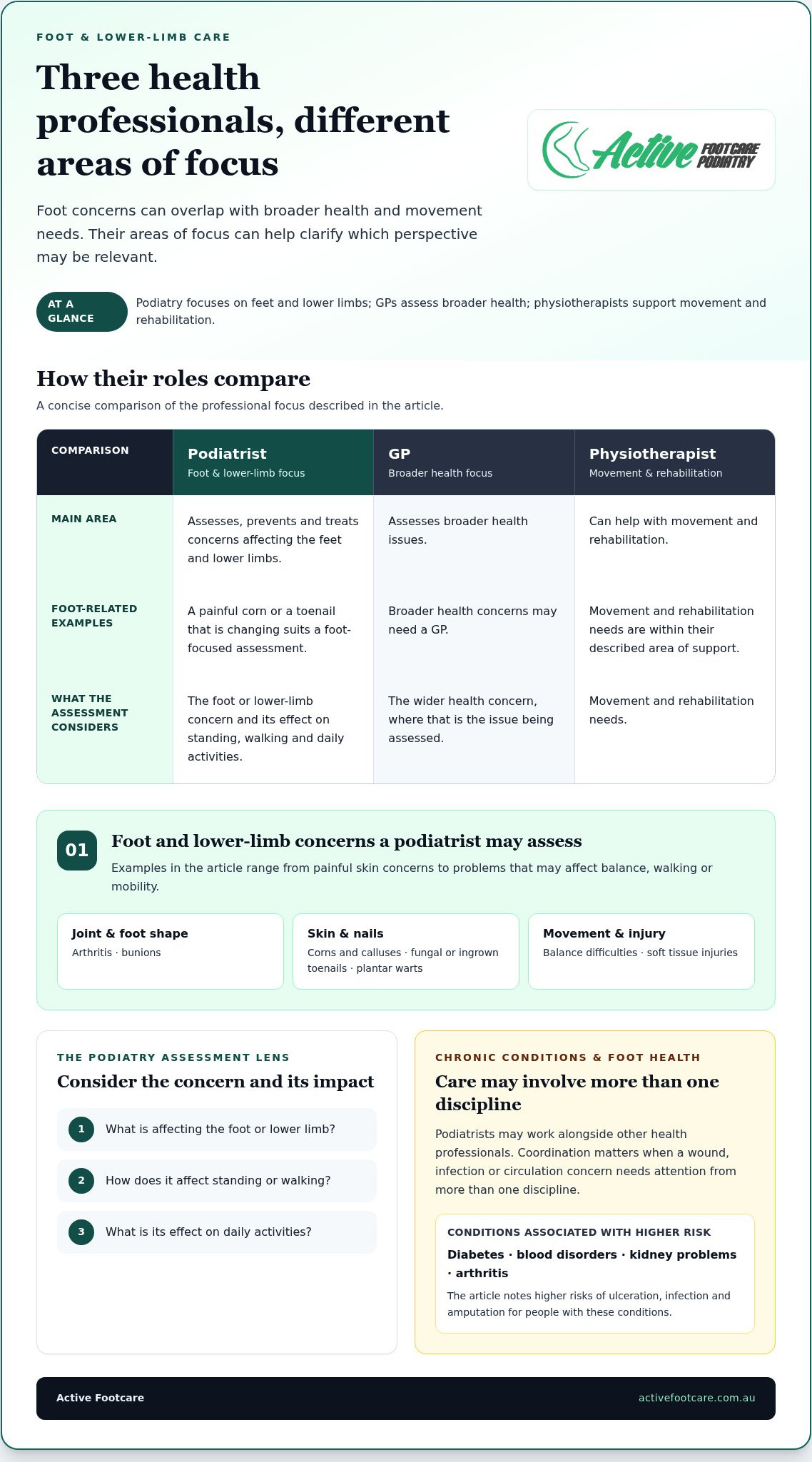
Podiatrists assess, prevent and treat concerns affecting the feet and lower limbs, from painful corns to wounds that affect walking. A podiatry assessment considers both the problem and its effect on standing, walking and daily activities.
Examples include arthritis, bunions, balance difficulties, corns and calluses, fungal or ingrown toenails, plantar warts and soft tissue injuries. A painful bunion, for example, may change how someone places weight through the foot. A podiatrist considers that impact as part of the assessment.
How does podiatry compare with seeing a GP or physiotherapist for foot pain? Podiatrists focus on foot and lower-limb concerns, GPs assess broader health issues, and physiotherapists can help with movement and rehabilitation. A painful corn or changing toenail suits a foot-focused assessment; broader health concerns may need a GP.
Diabetes-related foot care
Diabetes-related foot care can involve podiatrists working alongside other health professionals. This coordination is important when a wound, infection or circulation concern needs attention from more than one discipline. A Diabetes Foot Assessment focuses on foot health and issues that may need follow-up. People with diabetes, blood disorders, kidney problems or arthritis face higher risks of ulceration, infection and amputation.
High-risk foot care eligibility
High-risk foot care may also matter for people without diabetes. Blood disorders, kidney problems and arthritis are among conditions associated with higher risks of ulceration, infection and amputation. Foot ulceration or active Charcot foot may require specialised assessment. Public hospital outpatient services may focus on high-risk needs, with access depending on the service and referral pathway.
What qualifications and registration do Australian podiatrists need? Podiatric surgeons complete a 4-year degree before undertaking a master’s degree. Podiatrists and podiatric surgeons renew registration online before 30 November 2026, according to the Podiatry Board of Australia.
How do you find a registered podiatrist in Australia? Use the Podiatry Board of Australia’s registration information to check a practitioner’s registration. Match the practitioner’s name carefully, then consider whether their foot and lower-limb expertise suits your concern, such as an ingrown toenail or difficulty walking.
What are the risks of delaying treatment for common foot problems? A corn or ingrown nail can continue to cause pain and interfere with walking. For people with diabetes, blood disorders, kidney problems or arthritis, foot concerns also carry higher risks of ulceration and infection. Seek timely attention for a new wound or worsening foot problem.
Hospital outpatient care follows access rules that can differ from private appointments. Public services may prioritise people with high-risk needs, while private care follows a separate pathway. If you’re considering outpatient podiatry, discuss the referral process with your referring health professional and describe the foot concern clearly.
Allied health services for chronic conditions
Podiatry can support prevention, treatment and rehabilitation for people managing chronic conditions. These services may sit alongside care from other health professionals, with the setting and referral pathway shaping access.
Hospital and community podiatry
Hospital outpatient programs and community appointments meet different access needs. Public outpatient care may require a referral, and eligibility can depend on the service and the concern being assessed. Some programs focus on patients with higher-risk foot needs rather than routine care.
Community podiatry offers another pathway for concerns affecting daily life. Someone with a chronic condition may need foot checks and prevention advice, while another person may need help with walking difficulties. Your health needs, referral and the type of care sought all matter when choosing a setting.
To prepare, identify your main foot concern and whether a health professional has referred you. Explain how it affects everyday activities, such as standing at work or walking to appointments. These details help clarify whether hospital outpatient services or a community appointment better suits your needs.
Podiatry services and treatments
Allied health support can include exercises for the feet and legs, massage of problem areas, footwear and orthoses advice, and rehabilitation after surgery. Podiatry treatment can also help prevent or manage foot problems and investigate toenail conditions. The practitioner considers the patient’s concern and how it affects movement.
For someone recovering from surgery, rehabilitation may focus on restoring everyday movement. A person having difficulty walking may discuss exercises or orthoses. These examples show why assessment matters: treatment should address the person’s needs rather than follow one routine for every chronic condition.
Care can also involve communication between health professionals. Share relevant health history, current care and changes in foot health. This gives the practitioner useful context and helps coordinate care when a foot concern is part of broader health needs.
Does private health insurance cover podiatry in Australia? Some private health policies may include benefits for podiatry appointments, depending on the cover selected. Review your policy’s extras benefits and claiming rules before relying on a rebate. Public outpatient care has separate eligibility and referral pathways.
For a practical next step, write down your main concern, any chronic condition and the activities affected. Then identify whether you’re seeking public outpatient or private community care. This preparation can make a podiatry appointment more focused and give the practitioner a clear starting point for discussing suitable care.
Ingrown toenail treatment and surgery
An ingrown toenail is one example of a toenail concern a podiatrist can assess and treat. Assessment clarifies how the nail affects comfort and whether non-surgical care or a procedure should be discussed. Describe any pain, changes around the nail and difficulty wearing shoes.
The practitioner examines the affected nail, including its edge, the nearby skin and your symptoms. They can explain suitable care options and what each involves. The approach depends on the findings and your needs. If the problem affects walking or everyday activities, describe those effects during the assessment.
Not every ingrown nail needs surgery. A treatment discussion can cover the current problem, previous care and whether the nail continues to cause trouble. If a procedure is considered, ask what it aims to address, what the appointment involves and how to care for the toe afterwards. These questions help you understand the plan before deciding.
In Australia, all states allow registered podiatrists to use local anaesthesia for minor surgery. This is relevant when discussing a minor procedure, but the treatment still depends on the assessment. A practitioner can explain the steps, expected care and any follow-up needed for your situation. Don’t assume every nail concern needs the same approach.
Podiatric surgery is a specialist pathway, distinct from general assessment and treatment of foot concerns. Australian podiatrists who specialise in podiatric surgery complete a 4-year degree before undertaking a master’s degree. Podiatric surgery registrars then undertake 3-5 years of surgical training before they may qualify for Fellowship.
This training matters when a patient needs advice about surgical care. Ask the practitioner to explain whether the concern is suitable for treatment within their scope, or whether a specialist assessment is appropriate. A referral pathway can depend on the setting and the clinical concern. Hospital outpatient services, for example, may have separate referral and eligibility requirements.
For an appointment, note which toe is affected, how long it has been troubling you and what makes it worse. Include previous nail treatment and relevant health conditions, such as diabetes. These details help the practitioner assess the issue and discuss treatment options. If surgery comes up, ask about local anaesthesia, aftercare and the planned review.
Toenail problems can also involve fungal changes, so describe any visible changes as well as pain or tenderness. A practitioner can assess the nail and explain relevant treatment. Clear details about symptoms, previous care and daily impact support a focused discussion, whether the next step is conservative treatment or consideration of minor surgery.
Musculoskeletal and biomechanical assessment
A clinical assessment looks at how the structures of the feet and lower limbs work together. It connects symptoms with movement, strength and everyday activities. For example, discomfort during a walk may differ from pain while standing still. Describing when symptoms begin helps guide the assessment.
A walking assessment lets the practitioner observe each step and compare both sides. They may consider balance, foot movement, stride and how the legs support the body. A patient can describe where discomfort appears, such as the heel, arch or ankle. These observations help build a clearer picture than pain location alone.
Assessment also considers joint movement, muscle function and tenderness. A practitioner may ask you to stand, walk or move your ankle. Each task reveals how the lower limb responds. The findings help distinguish a movement-related concern from a problem that needs another clinical pathway.
Evidence-informed care connects assessment findings with practical treatment choices. Depending on the concern, this may include exercises, footwear advice, orthoses or rehabilitation support. For instance, someone with walking difficulty may benefit from advice about movement and support. Treatment should relate to the assessment, not just a general symptom label.
Lower-limb wound assessment focuses on the wound and surrounding foot. A practitioner can observe its location, appearance and nearby skin, then consider how it affects movement. For someone with diabetes, wound assessment is especially relevant because foot problems can carry higher risks. Report changes in a wound or increasing difficulty walking.
Management depends on the clinical findings and your health needs. A practitioner may assess the wound, discuss suitable foot care and identify whether other health professionals should be involved. Someone with a wound and a chronic condition, for example, may need coordinated support. Clear communication helps each professional understand the concern and care plan.
Bring useful details to an appointment: when symptoms started, what makes them worse and which activities are affected. Mention previous treatment, current footwear and any wound changes. These details connect your experience with observed movement and lower-limb function, and support a focused discussion about diagnosis and next steps.
A biomechanical assessment doesn’t replace care for every foot concern. A wound, nail problem or suspected infection may need its own clinical assessment. The practitioner weighs symptoms, movement and health history together, then explains the reasoning behind the recommended approach. This makes the purpose of each treatment clearer to the patient.
Mobile podiatry and home visits
A home visit brings foot and lower-limb assessment to your residence. It can suit someone whose pain, balance or mobility makes travelling difficult. For example, if getting to a clinic is challenging, you can discuss foot concerns in familiar surroundings. The visit still centres on your symptoms, health history and everyday movement.
Consider a home appointment when transport, stairs or fatigue create practical barriers. Someone with diabetes who finds travel difficult can have foot concerns assessed without a clinic journey. A person receiving support at home may also find it easier to explain how symptoms affect daily tasks. The key question is whether travel is preventing assessment.
Before the appointment, note your main concern and when it affects you. Include examples such as pain while standing, difficulty putting on shoes or a wound noticed while dressing. Keep relevant health information and current footwear nearby. These details help the practitioner understand the issue in the context of your home routines.
The home environment can add useful context to a discussion about mobility. A practitioner may learn how you manage everyday movement, such as walking between rooms or getting to the front door. Explain which tasks feel difficult and what support you already use. A home setting can make these practical challenges easier to describe.
A home visit does not mean every treatment can be delivered in the same way as a clinic appointment. The assessment focuses on your concern and the care appropriate to that setting. If the concern needs further investigation or a different clinical pathway, the practitioner can explain the next step. Ask what to expect during the visit.
Australia has public outpatient and private care pathways, with eligibility and referral requirements varying by service. A home appointment offers another setting for assessment but does not change public service rules. For example, Tasmania requires a referral for new outpatient appointments. Consider whether you need community care, a home visit or hospital outpatient assessment.
To make your appointment more useful, prepare a clear route to a chair or area where you can sit comfortably. Have your usual shoes, orthoses or walking aid nearby, if you use them. Mention recent changes, such as a new area of tenderness or altered walking. These details help focus the discussion on your practical needs.
If getting to a centre is difficult, arrange a podiatrist home visit to discuss your foot concern in the setting where daily mobility happens.
Active Foot Care: Podiatrist Home Visit
Active Foot Care’s Podiatrist Home Visit brings foot assessment and care to you when travelling to an appointment is difficult. It can be a practical option if pain or mobility challenges make leaving home harder. Discuss your concern, how it affects daily movement and what support may suit your needs.
For people managing diabetes, a Diabetes Foot Assessment focuses on foot health and concerns that may need attention. Custom Orthotics and Gait Analysis can support assessment of foot mechanics and walking needs. The appropriate podiatry service depends on your concern and goals.
If a home appointment or tailored foot assessment would help, contact Active Foot Care to discuss your needs.
Take the next step towards easier movement
A useful next step is to turn what you’ve noticed into a clear care goal. Think about the movement you’d like to manage more comfortably, the foot concern affecting it and any support that would make appointments easier. Sharing these details helps shape a focused conversation about suitable podiatry care.
Active Footcare offers a Podiatrist Home Visit, Diabetes Foot Assessment and Custom Orthotics. These options can help when you need care at home, support with diabetes-related foot health or tailored support for your feet. Start with your concern and what you want help with.
You don’t need to have all the answers before taking that step. A conversation can help you explain what’s changed and understand which care pathway fits your needs. Contact Active Foot Care to discuss your footcare needs and move towards a plan that supports your daily life.
Frequently Asked Questions
What does a podiatrist do?
A podiatrist assesses foot and lower-limb concerns and helps patients manage their effects. This may include investigating a painful toenail, assessing discomfort during activity or supporting walking difficulties. Treatment depends on the concern and assessment. If symptoms change how you stand, walk or manage daily tasks, describe those changes so they can inform the care discussion.
What to expect from the service?
Expect to discuss your main concern, health history and how it affects daily life. Explain what makes symptoms worse, such as walking, standing or wearing particular shoes. The practitioner assesses the relevant foot or lower-limb issue and discusses suitable care. Ask what the assessment found, what each recommended step involves and how it relates to your goals.
What does a podiatrist do in Australia?
In Australia, podiatrists assess and treat foot and lower-limb concerns, with care available through private and public pathways. Registration matters: according to the Podiatry Board of Australia, podiatrists and podiatric surgeons need to renew registration online before 30 November 2026. If you’re comparing appointment options, consider whether you need private care or meet the referral and eligibility rules for a public outpatient service.
What foot and ankle conditions do podiatrists treat?
Podiatrists assess concerns such as heel pain, flat feet, ingrown toenails and fungal nail changes. They can also investigate corns, calluses, bunions, plantar warts, arthritis and soft tissue injuries. The impact may go beyond comfort: foot or ankle symptoms can affect balance, walking and confidence on uneven ground. Describe where symptoms occur and which activities they interrupt.
Do you need a referral to see a podiatrist in Australia?
Referral requirements depend on the service and location. In Western Australia, a referral isn’t needed for a private podiatrist appointment, while hospital outpatient care requires a written doctor’s referral. Tasmania requires a referral for new outpatient appointments. Before arranging care, identify whether you’re seeking a private appointment or public hospital treatment, as access pathways differ.
Does Medicare cover podiatry in Australia, and who is eligible?
Medicare cover isn’t automatic for every private appointment. Public outpatient access and private health insurance claims are separate pathways, and a hospital referral requirement doesn’t itself establish Medicare payment for a private visit. Eligibility depends on the relevant Medicare arrangement and the care being accessed. First identify whether the appointment is private or public, then consider the applicable referral and payment pathway.
What happens at a first podiatry appointment?
A first appointment usually begins with your main concern and relevant health history. Bring a list of medicines, details of previous treatment and examples of affected activities, such as walking to the shops or standing at work. If footwear or an orthosis relates to the problem, bring it along. The practitioner can use these details to focus the assessment and explain next steps.
Are podiatry services available through Australia’s public health system?
Yes, public hospital outpatient services provide podiatry in Australia, but eligibility varies by state and service. Western Australian hospital outpatient appointments require a written doctor’s referral, and some services may prioritise high-risk patients. Tasmania requires referrals for new outpatient appointments and excludes some routine-care needs. Check which public pathway applies to your location and concern before planning an appointment.